×

Uganda🇺🇬 | townsIgangabus junction, sugarcane fields, roadside eateries | things to do and best time to go

Explore KitgumExplore Nebbi

Backpacking in Iganga
🌟 Highlighttown ranked #14
By Johan Kruseman 🇳🇱 | Updated June 8, 2026

Forget the idea that Iganga is just a pit stop on the way to Jinja or Mbale—there’s more going on here than bus fumes and boda-boda chaos. Smack in eastern Uganda, Iganga is a crossroads town with a pulse: busy markets, colonial-era buildings with real grit, and a main street that never really sleeps. For backpackers, it’s cheap, safe enough if you keep your wits, and refreshingly untouristed—don’t expect hostels or a party scene, but you’ll find street food, friendly locals, and a raw, unfiltered slice of Ugandan life. Compared to Jinja’s adrenaline or Mbale’s mountain views, Iganga is all about the everyday hustle. I once spent an afternoon here just people-watching over chapati—sometimes, that’s the real highlight.

Discover everything you want to know in the 📖 Uganda Travel Guide.
Safety warning

The current risk level for Uganda is high. Check the advice before going.


Get your Uganda guide
109 ranked highlights, routes & tips, works offline (422 pages)
Loading the map 🌍
CLICK TO FILTER
cities
towns
landmarks
national parks
hikes
beaches
attractions
festivals
regions
SHOW COUNTRY’S BESTSHOW ALL

✨ Why go?
Ranked #14 town in Uganda
What makes it a must-see town

Iganga is a strategic basecamp for backpackers navigating Uganda. It offers a mix of affordable hostels and local eateries that keep your budget in check while providing a taste of authentic Ugandan life. The city is walkable, making it easy to explore local markets and interact with friendly residents. While it may not have the flashiest nightlife, the laid-back bars offer a chance to unwind after a day of adventure.

What really sets Iganga apart is its proximity to day trips. You can easily venture out to explore nearby highlights without the hassle of long travel times. This makes it a smart choice for those looking to balance comfort and cost. If you’re on a longer journey through Uganda, Iganga is worth a stop; if you’re short on time, it can serve as a quick pit stop before diving into the more famous destinations.
Want to include Iganga in your Uganda route?
Create a personalized Uganda itinerary that includes Iganga and the places that fit your trip — based on your travel style, budget, and available time. Get your route in seconds.

Generate my trip

💡 HighlightsMust-see experiences and standout moments

  1. Iganga Central Market — The town’s heartbeat: rows of fruit, greens, spices, and cheap clothes. Great for tasting street food, practicing your bargaining, and seeing daily Busoga life up close.
  2. Iganga Railway Station — A working station on the old meter-gauge line. Trains, porters and cargo moves make it a slice of living transport history and a good spot for people-watching and photos.
  3. Iganga Bus Park — The chaotic transport hub where boda-bodas and buses converge. Ideal for watching logistics in action, catching regional rides, and getting a feel for how locals travel.
  4. Busoga University (Iganga campus) — A local university campus where you can feel the student energy, buy used textbooks, or catch occasional cultural events and lectures that reflect the region’s youth culture.
  5. Iganga
read more 👉
  1. Iganga Central Market — The town’s heartbeat: rows of fruit, greens, spices, and cheap clothes. Great for tasting street food, practicing your bargaining, and seeing daily Busoga life up close.
  2. Iganga Railway Station — A working station on the old meter-gauge line. Trains, porters and cargo moves make it a slice of living transport history and a good spot for people-watching and photos.
  3. Iganga Bus Park — The chaotic transport hub where boda-bodas and buses converge. Ideal for watching logistics in action, catching regional rides, and getting a feel for how locals travel.
  4. Busoga University (Iganga campus) — A local university campus where you can feel the student energy, buy used textbooks, or catch occasional cultural events and lectures that reflect the region’s youth culture.
  5. Iganga Municipal Grounds / Town Stadium — Where weekend football matches, political rallies and public celebrations happen. Go to a match for raw local atmosphere and loud, friendly crowds.
  6. Iganga Central Mosque — An active place of worship and community life. Attending a service (when appropriate) or simply observing the courtyard life gives insight into the town’s Muslim community and rhythms.
  7. Main Anglican Church, Iganga — One of the town’s longstanding congregations; the churchyard and services offer a window into local Christian rituals and community networks.
  8. Court Road / Main Street Tailors & Craft Stalls — A tight stretch of independent tailors, shoemakers and small craft sellers. Good for affordable custom clothes, quick repairs, and unique local souvenirs.
  9. Iganga Municipal Market for Livestock (weekly) — If your visit lines up with market day, the small livestock trading area gives a real look at regional food economy and rural-to-town trade patterns.
  10. Local Food Corridor (Jinja Road vendors) — A string of roadside kitchens and chai spots where drivers and traders stop. Best place to try hearty local dishes, hear travel stories, and get authentic, cheap meals.
A few real day-trip highlights just outside Iganga: Jinja and the Source of the Nile, Mabira Forest, and Ssezibwa Falls — the Source of the Nile in Jinja is my personal favorite.
Spotted a mistake or missing something? Contact us.

Things to do near Iganga

Ratings based on Tripadvisor reviews. When you book through this link, you support our work at no extra cost to you.

🏘️ NeighborhoodsHow different areas shape the experience

Iganga is a vibrant hub in Uganda, blending local culture with practical amenities for backpackers. Here’s how the neighborhoods stack up:

Central Iganga: This area is the heartbeat of the city. It’s bustling with markets and eateries, making it perfect for short stays. Costs are low, and you can walk to most attractions. Nightlife is lively but not overwhelming, with local bars offering a taste of the community vibe.

Jinja Road: A bit quieter, this stretch is ideal for those seeking a balance between comfort and accessibility. Guesthouses here are affordable, and you can easily catch transport to nearby attractions. It’s walkable, but you might want to grab a boda-boda for longer distances. Great for longer stays if you prefer a more relaxed pace.

Iganga Town Center: This area is a mix … read more 👉
Iganga is a vibrant hub in Uganda, blending local culture with practical amenities for backpackers. Here’s how the neighborhoods stack up:

Central Iganga: This area is the heartbeat of the city. It’s bustling with markets and eateries, making it perfect for short stays. Costs are low, and you can walk to most attractions. Nightlife is lively but not overwhelming, with local bars offering a taste of the community vibe.

Jinja Road: A bit quieter, this stretch is ideal for those seeking a balance between comfort and accessibility. Guesthouses here are affordable, and you can easily catch transport to nearby attractions. It’s walkable, but you might want to grab a boda-boda for longer distances. Great for longer stays if you prefer a more relaxed pace.

Iganga Town Center: This area is a mix of local life and backpacker-friendly spots. It’s affordable and walkable, with plenty of shops and cafes. The nightlife is more subdued, making it suitable for those who want to unwind after a day of exploring. Perfect for both short and extended stays.

Each area offers a unique flavor, so choose based on your priorities!

⌛️ 1 daySeeing the highlights in 24 hours

Iganga, Uganda, is a vibrant hub that pulses with local life, offering a blend of culture and community that’s hard to resist. It’s not on every tourist’s radar, which makes it all the more appealing for those seeking authenticity.

Start your day in the bustling center, where the aroma of street food wafts through the air. Grab a breakfast of chapati and eggs from a local vendor—it’s cheap and filling. After fueling up, take a stroll through the market. The colors and sounds are a feast for the senses. You’ll see everything from fresh produce to handmade crafts. Engage with the vendors; they often have stories that add depth to your experience.

In the afternoon, head to the nearby Nile River. Rent a bicycle and explore the scenic paths along the water. This is where you can find the less-visited … read more 👉
Iganga, Uganda, is a vibrant hub that pulses with local life, offering a blend of culture and community that’s hard to resist. It’s not on every tourist’s radar, which makes it all the more appealing for those seeking authenticity.

Start your day in the bustling center, where the aroma of street food wafts through the air. Grab a breakfast of chapati and eggs from a local vendor—it’s cheap and filling. After fueling up, take a stroll through the market. The colors and sounds are a feast for the senses. You’ll see everything from fresh produce to handmade crafts. Engage with the vendors; they often have stories that add depth to your experience.

In the afternoon, head to the nearby Nile River. Rent a bicycle and explore the scenic paths along the water. This is where you can find the less-visited Namasagali College, a serene spot with stunning views. It’s a perfect place to pause and soak in the surroundings.

As evening approaches, return to the city and find a local eatery in the Nyenga neighborhood. Try some luwombo, a traditional Ugandan stew. The warmth of the locals will make you feel right at home.

Wrap up your day by visiting the Iganga Cultural Center, where you can catch a dance performance. It’s a fantastic way to connect with the local culture and leave with memories that linger long after you’ve left.
Turn your Iganga visit into an Uganda adventure
Build a complete Uganda route with Iganga, hidden gems, must-see destinations, and realistic travel times included.

Generate my trip

🌤️ When to go?Seasonal considerations and timing


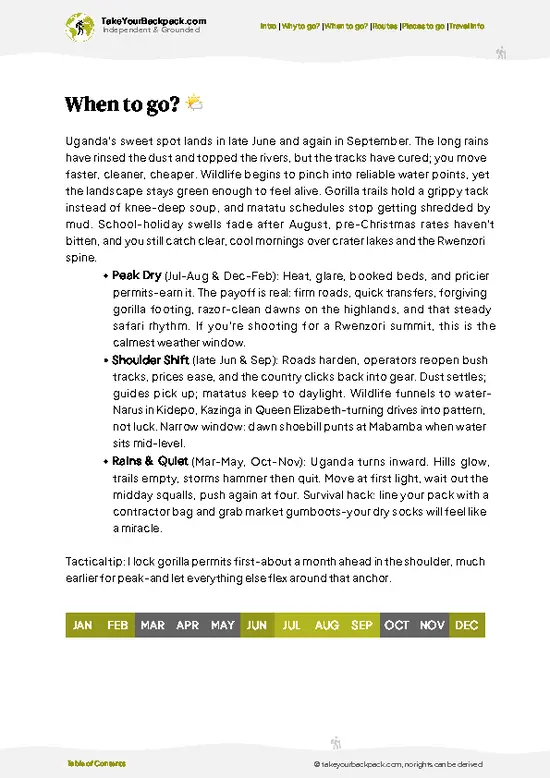
  • Topic: Weather – Iganga’s climate is tropical, with a wet season from March to May and October to November. Heavy rains can turn dirt roads into mud traps, slowing travel and dampening plans.

  • Topic: Temperature – Expect highs around 28-32°C (82-90°F) year-round, with nights cooling to 18-22°C (64-72°F). The temperature is steady, so heat won’t swing wildly.

  • Topic: Daylight Hours – Near the equator, daylight stays consistent, roughly 12 hours daily. Sunrise around 6:30 AM, sunset near 6:30 PM, giving you a reliable window for trekking or exploring.

  • Topic: Crowds – Tourist traffic is low year-round, but the dry season (June to September) sees a slight uptick as travelers avoid mud and rain delays.

  • Topic: Seasonal Activities – Dry months favor outdoor activities like hiking or village
read more 👉

  • Topic: Weather – Iganga’s climate is tropical, with a wet season from March to May and October to November. Heavy rains can turn dirt roads into mud traps, slowing travel and dampening plans.

  • Topic: Temperature – Expect highs around 28-32°C (82-90°F) year-round, with nights cooling to 18-22°C (64-72°F). The temperature is steady, so heat won’t swing wildly.

  • Topic: Daylight Hours – Near the equator, daylight stays consistent, roughly 12 hours daily. Sunrise around 6:30 AM, sunset near 6:30 PM, giving you a reliable window for trekking or exploring.

  • Topic: Crowds – Tourist traffic is low year-round, but the dry season (June to September) sees a slight uptick as travelers avoid mud and rain delays.

  • Topic: Seasonal Activities – Dry months favor outdoor activities like hiking or village visits. Wet months limit access but reveal lush landscapes and fewer visitors.

  • Topic: Price Fluctuations – Accommodation and transport costs dip during the rainy season due to lower demand, but factor in potential delays and less comfort.


Pro-tip: Aim for the shoulder months of June or September to balance dry trails, fewer crowds, and moderate prices—your sweet spot for a smooth, immersive experience.


source: climatestotravel.comJANJanuary: highly recommended for travelingFEBFebruary: highly recommended for travelingMARMarch: fair for travelingAPRApril: fair for travelingMAYMay: fair for travelingJUNJune: excellent for travelingJULJuly: excellent for travelingAUGAugust: excellent for travelingSEPSeptember: excellent for travelingOCTOctober: fair for travelingNOVNovember: fair for travelingDECDecember: highly recommended for traveling
when-to-go

✈️ The backpacker research shortcutUganda Travel Guide

An offline-friendly backpacking guide with optimized travel routes, ranked highlights, transport advice, and the best areas to stay.
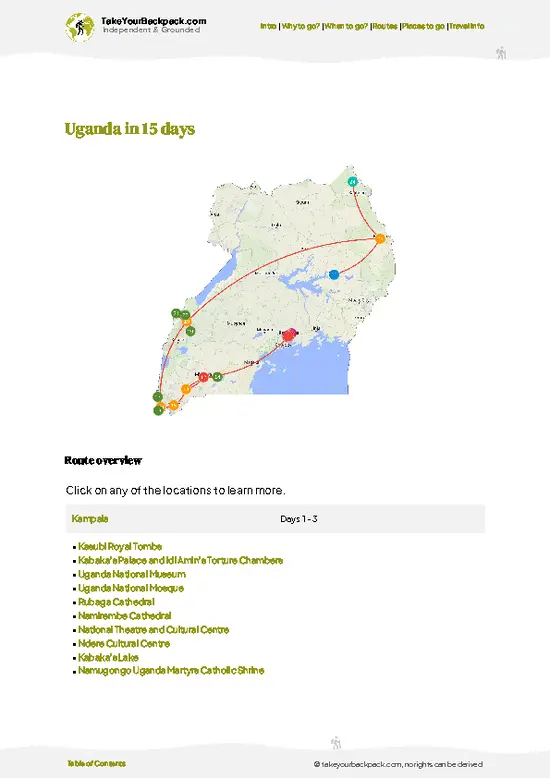
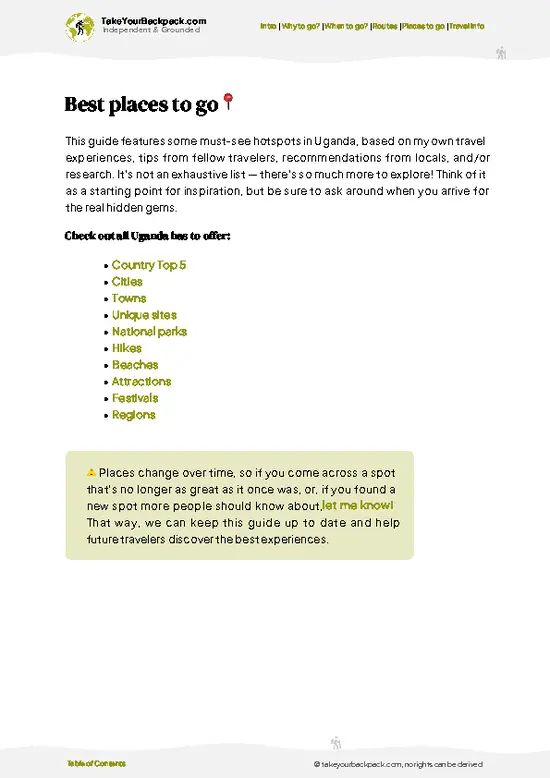
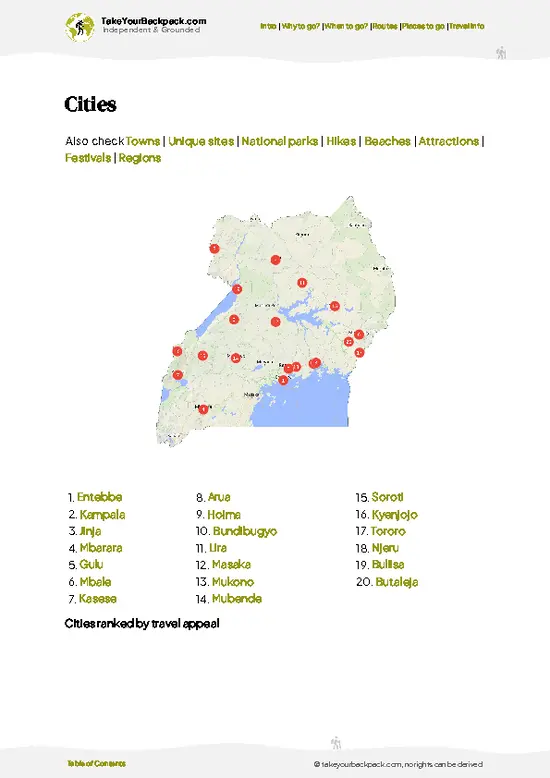
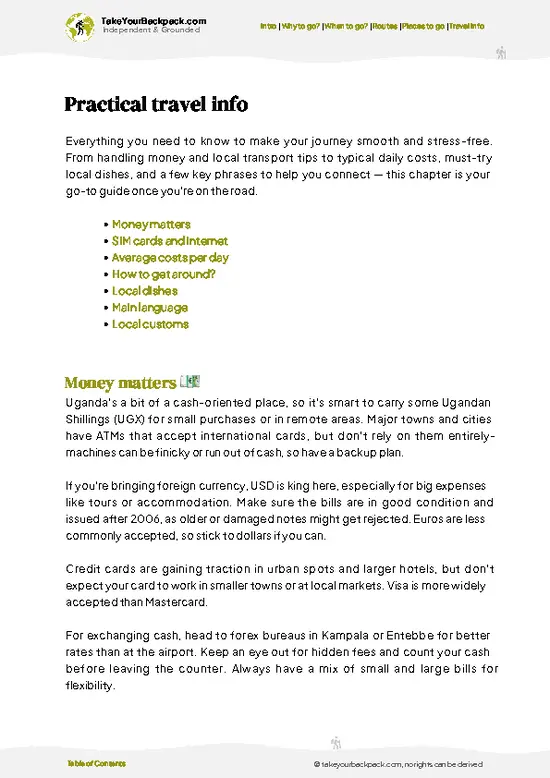
example page 0 from our offline Travel Guide for Uganda
example page 1 from our offline Travel Guide for Uganda
example page 2 from our offline Travel Guide for Uganda
example page 3 from our offline Travel Guide for Uganda
example page 4 from our offline Travel Guide for Uganda
example page 5 from our offline Travel Guide for Uganda
example page 6 from our offline Travel Guide for Uganda
example page 7 from our offline Travel Guide for Uganda
The digital guide (422 pages) contains:
109 highlights, ranked by travel appeal
Optimized 5, 10 & 15-day travel routes
Cities, national parks, landmarks, beaches
How to get around
Offline-friendly for travel without Wi-Fi
👉 Click to see all 30+ guide features

📅 Plan smarter in minutes, not weeks
Month by month travel advice
Festivals & national holidays
Budget expectations

🗺️ Go to the right places, skip the overrated ones
Honest pros & cons of destinations
Top hikes, parks & viewpoints
Lesser-known places most travelers miss
Clear “worth it vs skip it” guidance

🛏️ Travel smoothly without rookie mistakes
Best areas to stay
Transport systems explained simply
Common scams & safety advice
SIM cards, money & practical tips

🌍 Understand the country, not just visit it
Culture & traditions
52 Essential phrases & customs
Festivals worth planning around
Traveler-friendly historical context
Insights that make places more meaningful

📱 Built for real travel conditions
Fully downloadable PDF
Works completely offline
Optimized for phone use
Useful in remote areas & buses
Everything in one place
Save weeks of stressful planning
Get instant access to your full guide. 30‑day money-back guarantee.


By proceeding you agree to our terms.
Sent to your inbox immediately after payment • 100% Secure Checkout
Best Backpacking Travel Advisor 2025 tourism awardBest Backpacking
Travel Advisor
2025
What others say about Take Your Backpack Guides:
⭐⭐⭐⭐⭐
Fantastic, amazing amount of information!
⭐⭐⭐⭐⭐
My goodness this is amazing, it's what I've been looking for hats off too you!
⭐⭐⭐⭐⭐
I think this is absolutely BRILLIANT
⭐⭐⭐⭐
Very complete and informative. It's still missing places, but I gotta to commend you
⭐⭐⭐⭐⭐
This is truly amazing, thank you, can't wait to explore it with my kids!
⭐⭐⭐⭐⭐
Awesome resource, thank you!
⭐⭐⭐⭐⭐
This is amazing! Can't wait to explore the ones I haven't seen
⭐⭐⭐⭐
I love this! Well done, great idea.
⭐⭐⭐⭐⭐
Thanks for taking the time to make this gem!
⭐⭐⭐⭐⭐
This might be the best website I've ever seen.
⭐⭐⭐⭐⭐
Congratulations, and thank you so much for your work; it's incredibly valuable.
⭐⭐⭐⭐
In all seriousness I think you did a great job pointing out the important spots
⭐⭐⭐⭐⭐
10/10 very good
⭐⭐⭐⭐⭐
As someone who's only just starting to visit regularly this is awesome, thank you.
⭐⭐⭐⭐
Thank you very much! I'm going to visit my dad, it's going to be very useful!
⭐⭐⭐⭐⭐
This is really cool! We'll be travelling for the first time and this definitely come in handy.
⭐⭐⭐⭐⭐
You are now our minister of culture, congratulations 👨‍💼
⭐⭐⭐⭐⭐
Just wanted to tell you that this is a pearl! Going to follow your recommendations.
⭐⭐⭐⭐⭐
This is so cool. I'll definitely be using the resource for my travels soon.
⭐⭐⭐⭐⭐
This is very impressive! Good work.
⭐⭐⭐⭐⭐
This is an amazing and informative site. Very well done!

🛏️ Where to stay?Where staying makes the most sense

In Iganga, the best spot for backpackers is the town center area near the main market and bus park. This zone is the city’s social and logistical hub, where you’ll find a steady flow of fellow travelers, local vendors, and affordable eateries. It’s safe enough during daylight and early evening, with a lively atmosphere that makes solo travelers feel connected rather than isolated. Hostels and budget guesthouses cluster here, offering basic but clean accommodations that prioritize value over luxury.

Compared to the quieter, more residential neighborhoods on the outskirts, staying central means … read more 👉
In Iganga, the best spot for backpackers is the town center area near the main market and bus park. This zone is the city’s social and logistical hub, where you’ll find a steady flow of fellow travelers, local vendors, and affordable eateries. It’s safe enough during daylight and early evening, with a lively atmosphere that makes solo travelers feel connected rather than isolated. Hostels and budget guesthouses cluster here, offering basic but clean accommodations that prioritize value over luxury.

Compared to the quieter, more residential neighborhoods on the outskirts, staying central means sacrificing some peace and quiet for convenience and social energy. You trade a bit of comfort for access—easy transport links, quick meals, and instant immersion in local life. For backpackers who want to maximize interaction and minimize transit headaches, this trade-off is a smart move. The vibe is straightforward, practical, and welcoming, perfect for those who want to plug into the city’s pulse without breaking the bank.

🚌 Getting aroundHow to get from A to B

Iganga moves at its own rhythm—a blend of deliberate pace and bursts of spontaneous energy. It’s not a city where you’ll find strict timetables etched in stone; instead, the flow leans on local intuition and a shared understanding of when things start and stop. This means your travel choices here aren’t just about catching a bus or walking down a street—they’re about reading the room, sensing when the market wakes up or when the midday lull hits. Time, money, and comfort don’t just trade places; they dance, and your job is to pick the right partner for your journey.


  • Walking: The ultimate budget option. Iganga’s compact center makes walking practical and free, though the midday heat can sap your energy. Use mornings and late afternoons for the most comfortable strolls.

  • Boda-Boda (Motorcycle
read more 👉
Iganga moves at its own rhythm—a blend of deliberate pace and bursts of spontaneous energy. It’s not a city where you’ll find strict timetables etched in stone; instead, the flow leans on local intuition and a shared understanding of when things start and stop. This means your travel choices here aren’t just about catching a bus or walking down a street—they’re about reading the room, sensing when the market wakes up or when the midday lull hits. Time, money, and comfort don’t just trade places; they dance, and your job is to pick the right partner for your journey.


  • Walking: The ultimate budget option. Iganga’s compact center makes walking practical and free, though the midday heat can sap your energy. Use mornings and late afternoons for the most comfortable strolls.

  • Boda-Boda (Motorcycle Taxi): Fast and flexible, boda-bodas zip through traffic and can get you anywhere quickly. Expect to pay around 1,000–2,000 UGX for short trips. Comfort is minimal—helmet optional, wind guaranteed—but the time saved is often worth the trade-off.

  • Minibus Taxi: The backbone of local transit, these shared taxis run from early morning until early evening. Fares hover around 2,000–3,000 UGX. They’re slower than boda-bodas due to frequent stops but offer a balance between cost and comfort, especially if you snag a seat inside rather than hanging on the back.

  • Private Taxi: Rare and pricier, private taxis offer door-to-door comfort but at a steep premium—expect to pay 10,000 UGX or more for short distances. Best reserved for when time is tight or you’re carrying heavy gear.


Mastering Iganga’s transit means knowing when to sprint on a boda-boda, when to settle into a minibus, and when to simply lace up your boots and take in the city on foot. Each choice is a calculated trade-off in time, money, and comfort—your winning move is picking the right balance for your day’s mission.

👛 Costs (as of 16 May 2026)Money, prices, and spending tips

Backpacking in Iganga, Uganda, is a study in balancing your wallet against your comfort and time. Here’s the lowdown on what you’ll typically spend each day, broken down so you can see exactly where your money goes.
  • Dorm Accommodation (High Season): Expect to pay around $8 to $12 per night. High season means a bit more demand, so prices edge up, but you’re still in the budget-friendly range for basic, clean dorms.
  • Dorm Accommodation (Off-Season): Drop to about $5 to $8 per night. Fewer travelers mean better deals and a quieter stay, perfect if you’re flexible with timing.
  • Meals: Local eateries serve up filling meals for $2 to $4 each. Three meals a day will run you about $6 to $12, depending on whether you stick to street food or opt for a modest restaurant.
  • Local Transport: Boda-bodas
read more 👉
Backpacking in Iganga, Uganda, is a study in balancing your wallet against your comfort and time. Here’s the lowdown on what you’ll typically spend each day, broken down so you can see exactly where your money goes.
  • Dorm Accommodation (High Season): Expect to pay around $8 to $12 per night. High season means a bit more demand, so prices edge up, but you’re still in the budget-friendly range for basic, clean dorms.
  • Dorm Accommodation (Off-Season): Drop to about $5 to $8 per night. Fewer travelers mean better deals and a quieter stay, perfect if you’re flexible with timing.
  • Meals: Local eateries serve up filling meals for $2 to $4 each. Three meals a day will run you about $6 to $12, depending on whether you stick to street food or opt for a modest restaurant.
  • Local Transport: Boda-bodas (motorcycle taxis) are the go-to for short hops, costing roughly $0.50 to $1 per ride. They’re quick but can be a bit of a thrill ride.
  • City Transport Pass: Iganga doesn’t have a formal city transport pass system. Instead, expect to rely on boda-bodas or shared taxis, which keep costs low but require a bit of local savvy to navigate efficiently.
  • Basic Activities/Entry Fees: Most local attractions and markets have minimal or no entry fees, usually under $2. Guided tours or special activities might push this higher, but casual exploration stays cheap.
  • Miscellaneous Expenses: Budget around $1 to $3 for things like bottled water, snacks, or small tips. These add up but remain manageable.

All told, you’re looking at roughly $15 to $25 per day for a no-frills, independent backpacking experience in Iganga. This range gives you room to stretch for a bit more comfort or save by leaning into local options. Knowing these trade-offs means you can pick your priorities—whether that’s squeezing every dollar or upgrading a few comforts without breaking the bank.


source: visituganda.com
⚠️ Prices can change and everyone travels differently, so take this as a rough guide. Hope it helps you plan your adventure!

🚌 Day tripsEasy escapes and nearby places

Iganga, Uganda, is a strategic launchpad for day trips that blend adventure with cultural immersion. Here’s how to make the most of your time.

Murchison Falls National Park
Just a few hours from Iganga, Murchison Falls is a must-see for wildlife enthusiasts. The park is home to elephants, lions, and a plethora of bird species. A day trip typically costs around $50, including transport and park fees. The best time to visit is during the dry season, from December to February, when animals are easier to spot. Many first-timers underestimate the time needed for the drive; plan for about 3-4 hours each way to soak in the scenery.
👉 Explore Murchison Falls National Park

Jinja and the Nile River
Only about 30 minutes from Iganga, Jinja offers thrilling activities like white-water rafting … read more 👉
Iganga, Uganda, is a strategic launchpad for day trips that blend adventure with cultural immersion. Here’s how to make the most of your time.

Murchison Falls National Park
Just a few hours from Iganga, Murchison Falls is a must-see for wildlife enthusiasts. The park is home to elephants, lions, and a plethora of bird species. A day trip typically costs around $50, including transport and park fees. The best time to visit is during the dry season, from December to February, when animals are easier to spot. Many first-timers underestimate the time needed for the drive; plan for about 3-4 hours each way to soak in the scenery.
👉 Explore Murchison Falls National Park

Jinja and the Nile River
Only about 30 minutes from Iganga, Jinja offers thrilling activities like white-water rafting and bungee jumping. You can spend the day exploring the source of the Nile, with costs ranging from $20 for a leisurely boat ride to $100 for adrenaline-pumping rafting. The dry season is ideal for water activities, but be cautious of the crowds during peak tourist months. A common mistake is to overlook the local markets; grab a meal or souvenir before heading back.
👉 Explore Jinja

Sipi Falls
A bit further afield, Sipi Falls is worth the 2-3 hour journey. The cascading waterfalls are stunning, and you can hike through lush coffee plantations. Expect to spend around $30 for transport and a guide. The best time to visit is during the rainy season when the falls are at their most powerful. Many backpackers miss the chance to explore the surrounding villages; don’t skip this cultural experience.
👉 Explore Sipi Falls

Lake Victoria
Just over an hour away, Lake Victoria offers a serene escape. You can enjoy a boat ride or simply relax by the shore. Costs are minimal, around $15 for transport and a small fee for boat rentals. The dry season is best for clear skies. A common oversight is not checking local fishing schedules; timing your visit can enhance your experience.
Want to know what more Uganda offers?
The Uganda Travel Guide describes 109 highlights, from cities to national parks, from beaches to hikes

Get the Travel Guide -

🍲 FoodLocal Cuisine & Drinks

In Iganga, local cuisine is a vibrant tapestry of flavors that tells the story of its people. Don’t miss posho, a staple made from maize flour, often served with beans or groundnut sauce. The samosas here are a must-try, crispy pockets filled with spiced meat or vegetables, perfect for a quick snack from a street vendor.

For drinks, seek out ajon, a traditional millet beer that’s slightly sour and best enjoyed in good company. You’ll find it at local bars, where laughter and chatter fill the air. The market scene is alive with vendors selling fresh fruits, grilled meats, and local delicacies. Grab a roasted plantain from a street stall; the smoky sweetness is unforgettable.

Eating customs are relaxed but communal. Sharing food is common, so don’t hesitate to join in. Just remember to eat … read more 👉
In Iganga, local cuisine is a vibrant tapestry of flavors that tells the story of its people. Don’t miss posho, a staple made from maize flour, often served with beans or groundnut sauce. The samosas here are a must-try, crispy pockets filled with spiced meat or vegetables, perfect for a quick snack from a street vendor.

For drinks, seek out ajon, a traditional millet beer that’s slightly sour and best enjoyed in good company. You’ll find it at local bars, where laughter and chatter fill the air. The market scene is alive with vendors selling fresh fruits, grilled meats, and local delicacies. Grab a roasted plantain from a street stall; the smoky sweetness is unforgettable.

Eating customs are relaxed but communal. Sharing food is common, so don’t hesitate to join in. Just remember to eat with your right hand, as it’s considered polite. Embrace the flavors and the warmth of the people; it’s all part of the adventure.

🛡️ SafetyStaying Safe: What Travelers Should Know

Iganga is generally safe for backpackers, but staying aware is key. Stick to well-lit areas at night, especially if you’re solo. The local market can be bustling, and while most vendors are friendly, keep an eye on your belongings.

Common scams are rare, but be cautious of overly eager guides offering unsolicited help. Politely decline and seek out trusted sources for assistance.

Annoyances like persistent street vendors can test your patience; a friendly smile and a firm “no, thank you” usually do the trick. Carry yourself confidently, and engage with locals—most are welcoming and eager to share their culture. This approach not only enhances your experience but keeps you grounded in the community.

Other Ugandan towns near Iganga

Explore more nearby:

  • Mayuge—sugar estates, Lake Victoria islands, fishing ports| 17 km away
  • Bugiri—road junction, rice fields, eastern transit point| 31 km away
  • Kamuli—sugar plantations, Busoga region, rural trading center| 54 km away

💡 Not sure where to go next?
Create a personalized itinerary for Uganda including Iganga and the places that fit your trip.

Generate my itinerary

👉 Discover all towns

Or checkout all Uganda has to offer (think cities, towns, villages, national parks, hikes, beaches, festivals)
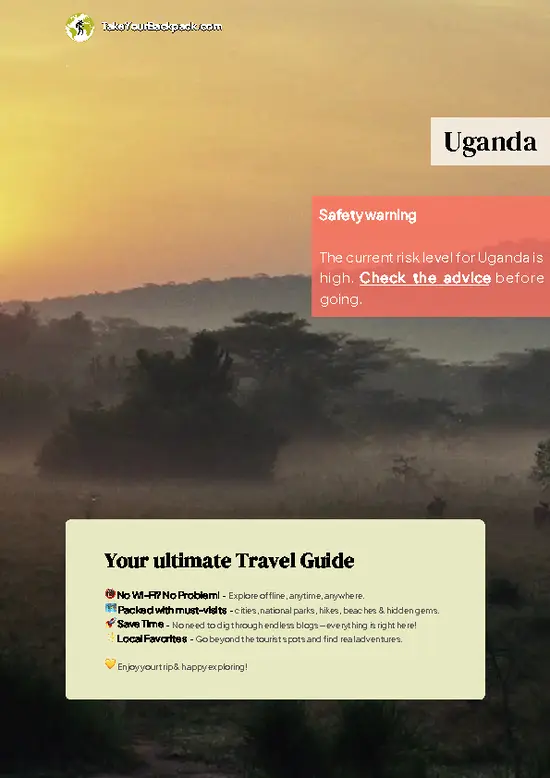
Country photo of Uganda

We 💚 feedbackParting advice and final tips

Iganga offers a genuine slice of Ugandan life, where you can connect with locals over fresh street food and vibrant markets. But be prepared: the infrastructure isn’t always smooth. Roads can be bumpy, and services may lag. Embrace the chaos; it’s part of the charm. You’ll leave with stories that are far richer than any polished tourist experience.

✈️ When did I visit Uganda?
In September 2019 I have done a backpacking trip through Uganda. Seeing gorilla’s in the wild from up close was a pure unexpected highlight!

✍️ Help improve this page!
The information on this page is based on my own backpacking experience in Uganda, supplemented with up-to-date research and feedback from other travelers. Travel details can change, so if you notice anything outdated or incomplete, feel free to let me know.


🙋‍♂️ Give feedback

👋 Meet the founderWho’s Behind Take Your Backpack?

Johan, backpacker and founder of TakeYourBackpackHi, I’m Johan (Netherlands 🇳🇱), the creator of TakeYourBackpack. Over the past decade, I’ve backpacked through 80+ countries across six continents, gaining extensive experience with independent travel, long-term trips, and overland routes.

This site is built on a combination of firsthand travel experience and carefully curated insights from other backpackers. Many guides are based on places I’ve personally visited, while others bring together tips, observations, and practical advice shared by trusted travelers I’ve met along the way.

The goal is to provide realistic, experience-driven guidance — not generic itineraries — so you can explore destinations with better context, clearer expectations, and more confidence.

Get full Uganda guide •
Instant download • 109 highlights • Full Offline guide