×

Uganda🇺🇬 | townsKibogacentral grasslands, cattle trading, roadside town | things to do and best time to go

Explore KanunguExplore Kamwenge

Backpacking in Kiboga
👀 For curious travelerstown ranked #32
By Johan Kruseman 🇳🇱 | Updated June 9, 2026

If you crave nightlife, polished museums, or Instagrammable cafés, Kiboga will feel too quiet, too real. But that’s exactly why it works for backpackers who want to see Uganda’s rural pulse without the filter. Kiboga sits northwest of Kampala, a few hours by bus, surrounded by rolling farmland and the scent of woodsmoke. The town itself is modest—markets, simple eats, a slow main street—but it’s a practical stopover between Kampala and Hoima, or a base for exploring the green hills and local villages. You won’t find hostels or a backpacker scene; expect basic guesthouses and evenings that wind down early. Costs are low, safety is typical for rural Uganda, and you’ll stand out as a traveler—sometimes awkward, sometimes rewarding. Compared to busier towns like Mubende, Kiboga is quieter, less polished, but more honest, with a rhythm that’s all its own.

Discover everything you want to know in the 📖 Uganda Travel Guide.
Safety warning

The current risk level for Uganda is high. Check the advice before going.


Get your Uganda guide
109 ranked highlights, routes & tips, works offline (422 pages)
Loading the map 🌍
CLICK TO FILTER
cities
towns
landmarks
national parks
hikes
beaches
attractions
festivals
regions
SHOW COUNTRY’S BESTSHOW ALL

✨ Why go?
Ranked #32 town in Uganda
Why visitors keep coming back

Kiboga serves as a strategic waypoint for backpackers exploring Uganda. Its walkable streets make it easy to navigate, while small-scale hostels and guesthouses offer a cozy, intimate atmosphere. You can grab a local meal that bursts with flavor, connecting you to the culture. Many travelers linger here for a few days, enjoying the friendly social vibe that fosters connections among solo travelers and small groups alike. It’s a perfect base for nearby hikes or cultural sites, allowing you to recharge before diving into the next adventure. If you appreciate a slower pace, Kiboga is your spot.
Want to include Kiboga in your Uganda route?
Create a personalized Uganda itinerary that includes Kiboga and the places that fit your trip — based on your travel style, budget, and available time. Get your route in seconds.

Generate my trip

💡 HighlightsMust-see experiences and standout moments

  • Kiboga Central Market — The town’s heartbeat: a cluttered, colorful tangle of fruit, cassava, matoke, live chickens and the best place to eavesdrop on local gossip, haggle prices, and see everyday commerce that drives the district.
  • Main Taxi Park (Kiboga Stage) — Not glamorous, but essential: the transport hub where you’ll meet boda drivers, catch shared taxis, and watch the choreography of people arriving and leaving the town. Great for people-watching and timing onward travel.
  • Weekly Livestock Market — On market day the outskirts of the central market turn into a livestock trading floor: cattle, goats and animated bargaining. It’s noisy, alive and one of the clearest ways to see rural trade and local livelihoods up close.
  • Kiboga Town Council / District Offices — The administrative center
read more 👉
  • Kiboga Central Market — The town’s heartbeat: a cluttered, colorful tangle of fruit, cassava, matoke, live chickens and the best place to eavesdrop on local gossip, haggle prices, and see everyday commerce that drives the district.
  • Main Taxi Park (Kiboga Stage) — Not glamorous, but essential: the transport hub where you’ll meet boda drivers, catch shared taxis, and watch the choreography of people arriving and leaving the town. Great for people-watching and timing onward travel.
  • Weekly Livestock Market — On market day the outskirts of the central market turn into a livestock trading floor: cattle, goats and animated bargaining. It’s noisy, alive and one of the clearest ways to see rural trade and local livelihoods up close.
  • Kiboga Town Council / District Offices — The administrative center where local politics and services intersect. A quick stop here gives context on local projects and the chance to pick up maps or ask about community events that outsiders wouldn’t hear about otherwise.
  • Main Catholic Parish Church — More than architecture: the parish is a social anchor. Attend a Sunday service if you can — music, ritual, and the congregation’s warmth tell you more about local life than any guidebook line.
  • Kiboga Central Mosque — The town’s Muslim community hub. Visit respectfully outside prayer times to observe interior details, chat with worshippers, and learn how different faiths shape daily rhythms in Kiboga.
  • Artisan Stalls and Woodcarver Workshops — Clustered near the market, small craftsmen sell carved stools, stools and household tools. Items are cheap, handmade, and give a direct connection to local materials and skills — good for practical souvenirs.
  • Main Street Food Scene — A string of matoke, posho and starchy-stew stalls plus roadside samosas and chapatis. Cheap, filling, and authentic — eating where locals eat is where you’ll taste the town’s flavor and meet people without pretense.
  • Kiboga Health Centre / Hospital compound — Not a tourist attraction in the usual sense, but a focal point for community resilience and public service. Observing (or volunteering briefly, if appropriate) reveals a lot about local networks and daily challenges.
  • Evening Social Spots (bars and local music joints) — Low-key bars near the market and stage where people gather after work. Live music isn’t guaranteed, but the conversations, local beers and informal performances are where the town’s social life comes alive.
A few real day-trip options just outside Kiboga worth considering: Mubende town and its markets (southwest), Hoima for Bunyoro cultural sites and kingdom history, and Kampala if you want museums and big-city markets — my personal favorite for a day trip from Kiboga is Hoima for its deep Bunyoro cultural feel.
Spotted a mistake or missing something? Contact us.

Things to do near Kiboga

Ratings based on Tripadvisor reviews. When you book through this link, you support our work at no extra cost to you.

🏘️ NeighborhoodsUnderstanding the local layout

Kiboga is a vibrant hub that offers a unique blend of local culture and accessibility for backpackers. Here’s how to navigate its neighborhoods:

Central Kiboga: This area buzzes with local markets and street vendors. It’s affordable and walkable, perfect for short stays. The nightlife is low-key, with small bars offering local brews.

Kasambya: A quieter neighborhood, ideal for those seeking a peaceful retreat. It’s less touristy, making it a great spot for longer stays. Transport options are limited, but the serene atmosphere is worth it.

Wamala: Known for its lively community events, this area is a blend of energy and charm. It’s accessible by public transport and offers a mix of budget accommodations. Perfect for backpackers who want to experience local life while still enjoying some nightlife.

⌛️ 1 dayHow to make the most of one day

Kiboga, Uganda, is a vibrant town that pulses with local life, surrounded by lush landscapes and the hum of everyday hustle. Start your morning at the bustling Kiboga Market. The air is thick with the scent of fresh produce and spices. Grab a warm chapati from a vendor and enjoy it while mingling with locals. This is where you’ll feel the town’s heartbeat.

In the afternoon, take a stroll through the nearby Nyabikere neighborhood. It’s not on the usual tourist map, but the friendly faces and colorful homes make it a rewarding detour. Visit the local artisans; you might even catch a glimpse of traditional crafts being made.

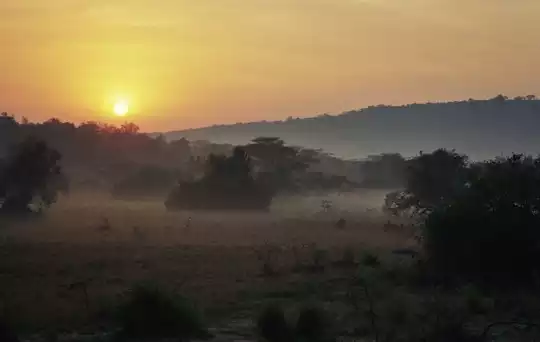
As the sun begins to set, head to the edge of town for a view over the rolling hills. The golden light casts long shadows, and the atmosphere shifts to a tranquil hum. … read more 👉
Kiboga, Uganda, is a vibrant town that pulses with local life, surrounded by lush landscapes and the hum of everyday hustle. Start your morning at the bustling Kiboga Market. The air is thick with the scent of fresh produce and spices. Grab a warm chapati from a vendor and enjoy it while mingling with locals. This is where you’ll feel the town’s heartbeat.

In the afternoon, take a stroll through the nearby Nyabikere neighborhood. It’s not on the usual tourist map, but the friendly faces and colorful homes make it a rewarding detour. Visit the local artisans; you might even catch a glimpse of traditional crafts being made.

As the sun begins to set, head to the edge of town for a view over the rolling hills. The golden light casts long shadows, and the atmosphere shifts to a tranquil hum. Finish your day at a local eatery, savoring a plate of matoke and groundnut sauce. This isn’t just a meal; it’s a taste of Kiboga’s soul.
Turn your Kiboga visit into an Uganda adventure
Build a complete Uganda route with Kiboga, hidden gems, must-see destinations, and realistic travel times included.

Generate my trip

🌤️ When to go?When to go for the best experience


  • Weather: Kiboga’s dry seasons from June to August and December to February offer clearer skies and less mud, making trails and roads easier to navigate.

  • Temperature: Expect daytime highs around 26-28°C (79-82°F) and cooler nights near 15-17°C (59-63°F), perfect for hiking without overheating or freezing.

  • Daylight Hours: Roughly 12 hours of daylight year-round, but dry months bring more consistent sunshine, ideal for early starts and late returns.

  • Crowds: Tourist flow is low year-round, but dry seasons see a slight uptick, meaning you’ll have company without feeling overwhelmed.

  • Seasonal Activities: Dry months open up local markets and outdoor cultural events, giving you a richer, more interactive experience.

  • Price Fluctuations: Accommodation and transport costs rise modestly during
read more 👉

  • Weather: Kiboga’s dry seasons from June to August and December to February offer clearer skies and less mud, making trails and roads easier to navigate.

  • Temperature: Expect daytime highs around 26-28°C (79-82°F) and cooler nights near 15-17°C (59-63°F), perfect for hiking without overheating or freezing.

  • Daylight Hours: Roughly 12 hours of daylight year-round, but dry months bring more consistent sunshine, ideal for early starts and late returns.

  • Crowds: Tourist flow is low year-round, but dry seasons see a slight uptick, meaning you’ll have company without feeling overwhelmed.

  • Seasonal Activities: Dry months open up local markets and outdoor cultural events, giving you a richer, more interactive experience.

  • Price Fluctuations: Accommodation and transport costs rise modestly during dry seasons; the trade-off is smoother travel and better conditions.


Pro-tip: Aim for early dry season—June or December—when the air is fresh, the land is firm, and you can enjoy Kiboga’s rhythms without the hassle of mud or crowds.


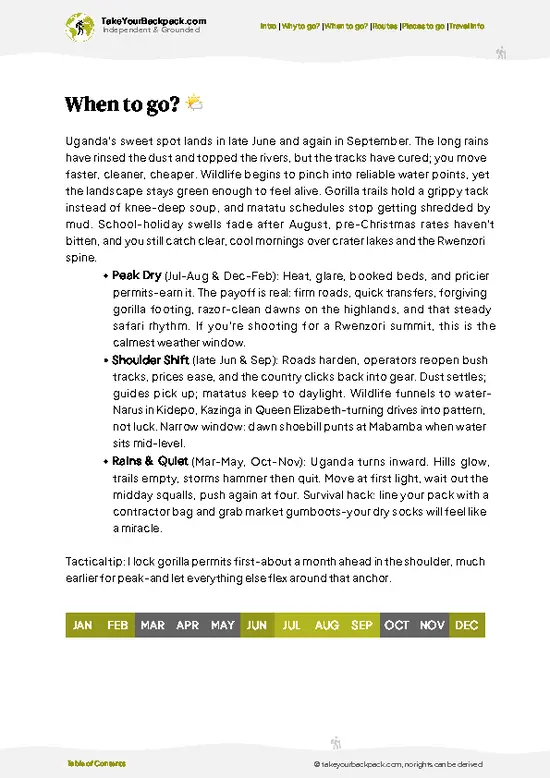
source: climatestotravel.comJANJanuary: highly recommended for travelingFEBFebruary: highly recommended for travelingMARMarch: fair for travelingAPRApril: fair for travelingMAYMay: good for travelingJUNJune: excellent for travelingJULJuly: excellent for travelingAUGAugust: excellent for travelingSEPSeptember: good for travelingOCTOctober: fair for travelingNOVNovember: fair for travelingDECDecember: excellent for traveling
when-to-go

✈️ The backpacker research shortcutUganda Travel Guide

An offline-friendly backpacking guide with optimized travel routes, ranked highlights, transport advice, and the best areas to stay.
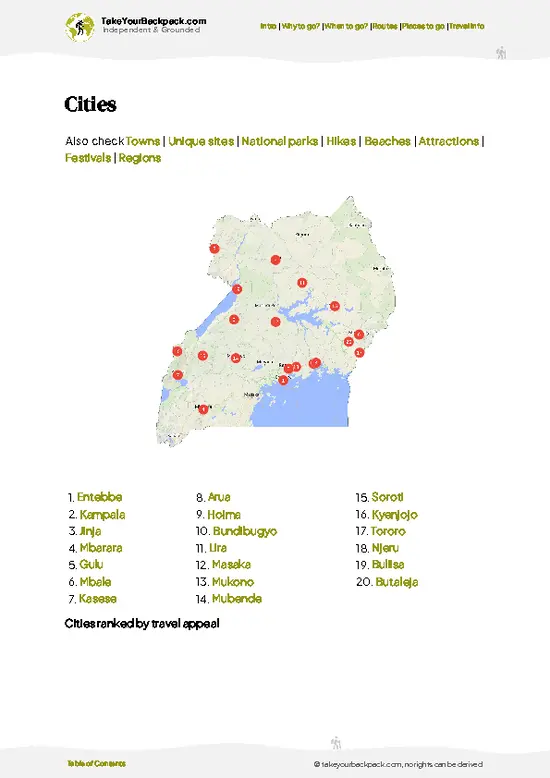
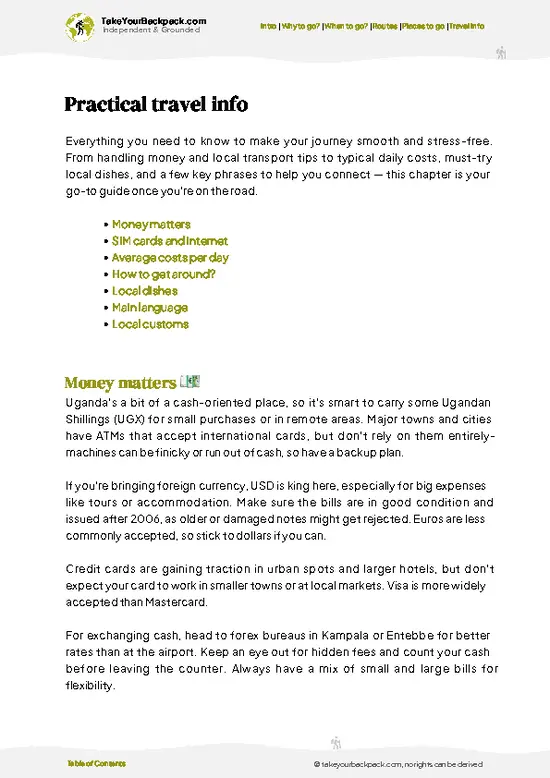
example page 0 from our offline Travel Guide for Uganda
example page 1 from our offline Travel Guide for Uganda
example page 2 from our offline Travel Guide for Uganda
example page 3 from our offline Travel Guide for Uganda
example page 4 from our offline Travel Guide for Uganda
example page 5 from our offline Travel Guide for Uganda
example page 6 from our offline Travel Guide for Uganda
example page 7 from our offline Travel Guide for Uganda
The digital guide (422 pages) contains:
109 highlights, ranked by travel appeal
Optimized 5, 10 & 15-day travel routes
Cities, national parks, landmarks, beaches
How to get around
Offline-friendly for travel without Wi-Fi
👉 Click to see all 30+ guide features

📅 Plan smarter in minutes, not weeks
Month by month travel advice
Festivals & national holidays
Budget expectations

🗺️ Go to the right places, skip the overrated ones
Honest pros & cons of destinations
Top hikes, parks & viewpoints
Lesser-known places most travelers miss
Clear “worth it vs skip it” guidance

🛏️ Travel smoothly without rookie mistakes
Best areas to stay
Transport systems explained simply
Common scams & safety advice
SIM cards, money & practical tips

🌍 Understand the country, not just visit it
Culture & traditions
52 Essential phrases & customs
Festivals worth planning around
Traveler-friendly historical context
Insights that make places more meaningful

📱 Built for real travel conditions
Fully downloadable PDF
Works completely offline
Optimized for phone use
Useful in remote areas & buses
Everything in one place
Save weeks of stressful planning
Get instant access to your full guide. 30‑day money-back guarantee.


By proceeding you agree to our terms.
Sent to your inbox immediately after payment • 100% Secure Checkout
Best Backpacking Travel Advisor 2025 tourism awardBest Backpacking
Travel Advisor
2025
What others say about Take Your Backpack Guides:
⭐⭐⭐⭐⭐
Fantastic, amazing amount of information!
⭐⭐⭐⭐⭐
My goodness this is amazing, it's what I've been looking for hats off too you!
⭐⭐⭐⭐⭐
I think this is absolutely BRILLIANT
⭐⭐⭐⭐
Very complete and informative. It's still missing places, but I gotta to commend you
⭐⭐⭐⭐⭐
This is truly amazing, thank you, can't wait to explore it with my kids!
⭐⭐⭐⭐⭐
Awesome resource, thank you!
⭐⭐⭐⭐⭐
This is amazing! Can't wait to explore the ones I haven't seen
⭐⭐⭐⭐
I love this! Well done, great idea.
⭐⭐⭐⭐⭐
Thanks for taking the time to make this gem!
⭐⭐⭐⭐⭐
This might be the best website I've ever seen.
⭐⭐⭐⭐⭐
Congratulations, and thank you so much for your work; it's incredibly valuable.
⭐⭐⭐⭐
In all seriousness I think you did a great job pointing out the important spots
⭐⭐⭐⭐⭐
10/10 very good
⭐⭐⭐⭐⭐
As someone who's only just starting to visit regularly this is awesome, thank you.
⭐⭐⭐⭐
Thank you very much! I'm going to visit my dad, it's going to be very useful!
⭐⭐⭐⭐⭐
This is really cool! We'll be travelling for the first time and this definitely come in handy.
⭐⭐⭐⭐⭐
You are now our minister of culture, congratulations 👨‍💼
⭐⭐⭐⭐⭐
Just wanted to tell you that this is a pearl! Going to follow your recommendations.
⭐⭐⭐⭐⭐
This is so cool. I'll definitely be using the resource for my travels soon.
⭐⭐⭐⭐⭐
This is very impressive! Good work.
⭐⭐⭐⭐⭐
This is an amazing and informative site. Very well done!

🛏️ Where to stay?Choosing the right base

Kiboga’s town center is the go-to spot for backpackers who want to plug into the local rhythm without losing their sense of ease. It’s where the streets hum with morning market chatter, and small eateries serve up fresh chapati and steaming tea—perfect fuel after a dusty bus ride. This area feels safe because it’s busy, with a steady flow of traders and travelers, so you’re never truly alone. Hostels here lean toward the basic but clean, offering communal spaces where you can swap stories with fellow wanderers. Compared to quieter outskirts, staying central means you’re steps from transport links … read more 👉
Kiboga’s town center is the go-to spot for backpackers who want to plug into the local rhythm without losing their sense of ease. It’s where the streets hum with morning market chatter, and small eateries serve up fresh chapati and steaming tea—perfect fuel after a dusty bus ride. This area feels safe because it’s busy, with a steady flow of traders and travelers, so you’re never truly alone. Hostels here lean toward the basic but clean, offering communal spaces where you can swap stories with fellow wanderers. Compared to quieter outskirts, staying central means you’re steps from transport links and the pulse of daily life, making it easier to dive into Kiboga’s authentic vibe without hassle.

🚌 Getting aroundHow to get around Kiboga

Kiboga moves at a pace that feels like a slow breath in the heat of the day, where the sun casts long shadows and the scent of earth and cooking fires lingers in the air. It’s not a place where timetables rule; instead, it’s a town that flows with a mix of informal rhythms and bursts of activity around market hours. You’ll find that patience is your best companion here, but with a little local savvy, you can navigate the town’s pulse without getting stuck in the slow gears.


  • Walking: The heart of Kiboga is compact enough to explore on foot, with dusty streets and open-air markets just a few minutes apart. Walking lets you soak in the smells of fresh produce and hear the chatter of vendors—free and flexible, but prepare for uneven paths and midday heat.

  • Boda Bodas (Motorcycle Taxis): These
read more 👉
Kiboga moves at a pace that feels like a slow breath in the heat of the day, where the sun casts long shadows and the scent of earth and cooking fires lingers in the air. It’s not a place where timetables rule; instead, it’s a town that flows with a mix of informal rhythms and bursts of activity around market hours. You’ll find that patience is your best companion here, but with a little local savvy, you can navigate the town’s pulse without getting stuck in the slow gears.


  • Walking: The heart of Kiboga is compact enough to explore on foot, with dusty streets and open-air markets just a few minutes apart. Walking lets you soak in the smells of fresh produce and hear the chatter of vendors—free and flexible, but prepare for uneven paths and midday heat.

  • Boda Bodas (Motorcycle Taxis): These are the quickest way to dart through town or reach nearby villages. Expect to negotiate fares—usually around 1,000 to 2,000 UGX per short trip—and hold tight as they weave through traffic and potholes.

  • Matatus (Minibus Taxis): For trips beyond Kiboga, matatus run irregularly from early morning until late afternoon. They’re cheap (about 3,000–5,000 UGX to nearby towns) but can be cramped and noisy, so pack light and keep your belongings close.

  • Buses: Larger buses connect Kiboga to Kampala and other regional hubs. They leave when full, which means no fixed schedule, but they’re more comfortable for longer rides and cost around 7,000–10,000 UGX. Arrive early to secure a seat.

👛 Costs (as of 16 May 2026)Money, prices, and spending tips

Backpacking in Kiboga, Uganda, offers a raw, authentic experience where your money stretches further than in the big cities, but you still need to plan carefully to avoid surprises.
  • Dorm Accommodation: Expect to pay around $5 to $10 per night for a basic dorm bed. These places are simple—think mosquito nets, a fan if you’re lucky, and a shared bathroom. It’s not luxury, but it’s clean enough and a great way to meet other travelers.
  • Meals: Local eateries serve hearty Ugandan staples like matoke, beans, and fried fish for about $2 to $4 per meal. Street food is even cheaper, but stick to cooked items to avoid tummy trouble. Western-style meals or imported snacks will push you closer to $5 or $6.
  • Local Transport: Boda-bodas (motorcycle taxis) are the go-to for short trips, costing roughly
read more 👉
Backpacking in Kiboga, Uganda, offers a raw, authentic experience where your money stretches further than in the big cities, but you still need to plan carefully to avoid surprises.
  • Dorm Accommodation: Expect to pay around $5 to $10 per night for a basic dorm bed. These places are simple—think mosquito nets, a fan if you’re lucky, and a shared bathroom. It’s not luxury, but it’s clean enough and a great way to meet other travelers.
  • Meals: Local eateries serve hearty Ugandan staples like matoke, beans, and fried fish for about $2 to $4 per meal. Street food is even cheaper, but stick to cooked items to avoid tummy trouble. Western-style meals or imported snacks will push you closer to $5 or $6.
  • Local Transport: Boda-bodas (motorcycle taxis) are the go-to for short trips, costing roughly $0.50 to $1 per ride within town. For longer distances, shared minibuses run around $1 to $3 depending on where you’re headed. Walking is often the best way to soak in the town’s atmosphere and save cash.
  • Basic Activities/Entry Fees: Kiboga isn’t a tourist hotspot, so entry fees are minimal or non-existent for local markets and cultural spots. If you want to explore nearby natural areas or community projects, budget $2 to $5 for guided visits or donations.
  • Miscellaneous Expenses: Water, snacks, and small essentials like toiletries or phone credit will add about $1 to $3 daily. Keep some cash handy for unexpected expenses, but don’t overpack—shops are basic but sufficient.

All told, you’re looking at roughly $10 to $20 a day to cover the essentials in Kiboga. It’s a place where simplicity meets genuine local life, and your budget buys you more than just survival—it buys connection. Keep your expectations grounded, and you’ll find the rhythm of the town rewarding in its own quiet way.


source: visituganda.com
⚠️ Prices can change and everyone travels differently, so take this as a rough guide. Hope it helps you plan your adventure!

🚌 Day tripsWhere to go beyond the main area

Kiboga, Uganda, is a backpacker’s dream base for exploring the heart of the country. The town’s laid-back vibe and local charm make it easy to venture out for unforgettable day trips.

Lake Victoria Excursion
Just a short ride away, Lake Victoria offers a refreshing escape. Spend the day fishing or simply soaking in the sun on the shores. The local markets nearby are perfect for grabbing fresh tilapia and local fruits. Expect to pay around $5 for transport and $10 for food. The best time to visit is during the dry season, when the skies are clear and the water is calm. A common mistake? Forgetting sunscreen; the sun can be relentless.


Budongo Forest Adventure
About an hour’s drive from Kiboga, Budongo Forest is a haven for nature lovers. Trek through lush greenery, listening to the … read more 👉
Kiboga, Uganda, is a backpacker’s dream base for exploring the heart of the country. The town’s laid-back vibe and local charm make it easy to venture out for unforgettable day trips.

Lake Victoria Excursion
Just a short ride away, Lake Victoria offers a refreshing escape. Spend the day fishing or simply soaking in the sun on the shores. The local markets nearby are perfect for grabbing fresh tilapia and local fruits. Expect to pay around $5 for transport and $10 for food. The best time to visit is during the dry season, when the skies are clear and the water is calm. A common mistake? Forgetting sunscreen; the sun can be relentless.


Budongo Forest Adventure
About an hour’s drive from Kiboga, Budongo Forest is a haven for nature lovers. Trek through lush greenery, listening to the symphony of birds and rustling leaves. Guided chimpanzee tracking is a highlight, costing around $30. Go early in the morning to catch the chimps at their most active. Many first-timers underestimate the forest’s humidity, so pack plenty of water and wear breathable clothing.


Ngamba Island Visit
Catch a boat to Ngamba Island, home to a chimpanzee sanctuary. The journey takes about two hours, but the sight of these playful primates is worth every minute. A day pass costs around $50, which includes a guided tour. The best time to visit is during feeding hours, when the chimps are most lively. Many backpackers miss the boat schedule, so check ahead to avoid disappointment.
Want to know what more Uganda offers?
The Uganda Travel Guide describes 109 highlights, from cities to national parks, from beaches to hikes

Get the Travel Guide -

🛡️ SafetySafety Tips and Common Scams in Kiboga

Kiboga is generally safe, but staying aware enhances your experience. Stick to well-lit areas after dark, especially if you’re solo. The local market can be bustling, so keep your belongings close; pickpockets occasionally lurk in crowds.

Be cautious with offers from strangers—some may try to sell you overpriced goods or services. A friendly smile and a firm “no, thank you” usually do the trick. Trust your instincts; if something feels off, it probably is. Enjoy the vibrant atmosphere, but stay grounded in your surroundings.

Other Ugandan towns near Kiboga

Explore more nearby:

  • Nakasongola—military base, cattle corridor, dry savanna| 88 km away
  • Kayunga—Kayunga Forest, Nile rapids, agricultural center| 128 km away
  • Apac—Lango region, rural market, northern access| 146 km away

💡 Not sure where to go next?
Create a personalized itinerary for Uganda including Kiboga and the places that fit your trip.

Generate my itinerary

👉 Discover all towns

Or checkout all Uganda has to offer (think cities, towns, villages, national parks, hikes, beaches, festivals)
Country photo of Uganda

We 💚 feedbackIs it worth it?

Kiboga offers a raw glimpse into Ugandan life, where the air is thick with the scent of earth after rain and laughter echoes in the streets. But be ready for limited amenities; it’s not a tourist hub. Embrace the simplicity, and you’ll find the heart of Uganda.

✈️ When did I visit Uganda?
In September 2019 I have done a backpacking trip through Uganda. Seeing gorilla’s in the wild from up close was a pure unexpected highlight!

✍️ Help improve this page!
The information on this page is based on my own backpacking experience in Uganda, supplemented with up-to-date research and feedback from other travelers. Travel details can change, so if you notice anything outdated or incomplete, feel free to let me know.


🙋‍♂️ Give feedback

👋 Meet the founderWho’s Behind Take Your Backpack?

Johan, backpacker and founder of TakeYourBackpackHi, I’m Johan (Netherlands 🇳🇱), the creator of TakeYourBackpack. Over the past decade, I’ve backpacked through 80+ countries across six continents, gaining extensive experience with independent travel, long-term trips, and overland routes.

This site is built on a combination of firsthand travel experience and carefully curated insights from other backpackers. Many guides are based on places I’ve personally visited, while others bring together tips, observations, and practical advice shared by trusted travelers I’ve met along the way.

The goal is to provide realistic, experience-driven guidance — not generic itineraries — so you can explore destinations with better context, clearer expectations, and more confidence.

Get full Uganda guide •
Instant download • 109 highlights • Full Offline guide