×

Uganda🇺🇬 | townsKanungutea estates, Bwindi access, hilly backroads | things to do and best time to go

Explore YumbeExplore Kiboga

Backpacking in Kanungu
👍 Recommendedtown ranked #16
By Johan Kruseman 🇳🇱 | Updated June 8, 2026

Kanungu isn’t the dusty, remote outpost you might expect—cell service is surprisingly reliable, and the town hums with the low-key energy of a place that’s both lived-in and on the edge of wild country. Tucked in Uganda’s southwest hills, Kanungu is more crossroads than destination, best used as a practical base for Bwindi’s misty gorilla forests or a breather between bigger towns like Kabale and Rukungiri. The market’s earthy smells and the red-dirt streets feel honest, not curated. Don’t expect hostels or a backpacker bar scene; evenings are slow, and most travelers pass through. Transport is mostly by matatu or boda, and costs are low, but you’ll need patience and a sense of humor. Compared to touristy Kisoro, Kanungu is quieter, more functional, and less likely to hand you an easy story—here, you earn your moments.

Discover everything you want to know in the 📖 Uganda Travel Guide.
Safety warning

The current risk level for Uganda is high. Check the advice before going.


Get your Uganda guide
109 ranked highlights, routes & tips, works offline (422 pages)
Loading the map 🌍
CLICK TO FILTER
cities
towns
landmarks
national parks
hikes
beaches
attractions
festivals
regions
SHOW COUNTRY’S BESTSHOW ALL

✨ Why go?
Ranked #16 town in Uganda
Reasons people choose to visit here

Kanungu serves as a gateway for backpackers heading to the Bwindi Impenetrable National Park. Its walkable streets make it easy to navigate between small-scale hostels and guesthouses, where you can soak in the local vibe. The aroma of street food wafts through the air, inviting you to try local dishes that fuel your adventures. Many travelers linger here for a few days, especially hikers and slow travelers, enjoying the friendly atmosphere and the chance to connect with fellow adventurers. While it’s not a nightlife hub, the social energy is palpable, making it a perfect stop for those seeking a blend of culture and nature.
Want to include Kanungu in your Uganda route?
Create a personalized Uganda itinerary that includes Kanungu and the places that fit your trip — based on your travel style, budget, and available time. Get your route in seconds.

Generate my trip

💡 HighlightsTop highlights of Kanungu

  1. Kanungu Central Market — the town’s real heartbeat: noisy stalls, fresh mountain vegetables, small but good coffee sellers and a great spot to watch daily life, barter for snacks, or buy supplies before heading into the hills.
  2. Kanungu District Headquarters & Main Square — where local politics, public notices and occasional markets happen; visit to get a feel for district administration, pick up local maps, or catch community events if your timing is right.
  3. Former site of the Movement for the Restoration of the Ten Commandments (the burnt church site) — a grim, important piece of recent Ugandan history. It’s a sober visit (ask locally for directions and permission) that tells a lot about the area’s social history — go respectfully and expect locals to be sensitive about the topic.
  4. Main
read more 👉
  1. Kanungu Central Market — the town’s real heartbeat: noisy stalls, fresh mountain vegetables, small but good coffee sellers and a great spot to watch daily life, barter for snacks, or buy supplies before heading into the hills.
  2. Kanungu District Headquarters & Main Square — where local politics, public notices and occasional markets happen; visit to get a feel for district administration, pick up local maps, or catch community events if your timing is right.
  3. Former site of the Movement for the Restoration of the Ten Commandments (the burnt church site) — a grim, important piece of recent Ugandan history. It’s a sober visit (ask locally for directions and permission) that tells a lot about the area’s social history — go respectfully and expect locals to be sensitive about the topic.
  4. Main Catholic parish church (Kanungu) — not a cathedral but an active community hub; attend a Sunday Mass or stop by during the week to see congregational life, hear local choirs, and meet parishioners.
  5. Main Anglican parish church (Kanungu) — another strong slice of local culture: services, community activities and a good place to chat with residents about life in the district.
  6. Kanungu bus park & transport hub — chaotic, lively and very much local: great for people-watching, catching shared taxis to nearby villages, or getting a read on regional travel schedules and prices.
  7. Coffee buying center & smallholder drying yards (town collection point) — southwestern Uganda grows excellent coffee; visit the collection/ drying areas in town to see how farmers bring in beans, bargain, and prepare sacks for market — a practical, sensory experience.
  8. Local craft stalls & roadside artisans — small-scale stalls and street sellers along the main road sell carved wood, beaded jewelry and useful travel gear; not a polished craft market, but a good place to find honest souvenirs and support local makers.
  9. Community guesthouses & homestays — Kanungu’s best cultural value is its people. Stay or have tea with a family-run guesthouse to get local food, stories about district life, and tips for nearby treks and markets.
  10. Riverside walk by the town stream — an easy, short walk that gives a quiet window into everyday life: fishermen, laundry spots, riverside gardens and nice views of the surrounding hills — perfect for a relaxed late-afternoon wander.
A few excellent day trips just outside Kanungu: Bwindi Impenetrable National Park for gorilla trekking (my personal favorite), the Ruhija/Buhoma sectors for birding and Batwa cultural visits, and the Ishasha area for its famous tree-climbing lions — all easily reached from Kanungu as day trips or short overnight journeys.
Spotted a mistake or missing something? Contact us.

Things to do near Kanungu

Ratings based on Tripadvisor reviews. When you book through this link, you support our work at no extra cost to you.

🏘️ NeighborhoodsNeighborhood guide to Kanungu

Kanungu is a gateway to adventure, blending local culture with the thrill of the wild. Here’s how to navigate its neighborhoods:

Central Kanungu: This is the heart of the town. It buzzes with markets and street vendors. Affordable accommodations are plentiful, making it ideal for budget travelers. Walkability is high, but nightlife is low-key. Perfect for short stays to soak in local life.

Nyakishenyi: A quieter area, great for those seeking peace. It’s a bit farther from the main action, but the serene atmosphere is worth it. Transport options are available, but you might need a boda-boda. Best for longer stays, especially if you want to recharge after a day of exploring.

Kihihi: Just a short ride away, this area offers a mix of local eateries and guesthouses. It’s more tourist-friendly, … read more 👉
Kanungu is a gateway to adventure, blending local culture with the thrill of the wild. Here’s how to navigate its neighborhoods:

Central Kanungu: This is the heart of the town. It buzzes with markets and street vendors. Affordable accommodations are plentiful, making it ideal for budget travelers. Walkability is high, but nightlife is low-key. Perfect for short stays to soak in local life.

Nyakishenyi: A quieter area, great for those seeking peace. It’s a bit farther from the main action, but the serene atmosphere is worth it. Transport options are available, but you might need a boda-boda. Best for longer stays, especially if you want to recharge after a day of exploring.

Kihihi: Just a short ride away, this area offers a mix of local eateries and guesthouses. It’s more tourist-friendly, with a lively vibe and better nightlife options. Great for social backpackers looking to connect.

⌛️ 1 dayHow to make the most of one day

Kanungu, Uganda, is a vibrant town that pulses with local life, nestled near the stunning Bwindi Impenetrable Forest. It’s a gateway to adventure, but it also offers a rich tapestry of culture and community that’s often overlooked.

Start your morning at the bustling Kanungu Market. The air is thick with the scent of fresh produce and spices, and the chatter of vendors fills the space. Grab a local breakfast of posho and beans from a friendly stall—fuel for the day ahead. Afterward, take a stroll through the nearby Nyakabande neighborhood, where you can see traditional mud huts and the warm smiles of locals going about their day.

In the afternoon, head to the less-trodden path of the Kanungu Cultural Center. Here, you can engage with local artisans and learn about traditional crafts. The … read more 👉
Kanungu, Uganda, is a vibrant town that pulses with local life, nestled near the stunning Bwindi Impenetrable Forest. It’s a gateway to adventure, but it also offers a rich tapestry of culture and community that’s often overlooked.

Start your morning at the bustling Kanungu Market. The air is thick with the scent of fresh produce and spices, and the chatter of vendors fills the space. Grab a local breakfast of posho and beans from a friendly stall—fuel for the day ahead. Afterward, take a stroll through the nearby Nyakabande neighborhood, where you can see traditional mud huts and the warm smiles of locals going about their day.

In the afternoon, head to the less-trodden path of the Kanungu Cultural Center. Here, you can engage with local artisans and learn about traditional crafts. The vibrant colors of their work will inspire you, and the stories shared will deepen your connection to the area.

As evening falls, find a spot at a local eatery like the Green Valley Restaurant. Savor a plate of grilled tilapia while the sun sets, painting the sky in hues of orange and pink. This day in Kanungu isn’t just about sights; it’s about the people and the stories that make this place come alive.
Turn your Kanungu visit into an Uganda adventure
Build a complete Uganda route with Kanungu, hidden gems, must-see destinations, and realistic travel times included.

Generate my trip

🌤️ When to go?Best time to visit Kanungu


  • Weather: Kanungu’s dry seasons, June to August and December to February, offer clear skies and manageable humidity, perfect for trekking without the constant threat of rain soaking your gear and spirits.

  • Temperature: Expect daytime highs around 22-26°C (72-79°F) during dry months, cooling to 10-14°C (50-57°F) at night—layers are your friend for those crisp evenings.

  • Daylight Hours: Roughly 12 hours year-round, but the dry season’s bright mornings and long afternoons give you more daylight to explore without rushing.

  • Crowds: Kanungu remains off the beaten path, but dry months attract more trekkers aiming for the Rwenzori Mountains, so plan accordingly if you want solitude.

  • Seasonal Activities: Dry seasons unlock the best hiking conditions; wet months turn trails muddy and slippery,
read more 👉

  • Weather: Kanungu’s dry seasons, June to August and December to February, offer clear skies and manageable humidity, perfect for trekking without the constant threat of rain soaking your gear and spirits.

  • Temperature: Expect daytime highs around 22-26°C (72-79°F) during dry months, cooling to 10-14°C (50-57°F) at night—layers are your friend for those crisp evenings.

  • Daylight Hours: Roughly 12 hours year-round, but the dry season’s bright mornings and long afternoons give you more daylight to explore without rushing.

  • Crowds: Kanungu remains off the beaten path, but dry months attract more trekkers aiming for the Rwenzori Mountains, so plan accordingly if you want solitude.

  • Seasonal Activities: Dry seasons unlock the best hiking conditions; wet months turn trails muddy and slippery, dulling the vibrant greens and making river crossings tricky.

  • Price Fluctuations: Accommodation and guides may hike prices slightly during dry season due to demand, but the trade-off is smoother logistics and safer trails.


Pro-tip: Aim for early dry season—June or December—when the air is fresh, the trails are firm, and you’ll catch Kanungu waking up from the rains, with fewer trekkers and better deals.


source: climatestotravel.comJANJanuary: highly recommended for travelingFEBFebruary: highly recommended for travelingMARMarch: fair for travelingAPRApril: fair for travelingMAYMay: good for travelingJUNJune: excellent for travelingJULJuly: excellent for travelingAUGAugust: excellent for travelingSEPSeptember: fair for travelingOCTOctober: fair for travelingNOVNovember: good for travelingDECDecember: excellent for traveling
when-to-go

✈️ The backpacker research shortcutUganda Travel Guide

An offline-friendly backpacking guide with optimized travel routes, ranked highlights, transport advice, and the best areas to stay.
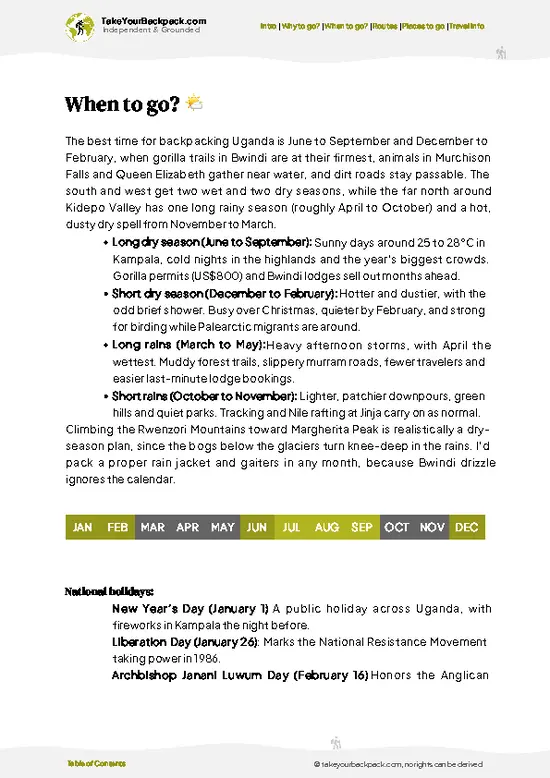
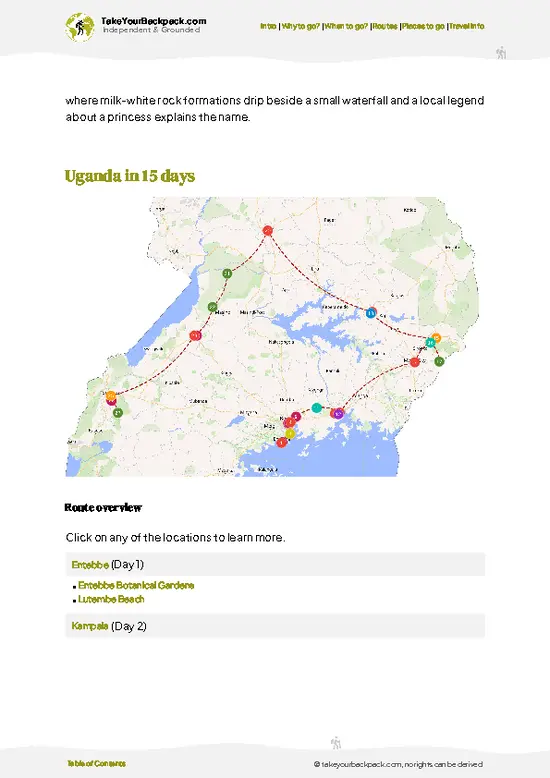
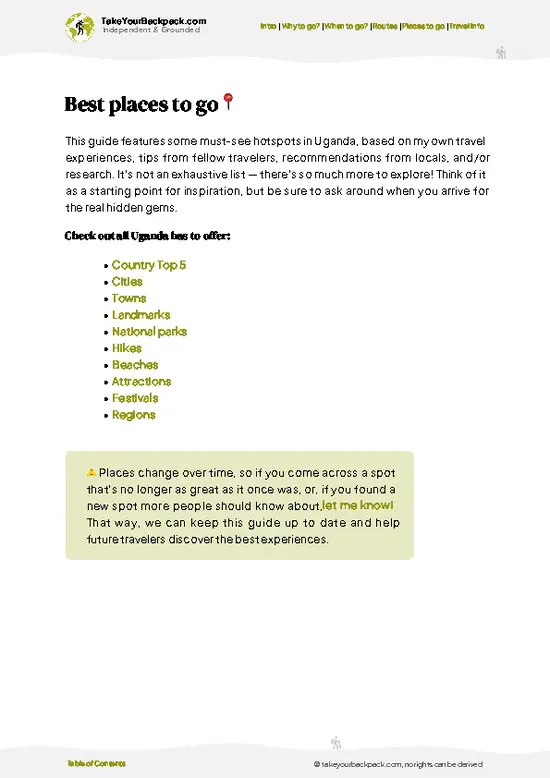
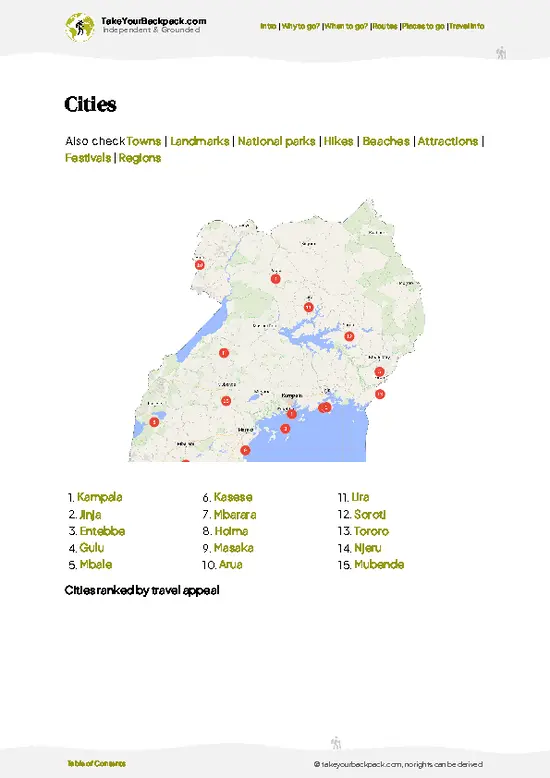
example page 0 from our offline Travel Guide for Uganda
example page 1 from our offline Travel Guide for Uganda
example page 2 from our offline Travel Guide for Uganda
example page 3 from our offline Travel Guide for Uganda
example page 4 from our offline Travel Guide for Uganda
example page 5 from our offline Travel Guide for Uganda
example page 6 from our offline Travel Guide for Uganda
example page 7 from our offline Travel Guide for Uganda
The digital guide (422 pages) contains:
109 highlights, ranked by travel appeal
Optimized 5, 10 & 15-day travel routes
Cities, national parks, landmarks, beaches
How to get around
Offline-friendly for travel without Wi-Fi
👉 Click to see all 30+ guide features

📅 Plan smarter in minutes, not weeks
Month by month travel advice
Festivals & national holidays
Budget expectations

🗺️ Go to the right places, skip the overrated ones
Honest pros & cons of destinations
Top hikes, parks & viewpoints
Lesser-known places most travelers miss
Clear “worth it vs skip it” guidance

🛏️ Travel smoothly without rookie mistakes
Best areas to stay
Transport systems explained simply
Common scams & safety advice
SIM cards, money & practical tips

🌍 Understand the country, not just visit it
Culture & traditions
52 Essential phrases & customs
Festivals worth planning around
Traveler-friendly historical context
Insights that make places more meaningful

📱 Built for real travel conditions
Fully downloadable PDF
Works completely offline
Optimized for phone use
Useful in remote areas & buses
Everything in one place
Save weeks of stressful planning
Get instant access to your full guide. 30‑day money-back guarantee.


By proceeding you agree to our terms.
Sent to your inbox immediately after payment • 100% Secure Checkout
Best Backpacking Travel Advisor 2025 tourism awardBest Backpacking
Travel Advisor
2025
What others say about Take Your Backpack Guides:
⭐⭐⭐⭐⭐
Fantastic, amazing amount of information!
⭐⭐⭐⭐⭐
My goodness this is amazing, it's what I've been looking for hats off too you!
⭐⭐⭐⭐⭐
I think this is absolutely BRILLIANT
⭐⭐⭐⭐
Very complete and informative. It's still missing places, but I gotta to commend you
⭐⭐⭐⭐⭐
This is truly amazing, thank you, can't wait to explore it with my kids!
⭐⭐⭐⭐⭐
Awesome resource, thank you!
⭐⭐⭐⭐⭐
This is amazing! Can't wait to explore the ones I haven't seen
⭐⭐⭐⭐
I love this! Well done, great idea.
⭐⭐⭐⭐⭐
Thanks for taking the time to make this gem!
⭐⭐⭐⭐⭐
This might be the best website I've ever seen.
⭐⭐⭐⭐⭐
Congratulations, and thank you so much for your work; it's incredibly valuable.
⭐⭐⭐⭐
In all seriousness I think you did a great job pointing out the important spots
⭐⭐⭐⭐⭐
10/10 very good
⭐⭐⭐⭐⭐
As someone who's only just starting to visit regularly this is awesome, thank you.
⭐⭐⭐⭐
Thank you very much! I'm going to visit my dad, it's going to be very useful!
⭐⭐⭐⭐⭐
This is really cool! We'll be travelling for the first time and this definitely come in handy.
⭐⭐⭐⭐⭐
You are now our minister of culture, congratulations 👨‍💼
⭐⭐⭐⭐⭐
Just wanted to tell you that this is a pearl! Going to follow your recommendations.
⭐⭐⭐⭐⭐
This is so cool. I'll definitely be using the resource for my travels soon.
⭐⭐⭐⭐⭐
This is very impressive! Good work.
⭐⭐⭐⭐⭐
This is an amazing and informative site. Very well done!

🛏️ Where to stay?How to pick the right area

Kanungu’s heart for backpackers pulses strongest near the town center, where the streets hum with local life and the air carries the earthy scent of fresh produce from nearby markets. This area is your best bet for safety and social energy—daylight spills into open courtyards where travelers swap stories over steaming cups of tea. Hostels here aren’t flashy, but they offer clean, simple dorms that make it easy to meet others without the touristy gloss. Venturing too far out risks losing that communal vibe and the convenience of walking to eateries or arranging local guides. Staying central means … read more 👉
Kanungu’s heart for backpackers pulses strongest near the town center, where the streets hum with local life and the air carries the earthy scent of fresh produce from nearby markets. This area is your best bet for safety and social energy—daylight spills into open courtyards where travelers swap stories over steaming cups of tea. Hostels here aren’t flashy, but they offer clean, simple dorms that make it easy to meet others without the touristy gloss. Venturing too far out risks losing that communal vibe and the convenience of walking to eateries or arranging local guides. Staying central means you’re plugged into Kanungu’s rhythm, where the genuine warmth of the people and the steady buzz of daily life create a backdrop that’s both grounding and inviting.

🚌 Getting aroundTransportation options and practical tips

Kanungu moves at its own rhythm—less a clockwork town and more a pulse you feel underfoot. The air carries the scent of damp earth and wood smoke, blending with the chatter of locals negotiating prices or sharing news. Time here isn’t a strict appointment but a flexible dance, where buses might leave early or late, and the best connections come from reading the mood of the market rather than a timetable. This isn’t a place for rigid schedules; it’s a place where patience and a keen eye unlock smoother travel.


  • Matatu minibuses: These are the lifeblood of Kanungu’s transit, darting through town and out to nearby villages. They start rolling around 6:30 AM and slow down by 6 PM. Fares hover around 1,000-2,000 UGX, making them the cheapest option. Expect a bumpy ride packed with locals, but
read more 👉
Kanungu moves at its own rhythm—less a clockwork town and more a pulse you feel underfoot. The air carries the scent of damp earth and wood smoke, blending with the chatter of locals negotiating prices or sharing news. Time here isn’t a strict appointment but a flexible dance, where buses might leave early or late, and the best connections come from reading the mood of the market rather than a timetable. This isn’t a place for rigid schedules; it’s a place where patience and a keen eye unlock smoother travel.


  • Matatu minibuses: These are the lifeblood of Kanungu’s transit, darting through town and out to nearby villages. They start rolling around 6:30 AM and slow down by 6 PM. Fares hover around 1,000-2,000 UGX, making them the cheapest option. Expect a bumpy ride packed with locals, but it’s the fastest way to cover short distances.

  • Boda-boda motorcycles: When time is tight or the road gets rough, boda-bodas are your go-to. They’re everywhere, ready to whisk you through narrow alleys or up steep hills. Prices vary but usually start at 2,000 UGX for short hops. Negotiate upfront—no meter here. The wind in your face and the smell of wet leaves make these rides memorable.

  • Walking: Kanungu’s compact center is best explored on foot. The uneven dirt streets and occasional mud puddles demand sturdy shoes, but walking lets you soak in the market’s colors, the calls of street vendors, and the scent of fresh produce. It’s the cheapest and most immersive way to navigate the town’s heartbeat.

  • Shared taxis: For trips beyond Kanungu, shared taxis offer a middle ground between matatus and private cars. They leave when full, usually between 7 AM and 5 PM, and cost around 10,000-15,000 UGX depending on the destination. They’re more comfortable but less frequent, so plan accordingly.

👛 Costs (as of 15 May 2026)Money, prices, and spending tips

Backpacking in Kanungu, Uganda, means embracing a pace where the air carries the scent of wet earth and the distant hum of village life sets your rhythm. Here’s what your daily costs will look like, grounded in the reality of local prices and the kind of travel that respects both your budget and the place.
  • Dorm Accommodation: Expect to pay around $5 to $10 per night for a basic dorm bed. Options are limited and rustic, often with mosquito nets and shared bathrooms. It’s not luxury, but it’s clean and gives you a chance to connect with other travelers or locals.
  • Meals: Local meals run about $2 to $4 each. Think fresh matoke (steamed plantains), beans, and rice, often cooked over wood fires. Street food snacks like roasted maize or samosas cost less than a dollar. Eating where locals eat is
read more 👉
Backpacking in Kanungu, Uganda, means embracing a pace where the air carries the scent of wet earth and the distant hum of village life sets your rhythm. Here’s what your daily costs will look like, grounded in the reality of local prices and the kind of travel that respects both your budget and the place.
  • Dorm Accommodation: Expect to pay around $5 to $10 per night for a basic dorm bed. Options are limited and rustic, often with mosquito nets and shared bathrooms. It’s not luxury, but it’s clean and gives you a chance to connect with other travelers or locals.
  • Meals: Local meals run about $2 to $4 each. Think fresh matoke (steamed plantains), beans, and rice, often cooked over wood fires. Street food snacks like roasted maize or samosas cost less than a dollar. Eating where locals eat is not just cheaper but more authentic.
  • Local Transport: Boda-bodas (motorcycle taxis) are the main way to get around, costing roughly $0.50 to $1 for short rides within town. For longer trips, shared minibuses might run $1 to $3 depending on distance. Walking is often the best way to soak in the atmosphere and save cash.
  • Basic Activities/Entry Fees: Kanungu is a gateway to Bwindi Impenetrable Forest, but permits for gorilla trekking are pricey (around $700+), so for budget travelers, local hikes or community visits cost about $5 to $10. These smaller excursions offer a meaningful glimpse into the region’s culture and landscape without breaking the bank.
  • Miscellaneous Expenses: Budget $1 to $3 for essentials like bottled water, phone credit, or a cup of tea at a roadside stall. These small costs add up but are manageable if you keep track.

All told, you’re looking at roughly $10 to $20 a day if you keep things simple and local. Kanungu isn’t about polished tourist infrastructure; it’s about the raw, tactile experience of rural Uganda. The modest daily budget reflects that—paying for the basics while you soak in the genuine atmosphere, where every shilling spent supports the community directly.


source: visituganda.com
⚠️ Prices can change and everyone travels differently, so take this as a rough guide. Hope it helps you plan your adventure!

🚌 Day tripsEasy escapes and nearby places

Kanungu is a backpacker’s dream base, offering easy access to some of Uganda’s most captivating experiences. The vibrant local culture and stunning landscapes make every day trip feel like a new adventure.

1. Bwindi Impenetrable National Park
Just a short drive from Kanungu, this UNESCO World Heritage site is a must for gorilla trekking. The thrill of encountering these majestic creatures in their natural habitat is unmatched. Expect to spend about 1.5 hours getting there, with trekking permits costing around $600. The best time to visit is during the dry seasons from June to September and December to February. A common rookie mistake? Underestimating the physical demands of the trek; prepare for steep, muddy trails.
👉 Explore Bwindi Impenetrable National Park

2. Lake Bunyonyi
A scenic … read more 👉
Kanungu is a backpacker’s dream base, offering easy access to some of Uganda’s most captivating experiences. The vibrant local culture and stunning landscapes make every day trip feel like a new adventure.

1. Bwindi Impenetrable National Park
Just a short drive from Kanungu, this UNESCO World Heritage site is a must for gorilla trekking. The thrill of encountering these majestic creatures in their natural habitat is unmatched. Expect to spend about 1.5 hours getting there, with trekking permits costing around $600. The best time to visit is during the dry seasons from June to September and December to February. A common rookie mistake? Underestimating the physical demands of the trek; prepare for steep, muddy trails.
👉 Explore Bwindi Impenetrable National Park

2. Lake Bunyonyi
A scenic 30-minute ride brings you to one of Africa’s deepest lakes. The serene waters are perfect for canoeing or simply soaking in the views. Budget around $10 for transport and a few dollars for canoe rentals. The dry season is ideal, but the lake’s beauty shines year-round. Many first-timers overlook the local villages; take a moment to explore and connect with the community.


3. Kisoro Town
About an hour from Kanungu, Kisoro offers a taste of local life and stunning views of the Virunga Mountains. Spend your day wandering the bustling market or hiking to the nearby hills for panoramic vistas. Expect to spend around $5 on transport and a few more for snacks. The best time to visit is during the dry months, but the vibrant market is alive year-round. Don’t miss the chance to chat with locals; they’re often eager to share stories.
Want to know what more Uganda offers?
The Uganda Travel Guide describes 109 highlights, from cities to national parks, from beaches to hikes

Get the Travel Guide -

🛡️ SafetyScams, Hazards, and Annoyances

Kanungu is generally safe, but staying aware enhances your experience. Stick to well-lit areas at night, especially around the market and bus station, where activity can dwindle. Solo travelers should blend in; avoid flashy gear that screams “tourist.”

Watch for common scams, like overly friendly locals offering unsolicited help that leads to inflated prices. Carry small bills for purchases to avoid awkward change situations. Keep your belongings close, especially in crowded spots. A confident demeanor goes a long way in navigating daily annoyances.

Other Ugandan towns near Kanungu

Explore more nearby:

  • Rukungiri—hilly terrain, market town, southwestern route| 19 km away
  • Kisoro—Virunga volcanoes, gorilla trekking base, border town| 45 km away
  • Kabale—Kigezi highlands, Lake Bunyonyi, terraced hills| 45 km away

💡 Not sure where to go next?
Create a personalized itinerary for Uganda including Kanungu and the places that fit your trip.

Generate my itinerary

👉 Discover all towns

Or checkout all Uganda has to offer (think cities, towns, villages, national parks, hikes, beaches, festivals)
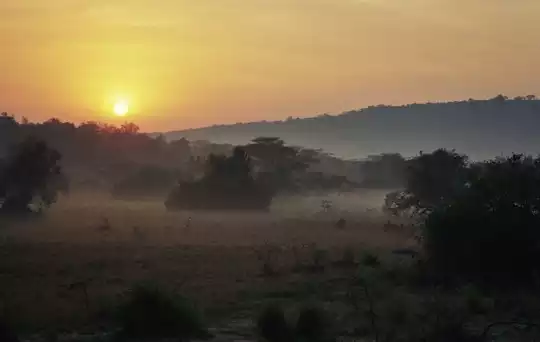
Country photo of Uganda

We 💚 feedbackParting advice and final tips

Kanungu’s charm lies in its raw, unfiltered connection to nature. The air is thick with the scent of earth after rain, and the sounds of wildlife are a constant reminder of your surroundings. Just know, the roads can be rough, so brace for a bumpy ride. It’s all part of the adventure.

✈️ When did I visit Uganda?
In September 2019 I have done a backpacking trip through Uganda. Seeing gorilla’s in the wild from up close was a pure unexpected highlight!

✍️ Help improve this page!
The information on this page is based on my own backpacking experience in Uganda, supplemented with up-to-date research and feedback from other travelers. Travel details can change, so if you notice anything outdated or incomplete, feel free to let me know.


🙋‍♂️ Give feedback

👋 Meet the founderWho’s Behind Take Your Backpack?

Johan, backpacker and founder of TakeYourBackpackHi, I’m Johan (Netherlands 🇳🇱), the creator of TakeYourBackpack. Over the past decade, I’ve backpacked through 80+ countries across six continents, gaining extensive experience with independent travel, long-term trips, and overland routes.

This site is built on a combination of firsthand travel experience and carefully curated insights from other backpackers. Many guides are based on places I’ve personally visited, while others bring together tips, observations, and practical advice shared by trusted travelers I’ve met along the way.

The goal is to provide realistic, experience-driven guidance — not generic itineraries — so you can explore destinations with better context, clearer expectations, and more confidence.

Get full Uganda guide •
Instant download • 109 highlights • Full Offline guide