×

Uganda🇺🇬 | townsKumiTeso heartland, weekly market, roadside town | things to do and best time to go

Explore NtungamoExplore Pallisa

Backpacking in Kumi
👍 Recommendedtown ranked #19
By Johan Kruseman 🇳🇱 | Updated June 11, 2026

Kumi, once a dusty crossroads where the red earth clung to your boots and the only soundtrack was the distant thrum of boda-bodas, now feels more like a practical pause than a destination. Tucked in eastern Uganda, north of Mbale and west of Soroti, it’s a town where backpackers swap the chaos of city markets for slow evenings and the scent of charcoal fires. You won’t find a buzzing hostel scene or Instagrammable cafés—just a handful of guesthouses, a lively central market, and the steady rhythm of local life. Kumi works best as a launchpad for exploring the wild wetlands of Lake Bisina or as a no-nonsense stopover between bigger draws. It’s cheaper and less hectic than Mbale, but less scenic too. Buses and matatus connect you easily, though you’ll need a boda for anything beyond the main strip. Safety is typical for rural Uganda—watch your bag, but relax. If you’re chasing nightlife or fellow travelers, keep moving; if you want a breather and a taste of small-town Uganda, Kumi delivers, quietly.

Discover everything you want to know in the 📖 Uganda Travel Guide.
Safety warning

The current risk level for Uganda is high. Check the advice before going.


Get your Uganda guide
109 ranked highlights, routes & tips, works offline (422 pages)
Loading the map 🌍
CLICK TO FILTER
cities
towns
landmarks
national parks
hikes
beaches
attractions
festivals
regions
SHOW COUNTRY’S BESTSHOW ALL

✨ Why go?
Ranked #19 town in Uganda
Why Kumi should be on your travel list

Kumi serves as a gateway for backpackers seeking both adventure and cultural immersion. Its proximity to stunning hikes and local beaches makes it a strategic stop. The small-scale hostels and guesthouses create a cozy atmosphere, perfect for solo travelers or small groups looking to connect. Streets are walkable, inviting you to explore local markets and sample authentic cuisine. While many pass through, a few linger to soak in the friendly vibe and engage with the community. If you’re a slow traveler or a hiker, Kumi offers a blend of convenience and charm that’s hard to resist.
Want to include Kumi in your Uganda route?
Create a personalized Uganda itinerary that includes Kumi and the places that fit your trip — based on your travel style, budget, and available time. Get your route in seconds.

Generate my trip

💡 HighlightsThe experiences that define the visit

  • Kumi Central Market — The real heartbeat of Kumi: a crowded, colorful market where local farmers sell fresh produce, roasted maize, matooke, and fish; a great spot for street-food, bargain mitumba (second-hand clothes), watching everyday Teso trade rituals, and candid street photography.
  • Kumi District Hospital — The main public health facility in town that offers a grounded look at community life: maternal and outpatient wards, public-health outreach programs, and the kind of grassroots healthcare delivery that tells you more about local social structure than any museum could.
Nyero Rock Paintings, Soroti Rock, and the Pian Upe Wildlife Reserve are all visitable day trips from Kumi — Nyero Rock Paintings is my personal favorite.
Spotted a mistake or missing something? Contact us.

Things to do near Kumi

Ratings based on Tripadvisor reviews. When you book through this link, you support our work at no extra cost to you.

🏘️ NeighborhoodsNeighborhood guide to Kumi

Kumi is a vibrant town that offers a blend of local culture and accessibility for backpackers. Here’s a breakdown of its key neighborhoods:

Central Kumi: This area buzzes with energy. It’s walkable, with markets and eateries lining the streets. Prices are reasonable, making it ideal for budget travelers. The nightlife is low-key, perfect for unwinding after a day of exploration. Short stays work well here due to its proximity to transport hubs.

Kumi Town Council: A quieter vibe prevails here. It’s less touristy, giving you a genuine feel of local life. Accommodations are affordable, and the area is safe for evening strolls. This is better for longer stays, as you can immerse yourself in the community.

Ngora Road: A bit further out, this area offers a mix of tranquility and accessibility. … read more 👉
Kumi is a vibrant town that offers a blend of local culture and accessibility for backpackers. Here’s a breakdown of its key neighborhoods:

Central Kumi: This area buzzes with energy. It’s walkable, with markets and eateries lining the streets. Prices are reasonable, making it ideal for budget travelers. The nightlife is low-key, perfect for unwinding after a day of exploration. Short stays work well here due to its proximity to transport hubs.

Kumi Town Council: A quieter vibe prevails here. It’s less touristy, giving you a genuine feel of local life. Accommodations are affordable, and the area is safe for evening strolls. This is better for longer stays, as you can immerse yourself in the community.

Ngora Road: A bit further out, this area offers a mix of tranquility and accessibility. It’s a short taxi ride from the center, making it easy to explore. Ideal for those seeking a peaceful retreat with the option to dive back into the hustle when desired.

⌛️ 1 daySeeing the highlights in 24 hours

Kumi, Uganda, is a vibrant town that pulses with local life, rich culture, and a sense of community often overlooked by travelers. Start your morning at the bustling Kumi Market, where the air is thick with the scent of fresh produce and spices. Engage with vendors selling everything from ripe bananas to handmade crafts. This is where you’ll feel the town’s heartbeat.

In the afternoon, head to the Kumi District Museum. It’s not on every tourist’s radar, but it offers a fascinating glimpse into the region’s history and traditions. The museum’s quiet atmosphere allows you to soak in stories of the local tribes, making it a rewarding stop.

As the sun begins to set, stroll through the serene Kumi Hill neighborhood. The golden light casts long shadows, and the views of the surrounding landscape … read more 👉
Kumi, Uganda, is a vibrant town that pulses with local life, rich culture, and a sense of community often overlooked by travelers. Start your morning at the bustling Kumi Market, where the air is thick with the scent of fresh produce and spices. Engage with vendors selling everything from ripe bananas to handmade crafts. This is where you’ll feel the town’s heartbeat.

In the afternoon, head to the Kumi District Museum. It’s not on every tourist’s radar, but it offers a fascinating glimpse into the region’s history and traditions. The museum’s quiet atmosphere allows you to soak in stories of the local tribes, making it a rewarding stop.

As the sun begins to set, stroll through the serene Kumi Hill neighborhood. The golden light casts long shadows, and the views of the surrounding landscape are breathtaking. Wrap up your day with dinner at a local eatery, savoring traditional Ugandan dishes like matoke and posho. The warmth of the people and the flavors of the food will leave you feeling connected to this hidden treasure.
Turn your Kumi visit into an Uganda adventure
Build a complete Uganda route with Kumi, hidden gems, must-see destinations, and realistic travel times included.

Generate my trip

🌤️ When to go?Weather, crowds, and seasonal trade-offs


  • Topic: Weather – Kumi’s dry season from December to February offers clear skies and manageable humidity, making trail conditions easier and less slippery than the wet months.

  • Topic: Temperature – Daytime highs hover around 28-32°C (82-90°F), cooling to 18-22°C (64-72°F) at night, so pack layers for comfort during chilly evenings.

  • Topic: Daylight Hours – Expect roughly 12 hours of daylight year-round, but the sun rises earlier and sets sooner in the rainy season, trimming your hiking window.

  • Topic: Crowds – Tourist traffic is low year-round, but the dry season draws more local visitors, so plan accordingly if you want solitude.

  • Topic: Seasonal Activities – Dry months are prime for exploring nearby wildlife reserves and cultural festivals, which often pause during heavy rains.

  • Topic:
read more 👉

  • Topic: Weather – Kumi’s dry season from December to February offers clear skies and manageable humidity, making trail conditions easier and less slippery than the wet months.

  • Topic: Temperature – Daytime highs hover around 28-32°C (82-90°F), cooling to 18-22°C (64-72°F) at night, so pack layers for comfort during chilly evenings.

  • Topic: Daylight Hours – Expect roughly 12 hours of daylight year-round, but the sun rises earlier and sets sooner in the rainy season, trimming your hiking window.

  • Topic: Crowds – Tourist traffic is low year-round, but the dry season draws more local visitors, so plan accordingly if you want solitude.

  • Topic: Seasonal Activities – Dry months are prime for exploring nearby wildlife reserves and cultural festivals, which often pause during heavy rains.

  • Topic: Price Fluctuations – Accommodation and transport costs rise slightly in the dry season due to demand; the wet season offers better deals but with trade-offs in accessibility.


Pro-tip: Aim for late dry season—February—when trails are firm, crowds thin, and the heat hasn’t peaked, giving you the best balance of comfort and adventure.


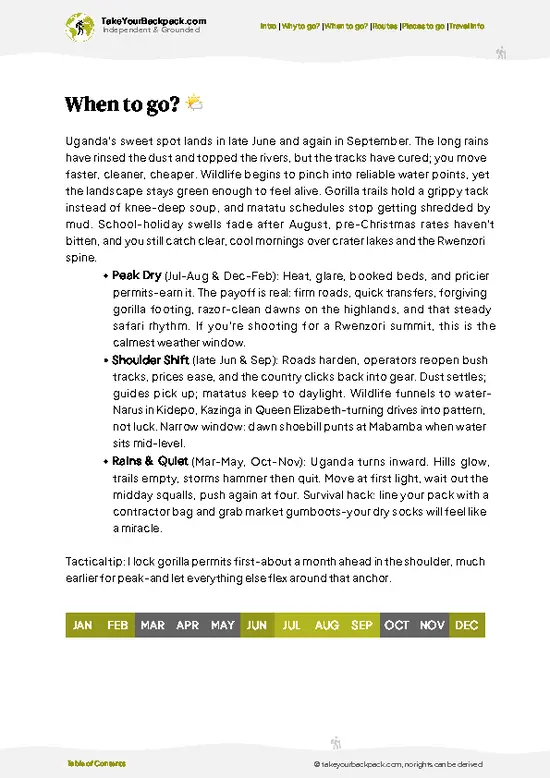
source: climatestotravel.comJANJanuary: highly recommended for travelingFEBFebruary: excellent for travelingMARMarch: fair for travelingAPRApril: fair for travelingMAYMay: good for travelingJUNJune: good for travelingJULJuly: good for travelingAUGAugust: good for travelingSEPSeptember: good for travelingOCTOctober: good for travelingNOVNovember: good for travelingDECDecember: highly recommended for traveling
when-to-go

✈️ The backpacker research shortcutUganda Travel Guide

An offline-friendly backpacking guide with optimized travel routes, ranked highlights, transport advice, and the best areas to stay.
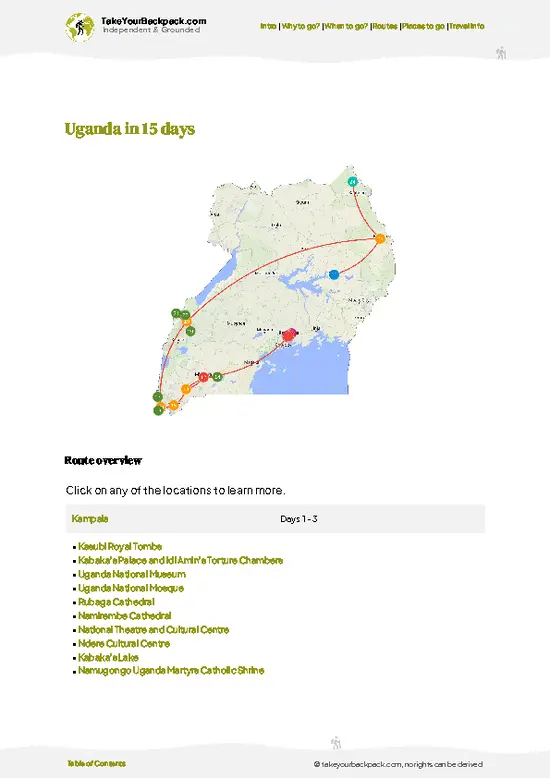
example page 0 from our offline Travel Guide for Uganda
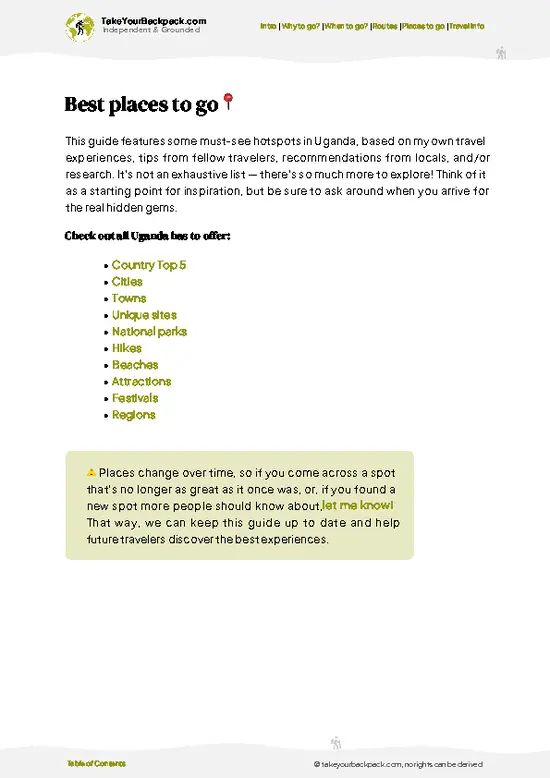
example page 1 from our offline Travel Guide for Uganda
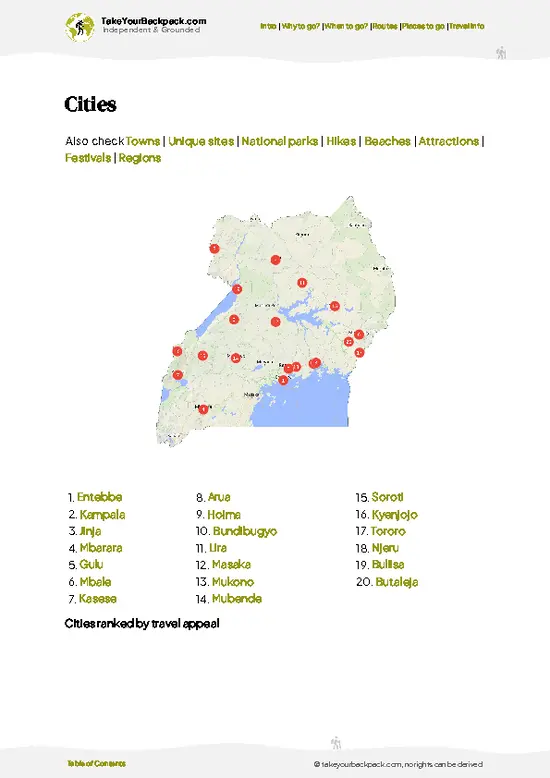
example page 2 from our offline Travel Guide for Uganda
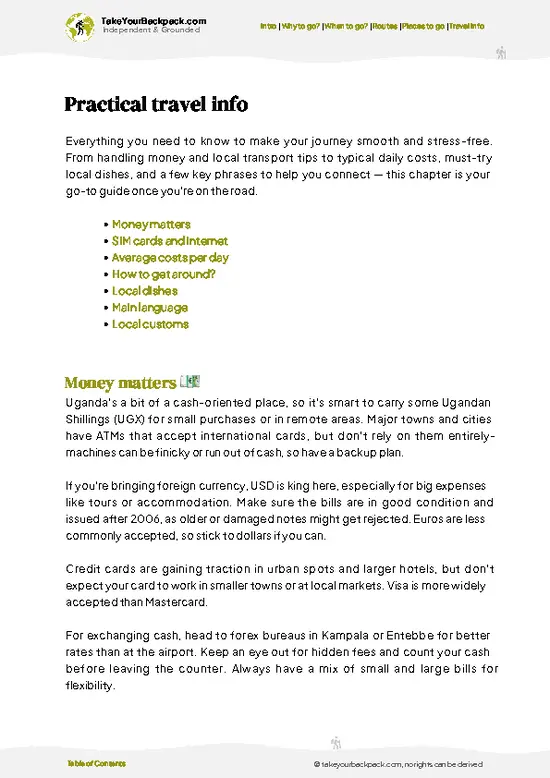
example page 3 from our offline Travel Guide for Uganda
example page 4 from our offline Travel Guide for Uganda
example page 5 from our offline Travel Guide for Uganda
example page 6 from our offline Travel Guide for Uganda
example page 7 from our offline Travel Guide for Uganda
The digital guide (422 pages) contains:
109 highlights, ranked by travel appeal
Optimized 5, 10 & 15-day travel routes
Cities, national parks, landmarks, beaches
How to get around
Offline-friendly for travel without Wi-Fi
👉 Click to see all 30+ guide features

📅 Plan smarter in minutes, not weeks
Month by month travel advice
Festivals & national holidays
Budget expectations

🗺️ Go to the right places, skip the overrated ones
Honest pros & cons of destinations
Top hikes, parks & viewpoints
Lesser-known places most travelers miss
Clear “worth it vs skip it” guidance

🛏️ Travel smoothly without rookie mistakes
Best areas to stay
Transport systems explained simply
Common scams & safety advice
SIM cards, money & practical tips

🌍 Understand the country, not just visit it
Culture & traditions
52 Essential phrases & customs
Festivals worth planning around
Traveler-friendly historical context
Insights that make places more meaningful

📱 Built for real travel conditions
Fully downloadable PDF
Works completely offline
Optimized for phone use
Useful in remote areas & buses
Everything in one place
Save weeks of stressful planning
Get instant access to your full guide. 30‑day money-back guarantee.


By proceeding you agree to our terms.
Sent to your inbox immediately after payment • 100% Secure Checkout
Best Backpacking Travel Advisor 2025 tourism awardBest Backpacking
Travel Advisor
2025
What others say about Take Your Backpack Guides:
⭐⭐⭐⭐⭐
Fantastic, amazing amount of information!
⭐⭐⭐⭐⭐
My goodness this is amazing, it's what I've been looking for hats off too you!
⭐⭐⭐⭐⭐
I think this is absolutely BRILLIANT
⭐⭐⭐⭐
Very complete and informative. It's still missing places, but I gotta to commend you
⭐⭐⭐⭐⭐
This is truly amazing, thank you, can't wait to explore it with my kids!
⭐⭐⭐⭐⭐
Awesome resource, thank you!
⭐⭐⭐⭐⭐
This is amazing! Can't wait to explore the ones I haven't seen
⭐⭐⭐⭐
I love this! Well done, great idea.
⭐⭐⭐⭐⭐
Thanks for taking the time to make this gem!
⭐⭐⭐⭐⭐
This might be the best website I've ever seen.
⭐⭐⭐⭐⭐
Congratulations, and thank you so much for your work; it's incredibly valuable.
⭐⭐⭐⭐
In all seriousness I think you did a great job pointing out the important spots
⭐⭐⭐⭐⭐
10/10 very good
⭐⭐⭐⭐⭐
As someone who's only just starting to visit regularly this is awesome, thank you.
⭐⭐⭐⭐
Thank you very much! I'm going to visit my dad, it's going to be very useful!
⭐⭐⭐⭐⭐
This is really cool! We'll be travelling for the first time and this definitely come in handy.
⭐⭐⭐⭐⭐
You are now our minister of culture, congratulations 👨‍💼
⭐⭐⭐⭐⭐
Just wanted to tell you that this is a pearl! Going to follow your recommendations.
⭐⭐⭐⭐⭐
This is so cool. I'll definitely be using the resource for my travels soon.
⭐⭐⭐⭐⭐
This is very impressive! Good work.
⭐⭐⭐⭐⭐
This is an amazing and informative site. Very well done!

🛏️ Where to stay?Best areas to stay in Uganda

In Kumi, the best spot for backpackers is the town center area around the main market and bus stage. This neighborhood hums with life from dawn till dusk—vendors shouting, the scent of fresh matoke and roasting meat in the air. It’s where you’ll find the most budget-friendly hostels packed with solo travelers swapping stories over shared meals. Safety here feels tangible; the streets are busy enough to keep you grounded but not overwhelming. Compared to quieter residential zones, staying near the market means instant access to local transport and a social vibe that makes solo travel less lonely. … read more 👉
In Kumi, the best spot for backpackers is the town center area around the main market and bus stage. This neighborhood hums with life from dawn till dusk—vendors shouting, the scent of fresh matoke and roasting meat in the air. It’s where you’ll find the most budget-friendly hostels packed with solo travelers swapping stories over shared meals. Safety here feels tangible; the streets are busy enough to keep you grounded but not overwhelming. Compared to quieter residential zones, staying near the market means instant access to local transport and a social vibe that makes solo travel less lonely. It’s the practical heart of Kumi, where convenience meets community.

🚌 Getting aroundHow to get around Kumi

Kumi moves at the pace of the sun climbing over its dusty rooftops—steady, unhurried, but never lazy. The town’s rhythm isn’t dictated by clocks but by the ebb and flow of daily life: market stalls opening as the air warms, motorbikes buzzing like persistent flies, and the occasional burst of laughter from a roadside tea spot. It’s a place where plans flex with the weather and the mood of the street, so your best bet is to lean into its organic pulse rather than fight it.


  • Walking: The heart of Kumi is compact enough to explore on foot, with dusty lanes and shaded alleys revealing local life up close. Walking costs nothing and lets you soak in the scent of roasting maize and hear the chatter of vendors—ideal for budget travelers who want to feel the town’s texture.

  • Boda-boda (Motorcycle
read more 👉
Kumi moves at the pace of the sun climbing over its dusty rooftops—steady, unhurried, but never lazy. The town’s rhythm isn’t dictated by clocks but by the ebb and flow of daily life: market stalls opening as the air warms, motorbikes buzzing like persistent flies, and the occasional burst of laughter from a roadside tea spot. It’s a place where plans flex with the weather and the mood of the street, so your best bet is to lean into its organic pulse rather than fight it.


  • Walking: The heart of Kumi is compact enough to explore on foot, with dusty lanes and shaded alleys revealing local life up close. Walking costs nothing and lets you soak in the scent of roasting maize and hear the chatter of vendors—ideal for budget travelers who want to feel the town’s texture.

  • Boda-boda (Motorcycle Taxi): These are everywhere, darting through traffic with nimble ease. Fares start low but always negotiate upfront. They run from dawn until late evening, perfect for quick hops across town or to nearby villages, though hold on tight—the ride is bumpy but fast.

  • Minibus Taxi: Shared minibuses connect Kumi to larger hubs like Soroti and Mbale. They leave when full, so timing is flexible but unpredictable. Tickets are cheap, and the ride offers a window into rural life, though expect crowding and frequent stops.

  • Bicycle Rental: For those wanting more control, renting a bicycle is a solid option. It’s slower than a boda-boda but quieter and lets you explore outskirts at your own pace. Rentals are affordable and available from local shops near the market.

👛 Costs (as of 18 May 2026)What things cost and how to budget

Backpacking in Kumi, Uganda, offers a raw, authentic experience where your money stretches further than in more tourist-heavy spots, but you still need to know where to spend smartly.
  • Dorm Accommodation: Expect to pay around $5 to $10 per night for a basic dorm bed. These are usually simple, clean guesthouses or hostels with mosquito nets and shared bathrooms. The lighting is often soft and warm, sometimes flickering with the power cuts common in the area, so bring a headlamp.
  • Meals: Local meals run about $2 to $4 each. Street food and small local eateries serve up hearty staples like posho, beans, and fried fish, often accompanied by fresh greens. The aroma of charcoal fires and spices fills the air, making even the simplest meal feel grounded in place.
  • Local Transport: Boda-bodas (motorcycle
read more 👉
Backpacking in Kumi, Uganda, offers a raw, authentic experience where your money stretches further than in more tourist-heavy spots, but you still need to know where to spend smartly.
  • Dorm Accommodation: Expect to pay around $5 to $10 per night for a basic dorm bed. These are usually simple, clean guesthouses or hostels with mosquito nets and shared bathrooms. The lighting is often soft and warm, sometimes flickering with the power cuts common in the area, so bring a headlamp.
  • Meals: Local meals run about $2 to $4 each. Street food and small local eateries serve up hearty staples like posho, beans, and fried fish, often accompanied by fresh greens. The aroma of charcoal fires and spices fills the air, making even the simplest meal feel grounded in place.
  • Local Transport: Boda-bodas (motorcycle taxis) are the go-to, costing roughly $0.50 to $1.50 for short rides within town. The wind and dust hit your face as you zip through narrow streets, a quick and lively way to get around. For longer trips, shared minibuses cost about $1 to $3.
  • Basic Activities/Entry Fees: Kumi isn’t a hotspot for pricey tourist attractions, but local markets and cultural visits might have small fees around $1 to $3. These experiences are more about soaking in daily life than ticking off sights, so budget accordingly.
  • Miscellaneous Expenses: Water, snacks, and occasional phone top-ups add another $1 to $3 daily. Bottled water is essential due to limited safe tap water, and the crisp clink of the plastic bottle is a small comfort in the heat.

Altogether, you’re looking at roughly $10 to $20 per day to cover the essentials in Kumi. It’s a modest sum that buys you a genuine slice of Ugandan life without gloss or pretense. Keep cash handy, as card payments are rare, and embrace the slower pace—this is where the real rhythm of the place reveals itself.


source: visituganda.com
⚠️ Prices can change and everyone travels differently, so take this as a rough guide. Hope it helps you plan your adventure!

🚌 Day tripsWhere to go beyond the main area

Kumi, Uganda, is a backpacker’s dream base for day trips, offering a blend of culture, nature, and adventure.

Mount Elgon National Park
Just a couple of hours from Kumi, this park is a treasure trove of biodiversity. The air is crisp, filled with the earthy scent of damp soil and wildflowers. You can hike the Sasa Trail for stunning views and a chance to spot rare birds. Expect to spend around $10 for park entry and transport. The best time to visit is during the dry season from June to August, when trails are more accessible. A common mistake? Underestimating the trail’s difficulty; pack plenty of water and snacks.
👉 Explore Mount Elgon National Park

Ngora Farms
A short drive away, Ngora Farms offers a unique glimpse into local agriculture. You’ll wander through lush fields, learning … read more 👉
Kumi, Uganda, is a backpacker’s dream base for day trips, offering a blend of culture, nature, and adventure.

Mount Elgon National Park
Just a couple of hours from Kumi, this park is a treasure trove of biodiversity. The air is crisp, filled with the earthy scent of damp soil and wildflowers. You can hike the Sasa Trail for stunning views and a chance to spot rare birds. Expect to spend around $10 for park entry and transport. The best time to visit is during the dry season from June to August, when trails are more accessible. A common mistake? Underestimating the trail’s difficulty; pack plenty of water and snacks.
👉 Explore Mount Elgon National Park

Ngora Farms
A short drive away, Ngora Farms offers a unique glimpse into local agriculture. You’ll wander through lush fields, learning about traditional farming practices while enjoying the sweet smell of ripe fruits. Tours typically cost about $5, and you can easily spend half a day here. The best time to visit is early morning to catch the farmers at work. Many first-timers miss the chance to engage with locals; don’t be shy—ask questions!


Lake Kyoga
About an hour from Kumi, Lake Kyoga is perfect for a relaxing day. The shimmering water reflects the sky, and the gentle lapping of waves is soothing. You can rent a canoe for around $10 and paddle among the papyrus reeds. The dry season is ideal for birdwatching, especially from December to February. A common pitfall? Forgetting sunscreen; the sun can be fierce out on the water.
Want to know what more Uganda offers?
The Uganda Travel Guide describes 109 highlights, from cities to national parks, from beaches to hikes

Get the Travel Guide -

🛡️ SafetyTraveler Safety Guide

Kumi is generally safe, but awareness is key. Stick to well-lit areas after dark, especially if you’re solo. The local market can be bustling, and while most vendors are friendly, keep an eye on your belongings; pickpockets can blend in easily.

Be cautious with offers for guided tours—some may inflate prices or lead you to less interesting spots. Trust your instincts; if something feels off, it probably is. Carry yourself confidently, engage with locals, and you’ll find the experience rewarding.

Other Ugandan towns near Kumi

Explore more nearby:

  • Bukedea—Teso plains, market center, roadside stop| 20 km away
  • Pallisa—wetland lakes, rice fields, rural crossroads| 43 km away
  • Kapchorwa—Sipi Falls, Sebei culture, mountain views| 58 km away

💡 Not sure where to go next?
Create a personalized itinerary for Uganda including Kumi and the places that fit your trip.

Generate my itinerary

👉 Discover all towns

Or checkout all Uganda has to offer (think cities, towns, villages, national parks, hikes, beaches, festivals)
Country photo of Uganda

We 💚 feedbackFinal thoughts on visiting Kumi

Kumi’s charm lies in its vibrant local markets, where the air buzzes with laughter and the scent of fresh produce fills your lungs. But be ready for the heat; it can be relentless. Embrace it, and you’ll find the warmth of the people matches the sun.

✈️ When did I visit Uganda?
In September 2019 I have done a backpacking trip through Uganda. Seeing gorilla’s in the wild from up close was a pure unexpected highlight!

✍️ Help improve this page!
The information on this page is based on my own backpacking experience in Uganda, supplemented with up-to-date research and feedback from other travelers. Travel details can change, so if you notice anything outdated or incomplete, feel free to let me know.


🙋‍♂️ Give feedback

👋 Meet the founderWho’s Behind Take Your Backpack?

Johan, backpacker and founder of TakeYourBackpackHi, I’m Johan (Netherlands 🇳🇱), the creator of TakeYourBackpack. Over the past decade, I’ve backpacked through 80+ countries across six continents, gaining extensive experience with independent travel, long-term trips, and overland routes.

This site is built on a combination of firsthand travel experience and carefully curated insights from other backpackers. Many guides are based on places I’ve personally visited, while others bring together tips, observations, and practical advice shared by trusted travelers I’ve met along the way.

The goal is to provide realistic, experience-driven guidance — not generic itineraries — so you can explore destinations with better context, clearer expectations, and more confidence.

Get full Uganda guide •
Instant download • 109 highlights • Full Offline guide