×

Uganda🇺🇬 | citiesMukonouniversity town, forest reserves, commuter links | things to do and best time to go

Explore TororoExplore Njeru

Backpacking in Mukono
👍 Recommendedcity ranked #11
By Johan Kruseman 🇳🇱 | Updated June 10, 2026

Most travelers skip Mukono, assuming it’s just a commuter town for Kampala, but here’s the twist: Mukono’s university scene gives it a pulse you won’t find in most Ugandan towns its size. Tucked along the main road east of Kampala, Mukono is a crossroads—literally and socially. You’ll find cheap eats, a lively market, and the odd colonial relic, but don’t expect a museum crawl or postcard parks. The nightlife is surprisingly energetic, fueled by students, but you’ll work to find fellow backpackers—this isn’t Jinja or Entebbe. It’s affordable, safe by Ugandan standards, and refreshingly hassle-free, but it’s the everyday Ugandan vibe, not tourist gloss, that makes Mukono worth a stop if you’re curious about real local life.

Discover everything you want to know in the 📖 Uganda Travel Guide.
Safety warning

The current risk level for Uganda is high. Check the advice before going.


Get your Uganda guide
109 ranked highlights, routes & tips, works offline (422 pages)
Loading the map 🌍
CLICK TO FILTER
cities
towns
landmarks
national parks
hikes
beaches
attractions
festivals
regions
SHOW COUNTRY’S BESTSHOW ALL

✨ Why go?
Ranked #11 city in Uganda
Reasons people choose to visit here

Mukono is a strategic stop for backpackers weaving through Uganda. It’s not just a place to pass through; it’s a basecamp for day trips to nearby highlights. The affordable hostels here offer a cozy vibe without breaking the bank, making it easy to meet fellow travelers. You’ll find a variety of local food options that won’t empty your wallet, from street vendors to casual eateries. The city is walkable, allowing you to soak in the local atmosphere without the hassle of transport.

When the sun sets, the nightlife is low-key but lively, perfect for unwinding after a day of exploration. Plus, Mukono’s location means easy onward travel to other destinations, whether you’re heading to Kampala or deeper into the countryside. If you’re looking for a blend of comfort and value, Mukono fits the … read more 👉
Mukono is a strategic stop for backpackers weaving through Uganda. It’s not just a place to pass through; it’s a basecamp for day trips to nearby highlights. The affordable hostels here offer a cozy vibe without breaking the bank, making it easy to meet fellow travelers. You’ll find a variety of local food options that won’t empty your wallet, from street vendors to casual eateries. The city is walkable, allowing you to soak in the local atmosphere without the hassle of transport.

When the sun sets, the nightlife is low-key but lively, perfect for unwinding after a day of exploration. Plus, Mukono’s location means easy onward travel to other destinations, whether you’re heading to Kampala or deeper into the countryside. If you’re looking for a blend of comfort and value, Mukono fits the bill, making it more than just a pit stop on your journey.
Want to include Mukono in your Uganda route?
Create a personalized Uganda itinerary that includes Mukono and the places that fit your trip — based on your travel style, budget, and available time. Get your route in seconds.

Generate my trip

💡 HighlightsMust-see experiences and standout moments

  • Uganda Christian University (UCU) — Mukono main campus: A lively, walkable campus with colonial-era stone buildings, a striking chapel, student-run shops and events that give a real feel for contemporary Ugandan student life and local culture.
  • Mukono Central Market: The busiest pulse of the town — mountains of produce, fresh fish and street food stalls, cloth and craftsmen stalls; perfect for people-watching, tasting local snacks, and picking up inexpensive souvenirs.
  • Mukono Railway Station: The historic stop on the Kampala-Jinja rail corridor — a tangible piece of transport history where you can see the old platform, rail infrastructure and local freight and passenger activity for a grounded sense of the town’s place on Uganda’s transport map.
  • Mukono Taxi/Bus Park (Central Park): The
read more 👉
  • Uganda Christian University (UCU) — Mukono main campus: A lively, walkable campus with colonial-era stone buildings, a striking chapel, student-run shops and events that give a real feel for contemporary Ugandan student life and local culture.
  • Mukono Central Market: The busiest pulse of the town — mountains of produce, fresh fish and street food stalls, cloth and craftsmen stalls; perfect for people-watching, tasting local snacks, and picking up inexpensive souvenirs.
  • Mukono Railway Station: The historic stop on the Kampala-Jinja rail corridor — a tangible piece of transport history where you can see the old platform, rail infrastructure and local freight and passenger activity for a grounded sense of the town’s place on Uganda’s transport map.
  • Mukono Taxi/Bus Park (Central Park): The transport hub where minibuses and boda-bodas converge — noisy, efficient and revealing of daily life in Mukono; great for observing local routines, trying roadside eats, and catching onward connections to neighborhoods and nearby attractions.
Nearby day-trip highlights include Mabira Forest Reserve, Sezibwa Falls, the Namugongo Martyrs Shrine and Jinja (Source of the Nile); Mabira Forest is my personal favorite.
Spotted a mistake or missing something? Contact us.

Things to do near Mukono

Ratings based on Tripadvisor reviews. When you book through this link, you support our work at no extra cost to you.

🏘️ NeighborhoodsKey areas and districts to know

Mukono is a vibrant hub that offers a mix of local culture and accessibility for backpackers. Here’s how the neighborhoods stack up:

Central Mukono: This area is the heartbeat of the city. It’s bustling with markets and street food stalls, making it perfect for those who want to dive into local life. Costs are moderate, and you can easily walk to most attractions. Nightlife is lively but not overwhelming, ideal for short stays.

Naalya: A bit more upscale, Naalya offers a quieter vibe with cozy cafes and restaurants. It’s a great spot for longer stays if you prefer a more relaxed atmosphere. Transport options are good, but you might need to rely on taxis for late-night outings. Prices can be higher, but the comfort level is worth it.

Bugujju: This neighborhood is more residential and less … read more 👉
Mukono is a vibrant hub that offers a mix of local culture and accessibility for backpackers. Here’s how the neighborhoods stack up:

Central Mukono: This area is the heartbeat of the city. It’s bustling with markets and street food stalls, making it perfect for those who want to dive into local life. Costs are moderate, and you can easily walk to most attractions. Nightlife is lively but not overwhelming, ideal for short stays.

Naalya: A bit more upscale, Naalya offers a quieter vibe with cozy cafes and restaurants. It’s a great spot for longer stays if you prefer a more relaxed atmosphere. Transport options are good, but you might need to rely on taxis for late-night outings. Prices can be higher, but the comfort level is worth it.

Bugujju: This neighborhood is more residential and less touristy, giving you an authentic Ugandan experience. It’s walkable, but you’ll need to plan for transport to reach main attractions. Costs are lower, making it suitable for budget travelers. The nightlife is minimal, perfect for those seeking peace.

Mpoma: A bit off the beaten path, Mpoma is for the adventurous. It’s less developed, so expect to sacrifice some comfort for authenticity. Costs are low, but transport can be tricky. Ideal for longer stays if you want to immerse yourself in local life.

⌛️ 1 daySeeing the highlights in 24 hours

Mukono, Uganda, is a vibrant city that often flies under the radar, yet it’s brimming with local culture and charm. Just a short drive from Kampala, it offers a refreshing escape from the hustle and bustle of the capital. The streets are alive with the sounds of vendors, laughter, and the occasional boda boda zipping by.

Start your morning at the Mukono Market. The aroma of fresh produce fills the air as you navigate through stalls brimming with colorful fruits and vegetables. Grab a few ripe bananas and a cup of local coffee to fuel your day. Engage with the friendly vendors; they love sharing stories about their goods and the community.

In the afternoon, head to the nearby Lake Victoria. It’s a perfect spot for a leisurely stroll along the shore. If you’re feeling adventurous, rent a canoe … read more 👉
Mukono, Uganda, is a vibrant city that often flies under the radar, yet it’s brimming with local culture and charm. Just a short drive from Kampala, it offers a refreshing escape from the hustle and bustle of the capital. The streets are alive with the sounds of vendors, laughter, and the occasional boda boda zipping by.

Start your morning at the Mukono Market. The aroma of fresh produce fills the air as you navigate through stalls brimming with colorful fruits and vegetables. Grab a few ripe bananas and a cup of local coffee to fuel your day. Engage with the friendly vendors; they love sharing stories about their goods and the community.

In the afternoon, head to the nearby Lake Victoria. It’s a perfect spot for a leisurely stroll along the shore. If you’re feeling adventurous, rent a canoe and paddle out to experience the lake from a different perspective. The tranquility here is a welcome contrast to the market’s buzz. Don’t miss the chance to visit the nearby Namasumbi, a lesser-known village where you can witness traditional crafts and perhaps even join a local workshop.

As the sun begins to set, make your way to the Mukono Hill. The view from the top is breathtaking, especially as the sky transforms into shades of orange and pink. It’s a fantastic place to reflect on your day. For dinner, find a local eatery serving matoke and grilled tilapia. The flavors are authentic, and the atmosphere is warm and inviting.

This day in Mukono isn’t just about ticking boxes; it’s about immersing yourself in the local rhythm and savoring every moment.
Turn your Mukono visit into an Uganda adventure
Build a complete Uganda route with Mukono, hidden gems, must-see destinations, and realistic travel times included.

Generate my trip

🌤️ When to go?When to go for the best experience


  • Topic: Weather – Mukono experiences a tropical climate with two rainy seasons: March to May and September to November. The dry months, especially December to February and June to August, offer more reliable sunshine and less mud, making trekking and outdoor activities smoother.

  • Topic: Temperature – Temperatures hover between 20°C and 28°C (68°F to 82°F) year-round, but the dry season feels more comfortable with lower humidity. The rainy season can feel hotter and stickier, which might drain your energy faster on the trail.

  • Topic: Daylight Hours – Near the equator, Mukono enjoys roughly 12 hours of daylight year-round, so no need to rush your daily plans based on fading light.

  • Topic: Crowds – Tourist traffic peaks during the dry season, especially December and January. If you prefer
read more 👉

  • Topic: Weather – Mukono experiences a tropical climate with two rainy seasons: March to May and September to November. The dry months, especially December to February and June to August, offer more reliable sunshine and less mud, making trekking and outdoor activities smoother.

  • Topic: Temperature – Temperatures hover between 20°C and 28°C (68°F to 82°F) year-round, but the dry season feels more comfortable with lower humidity. The rainy season can feel hotter and stickier, which might drain your energy faster on the trail.

  • Topic: Daylight Hours – Near the equator, Mukono enjoys roughly 12 hours of daylight year-round, so no need to rush your daily plans based on fading light.

  • Topic: Crowds – Tourist traffic peaks during the dry season, especially December and January. If you prefer fewer people and more local interaction, aim for shoulder months like February or June.

  • Topic: Seasonal Activities – Dry months are prime for hiking, wildlife spotting, and cultural festivals. Rainy seasons limit outdoor options but bring lush landscapes and fewer tourists.

  • Topic: Price Fluctuations – Accommodation and tours spike in the dry season due to demand. Traveling in the rainy season can save you 20-30%, but expect some trade-offs in comfort and accessibility.


Pro-tip: Balance your timing by targeting early dry season months—less crowd, decent weather, and better prices—turning logistics into your advantage.


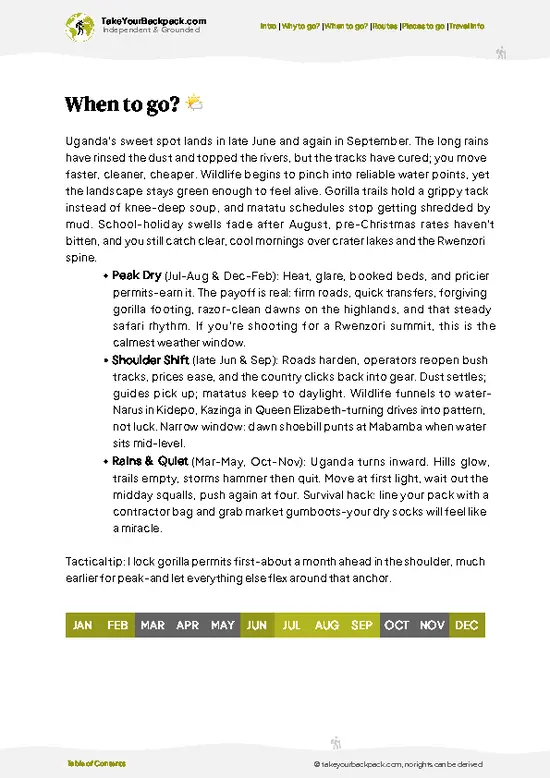
source: climatestotravel.comJANJanuary: highly recommended for travelingFEBFebruary: highly recommended for travelingMARMarch: fair for travelingAPRApril: fair for travelingMAYMay: fair for travelingJUNJune: highly recommended for travelingJULJuly: excellent for travelingAUGAugust: excellent for travelingSEPSeptember: fair for travelingOCTOctober: fair for travelingNOVNovember: fair for travelingDECDecember: highly recommended for traveling
when-to-go

✈️ The backpacker research shortcutUganda Travel Guide

An offline-friendly backpacking guide with optimized travel routes, ranked highlights, transport advice, and the best areas to stay.
example page 0 from our offline Travel Guide for Uganda
example page 1 from our offline Travel Guide for Uganda
example page 2 from our offline Travel Guide for Uganda
example page 3 from our offline Travel Guide for Uganda
example page 4 from our offline Travel Guide for Uganda
example page 5 from our offline Travel Guide for Uganda
example page 6 from our offline Travel Guide for Uganda
example page 7 from our offline Travel Guide for Uganda
The digital guide (422 pages) contains:
109 highlights, ranked by travel appeal
Optimized 5, 10 & 15-day travel routes
Cities, national parks, landmarks, beaches
How to get around
Offline-friendly for travel without Wi-Fi
👉 Click to see all 30+ guide features

📅 Plan smarter in minutes, not weeks
Month by month travel advice
Festivals & national holidays
Budget expectations

🗺️ Go to the right places, skip the overrated ones
Honest pros & cons of destinations
Top hikes, parks & viewpoints
Lesser-known places most travelers miss
Clear “worth it vs skip it” guidance

🛏️ Travel smoothly without rookie mistakes
Best areas to stay
Transport systems explained simply
Common scams & safety advice
SIM cards, money & practical tips

🌍 Understand the country, not just visit it
Culture & traditions
52 Essential phrases & customs
Festivals worth planning around
Traveler-friendly historical context
Insights that make places more meaningful

📱 Built for real travel conditions
Fully downloadable PDF
Works completely offline
Optimized for phone use
Useful in remote areas & buses
Everything in one place
Save weeks of stressful planning
Get instant access to your full guide. 30‑day money-back guarantee.


By proceeding you agree to our terms.
Sent to your inbox immediately after payment • 100% Secure Checkout
Best Backpacking Travel Advisor 2025 tourism awardBest Backpacking
Travel Advisor
2025
What others say about Take Your Backpack Guides:
⭐⭐⭐⭐⭐
Fantastic, amazing amount of information!
⭐⭐⭐⭐⭐
My goodness this is amazing, it's what I've been looking for hats off too you!
⭐⭐⭐⭐⭐
I think this is absolutely BRILLIANT
⭐⭐⭐⭐
Very complete and informative. It's still missing places, but I gotta to commend you
⭐⭐⭐⭐⭐
This is truly amazing, thank you, can't wait to explore it with my kids!
⭐⭐⭐⭐⭐
Awesome resource, thank you!
⭐⭐⭐⭐⭐
This is amazing! Can't wait to explore the ones I haven't seen
⭐⭐⭐⭐
I love this! Well done, great idea.
⭐⭐⭐⭐⭐
Thanks for taking the time to make this gem!
⭐⭐⭐⭐⭐
This might be the best website I've ever seen.
⭐⭐⭐⭐⭐
Congratulations, and thank you so much for your work; it's incredibly valuable.
⭐⭐⭐⭐
In all seriousness I think you did a great job pointing out the important spots
⭐⭐⭐⭐⭐
10/10 very good
⭐⭐⭐⭐⭐
As someone who's only just starting to visit regularly this is awesome, thank you.
⭐⭐⭐⭐
Thank you very much! I'm going to visit my dad, it's going to be very useful!
⭐⭐⭐⭐⭐
This is really cool! We'll be travelling for the first time and this definitely come in handy.
⭐⭐⭐⭐⭐
You are now our minister of culture, congratulations 👨‍💼
⭐⭐⭐⭐⭐
Just wanted to tell you that this is a pearl! Going to follow your recommendations.
⭐⭐⭐⭐⭐
This is so cool. I'll definitely be using the resource for my travels soon.
⭐⭐⭐⭐⭐
This is very impressive! Good work.
⭐⭐⭐⭐⭐
This is an amazing and informative site. Very well done!

🛏️ Where to stay?How to pick the right area

Mukono’s backpacker sweet spot is the town center and its immediate surroundings. This area strikes the right balance between safety, social buzz, and budget options. It’s where you’ll find the most hostels catering to solo travelers and small groups, making it easy to connect without the forced vibe of tourist traps. The streets here hum with local life—markets, street food stalls, and small cafés—offering a genuine slice of Ugandan daily rhythm without veering into sketchy territory.

Venture too far out, and you lose that social pulse; neighborhoods become quieter, less walkable, and public … read more 👉
Mukono’s backpacker sweet spot is the town center and its immediate surroundings. This area strikes the right balance between safety, social buzz, and budget options. It’s where you’ll find the most hostels catering to solo travelers and small groups, making it easy to connect without the forced vibe of tourist traps. The streets here hum with local life—markets, street food stalls, and small cafés—offering a genuine slice of Ugandan daily rhythm without veering into sketchy territory.

Venture too far out, and you lose that social pulse; neighborhoods become quieter, less walkable, and public transport options thin out. Plus, fewer budget accommodations mean you either pay more or compromise on comfort. Staying near the center means you’re never far from transport links to Kampala or the nearby Lake Victoria, which is a huge plus for day trips or onward travel. In Mukono, location isn’t just about convenience—it’s your gateway to both safety and the authentic, budget-friendly vibe every backpacker craves.

🚌 Getting aroundGetting around like a local

Mukono moves at its own rhythm—neither a frantic rush nor a slow crawl, but a pulse that blends the predictability of schedules with the improvisation of local hustle. Here, time is a flexible currency. You’ll find that buses and matatus (shared minibuses) don’t always stick to the clock, but they run often enough that waiting too long is rarely a problem. The city’s flow rewards those who read the subtle cues: a gathering crowd, a driver revving the engine, a vendor calling out. It’s a dance between structure and spontaneity, where your choices about time, money, and comfort shape the entire experience.


  • Walking: The ultimate budget option. Mukono’s compact center makes walking not just free but a chance to soak in street life. Expect to cover 2-3 km in 30-45 minutes, depending on your
read more 👉
Mukono moves at its own rhythm—neither a frantic rush nor a slow crawl, but a pulse that blends the predictability of schedules with the improvisation of local hustle. Here, time is a flexible currency. You’ll find that buses and matatus (shared minibuses) don’t always stick to the clock, but they run often enough that waiting too long is rarely a problem. The city’s flow rewards those who read the subtle cues: a gathering crowd, a driver revving the engine, a vendor calling out. It’s a dance between structure and spontaneity, where your choices about time, money, and comfort shape the entire experience.


  • Walking: The ultimate budget option. Mukono’s compact center makes walking not just free but a chance to soak in street life. Expect to cover 2-3 km in 30-45 minutes, depending on your pace. No schedule, no cost, full immersion.


  • Matatus: The backbone of local transit. These shared minibuses run from early morning (around 6 AM) until late evening (about 9 PM). Fares hover around 1,000 to 2,000 UGX ($0.25-$0.50). They’re cheap and relatively quick but can get crowded and noisy, so comfort is minimal. Timing is flexible but expect some wait during off-peak hours.


  • Boda Bodas (Motorcycle Taxis): When time is tight, boda bodas offer speed and door-to-door service. Prices vary widely—typically 2,000 to 5,000 UGX ($0.50-$1.25) for short hops. They’re fast and nimble but less safe and less comfortable, especially in bad weather. Great for squeezing minutes out of your day.


  • Local Taxis: Metered taxis exist but are rare and pricier, usually reserved for airport runs or longer trips outside Mukono. Expect to pay 15,000 UGX ($4) or more. They offer comfort and reliability but at a significant cost premium.


Understanding these options is your key to mastering Mukono’s transit game. You trade off money for speed or comfort for cost, but the city’s pulse lets you pick your rhythm. Walk when you want to linger, hop on a matatu when you’re budget-conscious but need to move, or grab a boda boda when every minute counts. The system isn’t just about getting from A to B—it’s about choosing how you experience the city’s flow.

👛 Costs (as of 16 May 2026)Typical daily expenses

Backpacking in Mukono, Uganda, offers a clear trade-off map between time, money, and comfort, with costs that reflect the city’s modest pace and local lifestyle.
  • Dorm Accommodation (High Season): Expect to pay around $8 to $12 per night. High season sees a slight bump due to demand, but options remain basic—think simple beds, shared bathrooms, and limited amenities.
  • Dorm Accommodation (Off-Season): Prices drop to about $5 to $8 per night. This is when you can snag a quieter spot and maybe negotiate a better deal, though comfort levels stay consistent year-round.
  • Meals: Local eateries serve filling meals for $2 to $4. Street food is cheaper, around $1 to $2, but expect simple, hearty Ugandan staples rather than fancy fare. Western-style meals or cafes will push you closer to $5 to $7.
  • Local
read more 👉
Backpacking in Mukono, Uganda, offers a clear trade-off map between time, money, and comfort, with costs that reflect the city’s modest pace and local lifestyle.
  • Dorm Accommodation (High Season): Expect to pay around $8 to $12 per night. High season sees a slight bump due to demand, but options remain basic—think simple beds, shared bathrooms, and limited amenities.
  • Dorm Accommodation (Off-Season): Prices drop to about $5 to $8 per night. This is when you can snag a quieter spot and maybe negotiate a better deal, though comfort levels stay consistent year-round.
  • Meals: Local eateries serve filling meals for $2 to $4. Street food is cheaper, around $1 to $2, but expect simple, hearty Ugandan staples rather than fancy fare. Western-style meals or cafes will push you closer to $5 to $7.
  • Local Transport: Boda bodas (motorcycle taxis) are the go-to, costing roughly $0.50 to $1 per short trip. For longer rides within Mukono, budget up to $2. Walking is often the best way to save time and money if your destinations are close.
  • City Transport Pass: Mukono doesn’t have a formal city transport pass system. Instead, daily transport expenses depend on your itinerary, but $2 to $4 per day covers most local travel needs.
  • Basic Activities/Entry Fees: Most local attractions and parks charge between $3 and $7. Cultural sites and community tours might be on the lower end, while nature reserves or guided experiences push higher.
  • Miscellaneous Expenses: Budget $1 to $3 for essentials like bottled water, snacks, or small tips. Internet cafes or SIM cards are affordable, around $1 to $2 for basic data packages.

Total daily costs for backpacking in Mukono typically range from $15 to $30, depending on how much comfort you want and how much you move around. The city’s low-cost structure rewards those who embrace local transport and simple meals, turning every dollar saved into more time exploring or relaxing.


source: visituganda.com
⚠️ Prices can change and everyone travels differently, so take this as a rough guide. Hope it helps you plan your adventure!

🚌 Day tripsExploring the surroundings

Mukono, Uganda, is a fantastic launchpad for day trips that blend adventure with cultural immersion. Here are some top picks that deliver high value without draining your resources.

Bujagali Falls
Just a short 30-minute drive from Mukono, Bujagali Falls offers a thrilling mix of white-water rafting and serene views. The rapids here are perfect for both beginners and seasoned rafters, and you can easily spend a day soaking in the adrenaline. Expect to pay around $30 for a rafting trip, which includes gear and a guide. The best time to visit is during the dry season from December to February when the water levels are ideal. A common mistake? Skipping the local eateries nearby; they serve some of the best Ugandan dishes you’ll find.


Jinja
About an hour from Mukono, Jinja is known as … read more 👉
Mukono, Uganda, is a fantastic launchpad for day trips that blend adventure with cultural immersion. Here are some top picks that deliver high value without draining your resources.

Bujagali Falls
Just a short 30-minute drive from Mukono, Bujagali Falls offers a thrilling mix of white-water rafting and serene views. The rapids here are perfect for both beginners and seasoned rafters, and you can easily spend a day soaking in the adrenaline. Expect to pay around $30 for a rafting trip, which includes gear and a guide. The best time to visit is during the dry season from December to February when the water levels are ideal. A common mistake? Skipping the local eateries nearby; they serve some of the best Ugandan dishes you’ll find.


Jinja
About an hour from Mukono, Jinja is known as the adventure capital of Uganda. You can explore the source of the Nile, take a bike tour through local villages, or simply enjoy the vibrant market scene. Budget around $20 for transport and a meal. The best time to visit is during the dry season, but the lush scenery in the rainy season has its own charm. Many first-timers underestimate the time needed to explore; don’t rush it!
👉 Explore Jinja

Lake Victoria Islands
A day trip to the islands of Lake Victoria is a unique experience. You can take a boat from Mukono to explore islands like Ngamba, home to rescued chimpanzees. The trip takes about 45 minutes and costs around $25 for the boat ride and entry fee. The dry season is best for clear skies and calm waters. A common oversight is not bringing enough water or snacks; the islands can be remote.


Kampala
Just a 30-minute ride away, Kampala offers a rich tapestry of culture and history. Visit the Uganda Museum, explore local markets, or enjoy a meal at a rooftop restaurant overlooking the city. Expect to spend around $15 for transport and food. The best time to visit is during the cooler months of June and July. Many backpackers miss out on the nightlife; don’t leave without experiencing it!
👉 Explore Kampala
Want to know what more Uganda offers?
The Uganda Travel Guide describes 109 highlights, from cities to national parks, from beaches to hikes

Get the Travel Guide -

🍲 FoodLocal Cuisine & Drinks

Mukono’s food scene is a delightful adventure for backpackers. Dive into matoke, a staple made from steamed green bananas, often served with a rich peanut sauce. Pair it with posho, a comforting maize porridge, and you’ve got a meal that warms the soul. Don’t miss luwombo, a savory stew that showcases local meats and vegetables, simmered to perfection.

Street food is where the magic happens. Vendors line the bustling markets, offering samosas and kebabs that are crispy and bursting with flavor. Grab a Rolex—a chapati rolled with eggs and veggies—perfect for a quick bite on the go.

When it comes to drinks, malwa, a local brew made from fermented millet, is a must-try. It’s often enjoyed in communal settings, reflecting the social fabric of Ugandan culture. Remember, sharing is key; it’s … read more 👉
Mukono’s food scene is a delightful adventure for backpackers. Dive into matoke, a staple made from steamed green bananas, often served with a rich peanut sauce. Pair it with posho, a comforting maize porridge, and you’ve got a meal that warms the soul. Don’t miss luwombo, a savory stew that showcases local meats and vegetables, simmered to perfection.

Street food is where the magic happens. Vendors line the bustling markets, offering samosas and kebabs that are crispy and bursting with flavor. Grab a Rolex—a chapati rolled with eggs and veggies—perfect for a quick bite on the go.

When it comes to drinks, malwa, a local brew made from fermented millet, is a must-try. It’s often enjoyed in communal settings, reflecting the social fabric of Ugandan culture. Remember, sharing is key; it’s not just about the food, but the connections you make over it. Embrace the vibrant atmosphere, and let your taste buds lead the way!

🛡️ SafetySafety Tips and Common Scams in Mukono

Mukono is generally safe, but like any city, it has its nuances. Stay aware in crowded markets, especially around the bus station, where pickpockets can be sneaky. If you’re solo, avoid wandering too far after dark; stick to well-lit areas and main roads.

Common scams include overly friendly locals offering unsolicited help, which can lead to inflated prices or awkward situations. Politely decline and keep your plans to yourself.

Everyday annoyances? Expect some hustle from vendors, but a friendly smile and a firm “no, thank you” usually do the trick. Carry your belongings close and maintain a confident posture; it signals you’re not an easy target. Enjoy the vibrant atmosphere, but stay savvy.

Other Ugandan cities near Mukono

Explore more nearby:

  • Kampala—hilltop views, nightlife districts, national museums| 19 km away
  • Njeru—Nile crossing, industrial zone, Jinja gateway| 45 km away
  • Entebbe—international airport, botanical gardens, Lake Victoria beaches| 47 km away

💡 Not sure where to go next?
Create a personalized itinerary for Uganda including Mukono and the places that fit your trip.

Generate my itinerary

👉 Discover all cities

Or checkout all Uganda has to offer (think cities, towns, villages, national parks, hikes, beaches, festivals)
Country photo of Uganda

We 💚 feedbackFinal thoughts on visiting Mukono

Mukono has this incredible energy, a blend of local life and vibrant markets that pulls you in. You’ll find authentic Ugandan culture here, away from the tourist traps. But be ready for the trade-off: infrastructure can be hit or miss. Roads might challenge your comfort, and that’s part of the adventure. Embrace it, and you’ll leave with stories that matter.

✈️ When did I visit Uganda?
In September 2019 I have done a backpacking trip through Uganda. Seeing gorilla’s in the wild from up close was a pure unexpected highlight!

✍️ Help improve this page!
The information on this page is based on my own backpacking experience in Uganda, supplemented with up-to-date research and feedback from other travelers. Travel details can change, so if you notice anything outdated or incomplete, feel free to let me know.


🙋‍♂️ Give feedback

👋 Meet the founderWho’s Behind Take Your Backpack?

Johan, backpacker and founder of TakeYourBackpackHi, I’m Johan (Netherlands 🇳🇱), the creator of TakeYourBackpack. Over the past decade, I’ve backpacked through 80+ countries across six continents, gaining extensive experience with independent travel, long-term trips, and overland routes.

This site is built on a combination of firsthand travel experience and carefully curated insights from other backpackers. Many guides are based on places I’ve personally visited, while others bring together tips, observations, and practical advice shared by trusted travelers I’ve met along the way.

The goal is to provide realistic, experience-driven guidance — not generic itineraries — so you can explore destinations with better context, clearer expectations, and more confidence.

Get full Uganda guide •
Instant download • 109 highlights • Full Offline guide