×

Uganda🇺🇬 | citiesNjeruNile crossing, industrial zone, Jinja gateway | things to do and best time to go

Explore MukonoExplore Adjumani

Backpacking in Njeru
👌 Worth visitingcity ranked #22
By Johan Kruseman 🇳🇱 | Updated June 13, 2026

The first real fork in the road at Njeru is whether you treat it as a quick pit stop or let it anchor your Nile-side days. Njeru sits just across the river from Jinja in southern Uganda, a short, dusty ride from the main highway. This isn’t a town that dazzles on arrival—think concrete, the scent of charcoal, and the Nile’s slow shimmer behind the factories. But for backpackers, Njeru is a practical launchpad: cheaper and quieter than Jinja, with easy access to whitewater rafting, riverside walks, and local markets where the chapati is hot and the greetings are genuine. You’ll find more boda-bodas than hostels, and the social scene leans local—don’t expect a parade of travelers, but do expect curious smiles and slow evenings. It’s easy to reach by minibus, but you’ll need a boda or shared taxi to get anywhere fast. Compared to Jinja’s tourist buzz, Njeru feels stripped-down and real—less postcard, more pulse. Costs are lower, safety is typical for Uganda (watch your bag, trust your gut), and the payoff is a front-row seat to the Nile without the backpacker circus.

Discover everything you want to know in the 📖 Uganda Travel Guide.
Safety warning

The current risk level for Uganda is high. Check the advice before going.


Get your Uganda guide
109 ranked highlights, routes & tips, works offline (422 pages)
Loading the map 🌍
CLICK TO FILTER
cities
towns
landmarks
national parks
hikes
beaches
attractions
festivals
regions
SHOW COUNTRY’S BESTSHOW ALL

✨ Why go?
Ranked #22 city in Uganda
Reasons people choose to visit here

Njeru is a gateway for backpackers exploring Uganda’s natural beauty. Its proximity to the Jinja area makes it a perfect base for those eager to tackle hikes along the Nile or relax by the beaches of Lake Victoria. The walkable streets invite you to wander, with small-scale hostels and guesthouses offering cozy, budget-friendly stays. You’ll find a mix of local food stalls and eateries where the aroma of grilled tilapia mingles with the scent of fresh matoke, creating a genuine taste of Ugandan culture.

Travelers often linger here for a few days, soaking in the friendly atmosphere that encourages connection among solo travelers and small groups alike. It’s not a party town, but the social vibe is warm, making it easy to meet fellow adventurers. If you’re a slow traveler or a hiker, Njeru … read more 👉
Njeru is a gateway for backpackers exploring Uganda’s natural beauty. Its proximity to the Jinja area makes it a perfect base for those eager to tackle hikes along the Nile or relax by the beaches of Lake Victoria. The walkable streets invite you to wander, with small-scale hostels and guesthouses offering cozy, budget-friendly stays. You’ll find a mix of local food stalls and eateries where the aroma of grilled tilapia mingles with the scent of fresh matoke, creating a genuine taste of Ugandan culture.

Travelers often linger here for a few days, soaking in the friendly atmosphere that encourages connection among solo travelers and small groups alike. It’s not a party town, but the social vibe is warm, making it easy to meet fellow adventurers. If you’re a slow traveler or a hiker, Njeru offers the right balance of activity and relaxation, ensuring your journey feels both rewarding and authentic.
Want to include Njeru in your Uganda route?
Create a personalized Uganda itinerary that includes Njeru and the places that fit your trip — based on your travel style, budget, and available time. Get your route in seconds.

Generate my trip

💡 HighlightsEssential experiences to have while visiting Njeru

  • Kiira Hydroelectric Power Station — Massive, modern hydro plant on the Nile; great for seeing Uganda’s electricity infrastructure up close and watching huge machines and waterworks that changed the area. You can get good views from public access points; formal tours need prior arrangement.
  • Nalubaale/Owen Falls dam viewpoint (Njeru side) — The original dam complex that tamed the Nile’s flow; standing by the spillway you get the industrial-history feel of why Jinja-Njeru grew into a river town. Excellent for photos of the river and big-water engineering.
  • Source of the Nile Bridge (Njeru approach) — The newer bridge that links Jinja and Njeru; walk the Njeru-side approaches for low-key river views, watching barges and fishermen, and good sunset-light over the Nile.
  • Nile Breweries (Njeru
read more 👉
  • Kiira Hydroelectric Power Station — Massive, modern hydro plant on the Nile; great for seeing Uganda’s electricity infrastructure up close and watching huge machines and waterworks that changed the area. You can get good views from public access points; formal tours need prior arrangement.
  • Nalubaale/Owen Falls dam viewpoint (Njeru side) — The original dam complex that tamed the Nile’s flow; standing by the spillway you get the industrial-history feel of why Jinja-Njeru grew into a river town. Excellent for photos of the river and big-water engineering.
  • Source of the Nile Bridge (Njeru approach) — The newer bridge that links Jinja and Njeru; walk the Njeru-side approaches for low-key river views, watching barges and fishermen, and good sunset-light over the Nile.
  • Nile Breweries (Njeru plant) — The brewery is a local landmark and employer; if you can book a visit you’ll learn about local production (and taste the result). Even just seeing the plant and its gardens gives a window into industrial life here.
  • Njeru Central Market — Raw, colourful and noisy in the best way: vegetables, dried fish, spices and street food. A short stroll through the market is one of the quickest ways to feel how locals live and eat.
  • Njeru fish landing and river jetties — Early morning is the time to be here: small boats come in, fish are auctioned or filleted on the shore, and you’ll see the working Nile rather than a postcard version. Honest, local, very visitable.
  • Njeru riverfront walks and picnic spots — Narrow stretches of riverbank and small grassy spots where locals gather; good for leisurely walks, watching river traffic, informal picnics and sunset photography without leaving town.
  • Bujagali launch area (edge of Njeru municipality) — The rafting/rafting-spectator points and nearby viewpoints sit right on Njeru’s edge; even if you don’t raft, the rocks and small rapids are worth a short visit for the scenery and local vendors.
  • Industrial heritage stroll (brewery, power stations, small factories) — Njeru’s story is industrial: take a self-guided walk or short tuk-tuk loop to see the mix of factories, worker housing, and river infrastructure that shaped the town’s character.
  • Community food and moto (boda-boda) micro-tours — Hire a local rider or guide for a 2-3 hour loop through neighbourhoods, roadside food stalls and small artisan spots. It’s low-cost, real-time cultural immersion and a great way to meet people.
A few quick day trips just outside Njeru worth the short drive: the Source of the Nile monument in central Jinja, the Bujagali rafting stretch (my personal favorite for a rush and scenery), and Mabira Forest for a calm hike.
Spotted a mistake or missing something? Contact us.

Things to do near Njeru

Ratings based on Tripadvisor reviews. When you book through this link, you support our work at no extra cost to you.

🏘️ NeighborhoodsUnderstanding the local layout

Njeru is a vibrant town that serves as a gateway to the beauty of Uganda, offering a mix of local culture and accessibility for backpackers. Here’s how to navigate its neighborhoods:

Central Njeru
This area pulses with energy. It’s where you’ll find local markets and street vendors selling everything from fresh fruit to handmade crafts. The vibe is lively, making it ideal for short stays. Walkability is high, and you can easily grab a matatu (shared taxi) for longer trips. Nightlife is modest, with a few bars that come alive on weekends.

Jinja Road
A bit quieter, Jinja Road offers a more laid-back atmosphere. It’s lined with guesthouses and cafes, perfect for longer stays. The cost is reasonable, and you can enjoy the local scenery while walking. Transport options are plentiful, with … read more 👉
Njeru is a vibrant town that serves as a gateway to the beauty of Uganda, offering a mix of local culture and accessibility for backpackers. Here’s how to navigate its neighborhoods:

Central Njeru
This area pulses with energy. It’s where you’ll find local markets and street vendors selling everything from fresh fruit to handmade crafts. The vibe is lively, making it ideal for short stays. Walkability is high, and you can easily grab a matatu (shared taxi) for longer trips. Nightlife is modest, with a few bars that come alive on weekends.

Jinja Road
A bit quieter, Jinja Road offers a more laid-back atmosphere. It’s lined with guesthouses and cafes, perfect for longer stays. The cost is reasonable, and you can enjoy the local scenery while walking. Transport options are plentiful, with easy access to Jinja and beyond. This area is great for those looking to recharge after a day of adventure.

Bugembe
Just a short distance from the center, Bugembe has a more residential feel. It’s less touristy, which means you’ll get a genuine taste of local life. Costs are lower here, making it budget-friendly. While nightlife is limited, the peaceful environment is perfect for unwinding. Walkability is decent, but you might need to rely on local transport for longer excursions.

⌛️ 1 dayHow to make the most of one day

Njeru, Uganda, is a vibrant town that often gets overshadowed by its neighbor, Jinja. But this place has its own pulse, with the Nile River flowing nearby and a rich tapestry of local life. The air is thick with the scent of fresh matoke cooking, and the sounds of laughter and chatter fill the streets.

Start your morning at the bustling Njeru Market. The colors of fruits and vegetables pop against the backdrop of the sun rising over the hills. Grab a cup of strong Ugandan coffee from a local vendor. It’s a perfect way to fuel up while soaking in the lively atmosphere. Don’t rush; take a moment to chat with the vendors. They often have stories that reveal the heart of this town.

In the afternoon, head to the nearby Nile River for a bit of adventure. While many tourists flock to Jinja for … read more 👉
Njeru, Uganda, is a vibrant town that often gets overshadowed by its neighbor, Jinja. But this place has its own pulse, with the Nile River flowing nearby and a rich tapestry of local life. The air is thick with the scent of fresh matoke cooking, and the sounds of laughter and chatter fill the streets.

Start your morning at the bustling Njeru Market. The colors of fruits and vegetables pop against the backdrop of the sun rising over the hills. Grab a cup of strong Ugandan coffee from a local vendor. It’s a perfect way to fuel up while soaking in the lively atmosphere. Don’t rush; take a moment to chat with the vendors. They often have stories that reveal the heart of this town.

In the afternoon, head to the nearby Nile River for a bit of adventure. While many tourists flock to Jinja for white-water rafting, consider a more serene boat ride. You can hire a local guide who knows the river’s secrets. The gentle sway of the boat and the distant calls of birds create a peaceful escape. You might even spot some hippos lounging on the banks.

As evening approaches, make your way to the local eatery, The Nile View. It’s not on the typical tourist map, but the grilled tilapia here is a must-try. The view of the sunset over the river is breathtaking, and the warmth of the locals makes you feel right at home.

Njeru may not be the first stop on everyone’s itinerary, but its charm and authenticity are worth every moment spent here.
Turn your Njeru visit into an Uganda adventure
Build a complete Uganda route with Njeru, hidden gems, must-see destinations, and realistic travel times included.

Generate my trip

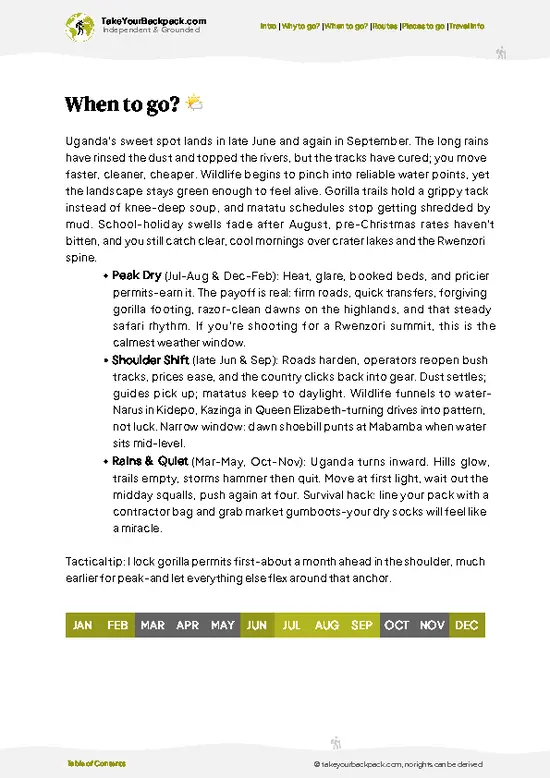
🌤️ When to go?Seasonal considerations and timing


  • Weather: Njeru’s dry season from June to September offers clear skies and minimal rain, making trails less slippery and the air crisp around 20-25°C (68-77°F). The wet season, March to May, drenches the landscape, turning paths to mud and the air thick with humidity.

  • Temperature: Daytime highs hover between 25-30°C (77-86°F) year-round, but evenings cool off noticeably during the dry months, perfect for campfires without sweating through your gear.

  • Daylight Hours: Near the equator, daylight stays steady at about 12 hours, but the dry season’s clearer skies mean you’ll catch golden hour light that’s perfect for photos and evening strolls.

  • Crowds: Tourist flow peaks in the dry season, especially July and August, so expect more fellow backpackers and slightly higher prices. The wet season
read more 👉

  • Weather: Njeru’s dry season from June to September offers clear skies and minimal rain, making trails less slippery and the air crisp around 20-25°C (68-77°F). The wet season, March to May, drenches the landscape, turning paths to mud and the air thick with humidity.

  • Temperature: Daytime highs hover between 25-30°C (77-86°F) year-round, but evenings cool off noticeably during the dry months, perfect for campfires without sweating through your gear.

  • Daylight Hours: Near the equator, daylight stays steady at about 12 hours, but the dry season’s clearer skies mean you’ll catch golden hour light that’s perfect for photos and evening strolls.

  • Crowds: Tourist flow peaks in the dry season, especially July and August, so expect more fellow backpackers and slightly higher prices. The wet season offers solitude but fewer services.

  • Seasonal Activities: Wildlife viewing and river activities shine in the dry months when animals gather at waterholes and the Nile’s flow is calmer, making boat trips smoother and more scenic.

  • Price Fluctuations: Accommodation and tours spike during dry season peak months; booking ahead is smart. The wet season offers bargains but comes with trade-offs in comfort and accessibility.


Pro-tip: Aim for late June or early September—dry enough for adventure, light crowds, and better deals—so you get the best of Njeru’s wild charm without the hassle.


source: climatestotravel.comJANJanuary: good for travelingFEBFebruary: good for travelingMARMarch: fair for travelingAPRApril: fair for travelingMAYMay: fair for travelingJUNJune: highly recommended for travelingJULJuly: highly recommended for travelingAUGAugust: highly recommended for travelingSEPSeptember: highly recommended for travelingOCTOctober: good for travelingNOVNovember: good for travelingDECDecember: good for traveling
when-to-go

✈️ The backpacker research shortcutUganda Travel Guide

An offline-friendly backpacking guide with optimized travel routes, ranked highlights, transport advice, and the best areas to stay.
example page 0 from our offline Travel Guide for Uganda
example page 1 from our offline Travel Guide for Uganda
example page 2 from our offline Travel Guide for Uganda
example page 3 from our offline Travel Guide for Uganda
example page 4 from our offline Travel Guide for Uganda
example page 5 from our offline Travel Guide for Uganda
example page 6 from our offline Travel Guide for Uganda
example page 7 from our offline Travel Guide for Uganda
The digital guide (422 pages) contains:
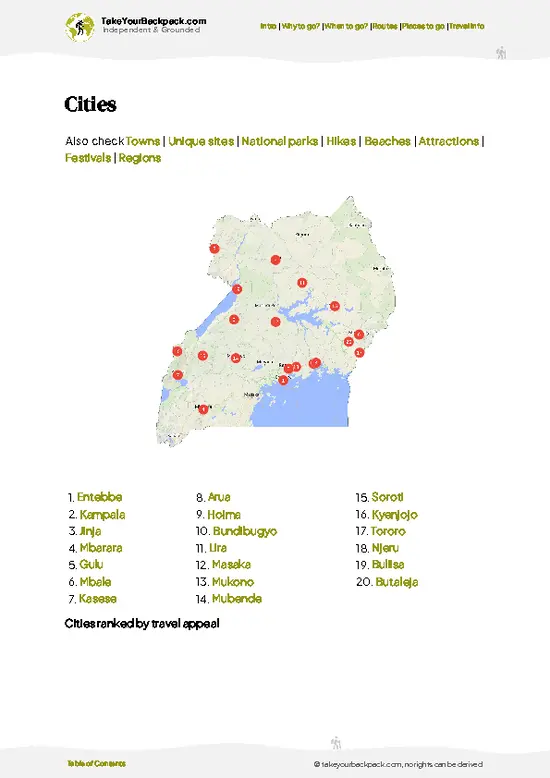
109 highlights, ranked by travel appeal
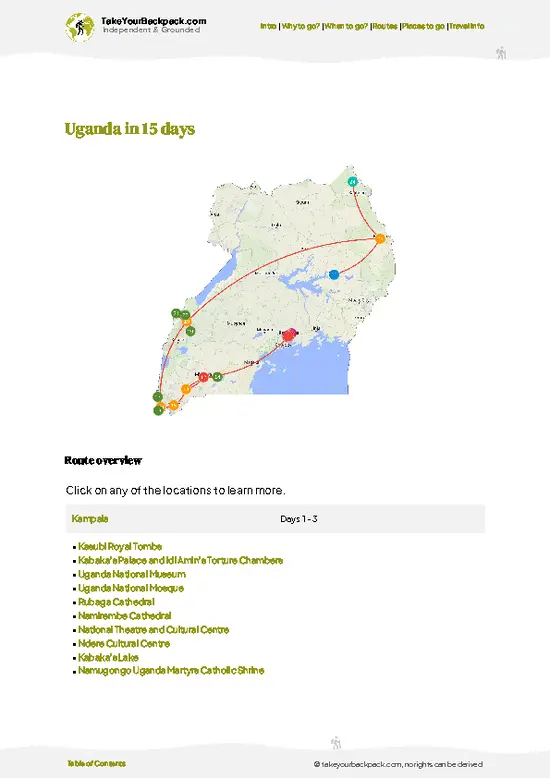
Optimized 5, 10 & 15-day travel routes
Cities, national parks, landmarks, beaches
How to get around
Offline-friendly for travel without Wi-Fi
👉 Click to see all 30+ guide features

📅 Plan smarter in minutes, not weeks
Month by month travel advice
Festivals & national holidays
Budget expectations

🗺️ Go to the right places, skip the overrated ones
Honest pros & cons of destinations
Top hikes, parks & viewpoints
Lesser-known places most travelers miss
Clear “worth it vs skip it” guidance

🛏️ Travel smoothly without rookie mistakes
Best areas to stay
Transport systems explained simply
Common scams & safety advice
SIM cards, money & practical tips

🌍 Understand the country, not just visit it
Culture & traditions
52 Essential phrases & customs
Festivals worth planning around
Traveler-friendly historical context
Insights that make places more meaningful

📱 Built for real travel conditions
Fully downloadable PDF
Works completely offline
Optimized for phone use
Useful in remote areas & buses
Everything in one place
Save weeks of stressful planning
Get instant access to your full guide. 30‑day money-back guarantee.


By proceeding you agree to our terms.
Sent to your inbox immediately after payment • 100% Secure Checkout
Best Backpacking Travel Advisor 2025 tourism awardBest Backpacking
Travel Advisor
2025
What others say about Take Your Backpack Guides:
⭐⭐⭐⭐⭐
Fantastic, amazing amount of information!
⭐⭐⭐⭐⭐
My goodness this is amazing, it's what I've been looking for hats off too you!
⭐⭐⭐⭐⭐
I think this is absolutely BRILLIANT
⭐⭐⭐⭐
Very complete and informative. It's still missing places, but I gotta to commend you
⭐⭐⭐⭐⭐
This is truly amazing, thank you, can't wait to explore it with my kids!
⭐⭐⭐⭐⭐
Awesome resource, thank you!
⭐⭐⭐⭐⭐
This is amazing! Can't wait to explore the ones I haven't seen
⭐⭐⭐⭐
I love this! Well done, great idea.
⭐⭐⭐⭐⭐
Thanks for taking the time to make this gem!
⭐⭐⭐⭐⭐
This might be the best website I've ever seen.
⭐⭐⭐⭐⭐
Congratulations, and thank you so much for your work; it's incredibly valuable.
⭐⭐⭐⭐
In all seriousness I think you did a great job pointing out the important spots
⭐⭐⭐⭐⭐
10/10 very good
⭐⭐⭐⭐⭐
As someone who's only just starting to visit regularly this is awesome, thank you.
⭐⭐⭐⭐
Thank you very much! I'm going to visit my dad, it's going to be very useful!
⭐⭐⭐⭐⭐
This is really cool! We'll be travelling for the first time and this definitely come in handy.
⭐⭐⭐⭐⭐
You are now our minister of culture, congratulations 👨‍💼
⭐⭐⭐⭐⭐
Just wanted to tell you that this is a pearl! Going to follow your recommendations.
⭐⭐⭐⭐⭐
This is so cool. I'll definitely be using the resource for my travels soon.
⭐⭐⭐⭐⭐
This is very impressive! Good work.
⭐⭐⭐⭐⭐
This is an amazing and informative site. Very well done!

🛏️ Where to stay?Choosing the right base

Njeru’s best backpacker zone hugs the main road near the Nile Bridge, where the pulse of local life meets easy access to transport and markets. This area feels alive without chaos—streets lined with small eateries and buzzing roadside stalls give you a real taste of Ugandan daily rhythm. It’s safe enough to wander after dark, thanks to steady foot traffic and a watchful community vibe. Hostels here lean toward the budget-friendly, often with communal spaces that invite conversation and connection, perfect for solo travelers craving company without the tourist bubble. Compared to quieter, more … read more 👉
Njeru’s best backpacker zone hugs the main road near the Nile Bridge, where the pulse of local life meets easy access to transport and markets. This area feels alive without chaos—streets lined with small eateries and buzzing roadside stalls give you a real taste of Ugandan daily rhythm. It’s safe enough to wander after dark, thanks to steady foot traffic and a watchful community vibe. Hostels here lean toward the budget-friendly, often with communal spaces that invite conversation and connection, perfect for solo travelers craving company without the tourist bubble. Compared to quieter, more residential pockets, this spot plugs you into the town’s energy and practical needs, cutting down on taxi rides and giving you a genuine foothold in Njeru’s everyday flow.

🚌 Getting aroundTransportation options and practical tips

Njeru moves at its own rhythm—neither frantic nor slow, but a steady pulse shaped by the hum of engines and the chatter of markets. The sun casts sharp shadows on dusty streets where time feels elastic: buses arrive when they’re ready, not by the clock, and the scent of frying street food mingles with the diesel tang. Here, patience isn’t just a virtue; it’s your ticket to blending in and unlocking the town’s real pace. The flow is less about rigid schedules and more about reading the crowd, catching the right ride, and knowing when to walk to soak in the everyday soundtrack of Njeru.


  • Matatus (Shared Minibuses): The backbone of local transit, these run frequently from early morning until dusk, costing just a few hundred Ugandan shillings. They’re packed, noisy, and fast if you know the
read more 👉
Njeru moves at its own rhythm—neither frantic nor slow, but a steady pulse shaped by the hum of engines and the chatter of markets. The sun casts sharp shadows on dusty streets where time feels elastic: buses arrive when they’re ready, not by the clock, and the scent of frying street food mingles with the diesel tang. Here, patience isn’t just a virtue; it’s your ticket to blending in and unlocking the town’s real pace. The flow is less about rigid schedules and more about reading the crowd, catching the right ride, and knowing when to walk to soak in the everyday soundtrack of Njeru.


  • Matatus (Shared Minibuses): The backbone of local transit, these run frequently from early morning until dusk, costing just a few hundred Ugandan shillings. They’re packed, noisy, and fast if you know the routes—perfect for budget travelers who want to dive into local life.

  • Boda Bodas (Motorcycle Taxis): Available 24/7, these dart through traffic with agility. Prices vary but are negotiable; they’re your best bet for quick hops or reaching spots off the main roads, especially when time is tight or the sun is dipping low.

  • Walking: Njeru’s compact center rewards those who explore on foot. The streets buzz with vendors and everyday scenes, making walking not just free but a sensory immersion—watch for uneven pavement and sudden potholes.

  • Local Buses: Larger and slower than matatus, these connect Njeru to neighboring towns. They run less frequently, mostly during daylight hours, and offer a cheaper, if less comfortable, alternative for longer trips.

👛 Costs (as of 17 May 2026)How expensive it really is

Backpacking in Njeru, Uganda, offers a raw, authentic experience where every shilling spent feels like an investment in local life rather than a tourist trap. Here’s how your daily costs typically break down:
  • Dorm Accommodation: Expect to pay around $5 to $10 per night for a basic dorm bed. These are often simple, clean guesthouses or hostels with shared bathrooms. The rooms won’t be fancy, but they provide a cool refuge from the tropical heat and a chance to meet other travelers.
  • Meals: Local eateries serve hearty Ugandan staples like matoke, beans, and fried fish for about $2 to $4 per meal. Street food is even cheaper, around $1 to $2, but stick to busy stalls to avoid any stomach surprises. Western-style meals or cafes will push closer to $5 to $7.
  • Local Transport: Boda-bodas (motorcycle
read more 👉
Backpacking in Njeru, Uganda, offers a raw, authentic experience where every shilling spent feels like an investment in local life rather than a tourist trap. Here’s how your daily costs typically break down:
  • Dorm Accommodation: Expect to pay around $5 to $10 per night for a basic dorm bed. These are often simple, clean guesthouses or hostels with shared bathrooms. The rooms won’t be fancy, but they provide a cool refuge from the tropical heat and a chance to meet other travelers.
  • Meals: Local eateries serve hearty Ugandan staples like matoke, beans, and fried fish for about $2 to $4 per meal. Street food is even cheaper, around $1 to $2, but stick to busy stalls to avoid any stomach surprises. Western-style meals or cafes will push closer to $5 to $7.
  • Local Transport: Boda-bodas (motorcycle taxis) are the go-to for short hops around town, costing roughly $0.50 to $1 per ride. For longer trips or shared minibus taxis, budget $1 to $3 depending on distance. Walking is often the best way to soak in the atmosphere and save cash.
  • Basic Activities/Entry Fees: Most local attractions, like the nearby Nile River spots or small cultural sites, charge minimal fees—usually $1 to $3. Guided tours are rare and pricier, so self-guiding with a local map or app is your best bet for budget-friendly exploration.
  • Miscellaneous Expenses: This covers essentials like bottled water, snacks, or a SIM card for data. Plan on $1 to $3 daily. Keep in mind that power outages are common, so a portable charger might be a worthwhile one-time purchase.

Altogether, you’re looking at a daily budget of roughly $10 to $25. This range covers the basics without skimping on comfort or safety. Njeru’s charm is in its simplicity—the modest costs reflect a place where the real currency is the warmth of the people and the pulse of everyday life.


source: visituganda.com
⚠️ Prices can change and everyone travels differently, so take this as a rough guide. Hope it helps you plan your adventure!

🚌 Day tripsEasy escapes and nearby places

Njeru, Uganda, is a backpacker’s dream base, offering easy access to some of the region’s most captivating experiences. The vibrant atmosphere of this town sets the stage for unforgettable day trips that blend adventure with local culture.

Jinja and the Source of the Nile
Just a short ride from Njeru, Jinja is where the Nile River begins its epic journey. Spend the morning exploring the bustling markets, where the scent of fried plantains and spices fills the air. Then, head to the river for some white-water rafting—an exhilarating way to embrace the Nile’s power. Expect to spend around $50 for a half-day rafting trip. The best time to visit is during the dry season from December to February, when the river is at its most thrilling. First-timers often underestimate the river’s strength; … read more 👉
Njeru, Uganda, is a backpacker’s dream base, offering easy access to some of the region’s most captivating experiences. The vibrant atmosphere of this town sets the stage for unforgettable day trips that blend adventure with local culture.

Jinja and the Source of the Nile
Just a short ride from Njeru, Jinja is where the Nile River begins its epic journey. Spend the morning exploring the bustling markets, where the scent of fried plantains and spices fills the air. Then, head to the river for some white-water rafting—an exhilarating way to embrace the Nile’s power. Expect to spend around $50 for a half-day rafting trip. The best time to visit is during the dry season from December to February, when the river is at its most thrilling. First-timers often underestimate the river’s strength; don’t shy away from a guide—they make the experience safer and more enjoyable.
👉 Explore Jinja

Lake Victoria Islands
Take a boat trip to the nearby islands of Lake Victoria, where you can soak in the tranquil beauty and local life. The ride is about 30 minutes, and you’ll find yourself surrounded by lush greenery and the sound of birds. A day trip can cost around $20, including boat fare and a local lunch. The best time to go is early morning, when the lake is calm and the light is perfect for photos. Many backpackers miss out on the cultural interactions with local fishermen—take the time to chat and learn about their way of life.


Ngamba Island Chimpanzee Sanctuary
A visit to Ngamba Island offers a unique chance to see rescued chimpanzees in their natural habitat. The boat ride takes about an hour, and the sanctuary is dedicated to conservation and education. Expect to pay around $50 for the day, which includes a guided tour. The best months to visit are from June to September, when the chimps are most active. A common mistake is to rush through the visit; take your time to observe their behaviors and enjoy the serene environment.
Want to know what more Uganda offers?
The Uganda Travel Guide describes 109 highlights, from cities to national parks, from beaches to hikes

Get the Travel Guide -

🍲 FoodEating & Drinking in Njeru

In Njeru, local cuisine is a vibrant mix of hearty and simple flavors. Don’t miss trying matoke, a mashed green banana dish often paired with rich, spicy stews. The city’s street food scene is alive with vendors grilling fresh fish from the nearby Nile, offering a smoky, satisfying bite that’s both affordable and authentic. Backpackers usually gather around bustling markets or casual roadside spots where the air hums with chatter and the scent of frying cassava. Drinking here is straightforward—expect to sip on waragi, a potent local spirit, or enjoy a cold Ugandan lager in laid-back bars where the vibe is more about connection than polish. Sharing food is common, so don’t be shy to dig in with locals and embrace the communal rhythm of meals.

🛡️ SafetyTraveler Safety Guide

Njeru, Uganda, is generally safe, but a little awareness goes a long way. Stick to well-lit areas after dark, especially if you’re solo. The main roads are usually bustling, but side streets can feel isolated. Keep your belongings close; a simple crossbody bag works wonders.

Watch out for the occasional “friendly” local offering unsolicited help—this can lead to a push for tips or purchases you didn’t plan on. If someone insists on guiding you, politely decline and stick to your map.

Street vendors can be persistent, but a friendly smile and a firm “no, thank you” usually do the trick. Embrace the local vibe, but stay grounded. With these tips, you’ll navigate Njeru like a pro, soaking in its charm without the hassle.

Other Ugandan cities near Njeru

Explore more nearby:

  • Jinja—Nile source, colonial-era buildings, adventure sports| 7 km away
  • Mukono—university town, forest reserves, commuter links| 45 km away
  • Kampala—hilltop views, nightlife districts, national museums| 64 km away

💡 Not sure where to go next?
Create a personalized itinerary for Uganda including Njeru and the places that fit your trip.

Generate my itinerary

👉 Discover all cities

Or checkout all Uganda has to offer (think cities, towns, villages, national parks, hikes, beaches, festivals)
Country photo of Uganda

We 💚 feedbackIs it worth it?

Njeru is a breath of fresh air after the chaos of Kampala. The banks of the Nile offer a serene escape, where you can soak in the sounds of water lapping against the shore and the scent of earth after rain. But be ready for the reality of limited infrastructure; roads can be rough, and services might not always meet your expectations. Embrace the adventure, and the rewards will follow.

✈️ When did I visit Uganda?
In September 2019 I have done a backpacking trip through Uganda. Seeing gorilla’s in the wild from up close was a pure unexpected highlight!

✍️ Help improve this page!
The information on this page is based on my own backpacking experience in Uganda, supplemented with up-to-date research and feedback from other travelers. Travel details can change, so if you notice anything outdated or incomplete, feel free to let me know.


🙋‍♂️ Give feedback

👋 Meet the founderWho’s Behind Take Your Backpack?

Johan, backpacker and founder of TakeYourBackpackHi, I’m Johan (Netherlands 🇳🇱), the creator of TakeYourBackpack. Over the past decade, I’ve backpacked through 80+ countries across six continents, gaining extensive experience with independent travel, long-term trips, and overland routes.

This site is built on a combination of firsthand travel experience and carefully curated insights from other backpackers. Many guides are based on places I’ve personally visited, while others bring together tips, observations, and practical advice shared by trusted travelers I’ve met along the way.

The goal is to provide realistic, experience-driven guidance — not generic itineraries — so you can explore destinations with better context, clearer expectations, and more confidence.

Get full Uganda guide •
Instant download • 109 highlights • Full Offline guide