×

Uganda🇺🇬 | citiesAdjumanirefugee settlements, Nile ferry, remote trading post | things to do and best time to go

Explore NjeruExplore Mubende

Backpacking in Adjumani
👀 For curious travelerscity ranked #27
By Johan Kruseman 🇳🇱 | Updated June 8, 2026

If you crave nightlife, polished hostels, or a parade of Instagrammable cafés, Adjumani will frustrate you. But if you want to see Uganda’s northern edge as it really is—dusty, sun-baked, and humming with the resilience of borderland life—Adjumani rewards the curious. Tucked near the South Sudan border, it’s a practical stopover, not a destination for bucket-list chasers. The town’s main draw is its proximity to the Nile’s wild banks and the raw, unfiltered energy of a refugee-hosting community. Expect basic guesthouses, a few lively markets, and evenings that settle into quiet, not parties. Getting here means a long, sometimes bumpy bus ride from Gulu or Arua, but the journey itself is part of the story. Compared to Gulu’s bustle or Moyo’s river views, Adjumani feels more grounded—less scenic, more real. Costs are low, safety is reasonable if you keep your wits, and while you won’t find a backpacker scene, you’ll find stories worth the detour.

Discover everything you want to know in the 📖 Uganda Travel Guide.
Safety warning

The current risk level for Uganda is high. Check the advice before going.


Get your Uganda guide
109 ranked highlights, routes & tips, works offline (422 pages)
Loading the map 🌍
CLICK TO FILTER
cities
towns
landmarks
national parks
hikes
beaches
attractions
festivals
regions
SHOW COUNTRY’S BESTSHOW ALL

✨ Why go?
Ranked #27 city in Uganda
What sets this place apart

Adjumani serves as a gateway for backpackers exploring northern Uganda. Its convenient location near the Murchison Falls National Park and Lake Albert makes it a strategic stop for those seeking hikes and cultural experiences. The walkable streets are lined with small-scale guesthouses and hostels, offering a cozy atmosphere where solo travelers and small groups can connect over local food stalls serving up hearty dishes. While some might only stay a night to recharge, others linger for a few days, soaking in the friendly vibe and engaging with locals. It’s not a party town, but the social atmosphere is warm, perfect for those who appreciate a slower pace and genuine interactions.
Want to include Adjumani in your Uganda route?
Create a personalized Uganda itinerary that includes Adjumani and the places that fit your trip — based on your travel style, budget, and available time. Get your route in seconds.

Generate my trip

💡 HighlightsWhat this place is best known for

  1. Adjumani Central Market — The town’s beating heart: colorful produce, charcoal and second-hand clothes, loud haggling and the best place to watch daily life up close. Go early for the freshest fish and to see traders set up; bring small change and your negotiation hat.
  2. Albert Nile riverbank / Adjumani landing — A short walk from the market, the riverbank is where you feel the landscape change: fishermen, wooden boats, Nile breeze and great sunset light. It’s low-key but deeply atmospheric and shows how the river shapes work and rhythm here.
  3. Adjumani Town Square & Council Offices — Not a monument so much as a social crossroads: local meetings, political life, and a good spot to orient yourself or ask about events, market days and transport. Helpful for practical questions and meeting locals.
read more 👉
  1. Adjumani Central Market — The town’s beating heart: colorful produce, charcoal and second-hand clothes, loud haggling and the best place to watch daily life up close. Go early for the freshest fish and to see traders set up; bring small change and your negotiation hat.
  2. Albert Nile riverbank / Adjumani landing — A short walk from the market, the riverbank is where you feel the landscape change: fishermen, wooden boats, Nile breeze and great sunset light. It’s low-key but deeply atmospheric and shows how the river shapes work and rhythm here.
  3. Adjumani Town Square & Council Offices — Not a monument so much as a social crossroads: local meetings, political life, and a good spot to orient yourself or ask about events, market days and transport. Helpful for practical questions and meeting locals.
  4. Adjumani General Hospital / Health Centre IV — A civic landmark with human stories tied to the region’s past decades. Visiting (respectfully) gives perspective on local healthcare challenges and the way communities organize around services.
  5. UNHCR / Refugee response information centre (Adjumani field office) — An important stop to learn about the refugee situation affecting the district, see coordination in action, and get reputable info before visiting nearby settlements. Staff will usually point you to community programs that welcome visitors.
  6. Adjumani Bus Park & Transport Hub — The practical theater of the town: shared taxis, minibuses, and moto-taxis coming and going. Great for people-watching, picking up a cheap seat out of town, or seeing trade routes in motion.
  7. Central Mosque (community hub) — One of the main religious centres where you can learn about local faith life and architecture. Attend a service respectfully or speak with community leaders for stories about Adjumani’s multicultural mix.
  8. Main Parish Church / Anglican parish — The Christian parish in town is a focal point for community gatherings, music and local charity work. Services and choir sessions are a good way to connect with residents and understand local traditions.
  9. Adjumani Airstrip — A small, functional strip that gives a real sense of rural Ugandan aviation and logistics. It’s not glamorous, but stepping onto the strip and watching light aircraft land or depart is oddly memorable and shows how remote areas stay connected.
  10. Weekly livestock/cattle market — If your visit lines up with market day, this is a lively, sensory experience: traders, cattle pens, bargaining and the rural economy in action. It’s where food, transport and social life converge outside the central market.
A few worthwhile day trips just outside Adjumani are the nearby Maaji and Ayilo refugee settlements for community-led visits and learning (go through official channels or NGOs), and stretches of the Albert Nile slightly upriver; my personal favorite for atmosphere and photography is the Albert Nile riverbank in town.
Spotted a mistake or missing something? Contact us.

Things to do near Adjumani

Ratings based on Tripadvisor reviews. When you book through this link, you support our work at no extra cost to you.

🏘️ NeighborhoodsWhere things are and how it's laid out

Adjumani is a vibrant hub that offers a unique blend of culture and accessibility for backpackers. Here’s how to navigate its neighborhoods:

Town Center: This is the heartbeat of Adjumani. Bustling markets and local eateries fill the air with the scent of grilled meat and spices. It’s walkable, making it easy to explore shops and cafes. Affordable accommodations abound, perfect for short stays. Nightlife is low-key, with a few bars where you can mingle with locals.

Nyumanzi: Known for its quieter vibe, Nyumanzi is ideal for those seeking a peaceful retreat. It’s a bit further from the center, so transport options are essential. Guesthouses here are budget-friendly, and the area is great for longer stays, especially if you want to immerse yourself in local life.

Adjumani Refugee Settlement: … read more 👉
Adjumani is a vibrant hub that offers a unique blend of culture and accessibility for backpackers. Here’s how to navigate its neighborhoods:

Town Center: This is the heartbeat of Adjumani. Bustling markets and local eateries fill the air with the scent of grilled meat and spices. It’s walkable, making it easy to explore shops and cafes. Affordable accommodations abound, perfect for short stays. Nightlife is low-key, with a few bars where you can mingle with locals.

Nyumanzi: Known for its quieter vibe, Nyumanzi is ideal for those seeking a peaceful retreat. It’s a bit further from the center, so transport options are essential. Guesthouses here are budget-friendly, and the area is great for longer stays, especially if you want to immerse yourself in local life.

Adjumani Refugee Settlement: This area offers a unique perspective on resilience and community. While it’s not a typical tourist spot, visiting can be eye-opening. It’s less walkable, so plan for transport. Accommodations are basic but affordable, making it suitable for those looking to stay longer and engage meaningfully.

⌛️ 1 dayWhat you can realistically do in a day

Adjumani, Uganda, is a vibrant town that pulses with the energy of its diverse communities and rich cultural tapestry. Nestled near the banks of the Nile, it’s a place where the scent of local street food mingles with the earthy aroma of the surrounding landscape.

Start your morning at the bustling market in the heart of town. The vibrant colors of fresh produce and handmade crafts create a sensory feast. Grab a cup of strong Ugandan coffee from a local vendor; the rich, nutty flavor will kickstart your day. Afterward, take a stroll through the nearby neighborhoods, where you can hear the laughter of children playing and the rhythmic sounds of daily life.

In the afternoon, head to the Adjumani Cultural Center. This spot is often overlooked by tourists but offers a genuine glimpse into local … read more 👉
Adjumani, Uganda, is a vibrant town that pulses with the energy of its diverse communities and rich cultural tapestry. Nestled near the banks of the Nile, it’s a place where the scent of local street food mingles with the earthy aroma of the surrounding landscape.

Start your morning at the bustling market in the heart of town. The vibrant colors of fresh produce and handmade crafts create a sensory feast. Grab a cup of strong Ugandan coffee from a local vendor; the rich, nutty flavor will kickstart your day. Afterward, take a stroll through the nearby neighborhoods, where you can hear the laughter of children playing and the rhythmic sounds of daily life.

In the afternoon, head to the Adjumani Cultural Center. This spot is often overlooked by tourists but offers a genuine glimpse into local traditions. Engage with artisans showcasing their crafts, and perhaps even try your hand at making a traditional basket. The warmth of the community will make you feel right at home.

As evening falls, find a local eatery along the main road. Enjoy a plate of posho and beans while watching the sun dip below the horizon, casting a golden hue over the Nile. It’s a perfect way to reflect on your day, surrounded by the sounds of laughter and conversation. Adjumani may not be on every tourist’s radar, but its charm lies in its authenticity and the connections you’ll make.
Turn your Adjumani visit into an Uganda adventure
Build a complete Uganda route with Adjumani, hidden gems, must-see destinations, and realistic travel times included.

Generate my trip

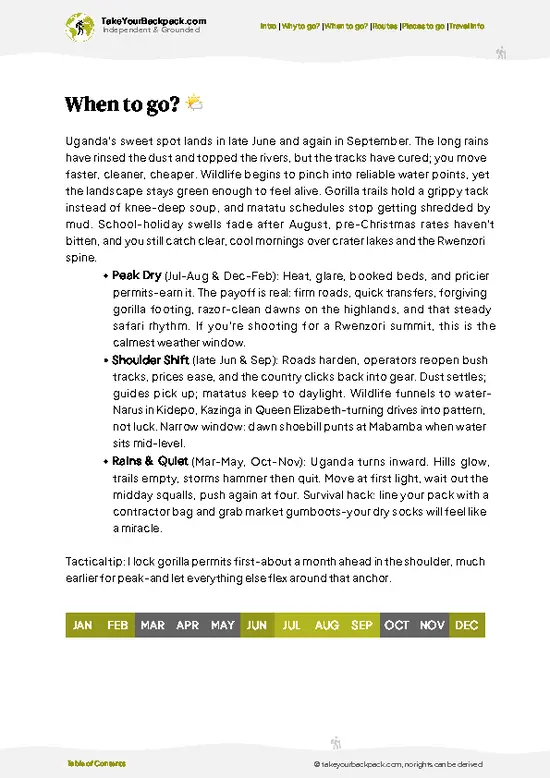
🌤️ When to go?Weather, crowds, and seasonal trade-offs


  • Topic: Weather – The dry season from December to February offers clear skies and dust-scented air, perfect for trekking. The wet season (March to November) brings heavy rains, turning trails into slippery mud baths and flooding some paths.

  • Topic: Temperature – Expect highs around 30°C (86°F) and lows near 20°C (68°F) year-round. The dry season feels warmer and drier, while the wet season’s humidity can weigh on your energy.

  • Topic: Daylight Hours – Roughly 12 hours of daylight year-round, with sunrise around 6:30 AM and sunset near 6:30 PM, giving you a reliable window for daily adventures.

  • Topic: Crowds – Adjumani is off the beaten path, so crowds are minimal year-round. However, the dry season sees a slight uptick in visitors, mostly aid workers and a few adventurous backpackers.
read more 👉

  • Topic: Weather – The dry season from December to February offers clear skies and dust-scented air, perfect for trekking. The wet season (March to November) brings heavy rains, turning trails into slippery mud baths and flooding some paths.

  • Topic: Temperature – Expect highs around 30°C (86°F) and lows near 20°C (68°F) year-round. The dry season feels warmer and drier, while the wet season’s humidity can weigh on your energy.

  • Topic: Daylight Hours – Roughly 12 hours of daylight year-round, with sunrise around 6:30 AM and sunset near 6:30 PM, giving you a reliable window for daily adventures.

  • Topic: Crowds – Adjumani is off the beaten path, so crowds are minimal year-round. However, the dry season sees a slight uptick in visitors, mostly aid workers and a few adventurous backpackers.

  • Topic: Seasonal Activities – Dry months are best for wildlife spotting and village visits as animals gather near waterholes and dirt roads are passable. Wet months bring lush greenery but limit access to remote areas.

  • Topic: Price Fluctuations – Accommodation and transport costs stay steady, but expect slightly higher prices during the dry season due to increased demand and easier travel conditions.


Pro-tip: Aim for late January or early February—when the air is crisp, the trails are dry, and the landscape is waking up from the dry spell—so you get the best balance of comfort and adventure.


source: climatestotravel.comJANJanuary: excellent for travelingFEBFebruary: excellent for travelingMARMarch: fair for travelingAPRApril: fair for travelingMAYMay: fair for travelingJUNJune: fair for travelingJULJuly: fair for travelingAUGAugust: fair for travelingSEPSeptember: fair for travelingOCTOctober: fair for travelingNOVNovember: fair for travelingDECDecember: highly recommended for traveling
when-to-go

✈️ The backpacker research shortcutUganda Travel Guide

An offline-friendly backpacking guide with optimized travel routes, ranked highlights, transport advice, and the best areas to stay.
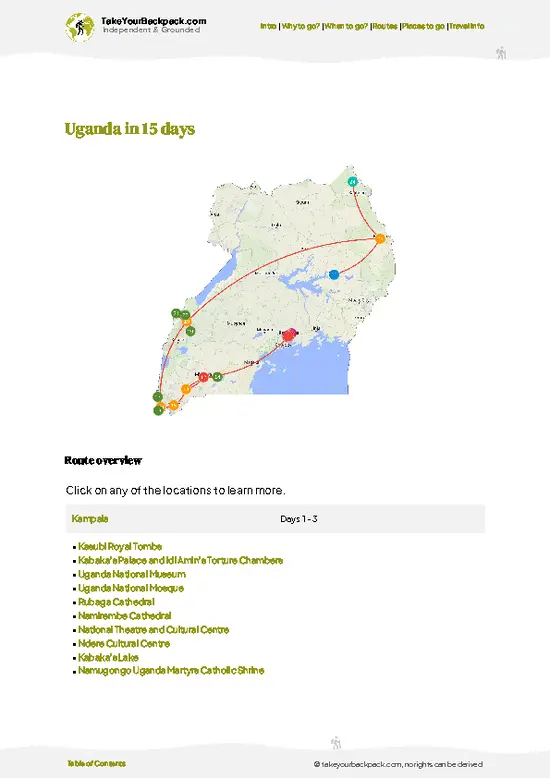
example page 0 from our offline Travel Guide for Uganda
example page 1 from our offline Travel Guide for Uganda
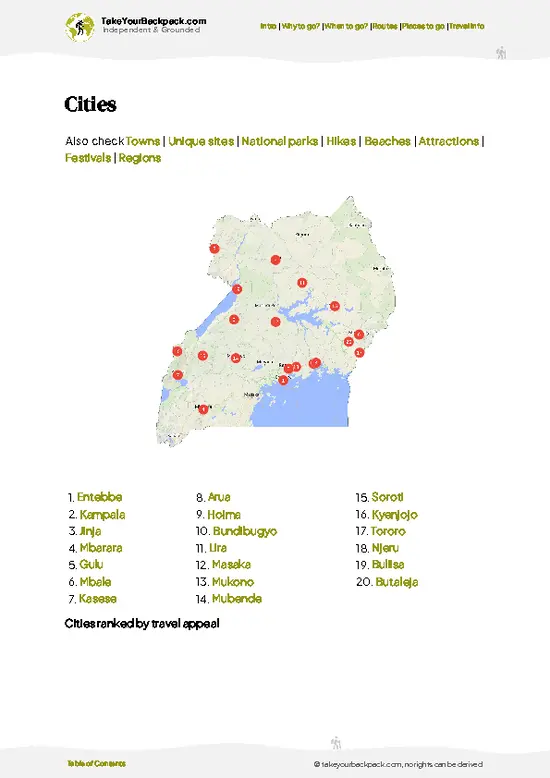
example page 2 from our offline Travel Guide for Uganda
example page 3 from our offline Travel Guide for Uganda
example page 4 from our offline Travel Guide for Uganda
example page 5 from our offline Travel Guide for Uganda
example page 6 from our offline Travel Guide for Uganda
example page 7 from our offline Travel Guide for Uganda
The digital guide (422 pages) contains:
109 highlights, ranked by travel appeal
Optimized 5, 10 & 15-day travel routes
Cities, national parks, landmarks, beaches
How to get around
Offline-friendly for travel without Wi-Fi
👉 Click to see all 30+ guide features

📅 Plan smarter in minutes, not weeks
Month by month travel advice
Festivals & national holidays
Budget expectations

🗺️ Go to the right places, skip the overrated ones
Honest pros & cons of destinations
Top hikes, parks & viewpoints
Lesser-known places most travelers miss
Clear “worth it vs skip it” guidance

🛏️ Travel smoothly without rookie mistakes
Best areas to stay
Transport systems explained simply
Common scams & safety advice
SIM cards, money & practical tips

🌍 Understand the country, not just visit it
Culture & traditions
52 Essential phrases & customs
Festivals worth planning around
Traveler-friendly historical context
Insights that make places more meaningful

📱 Built for real travel conditions
Fully downloadable PDF
Works completely offline
Optimized for phone use
Useful in remote areas & buses
Everything in one place
Save weeks of stressful planning
Get instant access to your full guide. 30‑day money-back guarantee.


By proceeding you agree to our terms.
Sent to your inbox immediately after payment • 100% Secure Checkout
Best Backpacking Travel Advisor 2025 tourism awardBest Backpacking
Travel Advisor
2025
What others say about Take Your Backpack Guides:
⭐⭐⭐⭐⭐
Fantastic, amazing amount of information!
⭐⭐⭐⭐⭐
My goodness this is amazing, it's what I've been looking for hats off too you!
⭐⭐⭐⭐⭐
I think this is absolutely BRILLIANT
⭐⭐⭐⭐
Very complete and informative. It's still missing places, but I gotta to commend you
⭐⭐⭐⭐⭐
This is truly amazing, thank you, can't wait to explore it with my kids!
⭐⭐⭐⭐⭐
Awesome resource, thank you!
⭐⭐⭐⭐⭐
This is amazing! Can't wait to explore the ones I haven't seen
⭐⭐⭐⭐
I love this! Well done, great idea.
⭐⭐⭐⭐⭐
Thanks for taking the time to make this gem!
⭐⭐⭐⭐⭐
This might be the best website I've ever seen.
⭐⭐⭐⭐⭐
Congratulations, and thank you so much for your work; it's incredibly valuable.
⭐⭐⭐⭐
In all seriousness I think you did a great job pointing out the important spots
⭐⭐⭐⭐⭐
10/10 very good
⭐⭐⭐⭐⭐
As someone who's only just starting to visit regularly this is awesome, thank you.
⭐⭐⭐⭐
Thank you very much! I'm going to visit my dad, it's going to be very useful!
⭐⭐⭐⭐⭐
This is really cool! We'll be travelling for the first time and this definitely come in handy.
⭐⭐⭐⭐⭐
You are now our minister of culture, congratulations 👨‍💼
⭐⭐⭐⭐⭐
Just wanted to tell you that this is a pearl! Going to follow your recommendations.
⭐⭐⭐⭐⭐
This is so cool. I'll definitely be using the resource for my travels soon.
⭐⭐⭐⭐⭐
This is very impressive! Good work.
⭐⭐⭐⭐⭐
This is an amazing and informative site. Very well done!

🛏️ Where to stay?How to pick the right area

In Adjumani, the best spot for backpackers is the town center near the main market and administrative offices. This area hums with life from dawn—vendors shouting over the scent of fresh cassava and roasting maize. It’s safe, well-lit after dark, and the social pulse is strong, making it easy to meet fellow travelers and locals alike. Hostels here cater to budget travelers, offering simple, clean rooms with communal spaces that encourage stories over shared meals. Compared to the quieter outskirts, staying here means you’re plugged into the town’s rhythm, with easy access to transport and local … read more 👉
In Adjumani, the best spot for backpackers is the town center near the main market and administrative offices. This area hums with life from dawn—vendors shouting over the scent of fresh cassava and roasting maize. It’s safe, well-lit after dark, and the social pulse is strong, making it easy to meet fellow travelers and locals alike. Hostels here cater to budget travelers, offering simple, clean rooms with communal spaces that encourage stories over shared meals. Compared to the quieter outskirts, staying here means you’re plugged into the town’s rhythm, with easy access to transport and local eateries, turning the practical into part of the adventure.

🚌 Getting aroundMoving around without the hassle

Adjumani moves at its own pace—less a clock-driven town, more a place where the rhythm is set by the sun and the chatter of market stalls. The air carries the scent of fresh earth and cooking fires, and the streets pulse with a mix of purposeful strides and casual pauses. Here, schedules bend to the flow of daily life rather than the other way around. If you want to blend in and get around like a local, you’ll need to embrace a bit of improvisation and patience, but the payoff is a genuine connection to the town’s heartbeat.


  • Walking: The most reliable way to navigate Adjumani’s compact center. Streets are dusty but manageable, and walking lets you soak in the vibrant market smells and street sounds. No cost, and you control your pace—perfect for spontaneous detours.

  • Boda Bodas (Motorcycle
read more 👉
Adjumani moves at its own pace—less a clock-driven town, more a place where the rhythm is set by the sun and the chatter of market stalls. The air carries the scent of fresh earth and cooking fires, and the streets pulse with a mix of purposeful strides and casual pauses. Here, schedules bend to the flow of daily life rather than the other way around. If you want to blend in and get around like a local, you’ll need to embrace a bit of improvisation and patience, but the payoff is a genuine connection to the town’s heartbeat.


  • Walking: The most reliable way to navigate Adjumani’s compact center. Streets are dusty but manageable, and walking lets you soak in the vibrant market smells and street sounds. No cost, and you control your pace—perfect for spontaneous detours.

  • Boda Bodas (Motorcycle Taxis): These dart through traffic with nimble speed, ideal for short to medium distances. Expect to negotiate fares upfront—usually between 1,000 to 3,000 UGX ($0.25–$0.75). They run all day until dusk, but avoid night rides unless you know the driver.

  • Matatus (Shared Minibuses): The budget workhorse for longer hauls, like trips to nearby towns. They leave when full, so timing is flexible but unpredictable. Fares hover around 5,000 UGX ($1.30). Expect a bumpy ride and a lively atmosphere inside.

  • Local Taxis: Less common and pricier, but useful if you’re carrying heavy gear or traveling off-peak hours. Negotiate fares before hopping in; expect around 10,000 UGX ($2.60) for short trips within town.

👛 Costs (as of 14 May 2026)How expensive it really is

Backpacking in Adjumani, Uganda, means embracing a pace that’s unhurried but rich with local flavor—and your daily costs reflect that balance.
  • Dorm Accommodation: Expect to pay around $5 to $10 per night for a basic dorm bed. These are simple, often with mosquito nets and shared bathrooms, but clean enough to recharge after a day of exploring.
  • Meals: Local eateries serve hearty meals for $2 to $4. Think staple Ugandan dishes like posho, beans, and fresh greens, often cooked over charcoal, filling and straightforward. Street food snacks can be even cheaper, around $0.50 to $1.
  • Local Transport: Boda-bodas (motorcycle taxis) dominate here. Short rides cost about $0.50 to $1. For longer trips or shared minibus taxis, budget $1 to $3 depending on distance. Walking is also common and practical
read more 👉
Backpacking in Adjumani, Uganda, means embracing a pace that’s unhurried but rich with local flavor—and your daily costs reflect that balance.
  • Dorm Accommodation: Expect to pay around $5 to $10 per night for a basic dorm bed. These are simple, often with mosquito nets and shared bathrooms, but clean enough to recharge after a day of exploring.
  • Meals: Local eateries serve hearty meals for $2 to $4. Think staple Ugandan dishes like posho, beans, and fresh greens, often cooked over charcoal, filling and straightforward. Street food snacks can be even cheaper, around $0.50 to $1.
  • Local Transport: Boda-bodas (motorcycle taxis) dominate here. Short rides cost about $0.50 to $1. For longer trips or shared minibus taxis, budget $1 to $3 depending on distance. Walking is also common and practical for short distances.
  • Basic Activities/Entry Fees: Adjumani isn’t a hotspot for pricey tourist attractions. Entry fees for local cultural sites or community visits usually range from $1 to $5. Guided tours, if available, might push that higher but remain affordable.
  • Miscellaneous Expenses: This covers essentials like water, snacks, or phone credit. Plan for $1 to $3 daily. Bottled water is a must, and local SIM cards with data are cheap and reliable.

Altogether, you’re looking at roughly $10 to $25 per day to cover the essentials in Adjumani. It’s a place where the costs stay low because the pace is local and unhurried, letting you focus on the people and the rhythms of daily life rather than tourist trappings.


source: ugandatourism.org
⚠️ Prices can change and everyone travels differently, so take this as a rough guide. Hope it helps you plan your adventure!

🚌 Day tripsEasy escapes and nearby places

Adjumani, Uganda, serves as a perfect launchpad for unforgettable day trips, each offering a unique slice of the region’s rich culture and stunning landscapes.

Murchison Falls National Park
Just a few hours from Adjumani, Murchison Falls is a must-see. The roar of the Nile crashing through a narrow gorge creates a spectacle that’s hard to forget. You can spot elephants and lions on a game drive, then take a boat ride to the base of the falls. Expect to spend around $40 for park entry and transport, and plan your visit during the dry season (December to February) for the best wildlife sightings. A common rookie mistake? Underestimating the time it takes to get there; leave early to maximize your experience.
👉 Explore Murchison Falls National Park

Lake Albert
A serene escape, Lake Albert … read more 👉
Adjumani, Uganda, serves as a perfect launchpad for unforgettable day trips, each offering a unique slice of the region’s rich culture and stunning landscapes.

Murchison Falls National Park
Just a few hours from Adjumani, Murchison Falls is a must-see. The roar of the Nile crashing through a narrow gorge creates a spectacle that’s hard to forget. You can spot elephants and lions on a game drive, then take a boat ride to the base of the falls. Expect to spend around $40 for park entry and transport, and plan your visit during the dry season (December to February) for the best wildlife sightings. A common rookie mistake? Underestimating the time it takes to get there; leave early to maximize your experience.
👉 Explore Murchison Falls National Park

Lake Albert
A serene escape, Lake Albert is about an hour’s drive from Adjumani. The shimmering waters are perfect for a day of fishing or simply soaking in the sun. Local fishermen often share stories that add depth to your visit. Costs are minimal—around $10 for transport and a small fee for fishing permits. The best time to visit is during the dry months when the lake is calm. Many first-timers miss the chance to interact with locals; don’t be shy—ask questions!


Owen Falls Dam
This engineering marvel is just a short trip away and offers a fascinating glimpse into Uganda’s hydroelectric power. The dam’s sheer scale is impressive, and the surrounding area is great for a picnic. Expect to spend about $5 on transport. The dry season is ideal for clear views. A common oversight is not bringing snacks; pack a lunch to enjoy while taking in the scenery.


Rhino Sanctuary
Located about two hours from Adjumani, the Rhino Sanctuary is a conservation success story. Here, you can track rhinos on foot, an exhilarating experience that connects you with nature. Entry fees are around $30, and the best time to visit is during the cooler mornings. Many newcomers forget to wear sturdy shoes; the terrain can be tricky, so come prepared.
Want to know what more Uganda offers?
The Uganda Travel Guide describes 109 highlights, from cities to national parks, from beaches to hikes

Get the Travel Guide -

🍲 FoodLocal Cuisine & Drinks

In Adjumani, the food scene is a lively mix of earthy flavors and simple, hearty meals. Don’t miss trying posho, a staple maize porridge that’s the backbone of many dishes here, often paired with groundnut sauce or fresh greens. The local markets buzz with vendors grilling tilapia over open flames, filling the air with smoky, irresistible aromas. Backpackers usually dive into these bustling spots or grab a seat at casual roadside eateries where the vibe is relaxed and the portions generous.

Drinks lean toward millet beer, a traditional brew that locals sip slowly, often in shared cups—a ritual that’s as much about connection as refreshment. Expect a warm welcome and a chance to join in the communal rhythm of eating and drinking, where patience and sharing are part of the unwritten etiquette.

🛡️ SafetyStaying Safe: What Travelers Should Know

Adjumani is generally safe, but a few mindful practices can enhance your experience. Stick to well-lit areas after dark, especially if you’re solo. The local vibe is friendly, but keep your belongings close; petty theft can happen in crowded markets.

Be cautious with offers from strangers. Some may try to sell you overpriced goods or services. A polite but firm “no, thank you” usually suffices.

When interacting with locals, a smile goes a long way. It builds rapport and can help you navigate any minor annoyances. Trust your instincts, stay aware, and you’ll find the heart of Adjumani welcoming.

Other Ugandan cities near Adjumani

Explore more nearby:

  • Gulu—open-air markets, Acholi culture, post-conflict renewal| 88 km away
  • Arua—border market, West Nile hub, Congolese influences| 105 km away
  • Zombo—Alur highlands, coffee farms, Congo border| 137 km away

💡 Not sure where to go next?
Create a personalized itinerary for Uganda including Adjumani and the places that fit your trip.

Generate my itinerary

👉 Discover all cities

Or checkout all Uganda has to offer (think cities, towns, villages, national parks, hikes, beaches, festivals)
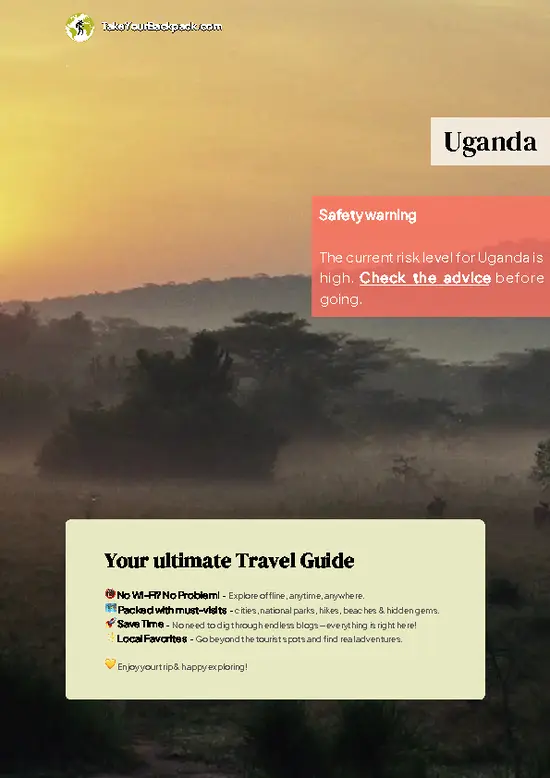
Country photo of Uganda

We 💚 feedbackIs it worth it?

Adjumani pulses with the warmth of its people and the rich tapestry of cultures. You’ll savor the aroma of local street food while soaking in vibrant community life. But be ready for the heat; it can be relentless. Embrace the sweat, and you’ll find that the connections you make are worth every drop.

✈️ When did I visit Uganda?
In September 2019 I have done a backpacking trip through Uganda. Seeing gorilla’s in the wild from up close was a pure unexpected highlight!

✍️ Help improve this page!
The information on this page is based on my own backpacking experience in Uganda, supplemented with up-to-date research and feedback from other travelers. Travel details can change, so if you notice anything outdated or incomplete, feel free to let me know.


🙋‍♂️ Give feedback

👋 Meet the founderWho’s Behind Take Your Backpack?

Johan, backpacker and founder of TakeYourBackpackHi, I’m Johan (Netherlands 🇳🇱), the creator of TakeYourBackpack. Over the past decade, I’ve backpacked through 80+ countries across six continents, gaining extensive experience with independent travel, long-term trips, and overland routes.

This site is built on a combination of firsthand travel experience and carefully curated insights from other backpackers. Many guides are based on places I’ve personally visited, while others bring together tips, observations, and practical advice shared by trusted travelers I’ve met along the way.

The goal is to provide realistic, experience-driven guidance — not generic itineraries — so you can explore destinations with better context, clearer expectations, and more confidence.

Get full Uganda guide •
Instant download • 109 highlights • Full Offline guide