×

Uganda🇺🇬 | attractionsUganda National Museumethnographic exhibits, fossil collections, musical instruments | things to do and best time to go

Explore Uganda National MosqueExplore Ndere Cultural Centre

Backpacking in Uganda National Museum
🏆 Top pickattraction ranked #3
By Johan Kruseman 🇳🇱 | Updated May 29, 2026

A battered thumb piano clinks under your fingers, its metallic notes echoing off concrete floors while the scent of old wood and dust lingers in the air. Somewhere behind you, a school group erupts in laughter at a display of ancient spears. This is the Uganda National Museum, tucked along Kira Road in Kampala—Uganda’s capital, not some remote jungle outpost.

Let’s cut through the brochure gloss: the museum isn’t flashy, and it won’t compete with gorilla trekking or Murchison Falls for adrenaline. But if you want to understand Uganda beyond the safari clichés, this is where you start. The exhibits are a bit faded, but the stories—about kingdoms, jazz bands, and colonial oddities—are real and raw. Entry is cheap, and crowds are mostly local families and students, not selfie-stick mobs. It’s not a “wow” in the Instagram sense, but it’s a rare place where you can touch history, not just look at it. For me, that’s worth more than another waterfall snapshot.

Discover everything you want to know in the 📖 Uganda Travel Guide.
Safety warning

The current risk level for Uganda is high. Check the advice before going.


Get your Uganda guide
109 ranked highlights, routes & tips, works offline (422 pages)
Loading the map 🌍
CLICK TO FILTER
cities
towns
landmarks
national parks
hikes
beaches
attractions
festivals
regions
SHOW COUNTRY’S BESTSHOW ALL

✨ Why go?
Ranked #3 attraction in Uganda
What sets this place apart

The Uganda National Museum isn’t some flashy, overhyped tourist trap plastered all over Instagram. Yes, it draws crowds, but not the kind that drown out the experience. It’s the oldest museum in East Africa, and that alone makes it a heavyweight on any Uganda itinerary. Backpackers who carve out time here aren’t just ticking a box—they’re diving into the country’s soul. The museum’s collection isn’t just artifacts; it’s a narrative of Uganda’s complex history, from pre-colonial kingdoms to the turbulent post-independence era. You get a raw, unfiltered look at cultural evolution, tribal identities, and the resilience that defines this nation.

Forget the adrenaline rush of a gorilla trek; this place offers a different kind of intensity—the kind that sticks with you long after you leave. It’s … read more 👉
The Uganda National Museum isn’t some flashy, overhyped tourist trap plastered all over Instagram. Yes, it draws crowds, but not the kind that drown out the experience. It’s the oldest museum in East Africa, and that alone makes it a heavyweight on any Uganda itinerary. Backpackers who carve out time here aren’t just ticking a box—they’re diving into the country’s soul. The museum’s collection isn’t just artifacts; it’s a narrative of Uganda’s complex history, from pre-colonial kingdoms to the turbulent post-independence era. You get a raw, unfiltered look at cultural evolution, tribal identities, and the resilience that defines this nation.

Forget the adrenaline rush of a gorilla trek; this place offers a different kind of intensity—the kind that sticks with you long after you leave. It’s a mental checkpoint, grounding you in context before you hit the wild landscapes or bustling Kampala streets. The effort-to-reward ratio is high because it’s compact, accessible, and packed with stories that deepen your understanding of everything else you’ll see in Uganda. For backpackers threading through East Africa, the Uganda National Museum is a milestone that transforms a trip from sightseeing to meaningful exploration.
Want to include Uganda National Museum in your Uganda route?
Create a personalized Uganda itinerary that includes Uganda National Museum and the places that fit your trip — based on your travel style, budget, and available time. Get your route in seconds.

Generate my trip

💡 HighlightsDon't-miss highlights and experiences

The Ethnography Gallery
Forget the sanitized, glass-case anthropology you get in most museums. Here, you’re face-to-face with the actual tools, musical instruments, and ceremonial objects Ugandans have used for centuries—and in many cases, still use today. You’ll see bark cloth that’s been pounded by hand, not manufactured for tourists. The gallery doesn’t just show you “tribal artifacts”; it gives you a crash course in the living, breathing cultures of Uganda’s 50+ ethnic groups. If you want to understand the country beyond the safari-brochure stereotypes, this is your launchpad.


The Traditional Music Section (with playable instruments!)
This is not a “look but don’t touch” situation. The museum’s collection of traditional Ugandan instruments—drums, lyres, xylophones—are sometimes available … read more 👉
The Ethnography Gallery
Forget the sanitized, glass-case anthropology you get in most museums. Here, you’re face-to-face with the actual tools, musical instruments, and ceremonial objects Ugandans have used for centuries—and in many cases, still use today. You’ll see bark cloth that’s been pounded by hand, not manufactured for tourists. The gallery doesn’t just show you “tribal artifacts”; it gives you a crash course in the living, breathing cultures of Uganda’s 50+ ethnic groups. If you want to understand the country beyond the safari-brochure stereotypes, this is your launchpad.


The Traditional Music Section (with playable instruments!)
This is not a “look but don’t touch” situation. The museum’s collection of traditional Ugandan instruments—drums, lyres, xylophones—are sometimes available for visitors to play. Yes, you can actually thump out a rhythm on a royal drum or pluck a harp that’s been used in village ceremonies. It’s loud, it’s chaotic, and it’s the opposite of the hushed, velvet-rope museum vibe. If you’re traveling with kids, or you’re just a grown-up who likes to make noise, this is the spot. My personal favorite—because nothing breaks the ice with strangers like a spontaneous drum circle.


The Transport Gallery
You’ll find a full-size, hand-built canoe, a colonial-era bicycle, and even a 1920s Ford Model T that looks like it’s survived a thousand potholes. This isn’t just a parade of old vehicles; it’s a timeline of how Ugandans have moved, migrated, and traded across the country. The battered, sun-bleached boda-boda (motorbike taxi) on display is a nod to the chaos of Kampala’s streets. It’s a rare chance to see the evolution of transport in East Africa, all under one roof.


The Independence Pavilion
Uganda’s path to independence was messy, complicated, and full of characters you won’t find in your high school history book. This section pulls no punches. You’ll see propaganda posters, political cartoons, and the actual pen used to sign the independence agreement in 1962. The museum doesn’t sugarcoat the colonial hangover or the turbulence that followed. If you want to understand why Uganda is the way it is today, this is essential viewing.


The Outdoor Cultural Village
Step outside and you’re in a mini-Uganda: a collection of full-scale, traditional huts from different regions, built using the same mud, thatch, and timber as the originals. You can walk inside, duck under the low doorways, and feel the temperature drop—a real lesson in sustainable architecture. It’s not a Disneyfied re-creation; these structures are built by craftspeople who know what they’re doing. If you’re lucky, you’ll catch a live demonstration or a local guide who can explain the symbolism behind every detail.


The Fossil and Paleontology Exhibit
Uganda’s prehistory doesn’t get the press that Kenya or Tanzania does, but the museum’s fossil collection is quietly world-class. You’ll see the jawbone of an ancient ape, stone tools from the dawn of humanity, and a few surprises that make you rethink the whole “cradle of mankind” narrative. It’s not flashy, but if you’re a science nerd or just want to see something older than the pyramids, this is your spot.


The Photography Archive
Tucked away, but worth seeking out, is a collection of black-and-white photographs that capture Uganda from the colonial era through the 1970s. These aren’t the sanitized, official portraits—they’re street scenes, family gatherings, and moments of everyday life. The images are raw, sometimes haunting, and always real. If you want to see Uganda beyond the Instagram filter, this is where you’ll find it.
Spotted a mistake or missing something? Contact us.

Things to do around Uganda National Museum

Ratings based on Tripadvisor reviews. When you book through this link, you support our work at no extra cost to you.

🌤️ When to go?Weather, crowds, and seasonal trade-offs


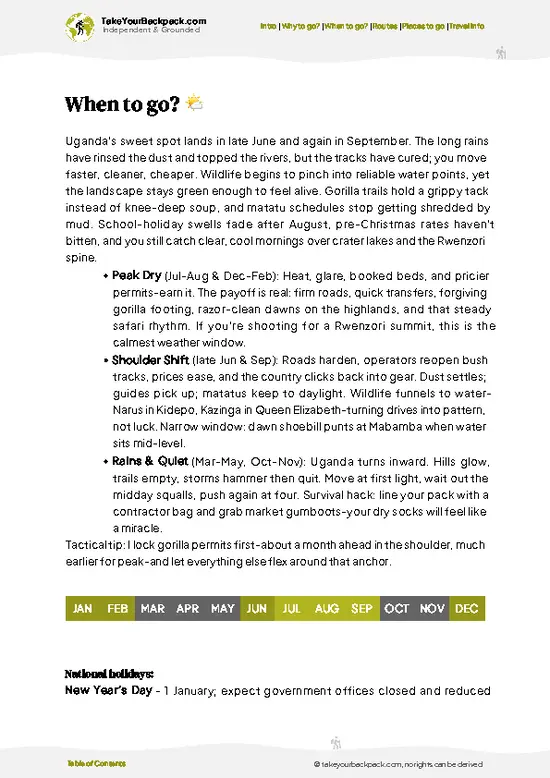
  • Weather: Uganda’s climate is equatorial, meaning it’s warm year-round but split between wet and dry seasons. The best time to visit the Uganda National Museum is during the dry seasons from June to September and December to February. Expect less mud and more comfortable strolls through the exhibits.

  • Temperature: Daytime temps hover around 22-26°C (72-79°F) during dry months, perfect for exploring without sweating buckets. The rainy seasons (March-May, October-November) bring cooler temps but also heavy downpours that can disrupt plans.

  • Daylight Hours: Uganda sits near the equator, so daylight is steady year-round—about 12 hours daily. No need to rush; you’ll have ample time to soak in the museum’s cultural treasures.

  • Crowds: Tourist traffic peaks in July and August, coinciding with
read more 👉

  • Weather: Uganda’s climate is equatorial, meaning it’s warm year-round but split between wet and dry seasons. The best time to visit the Uganda National Museum is during the dry seasons from June to September and December to February. Expect less mud and more comfortable strolls through the exhibits.

  • Temperature: Daytime temps hover around 22-26°C (72-79°F) during dry months, perfect for exploring without sweating buckets. The rainy seasons (March-May, October-November) bring cooler temps but also heavy downpours that can disrupt plans.

  • Daylight Hours: Uganda sits near the equator, so daylight is steady year-round—about 12 hours daily. No need to rush; you’ll have ample time to soak in the museum’s cultural treasures.

  • Crowds: Tourist traffic peaks in July and August, coinciding with the dry season and school holidays. Expect more groups and less elbow room. Visiting in the shoulder months like June or September means fewer people and a more intimate experience.

  • Seasonal Activities: Dry months align with local festivals and cultural events in Kampala, adding layers of context to your museum visit. Rainy seasons tend to quiet down the city’s social calendar.

  • Price Fluctuations: Entry fees remain stable year-round, but accommodation and transport costs spike during peak dry season months. Booking ahead during July and August is a must to avoid inflated prices.


Pro-tip: Aim for early June or late September to dodge crowds and rain, scoring the perfect balance of comfort, culture, and cost.


source: climatestotravel.comJANJanuary: excellent for travelingFEBFebruary: excellent for travelingMARMarch: fair for travelingAPRApril: fair for travelingMAYMay: fair for travelingJUNJune: highly recommended for travelingJULJuly: highly recommended for travelingAUGAugust: highly recommended for travelingSEPSeptember: highly recommended for travelingOCTOctober: fair for travelingNOVNovember: fair for travelingDECDecember: excellent for traveling
when-to-go

✈️ The backpacker research shortcutUganda Travel Guide

An offline-friendly backpacking guide with optimized travel routes, ranked highlights, transport advice, and the best areas to stay.
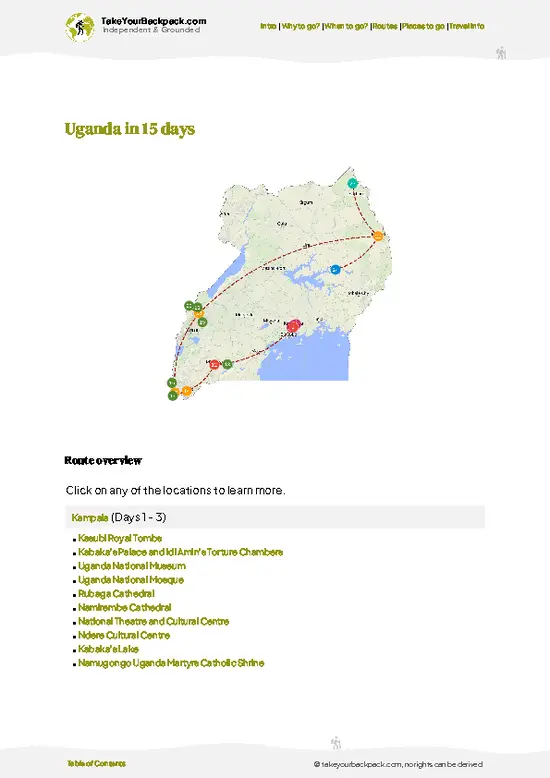
example page 0 from our offline Travel Guide for Uganda
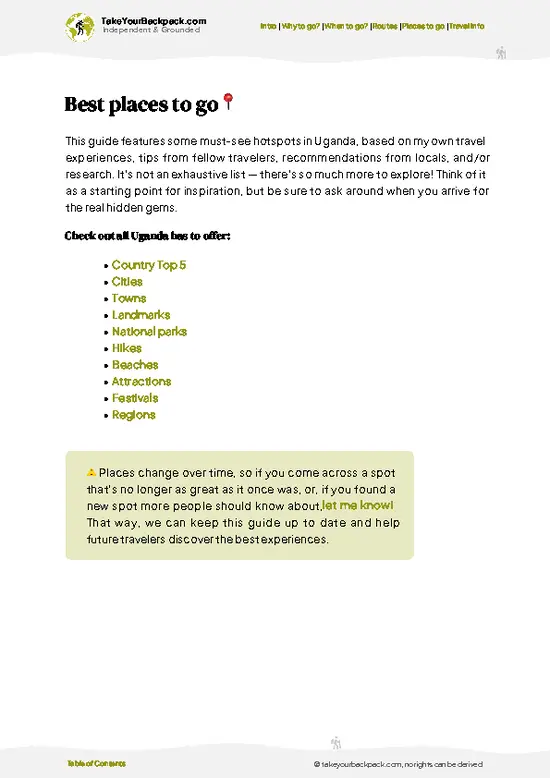
example page 1 from our offline Travel Guide for Uganda
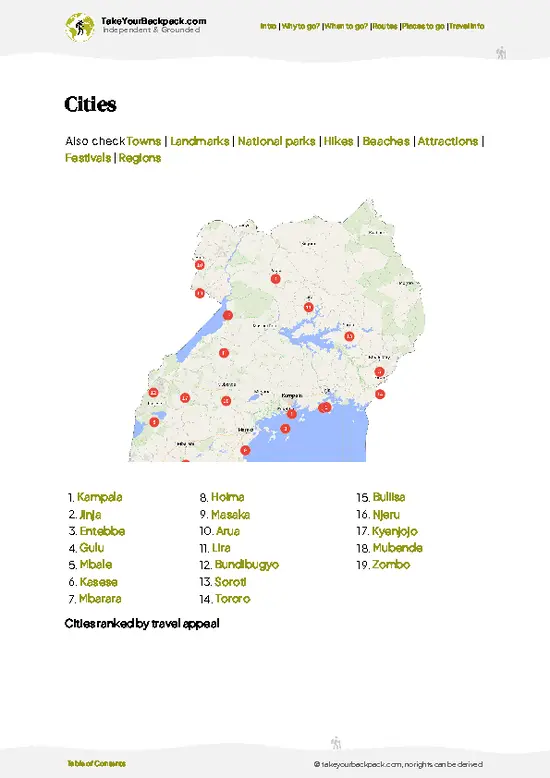
example page 2 from our offline Travel Guide for Uganda
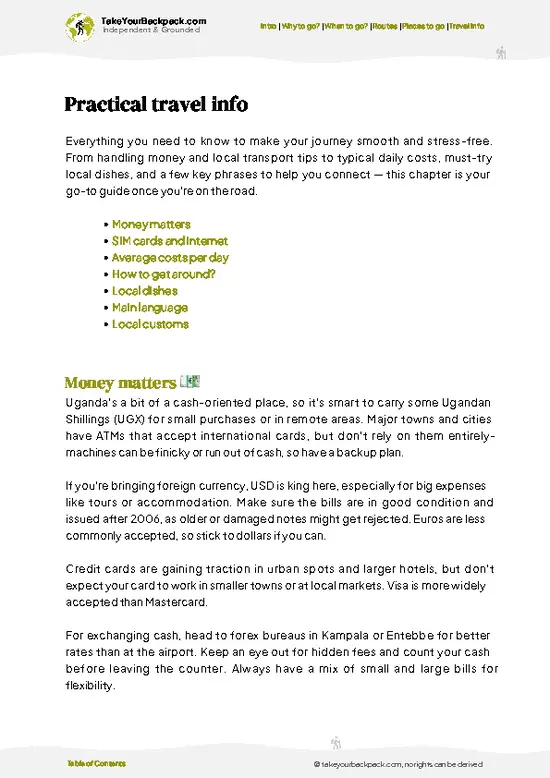
example page 3 from our offline Travel Guide for Uganda
example page 4 from our offline Travel Guide for Uganda
example page 5 from our offline Travel Guide for Uganda
example page 6 from our offline Travel Guide for Uganda
example page 7 from our offline Travel Guide for Uganda
The digital guide (422 pages) contains:
109 highlights, ranked by travel appeal
Optimized 5, 10 & 15-day travel routes
Cities, national parks, landmarks, beaches
How to get around
Offline-friendly for travel without Wi-Fi
👉 Click to see all 30+ guide features

📅 Plan smarter in minutes, not weeks
Month by month travel advice
Festivals & national holidays
Budget expectations

🗺️ Go to the right places, skip the overrated ones
Honest pros & cons of destinations
Top hikes, parks & viewpoints
Lesser-known places most travelers miss
Clear “worth it vs skip it” guidance

🛏️ Travel smoothly without rookie mistakes
Best areas to stay
Transport systems explained simply
Common scams & safety advice
SIM cards, money & practical tips

🌍 Understand the country, not just visit it
Culture & traditions
52 Essential phrases & customs
Festivals worth planning around
Traveler-friendly historical context
Insights that make places more meaningful

📱 Built for real travel conditions
Fully downloadable PDF
Works completely offline
Optimized for phone use
Useful in remote areas & buses
Everything in one place
Save weeks of stressful planning
Get instant access to your full guide. 30‑day money-back guarantee.


By proceeding you agree to our terms.
Sent to your inbox immediately after payment • 100% Secure Checkout
Best Backpacking Travel Advisor 2025 tourism awardBest Backpacking
Travel Advisor
2025
What others say about Take Your Backpack Guides:
⭐⭐⭐⭐⭐
Fantastic, amazing amount of information!
⭐⭐⭐⭐⭐
My goodness this is amazing, it's what I've been looking for hats off too you!
⭐⭐⭐⭐⭐
I think this is absolutely BRILLIANT
⭐⭐⭐⭐
Very complete and informative. It's still missing places, but I gotta to commend you
⭐⭐⭐⭐⭐
This is truly amazing, thank you, can't wait to explore it with my kids!
⭐⭐⭐⭐⭐
Awesome resource, thank you!
⭐⭐⭐⭐⭐
This is amazing! Can't wait to explore the ones I haven't seen
⭐⭐⭐⭐
I love this! Well done, great idea.
⭐⭐⭐⭐⭐
Thanks for taking the time to make this gem!
⭐⭐⭐⭐⭐
This might be the best website I've ever seen.
⭐⭐⭐⭐⭐
Congratulations, and thank you so much for your work; it's incredibly valuable.
⭐⭐⭐⭐
In all seriousness I think you did a great job pointing out the important spots
⭐⭐⭐⭐⭐
10/10 very good
⭐⭐⭐⭐⭐
As someone who's only just starting to visit regularly this is awesome, thank you.
⭐⭐⭐⭐
Thank you very much! I'm going to visit my dad, it's going to be very useful!
⭐⭐⭐⭐⭐
This is really cool! We'll be travelling for the first time and this definitely come in handy.
⭐⭐⭐⭐⭐
You are now our minister of culture, congratulations 👨‍💼
⭐⭐⭐⭐⭐
Just wanted to tell you that this is a pearl! Going to follow your recommendations.
⭐⭐⭐⭐⭐
This is so cool. I'll definitely be using the resource for my travels soon.
⭐⭐⭐⭐⭐
This is very impressive! Good work.
⭐⭐⭐⭐⭐
This is an amazing and informative site. Very well done!

🛏️ Where to stay?Best areas and accommodation options

If you’re heading to the Uganda National Museum, brace yourself for a reality check: this isn’t a polished, touristy hotspot with endless backpacker hubs. The museum sits in Kampala’s Old Kampala neighborhood, an area that’s a bit rough around the edges but packed with character and local life. Forget the sanitized tourist zones; this is where you get the real pulse of the city.

For backpackers, the best bet is to stay in the nearby neighborhoods of Old Kampala or Nakasero. Old Kampala offers a gritty, authentic vibe with affordable guesthouses and a chance to mingle with locals and fellow travelers … read more 👉
If you’re heading to the Uganda National Museum, brace yourself for a reality check: this isn’t a polished, touristy hotspot with endless backpacker hubs. The museum sits in Kampala’s Old Kampala neighborhood, an area that’s a bit rough around the edges but packed with character and local life. Forget the sanitized tourist zones; this is where you get the real pulse of the city.

For backpackers, the best bet is to stay in the nearby neighborhoods of Old Kampala or Nakasero. Old Kampala offers a gritty, authentic vibe with affordable guesthouses and a chance to mingle with locals and fellow travelers who aren’t just passing through. It’s safe enough if you stick to the main streets and keep your wits about you. The social scene here is low-key but genuine—think street food stalls, local bars, and impromptu music sessions rather than polished backpacker bars.

Nakasero, a bit more upscale and polished, is where you’ll find safer streets and a few more social spots geared toward travelers. It’s pricier but still manageable on a budget if you hunt for guesthouses or budget hotels. Plus, it’s a short ride from the museum and offers better security and a slightly more relaxed atmosphere after a day of exploring.

Bottom line: don’t expect a backpacker bubble. Embrace the raw, real Kampala neighborhoods close to the museum. That’s where the stories, the people, and the true Uganda experience live.

👛 Costs (as of 30 April 2026)Money, prices, and spending tips

As of the most recent estimates, the entrance fee for the Uganda National Museum is approximately €1.50 to €5.50 for foreign visitors, depending on the specific fee structure. Additional costs may include photography fees, which are typically around €1.50 for still cameras and €5.50 for video cameras. Please note that these fees are subject to change, and it's advisable to check the official Uganda Museums website for the most current information.

source: ugandamuseums.or.ug
⚠️ Prices can change and everyone travels differently, so take this as a rough guide. Hope it helps you plan your adventure!

Other Ugandan attractions near Uganda National Museum

Explore more nearby:


💡 Not sure where to go next?
Create a personalized itinerary for Uganda including Uganda National Museum and the places that fit your trip.

Generate my itinerary

👉 Discover all attractions

Or checkout all Uganda has to offer (think cities, towns, villages, national parks, hikes, beaches, festivals)
Country photo of Uganda

We 💚 feedbackSumming up the experience

Uganda National Museum isn’t some polished, crowd-pleasing spectacle—it’s a bit rough around the edges and often quieter than you’d expect. But that’s exactly why it’s worth your time. You get a raw, unfiltered look at Uganda’s cultural heartbeat, from traditional crafts to colonial history, without the tourist circus. Just don’t expect flashy displays or crowds; this place rewards patience and curiosity, not Instagram likes.

✈️ When did I visit Uganda?
In September 2019 I have done a backpacking trip through Uganda. Seeing gorilla’s in the wild from up close was a pure unexpected highlight!

✍️ Help improve this page!
The information on this page is based on my own backpacking experience in Uganda, supplemented with up-to-date research and feedback from other travelers. Travel details can change, so if you notice anything outdated or incomplete, feel free to let me know.


🙋‍♂️ Give feedback

👋 Meet the founderWho’s Behind Take Your Backpack?

Johan, backpacker and founder of TakeYourBackpackHi, I’m Johan (Netherlands 🇳🇱), the creator of TakeYourBackpack. Over the past decade, I’ve backpacked through 80+ countries across six continents, gaining extensive experience with independent travel, long-term trips, and overland routes.

This site is built on a combination of firsthand travel experience and carefully curated insights from other backpackers. Many guides are based on places I’ve personally visited, while others bring together tips, observations, and practical advice shared by trusted travelers I’ve met along the way.

The goal is to provide realistic, experience-driven guidance — not generic itineraries — so you can explore destinations with better context, clearer expectations, and more confidence.

Get full Uganda guide •
Instant download • 109 highlights • Full Offline guide