×

Uganda🇺🇬 | attractionsNdere Cultural Centretraditional dance, open-air amphitheater, regional music | things to do and best time to go

Explore Uganda National MuseumExplore Batwa Cultural Experience

Backpacking in Ndere Cultural Centre
🌟 Highlightattraction ranked #7
By Johan Kruseman 🇳🇱 | Updated May 30, 2026

Here’s what nobody tells you until you’re standing there, ticket in hand: Ndere Cultural Centre is one of the rare spots in Uganda where you can actually relax into the rhythm of local life without being hustled, herded, or gouged. It’s tucked away in the Ntinda suburb of Kampala—close enough to the city’s chaos for easy access, but just far enough to feel like you’ve slipped behind the curtain. The Instagram crowd barely scratches the surface here; yes, you’ll see a few phones out during the drum performances, but the real magic is in the laughter, the sweat, and the wild, joyful energy of the dancers who aren’t just putting on a show—they’re living it. Is it cheap? Not by backpacker street-food standards, but you get a full evening of music, storytelling, and a buffet that actually tastes like someone’s grandmother made it. Compared to the big-ticket safaris or gorilla treks, Ndere is refreshingly human, deeply local, and—if you let yourself join in—absolutely electric.

Discover everything you want to know in the 📖 Uganda Travel Guide.
Safety warning

The current risk level for Uganda is high. Check the advice before going.


Get your Uganda guide
109 ranked highlights, routes & tips, works offline (422 pages)
Loading the map 🌍
CLICK TO FILTER
cities
towns
landmarks
national parks
hikes
beaches
attractions
festivals
regions
SHOW COUNTRY’S BESTSHOW ALL

✨ Why go?
Ranked #7 attraction in Uganda
What sets this place apart

The Ndere Cultural Centre in Uganda isn’t just another stop on the tourist checklist—it’s a raw, unfiltered dive into the heart of Ugandan identity. Sure, it draws crowds, especially during performances, but that’s because it delivers something few places can: a living, breathing showcase of Uganda’s diverse ethnic traditions. This isn’t a polished, sanitized museum experience. It’s loud drums, vibrant costumes, and storytelling that punches through the noise of typical tourist traps. Backpackers who make the trek here aren’t just ticking a box; they’re witnessing history in motion, from traditional dances that have survived centuries to songs that carry the weight of community struggles and triumphs.

The cost? Modest compared to the cultural wealth you’re absorbing. It’s a rare spot where … read more 👉
The Ndere Cultural Centre in Uganda isn’t just another stop on the tourist checklist—it’s a raw, unfiltered dive into the heart of Ugandan identity. Sure, it draws crowds, especially during performances, but that’s because it delivers something few places can: a living, breathing showcase of Uganda’s diverse ethnic traditions. This isn’t a polished, sanitized museum experience. It’s loud drums, vibrant costumes, and storytelling that punches through the noise of typical tourist traps. Backpackers who make the trek here aren’t just ticking a box; they’re witnessing history in motion, from traditional dances that have survived centuries to songs that carry the weight of community struggles and triumphs.

The cost? Modest compared to the cultural wealth you’re absorbing. It’s a rare spot where the effort-to-reward ratio is off the charts—easy to reach from Kampala, yet rich enough to feel like a milestone on any Uganda route. For anyone serious about understanding the country beyond the safaris and landscapes, Ndere is a must. It’s where you stop being a visitor and start feeling the pulse of Uganda’s soul.
Want to include Ndere Cultural Centre in your Uganda route?
Create a personalized Uganda itinerary that includes Ndere Cultural Centre and the places that fit your trip — based on your travel style, budget, and available time. Get your route in seconds.

Generate my trip

💡 HighlightsTop highlights of Ndere Cultural Centre

1. The Full-Spectrum Dance Performances
Forget the sanitized, two-minute “cultural show” you’ve seen at tourist hotels. ’Ndere’s dance performances are a marathon of energy, sweat, and skill—think two and a half hours of live, unfiltered Ugandan culture. You’re not just watching a troupe; you’re witnessing a living archive. Each region’s dance is performed in full regalia, with moves that range from the acrobatic leaps of the Banyankole to the hypnotic, shoulder-driven rhythms of the Acholi. The stamina alone is jaw-dropping. This isn’t background entertainment; it’s the main event, and it’s impossible to sit still.


2. The Live Traditional Music
If you’ve ever wondered what a xylophone the size of a canoe sounds like, this is your chance. ’Ndere’s musicians play everything from the deep, … read more 👉
1. The Full-Spectrum Dance Performances
Forget the sanitized, two-minute “cultural show” you’ve seen at tourist hotels. ’Ndere’s dance performances are a marathon of energy, sweat, and skill—think two and a half hours of live, unfiltered Ugandan culture. You’re not just watching a troupe; you’re witnessing a living archive. Each region’s dance is performed in full regalia, with moves that range from the acrobatic leaps of the Banyankole to the hypnotic, shoulder-driven rhythms of the Acholi. The stamina alone is jaw-dropping. This isn’t background entertainment; it’s the main event, and it’s impossible to sit still.


2. The Live Traditional Music
If you’ve ever wondered what a xylophone the size of a canoe sounds like, this is your chance. ’Ndere’s musicians play everything from the deep, resonant engalabi drum to the sharp, melodic notes of the amadinda. The music isn’t just accompaniment—it’s a conversation, a challenge, a celebration. The musicians riff off each other, sometimes improvising, always pushing the energy higher. You’ll feel the bass in your chest and the rhythm in your feet. It’s not polished for Instagram; it’s raw, loud, and absolutely alive.


3. The Comedy Interludes
Here’s the curveball: between the dances, the emcee (often the legendary Stephen Rwangyezi himself) delivers rapid-fire comedy and storytelling. It’s sharp, local, and sometimes a little bit savage—think stand-up with a Ugandan twist. The jokes land whether you’re a local or a visitor, and the crowd’s laughter is contagious. This isn’t just filler; it’s a cultural crash course, delivered with wit and zero patience for pretension. If you’re expecting solemnity, you’re in for a surprise.


4. The Audience Participation
You will be called up. You will dance. And you will probably look ridiculous, but that’s the point. ’Ndere’s performers have a sixth sense for picking out the shyest person in the crowd and turning them into the star of the night. It’s not about humiliation—it’s about breaking down the wall between performer and audience. By the end, you’re part of the story, not just a spectator. This is the moment you’ll remember (and possibly cringe about) years later. This one’s my personal favorite—because nothing beats the look on someone’s face when they realize they’re actually having fun.


5. The Food and Drink Experience
You’re not coming here for a white-tablecloth meal, but the buffet is a crash course in Ugandan comfort food. Expect matoke (steamed banana), groundnut sauce, grilled meats, and local greens. It’s hearty, flavorful, and best enjoyed with a cold Nile Special beer. The food isn’t the star, but it’s the glue that holds the evening together—shared plates, shared laughter, and a chance to taste the country you’re exploring.


6. The Open-Air Setting
You’re not crammed into a theater. ’Ndere’s amphitheater is open to the Kampala night air, with the city’s distant hum as a backdrop. The setting is casual, communal, and refreshingly unpretentious. You’re here to relax, not to pose. The vibe is more backyard barbecue than formal gala, and that’s exactly why it works.
Spotted a mistake or missing something? Contact us.

Things to do near Ndere Cultural Centre

Ratings based on Tripadvisor reviews. When you book through this link, you support our work at no extra cost to you.

🌤️ When to go?Choosing the right time of year


  • Weather: The best time to visit Ndere Cultural Centre is during Uganda’s dry seasons, mainly from June to August and December to February. These months avoid the heavy rains that can turn the grounds muddy and make outdoor performances less enjoyable.

  • Temperature: Expect daytime temperatures around 22-28°C (72-82°F) during the dry season, which is comfortable for outdoor activities. The rainy seasons, March to May and September to November, bring cooler temps but also unpredictable showers.

  • Daylight Hours: Uganda sits near the equator, so daylight is steady year-round—about 12 hours daily. This means you don’t have to rush your visit based on fading light, but plan to arrive early to catch the full cultural performances.

  • Crowds: Ndere isn’t a tourist crush point like the national
read more 👉

  • Weather: The best time to visit Ndere Cultural Centre is during Uganda’s dry seasons, mainly from June to August and December to February. These months avoid the heavy rains that can turn the grounds muddy and make outdoor performances less enjoyable.

  • Temperature: Expect daytime temperatures around 22-28°C (72-82°F) during the dry season, which is comfortable for outdoor activities. The rainy seasons, March to May and September to November, bring cooler temps but also unpredictable showers.

  • Daylight Hours: Uganda sits near the equator, so daylight is steady year-round—about 12 hours daily. This means you don’t have to rush your visit based on fading light, but plan to arrive early to catch the full cultural performances.

  • Crowds: Ndere isn’t a tourist crush point like the national parks, but weekends and holidays see more locals and tourists. Visiting on a weekday during the dry season offers a more relaxed, authentic vibe.

  • Seasonal Activities: The centre’s performances and workshops run year-round, but special cultural festivals often align with dry months, adding extra layers of local flavor and energy.

  • Price Fluctuations: Entry fees and workshop costs stay fairly stable year-round, but accommodation and transport prices nearby can spike during peak dry season when more travelers are around.


Pro-tip: Aim for a weekday visit in July or January to dodge crowds, enjoy perfect weather, and soak in the full cultural experience without the muddy mess or tourist rush.


source: climatestotravel.comJANJanuary: excellent for travelingFEBFebruary: excellent for travelingMARMarch: fair for travelingAPRApril: fair for travelingMAYMay: fair for travelingJUNJune: excellent for travelingJULJuly: excellent for travelingAUGAugust: excellent for travelingSEPSeptember: fair for travelingOCTOctober: fair for travelingNOVNovember: fair for travelingDECDecember: excellent for traveling
when-to-go

✈️ The backpacker research shortcutUganda Travel Guide

An offline-friendly backpacking guide with optimized travel routes, ranked highlights, transport advice, and the best areas to stay.
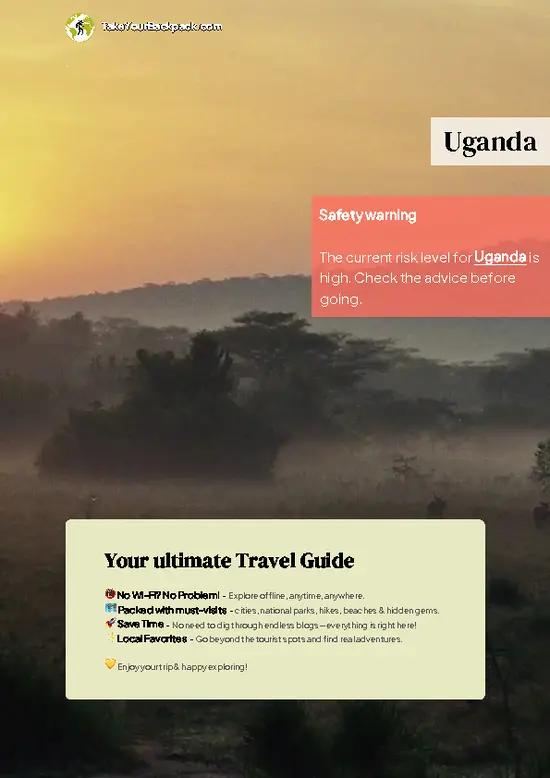
example page 0 from our offline Travel Guide for Uganda
example page 1 from our offline Travel Guide for Uganda
example page 2 from our offline Travel Guide for Uganda
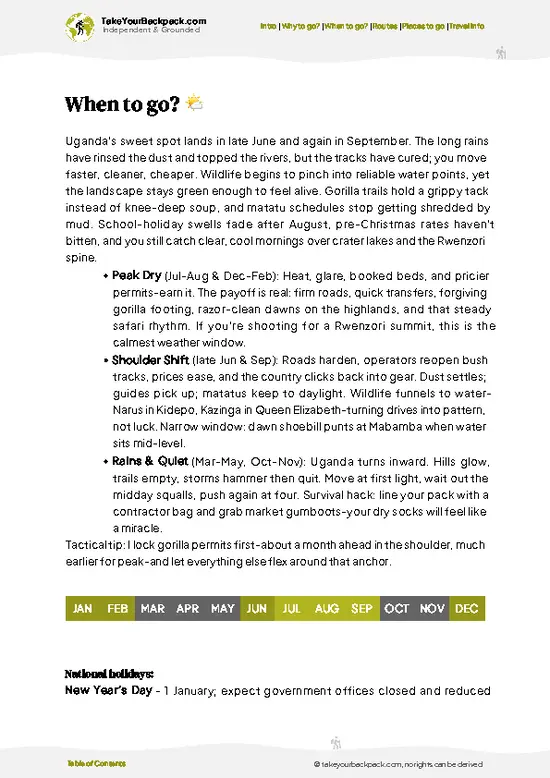
example page 3 from our offline Travel Guide for Uganda
example page 4 from our offline Travel Guide for Uganda
example page 5 from our offline Travel Guide for Uganda
example page 6 from our offline Travel Guide for Uganda
example page 7 from our offline Travel Guide for Uganda
The digital guide (422 pages) contains:
109 highlights, ranked by travel appeal
Optimized 5, 10 & 15-day travel routes
Cities, national parks, landmarks, beaches
How to get around
Offline-friendly for travel without Wi-Fi
👉 Click to see all 30+ guide features

📅 Plan smarter in minutes, not weeks
Month by month travel advice
Festivals & national holidays
Budget expectations

🗺️ Go to the right places, skip the overrated ones
Honest pros & cons of destinations
Top hikes, parks & viewpoints
Lesser-known places most travelers miss
Clear “worth it vs skip it” guidance

🛏️ Travel smoothly without rookie mistakes
Best areas to stay
Transport systems explained simply
Common scams & safety advice
SIM cards, money & practical tips

🌍 Understand the country, not just visit it
Culture & traditions
52 Essential phrases & customs
Festivals worth planning around
Traveler-friendly historical context
Insights that make places more meaningful

📱 Built for real travel conditions
Fully downloadable PDF
Works completely offline
Optimized for phone use
Useful in remote areas & buses
Everything in one place
Save weeks of stressful planning
Get instant access to your full guide. 30‑day money-back guarantee.


By proceeding you agree to our terms.
Sent to your inbox immediately after payment • 100% Secure Checkout
Best Backpacking Travel Advisor 2025 tourism awardBest Backpacking
Travel Advisor
2025
What others say about Take Your Backpack Guides:
⭐⭐⭐⭐⭐
Fantastic, amazing amount of information!
⭐⭐⭐⭐⭐
My goodness this is amazing, it's what I've been looking for hats off too you!
⭐⭐⭐⭐⭐
I think this is absolutely BRILLIANT
⭐⭐⭐⭐
Very complete and informative. It's still missing places, but I gotta to commend you
⭐⭐⭐⭐⭐
This is truly amazing, thank you, can't wait to explore it with my kids!
⭐⭐⭐⭐⭐
Awesome resource, thank you!
⭐⭐⭐⭐⭐
This is amazing! Can't wait to explore the ones I haven't seen
⭐⭐⭐⭐
I love this! Well done, great idea.
⭐⭐⭐⭐⭐
Thanks for taking the time to make this gem!
⭐⭐⭐⭐⭐
This might be the best website I've ever seen.
⭐⭐⭐⭐⭐
Congratulations, and thank you so much for your work; it's incredibly valuable.
⭐⭐⭐⭐
In all seriousness I think you did a great job pointing out the important spots
⭐⭐⭐⭐⭐
10/10 very good
⭐⭐⭐⭐⭐
As someone who's only just starting to visit regularly this is awesome, thank you.
⭐⭐⭐⭐
Thank you very much! I'm going to visit my dad, it's going to be very useful!
⭐⭐⭐⭐⭐
This is really cool! We'll be travelling for the first time and this definitely come in handy.
⭐⭐⭐⭐⭐
You are now our minister of culture, congratulations 👨‍💼
⭐⭐⭐⭐⭐
Just wanted to tell you that this is a pearl! Going to follow your recommendations.
⭐⭐⭐⭐⭐
This is so cool. I'll definitely be using the resource for my travels soon.
⭐⭐⭐⭐⭐
This is very impressive! Good work.
⭐⭐⭐⭐⭐
This is an amazing and informative site. Very well done!

🛏️ Where to stay?Best areas to stay in Uganda

If you’re heading to the ’Ndere Cultural Centre in Uganda, brace yourself for a reality check: this isn’t a polished tourist hotspot with endless amenities. The crowds? Manageable, but expect a steady flow of local visitors and cultural enthusiasts rather than hordes of selfie-stick wielders. The costs? Modest, but don’t expect luxury for budget prices. What you get instead is something far more valuable—authentic cultural immersion.

The best places to stay are not fancy resorts but the neighborhoods and small towns hugging the centre. These areas are where you’ll find safe, social spots popular … read more 👉
If you’re heading to the ’Ndere Cultural Centre in Uganda, brace yourself for a reality check: this isn’t a polished tourist hotspot with endless amenities. The crowds? Manageable, but expect a steady flow of local visitors and cultural enthusiasts rather than hordes of selfie-stick wielders. The costs? Modest, but don’t expect luxury for budget prices. What you get instead is something far more valuable—authentic cultural immersion.

The best places to stay are not fancy resorts but the neighborhoods and small towns hugging the centre. These areas are where you’ll find safe, social spots popular with backpackers and solo travelers who want to connect with locals and fellow adventurers alike. The vibe here is relaxed but lively, with guesthouses and small lodges that encourage interaction over shared meals or evening fires. It’s the kind of place where you swap stories with Ugandan artists or musicians who perform at the centre, not just other tourists.

Safety is solid if you stick to the main roads and well-trodden paths, and the locals are welcoming without being pushy. Staying close means you can catch early performances or workshops without rushing, and you’ll get a genuine feel for the rhythms of daily life around the centre. Forget polished tourist zones—this is where the real magic of ’Ndere lives, in the people and the pulse of the community.

👛 Costs (as of 1 May 2026)Money, prices, and spending tips

Entrance fees at Ndere Cultural Centre vary based on nationality and age. International visitors pay UGX 95,000 (approximately €25), while Ugandan nationals pay UGX 55,000 (approximately €15). Children aged 3 to 12 years are charged UGX 30,000 (approximately €8). An optional buffet dinner is available for UGX 60,000 (approximately €16). ([ndere.com](https://ndere.com/?utm_source=openai))

source: ndere.com
⚠️ Prices can change and everyone travels differently, so take this as a rough guide. Hope it helps you plan your adventure!

Other Ugandan attractions near Ndere Cultural Centre

Explore more nearby:


💡 Not sure where to go next?
Create a personalized itinerary for Uganda including Ndere Cultural Centre and the places that fit your trip.

Generate my itinerary

👉 Discover all attractions

Or checkout all Uganda has to offer (think cities, towns, villages, national parks, hikes, beaches, festivals)
Country photo of Uganda

We 💚 feedbackWhat to keep in mind

Ndere Cultural Centre isn’t some polished, touristy stage show—it’s raw, alive, and deeply rooted in Uganda’s traditions. The dancers don’t just perform; they tell stories that hit you right in the gut. But heads up: it can get crowded, especially on weekends, which sometimes drowns out the intimacy of the experience. Still, if you want a real connection to Uganda’s soul beyond the usual safari clichés, this place delivers in spades.

✈️ When did I visit Uganda?
In September 2019 I have done a backpacking trip through Uganda. Seeing gorilla’s in the wild from up close was a pure unexpected highlight!

✍️ Help improve this page!
The information on this page is based on my own backpacking experience in Uganda, supplemented with up-to-date research and feedback from other travelers. Travel details can change, so if you notice anything outdated or incomplete, feel free to let me know.


🙋‍♂️ Give feedback

👋 Meet the founderWho’s Behind Take Your Backpack?

Johan, backpacker and founder of TakeYourBackpackHi, I’m Johan (Netherlands 🇳🇱), the creator of TakeYourBackpack. Over the past decade, I’ve backpacked through 80+ countries across six continents, gaining extensive experience with independent travel, long-term trips, and overland routes.

This site is built on a combination of firsthand travel experience and carefully curated insights from other backpackers. Many guides are based on places I’ve personally visited, while others bring together tips, observations, and practical advice shared by trusted travelers I’ve met along the way.

The goal is to provide realistic, experience-driven guidance — not generic itineraries — so you can explore destinations with better context, clearer expectations, and more confidence.

Get full Uganda guide •
Instant download • 109 highlights • Full Offline guide