Expert Commentary
Uganda’s attractions demand a strategic approach. You won’t conquer every highlight in one trip without burning out or blowing your budget. Aim for a focused selection—three to five major experiences strike the right balance between depth and variety. This lets you savor each without rushing or skimming the surface.
Traveling across Uganda means grappling with uneven infrastructure. Roads can shift from smooth tarmac to rough dirt in minutes, turning a short distance into a half-day slog. Factor this into your timing. Don’t underestimate travel days; they’re part of the adventure, but they also eat into your exploration hours. Prioritize attractions clustered regionally to maximize your time on the ground rather than on the road.
Budget-wise, Uganda offers a spectrum. …
read more 👉Expert Commentary
Uganda’s attractions demand a strategic approach. You won’t conquer every highlight in one trip without burning out or blowing your budget. Aim for a focused selection—three to five major experiences strike the right balance between depth and variety. This lets you savor each without rushing or skimming the surface.
Traveling across Uganda means grappling with uneven infrastructure. Roads can shift from smooth tarmac to rough dirt in minutes, turning a short distance into a half-day slog. Factor this into your timing. Don’t underestimate travel days; they’re part of the adventure, but they also eat into your exploration hours. Prioritize attractions clustered regionally to maximize your time on the ground rather than on the road.
Budget-wise, Uganda offers a spectrum. Entry fees for parks and cultural sites can be steep compared to local standards, especially for gorilla trekking permits or guided safaris. These costs are unavoidable but worth the splurge if you value close wildlife encounters. Balance this by mixing high-ticket experiences with low-cost cultural visits or nature walks. Local markets, village tours, and community projects provide rich insight without draining your wallet. Expect to spend more on transport and guides than on food or accommodation if you’re aiming for quality and safety.
Safety and cultural respect are non-negotiable. Uganda is generally stable, but rural areas require vigilance—travel with reputable guides and avoid night driving. Engage with local customs openly but sensitively; Ugandans appreciate genuine interest but expect respect for traditions and personal space. Dress modestly outside tourist hubs and always ask before photographing people. These small gestures unlock warmer interactions and smoother logistics.
Planning your itinerary means embracing trade-offs. The country’s diversity—from dense rainforests to sprawling savannahs—means you can’t chase every ecosystem in one go. Choose your focus: primate trekking, birdwatching, cultural immersion, or big-game safaris. Each demands different gear, guides, and stamina. For instance, gorilla trekking requires physical fitness and permits booked months ahead, while birdwatching can be more flexible but demands patience and early mornings.
Local guides are your secret weapon. Their knowledge transforms a standard visit into a layered experience. They navigate language barriers, spot elusive wildlife, and share stories that no guidebook captures. Hiring them supports local economies and often means safer, smoother travel through remote areas. Don’t skimp here; the difference is palpable.
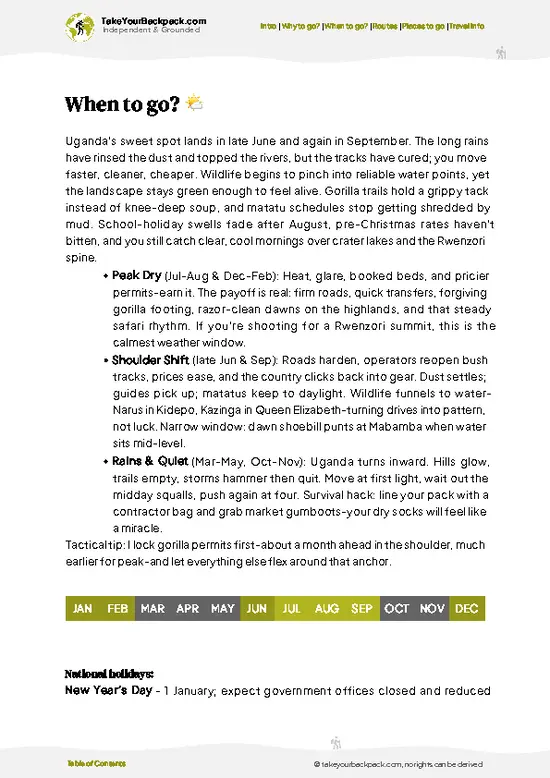
Weather patterns also shape your plans. Uganda’s equatorial climate brings heavy rains that can wash out roads and trails, especially in the wet seasons. This affects accessibility and wildlife visibility. Dry months offer easier travel but can mean dusty roads and crowded parks. Weigh your priorities: do you want solitude and lush landscapes or easier logistics and more predictable conditions?
Finally, pace yourself. Uganda’s attractions reward those who slow down and engage deeply. Rushing from one park to the next risks missing the subtle rhythms of local life and the quiet moments wildlife offers. Build in downtime to absorb the atmosphere, chat with locals, or simply watch the sunset over the savannah. This is where the real magic happens—beyond the checklist, in the lived experience.
In sum, treat Uganda’s attractions as a layered puzzle. Each piece requires time, money, and effort, but with thoughtful choices, you unlock a journey that’s both challenging and richly rewarding. The key is to plan with flexibility, respect, and a readiness to adapt. That’s how you move from tourist to traveler here.v2.webp)
 Best Backpacking
.jpg) Hi, I’m Johan (Netherlands 🇳🇱), the creator of TakeYourBackpack. Over the past decade, I’ve backpacked through 80+ countries across six continents, gaining extensive experience with independent travel, long-term trips, and overland routes.
Hi, I’m Johan (Netherlands 🇳🇱), the creator of TakeYourBackpack. Over the past decade, I’ve backpacked through 80+ countries across six continents, gaining extensive experience with independent travel, long-term trips, and overland routes.