×

United States Virgin Islands🇻🇮 | best regionsYour Guide to the Best regions in United States Virgin Islands

The United States Virgin Islands split into three inhabited islands, and the differences between them are real. St. Thomas is the commercial hub with cruise traffic and the most people. St. John is mostly national park, quieter and pricier. St. Croix is larger, flatter and more local. For independent travel on a budget, cost, ferry access and crowds should guide the choice.

By Johan Kruseman 🇳🇱 | Updated October 23, 2026
Explore the best towns in United States Virgin Islands

Why go?Key Factors That Shape the Experience

The territory is small, American and Caribbean at once, which shapes what it offers. US dollars are used, no passport is needed for U.S. citizens, and roads, ferries and phone service work reliably. Danish colonial history is visible in town grids, forts and place names, and Crucian, Thomas and John communities each keep their own character. The geography is volcanic hills ringed by coral reefs, with trade winds that keep heat tolerable.

Before choosing the territory, know that it is not a low-cost destination. Lodging, groceries and ferries cost more than in much of the Caribbean, and hostels are almost nonexistent. Public transport is limited, so car rental or taxis add real expense. Camping exists but is scarce. Hurricane damage in 2017 still shows in places, and some facilities remain closed.
Why These Made the Cut
The list of best regions in United States Virgin Islands is created based on landscapes, local culture, attractions, vibes, and overall appeal. If you feel a region is missing in this list, please let us know.

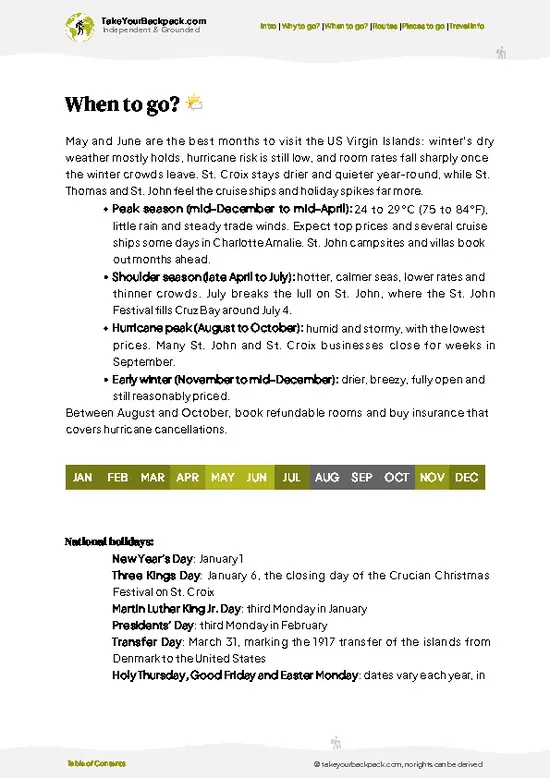
When to go?Best Time to Visit United States Virgin Islands for regions

Best months and weather: The best months are December to April, when rain is lightest, humidity is lower and trade winds hold daytime highs near 84 to 88°F (29 to 31°C). Seas are generally calmer for snorkeling, though north swells can affect some north-facing beaches in winter.Shoulder and peak seasons: Mid-December to early March is peak, with lodging often 30 to 50 percent above summer rates and booking needed weeks ahead. May to June and November are shoulder months with lower prices and fewer visitors. August to October is the wettest period, peaking in hurricane season (June to November), with September and October the highest risk. Some restaurants and guesthouses on St. John and St. Croix close for several weeks in that stretch. Annual rainfall averages roughly 40 to 45 inches (1,000 … read more 👉
Best months and weather: The best months are December to April, when rain is lightest, humidity is lower and trade winds hold daytime highs near 84 to 88°F (29 to 31°C). Seas are generally calmer for snorkeling, though north swells can affect some north-facing beaches in winter.Shoulder and peak seasons: Mid-December to early March is peak, with lodging often 30 to 50 percent above summer rates and booking needed weeks ahead. May to June and November are shoulder months with lower prices and fewer visitors. August to October is the wettest period, peaking in hurricane season (June to November), with September and October the highest risk. Some restaurants and guesthouses on St. John and St. Croix close for several weeks in that stretch. Annual rainfall averages roughly 40 to 45 inches (1,000 to 1,150 mm), and St. Croix is a little drier than the others.

region hoppingOptimizing Your Multi-Stop Itinerary

How many days to allow: A trip combining several islands needs 7 to 10 days. Fewer than that turns into ferry schedules and packing. Allow 3 to 4 nights on each island you choose, and treat two islands as the practical limit for a week.Order and transfers: St. Thomas and St. John pair easily, because ferries run from Red Hook to Cruz Bay about every hour, taking 20 to 25 minutes. St. Croix sits roughly 40 miles south, reached by a short flight of about 25 minutes from St. Thomas or by seaplane. A seasonal passenger ferry has run irregularly, so do not rely on it. Arriving at the St. Thomas airport and finishing on St. Croix, or the reverse, avoids backtracking.Common planning mistakes: Travelers often underestimate transfer time, since taxi, ferry and check-in can eat half a day. Schedule … read more 👉
How many days to allow: A trip combining several islands needs 7 to 10 days. Fewer than that turns into ferry schedules and packing. Allow 3 to 4 nights on each island you choose, and treat two islands as the practical limit for a week.Order and transfers: St. Thomas and St. John pair easily, because ferries run from Red Hook to Cruz Bay about every hour, taking 20 to 25 minutes. St. Croix sits roughly 40 miles south, reached by a short flight of about 25 minutes from St. Thomas or by seaplane. A seasonal passenger ferry has run irregularly, so do not rely on it. Arriving at the St. Thomas airport and finishing on St. Croix, or the reverse, avoids backtracking.Common planning mistakes: Travelers often underestimate transfer time, since taxi, ferry and check-in can eat half a day. Schedule island moves for mornings, and avoid the last ferry, which leaves the evening exposed to delays. Booking three islands into five days wastes the beaches that justify the trip.

The ListThe Best regions of United States Virgin Islands

1 Water Island

Honeymoon Beach, WWII tunnels, Flag Hill sunsets, residential lanes

Ride a short ferry from St. Thomas, snorkel off a calm crescent beach, then walk wartime tunnels and quiet lanes to a hilltop harbor view.

Loading the map 🌍

Expert viewTips and Advice from Travelers

How many islands to visit: Two islands is the number I advise for most backpackers. Each transfer costs half a day and US$30 to 120 in ferry, taxi or flight fares, so a third island rarely repays the time. One island is a fine choice for a week.Choosing by travel style: Choose the national park island for hiking and snorkeling from shore, and accept higher prices. Choose the largest island for local food, history and lower costs. The commercial hub suits short stays and onward connections but is crowded when cruise ships are in, often several a day in winter.What it costs: Budget US$100 to 180 a day if you camp or share a basic room, cook some meals and use open-air safari taxis. Private rooms commonly run US$150 to 300 a night in winter. Expect US$80 to 150 a day on top for a rental car, … read more 👉
How many islands to visit: Two islands is the number I advise for most backpackers. Each transfer costs half a day and US$30 to 120 in ferry, taxi or flight fares, so a third island rarely repays the time. One island is a fine choice for a week.Choosing by travel style: Choose the national park island for hiking and snorkeling from shore, and accept higher prices. Choose the largest island for local food, history and lower costs. The commercial hub suits short stays and onward connections but is crowded when cruise ships are in, often several a day in winter.What it costs: Budget US$100 to 180 a day if you camp or share a basic room, cook some meals and use open-air safari taxis. Private rooms commonly run US$150 to 300 a night in winter. Expect US$80 to 150 a day on top for a rental car, which is needed on the larger island. Beaches in the national park charge a US$5 entry fee. A snorkel rental runs about US$10 to 15 a day, and a guided boat trip US$80 to 150. A one-week visit lands near US$900 to 1,800 before flights.Costs and delays that catch travelers out: Groceries run 25 to 50 percent above mainland prices, so buy staples at the larger supermarkets and avoid resort-area shops. Restaurants add 15 to 20 percent service charges to some bills, so check before tipping again. Book camping and rooms early for winter, since cheap options sell out first. Fuel and car costs jump if you rent for a few days only, so use taxis for short stays.

Traffic drives on the left, with left-hand-drive American cars. That surprises many drivers. Roads are narrow and steep, and tires get punished.Safety and cultural notes: Petty theft from parked cars and beaches is the most common problem, so leave nothing visible and carry little. Avoid walking unlit roads at night, and use taxis after dark. Crime in some neighborhoods is higher than the tourist areas suggest. Coral is protected, so wear reef-safe sunscreen and never touch or stand on it. Greet people before asking for anything, and dress above swimwear in town.

✈️ The backpacker research shortcutUnited States Virgin Islands Travel Guide

An offline-friendly backpacking guide with optimized travel routes, ranked highlights, transport advice, and the best areas to stay.
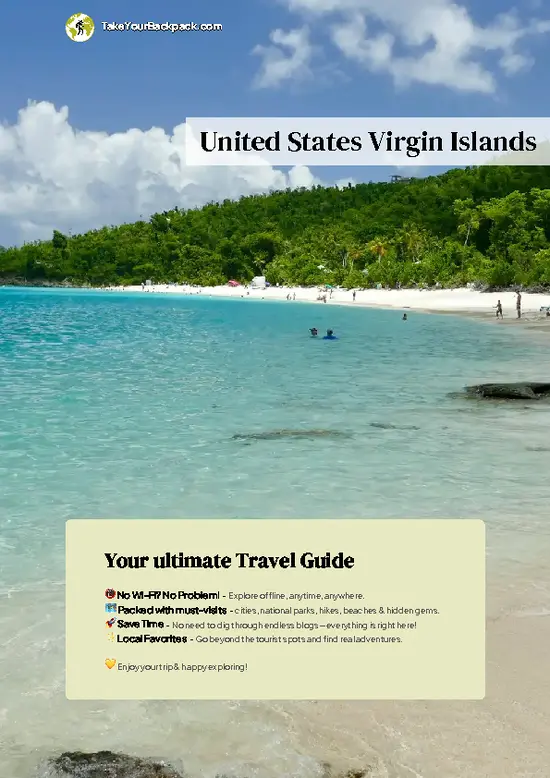
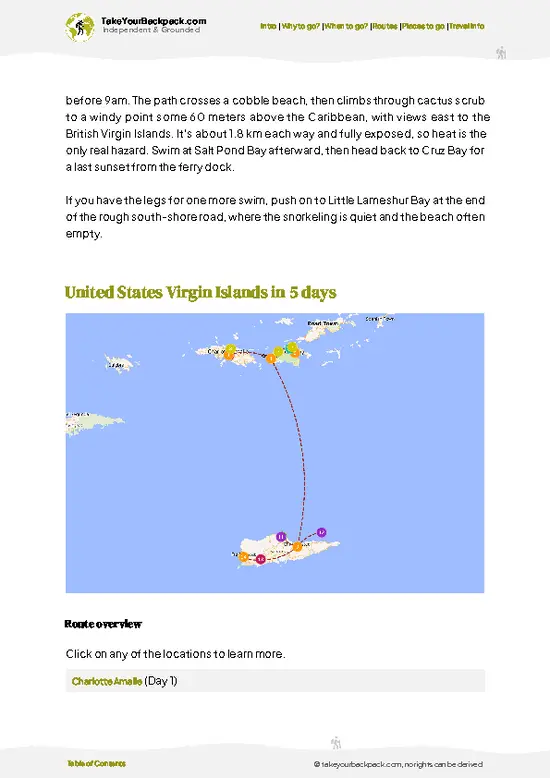
example page 0 from our offline Travel Guide for United States Virgin Islands
example page 1 from our offline Travel Guide for United States Virgin Islands
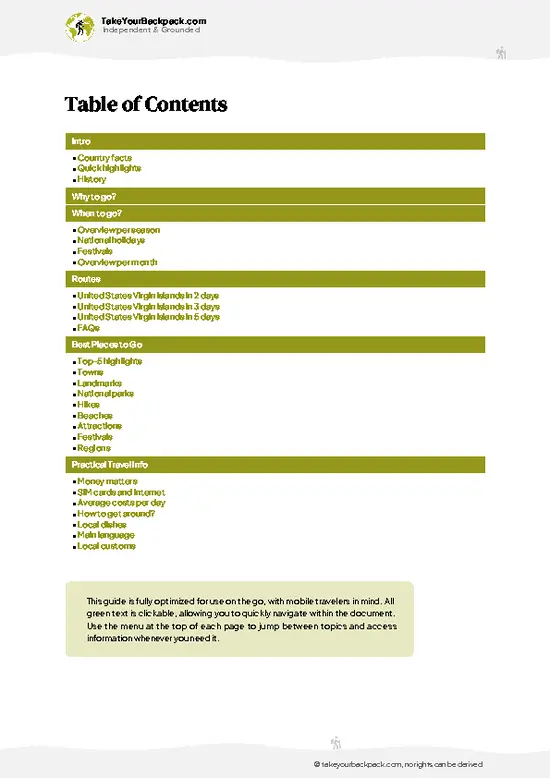
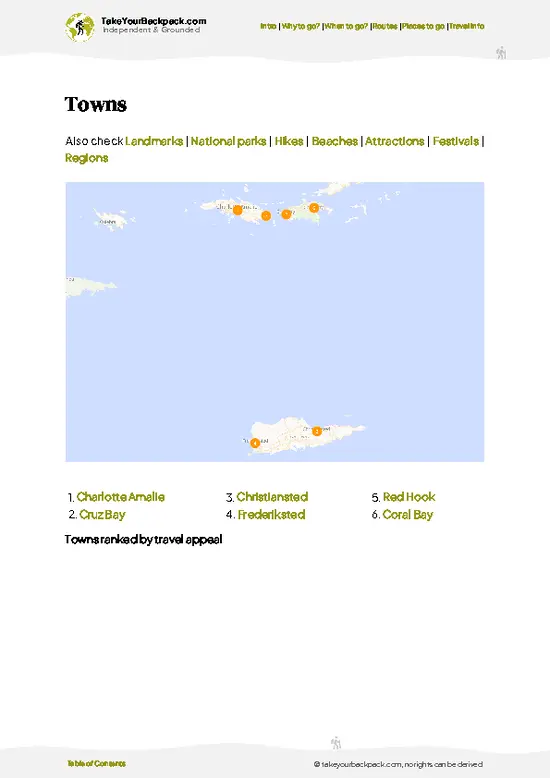
example page 2 from our offline Travel Guide for United States Virgin Islands
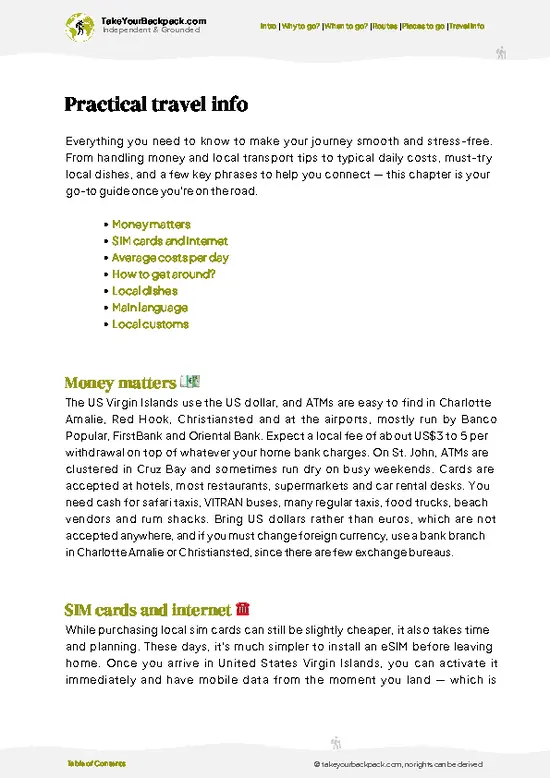
example page 3 from our offline Travel Guide for United States Virgin Islands
example page 4 from our offline Travel Guide for United States Virgin Islands
example page 5 from our offline Travel Guide for United States Virgin Islands
example page 6 from our offline Travel Guide for United States Virgin Islands
example page 7 from our offline Travel Guide for United States Virgin Islands
The digital guide (144 pages) contains:
✅ 35 highlights, ranked by travel appeal
✅ Optimized 2, 3 & 5-day travel routes
✅ Cities, national parks, landmarks, beaches
✅ How to get around
✅ Offline-friendly for travel without Wi-Fi
👉 Click to see all 30+ guide features

📅 Plan smarter in minutes, not weeks
✅ Month by month travel advice
✅ Festivals & national holidays
✅ Budget expectations

🗺️ Go to the right places, skip the overrated ones
✅ Honest pros & cons of destinations
✅ Top hikes, parks & viewpoints
✅ Lesser-known places most travelers miss
✅ Clear “worth it vs skip it” guidance

🛏️ Travel smoothly without rookie mistakes
✅ Best areas to stay
✅ Transport systems explained simply
✅ Common scams & safety advice
✅ SIM cards, money & practical tips

🌍 Understand the country, not just visit it
✅ Culture & traditions
✅ Local customs
✅ Festivals worth planning around
✅ Traveler-friendly historical context
✅ Insights that make places more meaningful

📱 Built for real travel conditions
✅ Fully downloadable PDF
✅ Works completely offline
✅ Optimized for phone use
✅ Useful in remote areas & buses
✅ Everything in one place
Stop searching, start planning
Get instant access to your full guide. 30‑day money-back guarantee.
+ Add another guide for just

By proceeding you agree to our terms.
Sent to your inbox immediately after payment • 100% Secure Checkout
Best Backpacking Travel Advisor 2025 tourism awardBest Backpacking
Travel Advisor
2025
What others say about Take Your Backpack Guides:
⭐⭐⭐⭐⭐
Fantastic, amazing amount of information!
⭐⭐⭐⭐⭐
My goodness this is amazing, it's what I've been looking for hats off too you!
⭐⭐⭐⭐⭐
I think this is absolutely BRILLIANT
⭐⭐⭐⭐
Very complete and informative. It's still missing places, but I gotta to commend you
⭐⭐⭐⭐⭐
This is truly amazing, thank you, can't wait to explore it with my kids!
⭐⭐⭐⭐⭐
Awesome resource, thank you!
⭐⭐⭐⭐⭐
This is amazing! Can't wait to explore the ones I haven't seen
⭐⭐⭐⭐
I love this! Well done, great idea.
⭐⭐⭐⭐⭐
Thanks for taking the time to make this gem!
⭐⭐⭐⭐⭐
This might be the best website I've ever seen.
⭐⭐⭐⭐⭐
Congratulations, and thank you so much for your work; it's incredibly valuable.
⭐⭐⭐⭐
In all seriousness I think you did a great job pointing out the important spots
⭐⭐⭐⭐⭐
10/10 very good
⭐⭐⭐⭐⭐
As someone who's only just starting to visit regularly this is awesome, thank you.
⭐⭐⭐⭐
Thank you very much! I'm going to visit my dad, it's going to be very useful!
⭐⭐⭐⭐⭐
This is really cool! We'll be travelling for the first time and this definitely come in handy.
⭐⭐⭐⭐⭐
You are now our minister of culture, congratulations 👨‍💼
⭐⭐⭐⭐⭐
Just wanted to tell you that this is a pearl! Going to follow your recommendations.
⭐⭐⭐⭐⭐
This is so cool. I'll definitely be using the resource for my travels soon.
⭐⭐⭐⭐⭐
This is very impressive! Good work.
⭐⭐⭐⭐⭐
This is an amazing and informative site. Very well done!

🛏️ Where to stay?Where to Stay: United States Virgin Islands Edition

True dorm hostels are almost nonexistent in the United States Virgin Islands, so budget travelers here rely on small guesthouses, rooms above shops and campground tents, with private rooms rarely dipping below US$120 to 180 a night in high season. On St. Thomas, Charlotte Amalie and neighboring Frenchtown have the cheapest beds and the best restaurant and bar scene within walking distance (though some downtown backstreets feel deserted and sketchy after dark), while Red Hook on the East End costs more but puts you beside the St. John ferry and a lively marina bar strip. St. John, with Cruz Bay as its small, walkable hub, offers campground tents and eco-cabins close to the national park beaches, … read more 👉
True dorm hostels are almost nonexistent in the United States Virgin Islands, so budget travelers here rely on small guesthouses, rooms above shops and campground tents, with private rooms rarely dipping below US$120 to 180 a night in high season. On St. Thomas, Charlotte Amalie and neighboring Frenchtown have the cheapest beds and the best restaurant and bar scene within walking distance (though some downtown backstreets feel deserted and sketchy after dark), while Red Hook on the East End costs more but puts you beside the St. John ferry and a lively marina bar strip. St. John, with Cruz Bay as its small, walkable hub, offers campground tents and eco-cabins close to the national park beaches, and on St. Croix, Christiansted has the widest choice of mid-priced inns and nightlife, whereas Frederiksted is quieter, cheaper and better for sunset swims than going out.

If you enjoy meeting fellow travelers, consider choosing hostels with high ratings for atmosphere. On the other hand, if you prefer having your own space, a hotel might be a better option.

United States Virgin IslandsExplore Beyond This Category

👋 Meet the founderWho’s Behind Take Your Backpack?

Johan, backpacker and founder of TakeYourBackpackHi, I’m Johan (Netherlands 🇳🇱), the creator of TakeYourBackpack. Over the past 3 decades, I’ve backpacked through 90+ countries across six continents, gaining extensive experience with independent travel, long-term trips, and overland routes.

This site is built on a combination of firsthand travel experience and carefully curated insights from other backpackers. Many guides are based on places I’ve personally visited, while others bring together tips, observations, and practical advice shared by trusted travelers I’ve met along the way.

The goal is to provide realistic, experience-driven guidance — not generic itineraries — so you can explore destinations with better context, clearer expectations, and more confidence.