×

United States Virgin Islands🇻🇮 | landmarksCaneel BayCalm coves, reef off the sand, west-facing sunsets, Rockefeller-era ruins | things to do and best time to go

Explore Red HookExplore Bioluminescent Bays of St. Croix

Backpacking in Caneel Bay
👌 Worth visitingunique site ranked #3
By Johan Kruseman 🇳🇱 | Updated October 22, 2026

Caneel Bay sits on national park land, and its beaches are open to anyone, even though the famous resort behind them has been closed since the 2017 hurricanes. Travelers still arrive expecting a check-in desk. You will find the bay on the north shore of St. John, in the United States Virgin Islands, a little northeast of Cruz Bay along North Shore Road. Its wow-factor is quiet: a calm, curved bay under steep green hills, with Tortola visible across the water. The gated resort grounds are off limits, so the experience is the view and the neighboring shoreline. Crowds thin out here compared with Trunk Bay, but the island is expensive, and a rental vehicle or taxi is part of the cost. The reward is history, good photos and low-key beach time. On a first day, start early on North Shore Road, swim at Hawksnest, then walk the hillside above the bay.

Discover everything you want to know in the 📖 United States Virgin Islands Travel Guide.


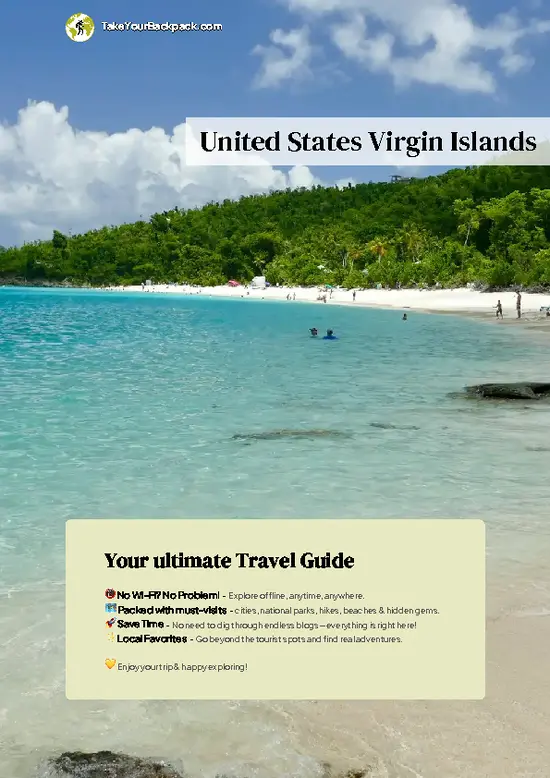
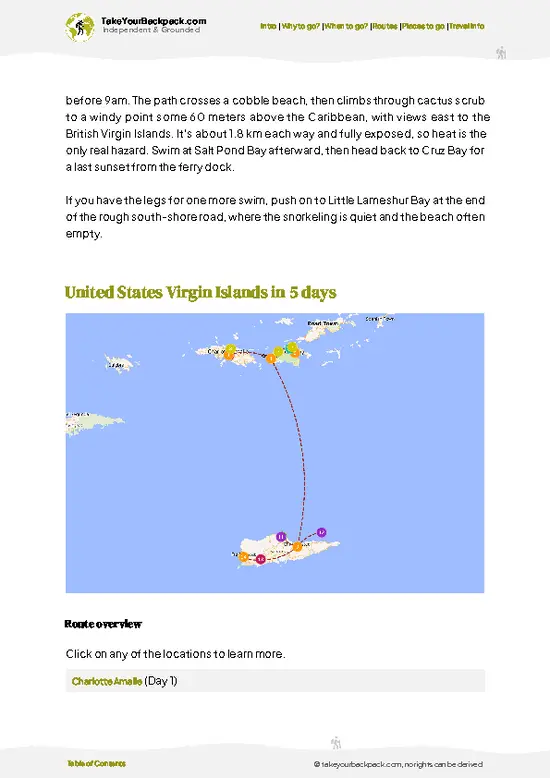
example page 0 from our offline Travel Guide for United States Virgin Islands
example page 1 from our offline Travel Guide for United States Virgin Islands
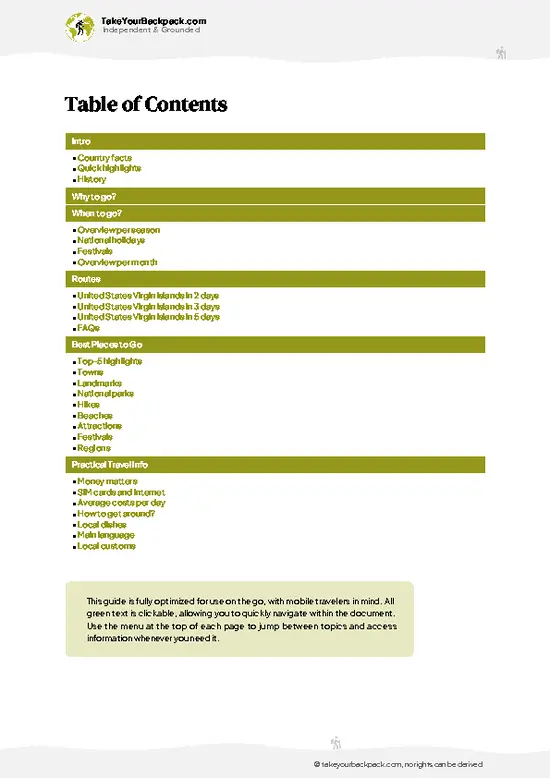
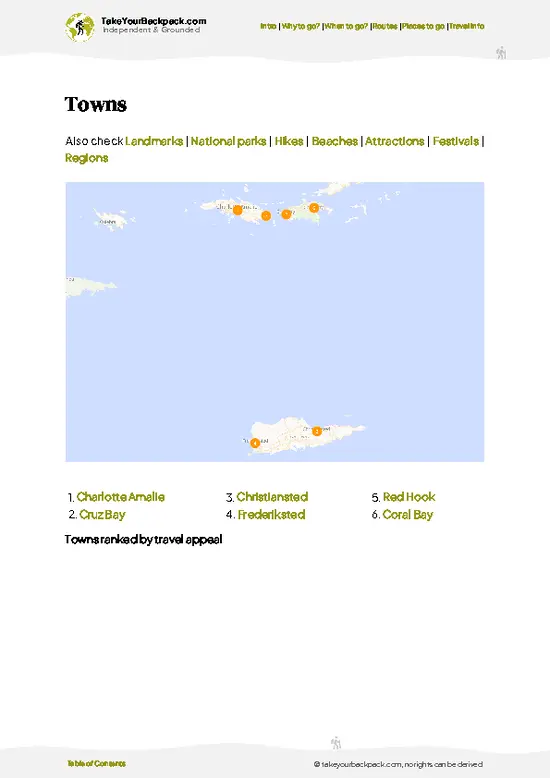
example page 2 from our offline Travel Guide for United States Virgin Islands
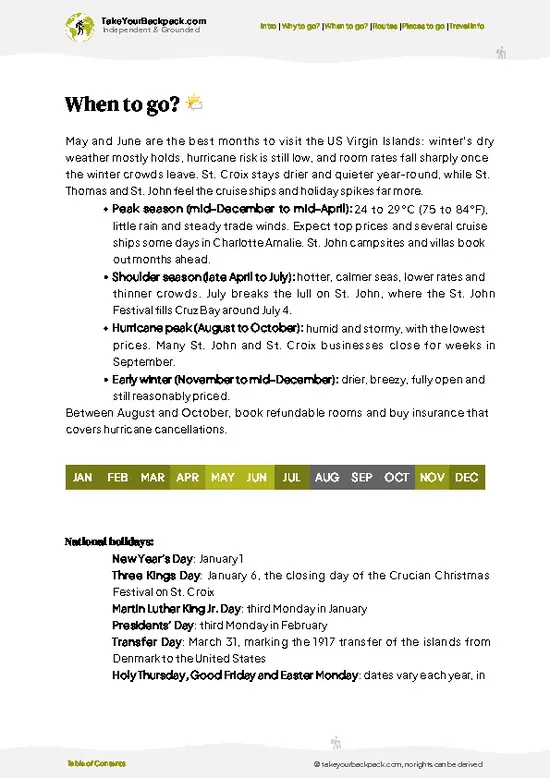
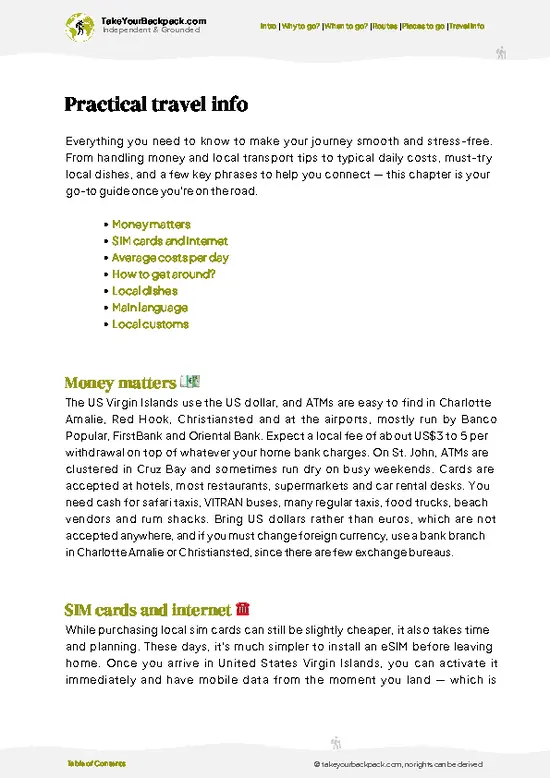
example page 3 from our offline Travel Guide for United States Virgin Islands
example page 4 from our offline Travel Guide for United States Virgin Islands
example page 5 from our offline Travel Guide for United States Virgin Islands
example page 6 from our offline Travel Guide for United States Virgin Islands
example page 7 from our offline Travel Guide for United States Virgin Islands
Loading the map 🌍
CLICK TO FILTER
towns
landmarks
national parks
hikes
beaches
attractions
festivals
regions
SHOW COUNTRY’S BESTSHOW ALL

✨ Why go?
Ranked #3 unique site in United States Virgin Islands
What makes it a must-see unique site

Caneel Bay gives you a piece of St. John’s layered past that most beach stops lack. The land was a Danish sugar plantation before Laurance Rockefeller built his resort here in the 1950s and donated much of the island to become Virgin Islands National Park. That story explains why roughly two thirds of St. John is undeveloped, and you can read it in the shoreline itself: no high-rises, no jet-ski rental strips, just forest running down to the water.

It also fits easily into a loop. North Shore Road strings together Hawksnest, Trunk Bay and Cinnamon Bay, so Caneel Bay works as an early stop before the busier beaches and snorkeling spots. The Caneel Hill Trail adds a short climb for anyone who wants a view over the bay rather than only a beach towel. Backpackers on a tight budget can lean on … read more 👉
Caneel Bay gives you a piece of St. John’s layered past that most beach stops lack. The land was a Danish sugar plantation before Laurance Rockefeller built his resort here in the 1950s and donated much of the island to become Virgin Islands National Park. That story explains why roughly two thirds of St. John is undeveloped, and you can read it in the shoreline itself: no high-rises, no jet-ski rental strips, just forest running down to the water.

It also fits easily into a loop. North Shore Road strings together Hawksnest, Trunk Bay and Cinnamon Bay, so Caneel Bay works as an early stop before the busier beaches and snorkeling spots. The Caneel Hill Trail adds a short climb for anyone who wants a view over the bay rather than only a beach towel. Backpackers on a tight budget can lean on the free public shoreline and the park’s trails, saving money for a ferry hop to Tortola or another island.

💡 HighlightsPlaces and moments you shouldn't skip

  1. Caneel Bay shoreline and resort grounds. The curved bay is the sight people come to find. The closed resort, with its low cottages among sea grape and palms, is visible from the road and the water, though the grounds themselves are restricted.
  2. Hawksnest Beach. A short drive from the bay, this public beach has shady trees, easy parking and shallow water with a seagrass edge where turtles often feed.
  3. Caneel Hill Trail. A steady path through dry forest climbs from Mongoose Junction in Cruz Bay over Caneel Hill and drops to North Shore Road opposite the Caneel Bay entrance. The sea views open up gradually, and the cooler air near the top is a relief.
  4. Peace Hill windmill. A short walk from the road leads to a stone sugar windmill tower from the Danish era, with a wide outlook toward the British Virgin
… read more 👉
  1. Caneel Bay shoreline and resort grounds. The curved bay is the sight people come to find. The closed resort, with its low cottages among sea grape and palms, is visible from the road and the water, though the grounds themselves are restricted.
  2. Hawksnest Beach. A short drive from the bay, this public beach has shady trees, easy parking and shallow water with a seagrass edge where turtles often feed.
  3. Caneel Hill Trail. A steady path through dry forest climbs from Mongoose Junction in Cruz Bay over Caneel Hill and drops to North Shore Road opposite the Caneel Bay entrance. The sea views open up gradually, and the cooler air near the top is a relief.
  4. Peace Hill windmill. A short walk from the road leads to a stone sugar windmill tower from the Danish era, with a wide outlook toward the British Virgin Islands.
  5. Trunk Bay. Famous for its underwater snorkeling trail with marked signs, this white-sand beach is the busiest on the north shore. Arrive early for clear water and fewer people.
  6. Cinnamon Bay. A longer beach with sugar plantation ruins nearby and a trail through them. Watersports rentals operate here, and the sand is wide enough to find space.
  7. North Shore Road drive. The narrow, curving road, with drivers on the left, passes one cove after another. Pull-offs give you good photo angles of the bays and the cays beyond.
Of everything around Caneel Bay, Hawksnest Beach and the roadside views cost the least, since you pay only for getting there and the Peace Hill walk is free.
Spotted a mistake or missing something? Contact us.

Things to do around Caneel Bay

Ratings based on Tripadvisor reviews. When you book through this link, you support our work at no extra cost to you.

🌤️ When to go?Seasonal considerations and timing

  • Winter and Spring (December to April): Caneel Bay is at its driest and most comfortable, with highs of 28 to 30°C (82 to 86°F), lows around 22 to 24°C (72 to 75°F) and steady trade winds. Days run about 11 to 12 hours. Beaches in Virgin Islands National Park are busiest and lodging costs the most, often 40 to 60 percent above summer rates.
  • Summer (May to August): Expect 30 to 32°C (86 to 90°F), more humidity and about 13 hours of daylight. Crowds thin, beds get cheaper and snorkeling water is calm and warm, though afternoon showers roll through.
  • Hurricane Season (September to November): Peak storm risk falls in September and October, with temperatures of 27 to 32°C (81 to 90°F). Some restaurants and ferries pare back or close, and rates hit their lowest.
Aim for late April or May, when the winter … read more 👉
  • Winter and Spring (December to April): Caneel Bay is at its driest and most comfortable, with highs of 28 to 30°C (82 to 86°F), lows around 22 to 24°C (72 to 75°F) and steady trade winds. Days run about 11 to 12 hours. Beaches in Virgin Islands National Park are busiest and lodging costs the most, often 40 to 60 percent above summer rates.
  • Summer (May to August): Expect 30 to 32°C (86 to 90°F), more humidity and about 13 hours of daylight. Crowds thin, beds get cheaper and snorkeling water is calm and warm, though afternoon showers roll through.
  • Hurricane Season (September to November): Peak storm risk falls in September and October, with temperatures of 27 to 32°C (81 to 90°F). Some restaurants and ferries pare back or close, and rates hit their lowest.
Aim for late April or May, when the winter crowds have left, prices have dropped and the weather is still mostly dry.


source: climatestotravel.comJANJanuary: highly recommended for travelingFEBFebruary: highly recommended for travelingMARMarch: highly recommended for travelingAPRApril: highly recommended for travelingMAYMay: highly recommended for travelingJUNJune: fair for travelingJULJuly: fair for travelingAUGAugust: fair for travelingSEPSeptember: below average for travelingOCTOctober: fair for travelingNOVNovember: good for travelingDECDecember: highly recommended for traveling
when-to-go

✈️ The backpacker research shortcutUnited States Virgin Islands Travel Guide

An offline-friendly backpacking guide with optimized travel routes, ranked highlights, transport advice, and the best areas to stay.
example page 0 from our offline Travel Guide for United States Virgin Islands
example page 1 from our offline Travel Guide for United States Virgin Islands
example page 2 from our offline Travel Guide for United States Virgin Islands
example page 3 from our offline Travel Guide for United States Virgin Islands
example page 4 from our offline Travel Guide for United States Virgin Islands
example page 5 from our offline Travel Guide for United States Virgin Islands
example page 6 from our offline Travel Guide for United States Virgin Islands
example page 7 from our offline Travel Guide for United States Virgin Islands
The digital guide (144 pages) contains:
✅ 35 highlights, ranked by travel appeal
✅ Optimized 2, 3 & 5-day travel routes
✅ Cities, national parks, landmarks, beaches
✅ How to get around
✅ Offline-friendly for travel without Wi-Fi
👉 Click to see all 30+ guide features

📅 Plan smarter in minutes, not weeks
✅ Month by month travel advice
✅ Festivals & national holidays
✅ Budget expectations

🗺️ Go to the right places, skip the overrated ones
✅ Honest pros & cons of destinations
✅ Top hikes, parks & viewpoints
✅ Lesser-known places most travelers miss
✅ Clear “worth it vs skip it” guidance

🛏️ Travel smoothly without rookie mistakes
✅ Best areas to stay
✅ Transport systems explained simply
✅ Common scams & safety advice
✅ SIM cards, money & practical tips

🌍 Understand the country, not just visit it
✅ Culture & traditions
✅ Local customs
✅ Festivals worth planning around
✅ Traveler-friendly historical context
✅ Insights that make places more meaningful

📱 Built for real travel conditions
✅ Fully downloadable PDF
✅ Works completely offline
✅ Optimized for phone use
✅ Useful in remote areas & buses
✅ Everything in one place
Stop searching, start planning
Get instant access to your full guide. 30‑day money-back guarantee.
+ Add another guide for just

By proceeding you agree to our terms.
Sent to your inbox immediately after payment • 100% Secure Checkout
Best Backpacking Travel Advisor 2025 tourism awardBest Backpacking
Travel Advisor
2025
What others say about Take Your Backpack Guides:
⭐⭐⭐⭐⭐
Fantastic, amazing amount of information!
⭐⭐⭐⭐⭐
My goodness this is amazing, it's what I've been looking for hats off too you!
⭐⭐⭐⭐⭐
I think this is absolutely BRILLIANT
⭐⭐⭐⭐
Very complete and informative. It's still missing places, but I gotta to commend you
⭐⭐⭐⭐⭐
This is truly amazing, thank you, can't wait to explore it with my kids!
⭐⭐⭐⭐⭐
Awesome resource, thank you!
⭐⭐⭐⭐⭐
This is amazing! Can't wait to explore the ones I haven't seen
⭐⭐⭐⭐
I love this! Well done, great idea.
⭐⭐⭐⭐⭐
Thanks for taking the time to make this gem!
⭐⭐⭐⭐⭐
This might be the best website I've ever seen.
⭐⭐⭐⭐⭐
Congratulations, and thank you so much for your work; it's incredibly valuable.
⭐⭐⭐⭐
In all seriousness I think you did a great job pointing out the important spots
⭐⭐⭐⭐⭐
10/10 very good
⭐⭐⭐⭐⭐
As someone who's only just starting to visit regularly this is awesome, thank you.
⭐⭐⭐⭐
Thank you very much! I'm going to visit my dad, it's going to be very useful!
⭐⭐⭐⭐⭐
This is really cool! We'll be travelling for the first time and this definitely come in handy.
⭐⭐⭐⭐⭐
You are now our minister of culture, congratulations 👨‍💼
⭐⭐⭐⭐⭐
Just wanted to tell you that this is a pearl! Going to follow your recommendations.
⭐⭐⭐⭐⭐
This is so cool. I'll definitely be using the resource for my travels soon.
⭐⭐⭐⭐⭐
This is very impressive! Good work.
⭐⭐⭐⭐⭐
This is an amazing and informative site. Very well done!

🛏️ Where to stay?Where staying makes the most sense

Cruz Bay is the place to stay near Caneel Bay, about 2 to 3 miles (3 to 5 km) west on St. John’s North Shore Road. It holds the ferry dock, the grocery stores and nearly every bar and budget bed on the island, so you can meet other travelers without trying. The walk to the shore is manageable, and taxis and open-air safari buses run the road to the beaches.

The streets around the ferry dock and Mongoose Junction are the most social. Evenings fill with live music and shared taxi rides to Trunk Bay and Hawksnest. Solo travelers will find it easy to feel safe here, as the town is compact, well lit … read more 👉
Cruz Bay is the place to stay near Caneel Bay, about 2 to 3 miles (3 to 5 km) west on St. John’s North Shore Road. It holds the ferry dock, the grocery stores and nearly every bar and budget bed on the island, so you can meet other travelers without trying. The walk to the shore is manageable, and taxis and open-air safari buses run the road to the beaches.

The streets around the ferry dock and Mongoose Junction are the most social. Evenings fill with live music and shared taxi rides to Trunk Bay and Hawksnest. Solo travelers will find it easy to feel safe here, as the town is compact, well lit and busy after dark.

For a quieter option, look at the Chocolate Hole and Great Cruz Bay side, a short ride south of Cruz Bay. It gives you hillside villas and rooms, more space and sea views, but fewer people to meet and a taxi is almost always needed. Campgrounds at Cinnamon Bay on the North Shore are the cheapest way to sleep beside a beach, and you will share the sand with hikers and snorkelers. Book early from December to April, because beds are limited everywhere on St. John.

👛 Costs (as of 22 October 2026)What things cost and how to budget

Caneel Bay on St. John costs a backpacker roughly US$115 to 175 a day, and almost all of it goes to getting there and sleeping nearby. The former resort sits inside Virgin Islands National Park, so the beach and trails need no ticket, but the park charges its own fees elsewhere. Travelers pay in US dollars.
CategoryBudget RangeLocal Reality
Accommodation (high season)US$70 to 110Campsites and shared cottages in Cruz Bay or Coral Bay run at the low end. Private rooms cost far more in winter.
Accommodation (low season)US$50 to 80Prices drop from late spring through fall.
Ferry from St. ThomasUS$8 to 16Passenger ferry from Red Hook to Cruz Bay, about 20 minutes, roughly US$8 each way, plus a small bag fee.
Local transportUS$2 to 12Open-air safari taxis on the North Shore Road charge about US$4 to
… read more 👉
Caneel Bay on St. John costs a backpacker roughly US$115 to 175 a day, and almost all of it goes to getting there and sleeping nearby. The former resort sits inside Virgin Islands National Park, so the beach and trails need no ticket, but the park charges its own fees elsewhere. Travelers pay in US dollars.
CategoryBudget RangeLocal Reality
Accommodation (high season)US$70 to 110Campsites and shared cottages in Cruz Bay or Coral Bay run at the low end. Private rooms cost far more in winter.
Accommodation (low season)US$50 to 80Prices drop from late spring through fall.
Ferry from St. ThomasUS$8 to 16Passenger ferry from Red Hook to Cruz Bay, about 20 minutes, roughly US$8 each way, plus a small bag fee.
Local transportUS$2 to 12Open-air safari taxis on the North Shore Road charge about US$4 to 6 per person. Walking from Cruz Bay is possible for fit hikers.
Park entry and beach accessUS$0 to 5Access to the area is free. The national park entry fee at Trunk Bay is US$5 per adult.
FoodUS$25 to 45Grocery shopping in Cruz Bay and cheap takeout keep costs down. Restaurant dinners start around US$20 to 30.
Gear and activitiesUS$0 to 25Snorkel gear rents for around US$10 to 15 a day. Hiking is free.
Total Daily BudgetUS$115 to 175Based on high-season lodging, a shared taxi, one park fee and mostly self-catered meals.


source: nps.gov
⚠️ Prices can change and everyone travels differently, so take this as a rough guide. Hope it helps you plan your adventure!

FAQTraveler FAQ

Caneel Bay is a sheltered bay and former resort property on St. John’s North Shore, inside Virgin Islands National Park. It has calm turquoise water, white sand and shaded coves that are good for snorkeling. Nearby Honeymoon Beach and Hawksnest Beach sit within a few minutes of each other along North Shore Road.
Caneel Bay needs a half day for a swim and a snorkel, or a full day if you combine it with nearby Hawksnest and Trunk Bay. Most backpackers spend 2 to 4 days on St. John to cover the beaches and a hike such as the Reef Bay Trail, which takes 3 to 4 hours. Add a day for ferry connections from St. Thomas.
Caneel Bay is reached from Cruz Bay, about 2 to 3 miles (3 to 5 km) east along North Shore Road. Take the ferry from Red Hook on St. Thomas, which runs roughly hourly and takes about 15 to 20 minutes for around US$8. From Cruz Bay, a safari taxi or rental jeep reaches the bay in 10 to 15 minutes, for a few dollars per person by shared taxi.
⚠️ Things can change over time, so always validate details locally before you go.

Other Virgin Islander landmarks near Caneel Bay

Explore more nearby:


💡 Not sure where to go next?
Create a personalized itinerary for United States Virgin Islands including Caneel Bay and the places that fit your trip.

Generate my itinerary

👉 Discover all landmarks

Or checkout all United States Virgin Islands has to offer (think cities, towns, villages, national parks, hikes, beaches, festivals)
Country photo of United States Virgin Islands

We 💚 feedbackWhat to keep in mind

Caneel Bay suits history-minded travelers and photographers who are happy with a view and a swim rather than a resort stay. If you want sunbeds and cocktails, go elsewhere on St. John. I would come with a snorkel mask, stop at Hawksnest first, and keep your expectations on the shoreline, the ruins and the trail above it.

✍️ Help improve this page!
The information on this page is based on in-depth research, insights shared by experienced travelers, and feedback from the local travel community in United States Virgin Islands. While every effort is made to keep the information accurate and current, conditions can change — so if you spot anything incorrect or outdated, please get in touch.


🙋‍♂️ Give feedback

👋 Meet the founderWho’s Behind Take Your Backpack?

Johan, backpacker and founder of TakeYourBackpackHi, I’m Johan (Netherlands 🇳🇱), the creator of TakeYourBackpack. Over the past 3 decades, I’ve backpacked through 90+ countries across six continents, gaining extensive experience with independent travel, long-term trips, and overland routes.

This site is built on a combination of firsthand travel experience and carefully curated insights from other backpackers. Many guides are based on places I’ve personally visited, while others bring together tips, observations, and practical advice shared by trusted travelers I’ve met along the way.

The goal is to provide realistic, experience-driven guidance — not generic itineraries — so you can explore destinations with better context, clearer expectations, and more confidence.