×

United States Virgin Islands🇻🇮 | landmarksBuck Island ReefMarked underwater trail, barrier reef, turtle sightings, crescent beach | things to do and best time to go

Explore Bioluminescent Bays of St. CroixExplore Cruzan Rum Distillery

Backpacking in Buck Island Reef
🏆 Top pickunique site ranked #1
By Johan Kruseman 🇳🇱 | Updated October 20, 2026

Buck Island Reef gets you into protected water with an underwater trail marked for snorkelers, reached by a short boat ride from Christiansted. The national monument sits about 1.5 miles off the northeast coast of St. Croix, in the United States Virgin Islands, and covers a small uninhabited island ringed by elkhorn coral. Visits run through licensed charter operators, so you pay for a half-day or full-day trip, and the price is not small for a backpacker budget. Boats cluster at the same moorings in the morning, so the trail can feel busy. Still, the water is clear, the barrier reef is shallow enough for beginners, and the island has a white beach with a short hiking path to a lookout. Anyone who snorkels, even badly, will get the most from it. People who dislike boats, group tours or fixed schedules, or who want a quiet solo dive, will find it limiting.

Discover everything you want to know in the 📖 United States Virgin Islands Travel Guide.


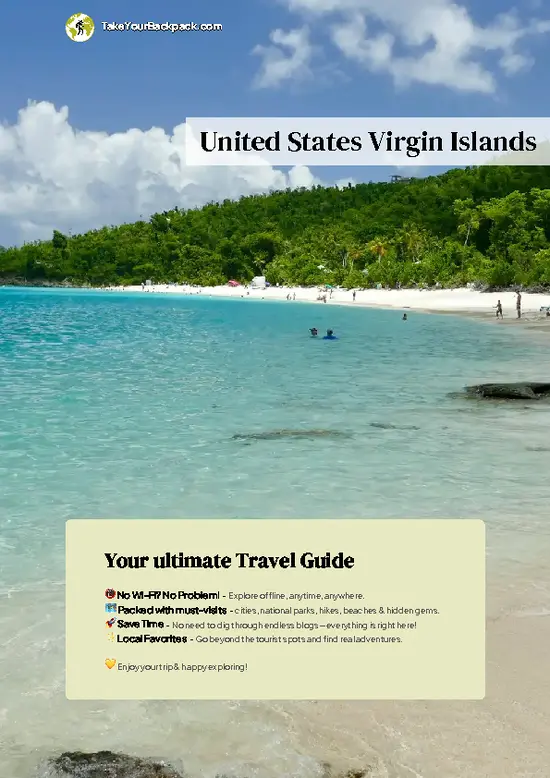
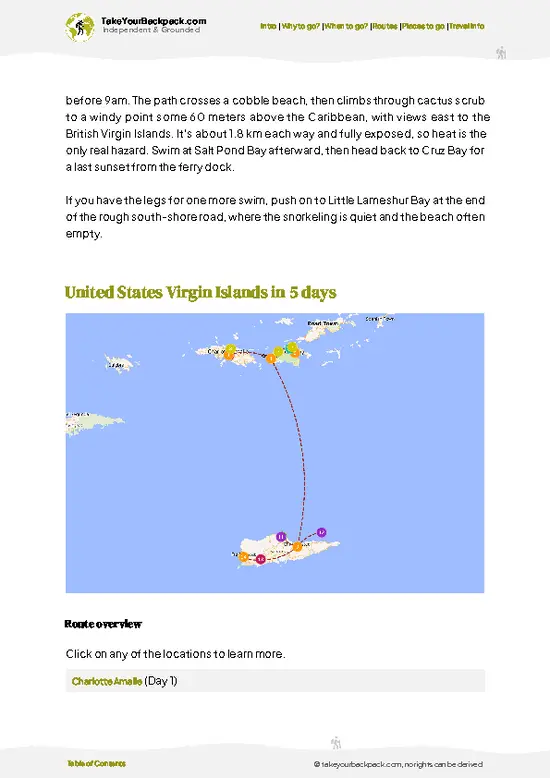
example page 0 from our offline Travel Guide for United States Virgin Islands
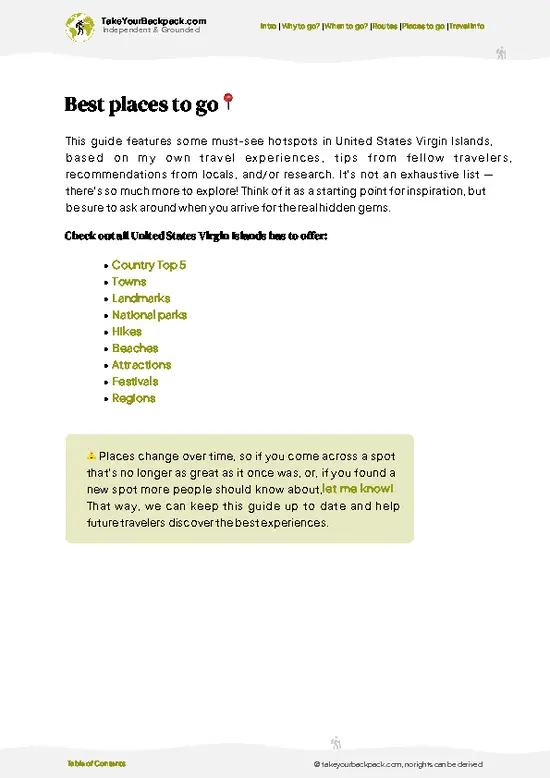
example page 1 from our offline Travel Guide for United States Virgin Islands
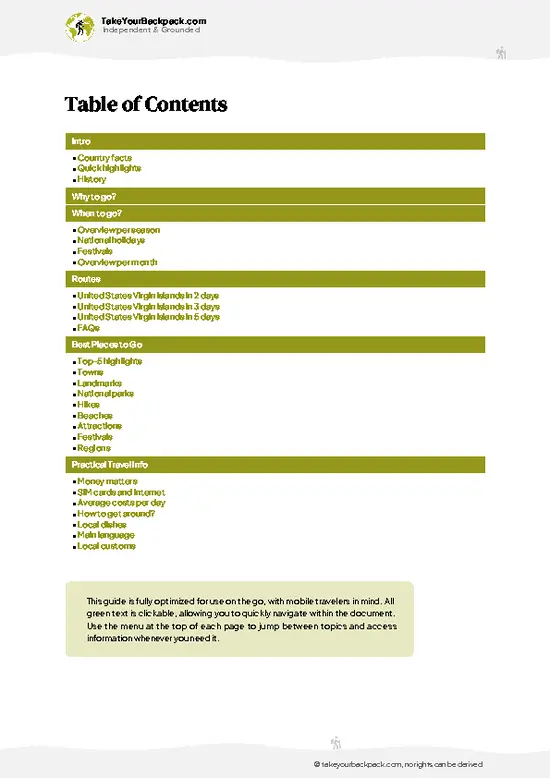
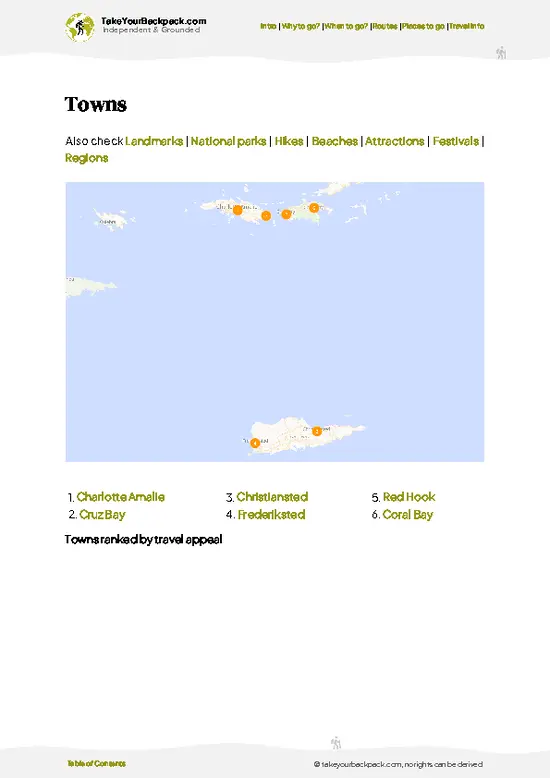
example page 2 from our offline Travel Guide for United States Virgin Islands
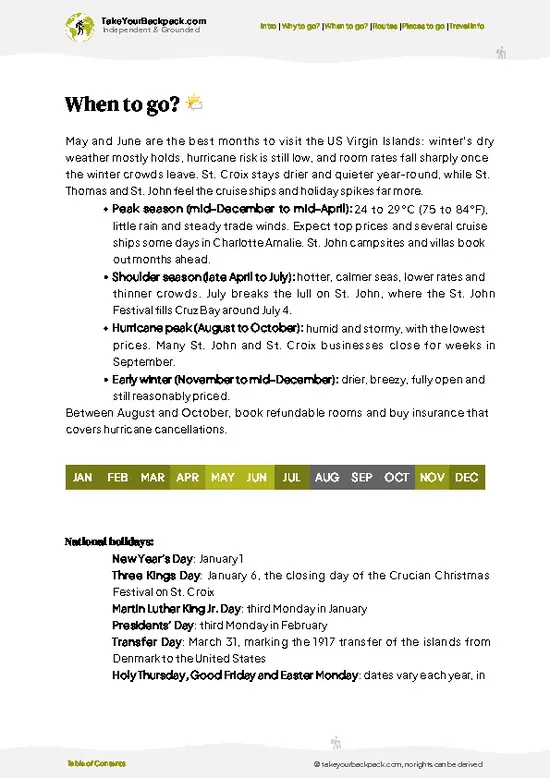
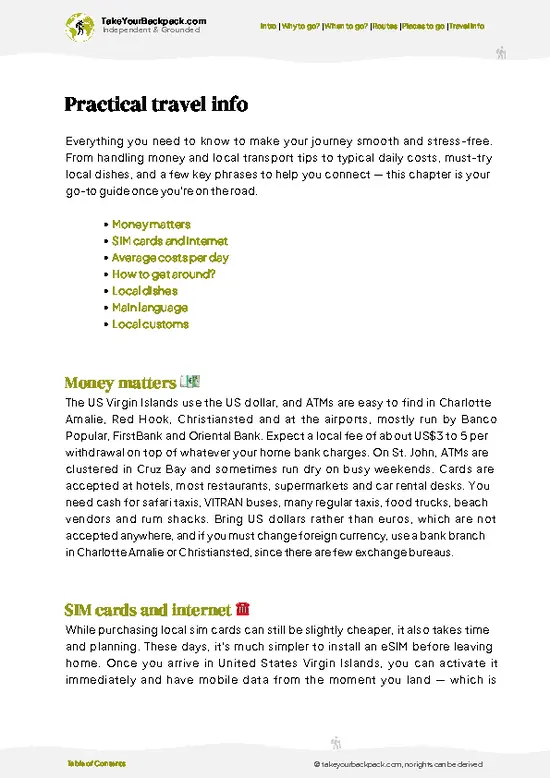
example page 3 from our offline Travel Guide for United States Virgin Islands
example page 4 from our offline Travel Guide for United States Virgin Islands
example page 5 from our offline Travel Guide for United States Virgin Islands
example page 6 from our offline Travel Guide for United States Virgin Islands
example page 7 from our offline Travel Guide for United States Virgin Islands
Loading the map 🌍
CLICK TO FILTER
towns
landmarks
national parks
hikes
beaches
attractions
festivals
regions
SHOW COUNTRY’S BESTSHOW ALL

✨ Why go?
Ranked #1 unique site in United States Virgin Islands
Why Buck Island Reef should be on your travel list

Buck Island Reef is one of the few places in the Caribbean where a first-time snorkeler can follow a marked underwater trail with signs naming the corals and fish, rather than guessing at what is below. The route runs along the elkhorn coral barrier on the island’s east side, with brain coral, sea fans, parrotfish, and the occasional sea turtle drifting through shallow water. That is a clear reason to make the boat trip, and the water is calm enough that nervous swimmers manage it with a vest and a guide.

The effort to get there is small. Charters leave from the waterfront at Christiansted, which is easy to reach from most places on St. Croix, so the reef fits comfortably into a few days of exploring the island’s rum distilleries, old Danish streets, and beaches. Because the monument is a … read more 👉
Buck Island Reef is one of the few places in the Caribbean where a first-time snorkeler can follow a marked underwater trail with signs naming the corals and fish, rather than guessing at what is below. The route runs along the elkhorn coral barrier on the island’s east side, with brain coral, sea fans, parrotfish, and the occasional sea turtle drifting through shallow water. That is a clear reason to make the boat trip, and the water is calm enough that nervous swimmers manage it with a vest and a guide.

The effort to get there is small. Charters leave from the waterfront at Christiansted, which is easy to reach from most places on St. Croix, so the reef fits comfortably into a few days of exploring the island’s rum distilleries, old Danish streets, and beaches. Because the monument is a protected national site, the reef is in noticeably better condition than many freely accessible spots nearby, and anchoring and fishing are limited. You also get a beach stop on Buck Island’s western shore, where you can swim, eat a packed lunch under the trees, and walk the island trail before heading back to the dock.

💡 HighlightsEssential experiences to have while visiting Buck Island Reef

  1. Underwater Snorkel Trail: The monument’s best-known feature, a marked route on the east side of the island where signs on the seabed identify the coral and fish. Water depth is shallow, mostly 4 to 12 feet, so beginners manage it.
  2. Elkhorn Coral Barrier: A long ridge of branching elkhorn coral along the island’s eastern edge. It is one of the reasons the area was protected, and the coral formations are big enough to swim alongside.
  3. Turtle Spotting: Green, hawksbill, and leatherback turtles use the surrounding waters and the beaches for nesting. Green and hawksbill turtles are the ones you are most likely to see grazing in the seagrass.
  4. Buck Island Beach: A white sand beach on the western side with calm, clear water and shade from trees behind the sand. Charters usually stop here for lunch and
… read more 👉
  1. Underwater Snorkel Trail: The monument’s best-known feature, a marked route on the east side of the island where signs on the seabed identify the coral and fish. Water depth is shallow, mostly 4 to 12 feet, so beginners manage it.
  2. Elkhorn Coral Barrier: A long ridge of branching elkhorn coral along the island’s eastern edge. It is one of the reasons the area was protected, and the coral formations are big enough to swim alongside.
  3. Turtle Spotting: Green, hawksbill, and leatherback turtles use the surrounding waters and the beaches for nesting. Green and hawksbill turtles are the ones you are most likely to see grazing in the seagrass.
  4. Buck Island Beach: A white sand beach on the western side with calm, clear water and shade from trees behind the sand. Charters usually stop here for lunch and a swim.
  5. Buck Island Hiking Trail: A short, steep path leading from the beach up to a high point on the island. From the top you see St. Croix across the water, the reef line, and the shifting blues around the island. Wear closed shoes because the ground is rocky.
  6. Sailing from Christiansted: The boat ride itself is part of the day. Many charters use catamarans or sloops, and the crossing gives you a look at the north coast of St. Croix and the harbor fort.
  7. Tropical Fish Life: Parrotfish, blue tang, sergeant majors, and barracuda are regular sights along the reef. Schools gather close to the coral heads, so you do not have to go deep to see them.
Buck Island Reef is best started with the snorkel trail, since morning water is usually calmest and clearest before the other boats arrive.
Spotted a mistake or missing something? Contact us.

🌤️ When to go?Choosing the right time of year

The best time for Buck Island Reef is December to April, when seas are calmest and visibility underwater often reaches 30 meters (100 feet).
  • Dry Season (December to April): Highs of 27 to 29°C (81 to 84°F), light trade winds and the clearest water. Boat trips fill up, so book several days ahead. Lodging prices run highest, especially over Christmas and Presidents’ Day week.
  • Shoulder Months (May to June): Highs of 29 to 31°C (84 to 88°F), thinner crowds and easier boat bookings. Daylight stretches past 13 hours in June, which leaves room for a long snorkel and a beach afternoon.
  • Summer and Hurricane Season (July to November): Highs of 31 to 32°C (88 to 90°F), hot sun and the lowest rates. Peak storm risk runs August to October, and tours get canceled when seas build. Sea turtle nesting on the
… read more 👉
The best time for Buck Island Reef is December to April, when seas are calmest and visibility underwater often reaches 30 meters (100 feet).
  • Dry Season (December to April): Highs of 27 to 29°C (81 to 84°F), light trade winds and the clearest water. Boat trips fill up, so book several days ahead. Lodging prices run highest, especially over Christmas and Presidents’ Day week.
  • Shoulder Months (May to June): Highs of 29 to 31°C (84 to 88°F), thinner crowds and easier boat bookings. Daylight stretches past 13 hours in June, which leaves room for a long snorkel and a beach afternoon.
  • Summer and Hurricane Season (July to November): Highs of 31 to 32°C (88 to 90°F), hot sun and the lowest rates. Peak storm risk runs August to October, and tours get canceled when seas build. Sea turtle nesting on the island’s beaches runs roughly April to November.
  • Winter Swell: Northerly swells between December and March can occasionally cancel trips on otherwise sunny days.
Book the earliest morning departure, since the water is flattest and the underwater trail is quietest before midday.


source: climatestotravel.comJANJanuary: highly recommended for travelingFEBFebruary: highly recommended for travelingMARMarch: highly recommended for travelingAPRApril: highly recommended for travelingMAYMay: excellent for travelingJUNJune: fair for travelingJULJuly: fair for travelingAUGAugust: fair for travelingSEPSeptember: below average for travelingOCTOctober: fair for travelingNOVNovember: highly recommended for travelingDECDecember: highly recommended for traveling
united-states-virgin-islands-unique-site-buck-island-reef
© Google |

✈️ The backpacker research shortcutUnited States Virgin Islands Travel Guide

An offline-friendly backpacking guide with optimized travel routes, ranked highlights, transport advice, and the best areas to stay.
example page 0 from our offline Travel Guide for United States Virgin Islands
example page 1 from our offline Travel Guide for United States Virgin Islands
example page 2 from our offline Travel Guide for United States Virgin Islands
example page 3 from our offline Travel Guide for United States Virgin Islands
example page 4 from our offline Travel Guide for United States Virgin Islands
example page 5 from our offline Travel Guide for United States Virgin Islands
example page 6 from our offline Travel Guide for United States Virgin Islands
example page 7 from our offline Travel Guide for United States Virgin Islands
The digital guide (144 pages) contains:
✅ 35 highlights, ranked by travel appeal
✅ Optimized 2, 3 & 5-day travel routes
✅ Cities, national parks, landmarks, beaches
✅ How to get around
✅ Offline-friendly for travel without Wi-Fi
👉 Click to see all 30+ guide features

📅 Plan smarter in minutes, not weeks
✅ Month by month travel advice
✅ Festivals & national holidays
✅ Budget expectations

🗺️ Go to the right places, skip the overrated ones
✅ Honest pros & cons of destinations
✅ Top hikes, parks & viewpoints
✅ Lesser-known places most travelers miss
✅ Clear “worth it vs skip it” guidance

🛏️ Travel smoothly without rookie mistakes
✅ Best areas to stay
✅ Transport systems explained simply
✅ Common scams & safety advice
✅ SIM cards, money & practical tips

🌍 Understand the country, not just visit it
✅ Culture & traditions
✅ Local customs
✅ Festivals worth planning around
✅ Traveler-friendly historical context
✅ Insights that make places more meaningful

📱 Built for real travel conditions
✅ Fully downloadable PDF
✅ Works completely offline
✅ Optimized for phone use
✅ Useful in remote areas & buses
✅ Everything in one place
Stop searching, start planning
Get instant access to your full guide. 30‑day money-back guarantee.
+ Add another guide for just

By proceeding you agree to our terms.
Sent to your inbox immediately after payment • 100% Secure Checkout
Best Backpacking Travel Advisor 2025 tourism awardBest Backpacking
Travel Advisor
2025
What others say about Take Your Backpack Guides:
⭐⭐⭐⭐⭐
Fantastic, amazing amount of information!
⭐⭐⭐⭐⭐
My goodness this is amazing, it's what I've been looking for hats off too you!
⭐⭐⭐⭐⭐
I think this is absolutely BRILLIANT
⭐⭐⭐⭐
Very complete and informative. It's still missing places, but I gotta to commend you
⭐⭐⭐⭐⭐
This is truly amazing, thank you, can't wait to explore it with my kids!
⭐⭐⭐⭐⭐
Awesome resource, thank you!
⭐⭐⭐⭐⭐
This is amazing! Can't wait to explore the ones I haven't seen
⭐⭐⭐⭐
I love this! Well done, great idea.
⭐⭐⭐⭐⭐
Thanks for taking the time to make this gem!
⭐⭐⭐⭐⭐
This might be the best website I've ever seen.
⭐⭐⭐⭐⭐
Congratulations, and thank you so much for your work; it's incredibly valuable.
⭐⭐⭐⭐
In all seriousness I think you did a great job pointing out the important spots
⭐⭐⭐⭐⭐
10/10 very good
⭐⭐⭐⭐⭐
As someone who's only just starting to visit regularly this is awesome, thank you.
⭐⭐⭐⭐
Thank you very much! I'm going to visit my dad, it's going to be very useful!
⭐⭐⭐⭐⭐
This is really cool! We'll be travelling for the first time and this definitely come in handy.
⭐⭐⭐⭐⭐
You are now our minister of culture, congratulations 👨‍💼
⭐⭐⭐⭐⭐
Just wanted to tell you that this is a pearl! Going to follow your recommendations.
⭐⭐⭐⭐⭐
This is so cool. I'll definitely be using the resource for my travels soon.
⭐⭐⭐⭐⭐
This is very impressive! Good work.
⭐⭐⭐⭐⭐
This is an amazing and informative site. Very well done!

🛏️ Where to stay?Best areas to stay in United States Virgin Islands

Christiansted, on the north shore of St. Croix, is where most backpackers should stay, because the boats to Buck Island Reef leave from its waterfront. Staying here means a short walk to the dock at dawn, with no rental car needed. The historic town center is compact, with a boardwalk lined with bars and cafés, so you can wander back after dark without much worry. Stick to the lit waterfront streets and main roads at night, as you would anywhere on the island. Budget guesthouses and shared rooms cluster in and just outside the center, and it is the easiest place on St. Croix to meet other solo … read more 👉
Christiansted, on the north shore of St. Croix, is where most backpackers should stay, because the boats to Buck Island Reef leave from its waterfront. Staying here means a short walk to the dock at dawn, with no rental car needed. The historic town center is compact, with a boardwalk lined with bars and cafés, so you can wander back after dark without much worry. Stick to the lit waterfront streets and main roads at night, as you would anywhere on the island. Budget guesthouses and shared rooms cluster in and just outside the center, and it is the easiest place on St. Croix to meet other solo travelers over a rum drink or at a snorkel trip.
Gallows Bay, just east of Christiansted and a few minutes on foot or by short ride, is quieter and slightly cheaper. It suits travelers who want a local feel and a kitchen to cook in, and it still sits within easy reach of the departure docks.
Frederiksted, on the west coast, has a sleepy pier, sunset views and a small dive scene. It is a good second base if you plan to dive, but it is roughly a 30 to 40 minute drive from the Buck Island boats. Public buses are infrequent, so most visitors there rent a car or share rides.

👛 Costs (as of 20 October 2026)Typical daily expenses

A realistic backpacker budget for a day built around Buck Island Reef is about US$175 to 330, with the boat tour as the biggest single expense.
CategoryBudget RangeLocal Reality
Boat tour to Buck Island ReefUS$75 to 140Half-day trips with snorkel gear usually cost around US$75 to 100, and full-day or sailing trips cost more. Lunch and drinks are sometimes included.
National Monument entryUS$0No separate entry fee is charged for the park, and operators include the boat fee in the tour price.
Accommodation (high season)US$70 to 120Basic guesthouse rooms and the few shared options in Christiansted fill up from December to April. Off-season rates drop to about US$55 to 90.
FoodUS$25 to 40Local lunch plates cost about US$10 to 15, and dinners at waterfront restaurants run US$20 to 35. Groceries are
… read more 👉
A realistic backpacker budget for a day built around Buck Island Reef is about US$175 to 330, with the boat tour as the biggest single expense.
CategoryBudget RangeLocal Reality
Boat tour to Buck Island ReefUS$75 to 140Half-day trips with snorkel gear usually cost around US$75 to 100, and full-day or sailing trips cost more. Lunch and drinks are sometimes included.
National Monument entryUS$0No separate entry fee is charged for the park, and operators include the boat fee in the tour price.
Accommodation (high season)US$70 to 120Basic guesthouse rooms and the few shared options in Christiansted fill up from December to April. Off-season rates drop to about US$55 to 90.
FoodUS$25 to 40Local lunch plates cost about US$10 to 15, and dinners at waterfront restaurants run US$20 to 35. Groceries are pricey, since most food is imported.
Local transportUS$5 to 15Christiansted is walkable. Taxis within town cost a few dollars, but buses are infrequent and car rentals cost about US$50 to 80 a day.
Snorkel gear and extrasUS$0 to 15Most tours supply gear. Reef-safe sunscreen and a rash guard are worth buying, since regular sunscreen is discouraged around the reef.
Total Daily BudgetUS$175 to 330Per person, per day, in high season.


source: nps.gov
⚠️ Prices can change and everyone travels differently, so take this as a rough guide. Hope it helps you plan your adventure!

FAQTraveler FAQ

Buck Island Reef National Monument is a protected marine park off the northeast coast of St. Croix, centered on an uninhabited 176-acre island ringed by a barrier reef. Its signature attraction is an underwater snorkel trail marked along elkhorn coral, with sea turtles, parrotfish and schools of blue tang. A short hiking trail on the island climbs to a lookout, and the white sand beach on the west side is a popular lunch stop.
Plan on a half day, which is roughly four to five hours including the boat ride of about 30 to 45 minutes each way. Half-day tours usually include around 1.5 hours of snorkeling and beach time, while full-day sailing trips run six to eight hours. Stay in Christiansted for at least two nights so you have a backup day if winds cancel a trip.
Reach Buck Island Reef by boat from Christiansted on St. Croix, because no public ferry runs and private landing is limited. Licensed operators leave from the Christiansted waterfront and Green Cay Marina, with tours costing about US$75 to 140. St. Croix’s Henry E. Rohlsen Airport is about 20 to 25 minutes by taxi from Christiansted, and a ferry or seaplane connects St. Croix with St. Thomas.
⚠️ Things can change over time, so always validate details locally before you go.

Other Virgin Islander landmarks near Buck Island Reef

Explore more nearby:

  • Bioluminescent Bays of St. Croix—Night kayaking, mangrove channels, glowing wake, moon-phase timing| 14 km away
  • Caneel Bay—Calm coves, reef off the sand, west-facing sunsets, Rockefeller-era ruins| 64 km away

💡 Not sure where to go next?
Create a personalized itinerary for United States Virgin Islands including Buck Island Reef and the places that fit your trip.

Generate my itinerary

👉 Discover all landmarks

Or checkout all United States Virgin Islands has to offer (think cities, towns, villages, national parks, hikes, beaches, festivals)
Country photo of United States Virgin Islands

We 💚 feedbackIs it worth it?

Buck Island Reef suits people who like being in the water more than on it, even if they are only moderately confident swimmers. I would book the earliest departure, bring a reef-safe sunscreen or wear a long-sleeved rash guard, and skip the trip on days when the wind is up, since visibility drops. Solo travelers can easily join a shared charter.

✍️ Help improve this page!
The information on this page is based on in-depth research, insights shared by experienced travelers, and feedback from the local travel community in United States Virgin Islands. While every effort is made to keep the information accurate and current, conditions can change — so if you spot anything incorrect or outdated, please get in touch.


🙋‍♂️ Give feedback

👋 Meet the founderWho’s Behind Take Your Backpack?

Johan, backpacker and founder of TakeYourBackpackHi, I’m Johan (Netherlands 🇳🇱), the creator of TakeYourBackpack. Over the past 3 decades, I’ve backpacked through 90+ countries across six continents, gaining extensive experience with independent travel, long-term trips, and overland routes.

This site is built on a combination of firsthand travel experience and carefully curated insights from other backpackers. Many guides are based on places I’ve personally visited, while others bring together tips, observations, and practical advice shared by trusted travelers I’ve met along the way.

The goal is to provide realistic, experience-driven guidance — not generic itineraries — so you can explore destinations with better context, clearer expectations, and more confidence.