×

the USA🇺🇸 | national parksAcadiaPink granite summits, carriage roads, Thunder Hole, island shuttle | things to do and best time to go

Explore Sawtooth WildernessExplore Arches National Park

Backpacking in Acadia
🌟 Highlightnational park ranked #12
By Johan Kruseman 🇳🇱 | Updated October 22, 2026

Book your vehicle pass and Cadillac sunrise timing early, because the park’s best-known pieces run on reservations and Acadia rewards planning. Acadia sits on the coast of Maine in the northeast of United States, mostly on Mount Desert Island. It has granite summits, ocean cliffs, carriage roads for walking and seals on the ledges. It also has summer traffic that moves like a parade of rental SUVs. A Bar Harbor shopkeeper once told me, “Park at the edges, walk in, and don’t chase a spot at Jordan Pond at noon.” Good advice. Use the free Island Explorer shuttle, skip midday Ocean Drive, and your first day can be a morning hike, a popover lunch and a quiet evening shoreline.

Discover everything you want to know in the 📖 the USA Travel Guide.


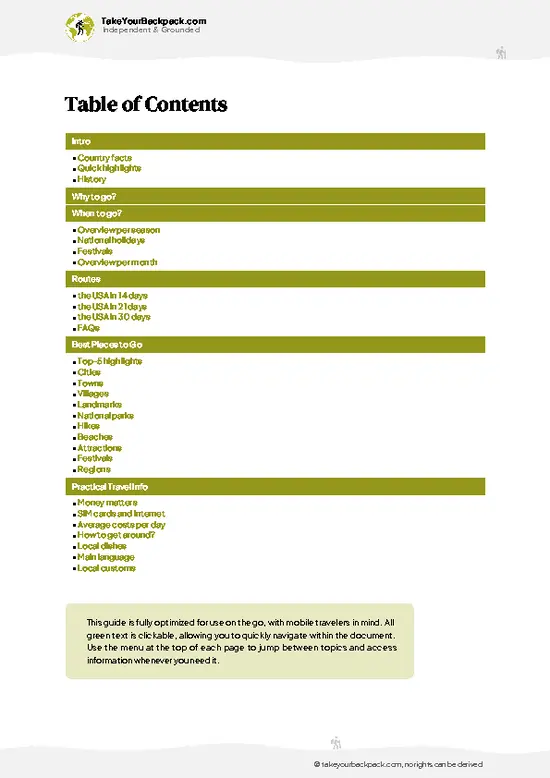
example page 0 from our offline Travel Guide for United States
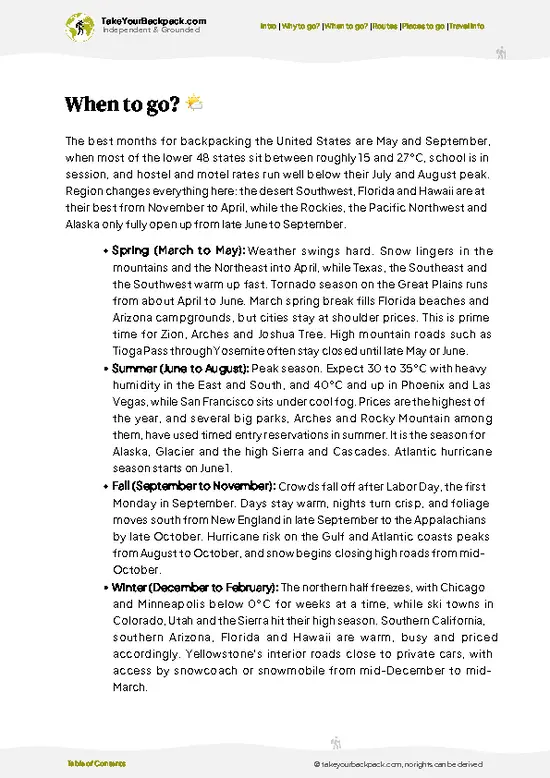
example page 1 from our offline Travel Guide for United States
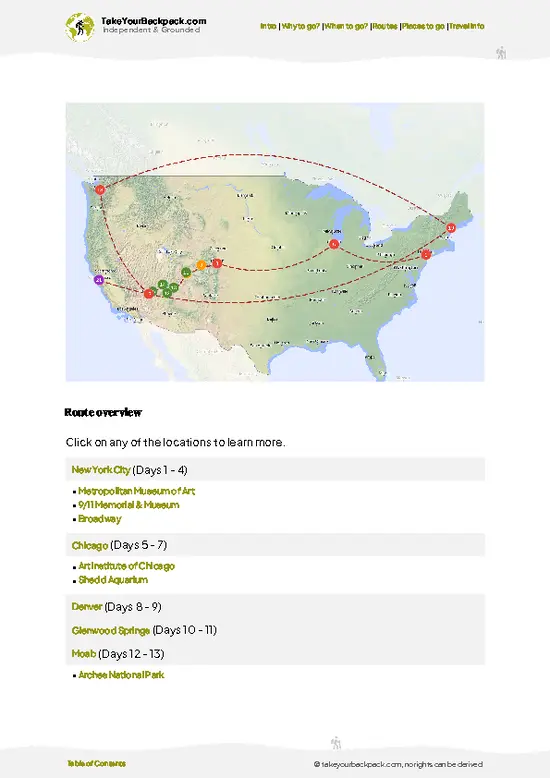
example page 2 from our offline Travel Guide for United States
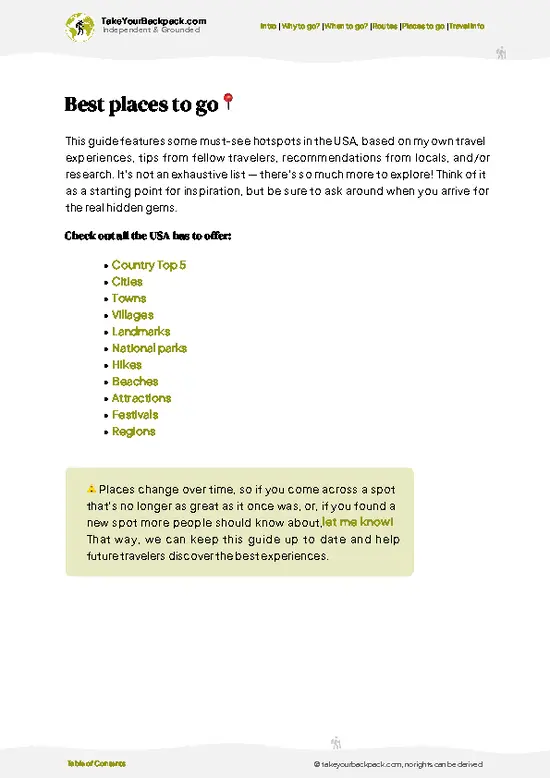
example page 3 from our offline Travel Guide for United States
example page 4 from our offline Travel Guide for United States
example page 5 from our offline Travel Guide for United States
example page 6 from our offline Travel Guide for United States
example page 7 from our offline Travel Guide for United States
Loading the map 🌍
CLICK TO FILTER
cities
towns
villages
landmarks
national parks
hikes
beaches
attractions
festivals
regions
SHOW COUNTRY’S BESTSHOW ALL

✨ Why go?
Ranked #12 national park in the USA
The unique appeal for travelers

Acadia suits backpackers who like building their own days. The park is compact enough that you can link trails, shuttle stops and village streets without a tour, and the free Island Explorer buses reach many trailheads. Trail variety is the other draw: iron-rung climbs like the Precipice and Beehive sit minutes from gentle ocean paths and the 45 miles of carriage roads built by John D. Rockefeller Jr., which are ideal for easy walking with long views. You can pair a hard summit scramble with a flat lakeside loop on the same day. Acadia also rewards early starts, since quiet granite ledges and tide pools are yours before the crowds arrive.

💡 HighlightsEssential experiences to have while exploring Acadia

  1. Cadillac Mountain: The highest point on the US Atlantic coast north of Brazil, with bare pink granite and views over islands and Frenchman Bay. Sunrise needs a vehicle reservation in season.
  2. Park Loop Road: A one-way scenic drive linking the coast, lakes and summits, best by shuttle or bike to dodge parking trouble.
  3. Thunder Hole: A rock inlet where waves boom into a narrow chasm, best near mid-tide and rough seas.
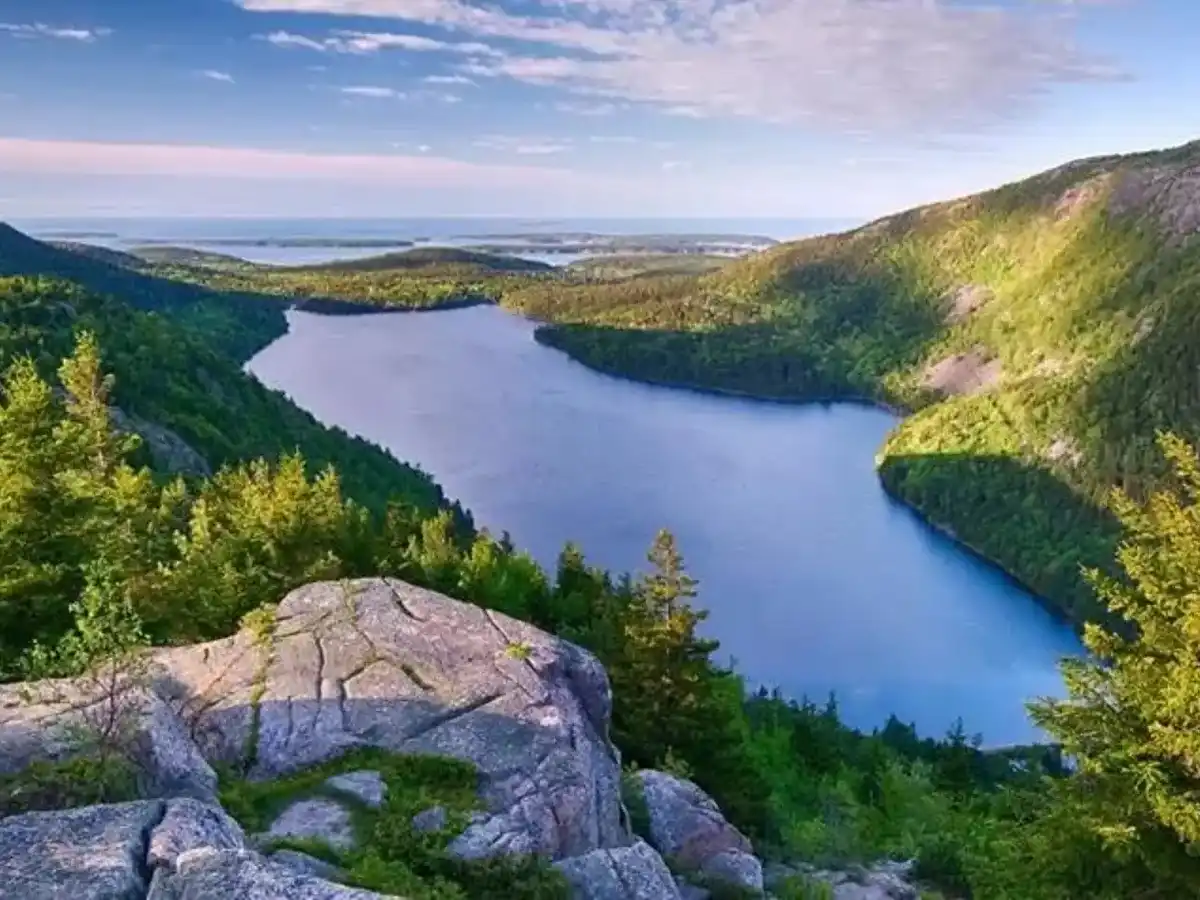
  4. Jordan Pond: A clear glacial lake with a flat shoreline path and the famous Bubbles rising behind it.
  5. Precipice Trail: A steep climb on iron rungs and ledges up Champlain Mountain, for confident hikers only.
  6. Carriage Roads: Broken-stone lanes with stone bridges, closed to cars and ideal for walking or cycling.
  7. Bass Harbor Head Light: A small red-roofed lighthouse on a cliff, best photographed
… read more 👉
  1. Cadillac Mountain: The highest point on the US Atlantic coast north of Brazil, with bare pink granite and views over islands and Frenchman Bay. Sunrise needs a vehicle reservation in season.
  2. Park Loop Road: A one-way scenic drive linking the coast, lakes and summits, best by shuttle or bike to dodge parking trouble.
  3. Thunder Hole: A rock inlet where waves boom into a narrow chasm, best near mid-tide and rough seas.
  4. Jordan Pond: A clear glacial lake with a flat shoreline path and the famous Bubbles rising behind it.
  5. Precipice Trail: A steep climb on iron rungs and ledges up Champlain Mountain, for confident hikers only.
  6. Carriage Roads: Broken-stone lanes with stone bridges, closed to cars and ideal for walking or cycling.
  7. Bass Harbor Head Light: A small red-roofed lighthouse on a cliff, best photographed from the rocks below at golden hour.
  8. Schoodic Peninsula: A quieter mainland section with surf-pounded granite and far fewer visitors.
Acadia’s main sights fit into two full days, and three if you add Schoodic.
Spotted a mistake or missing something? Contact us.

Things to do around Acadia

Ratings based on Tripadvisor reviews. When you book through this link, you support our work at no extra cost to you.

🌤️ When to go?Best time to explore Acadia

  • Summer (July to August): Highs run 22 to 27°C (72 to 80°F), nights 12 to 15°C (54 to 59°F), with daylight stretching past 15 hours. Crowds and lodging prices peak, and the Island Explorer shuttle runs.
  • Fall (September to mid-October): Highs of 12 to 20°C (54 to 68°F), thinner crowds, and foliage that peaks around early to mid October. Rates drop after Labor Day.
  • Winter (December to March): Highs of -6 to 2°C (21 to 36°F). Park Loop Road closes to cars, carriage roads suit skiing, and many businesses shut.
  • Spring (April to June): Highs of 7 to 20°C (45 to 68°F), mud, black flies in late May, and cheap rooms.
Book summer beds months ahead, or come in September for easier reservations and cooler hiking.

source: climatestotravel.comJANJanuary: below average for travelingFEBFebruary: below average for travelingMARMarch: fair for travelingAPRApril: good for travelingMAYMay: highly recommended for travelingJUNJune: highly recommended for travelingJULJuly: good for travelingAUGAugust: good for travelingSEPSeptember: excellent for travelingOCTOctober: excellent for travelingNOVNovember: fair for travelingDECDecember: below average for traveling
united-states-national-park-acadia
© Google | Brian Etzel

✈️ The backpacker research shortcutthe USA Travel Guide

An offline-friendly backpacking guide with optimized travel routes, ranked highlights, transport advice, and the best areas to stay.
example page 0 from our offline Travel Guide for United States
example page 1 from our offline Travel Guide for United States
example page 2 from our offline Travel Guide for United States
example page 3 from our offline Travel Guide for United States
example page 4 from our offline Travel Guide for United States
example page 5 from our offline Travel Guide for United States
example page 6 from our offline Travel Guide for United States
example page 7 from our offline Travel Guide for United States
The digital guide (451 pages) contains:
✅ 159 highlights, ranked by travel appeal
✅ Optimized 14, 21 & 30-day travel routes
✅ Cities, national parks, landmarks, beaches
✅ How to get around
✅ Offline-friendly for travel without Wi-Fi
👉 Click to see all 30+ guide features

📅 Plan smarter in minutes, not weeks
✅ Month by month travel advice
✅ Festivals & national holidays
✅ Budget expectations

🗺️ Go to the right places, skip the overrated ones
✅ Honest pros & cons of destinations
✅ Top hikes, parks & viewpoints
✅ Lesser-known places most travelers miss
✅ Clear “worth it vs skip it” guidance

🛏️ Travel smoothly without rookie mistakes
✅ Best areas to stay
✅ Transport systems explained simply
✅ Common scams & safety advice
✅ SIM cards, money & practical tips

🌍 Understand the country, not just visit it
✅ Culture & traditions
✅ Local customs
✅ Festivals worth planning around
✅ Traveler-friendly historical context
✅ Insights that make places more meaningful

📱 Built for real travel conditions
✅ Fully downloadable PDF
✅ Works completely offline
✅ Optimized for phone use
✅ Useful in remote areas & buses
✅ Everything in one place
Stop searching, start planning
Get instant access to your full guide. 30‑day money-back guarantee.
+ Add another guide for just

By proceeding you agree to our terms.
Sent to your inbox immediately after payment • 100% Secure Checkout
Best Backpacking Travel Advisor 2025 tourism awardBest Backpacking
Travel Advisor
2025
What others say about Take Your Backpack Guides:
⭐⭐⭐⭐⭐
Fantastic, amazing amount of information!
⭐⭐⭐⭐⭐
My goodness this is amazing, it's what I've been looking for hats off too you!
⭐⭐⭐⭐⭐
I think this is absolutely BRILLIANT
⭐⭐⭐⭐
Very complete and informative. It's still missing places, but I gotta to commend you
⭐⭐⭐⭐⭐
This is truly amazing, thank you, can't wait to explore it with my kids!
⭐⭐⭐⭐⭐
Awesome resource, thank you!
⭐⭐⭐⭐⭐
This is amazing! Can't wait to explore the ones I haven't seen
⭐⭐⭐⭐
I love this! Well done, great idea.
⭐⭐⭐⭐⭐
Thanks for taking the time to make this gem!
⭐⭐⭐⭐⭐
This might be the best website I've ever seen.
⭐⭐⭐⭐⭐
Congratulations, and thank you so much for your work; it's incredibly valuable.
⭐⭐⭐⭐
In all seriousness I think you did a great job pointing out the important spots
⭐⭐⭐⭐⭐
10/10 very good
⭐⭐⭐⭐⭐
As someone who's only just starting to visit regularly this is awesome, thank you.
⭐⭐⭐⭐
Thank you very much! I'm going to visit my dad, it's going to be very useful!
⭐⭐⭐⭐⭐
This is really cool! We'll be travelling for the first time and this definitely come in handy.
⭐⭐⭐⭐⭐
You are now our minister of culture, congratulations 👨‍💼
⭐⭐⭐⭐⭐
Just wanted to tell you that this is a pearl! Going to follow your recommendations.
⭐⭐⭐⭐⭐
This is so cool. I'll definitely be using the resource for my travels soon.
⭐⭐⭐⭐⭐
This is very impressive! Good work.
⭐⭐⭐⭐⭐
This is an amazing and informative site. Very well done!

🛏️ Where to stay?Where staying makes the most sense

The best base for backpackers is Bar Harbor, a 10-minute drive from the park's main entrance, with hostels and motels from US$90 to 200 a night in summer. Inside Acadia, Blackwoods and Seawall are the two campgrounds on Mount Desert Island, with sites around US$30 to 40 a night, and reservations open months ahead through Recreation.gov. Duck Harbor on Isle au Haut is a tiny backcountry option with lean-tos. Outside the park, Southwest Harbor and Northeast Harbor are quieter and have inns, though prices stay high in July and August. Trenton and Ellsworth, 20 to 30 minutes away on the mainland, … read more 👉
The best base for backpackers is Bar Harbor, a 10-minute drive from the park's main entrance, with hostels and motels from US$90 to 200 a night in summer. Inside Acadia, Blackwoods and Seawall are the two campgrounds on Mount Desert Island, with sites around US$30 to 40 a night, and reservations open months ahead through Recreation.gov. Duck Harbor on Isle au Haut is a tiny backcountry option with lean-tos. Outside the park, Southwest Harbor and Northeast Harbor are quieter and have inns, though prices stay high in July and August. Trenton and Ellsworth, 20 to 30 minutes away on the mainland, have cheaper motels at US$80 to 150 and private campgrounds. Bar Harbor is the easiest choice without a car, since the free Island Explorer shuttle runs from the village green to trailheads and campgrounds in season.

👛 Costs (as of 22 October 2026)Travel costs and budget guide for Acadia

Acadia costs a backpacker roughly US$130 to 150 a day in summer, with the park pass and a bed in Bar Harbor being the big items.
CategoryBudget RangeLocal Reality
Entrance feeUS$10 to 35US$35 per vehicle for 7 days, US$20 per person on foot or bike; about US$10 daily averaged on a week pass.
Accommodation (high season)US$35 to 120Campsites run US$30 to 40 at Blackwoods or Seawall, while hostel and motel beds in Bar Harbor often reach US$90 and above.
Local transportUS$0 to 15The Island Explorer shuttle is free with a park pass. Bike rentals cost about US$35 to 50 a day.
Food and suppliesUS$25 to 45Groceries and camp cooking keep costs low. A lobster roll costs around US$25 to 35.
Total Daily BudgetUS$130 to 150Per person, per day, in high season.


source: nps.gov
⚠️ Prices can change and everyone travels differently, so take this as a rough guide. Hope it helps you plan your adventure!

🥾 TrailsPlan your hike in Acadia: routes, terrain, and sights

Acadia offers more than 150 miles of trails, from ocean strolls to ladder-assisted scrambles. Mount Desert Island’s terrain is granite, spruce forest, freshwater ponds and rocky shore.
  • Precipice Trail: About 1.5 miles round trip, 2 to 3 hours, very strenuous, with iron rungs and exposed ledges. It is closed in spring for peregrine falcon nesting.
  • Beehive Trail: About 1.4 miles round trip, 1.5 to 2 hours, strenuous, with short ladders and a view over Sand Beach.
  • Jordan Pond Path: About 3.3 miles loop, 1.5 to 2 hours, easy, with boardwalks and mountain views.
  • Cadillac North Ridge Trail: About 4.4 miles
… read more 👉
Acadia offers more than 150 miles of trails, from ocean strolls to ladder-assisted scrambles. Mount Desert Island’s terrain is granite, spruce forest, freshwater ponds and rocky shore.
  • Precipice Trail: About 1.5 miles round trip, 2 to 3 hours, very strenuous, with iron rungs and exposed ledges. It is closed in spring for peregrine falcon nesting.
  • Beehive Trail: About 1.4 miles round trip, 1.5 to 2 hours, strenuous, with short ladders and a view over Sand Beach.
  • Jordan Pond Path: About 3.3 miles loop, 1.5 to 2 hours, easy, with boardwalks and mountain views.
  • Cadillac North Ridge Trail: About 4.4 miles round trip, 3 to 4 hours, moderate, with open granite and ocean views.
  • Ocean Path: About 4.4 miles round trip, 2 hours, easy, passing Sand Beach, Thunder Hole and Otter Cliff.
Wildlife includes harbor seals, peregrine falcons, white-tailed deer and seabirds, and the tide pools at low tide are rich.
Acadia is reached from Bar Harbor by the seasonal free Island Explorer shuttle, which serves many trailheads. Crowds peak in July and August, especially at Cadillac and Jordan Pond. A park entrance pass is required (US$20 per person or US$35 per vehicle, valid seven days).
⚠️ Hiking info can sometimes be outdated or inaccurate. Before you hit the trail, check the latest conditions with locals. If you do spot anything that's off, I'd love to hear from you, so I can update it for fellow travelers.

🛡️ SafetyScams, Hazards, and Annoyances

Acadia is well managed and straightforward, and most problems come from weather, wet rock and the sea. Fog and sudden rain can roll in fast, so carry a layer even on sunny mornings. Iron-rung routes like the Precipice and Beehive Trails involve exposed climbing, so skip them in wet weather and allow slow pace on busy days. Granite is slick when damp, and shoes with grip matter. Tidal flats, such as the Bar Island land bridge, flood around high tide, so check tide tables. Ticks are common in grass and brush, and a quick check after hiking helps. Black bears are rare. Store food in your vehicle or the provided lockers, and carry water because trailhead sources are limited.

FAQFrequently asked questions about Acadia

Three days works well for most backpackers in Acadia. That covers Cadillac Mountain, the Ocean Path and Jordan Pond on day one, a classic climb like the Beehive or Precipice on day two, and carriage roads or the quieter western side near Bass Harbor on day three. A fast first visit can be done in two days, while hikers wanting the Isle au Haut or Schoodic sections should add a day.
Yes, you can visit Acadia without a car. The free Island Explorer shuttle runs from late June to mid October, linking Bar Harbor, campgrounds, Jordan Pond and many trailheads. Bar Harbor itself is walkable, and bikes can be rented for around US$35 to 50 a day to use the carriage roads. Reaching Maine requires a bus or flight to Bangor, about 1.5 hours by road from Bar Harbor.
Yes, Acadia requires a park pass. It costs US$35 per vehicle or US$20 per person on foot or bike, valid for 7 days, plus US$100 per person for non-US residents aged 16 and over, unless you hold an America the Beautiful annual pass (US$80 for US residents, US$250 for non-residents). Driving up Cadillac Summit Road in season needs a separate timed vehicle reservation of around US$6 through Recreation.gov. Campgrounds like Blackwoods need advance bookings, and backcountry permits are not generally needed on Mount Desert Island.
⚠️ Things can change over time, so always validate details locally before you go.

Other American national parks near Acadia

Explore more nearby:


💡 Not sure where to go next?
Create a personalized itinerary for the USA including Acadia and the places that fit your trip.

Generate my itinerary

👉 Discover all national parks

Or checkout all the USA has to offer (think cities, towns, villages, national parks, hikes, beaches, festivals)
Country photo of the USA

We 💚 feedbackParting advice and final tips

Acadia pairs well with a few days in Bar Harbor and a slow drive south along the Maine coast toward Camden and Portland, where lobster rolls and ferry-side harbors keep the pace relaxed. I would plan Acadia as the middle stop on that route, bring a refillable bottle and a rain shell, and leave room for one unplanned foggy morning on the water.

✈️ When did I visit the USA?
In January 2023 I visited New York. Many years before, before digital cameras existed, I discovered most of the national parks in the West.

✍️ Help improve this page!
The information on this page is based on my own backpacking experience in the USA, supplemented with up-to-date research and feedback from other travelers. Travel details can change, so if you notice anything outdated or incomplete, feel free to let me know.


🙋‍♂️ Give feedback

👋 Meet the founderWho’s Behind Take Your Backpack?

Johan, backpacker and founder of TakeYourBackpackHi, I’m Johan (Netherlands 🇳🇱), the creator of TakeYourBackpack. Over the past 3 decades, I’ve backpacked through 90+ countries across six continents, gaining extensive experience with independent travel, long-term trips, and overland routes.

This site is built on a combination of firsthand travel experience and carefully curated insights from other backpackers. Many guides are based on places I’ve personally visited, while others bring together tips, observations, and practical advice shared by trusted travelers I’ve met along the way.

The goal is to provide realistic, experience-driven guidance — not generic itineraries — so you can explore destinations with better context, clearer expectations, and more confidence.