×

United States🇺🇸 | best national parksBest 10 national parks in the USA

Americans have a gift for making the outdoors feel like a ticketed event. The 63 national parks of the United States (USA) range from empty Alaskan wilderness to Utah canyons where a sunrise viewpoint has a parking problem by 6 a.m. Knowing which kind you are walking into matters more than any ranking.

The desert Southwest is the celebrity circuit: red rock, short iconic trails and shuttle queues. The Rockies and Pacific Northwest trade crowds for altitude, snow and timed-entry permits. The Appalachian East is lower, greener and close to cities, so it fills up on fall weekends. Alaska and the remote islands need bush planes or boats, and the bill grows fast. Florida and the Gulf bring swamp, heat and bugs with impressive commitment.

Entry is usually US$20 to 35 per vehicle, or US$80 for the annual America the Beautiful pass, which pays for itself by the third stop. Backpacking is the best way to leave the crowds behind, since a wilderness permit and a few miles of trail will thin the herd. Independent travel works well, though you will want a car for most parks. Pick your region first, and the rest of the planning gets easier.

By Johan Kruseman 🇳🇱 | Updated October 21, 2026
Explore the best hikes in the USA

Why go?Why Travelers Love These Spots

The United States did something unusual in 1872: it set aside land as public property rather than a royal hunting ground or a private estate. That idea is now baked into the culture, and it shows in the system. Parks are federally owned, run by a single agency, and open to anyone who pays a modest gate fee. A visitor from almost anywhere else will be surprised by how much wild land is simply there for the walking.

Geography does the rest. The country spans tropical swamp, arctic tundra, rainforest, high desert and glaciated peaks, so a single nation covers climates that elsewhere need a continent-hopping flight. Distances are large, though, and public transport rarely reaches the gates. That makes a car the default tool, and anyone who plans without one should expect to rely on gateway-town … read more 👉
The United States did something unusual in 1872: it set aside land as public property rather than a royal hunting ground or a private estate. That idea is now baked into the culture, and it shows in the system. Parks are federally owned, run by a single agency, and open to anyone who pays a modest gate fee. A visitor from almost anywhere else will be surprised by how much wild land is simply there for the walking.

Geography does the rest. The country spans tropical swamp, arctic tundra, rainforest, high desert and glaciated peaks, so a single nation covers climates that elsewhere need a continent-hopping flight. Distances are large, though, and public transport rarely reaches the gates. That makes a car the default tool, and anyone who plans without one should expect to rely on gateway-town shuttles, guided tours or a lot of patience.

Infrastructure is a strength and a quirk. Roads, visitor centers, ranger talks, campgrounds and marked trails are consistently good. Lodging inside parks is limited, and the best campsites and lodges are booked six months or more ahead through Recreation.gov. Several of the busiest parks now use timed-entry reservations in peak months, which is a sentence nobody expected to write about a mountain.

Backcountry rules are strict and sensible. You need a wilderness permit for overnight trips, bear canisters or hanging systems are mandatory in many areas, and fires are often banned. These rules protect the land, and rangers will tell you plainly what is allowed.

Costs are the other thing to weigh before committing. Entry is cheap, but getting to the parks, renting a vehicle and paying for gateway-town lodging adds up fast, especially near the famous ones. Cell service is patchy to absent in many parks, so download maps beforehand and carry a paper backup.

Seasonal closures also matter. Mountain roads shut with snow, and some parks are effectively out of reach for months. Do your homework and the system rewards you; wing it and you may discover that the campground you wanted filled in February.
How the List Was Created
The list of best national parks in the USA is created based on landscapes, wildlife, adventure opportunities, facilities, and overall experience. If you feel a national park is missing in this list, please let us know.

When to go?Seasonal Guide to Visiting

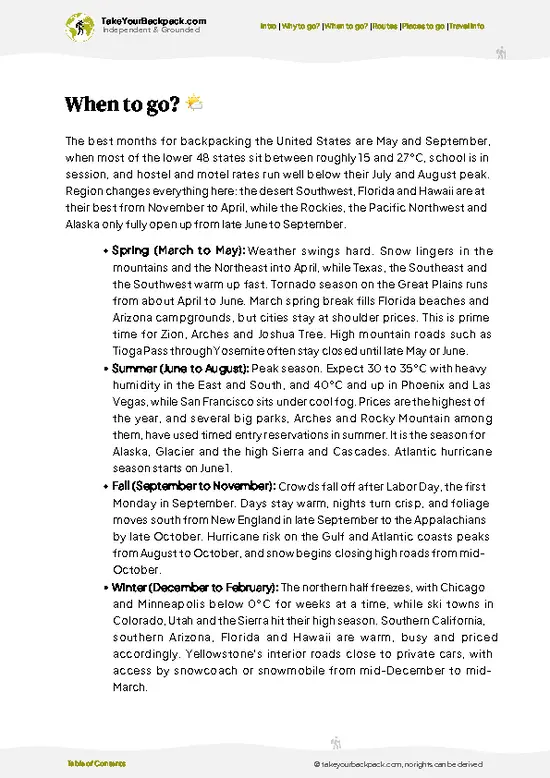
Best months overall: September and early October give the most reliable window across the country: daytime highs of 60 to 80°F (15 to 27°C) in most western parks, thinner crowds than summer and clear skies. Late spring, from May to early June, also works well in many regions, though high-elevation trails may still hold snow.

Summer: June through August is peak season, and it behaves like it. Lodging near major gates costs 30 to 100 percent more than in the shoulder months, and popular trailheads fill before 8 a.m. In the desert Southwest, highs regularly pass 100°F (38°C), and hiking at midday is a bad idea that people try anyway. Mountain parks in the Rockies and Sierra Nevada are at their best for backpacking from July to mid-September, once snowpack melts. Afternoon thunderstorms are common … read more 👉
Best months overall: September and early October give the most reliable window across the country: daytime highs of 60 to 80°F (15 to 27°C) in most western parks, thinner crowds than summer and clear skies. Late spring, from May to early June, also works well in many regions, though high-elevation trails may still hold snow.

Summer: June through August is peak season, and it behaves like it. Lodging near major gates costs 30 to 100 percent more than in the shoulder months, and popular trailheads fill before 8 a.m. In the desert Southwest, highs regularly pass 100°F (38°C), and hiking at midday is a bad idea that people try anyway. Mountain parks in the Rockies and Sierra Nevada are at their best for backpacking from July to mid-September, once snowpack melts. Afternoon thunderstorms are common in the Rockies, so be off ridgelines by early afternoon. Alaska peaks from June to August, with nearly endless daylight and mosquitoes of notable ambition.

Fall: Fall brings cooler nights, 25 to 45°F (-4 to 7°C) at elevation, and color in the Appalachians and Rockies. Eastern parks swell on October weekends, so go midweek or book early. Some high-country roads close after the first major snowfall, which can come as early as October.

Winter: November to March is the season for the Southwest deserts, southern Florida and the Gulf coast, where temperatures sit at 50 to 75°F (10 to 24°C) and crowds are noticeably lighter. Florida’s dry season runs roughly December to April, with far fewer mosquitoes. Mountain and northern parks turn to snowshoes and skis, and some roads and facilities close until late spring. Lodging prices drop 20 to 50 percent outside holidays.

Spring: March to May is changeable. Desert wildflowers can appear in March and April, but snow can still block mountain passes into June. Rain is more likely in the Pacific Northwest, where the wet season runs from roughly October to April and annual rainfall in places can exceed 100 inches (2,500 mm).

Book early whatever the season. Permits and campsites in prime windows sell out months ahead, so the best weather is only useful if you secured a place to sleep in it.

national park hoppingOptimizing Your Multi-Stop Itinerary

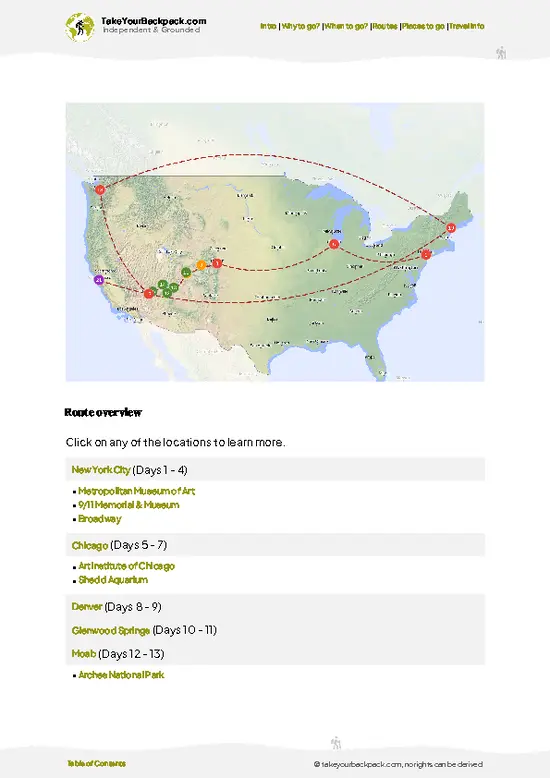
How many days to allow: A trip linking several national parks in the United States needs 10 to 21 days, and the more you stretch it, the better it works. Fewer than 10 days is possible within one region, but the distances punish any attempt to cross the country in a hurry.

Which regions cluster together: The desert Southwest is the easiest to combine, because parks in Utah, Arizona and Nevada sit within 2 to 5 hours of each other by road. Las Vegas and Salt Lake City are the practical hubs, with major airports and cheap rental cars. The Northern Rockies pair well, with Denver or Salt Lake City as gateways, and drives between parks of 3 to 6 hours. The Pacific coast and Sierra Nevada link through San Francisco or Los Angeles, about 5 to 7 hours between major stops. The Appalachian and Southeastern … read more 👉
How many days to allow: A trip linking several national parks in the United States needs 10 to 21 days, and the more you stretch it, the better it works. Fewer than 10 days is possible within one region, but the distances punish any attempt to cross the country in a hurry.

Which regions cluster together: The desert Southwest is the easiest to combine, because parks in Utah, Arizona and Nevada sit within 2 to 5 hours of each other by road. Las Vegas and Salt Lake City are the practical hubs, with major airports and cheap rental cars. The Northern Rockies pair well, with Denver or Salt Lake City as gateways, and drives between parks of 3 to 6 hours. The Pacific coast and Sierra Nevada link through San Francisco or Los Angeles, about 5 to 7 hours between major stops. The Appalachian and Southeastern parks suit short loops from Atlanta or Washington, D.C. Alaska and Hawaii are separate trips, each requiring its own flights and budget.

Direction and pacing: Pick a loop that starts and ends at the same airport, since one-way car rentals often add US$100 to 400 in drop fees. Travel from lower to higher elevation if you are not acclimated, and head toward the cooler region as summer progresses. Plan two to three nights at each major stop, which gives time for one full day on trail and one half-day buffer. Backpackers heading into overnight permits should add a day for the permit pickup, gear checks and weather delays.

Mistakes to avoid: The classic error is trusting the map. A 150-mile leg can take four hours once you add mountain roads, construction and a pace of 35 mph behind a camper van. Budget for 40 to 50 miles per hour on average, and keep drives under five hours on days you want to hike. Another mistake is booking one night per stop, which turns the trip into a driving tour with scenery out of the window. Stay two nights and walk.

Permits are another trap. Timed entry and backcountry permits often release months in advance, so lock those first and build the route around them. Finally, check seasonal road closures before fixing dates, because a pass that is shut in May can erase half a plan. Cell signal vanishes between stops, so download offline maps and fill the tank when you can.

The ListThe Best national parks of the USA

1 Grand Canyon National Park

Rim viewpoints, Bright Angel switchbacks, Trail of Time, Phantom Ranch

Walk the rim past billion-year rock markers, or descend steep trails to a river canyon floor with cottonwood shade.

United States - Grand Canyon National Park

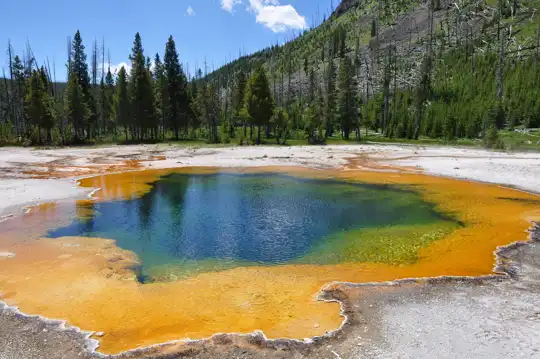
2 Yellowstone National Park

Old Faithful, Grand Prismatic, Lamar wolves, backcountry permits

Time geyser eruptions and boardwalk springs, then head to Lamar Valley at dawn for bison herds and wolf packs.

United States - Yellowstone National Park

3 Yosemite National Park

Granite walls, Yosemite Falls, Half Dome cables, giant sequoias

Park once in the valley and ride the shuttle past sheer cliffs, thundering falls, high meadows and ancient sequoia groves.

United States - Yosemite National Park

4 Zion National Park

Virgin River Narrows, Angels Landing chains, red canyon walls, shuttle road

Wade a river between pinched canyon walls, or climb chained ridges to views straight down a red-rock gorge.

United States - Zion National Park

5 Glacier National Park

Going-to-the-Sun Road, Logan Pass, red-pebble lakes, grizzly country

Climb the Continental Divide on a cliff-hugging road, then hike to cirque lakes, alpine ledges and mountain goats.

united-states-national-park-glacier-national-park
© Google | Aure05 Sapparys

6 Grand Teton National Park

Teton skyline, Jenny Lake, moose willows, Mormon Row barns

Watch jagged peaks rise straight from sagebrush flats, then hike glacial canyons where moose browse among the willows.

7 Olympic National Park

Hoh rain forest, Hurricane Ridge, driftwood beaches, sea arches

Hike mossy maple groves, then cross to wild shores with tide pools and an arch you can walk through at low tide.

8 Arches National Park

Sandstone arches, Delicate Arch, timed entry, La Sal views

Walk short trails to freestanding spans and paired windows, then climb slickrock to an arch framing distant snowy peaks.

United States - Arches National Park

9 Bryce Canyon

Orange hoodoos, rim amphitheater, Wall Street slot, Fairyland loop

Drop below the rim through narrow slots and spires, where Douglas firs lean toward the light and the crowds thin fast.

United States - Bryce Canyon

10 Rocky Mountain National Park

Trail Ridge Road, alpine tundra, Bear Lake, bugling elk

Cross the Continental Divide above treeline, then hike lake basins beneath granite peaks where elk call across meadows.

united-states-national-park-rocky-mountain-national-park
© Google | Daniel Gonzalez

11 Everglades National Park

Sawgrass marsh, Anhinga boardwalk, alligators, Flamingo paddling

Follow boardwalks over sawgrass where gators lounge near the rail, then drive south to mangrove creeks and Florida Bay.

United States - Everglades National Park

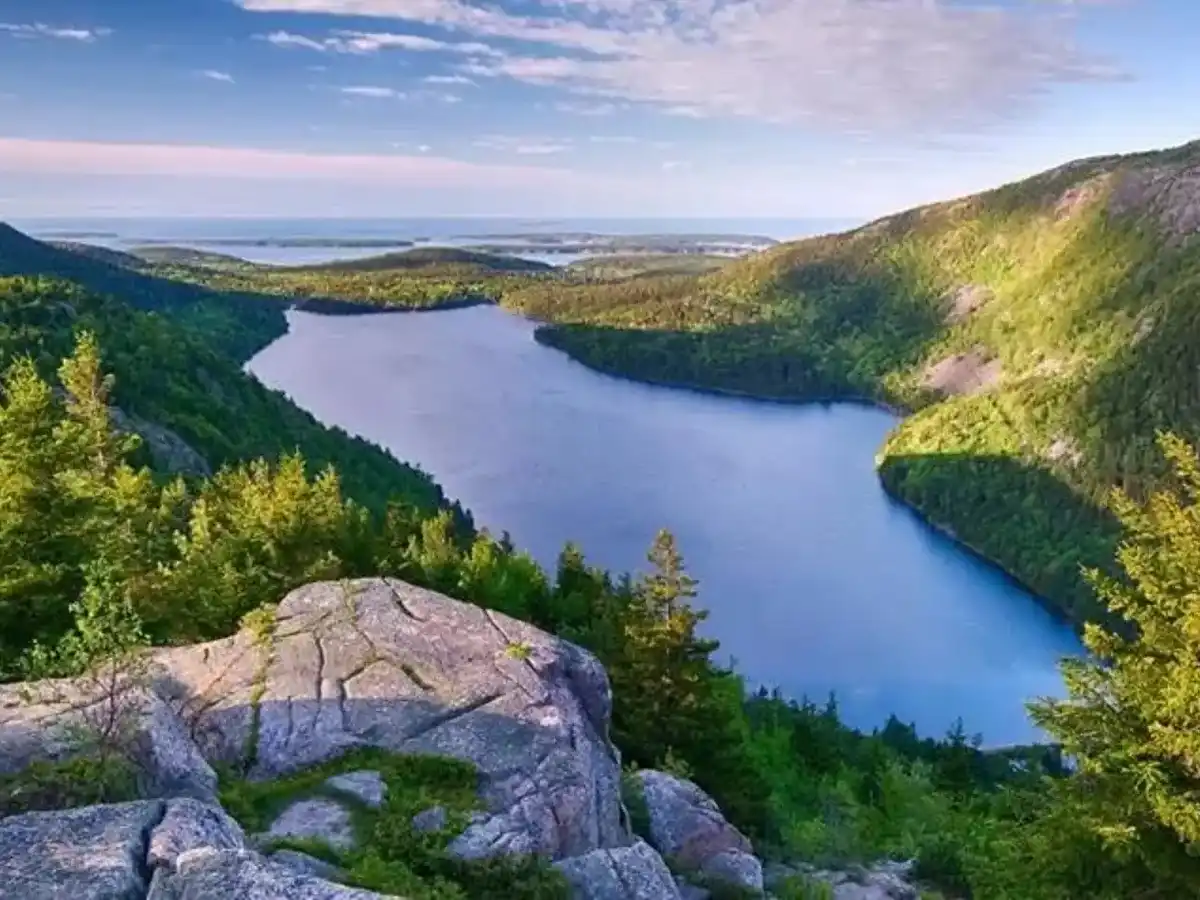
12 Acadia

Pink granite summits, carriage roads, Thunder Hole, island shuttle

Ride the free island shuttle between granite peaks, glacial ponds and stone-bridged carriage lanes, with a coastal drive looping past surf-hit cliffs.

united-states-national-park-acadia
© Google | Brian Etzel

13 Adirondack Mountains

High Peaks trailheads, Marcy summit, canoe portages, Keene Valley

Pick a trailhead town, then climb ledges above spruce forest or paddle chained lakes where loons call along quiet shorelines.

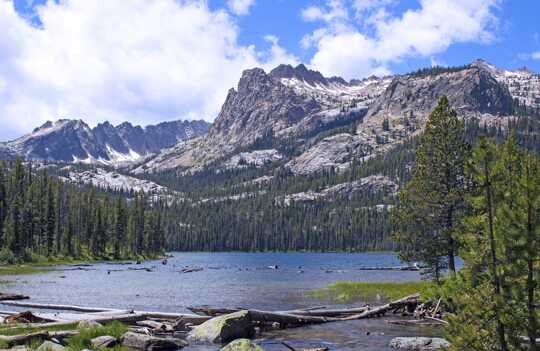
14 Sawtooth Wilderness

Granite crags, alpine lakes, self-issued permits, Redfish Lake

Carry a trailhead permit past gravel roads and meadows to swimmable lakes under a jagged granite wall.

United States - Sawtooth Wilderness

15 Hawai’i Volcanoes National Park

Kīlauea summit, lava tubes, Chain of Craters, petroglyphs

Peer into a steaming crater, walk a lava tube, then drive down to sea arches cut in black cliffs.

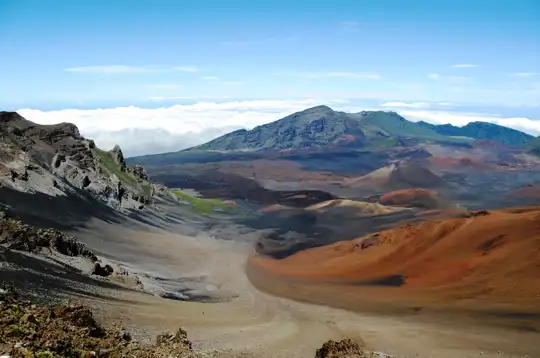
16 Haleakalā National Park

Crater rim, summit sunrise, silverswords, Kīpahulu falls

Reserve a dawn slot above the clouds, hike rust-colored cinder fields, then visit a bamboo forest trail on the wet coast.

United States - Haleakalā National Park

17 Glacier Bay National Park

Tidewater glaciers, Margerie Glacier, Bartlett Cove, kayak channels

Cruise or paddle toward calving ice walls, with rainforest trails and seals on bergs reached only by water or air.

united-states-national-park-glacier-bay-national-park
© Google | Denyse Morin

18 Carlsbad Caverns National Park

Big Room cavern, bat flights, Chihuahuan desert, wild caves

Descend switchbacks into a huge limestone chamber, then watch bats spiral from the cave mouth at dusk in summer.

united-states-national-park-carlsbad-caverns-national-park
© Google | Mandy Anglin

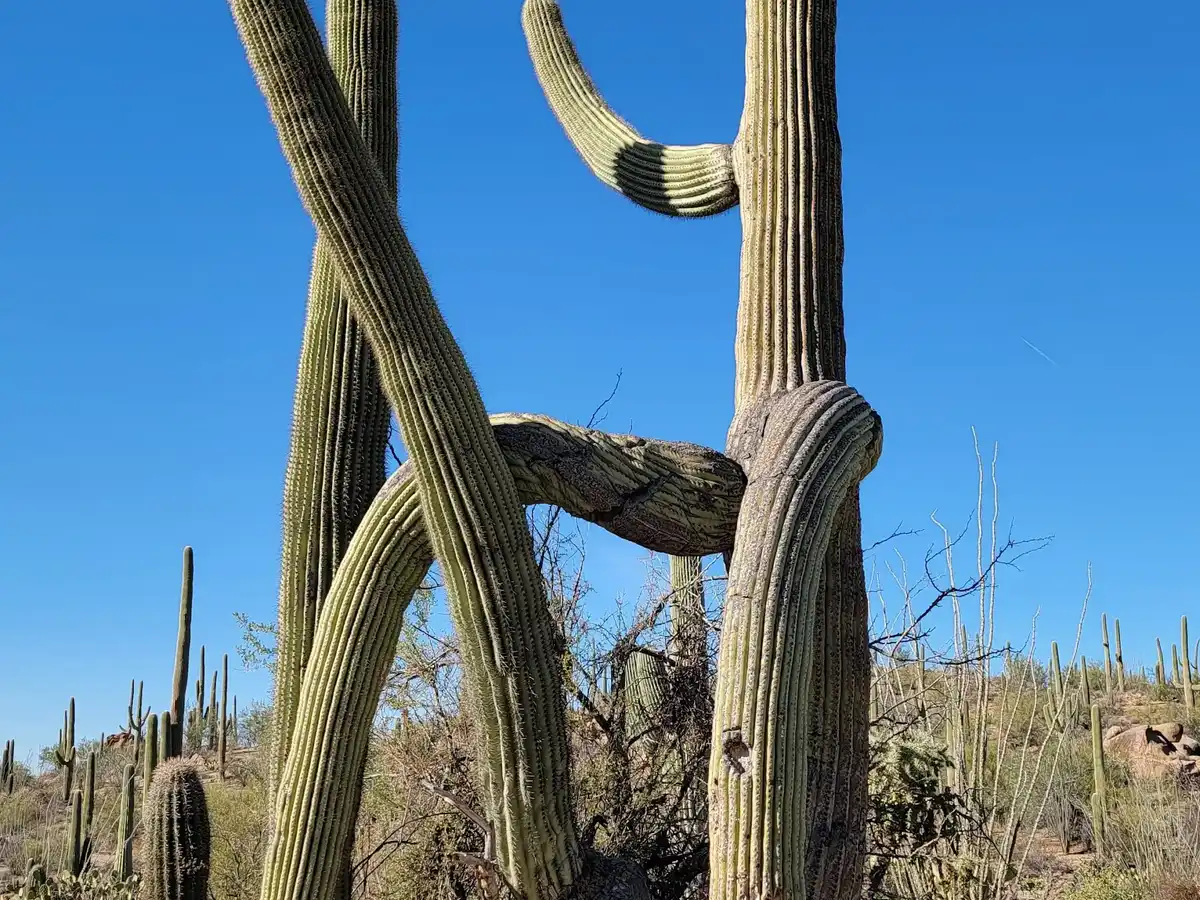
19 Saguaro National Park

Saguaro forests, twin districts, Hohokam carvings, Tucson sunsets

Walk among giant cacti on either side of Tucson, with rock carvings, ridge hikes and sunsets over the desert valley.

united-states-national-park-saguaro-national-park
© Google | Rachel Y

20 Cumberland Island

Wild horses, Dungeness ruins, empty beaches, mossy live oaks

Step off the ferry into sand roads, burned mansion walls and feral horses grazing under oaks draped in moss.

21 Mesa Verde National Park

Cliff dwellings, ladder tours, mesa-top drive, ranger tickets

Climb ladders into ancestral alcove villages, then loop the mesa tops for overlooks and early pit houses.

united-states-national-park-mesa-verde-national-park
© Google | Jeff Jackson

22 Great Smoky Mountains

Hazy ridges, Clingmans Dome, Cades Cove, black bears

Climb to a concrete tower above ridge after ridge, then loop through old cabin meadows where deer and bears feed at dawn.

23 Denali National Park

Single park road, transit bus, Wonder Lake, grizzly tundra

Ride the lone park road deep into tundra, hop off where grizzlies and caribou appear, and wait for the high peak to clear.

United States - Denali National Park

24 Great Sand Dunes National Park

Tall dunes, Medano Creek, sandboarding, High Dune

Slog up shifting sand to a ridgeline view, then slide down or wade the seasonal creek that pulses in waves.

united-states-national-park-great-sand-dunes-national-park
© Google | Roy O

25 North Cascades National Park

Turquoise Diablo Lake, Cascade Pass, highway overlooks, glacier peaks

Pull off the highway for a silt-colored lake, then switchback to a pass where marmots whistle beneath hanging glaciers.

united-states-national-park-north-cascades-national-park
© Google | Chadi Abdallah

26 Dry Tortugas National Park

Fort Jefferson, moat snorkeling, Gulf ferry, sooty terns

Cross open water to a huge brick fort, then snorkel its moat wall among parrotfish and barracuda.

27 Channel Islands National Park

Boat-only islands, Painted Cave, island foxes, whale crossings

Cross the channel by boat to sea caves, cliff walks and rare island foxes, with whales often alongside the ferry.

united-states-national-park-channel-islands-national-park
© Google | Zach Sarnoff

28 Custer State Park

Bison herds, Needles Highway, granite spires, Black Hills lakes

Drive a slow loop past grazing bison and begging burros, then thread tight tunnels between granite needles.

united-states-national-park-custer-state-park
© Google | Patti Orzel

29 Valley of Fire State Park

Red sandstone waves, petroglyph stairs, Fire Wave, Mojave heat

Walk short trails over striped red sandstone, pausing at ancient carvings and rock formations that glow in low light.

united-states-national-park-valley-of-fire-state-park
© Google | Jay The Traveler

30 Mammoth Cave National Park

Longest cave system, Historic Tour, Frozen Niagara, free ferry

Squeeze through tight passages on a ranger tour, then cross the Green River by free car ferry through quiet woods.

united-states-national-park-mammoth-cave-national-park
© Google | Jared Mccullough

31 Great Basin National Park

Bristlecone pines, Lehman Caves, Wheeler Peak, dark skies

Walk among twisted ancient pines, tour a marble cave, then lie back under a Milky Way untouched by city glow.

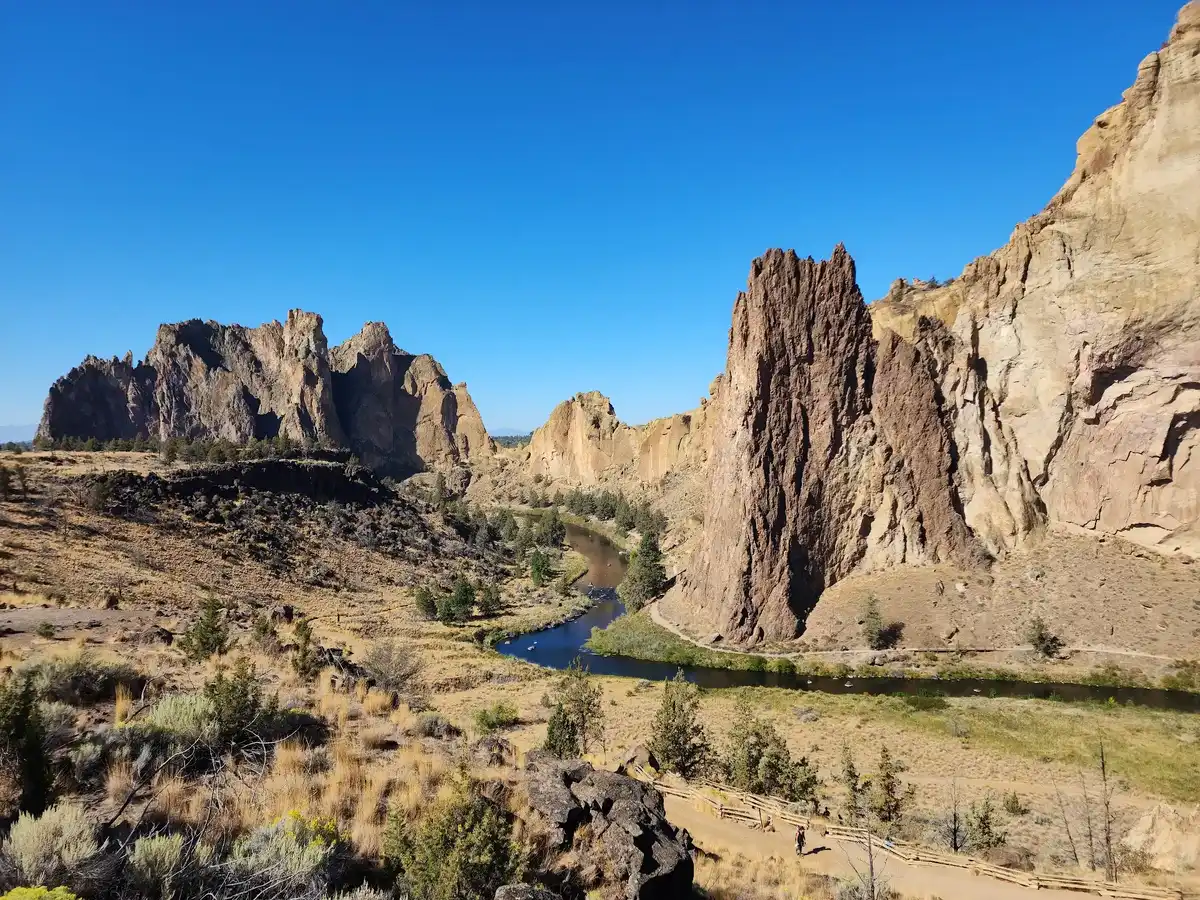
32 Smith Rock State Park

Welded tuff cliffs, Monkey Face, sport climbing, Crooked River

Climb steep switchbacks above a river bend to see climbers on a volcanic spire, then loop back along the water.

united-states-national-park-smith-rock-state-park
© Google | Bo Li

33 Letchworth State Park

Genesee gorge, three waterfalls, railroad trestle, balloon flights

Follow a deep river canyon past three falls, overlooks with long drops and a historic inn above the cascades.

united-states-national-park-letchworth-state-park
© Google | Ching-jen Tang

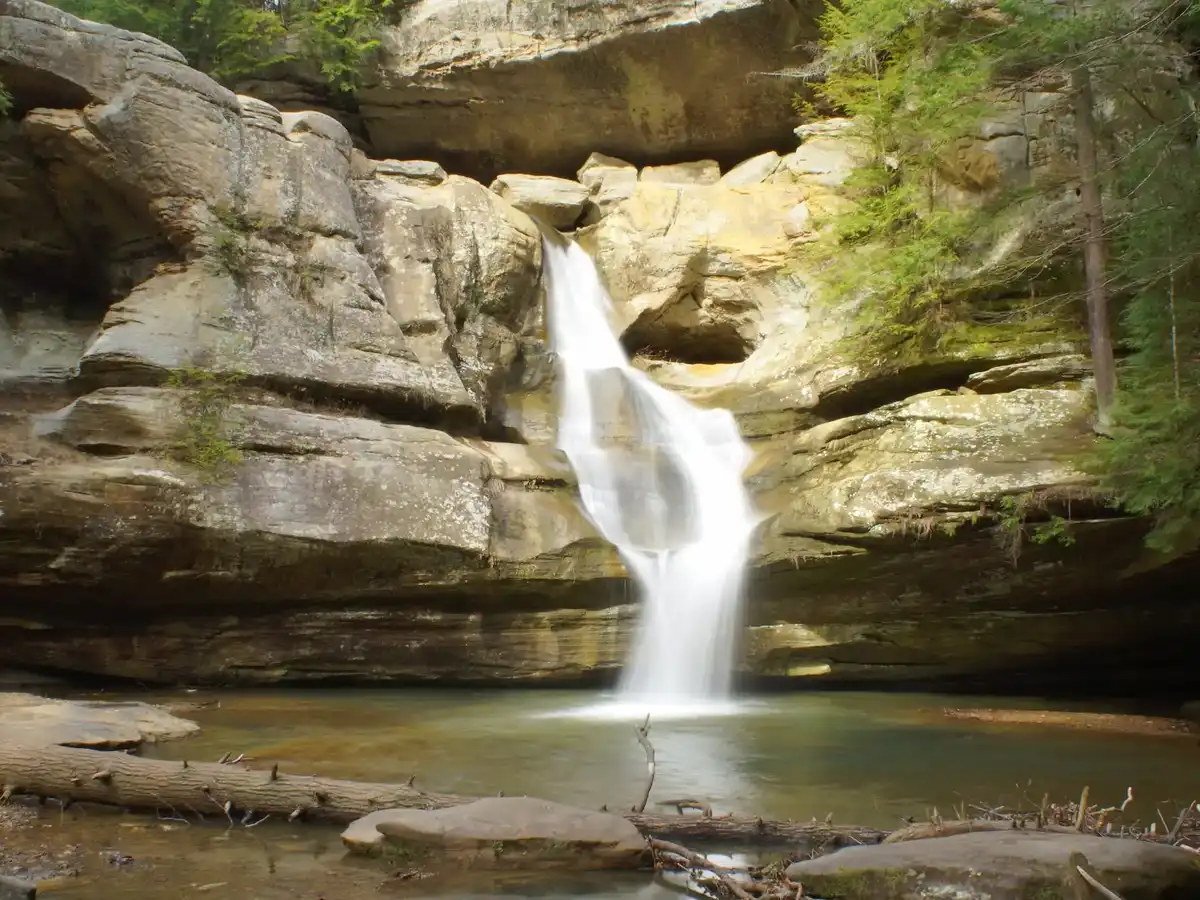
34 Hocking Hills State Park

Sandstone gorges, recess caves, hemlock waterfalls, Old Man’s Cave

Link short gorge walks by car, passing stone steps, rock tunnels and a horseshoe cave with a thin waterfall.

united-states-national-park-hocking-hills-state-park
© Google | Chadwick Brewer

Think you know the USA?

Prove you’re a true local — uncover 24 lesser-known national parks in the USA that locals tend to keep to themselves.
Loading the map 🌍

Expert viewWhat You Should Know

How many parks to visit: I advise three to five parks on a two-to-three-week trip, and no more than two or three on a shorter one. The reason is simple arithmetic: driving between parks often takes 3 to 6 hours, and each park needs at least two nights to be worth the gate fee. Pack in eight stops and you will see eight parking lots. A smaller number gives you time for one proper overnight hike, which is where the country’s parks really justify their reputation.

Choosing between kinds of parks: The big split is between famous, road-accessible parks and remote, permit-driven ones. The famous ones cost less in time, since you can see highlights in a day from your car, and they offer the most comfort, with lodges, restaurants and shuttle buses. The price is crowds and higher gateway-town rates. … read more 👉
How many parks to visit: I advise three to five parks on a two-to-three-week trip, and no more than two or three on a shorter one. The reason is simple arithmetic: driving between parks often takes 3 to 6 hours, and each park needs at least two nights to be worth the gate fee. Pack in eight stops and you will see eight parking lots. A smaller number gives you time for one proper overnight hike, which is where the country’s parks really justify their reputation.

Choosing between kinds of parks: The big split is between famous, road-accessible parks and remote, permit-driven ones. The famous ones cost less in time, since you can see highlights in a day from your car, and they offer the most comfort, with lodges, restaurants and shuttle buses. The price is crowds and higher gateway-town rates. For a first trip or a tight schedule, a mix of two famous parks and one quieter one gives the best balance. The remote parks cost more in time and money, with long approaches, bush flights in Alaska at US$300 to 800 or more, and basic facilities, but they give the most solitude per dollar for anyone with a tent and a week. Solo backpackers on a budget get the best return from mid-sized mountain and desert parks where backcountry permits are cheap and trailheads are reachable by car.

What it costs: Entry is usually US$20 to 35 per vehicle for seven days, or US$15 to 20 per person on foot or bicycle. The America the Beautiful annual pass at US$80 covers all federal parks and pays off after three visits. Wilderness permits run from free to about US$30 per trip, with reservation fees on top at popular areas. Campgrounds in parks cost US$15 to 40 a night, while backcountry camping is often free beyond the permit. Motels in gateway towns typically run US$100 to 250 in summer and half that off-season, so camping saves the most money by a wide margin and gives up only a mattress.

A realistic daily budget is US$60 to 100 for a backpacker camping and cooking their own food, and US$150 to 250 if staying in motels and eating out. A rental car runs US$40 to 90 a day plus fuel, which at long distances can match your lodging bill. Splitting the car among three or four people is the single biggest saving. Guided trips range from US$100 to 250 for a day and are rarely needed unless you want canyoneering, rafting or glacier travel, where a guide earns the fee. Shuttle buses inside the busiest parks are usually free with entry.

Safety and local etiquette: The most common danger is dehydration and heat in the desert. Carry at least 1 gallon (4 liters) of water per person per day and start hikes at dawn. In the mountains, altitude above 8,000 feet (2,400 m) can bring headaches and fatigue, and lightning is a real risk on exposed ridges. Cold water and flash floods kill people in slot canyons, so check the forecast with rangers before entering.

Wildlife rules are enforced for good reason. Stay at least 25 yards (23 m) from most animals and 100 yards (91 m) from bears and wolves. Use bear canisters or lockers wherever required, and never keep food in a tent. Cell service is unreliable, so tell someone your route and consider a satellite messenger for backcountry trips.

Cultural expectations are straightforward. Pack out everything, stay on trails in fragile desert soil, and respect fire bans, which carry heavy fines. Many parks sit on land sacred to Native nations, and some areas have closures or guidelines worth reading. Rangers are friendly, well informed and happy to answer questions, so use them before you go rather than after something goes wrong. Tipping guides 15 to 20 percent is customary.

Where I would put the money: Spend on the annual pass, a good map, a proper water system and one early campsite reservation. Skip souvenirs, premium gateway lodging and any plan that depends on arriving at a famous viewpoint at noon in July. A tight budget stretches furthest when you camp, cook and spend more nights on fewer parks.

✈️ The backpacker research shortcutthe USA Travel Guide

An offline-friendly backpacking guide with optimized travel routes, ranked highlights, transport advice, and the best areas to stay.
example page 0 from our offline Travel Guide for United States
example page 1 from our offline Travel Guide for United States
example page 2 from our offline Travel Guide for United States
example page 3 from our offline Travel Guide for United States
example page 4 from our offline Travel Guide for United States
example page 5 from our offline Travel Guide for United States
example page 6 from our offline Travel Guide for United States
example page 7 from our offline Travel Guide for United States
The digital guide (451 pages) contains:
✅ 159 highlights, ranked by travel appeal
✅ Optimized 14, 21 & 30-day travel routes
✅ Cities, national parks, landmarks, beaches
✅ How to get around
✅ Offline-friendly for travel without Wi-Fi
👉 Click to see all 30+ guide features

📅 Plan smarter in minutes, not weeks
✅ Month by month travel advice
✅ Festivals & national holidays
✅ Budget expectations

🗺️ Go to the right places, skip the overrated ones
✅ Honest pros & cons of destinations
✅ Top hikes, parks & viewpoints
✅ Lesser-known places most travelers miss
✅ Clear “worth it vs skip it” guidance

🛏️ Travel smoothly without rookie mistakes
✅ Best areas to stay
✅ Transport systems explained simply
✅ Common scams & safety advice
✅ SIM cards, money & practical tips

🌍 Understand the country, not just visit it
✅ Culture & traditions
✅ Local customs
✅ Festivals worth planning around
✅ Traveler-friendly historical context
✅ Insights that make places more meaningful

📱 Built for real travel conditions
✅ Fully downloadable PDF
✅ Works completely offline
✅ Optimized for phone use
✅ Useful in remote areas & buses
✅ Everything in one place
Stop searching, start planning
Get instant access to your full guide. 30‑day money-back guarantee.
+ Add another guide for just

By proceeding you agree to our terms.
Sent to your inbox immediately after payment • 100% Secure Checkout
Best Backpacking Travel Advisor 2025 tourism awardBest Backpacking
Travel Advisor
2025
What others say about Take Your Backpack Guides:
⭐⭐⭐⭐⭐
Fantastic, amazing amount of information!
⭐⭐⭐⭐⭐
My goodness this is amazing, it's what I've been looking for hats off too you!
⭐⭐⭐⭐⭐
I think this is absolutely BRILLIANT
⭐⭐⭐⭐
Very complete and informative. It's still missing places, but I gotta to commend you
⭐⭐⭐⭐⭐
This is truly amazing, thank you, can't wait to explore it with my kids!
⭐⭐⭐⭐⭐
Awesome resource, thank you!
⭐⭐⭐⭐⭐
This is amazing! Can't wait to explore the ones I haven't seen
⭐⭐⭐⭐
I love this! Well done, great idea.
⭐⭐⭐⭐⭐
Thanks for taking the time to make this gem!
⭐⭐⭐⭐⭐
This might be the best website I've ever seen.
⭐⭐⭐⭐⭐
Congratulations, and thank you so much for your work; it's incredibly valuable.
⭐⭐⭐⭐
In all seriousness I think you did a great job pointing out the important spots
⭐⭐⭐⭐⭐
10/10 very good
⭐⭐⭐⭐⭐
As someone who's only just starting to visit regularly this is awesome, thank you.
⭐⭐⭐⭐
Thank you very much! I'm going to visit my dad, it's going to be very useful!
⭐⭐⭐⭐⭐
This is really cool! We'll be travelling for the first time and this definitely come in handy.
⭐⭐⭐⭐⭐
You are now our minister of culture, congratulations 👨‍💼
⭐⭐⭐⭐⭐
Just wanted to tell you that this is a pearl! Going to follow your recommendations.
⭐⭐⭐⭐⭐
This is so cool. I'll definitely be using the resource for my travels soon.
⭐⭐⭐⭐⭐
This is very impressive! Good work.
⭐⭐⭐⭐⭐
This is an amazing and informative site. Very well done!

🛏️ Where to stay?Where to Base Yourself

The United States has hostels in nearly every major city and many national park gateway towns, with dorm beds usually running US$35 to 70 a night and basic motel rooms from about US$70 to 120 away from the main tourist strips. In New York, the Lower East Side and Williamsburg put you steps from late-night bars but cost the most, while Harlem is cheaper and calmer with a longer subway ride; in San Francisco, Union Square is central but rough after dark where it borders the Tenderloin, and Fisherman’s Wharf feels safer yet very touristy. Elsewhere, most hostels cluster in Hollywood and Venice Beach in Los Angeles (both lively, both sketchy on side streets late at night), Wicker Park in Chicago … read more 👉
The United States has hostels in nearly every major city and many national park gateway towns, with dorm beds usually running US$35 to 70 a night and basic motel rooms from about US$70 to 120 away from the main tourist strips. In New York, the Lower East Side and Williamsburg put you steps from late-night bars but cost the most, while Harlem is cheaper and calmer with a longer subway ride; in San Francisco, Union Square is central but rough after dark where it borders the Tenderloin, and Fisherman’s Wharf feels safer yet very touristy. Elsewhere, most hostels cluster in Hollywood and Venice Beach in Los Angeles (both lively, both sketchy on side streets late at night), Wicker Park in Chicago (great bars, 20 minutes from the Loop by train) and the French Quarter and Marigny in New Orleans, where easy nightlife comes with street noise until the small hours.

If you enjoy meeting fellow travelers, consider choosing hostels with high ratings for atmosphere. On the other hand, if you prefer having your own space, a hotel might be a better option.

the USAExpand Your Journey

👋 Meet the founderWho’s Behind Take Your Backpack?

Johan, backpacker and founder of TakeYourBackpackHi, I’m Johan (Netherlands 🇳🇱), the creator of TakeYourBackpack. Over the past 3 decades, I’ve backpacked through 90+ countries across six continents, gaining extensive experience with independent travel, long-term trips, and overland routes.

This site is built on a combination of firsthand travel experience and carefully curated insights from other backpackers. Many guides are based on places I’ve personally visited, while others bring together tips, observations, and practical advice shared by trusted travelers I’ve met along the way.

The goal is to provide realistic, experience-driven guidance — not generic itineraries — so you can explore destinations with better context, clearer expectations, and more confidence.