×

the USA🇺🇸 | regionsCaliforniaSierra granite, redwood coast, Mojave basins, Highway 1 | things to do and best time to go

Explore ArkansasExplore Colorado

Backpacking in California
🏆 Top pickregion ranked #1
By Johan Kruseman 🇳🇱 | Updated October 22, 2026

In the White Mountains, the Methuselah Grove holds bristlecone pines more than 4,000 years old, and the oldest tree is left unmarked so nobody carves their initials into it. California itself sits on the western edge of the United States, and it is the size of a small continent with the logistics to match. I once looked at the map, decided Yosemite and the coast made a tidy pair, and ended the evening on a Central Valley highway staring at almond orchards and a produce truck’s taillights. The lesson: the map lies about scale, so choose one region per few days and use Amtrak or a short flight between the big ones. Redwoods, deserts, wine country and Sierra granite are all real, but so are pricey parking and park permits that sell out months ahead. Reserve early, and skip the rental car in San Francisco. A first day could mean coffee in the Mission, a walk across the Golden Gate Bridge, and a burrito dinner before an early bed.

Discover everything you want to know in the 📖 the USA Travel Guide.


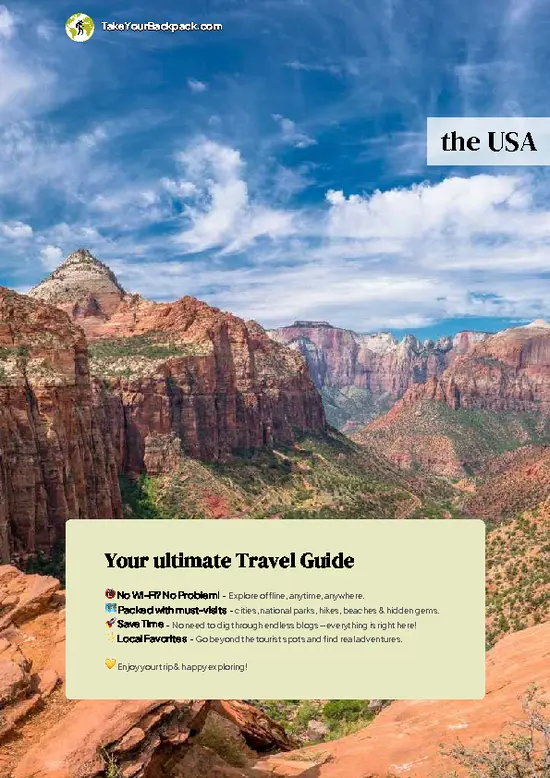
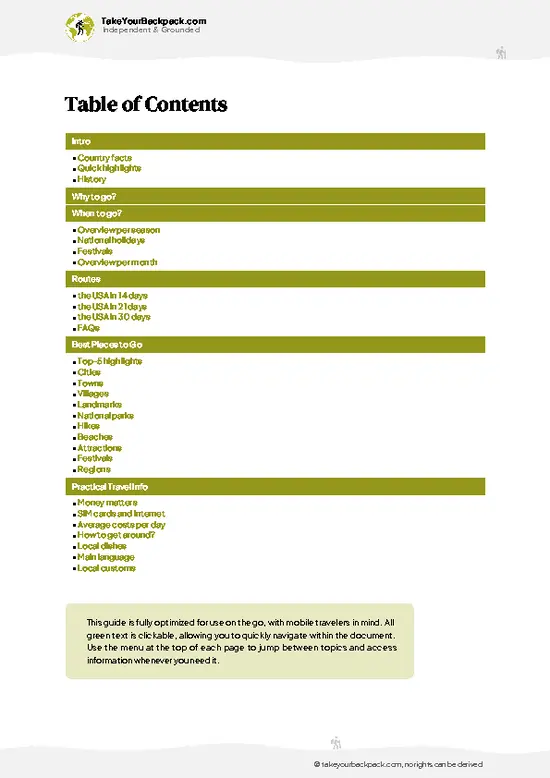
example page 0 from our offline Travel Guide for United States
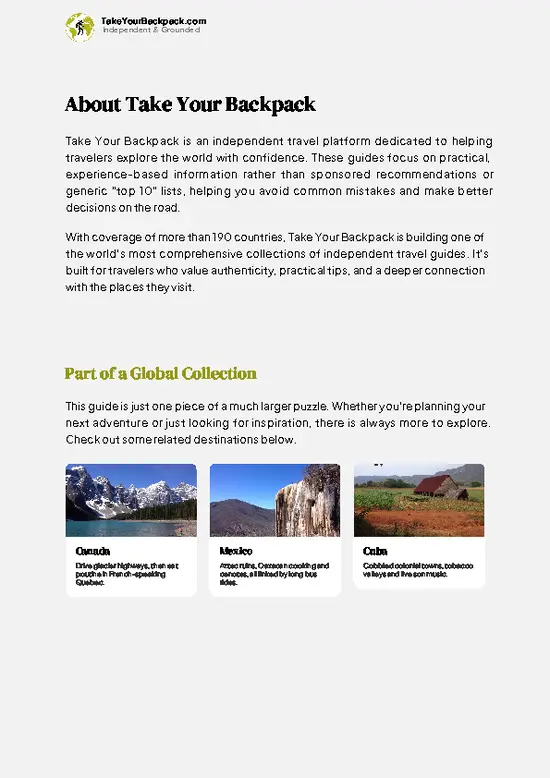
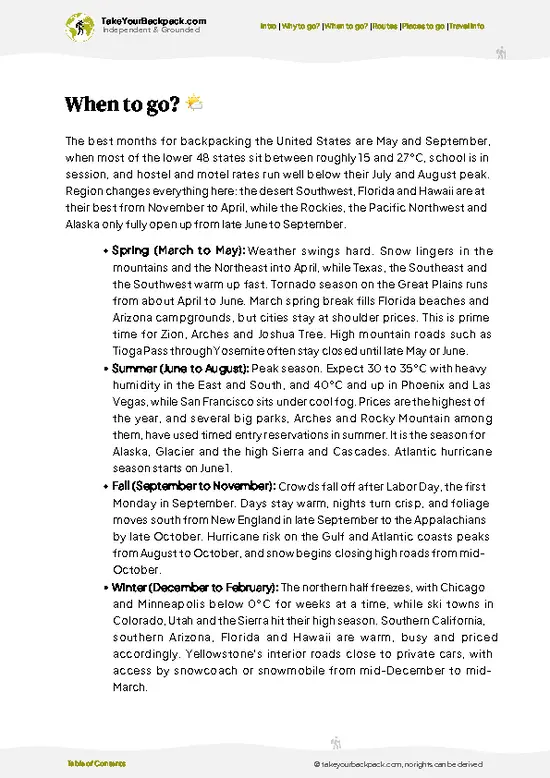
example page 1 from our offline Travel Guide for United States
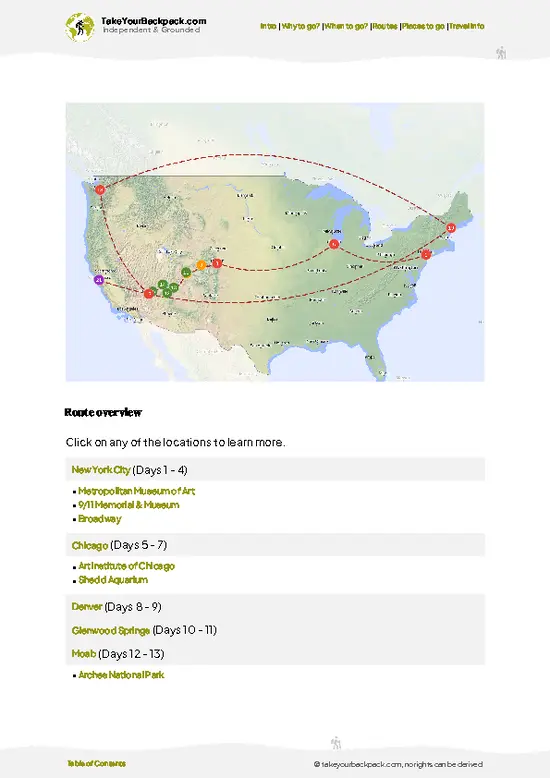
example page 2 from our offline Travel Guide for United States
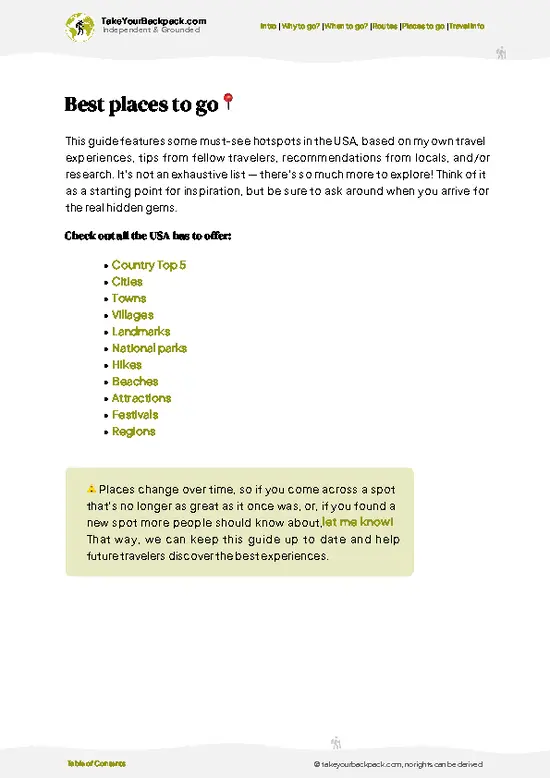
example page 3 from our offline Travel Guide for United States
example page 4 from our offline Travel Guide for United States
example page 5 from our offline Travel Guide for United States
example page 6 from our offline Travel Guide for United States
example page 7 from our offline Travel Guide for United States
Loading the map 🌍
CLICK TO FILTER
cities
towns
villages
landmarks
national parks
hikes
beaches
attractions
festivals
regions
SHOW COUNTRY’S BESTSHOW ALL

✨ Why go?
Ranked #1 region in the USA
What makes it a must-see region

California rewards backpackers who want radically different landscapes without changing countries. In one trip you can stand under the sequoias of Yosemite and Sequoia National Parks, then watch the Pacific hammer the cliffs along Highway 1 through Big Sur, then drop into the salt flats of Death Valley, the lowest point in North America. Few places pack that range of terrain into a single state.
The second reason is how forgiving the state is for slow, flexible travel. Hostels cluster in San Francisco, Los Angeles and San Diego, so you can leave bags with a base and rent a car only for the stretches where you truly need one. National park campgrounds and the Pacific coastal trails give you a cheaper, quieter alternative to motels, and free dispersed camping on national forest land opens up … read more 👉
California rewards backpackers who want radically different landscapes without changing countries. In one trip you can stand under the sequoias of Yosemite and Sequoia National Parks, then watch the Pacific hammer the cliffs along Highway 1 through Big Sur, then drop into the salt flats of Death Valley, the lowest point in North America. Few places pack that range of terrain into a single state.
The second reason is how forgiving the state is for slow, flexible travel. Hostels cluster in San Francisco, Los Angeles and San Diego, so you can leave bags with a base and rent a car only for the stretches where you truly need one. National park campgrounds and the Pacific coastal trails give you a cheaper, quieter alternative to motels, and free dispersed camping on national forest land opens up the Sierra.
The culture is just as varied. You can eat Oaxacan food in Los Angeles, dim sum in San Francisco’s Chinatown, and fish tacos in San Diego within the same week, which makes a long trip feel like several short ones. Plan around the Tioga Pass opening if you want to cross the high Sierra.

💡 HighlightsPlaces and moments you shouldn't skip

  1. Golden Gate Bridge, San Francisco: the orange suspension bridge is walkable on its east sidewalk, and the Marin Headlands viewpoint on the north side gives the classic photo with the city behind it. Free to walk.
  2. Yosemite Valley: sheer granite walls, El Capitan and Half Dome, plus Yosemite Falls roaring in snowmelt season. Entry is about US$35 per vehicle, and since 2026 nonresidents aged 16 and over also pay a US$100 nonresident fee each unless they hold an annual pass. A day in the valley is the minimum.
  3. Big Sur and Bixby Bridge: a long coastal stretch of Highway 1 where redwood canyons meet sea cliffs. Stop at McWay Falls, which drops onto a beach.
  4. Redwood National and State Parks: the tallest trees on Earth stand along the far north coast. Walk Lady Bird Johnson Grove or the quieter Tall
… read more 👉
  1. Golden Gate Bridge, San Francisco: the orange suspension bridge is walkable on its east sidewalk, and the Marin Headlands viewpoint on the north side gives the classic photo with the city behind it. Free to walk.
  2. Yosemite Valley: sheer granite walls, El Capitan and Half Dome, plus Yosemite Falls roaring in snowmelt season. Entry is about US$35 per vehicle, and since 2026 nonresidents aged 16 and over also pay a US$100 nonresident fee each unless they hold an annual pass. A day in the valley is the minimum.
  3. Big Sur and Bixby Bridge: a long coastal stretch of Highway 1 where redwood canyons meet sea cliffs. Stop at McWay Falls, which drops onto a beach.
  4. Redwood National and State Parks: the tallest trees on Earth stand along the far north coast. Walk Lady Bird Johnson Grove or the quieter Tall Trees Grove, which requires a free permit.
  5. Joshua Tree National Park: boulder piles and twisted yucca-like trees where two deserts meet. Hidden Valley is a short loop, and Keys View looks over the Coachella Valley. About US$30 per vehicle.
  6. Badwater Basin, Death Valley: a salt flat 282 feet below sea level, with polygon crusts crunching underfoot. Walk out past the boardwalk crowd for the best patterns.
  7. Mono Lake South Tufa: limestone towers rising from an alkaline lake east of the Sierra. A short loop trail leads through them, and the small fee is among the best value on this list.
  8. Bodie State Historic Park: a gold rush ghost town preserved in “arrested decay,” with roughly 100 buildings and a dusty, hushed street. Entry runs about US$8 for adults.
  9. Ancient Bristlecone Pine Forest: high in the White Mountains, with trees over 4,000 years old on dry dolomite slopes. Few people come, so you can walk the Discovery Trail nearly alone.
  10. Lassen Volcanic National Park: steaming vents and mud pots at Bumpass Hell, reached by a moderate trail past turquoise pools. It draws a fraction of Yosemite’s crowds.
In California, Mono Lake and Bodie pair neatly in one day, with the tufa towers in the morning and the ghost town in the afternoon.
Spotted a mistake or missing something? Contact us.

Things to do around California

Ratings based on Tripadvisor reviews. When you book through this link, you support our work at no extra cost to you.

⌛️ 5 daysA smart one-week plan

Walk your first two days, then pick up a rental car only when the city stops being the point. Public transit and your feet cover San Francisco, while the Sierra and the coast beyond it reward driving, and that split sets the whole pace.
Day 1-2: San Francisco:
Start on foot and by cable car and bus, because parking here costs more than most hostel beds. Spend the first day on the Embarcadero, Chinatown and the Golden Gate Bridge. On day two take the detour to Point Reyes National Seashore, a lighthouse, elk and empty beaches that need a car for just one day and do not break the plan. Return the car that evening and keep your base in the city.
Day 3-4: Yosemite Valley:
Collect a rental car for the drive east, and book Yosemite lodging or a campsite months ahead, since walk-ins rarely work. Once … read more 👉
Walk your first two days, then pick up a rental car only when the city stops being the point. Public transit and your feet cover San Francisco, while the Sierra and the coast beyond it reward driving, and that split sets the whole pace.
Day 1-2: San Francisco:
Start on foot and by cable car and bus, because parking here costs more than most hostel beds. Spend the first day on the Embarcadero, Chinatown and the Golden Gate Bridge. On day two take the detour to Point Reyes National Seashore, a lighthouse, elk and empty beaches that need a car for just one day and do not break the plan. Return the car that evening and keep your base in the city.
Day 3-4: Yosemite Valley:
Collect a rental car for the drive east, and book Yosemite lodging or a campsite months ahead, since walk-ins rarely work. Once inside the valley, free shuttles link the trailheads, so park once and leave the car alone. Day three is for Yosemite Falls and the valley floor. Day four is for the long climb, either the Mist Trail or the Four Mile Trail, where the views earn the legs’ complaints.
Day 5: Mono Lake:
Cross the Sierra on Tioga Road when it is open, since the pass closes seasonally. Mono Lake’s tufa towers make a calm finish after the granite, and the drive down the east side shows you a completely different California.
If you only get one day, make it day four in Yosemite. The effort pays off at the top, and no other day on this route changes your sense of scale as completely.

🌤️ When to go?Best time to visit California

  • Summer (June to August): Coastal fog keeps San Francisco near 15 to 22°C (59 to 72°F), while Death Valley and the Central Valley hit 38 to 54°C (100 to 129°F). Yosemite and the Sierra open fully, with long daylight and the highest prices and crowds. Book campsites and park lodging months ahead.
  • Fall (September to November): Beaches in Southern California stay at 24 to 30°C (75 to 86°F) into October, Sierra aspens turn gold, and rates ease after Labor Day. Wildfire smoke can cloud the air.
  • Winter (December to February): Coastal cities run 8 to 20°C (46 to 68°F) with rain, mostly in the north. Sierra resorts like Mammoth have snow, and desert parks are pleasant at 15 to 22°C (59 to 72°F). Daylight is short, and Tioga Road in Yosemite is closed.
  • Spring (March to May): Desert wildflowers peak in
… read more 👉
  • Summer (June to August): Coastal fog keeps San Francisco near 15 to 22°C (59 to 72°F), while Death Valley and the Central Valley hit 38 to 54°C (100 to 129°F). Yosemite and the Sierra open fully, with long daylight and the highest prices and crowds. Book campsites and park lodging months ahead.
  • Fall (September to November): Beaches in Southern California stay at 24 to 30°C (75 to 86°F) into October, Sierra aspens turn gold, and rates ease after Labor Day. Wildfire smoke can cloud the air.
  • Winter (December to February): Coastal cities run 8 to 20°C (46 to 68°F) with rain, mostly in the north. Sierra resorts like Mammoth have snow, and desert parks are pleasant at 15 to 22°C (59 to 72°F). Daylight is short, and Tioga Road in Yosemite is closed.
  • Spring (March to May): Desert wildflowers peak in March and April, waterfalls in Yosemite roar in May, and temperatures sit at 15 to 25°C (59 to 77°F) in most lowlands. Crowds build around spring break.
Aim for April or October if you want to string together desert, coast and mountains in one trip.


source: climatestotravel.comJANJanuary: fair for travelingFEBFebruary: fair for travelingMARMarch: good for travelingAPRApril: highly recommended for travelingMAYMay: highly recommended for travelingJUNJune: good for travelingJULJuly: fair for travelingAUGAugust: fair for travelingSEPSeptember: highly recommended for travelingOCTOctober: highly recommended for travelingNOVNovember: good for travelingDECDecember: fair for traveling
united-states-region-california
© Google | Saeed Ullah

✈️ The backpacker research shortcutthe USA Travel Guide

An offline-friendly backpacking guide with optimized travel routes, ranked highlights, transport advice, and the best areas to stay.
example page 0 from our offline Travel Guide for United States
example page 1 from our offline Travel Guide for United States
example page 2 from our offline Travel Guide for United States
example page 3 from our offline Travel Guide for United States
example page 4 from our offline Travel Guide for United States
example page 5 from our offline Travel Guide for United States
example page 6 from our offline Travel Guide for United States
example page 7 from our offline Travel Guide for United States
The digital guide (451 pages) contains:
✅ 159 highlights, ranked by travel appeal
✅ Optimized 14, 21 & 30-day travel routes
✅ Cities, national parks, landmarks, beaches
✅ How to get around
✅ Offline-friendly for travel without Wi-Fi
👉 Click to see all 30+ guide features

📅 Plan smarter in minutes, not weeks
✅ Month by month travel advice
✅ Festivals & national holidays
✅ Budget expectations

🗺️ Go to the right places, skip the overrated ones
✅ Honest pros & cons of destinations
✅ Top hikes, parks & viewpoints
✅ Lesser-known places most travelers miss
✅ Clear “worth it vs skip it” guidance

🛏️ Travel smoothly without rookie mistakes
✅ Best areas to stay
✅ Transport systems explained simply
✅ Common scams & safety advice
✅ SIM cards, money & practical tips

🌍 Understand the country, not just visit it
✅ Culture & traditions
✅ Local customs
✅ Festivals worth planning around
✅ Traveler-friendly historical context
✅ Insights that make places more meaningful

📱 Built for real travel conditions
✅ Fully downloadable PDF
✅ Works completely offline
✅ Optimized for phone use
✅ Useful in remote areas & buses
✅ Everything in one place
Stop searching, start planning
Get instant access to your full guide. 30‑day money-back guarantee.
+ Add another guide for just

By proceeding you agree to our terms.
Sent to your inbox immediately after payment • 100% Secure Checkout
Best Backpacking Travel Advisor 2025 tourism awardBest Backpacking
Travel Advisor
2025
What others say about Take Your Backpack Guides:
⭐⭐⭐⭐⭐
Fantastic, amazing amount of information!
⭐⭐⭐⭐⭐
My goodness this is amazing, it's what I've been looking for hats off too you!
⭐⭐⭐⭐⭐
I think this is absolutely BRILLIANT
⭐⭐⭐⭐
Very complete and informative. It's still missing places, but I gotta to commend you
⭐⭐⭐⭐⭐
This is truly amazing, thank you, can't wait to explore it with my kids!
⭐⭐⭐⭐⭐
Awesome resource, thank you!
⭐⭐⭐⭐⭐
This is amazing! Can't wait to explore the ones I haven't seen
⭐⭐⭐⭐
I love this! Well done, great idea.
⭐⭐⭐⭐⭐
Thanks for taking the time to make this gem!
⭐⭐⭐⭐⭐
This might be the best website I've ever seen.
⭐⭐⭐⭐⭐
Congratulations, and thank you so much for your work; it's incredibly valuable.
⭐⭐⭐⭐
In all seriousness I think you did a great job pointing out the important spots
⭐⭐⭐⭐⭐
10/10 very good
⭐⭐⭐⭐⭐
As someone who's only just starting to visit regularly this is awesome, thank you.
⭐⭐⭐⭐
Thank you very much! I'm going to visit my dad, it's going to be very useful!
⭐⭐⭐⭐⭐
This is really cool! We'll be travelling for the first time and this definitely come in handy.
⭐⭐⭐⭐⭐
You are now our minister of culture, congratulations 👨‍💼
⭐⭐⭐⭐⭐
Just wanted to tell you that this is a pearl! Going to follow your recommendations.
⭐⭐⭐⭐⭐
This is so cool. I'll definitely be using the resource for my travels soon.
⭐⭐⭐⭐⭐
This is very impressive! Good work.
⭐⭐⭐⭐⭐
This is an amazing and informative site. Very well done!

🛏️ Where to stay?How to pick the right area

San Francisco, Los Angeles and San Diego are the most social bases, with Santa Cruz and Yosemite gateways filling the gaps. Dorm beds usually run US$35 to 70 a night, more in summer.
San Francisco works best around the Mission, North Beach and the Embarcadero area, where transit is easy and hostels cluster close to cafés, murals and walkable hills. Expect fog even in July.
In Los Angeles, Hollywood is convenient for the Metro and tours, while Venice and Santa Monica are better for beaches, bike paths and a surf crowd. Downtown LA has more transit links and lower prices.
San Diego suits first-timers … read more 👉
San Francisco, Los Angeles and San Diego are the most social bases, with Santa Cruz and Yosemite gateways filling the gaps. Dorm beds usually run US$35 to 70 a night, more in summer.
San Francisco works best around the Mission, North Beach and the Embarcadero area, where transit is easy and hostels cluster close to cafés, murals and walkable hills. Expect fog even in July.
In Los Angeles, Hollywood is convenient for the Metro and tours, while Venice and Santa Monica are better for beaches, bike paths and a surf crowd. Downtown LA has more transit links and lower prices.
San Diego suits first-timers well. The Gaslamp Quarter, Pacific Beach and Ocean Beach offer easy nightlife, sunshine and a younger crowd, and the trolley reaches the border region.
Santa Cruz and Santa Barbara are smaller and calmer, good for surfers and for resting between longer drives. For Yosemite, Mariposa and El Portal cost less than the valley floor, and Lee Vining suits the eastern side. Bishop and Mammoth Lakes attract climbers and hikers, and campgrounds across the state are the cheapest bed, usually US$25 to 40 a night but booked out months ahead in summer.

🚌 Getting aroundTransportation options and practical tips

California is built for cars, and the centers of San Francisco, San Diego and Santa Barbara are walkable, but walking stops making sense the moment you leave them, since Los Angeles is a collection of neighborhoods strung along freeways. Most backpackers combine trains, buses and the occasional rental car, and the big corridors are reliable while rural parks are not.
  • Amtrak Coast Starlight and Pacific Surfliner: Trains run along the coast, with San Diego to Los Angeles taking about 3 hours for US$25 to 45. They are scenic and comfortable, though they run late sometimes because freight trains get priority on the tracks, so avoid tight connections.
  • FlixBus and Greyhound: Intercity buses link LA to San Francisco in 6 to 8 hours for US$20 to 60. Fares are cheapest booked a week or two ahead, and
… read more 👉
California is built for cars, and the centers of San Francisco, San Diego and Santa Barbara are walkable, but walking stops making sense the moment you leave them, since Los Angeles is a collection of neighborhoods strung along freeways. Most backpackers combine trains, buses and the occasional rental car, and the big corridors are reliable while rural parks are not.
  • Amtrak Coast Starlight and Pacific Surfliner: Trains run along the coast, with San Diego to Los Angeles taking about 3 hours for US$25 to 45. They are scenic and comfortable, though they run late sometimes because freight trains get priority on the tracks, so avoid tight connections.
  • FlixBus and Greyhound: Intercity buses link LA to San Francisco in 6 to 8 hours for US$20 to 60. Fares are cheapest booked a week or two ahead, and a 6 hour drive can become 9 in Friday traffic.
  • Metro and BART: Los Angeles Metro and San Francisco BART cost US$1.75 to 12 per ride depending on distance. LA rail is useful but limited, so pair it with rideshare for the gaps, and buy a reloadable card to skip the fare machines.
  • Rental car: From US$40 to 90 a day plus fuel at roughly US$4.50 to 6 a gallon, it is the only practical way into Death Valley, Big Sur and most of the Sierra. Cars are cheaper if you split with two or three people and pick up away from airports, where fees add 10 to 20 percent.
  • YARTS bus: Seasonal buses reach Yosemite Valley from Merced for US$15 to 25 round trip, which saves you the parking circus and the entry reservation headaches that drivers sometimes face.
Skip a car inside cities (parking runs US$25 to 60 a day downtown), then rent one only for the stretches where public transit ends.

🍲 FoodEating & Drinking in California

Start with the burrito. In San Francisco’s Mission it is a foil-wrapped brick of rice, beans and carne asada, and in San Diego the California burrito comes stuffed with french fries. Fish tacos with crunchy cabbage and lime are the Southern California answer to lunch, usually US$3 to 6 each.
Northern California leans on produce. Farmers markets sell stone fruit, avocados, citrus and warm tortillas, and the Ferry Building and Santa Monica markets are the best known. Sourdough bread with clam chowder in San Francisco steams up cold, foggy afternoons. In-N-Out’s Double-Double with “animal style” fries is a local cult order.
For a budget meal, look for taquerias, food trucks, Vietnamese pho in San Jose, and dim sum in Chinatown, with most meals at US$10 to 18. Wine from Napa, Sonoma and Paso Robles … read more 👉
Start with the burrito. In San Francisco’s Mission it is a foil-wrapped brick of rice, beans and carne asada, and in San Diego the California burrito comes stuffed with french fries. Fish tacos with crunchy cabbage and lime are the Southern California answer to lunch, usually US$3 to 6 each.
Northern California leans on produce. Farmers markets sell stone fruit, avocados, citrus and warm tortillas, and the Ferry Building and Santa Monica markets are the best known. Sourdough bread with clam chowder in San Francisco steams up cold, foggy afternoons. In-N-Out’s Double-Double with “animal style” fries is a local cult order.
For a budget meal, look for taquerias, food trucks, Vietnamese pho in San Jose, and dim sum in Chinatown, with most meals at US$10 to 18. Wine from Napa, Sonoma and Paso Robles is poured in tasting rooms for US$20 to 40, and craft beer, especially San Diego IPAs, is everywhere.
Tipping is expected: 18 to 20 percent at sit-down restaurants, and a dollar or two at counters. Menu prices exclude tax, which adds roughly 8 to 10 percent. Water is free and portions are large, so splitting plates saves money.

FAQTraveler FAQ

Plan 7 to 10 days to cover the main highlights of California, such as San Francisco, Yosemite, Big Sur and Los Angeles. A two week trip adds San Diego and Death Valley. Distances are large, with San Francisco to Los Angeles about 380 miles (610 km) and 6 to 8 hours by road, so cutting stops saves more time than rushing.
California is workable without a car if you stay on the coast corridors: Amtrak Pacific Surfliner runs San Diego to Los Angeles in about 3 hours for US$25 to 45, and FlixBus connects LA and San Francisco for roughly US$20 to 60. Metro and BART serve the cities, while YARTS buses reach Yosemite from Merced for US$15 to 25 round trip. Rural parks like Death Valley need a rental car or a tour.
California is known for Hollywood, the Golden Gate Bridge, surf beaches and national parks such as Yosemite and Joshua Tree. It also leads the country in wine and farm production, with Napa and Sonoma as the best known regions. Giant sequoias in Sequoia National Park and Big Sur’s coastal highway are the other big draws, and park entry is typically US$20 to 35 per vehicle, plus a US$100 nonresident fee per person at Yosemite and Sequoia since 2026.
Free Wi-Fi is widely available in California’s airports, cafés, hotels, and hostels. While it’s generally convenient, avoid accessing sensitive accounts over unsecured networks. If you need to check online banking or book transport, using a VPN can add an extra layer of security. If you’re connecting through public Wi-Fi, a free VPN for Android can help encrypt your connection when accessing travel bookings, maps, or banking apps.
⚠️ Things can change over time, so always validate details locally before you go.

Other American regions near California

Explore more nearby:

  • Nevada—Neon Strip, Valley of Fire, Great Basin darkness, ghost mining towns| 394 km away
  • Utah—Five national parks, Zion Narrows, Delicate Arch, red-rock hoodoos| 752 km away
  • Oregon—Crater Lake blue, Columbia Gorge falls, coastal sea stacks, high desert playas| 808 km away

💡 Not sure where to go next?
Create a personalized itinerary for the USA including California and the places that fit your trip.

Generate my itinerary

👉 Discover all regions

Or checkout all the USA has to offer (think cities, towns, villages, national parks, hikes, beaches, festivals)
Country photo of the USA

We 💚 feedbackSumming up the experience

California suits travelers who would rather know one region well than tick off the whole state. If you like long drives, big trees and a flexible plan, you will thrive here. If you want everything in one week, you will mostly see highways. I would pick two areas, book park lodging far ahead, and leave one empty day for whatever the road offers.

✈️ When did I visit the USA?
In January 2023 I visited New York. Many years before, before digital cameras existed, I discovered most of the national parks in the West.

✍️ Help improve this page!
The information on this page is based on my own backpacking experience in the USA, supplemented with up-to-date research and feedback from other travelers. Travel details can change, so if you notice anything outdated or incomplete, feel free to let me know.


🙋‍♂️ Give feedback

👋 Meet the founderWho’s Behind Take Your Backpack?

Johan, backpacker and founder of TakeYourBackpackHi, I’m Johan (Netherlands 🇳🇱), the creator of TakeYourBackpack. Over the past 3 decades, I’ve backpacked through 90+ countries across six continents, gaining extensive experience with independent travel, long-term trips, and overland routes.

This site is built on a combination of firsthand travel experience and carefully curated insights from other backpackers. Many guides are based on places I’ve personally visited, while others bring together tips, observations, and practical advice shared by trusted travelers I’ve met along the way.

The goal is to provide realistic, experience-driven guidance — not generic itineraries — so you can explore destinations with better context, clearer expectations, and more confidence.