×
Grand Canyon National Park

the USA🇺🇸 | national parksGrand Canyon National ParkRim viewpoints, Bright Angel switchbacks, Trail of Time, Phantom Ranch | things to do and best time to go

Explore Glacier National ParkExplore Grand Teton National Park

Backpacking in Grand Canyon
🏆 Top picknational park ranked #1
By Johan Kruseman 🇳🇱 | Updated October 22, 2026

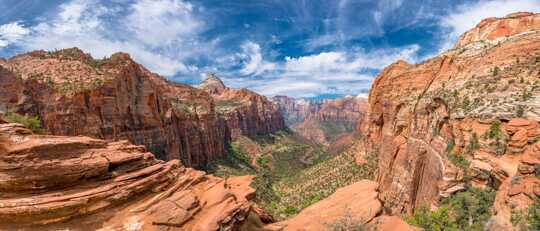
A line of small bronze markers runs along the Rim Trail from the Yavapai Geology Museum to Verkamp’s Visitor Center, each meter of paving standing for one million years of rock below. That’s the Trail of Time, and you can step over a billion years before lunch. Grand Canyon National Park sits in northern Arizona, in the United States, and the South Rim is the part most backpackers use. The hiking is superb, the wildlife (mule deer, elk, ravens with no manners) is easy to spot, and the crowds are real. Book lodging many months ahead, arrive early or take the free shuttle because parking lots fill by mid-morning, and never try rim to river and back in one summer day. Rangers rescue people who do. I walked from the car park through the pines toward Mather Point, heard tour groups murmuring, then reached the edge and the murmuring just stopped. Even the ravens were quiet. The first thing I noticed was a faint rattle of pebbles far below.

Discover everything you want to know in the 📖 the USA Travel Guide.


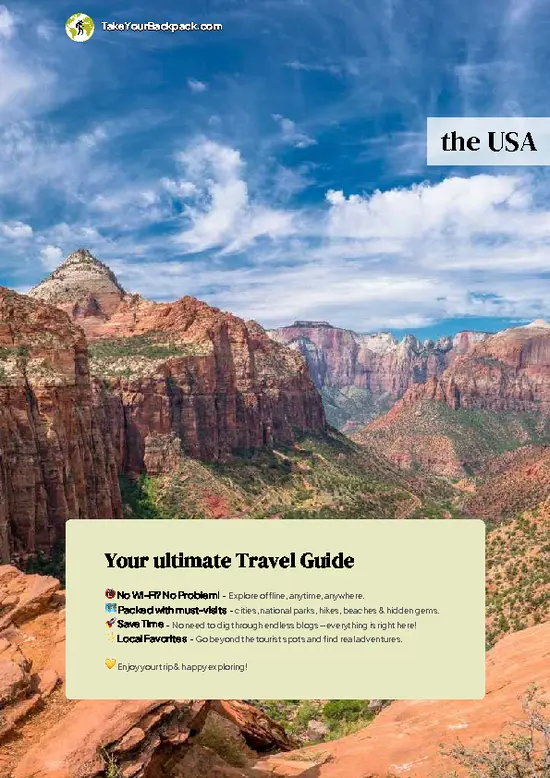
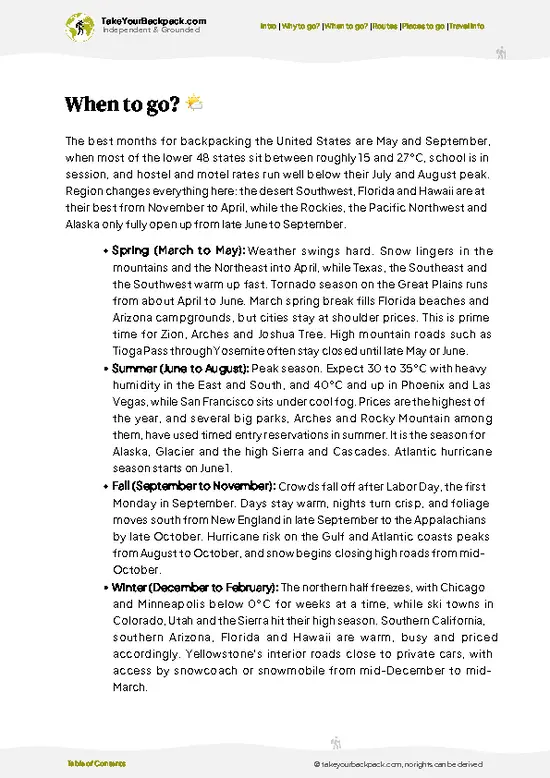
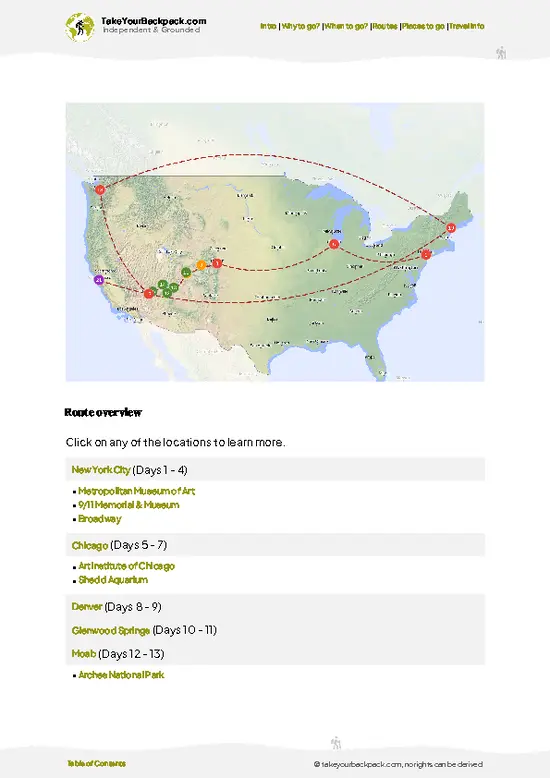
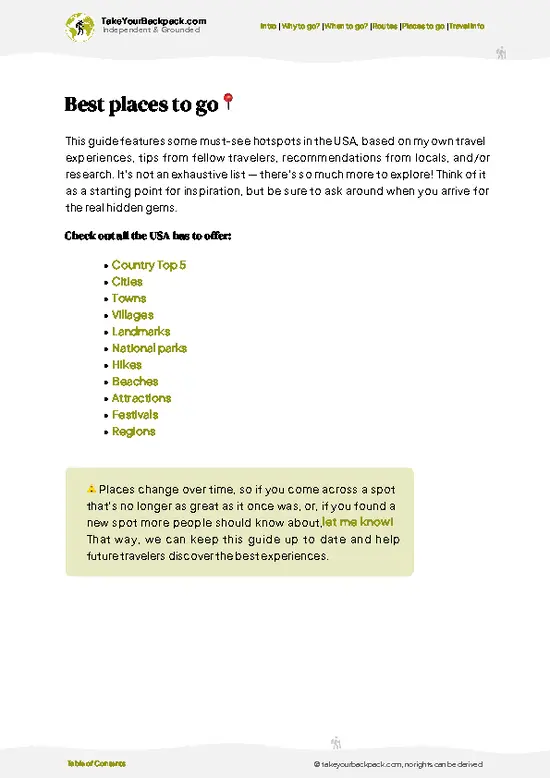
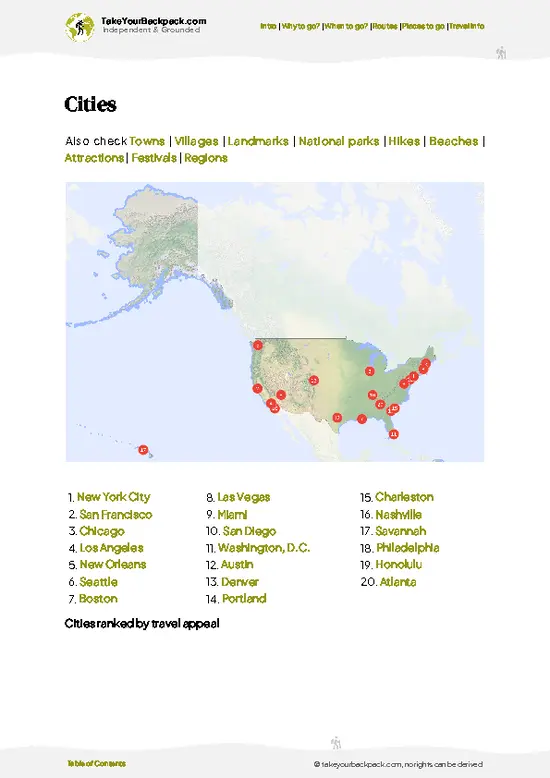
example page 0 from our offline Travel Guide for United States
example page 1 from our offline Travel Guide for United States
example page 2 from our offline Travel Guide for United States
example page 3 from our offline Travel Guide for United States
example page 4 from our offline Travel Guide for United States
example page 5 from our offline Travel Guide for United States
example page 6 from our offline Travel Guide for United States
example page 7 from our offline Travel Guide for United States
Loading the map 🌍
CLICK TO FILTER
cities
towns
villages
landmarks
national parks
hikes
beaches
attractions
festivals
regions
SHOW COUNTRY’S BESTSHOW ALL

✨ Why go?
Ranked #1 national park in the USA
What makes it a must-see national park

Grand Canyon National Park suits backpackers who like to plan their own days, because the South Rim is built for it. The free shuttle buses loop between the village, the trailheads and the viewpoints, so you can skip the car entirely once you arrive, and nobody needs a guide to walk the paved Rim Trail, which runs about 13 miles along the edge with a bench at nearly every good view.

The trail variety is the other draw. You can do a one-hour wander to Ooh Aah Point, a full day to Plateau Point on the Bright Angel Trail, or a multi-day descent to the Colorado River with a backcountry permit and a night at Bright Angel Campground. Water spigots and rest houses along Bright Angel make it forgiving for first-timers. Experienced hikers get the long routes, including the 24-mile rim-to-rim crossing. … read more 👉
Grand Canyon National Park suits backpackers who like to plan their own days, because the South Rim is built for it. The free shuttle buses loop between the village, the trailheads and the viewpoints, so you can skip the car entirely once you arrive, and nobody needs a guide to walk the paved Rim Trail, which runs about 13 miles along the edge with a bench at nearly every good view.

The trail variety is the other draw. You can do a one-hour wander to Ooh Aah Point, a full day to Plateau Point on the Bright Angel Trail, or a multi-day descent to the Colorado River with a backcountry permit and a night at Bright Angel Campground. Water spigots and rest houses along Bright Angel make it forgiving for first-timers. Experienced hikers get the long routes, including the 24-mile rim-to-rim crossing. Tours exist, but they mostly repackage what you can do alone, and the scale of the place rewards going at your own speed. Bring sturdy shoes and more water than seems reasonable.

💡 HighlightsPlaces and moments you shouldn't skip

  1. Mather Point: The viewpoint most people reach first, a short walk from the main visitor center. The canyon opens suddenly in front of you, with the Inner Gorge and the river visible far below, and it’s the easiest place to understand the scale.
  2. Bright Angel Trail: The classic corridor trail, starting right beside Bright Angel Lodge. It switchbacks through tunnels and past rest houses with seasonal water, and day hikers reach the first one at 1.5 miles.
  3. South Kaibab Trail to Ooh Aah Point: A steep, exposed ridge route with broad views in every direction from the first bend. Ooh Aah Point makes a roughly 1.8-mile round trip, but there is no water on this trail.
  4. Hermit Road and Hopi Point: A seven-mile scenic road along the rim, open to shuttle buses for most of the year. Hopi Point juts far into
… read more 👉
  1. Mather Point: The viewpoint most people reach first, a short walk from the main visitor center. The canyon opens suddenly in front of you, with the Inner Gorge and the river visible far below, and it’s the easiest place to understand the scale.
  2. Bright Angel Trail: The classic corridor trail, starting right beside Bright Angel Lodge. It switchbacks through tunnels and past rest houses with seasonal water, and day hikers reach the first one at 1.5 miles.
  3. South Kaibab Trail to Ooh Aah Point: A steep, exposed ridge route with broad views in every direction from the first bend. Ooh Aah Point makes a roughly 1.8-mile round trip, but there is no water on this trail.
  4. Hermit Road and Hopi Point: A seven-mile scenic road along the rim, open to shuttle buses for most of the year. Hopi Point juts far into the canyon and is the favorite spot for watching the light change on the buttes at day’s end.
  5. Desert View Watchtower: A stone tower near the east entrance, designed by architect Mary Colter and finished in 1932. Inside, Hopi-themed murals cover the walls, and the top floor gives a clear view of the Colorado River bending through the canyon.
  6. Yavapai Geology Museum: A small museum with a wall of glass facing the canyon and exhibits explaining how the layers formed. It’s a good stop before you hike, since the rock names finally mean something.
  7. Phantom Ranch and the Colorado River: A cluster of cabins and a canteen at the bottom of the canyon, reached only on foot, by mule or by raft. The Silver Bridge and the Kaibab suspension bridge cross the river nearby, and cottonwood shade feels remarkable after the descent.
In Grand Canyon National Park, Phantom Ranch beds and overnight backcountry permits sell out many months ahead, so reserve those before anything else.
Spotted a mistake or missing something? Contact us.

Things to do around Grand Canyon National Park

Ratings based on Tripadvisor reviews. When you book through this link, you support our work at no extra cost to you.

🌤️ When to go?Seasonal considerations and timing

  • Spring (March to May): South Rim days run 10 to 18°C (50 to 65°F) with cold nights near freezing, and snow can still close trails in March. Crowds build from April, and the North Rim stays closed until mid-May.
  • Summer (June to August): The South Rim sits at 24 to 30°C (75 to 85°F), while the inner canyon at Phantom Ranch regularly passes 38°C (100°F). Daylight lasts about 14 hours, but this is the busiest and priciest season, and afternoon thunderstorms are common from July.
  • Autumn (September to October): Highs of 18 to 25°C (65 to 77°F) in September cool to 12 to 18°C (54 to 65°F) in October. Crowds thin, lodging prices ease, and the North Rim closes to cars in mid-October.
  • Winter (November to February): The South Rim hovers around 4 to 8°C (40 to 46°F) with lows well below freezing, and daylight
… read more 👉
  • Spring (March to May): South Rim days run 10 to 18°C (50 to 65°F) with cold nights near freezing, and snow can still close trails in March. Crowds build from April, and the North Rim stays closed until mid-May.
  • Summer (June to August): The South Rim sits at 24 to 30°C (75 to 85°F), while the inner canyon at Phantom Ranch regularly passes 38°C (100°F). Daylight lasts about 14 hours, but this is the busiest and priciest season, and afternoon thunderstorms are common from July.
  • Autumn (September to October): Highs of 18 to 25°C (65 to 77°F) in September cool to 12 to 18°C (54 to 65°F) in October. Crowds thin, lodging prices ease, and the North Rim closes to cars in mid-October.
  • Winter (November to February): The South Rim hovers around 4 to 8°C (40 to 46°F) with lows well below freezing, and daylight shrinks to roughly 10 hours. Rim snow and icy upper trails call for traction gear, but hotel rates drop and viewpoints are quiet.
Book Bright Angel Campground or Phantom Ranch up to 13 months ahead for spring and fall, the best hiking windows.


source: climatestotravel.comJANJanuary: below average for travelingFEBFebruary: below average for travelingMARMarch: highly recommended for travelingAPRApril: excellent for travelingMAYMay: highly recommended for travelingJUNJune: fair for travelingJULJuly: fair for travelingAUGAugust: fair for travelingSEPSeptember: highly recommended for travelingOCTOctober: excellent for travelingNOVNovember: highly recommended for travelingDECDecember: below average for traveling
United States - Grand Canyon National Park

✈️ The backpacker research shortcutthe USA Travel Guide

An offline-friendly backpacking guide with optimized travel routes, ranked highlights, transport advice, and the best areas to stay.
example page 0 from our offline Travel Guide for United States
example page 1 from our offline Travel Guide for United States
example page 2 from our offline Travel Guide for United States
example page 3 from our offline Travel Guide for United States
example page 4 from our offline Travel Guide for United States
example page 5 from our offline Travel Guide for United States
example page 6 from our offline Travel Guide for United States
example page 7 from our offline Travel Guide for United States
The digital guide (451 pages) contains:
✅ 159 highlights, ranked by travel appeal
✅ Optimized 14, 21 & 30-day travel routes
✅ Cities, national parks, landmarks, beaches
✅ How to get around
✅ Offline-friendly for travel without Wi-Fi
👉 Click to see all 30+ guide features

📅 Plan smarter in minutes, not weeks
✅ Month by month travel advice
✅ Festivals & national holidays
✅ Budget expectations

🗺️ Go to the right places, skip the overrated ones
✅ Honest pros & cons of destinations
✅ Top hikes, parks & viewpoints
✅ Lesser-known places most travelers miss
✅ Clear “worth it vs skip it” guidance

🛏️ Travel smoothly without rookie mistakes
✅ Best areas to stay
✅ Transport systems explained simply
✅ Common scams & safety advice
✅ SIM cards, money & practical tips

🌍 Understand the country, not just visit it
✅ Culture & traditions
✅ Local customs
✅ Festivals worth planning around
✅ Traveler-friendly historical context
✅ Insights that make places more meaningful

📱 Built for real travel conditions
✅ Fully downloadable PDF
✅ Works completely offline
✅ Optimized for phone use
✅ Useful in remote areas & buses
✅ Everything in one place
Stop searching, start planning
Get instant access to your full guide. 30‑day money-back guarantee.
+ Add another guide for just

By proceeding you agree to our terms.
Sent to your inbox immediately after payment • 100% Secure Checkout
Best Backpacking Travel Advisor 2025 tourism awardBest Backpacking
Travel Advisor
2025
What others say about Take Your Backpack Guides:
⭐⭐⭐⭐⭐
Fantastic, amazing amount of information!
⭐⭐⭐⭐⭐
My goodness this is amazing, it's what I've been looking for hats off too you!
⭐⭐⭐⭐⭐
I think this is absolutely BRILLIANT
⭐⭐⭐⭐
Very complete and informative. It's still missing places, but I gotta to commend you
⭐⭐⭐⭐⭐
This is truly amazing, thank you, can't wait to explore it with my kids!
⭐⭐⭐⭐⭐
Awesome resource, thank you!
⭐⭐⭐⭐⭐
This is amazing! Can't wait to explore the ones I haven't seen
⭐⭐⭐⭐
I love this! Well done, great idea.
⭐⭐⭐⭐⭐
Thanks for taking the time to make this gem!
⭐⭐⭐⭐⭐
This might be the best website I've ever seen.
⭐⭐⭐⭐⭐
Congratulations, and thank you so much for your work; it's incredibly valuable.
⭐⭐⭐⭐
In all seriousness I think you did a great job pointing out the important spots
⭐⭐⭐⭐⭐
10/10 very good
⭐⭐⭐⭐⭐
As someone who's only just starting to visit regularly this is awesome, thank you.
⭐⭐⭐⭐
Thank you very much! I'm going to visit my dad, it's going to be very useful!
⭐⭐⭐⭐⭐
This is really cool! We'll be travelling for the first time and this definitely come in handy.
⭐⭐⭐⭐⭐
You are now our minister of culture, congratulations 👨‍💼
⭐⭐⭐⭐⭐
Just wanted to tell you that this is a pearl! Going to follow your recommendations.
⭐⭐⭐⭐⭐
This is so cool. I'll definitely be using the resource for my travels soon.
⭐⭐⭐⭐⭐
This is very impressive! Good work.
⭐⭐⭐⭐⭐
This is an amazing and informative site. Very well done!

🛏️ Where to stay?Best areas and accommodation options

The best base for most backpackers is the South Rim, where Grand Canyon Village has the park’s lodges and campgrounds. Mather Campground (about US$18 to 30 a night) takes reservations and sits a short walk from the rim. Trailer Village is mostly for RVs. Inside the canyon, Bright Angel Campground and Cottonwood Campground need a backcountry permit, and Phantom Ranch offers dorm bunks (roughly US$60 to 70) that sell out far ahead, with lotteries for some dates. Lodges such as Bright Angel Lodge and Maswik Lodge run about US$130 to 280 a night.
Outside the gate, Tusayan, 12 km (7 miles) south, has … read more 👉
The best base for most backpackers is the South Rim, where Grand Canyon Village has the park’s lodges and campgrounds. Mather Campground (about US$18 to 30 a night) takes reservations and sits a short walk from the rim. Trailer Village is mostly for RVs. Inside the canyon, Bright Angel Campground and Cottonwood Campground need a backcountry permit, and Phantom Ranch offers dorm bunks (roughly US$60 to 70) that sell out far ahead, with lotteries for some dates. Lodges such as Bright Angel Lodge and Maswik Lodge run about US$130 to 280 a night.
Outside the gate, Tusayan, 12 km (7 miles) south, has motels at roughly US$120 to 300 in summer and a free-camping option in the surrounding Kaibab National Forest, where dispersed camping is allowed. Williams, about 90 km (56 miles) south, is cheaper, with hostels and motels from around US$35 to 120 and the Grand Canyon Railway. Flagstaff, about 130 km (80 miles) away, is the best hub for hostels, groceries, gear shops and bars.
The North Rim lost Grand Canyon Lodge to the 2025 Dragon Bravo Fire and reopened in May 2026 without lodging, and the North Rim Campground stayed closed. It is remote and quiet, with Jacob Lake the nearest town, 70 km (43 miles) north.

👛 Costs (as of 22 October 2026)What things cost and how to budget

Grand Canyon National Park costs about US$83 to 125 a day for a backpacker who camps and cooks much of the time. That figure uses high-season camping and a mix of groceries and cheap meals.
CategoryBudget RangeLocal Reality
Entrance feeUS$20 per person on foot or bike (US$35 per vehicle)Valid for 7 days. Visitors who are not US residents pay an extra US$100 each from age 16. The America the Beautiful annual pass (US$80 for US residents, US$250 for nonresidents) covers all national parks.
Backcountry permitUS$10 plus US$15 per person per nightRequired for overnight trips below the rim. Apply well in advance, as popular dates fill.
Accommodation (high season)US$18 to 30 in a campgroundMather Campground is the usual choice. Dorm bunks or motels outside the park run US$35 to 120 or more.
Local transportUS$0
… read more 👉
Grand Canyon National Park costs about US$83 to 125 a day for a backpacker who camps and cooks much of the time. That figure uses high-season camping and a mix of groceries and cheap meals.
CategoryBudget RangeLocal Reality
Entrance feeUS$20 per person on foot or bike (US$35 per vehicle)Valid for 7 days. Visitors who are not US residents pay an extra US$100 each from age 16. The America the Beautiful annual pass (US$80 for US residents, US$250 for nonresidents) covers all national parks.
Backcountry permitUS$10 plus US$15 per person per nightRequired for overnight trips below the rim. Apply well in advance, as popular dates fill.
Accommodation (high season)US$18 to 30 in a campgroundMather Campground is the usual choice. Dorm bunks or motels outside the park run US$35 to 120 or more.
Local transportUS$0 to 10Free South Rim shuttle buses cover the village and viewpoints. The Hikers Express and Tusayan shuttles are cheap or free in season.
Food and suppliesUS$20 to 40Groceries at Canyon Village Market cost more than in Flagstaff. Restaurant meals run US$15 to 30.
Total Daily BudgetUS$83 to 125Roughly US$95 to 130 once you factor in the first-day fee and permits, if hiking overnight.


source: nps.gov
⚠️ Prices can change and everyone travels differently, so take this as a rough guide. Hope it helps you plan your adventure!

🥾 TrailsHiking Grand Canyon national park: highlights and difficulty

Grand Canyon National Park offers hiking on two very different scales: easy rim walks with views, and corridor trails that drop a vertical mile into desert heat. The terrain below the rim is dry and rocky, with big steps, loose gravel and almost no shade, and mule trains have right of way. Wildlife includes mule deer, elk near the village, California condors that sometimes soar near the rim, and ground squirrels that will raid an open pack. Never feed any of them.
  • Rim Trail: About 13 miles one way between Hermits Rest and the South Kaibab trailhead, mostly paved and flat. Walk any piece you like
… read more 👉
Grand Canyon National Park offers hiking on two very different scales: easy rim walks with views, and corridor trails that drop a vertical mile into desert heat. The terrain below the rim is dry and rocky, with big steps, loose gravel and almost no shade, and mule trains have right of way. Wildlife includes mule deer, elk near the village, California condors that sometimes soar near the rim, and ground squirrels that will raid an open pack. Never feed any of them.
  • Rim Trail: About 13 miles one way between Hermits Rest and the South Kaibab trailhead, mostly paved and flat. Walk any piece you like and hop on a shuttle; easy.
  • Trail of Time: A 2.8-mile stretch of the Rim Trail with markers for each million years of geologic history. Allow an hour or two with stops; easy.
  • Bright Angel Trail: Reaching the 1.5-mile and 3-mile rest houses takes 2 to 5 hours round trip. Havasupai Gardens is 4.6 miles down, Plateau Point is a 12-mile round trip and the river is 9.5 miles one way. Seasonal water; strenuous.
  • South Kaibab Trail: Cedar Ridge is a 3-mile round trip and Skeleton Point 6 miles round trip. Views are better than on Bright Angel, but there is no water, so it is best used for going down; moderate to strenuous.
  • Hermit Trail: A rougher, less maintained route from Hermits Rest, with steep rocky sections and few people. Best for experienced hikers; strenuous.
Most people reach the South Rim by driving from Flagstaff or Williams. Without a car, a shuttle bus runs from Flagstaff, and the Grand Canyon Railway runs from Williams. Once inside, free shuttle buses cover the village, Hermit Road and the Kaibab trailheads.

Expect heavy crowds from spring through autumn, especially near Mather Point and the first miles of Bright Angel. Entry costs US$35 per vehicle or US$20 per person on foot or bike, valid for seven days. Start descents at first light in summer, because the inner canyon can be dangerously hot.
⚠️ Hiking info can sometimes be outdated or inaccurate. Before you hit the trail, check the latest conditions with locals. If you do spot anything that's off, I'd love to hear from you, so I can update it for fellow travelers.

🛡️ SafetySafety Tips and Common Scams in Grand Canyon

Heat and overambition cause most rescues at Grand Canyon National Park, not wildlife or crime. The canyon floor can be 10 to 15°C (18 to 27°F) hotter than the rim, and hikers who start late in summer often run out of water and energy on the climb out. Go down early, turn around before you feel tired, and remember that the return takes about twice as long. Carry 3 to 4 liters, eat salty snacks, and avoid hiking between 10 a.m. and 4 p.m. in summer. Winter brings ice on the upper switchbacks, so traction devices matter. Water is only available at set points that vary by season, so check the status before you leave. Mule trains have right of way, so step to the inside of the trail. Never feed squirrels, which bite, and keep food in lockers or hung at camp. Rattlesnakes and scorpions are present … read more 👉
Heat and overambition cause most rescues at Grand Canyon National Park, not wildlife or crime. The canyon floor can be 10 to 15°C (18 to 27°F) hotter than the rim, and hikers who start late in summer often run out of water and energy on the climb out. Go down early, turn around before you feel tired, and remember that the return takes about twice as long. Carry 3 to 4 liters, eat salty snacks, and avoid hiking between 10 a.m. and 4 p.m. in summer. Winter brings ice on the upper switchbacks, so traction devices matter. Water is only available at set points that vary by season, so check the status before you leave. Mule trains have right of way, so step to the inside of the trail. Never feed squirrels, which bite, and keep food in lockers or hung at camp. Rattlesnakes and scorpions are present but rarely seen. Rim edges are mostly unfenced, so keep selfies back from the drop. Lightning on exposed rim points is a real summer risk.

FAQCommon questions from travelers

Plan on 2 to 3 days for Grand Canyon National Park if you stay on the South Rim. That covers the rim viewpoints, Desert View Drive (about 40 km or 25 miles long), and a day hike on Bright Angel or South Kaibab trail. A rim-to-river overnight at Phantom Ranch needs 2 to 3 more days, and a rim-to-rim crossing takes 3 to 4 days with permits.
Yes, Grand Canyon National Park is workable without a car on the South Rim. The Grand Canyon Railway runs from Williams (about 2 hours each way), and Flagstaff has shuttle services and Greyhound or Amtrak connections to Flagstaff or Williams. Free park shuttles then link Grand Canyon Village, the trailheads and the main viewpoints, so you rarely need your own vehicle once inside.
Yes, Grand Canyon National Park charges US$20 per person for entry on foot or bicycle, and US$35 for a vehicle, valid for 7 days. Nonresidents aged 16 and over also pay a US$100 nonresident fee each unless they hold an annual pass. Day hiking needs no permit, but overnight trips below the rim require a backcountry permit costing US$10 plus US$15 per person per night. Apply well ahead, as spring and fall fill up months in advance.
⚠️ Things can change over time, so always validate details locally before you go.

Other American national parks near Grand Canyon

Explore more nearby:

  • Zion National Park—Virgin River Narrows, Angels Landing chains, red canyon walls, shuttle road| 129 km away
  • Bryce Canyon—Orange hoodoos, rim amphitheater, Wall Street slot, Fairyland loop| 148 km away
  • Valley of Fire State Park—Red sandstone waves, petroglyph stairs, Fire Wave, Mojave heat| 197 km away

💡 Not sure where to go next?
Create a personalized itinerary for the USA including Grand Canyon and the places that fit your trip.

Generate my itinerary

👉 Discover all national parks

Or checkout all the USA has to offer (think cities, towns, villages, national parks, hikes, beaches, festivals)
Country photo of the USA

We 💚 feedbackSumming up the experience

Grand Canyon National Park is best for walkers who like clear logistics and big-scale views, and for first-time backpackers who want a trail with water stops and rangers nearby. If crowds drain you, it won’t be a solitude trip. I’d reserve a night below the rim and carry salty snacks. Then I’d spend one early morning on the Rim Trail while the tour buses are still parking.

✈️ When did I visit the USA?
In January 2023 I visited New York. Many years before, before digital cameras existed, I discovered most of the national parks in the West.

✍️ Help improve this page!
The information on this page is based on my own backpacking experience in the USA, supplemented with up-to-date research and feedback from other travelers. Travel details can change, so if you notice anything outdated or incomplete, feel free to let me know.


🙋‍♂️ Give feedback

👋 Meet the founderWho’s Behind Take Your Backpack?

Johan, backpacker and founder of TakeYourBackpackHi, I’m Johan (Netherlands 🇳🇱), the creator of TakeYourBackpack. Over the past 3 decades, I’ve backpacked through 90+ countries across six continents, gaining extensive experience with independent travel, long-term trips, and overland routes.

This site is built on a combination of firsthand travel experience and carefully curated insights from other backpackers. Many guides are based on places I’ve personally visited, while others bring together tips, observations, and practical advice shared by trusted travelers I’ve met along the way.

The goal is to provide realistic, experience-driven guidance — not generic itineraries — so you can explore destinations with better context, clearer expectations, and more confidence.