



×

the USA🇺🇸 | national parksHawaii Volcanoes National Parkactive lava flows, steam vents, rainforest trails | things to do and best time to go

Explore Haleakalā National ParkExplore Hocking Hills State Park

Backpacking in Hawaii Volcanoes
UNESCO World Heritage site
🌟 Highlightnational park ranked #13
By Johan Kruseman 🇳🇱 | Updated September 4, 2026

Most people only realize after they leave that Hawaii Volcanoes National Park is one of the few places in the USA where you can build an entire trip around geology and still walk away feeling like you got a cultural education too. It sits on the Big Island of Hawaiʻi, far from the mainland parks that hog the spotlight. For backpackers, it’s a trade: surreal lava fields, crater rims, and occasional glow-at-night lava views instead of big-mammal wildlife and alpine lakes. Trails range from easy crater loops to long, exposed coastal slogs over sharp rock, so footwear and water discipline matter more than usual. The entrance fee isn’t outrageous by USA park standards, but you’ll feel the island markup on food, fuel, and gear, and public transport is basically a non-option, so hitchhiking or a rental car becomes part of the budget math. Camping is cheaper than any hotel but more regulated and limited than people expect, and backcountry permits don’t come with the solitude you’d get in a big mainland park. Compared with Hawaiʻi’s other units and the classic western heavyweights like Yosemite or Zion in the USA, this place is less about postcard views and more about slow-burn fascination: steam vents, lava tubes, native birds in the forest pockets, and the low, constant reminder that the ground under your tent is very much alive.

Discover everything you want to know in the 📖 the USA Travel Guide.


Get your USA guide
161 ranked highlights, routes & tips, works offline (586 pages)
Loading the map 🌍
CLICK TO FILTER
cities
towns
villages
landmarks
national parks
hikes
beaches
attractions
festivals
regions
SHOW COUNTRY’S BESTSHOW ALL

✨ Why go?
Ranked #13 national park in the USA
Why visitors keep coming back

Hawaii Volcanoes National Park attracts backpackers for several compelling reasons. Independent exploration is a major draw; the park’s vast landscapes invite you to wander at your own pace. You can easily find budget camping options or hostels nearby, making it accessible for those watching their wallets. The trail variety is impressive, from easy walks to challenging hikes, catering to all skill levels.

This park is particularly suited for self-guided travelers. You can dive into the unique geology and ecosystems without the constraints of a tour. Just be aware of potential hidden costs, like parking fees or entrance fees that can sneak up on you. Planning ahead allows you to focus your energy and budget on the experiences that truly matter.
Want to include Hawaii Volcanoes National Park in your the USA route?
Create a personalized the USA itinerary that includes Hawaii Volcanoes National Park and the places that fit your trip — based on your travel style, budget, and available time. Get your route in seconds.

Generate my trip

💡 HighlightsDon't-miss highlights and experiences

  • Kīlauea Caldera & Halemaʻumaʻu Overlook — The heart of the park: enormous crater rim views, steaming vents and a surreal lunar-like floor. When the volcano is active you can sometimes see a red glow at night from sanctioned overlooks, but even when quiet the scale and geology are jaw-dropping. Short, accessible viewpoints with interpretive signs make it easy to appreciate why people come from far away.
  • Kīlauea Iki Trail — A roughly 4-mile loop (down into a crater and back up) that drops you onto a hardened lava lake from the 1959 eruption. You walk across smooth pahoehoe, under misty rain forest, and past steam vents—great mix of scenery and geology. My personal favorite: dramatic, varied, and leaves you feeling like you actually earned the view.
  • Nāhuku (Thurston Lava Tube) — A short,
read more 👉
  • Kīlauea Caldera & Halemaʻumaʻu Overlook — The heart of the park: enormous crater rim views, steaming vents and a surreal lunar-like floor. When the volcano is active you can sometimes see a red glow at night from sanctioned overlooks, but even when quiet the scale and geology are jaw-dropping. Short, accessible viewpoints with interpretive signs make it easy to appreciate why people come from far away.
  • Kīlauea Iki Trail — A roughly 4-mile loop (down into a crater and back up) that drops you onto a hardened lava lake from the 1959 eruption. You walk across smooth pahoehoe, under misty rain forest, and past steam vents—great mix of scenery and geology. My personal favorite: dramatic, varied, and leaves you feeling like you actually earned the view.
  • Nāhuku (Thurston Lava Tube) — A short, easy walk into a real lava tube cavern. It’s cool and otherworldly inside; bring a light jacket because it’s damp and noticeably cooler than the surface. Perfect for a quick contrast to the open vistas elsewhere in the park.
  • Sulphur Banks (Haʻakulamanu) — A compact area of steaming fumaroles, colorful mineral stains and a strong sulfur smell. It’s raw volcanic chemistry on display—good for photos and geology nerding, but don’t linger if you’re sensitive to gases.
  • Chain of Craters Road & Holei Sea Arch — One of the best scenic drives in the park: descending from the highlands to the coast, you pass fresh lava fields, viewpoints and black sand spots before reaching the dramatic Holei Sea Arch at the ocean. Sunset here is spectacular; bring water and expect minimal services along the way.
  • Devastation Trail & Kipukapuaulu (Bird Park) — A short, accessible trail that showcases an area wiped by past eruptions and now in slow ecological recovery, followed by a sheltered kipuka where native trees and songbirds persist. Good spot for birdwatching—look for honeycreepers and, if you’re lucky, the nēnē (Hawaiian goose).
  • Mauna Loa summit area (Pulama pali approaches) — The biggest volcano on Earth. Hikes here are high, remote and dramatic: alpine desert, sweeping vistas, and a sense of scale most trails don’t offer. This is for experienced hikers—weather can change fast, and permits/vehicle restrictions sometimes apply—so plan carefully.
Spotted a mistake or missing something? Contact us.

Things to do around Hawaii Volcanoes National Park

Ratings based on Tripadvisor reviews. When you book through this link, you support our work at no extra cost to you.

🌤️ When to go?When to go for the best experience


  • Topic: Weather – Hawaii Volcanoes National Park experiences a tropical climate with a wet season from November to March and a dry season from April to October. Heavy rains can make trails slippery and less enjoyable during the wet months.

  • Topic: Temperature – Expect daytime highs around 24-29°C (75-85°F) and cooler nights dropping to 13-18°C (55-65°F). Higher elevations can be significantly colder, so pack layers.

  • Topic: Daylight Hours – Daylight varies little year-round, roughly 11-13 hours, but shorter days in winter mean less time for long hikes.

  • Topic: Crowds – Peak visitor season is December through March and summer months, leading to crowded trails and limited campsite availability.

  • Topic: Seasonal Activities – Lava viewing is more active and accessible in the dry season, enhancing
read more 👉

  • Topic: Weather – Hawaii Volcanoes National Park experiences a tropical climate with a wet season from November to March and a dry season from April to October. Heavy rains can make trails slippery and less enjoyable during the wet months.

  • Topic: Temperature – Expect daytime highs around 24-29°C (75-85°F) and cooler nights dropping to 13-18°C (55-65°F). Higher elevations can be significantly colder, so pack layers.

  • Topic: Daylight Hours – Daylight varies little year-round, roughly 11-13 hours, but shorter days in winter mean less time for long hikes.

  • Topic: Crowds – Peak visitor season is December through March and summer months, leading to crowded trails and limited campsite availability.

  • Topic: Seasonal Activities – Lava viewing is more active and accessible in the dry season, enhancing the backpacking experience but also increasing visitor numbers.

  • Topic: Price Fluctuations – Accommodation and flights to the USA’s Big Island spike during holidays and summer; booking early can save money.


Pro-tip: Aim for late spring or early fall to dodge crowds and rain, giving you cooler nights, manageable trail conditions, and a better shot at active lava flows without the holiday price hike.


source: climatestotravel.comJANJanuary: fair for travelingFEBFebruary: fair for travelingMARMarch: fair for travelingAPRApril: highly recommended for travelingMAYMay: excellent for travelingJUNJune: good for travelingJULJuly: good for travelingAUGAugust: good for travelingSEPSeptember: highly recommended for travelingOCTOctober: highly recommended for travelingNOVNovember: fair for travelingDECDecember: fair for traveling
when-to-go

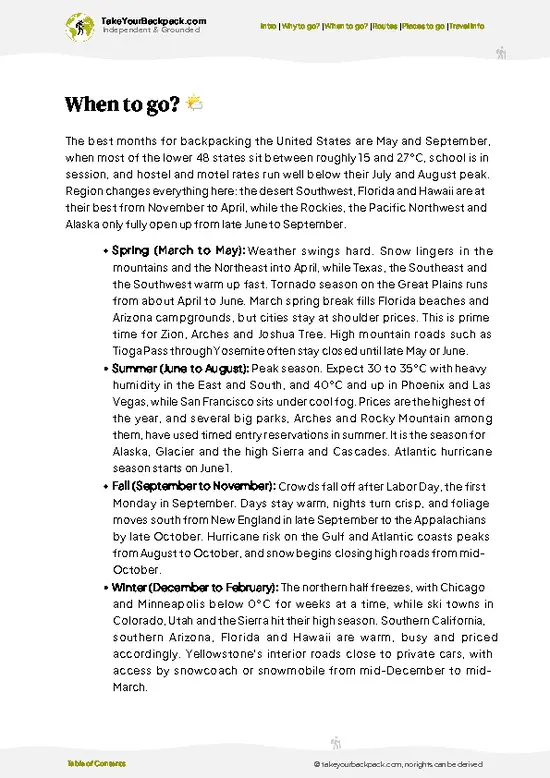
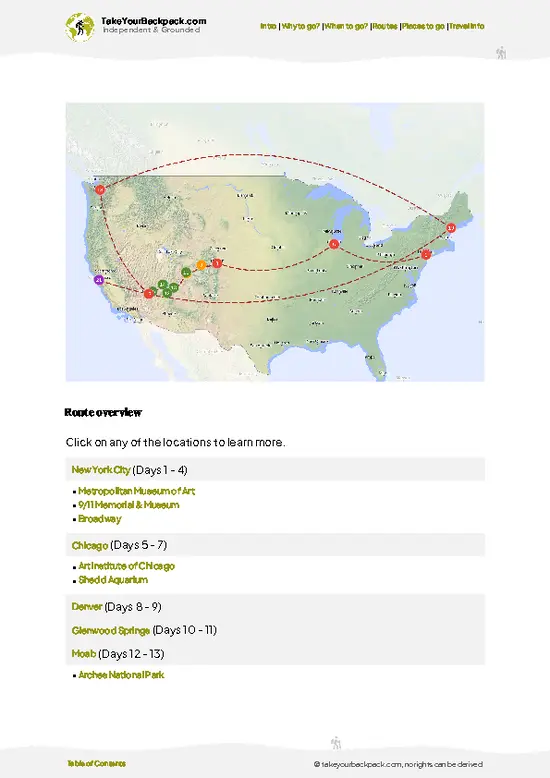
✈️ The backpacker research shortcutthe USA Travel Guide

An offline-friendly backpacking guide with optimized travel routes, ranked highlights, transport advice, and the best areas to stay.
example page 0 from our offline Travel Guide for United States
example page 1 from our offline Travel Guide for United States
example page 2 from our offline Travel Guide for United States
example page 3 from our offline Travel Guide for United States
example page 4 from our offline Travel Guide for United States
example page 5 from our offline Travel Guide for United States
example page 6 from our offline Travel Guide for United States
example page 7 from our offline Travel Guide for United States
The digital guide (586 pages) contains:
161 highlights, ranked by travel appeal
Optimized 14, 21 & 30-day travel routes
Cities, national parks, landmarks, beaches
How to get around
Offline-friendly for travel without Wi-Fi
👉 Click to see all 30+ guide features

📅 Plan smarter in minutes, not weeks
Month by month travel advice
Festivals & national holidays
Budget expectations

🗺️ Go to the right places, skip the overrated ones
Honest pros & cons of destinations
Top hikes, parks & viewpoints
Lesser-known places most travelers miss
Clear “worth it vs skip it” guidance

🛏️ Travel smoothly without rookie mistakes
Best areas to stay
Transport systems explained simply
Common scams & safety advice
SIM cards, money & practical tips

🌍 Understand the country, not just visit it
Culture & traditions
Local customs
Festivals worth planning around
Traveler-friendly historical context
Insights that make places more meaningful

📱 Built for real travel conditions
Fully downloadable PDF
Works completely offline
Optimized for phone use
Useful in remote areas & buses
Everything in one place
Save weeks of stressful planning
Get instant access to your full guide. 30‑day money-back guarantee.
+ Add another guide for just US$7.80

By proceeding you agree to our terms.
Sent to your inbox immediately after payment • 100% Secure Checkout
Best Backpacking Travel Advisor 2025 tourism awardBest Backpacking
Travel Advisor
2025
What others say about Take Your Backpack Guides:
⭐⭐⭐⭐⭐
Fantastic, amazing amount of information!
⭐⭐⭐⭐⭐
My goodness this is amazing, it's what I've been looking for hats off too you!
⭐⭐⭐⭐⭐
I think this is absolutely BRILLIANT
⭐⭐⭐⭐
Very complete and informative. It's still missing places, but I gotta to commend you
⭐⭐⭐⭐⭐
This is truly amazing, thank you, can't wait to explore it with my kids!
⭐⭐⭐⭐⭐
Awesome resource, thank you!
⭐⭐⭐⭐⭐
This is amazing! Can't wait to explore the ones I haven't seen
⭐⭐⭐⭐
I love this! Well done, great idea.
⭐⭐⭐⭐⭐
Thanks for taking the time to make this gem!
⭐⭐⭐⭐⭐
This might be the best website I've ever seen.
⭐⭐⭐⭐⭐
Congratulations, and thank you so much for your work; it's incredibly valuable.
⭐⭐⭐⭐
In all seriousness I think you did a great job pointing out the important spots
⭐⭐⭐⭐⭐
10/10 very good
⭐⭐⭐⭐⭐
As someone who's only just starting to visit regularly this is awesome, thank you.
⭐⭐⭐⭐
Thank you very much! I'm going to visit my dad, it's going to be very useful!
⭐⭐⭐⭐⭐
This is really cool! We'll be travelling for the first time and this definitely come in handy.
⭐⭐⭐⭐⭐
You are now our minister of culture, congratulations 👨‍💼
⭐⭐⭐⭐⭐
Just wanted to tell you that this is a pearl! Going to follow your recommendations.
⭐⭐⭐⭐⭐
This is so cool. I'll definitely be using the resource for my travels soon.
⭐⭐⭐⭐⭐
This is very impressive! Good work.
⭐⭐⭐⭐⭐
This is an amazing and informative site. Very well done!

🛏️ Where to stay?Choosing the right base

Hawaii Volcanoes National Park offers a few solid options for backpackers. Inside the park, the Volcano House is a prime choice. It’s the only lodge within the park, providing a unique chance to wake up near the Kīlauea caldera. However, it can fill up quickly, so book in advance.

If you prefer a more budget-friendly option, consider camping at the Kīlauea Campground. It’s a great way to immerse yourself in the park’s natural beauty, but be prepared for cooler nights and occasional rain.

For nearby towns, head to Volcano Village. It’s just a few miles from the park entrance and has several cozy … read more 👉
Hawaii Volcanoes National Park offers a few solid options for backpackers. Inside the park, the Volcano House is a prime choice. It’s the only lodge within the park, providing a unique chance to wake up near the Kīlauea caldera. However, it can fill up quickly, so book in advance.

If you prefer a more budget-friendly option, consider camping at the Kīlauea Campground. It’s a great way to immerse yourself in the park’s natural beauty, but be prepared for cooler nights and occasional rain.

For nearby towns, head to Volcano Village. It’s just a few miles from the park entrance and has several cozy guesthouses and B&Bs. Hilo, about 30 minutes away, offers more amenities, including hostels and budget hotels. Just keep in mind that prices can spike during peak seasons, so plan accordingly to avoid surprises.

👛 Costs (as of 4 September 2026)What things cost and how to budget

Hawaii Volcanoes National Park has some straightforward costs that you should know about.

First, the entrance fee is $30 per vehicle. This pass is valid for seven days. If you’re traveling solo, a pedestrian or bicycle pass is $15.

Camping in the park? That’ll set you back about $20 per night for a campsite. Make sure to reserve in advance, especially during peak seasons.

If you’re interested in guided tours, prices vary widely. Expect to pay anywhere from $50 to $150 per person, depending on the length and type of tour.

Keep in mind that food options inside the park are limited. Stock up on snacks and water before you arrive. This will save you money and keep your energy up for exploring.

Lastly, consider that parking can fill up quickly at popular spots. Arrive early to avoid the … read more 👉
Hawaii Volcanoes National Park has some straightforward costs that you should know about.

First, the entrance fee is $30 per vehicle. This pass is valid for seven days. If you’re traveling solo, a pedestrian or bicycle pass is $15.

Camping in the park? That’ll set you back about $20 per night for a campsite. Make sure to reserve in advance, especially during peak seasons.

If you’re interested in guided tours, prices vary widely. Expect to pay anywhere from $50 to $150 per person, depending on the length and type of tour.

Keep in mind that food options inside the park are limited. Stock up on snacks and water before you arrive. This will save you money and keep your energy up for exploring.

Lastly, consider that parking can fill up quickly at popular spots. Arrive early to avoid the hassle and maximize your time.

These costs can add up, so plan accordingly to make the most of your visit without breaking the bank.


source: nps.gov
⚠️ Prices can change and everyone travels differently, so take this as a rough guide. Hope it helps you plan your adventure!

🥾 TrailsHiking Hawaii Volcanoes national park: highlights and difficulty

Hiking in Hawaii Volcanoes National Park is a unique experience, blending stunning landscapes and diverse ecosystems. You’ll find everything from lush rainforests to stark volcanic craters. The terrain can be rugged, with some trails leading through lava fields and others winding through dense foliage. Keep an eye out for native wildlife, like the Hawaiian goose or the endangered Hawaiian hoary bat, which might surprise you along the way.

One of the standout trails is the Kīlauea Iki Trail. Here’s what you need to know:
  • Length: 4 miles
  • Estimated Duration: 2-3 hours
  • Difficulty Level: Moderate
  • Key
read more 👉
Hiking in Hawaii Volcanoes National Park is a unique experience, blending stunning landscapes and diverse ecosystems. You’ll find everything from lush rainforests to stark volcanic craters. The terrain can be rugged, with some trails leading through lava fields and others winding through dense foliage. Keep an eye out for native wildlife, like the Hawaiian goose or the endangered Hawaiian hoary bat, which might surprise you along the way.

One of the standout trails is the Kīlauea Iki Trail. Here’s what you need to know:
  • Length: 4 miles
  • Estimated Duration: 2-3 hours
  • Difficulty Level: Moderate
  • Key Features: Stunning views of Kīlauea’s crater, lush rainforest, and a walk across a solidified lava lake.
  • Terrain: Varied, with steep sections, rocky paths, and smooth lava rock.

Another great option is the Thurston Lava Tube Trail:
  • Length: 0.5 miles
  • Estimated Duration: 30 minutes
  • Difficulty Level: Easy
  • Key Features: An impressive lava tube that you can walk through, surrounded by lush vegetation.
  • Terrain: Paved and well-maintained, suitable for all ages.

Reaching the park is pretty straightforward. If you’re relying on public transport, the options can be limited, but there are shuttles from Hilo. Just be ready for a bit of a wait, as they don’t run super frequently. The park can get crowded, especially during peak tourist seasons, but there’s enough space to find some solitude if you wander off the beaten path. As for the entrance fee, it’s around $30 for a vehicle, but if you’re on foot, it’s cheaper, so consider hiking in if you can!
⚠️ Hiking info can sometimes be outdated or inaccurate. Before you hit the trail, check the latest conditions with locals. If you do spot anything that's off, I'd love to hear from you, so I can update it for fellow travelers.

🛡️ SafetyStaying Safe: What Travelers Should Know

Hawaii Volcanoes National Park offers a unique hiking experience, but it’s essential to be prepared. Weather can shift quickly, so dress in layers and keep an eye on the forecast. The terrain varies from smooth paths to rocky, uneven ground; sturdy footwear is a must.

While wildlife encounters are rare, maintain a respectful distance from any animals you see. Most trails are well-marked, but a good map or GPS can help with navigation, especially in less traveled areas.

Stay hydrated and pace yourself, particularly if you’re not acclimated to the elevation. With proper preparation, you can focus on the park’s beauty without unnecessary stress.

FAQTraveler FAQ

2 to 3 days are ideal to explore Hawaii Volcanoes National Park thoroughly. This allows time to visit key sites like Kilauea Visitor Center, Thurston Lava Tube, and the Chain of Craters Road. Nighttime lava viewing, if active, requires additional time and planning.
Yes, you can visit Hawaii Volcanoes National Park without a car, but it is less convenient. Public transportation options are limited, so consider shuttle services or guided tours from nearby towns like Hilo. Renting a bike or using taxis is possible but restricts access to some remote areas.
Yes, there is an entrance fee of $30 per vehicle, valid for 7 days. Pedestrians and cyclists pay $15 each. No special permits are needed for general park access, but permits are required for backcountry camping or research activities.
⚠️ Things can change over time, so always validate details locally before you go.

Other American national parks near Hawaii Volcanoes

Explore more nearby:


💡 Not sure where to go next?
Create a personalized itinerary for the USA including Hawaii Volcanoes and the places that fit your trip.

Generate my itinerary

👉 Discover all national parks

Or checkout all the USA has to offer (think cities, towns, villages, national parks, hikes, beaches, festivals)
Country photo of the USA

We 💚 feedbackFinal thoughts on exploring Hawaii Volcanoes

Hawaii Volcanoes National Park is a must-see for its raw, powerful landscapes that remind you of nature’s might. Standing before an active volcano is humbling. But be prepared: the weather can shift quickly, and trails may close unexpectedly. Pack layers and stay flexible. Embrace the unpredictability; it’s part of the adventure. Just don’t let it catch you off guard.

✈️ When did I visit the USA?
In January 2023 I visited New York. Many years before, before digital cameras existed, I discovered most of the national parks in the West.

✍️ Help improve this page!
The information on this page is based on my own backpacking experience in the USA, supplemented with up-to-date research and feedback from other travelers. Travel details can change, so if you notice anything outdated or incomplete, feel free to let me know.


🙋‍♂️ Give feedback

👋 Meet the founderWho’s Behind Take Your Backpack?

Johan, backpacker and founder of TakeYourBackpackHi, I’m Johan (Netherlands 🇳🇱), the creator of TakeYourBackpack. Over the past decade, I’ve backpacked through 80+ countries across six continents, gaining extensive experience with independent travel, long-term trips, and overland routes.

This site is built on a combination of firsthand travel experience and carefully curated insights from other backpackers. Many guides are based on places I’ve personally visited, while others bring together tips, observations, and practical advice shared by trusted travelers I’ve met along the way.

The goal is to provide realistic, experience-driven guidance — not generic itineraries — so you can explore destinations with better context, clearer expectations, and more confidence.

Get full USA guide •
Instant download • 161 highlights • Full Offline guide