
×
Metropolitan Museum of Art

the USA🇺🇸 | attractionsMetropolitan Museum of ArtTemple of Dendur, Vermeers, armor hall, roof garden | things to do and best time to go

Explore MarfaExplore Museum of Modern Art

Backpacking in Metropolitan Museum of Art
🏆 Top pickattraction ranked #1
By Johan Kruseman 🇳🇱 | Updated October 22, 2026

Only New York State residents and students from New York, New Jersey and Connecticut get to pay what they wish; everyone else pays a fixed US$30 adult ticket, valid for one day at both Met locations. The Met sits on the eastern edge of Central Park, on Fifth Avenue at 82nd Street, on Manhattan’s Upper East Side in New York City, United States. The galleries cover roughly two million square feet and no human finishes them, so an experienced traveler picks a few wings instead of one marathon. The museum closes on Wednesdays, a fact that ruins more itineraries than any subway delay. I bought a US$4 soft pretzel from a sidewalk cart and ate it on the front steps, salt crystals like gravel, while a pigeon negotiated for a share. A first day goes best if you arrive at opening, head straight to the Egyptian wing, break for lunch, and leave after the European paintings with your feet intact.

Discover everything you want to know in the 📖 the USA Travel Guide.


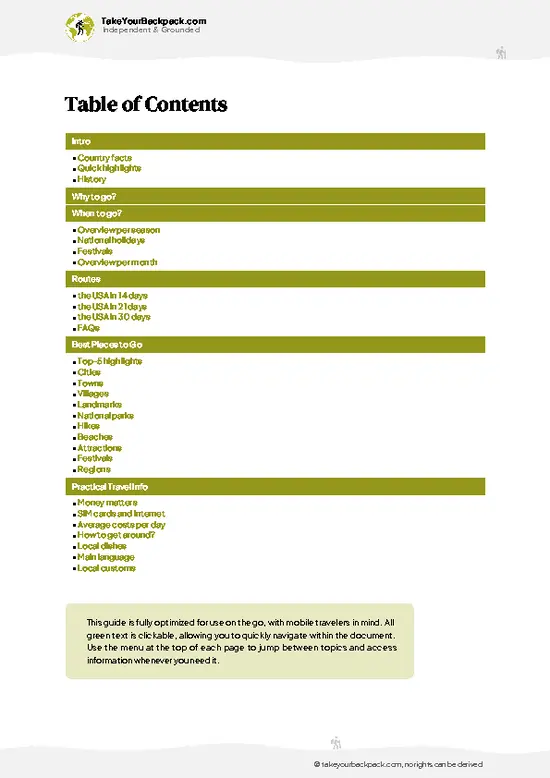
example page 0 from our offline Travel Guide for United States
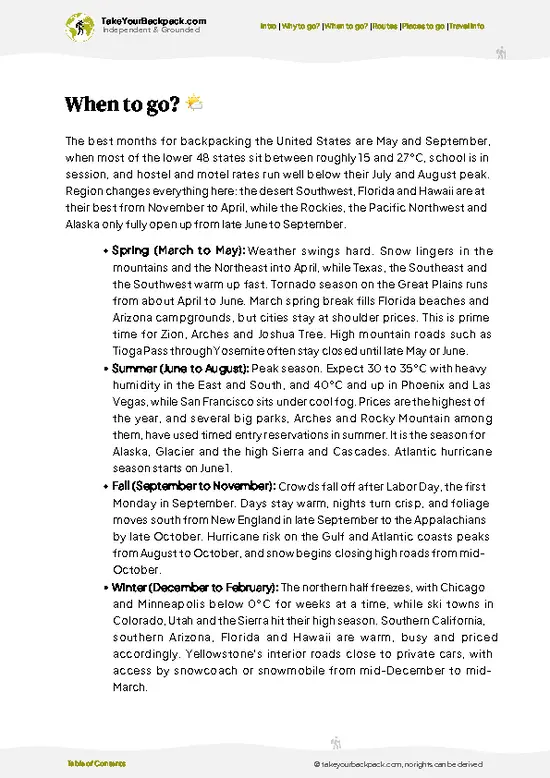
example page 1 from our offline Travel Guide for United States
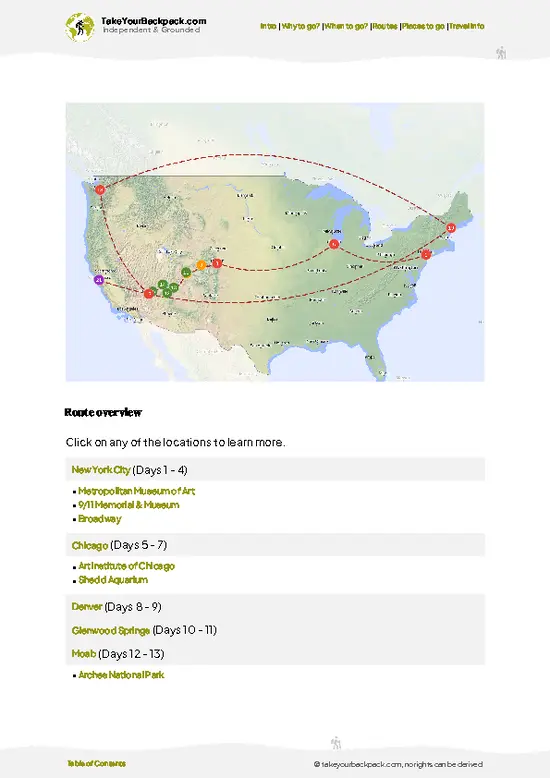
example page 2 from our offline Travel Guide for United States
example page 3 from our offline Travel Guide for United States
example page 4 from our offline Travel Guide for United States
example page 5 from our offline Travel Guide for United States
example page 6 from our offline Travel Guide for United States
example page 7 from our offline Travel Guide for United States
Loading the map 🌍
CLICK TO FILTER
cities
towns
villages
landmarks
national parks
hikes
beaches
attractions
festivals
regions
SHOW COUNTRY’S BESTSHOW ALL

✨ Why go?
Ranked #1 attraction in the USA
What makes it a must-see attraction

Metropolitan Museum of Art holds more than 5,000 years of human output under one roof, and the range is the point. In a single afternoon you can walk from an Egyptian tomb to a Dutch interior to a Tiffany glass courtyard without changing buildings, which no other museum in the country manages at this scale. For a backpacker, that is a rare thing: a world tour compressed into a few hundred meters of marble corridor.

The pull is also about specific objects. The Temple of Dendur, a Roman-era Egyptian sandstone temple, stands in a glass-walled hall beside a reflecting pool. Five Vermeers hang in the European galleries, a count most museums cannot approach. If you are crossing the United States and want one stop that justifies a day in New York City, this is it.

It also works as a reset in a … read more 👉
Metropolitan Museum of Art holds more than 5,000 years of human output under one roof, and the range is the point. In a single afternoon you can walk from an Egyptian tomb to a Dutch interior to a Tiffany glass courtyard without changing buildings, which no other museum in the country manages at this scale. For a backpacker, that is a rare thing: a world tour compressed into a few hundred meters of marble corridor.

The pull is also about specific objects. The Temple of Dendur, a Roman-era Egyptian sandstone temple, stands in a glass-walled hall beside a reflecting pool. Five Vermeers hang in the European galleries, a count most museums cannot approach. If you are crossing the United States and want one stop that justifies a day in New York City, this is it.

It also works as a reset in a long trip. After weeks of hostels and buses, hours in quiet, cool galleries spent looking at Washington Crossing the Delaware and a Van Gogh cypress painting feel like a very different kind of travel.

💡 HighlightsTop highlights of Metropolitan Museum of Art

  1. Temple of Dendur: Built around 15 BC for the Roman emperor Augustus on the Nile, this temple was given by Egypt to the United States in 1965 and rebuilt in the Sackler Wing in 1978. A slanted glass wall faces Central Park, so the sandstone glows in afternoon light, and carved graffiti from 19th-century visitors is still visible on the stone.
  2. Tomb of Perneb: A real Old Kingdom mastaba chapel from about 2400 BC, one you can walk into. The painted reliefs of offerings and cattle are crisp, and it is usually far quieter than the temple.
  3. Washington Crossing the Delaware: Emanuel Leutze’s painting is enormous, around 12 by 21 feet, and hangs in the American Wing. Seeing the scale in person explains why it became the most reproduced image of the Revolution.
  4. Charles Engelhard Court and the American Wing:
… read more 👉
  1. Temple of Dendur: Built around 15 BC for the Roman emperor Augustus on the Nile, this temple was given by Egypt to the United States in 1965 and rebuilt in the Sackler Wing in 1978. A slanted glass wall faces Central Park, so the sandstone glows in afternoon light, and carved graffiti from 19th-century visitors is still visible on the stone.
  2. Tomb of Perneb: A real Old Kingdom mastaba chapel from about 2400 BC, one you can walk into. The painted reliefs of offerings and cattle are crisp, and it is usually far quieter than the temple.
  3. Washington Crossing the Delaware: Emanuel Leutze’s painting is enormous, around 12 by 21 feet, and hangs in the American Wing. Seeing the scale in person explains why it became the most reproduced image of the Revolution.
  4. Charles Engelhard Court and the American Wing: A sunlit sculpture garden with a Tiffany loggia, a Frank Lloyd Wright living room and period rooms from colonial New England onward. It makes a good seat for resting your legs.
  5. Vermeer and the Dutch galleries: The Met owns five Vermeers, small and luminous, among Rembrandts and Hals. Stand close to the Young Woman with a Water Pitcher and watch the light on the brass and window.
  6. Arms and Armor: The central hall displays knights on armored horses in a full procession, with Japanese samurai armor nearby. It is the kind of room that makes kids and cynics equally quiet.
  7. Van Gogh’s Cypresses: The thick, swirling brushwork of this Post-Impressionist painting is much more physical in person than in prints. The nearby Monet and Cézanne rooms make this one of the best stretches of the building.
  8. Cantor Roof Garden: Open seasonally, roughly from late spring into fall, with a commissioned installation and a view across the tops of the Central Park trees to the Midtown skyline. Bring a drink order and a camera.
Metropolitan Museum of Art charges US$30 for adults, which covers all the galleries and special exhibitions plus the Met Cloisters on the same day, and buying online lets you skip the ticket line, while the Roof Garden is accessible with the same ticket when open.
Spotted a mistake or missing something? Contact us.

Things to do around Metropolitan Museum of Art

Ratings based on Tripadvisor reviews. When you book through this link, you support our work at no extra cost to you.

🌤️ When to go?When to go for the best experience

  • Weekday Mornings: The Met opens at 10 a.m. most days and the first hour on Tuesday and Thursday is the quietest window, before tour groups fill the Egyptian wing and the Temple of Dendur.
  • Fall (Sept to Nov): Highs run 13 to 24°C (55 to 75°F), ideal for walking Central Park to the museum's Fifth Avenue steps. Hotel rates climb sharply in October.
  • Winter (Dec to Feb): Highs of 0 to 6°C (32 to 43°F) and daylight of roughly 9 to 10 hours make indoor time appealing. Crowds thin after New Year's, and January has the lowest room prices of the year.
  • Spring (Mar to May): Highs of 8 to 22°C (46 to 72°F) and blooming Central Park trees. Easter and school break weeks are busy.
  • Summer (Jun to Aug): Highs of 25 to 30°C (77 to 86°F) with humid afternoons, and the galleries are a cool escape. Daylight lasts about
… read more 👉
  • Weekday Mornings: The Met opens at 10 a.m. most days and the first hour on Tuesday and Thursday is the quietest window, before tour groups fill the Egyptian wing and the Temple of Dendur.
  • Fall (Sept to Nov): Highs run 13 to 24°C (55 to 75°F), ideal for walking Central Park to the museum's Fifth Avenue steps. Hotel rates climb sharply in October.
  • Winter (Dec to Feb): Highs of 0 to 6°C (32 to 43°F) and daylight of roughly 9 to 10 hours make indoor time appealing. Crowds thin after New Year's, and January has the lowest room prices of the year.
  • Spring (Mar to May): Highs of 8 to 22°C (46 to 72°F) and blooming Central Park trees. Easter and school break weeks are busy.
  • Summer (Jun to Aug): Highs of 25 to 30°C (77 to 86°F) with humid afternoons, and the galleries are a cool escape. Daylight lasts about 15 hours, and international visitors keep lobbies full.
  • Weekends: Saturday and Sunday afternoons are the most crowded. The museum is closed every Wednesday.
Arrive on a Friday evening, when the museum stays open later and the galleries empty out.


source: climatestotravel.comJANJanuary: highly recommended for travelingFEBFebruary: highly recommended for travelingMARMarch: highly recommended for travelingAPRApril: good for travelingMAYMay: highly recommended for travelingJUNJune: good for travelingJULJuly: fair for travelingAUGAugust: fair for travelingSEPSeptember: good for travelingOCTOctober: highly recommended for travelingNOVNovember: good for travelingDECDecember: fair for traveling
United States - Metropolitan Museum of Art

✈️ The backpacker research shortcutthe USA Travel Guide

An offline-friendly backpacking guide with optimized travel routes, ranked highlights, transport advice, and the best areas to stay.
example page 0 from our offline Travel Guide for United States
example page 1 from our offline Travel Guide for United States
example page 2 from our offline Travel Guide for United States
example page 3 from our offline Travel Guide for United States
example page 4 from our offline Travel Guide for United States
example page 5 from our offline Travel Guide for United States
example page 6 from our offline Travel Guide for United States
example page 7 from our offline Travel Guide for United States
The digital guide (451 pages) contains:
✅ 159 highlights, ranked by travel appeal
✅ Optimized 14, 21 & 30-day travel routes
✅ Cities, national parks, landmarks, beaches
✅ How to get around
✅ Offline-friendly for travel without Wi-Fi
👉 Click to see all 30+ guide features

📅 Plan smarter in minutes, not weeks
✅ Month by month travel advice
✅ Festivals & national holidays
✅ Budget expectations

🗺️ Go to the right places, skip the overrated ones
✅ Honest pros & cons of destinations
✅ Top hikes, parks & viewpoints
✅ Lesser-known places most travelers miss
✅ Clear “worth it vs skip it” guidance

🛏️ Travel smoothly without rookie mistakes
✅ Best areas to stay
✅ Transport systems explained simply
✅ Common scams & safety advice
✅ SIM cards, money & practical tips

🌍 Understand the country, not just visit it
✅ Culture & traditions
✅ Local customs
✅ Festivals worth planning around
✅ Traveler-friendly historical context
✅ Insights that make places more meaningful

📱 Built for real travel conditions
✅ Fully downloadable PDF
✅ Works completely offline
✅ Optimized for phone use
✅ Useful in remote areas & buses
✅ Everything in one place
Stop searching, start planning
Get instant access to your full guide. 30‑day money-back guarantee.
+ Add another guide for just

By proceeding you agree to our terms.
Sent to your inbox immediately after payment • 100% Secure Checkout
Best Backpacking Travel Advisor 2025 tourism awardBest Backpacking
Travel Advisor
2025
What others say about Take Your Backpack Guides:
⭐⭐⭐⭐⭐
Fantastic, amazing amount of information!
⭐⭐⭐⭐⭐
My goodness this is amazing, it's what I've been looking for hats off too you!
⭐⭐⭐⭐⭐
I think this is absolutely BRILLIANT
⭐⭐⭐⭐
Very complete and informative. It's still missing places, but I gotta to commend you
⭐⭐⭐⭐⭐
This is truly amazing, thank you, can't wait to explore it with my kids!
⭐⭐⭐⭐⭐
Awesome resource, thank you!
⭐⭐⭐⭐⭐
This is amazing! Can't wait to explore the ones I haven't seen
⭐⭐⭐⭐
I love this! Well done, great idea.
⭐⭐⭐⭐⭐
Thanks for taking the time to make this gem!
⭐⭐⭐⭐⭐
This might be the best website I've ever seen.
⭐⭐⭐⭐⭐
Congratulations, and thank you so much for your work; it's incredibly valuable.
⭐⭐⭐⭐
In all seriousness I think you did a great job pointing out the important spots
⭐⭐⭐⭐⭐
10/10 very good
⭐⭐⭐⭐⭐
As someone who's only just starting to visit regularly this is awesome, thank you.
⭐⭐⭐⭐
Thank you very much! I'm going to visit my dad, it's going to be very useful!
⭐⭐⭐⭐⭐
This is really cool! We'll be travelling for the first time and this definitely come in handy.
⭐⭐⭐⭐⭐
You are now our minister of culture, congratulations 👨‍💼
⭐⭐⭐⭐⭐
Just wanted to tell you that this is a pearl! Going to follow your recommendations.
⭐⭐⭐⭐⭐
This is so cool. I'll definitely be using the resource for my travels soon.
⭐⭐⭐⭐⭐
This is very impressive! Good work.
⭐⭐⭐⭐⭐
This is an amazing and informative site. Very well done!

🛏️ Where to stay?Choosing the right base

The Upper East Side puts you within walking distance of the Metropolitan Museum of Art, but the budget beds are mostly across the park and to the north, so plan around the Upper West Side and Harlem.
The Upper West Side, roughly West 70s to 100s, is the best compromise. It is quiet, safe at night, and a 15 to 25 minute walk across Central Park to the museum's Fifth Avenue entrance. Hostel dorms near West 100th Street usually run US$50 to 90 a night. The 1, 2 and 3 subway lines and the B and C along Central Park West connect you to Midtown quickly.
East Harlem and Central Harlem, north of 96th Street, … read more 👉
The Upper East Side puts you within walking distance of the Metropolitan Museum of Art, but the budget beds are mostly across the park and to the north, so plan around the Upper West Side and Harlem.
The Upper West Side, roughly West 70s to 100s, is the best compromise. It is quiet, safe at night, and a 15 to 25 minute walk across Central Park to the museum's Fifth Avenue entrance. Hostel dorms near West 100th Street usually run US$50 to 90 a night. The 1, 2 and 3 subway lines and the B and C along Central Park West connect you to Midtown quickly.
East Harlem and Central Harlem, north of 96th Street, are cheaper and have excellent soul food, Latin bakeries and bars. The 4, 5 and 6 trains on Lexington Avenue reach the museum's neighborhood in about 10 minutes, then it is a short walk west. Rates are often 20 to 30 percent lower than in Midtown.
Midtown West and the Garment District have the largest cluster of social hostels and the easiest transit hub at Times Square, but street noise is constant. Brooklyn neighborhoods such as Williamsburg and Bushwick offer a younger, nightlife-heavy scene with dorm beds around US$45 to 80, and the L train plus a transfer takes 35 to 50 minutes to the museum.

👛 Costs (as of 22 October 2026)Money, prices, and spending tips

The Metropolitan Museum of Art costs about US$115 to 160 per day for a backpacker, with the US$30 adult admission being only one part of it. Out-of-state visitors pay the full fee, while New York State residents and students from the tri-state area pay what they wish.
CategoryBudget RangeLocal Reality
AdmissionUS$30Adult ticket for non-residents, valid for one day at The Met Fifth Avenue and The Met Cloisters. Seniors pay about US$22 and students about US$17.
Special exhibitionsUS$0Most are included in the ticket, so there is rarely an extra charge.
Audio guide and extrasUS$0 to 10The free app works with your own phone and headphones. Large bags and coats can be stored at the coat check for a small fee or free.
Food at the museumUS$10 to 20The cafeteria and the Great Hall café are pricey. A hot
… read more 👉
The Metropolitan Museum of Art costs about US$115 to 160 per day for a backpacker, with the US$30 adult admission being only one part of it. Out-of-state visitors pay the full fee, while New York State residents and students from the tri-state area pay what they wish.
CategoryBudget RangeLocal Reality
AdmissionUS$30Adult ticket for non-residents, valid for one day at The Met Fifth Avenue and The Met Cloisters. Seniors pay about US$22 and students about US$17.
Special exhibitionsUS$0Most are included in the ticket, so there is rarely an extra charge.
Audio guide and extrasUS$0 to 10The free app works with your own phone and headphones. Large bags and coats can be stored at the coat check for a small fee or free.
Food at the museumUS$10 to 20The cafeteria and the Great Hall café are pricey. A hot dog or halal cart on Fifth Avenue costs US$4 to 8.
Local transportUS$3 to 6A subway or bus ride is US$3. The 4, 5 and 6 trains stop at 86th Street, about three blocks east of the museum.
Accommodation (high season)US$50 to 90Hostel dorm bed in Manhattan or Brooklyn. Low season in January and February runs US$35 to 60.
Total Daily BudgetUS$115 to 160One museum day plus a dorm bed, two cheap meals and subway rides.


source: metmuseum.org
⚠️ Prices can change and everyone travels differently, so take this as a rough guide. Hope it helps you plan your adventure!

FAQTraveler FAQ

Plan on three to four hours for the highlights at the Metropolitan Museum of Art, and a full day of six to eight hours if you want the European paintings, the Egyptian wing and the Arms and Armor hall at an unhurried pace. The museum holds over two million objects across roughly 17 acres of floor space. Your ticket covers one day, so pick the wings you care about most.
Yes, for most travelers the Metropolitan Museum of Art is worth the US$30 adult admission. The ticket covers same-day entry to the Fifth Avenue building and The Met Cloisters, and includes major exhibitions, the Temple of Dendur and the Impressionist galleries. New York State residents and tri-state-area students pay what they wish, and the rooftop garden in warm months adds a free skyline view.
The Metropolitan Museum of Art sits on Fifth Avenue at East 82nd Street, on the east edge of Central Park. Take the 4, 5 or 6 subway to 86th Street and walk about 10 minutes west, or ride the M1, M2, M3 or M4 bus along Fifth and Madison Avenues for US$3. From Times Square the trip takes about 25 to 30 minutes, and from the Upper West Side it is a 20 minute walk across the park.
⚠️ Things can change over time, so always validate details locally before you go.

Other American attractions near Metropolitan Museum of Art

Explore more nearby:

  • Metropolitan Opera House—Gold ceiling, Sputnik chandeliers, Chagall murals, standing room| 2 km away
  • Museum of Modern Art—Starry Night, Picasso, Warhol soup cans, sculpture garden| 2 km away
  • Broadway—Theater district, TKTS red steps, rush seats, stage doors| 2 km away

💡 Not sure where to go next?
Create a personalized itinerary for the USA including Metropolitan Museum of Art and the places that fit your trip.

Generate my itinerary

👉 Discover all attractions

Or checkout all the USA has to offer (think cities, towns, villages, national parks, hikes, beaches, festivals)
Country photo of the USA

We 💚 feedbackWhat to keep in mind

Metropolitan Museum of Art defeats travelers who try to see everything in a single day and leave dazed, with sore feet and only blurred memories. I would pick two or three wings and let the rest wait for another trip. Start at opening, linger over a few rooms, and go outside to sit in Central Park before you reach saturation.

✈️ When did I visit the USA?
In January 2023 I visited New York. Many years before, before digital cameras existed, I discovered most of the national parks in the West.

✍️ Help improve this page!
The information on this page is based on my own backpacking experience in the USA, supplemented with up-to-date research and feedback from other travelers. Travel details can change, so if you notice anything outdated or incomplete, feel free to let me know.


🙋‍♂️ Give feedback

👋 Meet the founderWho’s Behind Take Your Backpack?

Johan, backpacker and founder of TakeYourBackpackHi, I’m Johan (Netherlands 🇳🇱), the creator of TakeYourBackpack. Over the past 3 decades, I’ve backpacked through 90+ countries across six continents, gaining extensive experience with independent travel, long-term trips, and overland routes.

This site is built on a combination of firsthand travel experience and carefully curated insights from other backpackers. Many guides are based on places I’ve personally visited, while others bring together tips, observations, and practical advice shared by trusted travelers I’ve met along the way.

The goal is to provide realistic, experience-driven guidance — not generic itineraries — so you can explore destinations with better context, clearer expectations, and more confidence.