×
San Francisco

the USA🇺🇸 | citiesSan FranciscoGolden Gate walk, Alcatraz audio tour, Mission murals, steep hills | things to do and best time to go

Explore New York CityExplore Savannah

Backpacking in San Francisco
🏆 Top pickcity ranked #2
By Johan Kruseman 🇳🇱 | Updated October 22, 2026

“Sourdough, no, you don’t want the bowl, you want the loaf,” the woman at the Boudin counter told me, already sliding one across the glass while a line of tourists photographed the crab-shaped rolls. She was right, and I ate it warm on the pier. San Francisco sits at the tip of a peninsula on the West Coast of the United States, and it rewards walkers with strong legs and a tolerance for hills that look like typos on the map. The cable car ride is a pricey, slow queue for a short trip, so skip it and take the F streetcar instead. Fisherman’s Wharf is mostly sea lions and fudge; the Mission, Chinatown and the Presidio are where your days belong. Beds are expensive, and so is almost everything else. The best detail is the fog pouring over the Golden Gate Bridge's towers like slow milk.

Discover everything you want to know in the 📖 the USA Travel Guide.


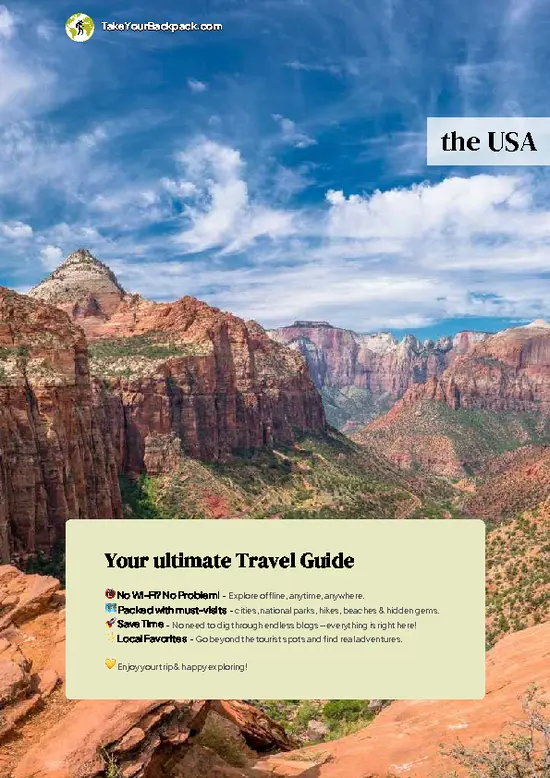
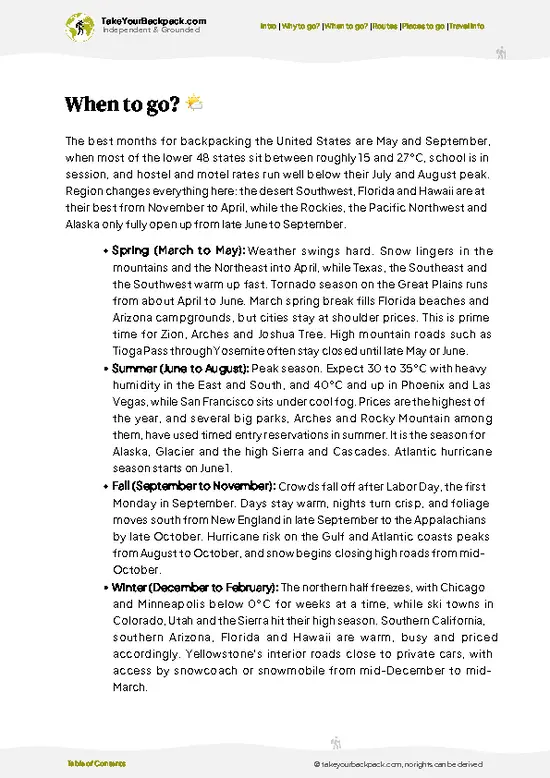
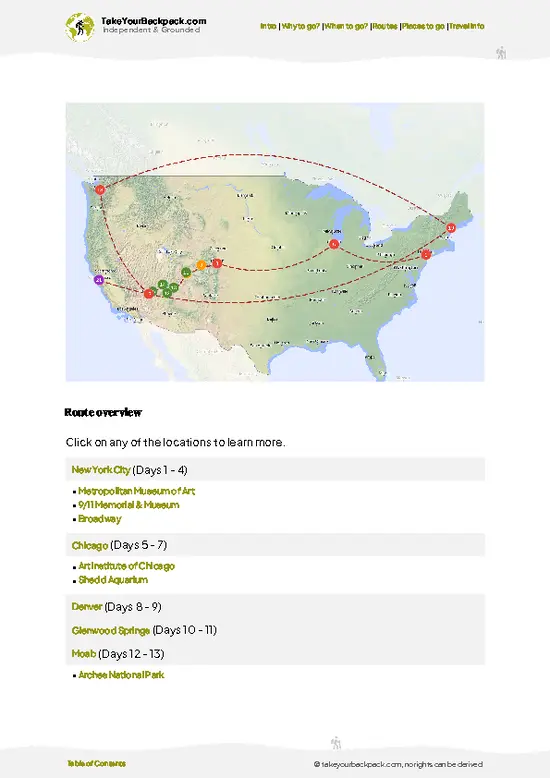
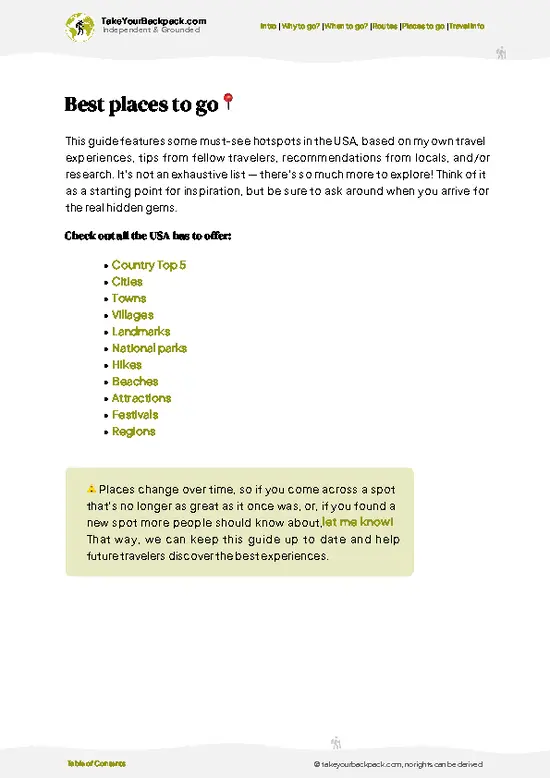
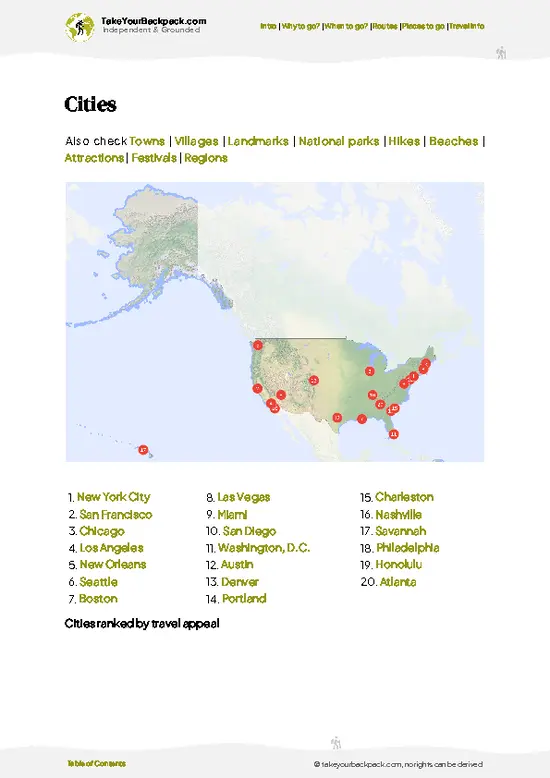
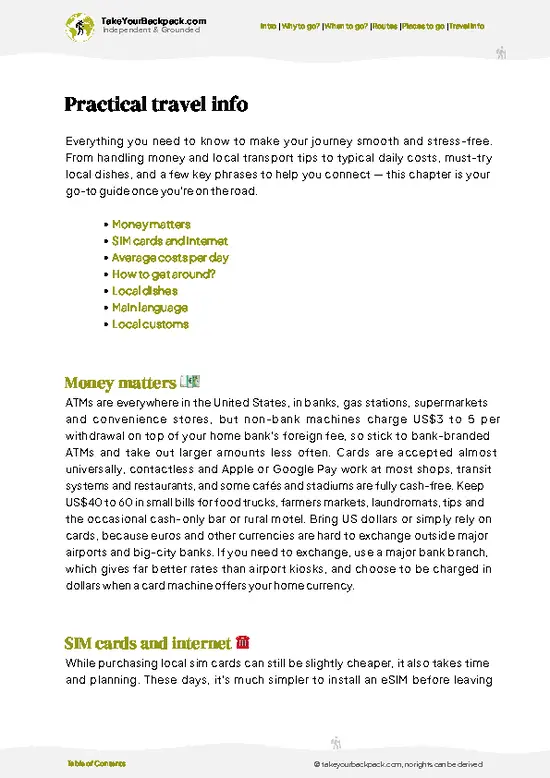
example page 0 from our offline Travel Guide for United States
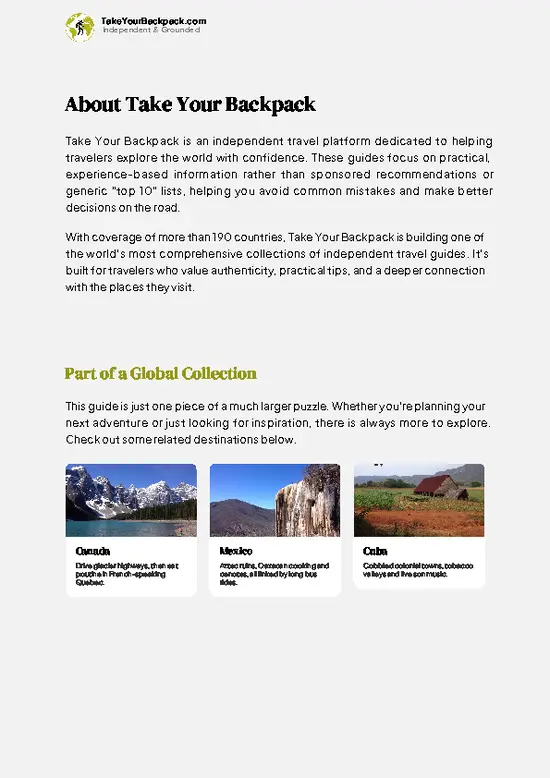
example page 1 from our offline Travel Guide for United States
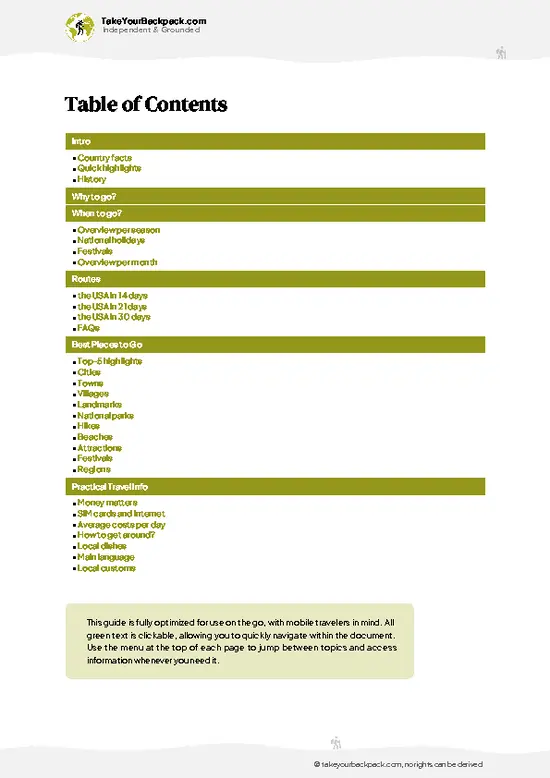
example page 2 from our offline Travel Guide for United States
example page 3 from our offline Travel Guide for United States
example page 4 from our offline Travel Guide for United States
example page 5 from our offline Travel Guide for United States
example page 6 from our offline Travel Guide for United States
example page 7 from our offline Travel Guide for United States
Loading the map 🌍
CLICK TO FILTER
cities
towns
villages
landmarks
national parks
hikes
beaches
attractions
festivals
regions
SHOW COUNTRY’S BESTSHOW ALL

✨ Why go?
Ranked #2 city in the USA
What makes it a must-see city

San Francisco earns its place on a West Coast route because it packs an absurd amount into a small footprint, roughly 7 by 7 miles. You can string together a famous bridge, an island prison, murals, parks and a dozen distinct neighborhoods without ever renting a car, and the hills make every walk feel like a workout you didn’t sign up for. It also works as a connector. Flights, Amtrak buses and the BART line to the airport make it a natural start or finish for a California coastal trip, or a gateway to Yosemite and wine country. Food is the other big pull: Mission burritos, dim sum in Chinatown and Vietnamese or Ethiopian spots on nearly every corner keep you well fed at a range of prices. Hostels are few and pricey, but they cluster near the Union Square and Fisherman’s Wharf areas, which … read more 👉
San Francisco earns its place on a West Coast route because it packs an absurd amount into a small footprint, roughly 7 by 7 miles. You can string together a famous bridge, an island prison, murals, parks and a dozen distinct neighborhoods without ever renting a car, and the hills make every walk feel like a workout you didn’t sign up for. It also works as a connector. Flights, Amtrak buses and the BART line to the airport make it a natural start or finish for a California coastal trip, or a gateway to Yosemite and wine country. Food is the other big pull: Mission burritos, dim sum in Chinatown and Vietnamese or Ethiopian spots on nearly every corner keep you well fed at a range of prices. Hostels are few and pricey, but they cluster near the Union Square and Fisherman’s Wharf areas, which keeps you close to transit. If you have a tight budget, treat San Francisco as a three or four night stop rather than a long base.

💡 HighlightsEssential experiences to have while visiting San Francisco

  1. Golden Gate Bridge: The orange suspension span is the city’s signature sight. Walk the pedestrian side from the Welcome Center toward Marin and back (about 3.4 miles round trip). Free. Allow 1.5 to 2.5 hours. Go in the morning, when fog often burns off by late morning, or at sunset for strong light.
  2. Alcatraz Island: The former federal penitentiary is reached by ferry from Pier 33, and the audio tour narrated by former guards and inmates is excellent. Tickets run about US$45 to 50 and sell out days ahead. Allow 3 to 4 hours. Book the first morning boat for fewer crowds.
  3. Mission District murals: Balmy Alley and Clarion Alley hold decades of political and community murals. Free. Allow 1 to 2 hours. Go in daylight, then eat a burrito at La Taqueria (US$11 to 14).
  4. Golden Gate Park: A 1,000-acre park
… read more 👉
  1. Golden Gate Bridge: The orange suspension span is the city’s signature sight. Walk the pedestrian side from the Welcome Center toward Marin and back (about 3.4 miles round trip). Free. Allow 1.5 to 2.5 hours. Go in the morning, when fog often burns off by late morning, or at sunset for strong light.
  2. Alcatraz Island: The former federal penitentiary is reached by ferry from Pier 33, and the audio tour narrated by former guards and inmates is excellent. Tickets run about US$45 to 50 and sell out days ahead. Allow 3 to 4 hours. Book the first morning boat for fewer crowds.
  3. Mission District murals: Balmy Alley and Clarion Alley hold decades of political and community murals. Free. Allow 1 to 2 hours. Go in daylight, then eat a burrito at La Taqueria (US$11 to 14).
  4. Golden Gate Park: A 1,000-acre park with the Japanese Tea Garden (about US$12 to 15), the Conservatory of Flowers and Ocean Beach at its western end. Allow 3 to 5 hours. JFK Drive has been car-free every day since 2022, so any day works for walking or cycling.
  5. Chinatown: The oldest Chinatown in North America, with Grant Avenue shops, the Golden Gate Fortune Cookie Factory in a narrow alley and Waverly Place temples. Free to wander. Allow 1.5 to 2 hours. Mornings are calmer.
  6. City Lights Bookstore: The Beat Generation landmark in North Beach, still stocking poetry and small press titles over three floors. Free to browse. Allow 30 to 60 minutes. Pair it with espresso at Caffe Trieste nearby.
  7. Painted Ladies at Alamo Square: Row of colorful Victorian houses facing a hilltop park with a skyline view. Free. Allow 30 to 45 minutes. Late afternoon light is best.
  8. Coit Tower: Art deco tower on Telegraph Hill with 1930s Depression-era murals inside and a city view from the top. The elevator ride costs about US$9 to 10. Allow 1 hour. Walk up the Filbert Steps through gardens for a better approach.
San Francisco also opens the door to day trips such as Muir Woods, Sausalito, Point Reyes and Napa Valley. Doing every item above takes about three full days at a comfortable pace.
Spotted a mistake or missing something? Contact us.

Things to do in San Francisco

Ratings based on Tripadvisor reviews. When you book through this link, you support our work at no extra cost to you.

🏘️ NeighborhoodsUnderstanding the local layout

San Francisco is a 7-by-7-mile city of steep hills, and every neighborhood has its own microclimate, so your jacket will get more use than your itinerary. Here is where to spend your time.
  • Mission District: The best all-round area for backpackers. Taquerias with burritos the size of a forearm, murals along Balmy and Clarion Alleys, and Dolores Park on sunny afternoons. Nightlife is loud and good. Very walkable, with a few rough blocks near 16th Street.
  • North Beach and Chinatown: Italian cafés, old bars, and City Lights bookstore next to dim sum counters and herbal shops. Worth a half day on foot. Skip the restaurants with a host waving menus.
  • Fisherman’s Wharf: Sea lions at Pier 39 are free and genuinely funny. The rest is overpriced chowder and souvenir shops. Give it an hour, then leave.
  • Haight-Ashbury:
… read more 👉
San Francisco is a 7-by-7-mile city of steep hills, and every neighborhood has its own microclimate, so your jacket will get more use than your itinerary. Here is where to spend your time.
  • Mission District: The best all-round area for backpackers. Taquerias with burritos the size of a forearm, murals along Balmy and Clarion Alleys, and Dolores Park on sunny afternoons. Nightlife is loud and good. Very walkable, with a few rough blocks near 16th Street.
  • North Beach and Chinatown: Italian cafés, old bars, and City Lights bookstore next to dim sum counters and herbal shops. Worth a half day on foot. Skip the restaurants with a host waving menus.
  • Fisherman’s Wharf: Sea lions at Pier 39 are free and genuinely funny. The rest is overpriced chowder and souvenir shops. Give it an hour, then leave.
  • Haight-Ashbury: Vintage stores, record shops and Victorian houses. Good for browsing, a little costume-like, and the walk up from Golden Gate Park is steep.
  • Golden Gate Park and Richmond: Museums, gardens and bison, plus excellent cheap Asian food on Clement Street. Big distances, so rent a bike or take the bus.
  • Downtown and SoMa: Offices, the Ferry Building market and tech billboards. Pass through, do not linger after dark.

⌛️ 1 dayA smart one-day plan

8:30 AM: Mission District murals Start with Balmy Alley and Clarion Alley, the one stop not to skip. The paint is fresh, the streets are quiet and the stories behind each wall, from labor strikes to Latin American politics, are the real San Francisco. Grab a coffee on 24th Street, then take BART or a short bus ride north.

11:00 AM: Chinatown Enter through the Dragon’s Gate on Grant Avenue and drift to Waverly Place for the temple balconies and the fortune cookie factory. Dim sum at a small, no-frills place is the right lunch here.

1:30 PM: City Lights Bookstore and North Beach Walk ten minutes up to Columbus Avenue. Browse the poetry room upstairs, then get espresso at Caffe Trieste, where the Beats once argued over cups.

3:00 PM: Filbert Steps and Coit Tower Climb the steps from Telegraph … read more 👉
8:30 AM: Mission District murals Start with Balmy Alley and Clarion Alley, the one stop not to skip. The paint is fresh, the streets are quiet and the stories behind each wall, from labor strikes to Latin American politics, are the real San Francisco. Grab a coffee on 24th Street, then take BART or a short bus ride north.

11:00 AM: Chinatown Enter through the Dragon’s Gate on Grant Avenue and drift to Waverly Place for the temple balconies and the fortune cookie factory. Dim sum at a small, no-frills place is the right lunch here.

1:30 PM: City Lights Bookstore and North Beach Walk ten minutes up to Columbus Avenue. Browse the poetry room upstairs, then get espresso at Caffe Trieste, where the Beats once argued over cups.

3:00 PM: Filbert Steps and Coit Tower Climb the steps from Telegraph Hill’s east side, past gardens and wild parrots, to the tower. Inside, the 1930s murals take about twenty minutes, and the top gives a clear look at the bay.

5:30 PM: 16th Avenue Tiled Steps, Sunset district (off the usual path) Take transit to 16th Avenue and climb the 163-step mosaic stairway, which is tiled with sea creatures and stars. Few tourists come here. From the top you see the sun dropping toward the Pacific, and it is a calm way to end a busy day. Finish with noodles on nearby Irving Street.

🌤️ When to go?Seasonal considerations and timing

September and October are the warmest, clearest months in San Francisco, with highs around 21 to 24°C (70 to 75°F).
  • Late Summer and Fall (Sept to Oct): Fog retreats, skies clear, and evenings stay mild. Hotel prices peak and hostel beds fill early.
  • Summer (June to Aug): Counterintuitively cold and foggy, with highs of 17 to 21°C (63 to 70°F) and long daylight. Tourist crowds are heavy at the wharf and bridges. Pack layers.
  • Winter (Nov to Feb): Rain arrives, mostly December to February, with highs of 13 to 16°C (55 to 61°F) and lows near 8°C (46°F). Days are short, but prices drop and lines vanish. Whales pass offshore.
  • Spring (Mar to May): Green hills, wildflowers, and changeable weather at 15 to 19°C (59 to 66°F). Moderate prices apart from conference weeks.
Book beds early if a big tech conference is on, since rates can double.

source: climatestotravel.comJANJanuary: good for travelingFEBFebruary: good for travelingMARMarch: good for travelingAPRApril: highly recommended for travelingMAYMay: highly recommended for travelingJUNJune: good for travelingJULJuly: good for travelingAUGAugust: good for travelingSEPSeptember: highly recommended for travelingOCTOctober: highly recommended for travelingNOVNovember: good for travelingDECDecember: good for traveling
United States - San Francisco

✈️ The backpacker research shortcutthe USA Travel Guide

An offline-friendly backpacking guide with optimized travel routes, ranked highlights, transport advice, and the best areas to stay.
example page 0 from our offline Travel Guide for United States
example page 1 from our offline Travel Guide for United States
example page 2 from our offline Travel Guide for United States
example page 3 from our offline Travel Guide for United States
example page 4 from our offline Travel Guide for United States
example page 5 from our offline Travel Guide for United States
example page 6 from our offline Travel Guide for United States
example page 7 from our offline Travel Guide for United States
The digital guide (451 pages) contains:
✅ 157 highlights, ranked by travel appeal
✅ Optimized 14, 21 & 30-day travel routes
✅ Cities, national parks, landmarks, beaches
✅ How to get around
✅ Offline-friendly for travel without Wi-Fi
👉 Click to see all 30+ guide features

📅 Plan smarter in minutes, not weeks
✅ Month by month travel advice
✅ Festivals & national holidays
✅ Budget expectations

🗺️ Go to the right places, skip the overrated ones
✅ Honest pros & cons of destinations
✅ Top hikes, parks & viewpoints
✅ Lesser-known places most travelers miss
✅ Clear “worth it vs skip it” guidance

🛏️ Travel smoothly without rookie mistakes
✅ Best areas to stay
✅ Transport systems explained simply
✅ Common scams & safety advice
✅ SIM cards, money & practical tips

🌍 Understand the country, not just visit it
✅ Culture & traditions
✅ Local customs
✅ Festivals worth planning around
✅ Traveler-friendly historical context
✅ Insights that make places more meaningful

📱 Built for real travel conditions
✅ Fully downloadable PDF
✅ Works completely offline
✅ Optimized for phone use
✅ Useful in remote areas & buses
✅ Everything in one place
Stop searching, start planning
Get instant access to your full guide. 30‑day money-back guarantee.
+ Add another guide for just

By proceeding you agree to our terms.
Sent to your inbox immediately after payment • 100% Secure Checkout
Best Backpacking Travel Advisor 2025 tourism awardBest Backpacking
Travel Advisor
2025
What others say about Take Your Backpack Guides:
⭐⭐⭐⭐⭐
Fantastic, amazing amount of information!
⭐⭐⭐⭐⭐
My goodness this is amazing, it's what I've been looking for hats off too you!
⭐⭐⭐⭐⭐
I think this is absolutely BRILLIANT
⭐⭐⭐⭐
Very complete and informative. It's still missing places, but I gotta to commend you
⭐⭐⭐⭐⭐
This is truly amazing, thank you, can't wait to explore it with my kids!
⭐⭐⭐⭐⭐
Awesome resource, thank you!
⭐⭐⭐⭐⭐
This is amazing! Can't wait to explore the ones I haven't seen
⭐⭐⭐⭐
I love this! Well done, great idea.
⭐⭐⭐⭐⭐
Thanks for taking the time to make this gem!
⭐⭐⭐⭐⭐
This might be the best website I've ever seen.
⭐⭐⭐⭐⭐
Congratulations, and thank you so much for your work; it's incredibly valuable.
⭐⭐⭐⭐
In all seriousness I think you did a great job pointing out the important spots
⭐⭐⭐⭐⭐
10/10 very good
⭐⭐⭐⭐⭐
As someone who's only just starting to visit regularly this is awesome, thank you.
⭐⭐⭐⭐
Thank you very much! I'm going to visit my dad, it's going to be very useful!
⭐⭐⭐⭐⭐
This is really cool! We'll be travelling for the first time and this definitely come in handy.
⭐⭐⭐⭐⭐
You are now our minister of culture, congratulations 👨‍💼
⭐⭐⭐⭐⭐
Just wanted to tell you that this is a pearl! Going to follow your recommendations.
⭐⭐⭐⭐⭐
This is so cool. I'll definitely be using the resource for my travels soon.
⭐⭐⭐⭐⭐
This is very impressive! Good work.
⭐⭐⭐⭐⭐
This is an amazing and informative site. Very well done!

🛏️ Where to stay?Best areas to stay in the USA

The best bet for a budget bed in San Francisco is the area around Union Square, Downtown and the Tenderloin edge, with the Fisherman’s Wharf and North Beach side as the calmer alternative. Hostel dorms cluster here, and the Mission also has a few options. Dorm beds run roughly US$40 to 80 a night, rising in summer and fall.
Union Square and nearby Downtown give the strongest transport links. Muni, BART and cable cars all converge, and the airport is a single direct train ride. The trade-off is noise from traffic and sirens, and the Tenderloin blocks a few streets west can feel rough at night. Stick … read more 👉
The best bet for a budget bed in San Francisco is the area around Union Square, Downtown and the Tenderloin edge, with the Fisherman’s Wharf and North Beach side as the calmer alternative. Hostel dorms cluster here, and the Mission also has a few options. Dorm beds run roughly US$40 to 80 a night, rising in summer and fall.
Union Square and nearby Downtown give the strongest transport links. Muni, BART and cable cars all converge, and the airport is a single direct train ride. The trade-off is noise from traffic and sirens, and the Tenderloin blocks a few streets west can feel rough at night. Stick to the main streets when you walk back.
North Beach and the wharf side are quieter in the late evening, with fewer bars shouting at 2 a.m. and a friendlier feel for solo travelers returning late. Bus connections are decent, though BART is a longer walk. Book early for summer and early fall, when beds go quickly. A private room costs several times a dorm bed, so groups of friends sometimes find the numbers close.

🚌 Getting aroundMoving around without the hassle

A single Muni bus or light rail ride in San Francisco costs US$3, and you pay with a tapped Clipper card, the Clipper app on your phone, or contactless card on most vehicles. Cash works on buses but gives no change, which is a lesson best learned once. The city is compact and walkable, but the hills are real, and traffic and parking are miserable, so skip renting a car.
  • Walking: Free, and the best way to cover the Mission, North Beach, Chinatown and the waterfront. Plan routes around the hills, because a flat-looking map can hide a 20 percent grade.
  • Muni buses and Metro: US$3 per ride with a transfer window of 2 hours. Lines run roughly 5 a.m. to after midnight, with owl routes overnight. Reliability is fair, not Swiss. Worth it for reaching Golden Gate Park and the Richmond.
  • BART: The underground
… read more 👉
A single Muni bus or light rail ride in San Francisco costs US$3, and you pay with a tapped Clipper card, the Clipper app on your phone, or contactless card on most vehicles. Cash works on buses but gives no change, which is a lesson best learned once. The city is compact and walkable, but the hills are real, and traffic and parking are miserable, so skip renting a car.
  • Walking: Free, and the best way to cover the Mission, North Beach, Chinatown and the waterfront. Plan routes around the hills, because a flat-looking map can hide a 20 percent grade.
  • Muni buses and Metro: US$3 per ride with a transfer window of 2 hours. Lines run roughly 5 a.m. to after midnight, with owl routes overnight. Reliability is fair, not Swiss. Worth it for reaching Golden Gate Park and the Richmond.
  • BART: The underground rail to the airport and Oakland costs US$2 to 12 depending on distance. The airport ride is about 30 minutes to downtown for roughly US$11 to 12. Trains run from about 5 a.m. to midnight.
  • Cable cars: US$9 a ride. Slow, crowded and photogenic. Do one ride early in the morning, then never again. A Muni day pass is better value.
  • Bikes and scooters: Bay Wheels bikes cost around US$1 to 4 per ride, and e-bikes help with hills. The ride to the Golden Gate Bridge is flat and lovely along the waterfront.
Rideshares cost US$10 to 25 for most city trips, useful late at night.

👛 Costs (as of 22 October 2026)Money, prices, and spending tips

Backpacking in San Francisco costs about US$135 to 170 a day, and the total below is US$156 with a dorm bed in high season.
CategoryBudget RangeLocal Reality
Dorm (high season)US$55 to 80Summer and fall beds fill early, so US$65 is typical.
Dorm (off-season)US$40 to 60Winter often has cheaper dorms.
MealsUS$35 to 50Burritos, dim sum and grocery stops. Add tax and 18 to 20 percent tipping at sit-down places.
Local transportUS$6 to 12Muni rides are US$3 each, with a daily cap.
City transport passUS$6 to 15A Muni Passport costs US$15 for one day and includes cable cars.
Basic activities/entry feesUS$10 to 30Many highlights are free, such as parks, murals and the bridge. Museums run US$15 to 30.
MiscellaneousUS$8 to 15Laundry, snacks, coffee at US$5 to 6 a cup.
Total Daily BudgetUS$156Based on US$65 dorm,
… read more 👉
Backpacking in San Francisco costs about US$135 to 170 a day, and the total below is US$156 with a dorm bed in high season.
CategoryBudget RangeLocal Reality
Dorm (high season)US$55 to 80Summer and fall beds fill early, so US$65 is typical.
Dorm (off-season)US$40 to 60Winter often has cheaper dorms.
MealsUS$35 to 50Burritos, dim sum and grocery stops. Add tax and 18 to 20 percent tipping at sit-down places.
Local transportUS$6 to 12Muni rides are US$3 each, with a daily cap.
City transport passUS$6 to 15A Muni Passport costs US$15 for one day and includes cable cars.
Basic activities/entry feesUS$10 to 30Many highlights are free, such as parks, murals and the bridge. Museums run US$15 to 30.
MiscellaneousUS$8 to 15Laundry, snacks, coffee at US$5 to 6 a cup.
Total Daily BudgetUS$156Based on US$65 dorm, US$40 meals, US$9 transport, US$15 pass, US$15 activities, US$12 extras.
Buy groceries at a supermarket and cook at the hostel to cut food costs by half.


source: numbeo.com
⚠️ Prices can change and everyone travels differently, so take this as a rough guide. Hope it helps you plan your adventure!

🚌 Day tripsExploring the surroundings

San Francisco is a strong base for day trips because buses, ferries and trains reach the surrounding coast, wine country and redwoods without a car.
Muir Woods:
Giant coastal redwoods, about 30 to 45 minutes north across the Golden Gate Bridge. Entry is US$15 plus a required parking or shuttle reservation, and booking ahead is the mistake first-timers skip. Go early on a weekday to avoid crowds, with a total budget near US$35 to 50.

Sausalito and Angel Island:
A ferry from the Ferry Building to Sausalito takes about 30 minutes and costs around US$14 one way. Rent a bike for the ride back across the bridge or take the ferry. Angel Island adds a hilltop loop with panoramic views, about US$20 to 30 total with the ferry.

Berkeley:
BART from downtown takes about 25 minutes for roughly US$4 to … read more 👉
San Francisco is a strong base for day trips because buses, ferries and trains reach the surrounding coast, wine country and redwoods without a car.
Muir Woods:
Giant coastal redwoods, about 30 to 45 minutes north across the Golden Gate Bridge. Entry is US$15 plus a required parking or shuttle reservation, and booking ahead is the mistake first-timers skip. Go early on a weekday to avoid crowds, with a total budget near US$35 to 50.

Sausalito and Angel Island:
A ferry from the Ferry Building to Sausalito takes about 30 minutes and costs around US$14 one way. Rent a bike for the ride back across the bridge or take the ferry. Angel Island adds a hilltop loop with panoramic views, about US$20 to 30 total with the ferry.

Berkeley:
BART from downtown takes about 25 minutes for roughly US$4 to 5. Walk the UC campus, browse the bookstores and eat cheaply around Telegraph Avenue. Year-round works, and the weather is often warmer than in the city.

Napa and Sonoma Valley:
The wine country sits 1.5 to 2 hours away. Public transport is limited, so a group tour costing US$100 to 180 or a shared car is realistic. Harvest from September to October is the best window, but tastings alone run US$30 to 60 each.

Point Reyes:
About 1.5 hours by car, with lighthouse cliffs, elk and empty beaches. Public transport is poor, so share a rental car. Fog often hides the lighthouse in summer, so check conditions and pack layers.

🍲 FoodLocal Cuisine & Drinks

San Francisco’s signature is the Mission burrito, a foil-wrapped foot-long stuffed with rice, beans and carne asada that costs about US$12 to 15 and doubles as dinner. Sourdough is the city’s bread, and a bread bowl of clam chowder at the wharf is touristy but filling. Dungeness crab arrives from November to spring, and cioppino, a tomato-based seafood stew, is the old Italian-fisherman dish worth ordering in North Beach. Dim sum in Chinatown and the Richmond is cheaper and better than most places in the country, with plates for US$4 to 8.
For casual eating, try the taquerias along Mission Street, the food trucks and pop-ups around SoMa, and the Ferry Building market on Saturday mornings for cheese, oysters and coffee. Bakeries sell croissants with long lines, and the early crowd is half the … read more 👉
San Francisco’s signature is the Mission burrito, a foil-wrapped foot-long stuffed with rice, beans and carne asada that costs about US$12 to 15 and doubles as dinner. Sourdough is the city’s bread, and a bread bowl of clam chowder at the wharf is touristy but filling. Dungeness crab arrives from November to spring, and cioppino, a tomato-based seafood stew, is the old Italian-fisherman dish worth ordering in North Beach. Dim sum in Chinatown and the Richmond is cheaper and better than most places in the country, with plates for US$4 to 8.
For casual eating, try the taquerias along Mission Street, the food trucks and pop-ups around SoMa, and the Ferry Building market on Saturday mornings for cheese, oysters and coffee. Bakeries sell croissants with long lines, and the early crowd is half the show. Craft beer is huge, with breweries across the city, and local wine is easy to find. Irish coffee at an old waterfront bar is a quirk of the city. Tipping 18 to 20 percent is expected at sit-down places.

🛡️ SafetyTraveler Safety Guide

San Francisco is safe for most travelers in the busy areas, and the main problem is car break-ins, not violence. Never leave anything visible in a parked or rental car, even for a few minutes, because smashed windows happen daily at viewpoints and parking lots. Keep your phone tucked away on trains and near BART exits, where snatch thefts occur, and carry bags in front on crowded buses. The Tenderloin, parts of SoMa and the blocks around 6th and Market have open drug use and visible homelessness, and most people feel more comfortable walking through quickly or going around. At night, use rideshare rather than walking long empty stretches, and solo travelers do well staying on lit, busy streets. Panhandlers are an everyday annoyance, and a polite no is enough. Fake charity petitions and street … read more 👉
San Francisco is safe for most travelers in the busy areas, and the main problem is car break-ins, not violence. Never leave anything visible in a parked or rental car, even for a few minutes, because smashed windows happen daily at viewpoints and parking lots. Keep your phone tucked away on trains and near BART exits, where snatch thefts occur, and carry bags in front on crowded buses. The Tenderloin, parts of SoMa and the blocks around 6th and Market have open drug use and visible homelessness, and most people feel more comfortable walking through quickly or going around. At night, use rideshare rather than walking long empty stretches, and solo travelers do well staying on lit, busy streets. Panhandlers are an everyday annoyance, and a polite no is enough. Fake charity petitions and street games appear in tourist zones, so ignore anyone who approaches uninvited.

FAQCommon questions from travelers

Three to four days covers the main sights in San Francisco. Spend one day on the Golden Gate Bridge, the Presidio and the waterfront, one on the Mission and North Beach, and one on Golden Gate Park, with a fourth for Muir Woods (about 45 minutes away) or Berkeley. A long weekend works if you skip the day trips.
Yes, San Francisco is manageable for solo backpackers who use common sense. Car break-ins and phone snatching are the main risks, so keep belongings out of sight and avoid walking long empty stretches at night, especially in the Tenderloin and parts of SoMa. Rideshares cost US$10 to 25 for most trips, and hostels in the center make meeting people easy.
San Francisco is known for the Golden Gate Bridge, cable cars, Alcatraz and its steep hills. It is also famed for the Mission burrito, sourdough bread, Chinatown (one of the oldest in the country) and a tech industry centered on nearby Silicon Valley. Haight-Ashbury ties the city to the 1960s counterculture, and Alcatraz ferry tickets cost around US$45 to 50 and sell out ahead of time.
⚠️ Things can change over time, so always validate details locally before you go.

Other American cities near San Francisco

Explore more nearby:

  • Los Angeles—Griffith views, Getty hilltop, taco hall, Venice boardwalk| 559 km away
  • Las Vegas—Strip lights, Fremont canopy, neon boneyard, mob history| 671 km away
  • Bend—Cinder cone, river floats, lava tube, brewpubs| 705 km away

💡 Not sure where to go next?
Create a personalized itinerary for the USA including San Francisco and the places that fit your trip.

Generate my itinerary

👉 Discover all cities

Or checkout all the USA has to offer (think cities, towns, villages, national parks, hikes, beaches, festivals)
Country photo of the USA

We 💚 feedbackFinal thoughts on visiting San Francisco

San Francisco suits curious walkers who love food, books, music and odd corners more than beaches or nightlife marathons. Budget travelers should plan short stays, since beds are costly. I would bring a warm layer even in summer and book Alcatraz well ahead. Skip the cable car queue, and spend that time wandering the Mission.

✈️ When did I visit the USA?
In January 2023 I visited New York. Many years before, before digital cameras existed, I discovered most of the national parks in the West.

✍️ Help improve this page!
The information on this page is based on my own backpacking experience in the USA, supplemented with up-to-date research and feedback from other travelers. Travel details can change, so if you notice anything outdated or incomplete, feel free to let me know.


🙋‍♂️ Give feedback

👋 Meet the founderWho’s Behind Take Your Backpack?

Johan, backpacker and founder of TakeYourBackpackHi, I’m Johan (Netherlands 🇳🇱), the creator of TakeYourBackpack. Over the past 3 decades, I’ve backpacked through 90+ countries across six continents, gaining extensive experience with independent travel, long-term trips, and overland routes.

This site is built on a combination of firsthand travel experience and carefully curated insights from other backpackers. Many guides are based on places I’ve personally visited, while others bring together tips, observations, and practical advice shared by trusted travelers I’ve met along the way.

The goal is to provide realistic, experience-driven guidance — not generic itineraries — so you can explore destinations with better context, clearer expectations, and more confidence.