×

United States🇺🇸 | best citiesBest 10 cities in the USA

Cities in the United States (USA) come with a catch: the country is roughly the width of Europe, and nobody told the cities to coordinate. Each region runs its own show. The Northeast is compact, walkable and rail-connected, with Amtrak and commuter lines doing the work of a car, though hostel beds can top US$60 a night. The West Coast sprawls, leans on freeways, and rewards you with mild weather and a strong outdoor-gear-and-taco economy. The South trades speed for live music, slow meals and humidity thick enough to chew. The Midwest is the quiet bargain, with big museums, lake shorelines and rooms often 30 to 50 percent cheaper than on either coast. The Mountain West and Southwest add altitude, desert heat and long gaps between everything.

For backpacking or independent travel, the real divider is transit. Some cities let you ditch the car entirely, while others politely suggest you rent one and then charge US$40 to 60 a night to park it. Crowds peak around holidays and big events, and prices move with them. Pick a region by how you like to move, then pick the city.

By Johan Kruseman 🇳🇱 | Updated October 21, 2026
Explore the best towns in the USA

Why go?Why Travelers Love These Spots

The United States built its cities late, fast and mostly after the automobile was a serious option, and that single fact explains most of what a visitor will experience. Older Northeastern and Great Lakes cities grew around ports, railroads and factories, so they have dense grids, real subway systems and districts you can cover on foot. Cities that boomed after the 1940s, mostly in the West and Sun Belt, were designed around highways, which means wide streets, spread-out neighborhoods and a bus that arrives roughly when it feels like it.

Immigration gives the country its second big advantage. Waves of arrivals from Europe, Africa, Latin America and Asia settled in urban neighborhoods and never left, so food, music and language change block by block. A single metro area can cover Ethiopian … read more 👉
The United States built its cities late, fast and mostly after the automobile was a serious option, and that single fact explains most of what a visitor will experience. Older Northeastern and Great Lakes cities grew around ports, railroads and factories, so they have dense grids, real subway systems and districts you can cover on foot. Cities that boomed after the 1940s, mostly in the West and Sun Belt, were designed around highways, which means wide streets, spread-out neighborhoods and a bus that arrives roughly when it feels like it.

Immigration gives the country its second big advantage. Waves of arrivals from Europe, Africa, Latin America and Asia settled in urban neighborhoods and never left, so food, music and language change block by block. A single metro area can cover Ethiopian coffee ceremonies, Vietnamese noodle shops and Puerto Rican bakeries without needing a flight. Few countries pack that much variety into so many places at once.

Geography handles the rest. Coastal cities sit on oceans, bays and rivers, while inland ones sit beside lakes, deserts or mountain ranges, so the setting shifts dramatically from one stop to the next. Climate does too, from subtropical humidity to snowbound winters to dry desert heat that makes a 10 a.m. walk feel ambitious.

Before choosing the country for its cities, know a few things. Distances are huge, and a domestic flight between regions runs roughly 2 to 6 hours in the air. Public transit quality varies wildly, so check each city rather than assuming. Tipping is expected, usually 18 to 20 percent in restaurants, and the price on the menu is not the price you pay once tax is added. Healthcare is expensive, so travel insurance is worth buying. Costs are high compared with most of the world, especially lodging in major coastal cities. Budget travelers do well by leaning on free museums days, public parks, food trucks and hostels, and by accepting that the country rewards planning more than improvisation. Visitors from many countries need an ESTA or a visa before departure, so sort that out well ahead.
Why These Made the Cut
The list of best cities in the USA is created based on culture, vibe, attractions, transport ease, and local charm. If you feel a city is missing in this list, please let us know.

When to go?Seasonal Guide to Visiting

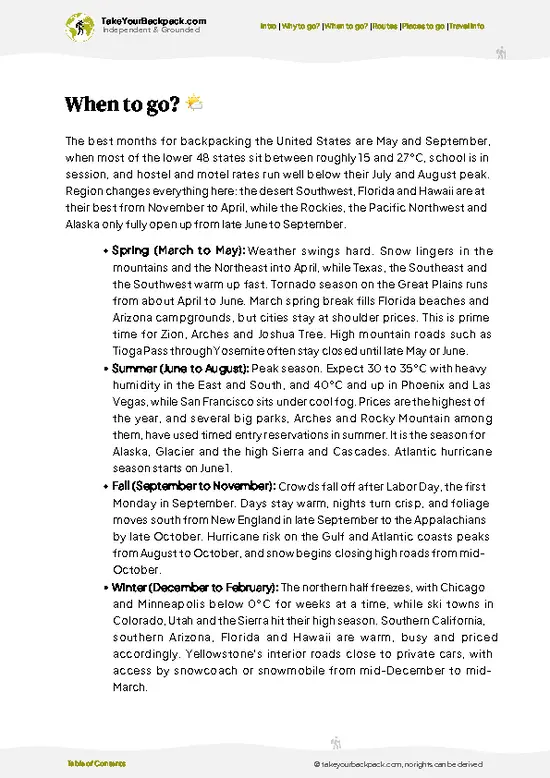
Best months for city travel: September and October, plus April and May, are the best months for most US cities, with daytime highs of roughly 55 to 75°F (13 to 24°C), lower humidity and none of the summer price spikes. Autumn is especially good in the Northeast and Midwest, when the air turns crisp and leaves change color. Spring does the same job a few weeks earlier in the South.

Summer: hot, busy and expensive: June through August is peak season. Northeastern cities hit 80 to 90°F (27 to 32°C) with sticky humidity, and Southern cities such as those along the Gulf and Atlantic coasts regularly push past 90°F (32°C) with afternoon thunderstorms. The Southwest and desert cities can reach 105 to 115°F (40 to 46°C), which makes midday sightseeing a bad idea and turns the shade into a sought-after … read more 👉
Best months for city travel: September and October, plus April and May, are the best months for most US cities, with daytime highs of roughly 55 to 75°F (13 to 24°C), lower humidity and none of the summer price spikes. Autumn is especially good in the Northeast and Midwest, when the air turns crisp and leaves change color. Spring does the same job a few weeks earlier in the South.

Summer: hot, busy and expensive: June through August is peak season. Northeastern cities hit 80 to 90°F (27 to 32°C) with sticky humidity, and Southern cities such as those along the Gulf and Atlantic coasts regularly push past 90°F (32°C) with afternoon thunderstorms. The Southwest and desert cities can reach 105 to 115°F (40 to 46°C), which makes midday sightseeing a bad idea and turns the shade into a sought-after amenity. Hotel rates in popular destinations often run 20 to 50 percent above spring and fall levels, and school holidays push them higher. Coastal California is the exception, with cool, foggy summer mornings and highs often in the 60s to 70s°F (16 to 24°C).

Winter: cheap in some places, brutal in others: December through February is cold and snowy across the Northeast, Midwest and Mountain West, with highs near or below freezing (around 20 to 35°F, or -7 to 2°C) in many northern cities. Cold snaps can drop lower, and some outdoor attractions shorten their hours or close. On the upside, hotel prices in northern cities drop sharply outside the December holiday period, and museums and theaters are less crowded. The South, Florida and Southern California stay mild, usually 55 to 75°F (13 to 24°C), which is why they fill up with winter escapees. The Southwest is pleasant in winter, while the mountain cities turn into ski-season price zones.

Dates that change plans: Thanksgiving week (late November), Christmas to New Year's, Memorial Day, the Fourth of July and Labor Day all spike transport and lodging costs, and domestic flights fill up. Big conventions, music festivals and major sporting events can double room rates for a weekend in any city. Hurricane season runs from June to November on the Gulf and Atlantic coasts, peaking from August to October, so build in flexibility there. Late spring and early fall remain the safest bets across the whole country.

city hoppingOptimizing Your Multi-Stop Itinerary

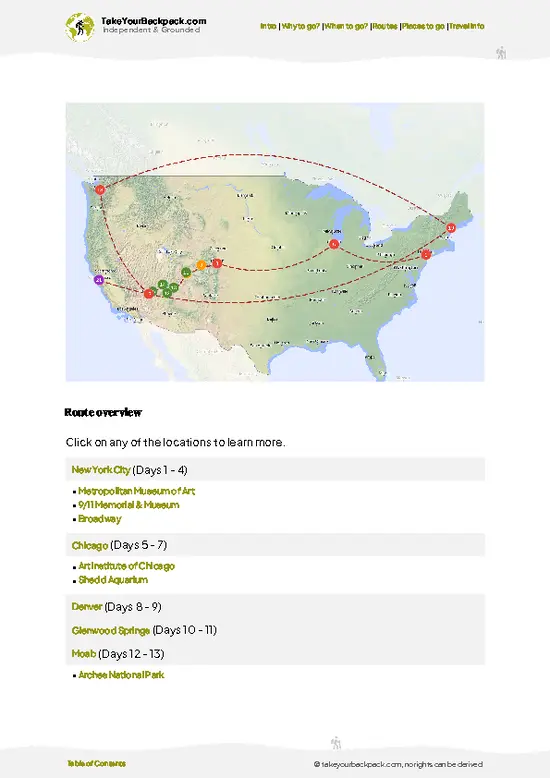
How Many Days a Multi-City Trip Needs: A trip linking several cities in the United States (USA) needs 14 to 28 days, and 21 is the figure where it stops feeling like a sprint. Anything shorter works only if you stay inside one region. Crossing the country in ten days mostly means getting to know airport terminals.
Which Regions Cluster Together: The Northeast corridor is the easiest group to link. Boston, New York, Philadelphia and Washington, DC sit along one rail line (Amtrak’s Northeast Regional and Acela), with 1.5 to 4 hours between neighbors. The West Coast forms a second cluster along the Pacific, where Seattle, Portland, San Francisco, Los Angeles and San Diego are separated by 3 to 12 hours by train, bus or car. The Southeast and Gulf (Atlanta, Nashville, New Orleans, Miami) link by … read more 👉
How Many Days a Multi-City Trip Needs: A trip linking several cities in the United States (USA) needs 14 to 28 days, and 21 is the figure where it stops feeling like a sprint. Anything shorter works only if you stay inside one region. Crossing the country in ten days mostly means getting to know airport terminals.
Which Regions Cluster Together: The Northeast corridor is the easiest group to link. Boston, New York, Philadelphia and Washington, DC sit along one rail line (Amtrak’s Northeast Regional and Acela), with 1.5 to 4 hours between neighbors. The West Coast forms a second cluster along the Pacific, where Seattle, Portland, San Francisco, Los Angeles and San Diego are separated by 3 to 12 hours by train, bus or car. The Southeast and Gulf (Atlanta, Nashville, New Orleans, Miami) link by short flights or long drives of 4 to 9 hours. Chicago and the Great Lakes pair with the Midwest by bus or train in 4 to 8 hours.
Direction of Travel and Time per Stop: Pick one region and finish it before crossing the country. If you do link two coasts, fly between hubs such as New York, Chicago, Denver or Los Angeles, where nonstop flights across the country run 5 to 6 hours and often cost US$100 to 300 one way when booked a few weeks ahead. Travel east to west if you arrive in jet-lagged confusion, since the sun then helps you rather than mocks you. Give big cities 3 to 4 nights, since each has enough neighborhoods, museums and food to eat your first two days without trying. Mid-size cities are fine with 2 nights. Add half a day for every airport transfer, because getting from a downtown hotel to a gate and through security often takes 3 to 4 hours door to door.
Getting Between Regions: Within regions, trains and intercity buses (Greyhound, FlixBus, Megabus) are the cheap options, often US$15 to 60 per leg. Between regions, budget flights usually beat anything on the ground, because distances are enormous and rail service thins out fast outside the Northeast. Car rental suits the West and Southeast, though parking in dense downtowns can cost US$30 to 60 a night, so rent on the way out rather than for the whole trip.
Planning Mistakes and Fixes: The classic mistake is treating the map like a European one. New York to Los Angeles is roughly 2,800 miles (4,500 km), and a road trip between them takes about 40 hours of pure driving. Another is cramming five cities into seven days and seeing each through a taxi window. Choose two or three per region instead. Many travelers also forget that some long train and bus legs leave at awkward hours and run late, so build in a buffer day before any flight home. Finally, booking nonrefundable flights early in a flexible trip locks you in. Book the long hauls, and leave the short hops open.

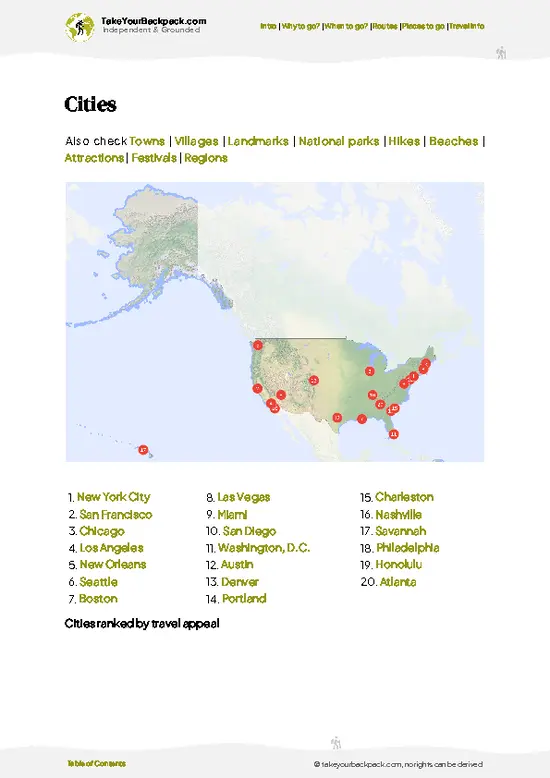
The ListThe Best cities of the USA

1 New York City

Statue ferry, Brooklyn Bridge, Met galleries, High Line

Cross the Brooklyn Bridge at sunrise, take the free Staten Island ferry past Liberty, and dive into dumplings on the Lower East Side.

United States - New York City

2 San Francisco

Golden Gate walk, Alcatraz audio tour, Mission murals, steep hills

Walk the Golden Gate Bridge before the fog lifts, then eat a burrito among the political murals of Mission District alleys.

United States - San Francisco

3 Chicago

Cloud Gate, river architecture cruise, Tiffany dome, elevated trains

Float down the Chicago River for a lesson in skyscraper design, then walk to the Bean and the Art Institute’s Hopper and Seurat.

United States - Chicago

4 Los Angeles

Griffith views, Getty hilltop, taco hall, Venice boardwalk

Ride the Metro downtown for tacos at Grand Central Market, then catch sunset from the Griffith Observatory above the basin.

United States - Los Angeles

5 New Orleans

Beignets, Frenchmen Street jazz, streetcar, French Quarter balconies

Start with beignets near Jackson Square, ride the oak-lined streetcar to the Garden District, and hear brass and jazz on Frenchmen Street.

6 Seattle

Pike Place fish, Space Needle, glass garden, Sound ferries

Watch salmon fly at Pike Place Market, ride a ferry to Bainbridge Island, and catch Rainier and the skyline from Kerry Park.

7 Boston

Red brick trail, Fenway tours, North End bakeries, harbor ferries

Trace the Freedom Trail across sixteen sites, then reward your feet with a cannoli in the narrow North End streets.

8 Las Vegas

Strip lights, Fremont canopy, neon boneyard, mob history

Walk the Strip after dark, watch the Bellagio fountains, then cross to Downtown for the Neon Museum and the Mob Museum.

United States - Las Vegas

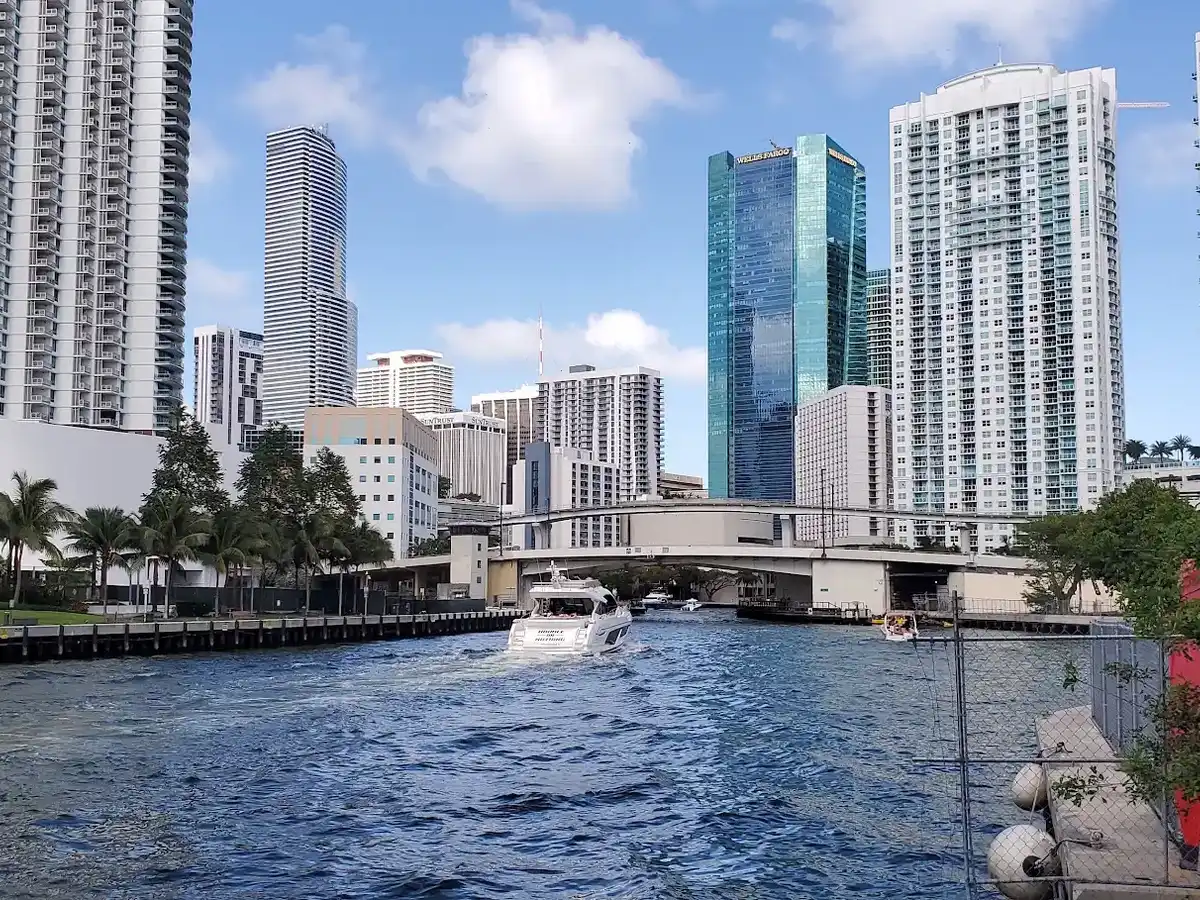
9 Miami

Art Deco pastels, Calle Ocho, Wynwood murals, Latin gateway

Stroll pastel Art Deco hotels at dawn, sip thimble-sized Cuban coffee in Little Havana, and browse the giant murals of Wynwood.

10 San Diego

Balboa museums, aircraft carrier, sea lion cove, border trolley

Tour a real aircraft carrier downtown, watch sea lions at La Jolla Cove, and watch the sun drop from Sunset Cliffs.

united-states-city-san-diego
© Google |

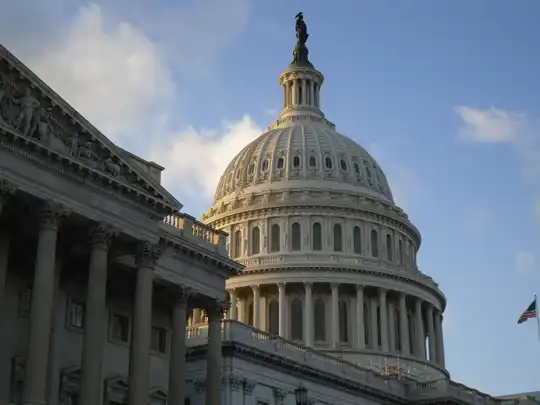
11 Washington, D.C.

Free museums, Lincoln Memorial, Capitol rotunda, Georgetown canal

Walk the National Mall at dusk, spend hours in free museums from Apollo 11 to African American history, and end at the Lincoln steps.

United States - Washington, D.C.

12 Austin

Bat flights, spring-fed pool, brisket lines, South Congress

Swim in a 68-degree spring pool, wait in line for smoked brisket, and watch bats pour from a bridge at dusk.

13 Denver

Sandstone amphitheater, Union Station, mile-high step, RiNo murals

Catch a concert or sunrise walk among red sandstone at Red Rocks, then explore mural-covered streets and a restored 1914 rail hall.

14 Portland

Powell’s bookstore, food cart pods, rose garden, light rail

Get lost in a city block of books at Powell’s, then eat Thai or Korean fried chicken from a food cart pod.

15 Charleston

Pastel Rainbow Row, Fort Sumter ferry, sweetgrass baskets, peninsula streets

Wander flat, oak-shaded streets past pastel houses, then take a ferry to the fort where the Civil War began.

16 Nashville

Ryman stage, songwriter rounds, hot chicken, Parthenon replica

Tour the Ryman Auditorium, hear songwriters perform in the round at the Bluebird Cafe, and brave a plate of fiery hot chicken.

17 Savannah

Moss-draped squares, Bonaventure oaks, Gothic spires, river cobblestones

Wander a grid of shaded squares on foot, then stroll live oaks and graves at Bonaventure Cemetery in the early morning quiet.

18 Philadelphia

Independence Hall, Liberty Bell, Reading Terminal, Rocky Steps

Stand where the Constitution was debated, then eat a roast pork sandwich at Reading Terminal Market and climb the Rocky Steps.

19 Honolulu

Surf lessons, crater hike, royal palace, plate lunch

Hike Diamond Head at opening, visit the USS Arizona Memorial, and tour the only royal palace on American soil.

20 Atlanta

Auburn Avenue, BeltLine murals, whale sharks, MARTA rail

Follow Martin Luther King Jr.’s Auburn Avenue footsteps, then cover the old rail loop on foot with stops at murals and food halls.

21 Memphis

Graceland, Sun Studio, Beale Street blues, dry-rub ribs

Stand at the microphone where Elvis and Johnny Cash recorded, then follow neon and live blues down Beale Street.

22 Salt Lake City

Temple Square, canyon trail, copper museum, Wasatch backdrop

Walk granite Temple Square at dusk, then slip into City Creek Canyon for a run or bike ride minutes from downtown.

23 San Antonio

Alamo limestone, River Walk, mission churches, Market Square

Visit the Alamo at opening, cycle or walk four 18th-century missions, then wander the sunken River Walk under cypress trees.

24 Minneapolis

Mill ruins, Stone Arch Bridge, sculpture garden, Purple Rain club

Cross the old railroad bridge above Saint Anthony Falls, then loop the lakes by bike and finish with a show at First Avenue.

25 Baltimore

Star-shaped fort, Fells Point pubs, crab cakes, Federal Hill

Visit the harbor fort behind the national anthem, then drift through waterfront pubs and a lunchtime market for fried chicken.

26 Pittsburgh

Warhol floors, three-river view, Strip District, Gothic tower

Ride the Duquesne Incline at dusk for the three-river view, then spend a Saturday morning grazing the stalls of the Strip District.

27 Richmond

River rocks, Tredegar ironworks, Carytown, Byrd Theatre

Sunbathe on granite slabs at Belle Isle, then browse vintage shops and catch a cheap movie at the 1928 Byrd Theatre.

28 Milwaukee

Winged museum roof, lakefront trails, Harley museum, brewery tours

Watch the Calatrava roof open over the lake, then ride the lakefront trail and sample beer on a Friday fish fry tour.

29 Kansas City

Burnt ends, jazz district, WWI memorial, Spanish-style Plaza

Order smoked ribs and burnt ends at a gas-station barbecue joint, then hear the story of jazz and the Negro Leagues in one district.

30 Anchorage

Coastal trail moose, Flattop summit, Alaska Native heritage, reindeer sausage

Pedal or walk the paved inlet path past moose and eagles, then climb Flattop at evening for city and water views.

31 Boise

Basque Block, Greenbelt, sandstone prison, geothermal capitol

Ride the riverside path between sights, then settle into a Basque lunch on a single block of restaurants and a pelota court.

32 Bend

Cinder cone, river floats, lava tube, brewpubs

Climb a volcanic butte at sunrise, drift the Deschutes on a tube, and finish with a pint at the original brewpub.

33 Chattanooga

Steep incline railway, Ruby Falls cave, river bridge, North Shore

Ride one of the steepest railways in the world up Lookout Mountain, then descend into a cave with a 145-foot waterfall.

34 Detroit

Motown studio, Rivera murals, Art Deco towers, riverfront Canada views

Stand in Studio A at the Motown Museum, then stand before Diego Rivera’s factory murals filling a whole courtyard.

35 Fairbanks

Aurora nights, hot springs, ice museum, gold rush cabins

Soak in a mineral pool on clear winter nights under the aurora, then browse relocated gold rush cabins and a bison mummy.

36 Jackson

Civil rights galleries, Medgar Evers house, Fondren murals, fried catfish

Spend an afternoon in eight galleries tracing Mississippi’s struggle for equality, then walk the murals and bars of Fondren.

37 Madison

Terrace sunsets, granite Capitol, Saturday cheese curds, lake paths

Sip a beer on the lakeside terrace, then circle the Capitol Square on Saturday for cheese curds, flowers and fresh bread.

38 Portsmouth

Foot ferry, Olde Towne, lightship, shipyard museum

Take the foot ferry across the Elizabeth River, then walk brick streets of old townhouses and board a retired floating lighthouse.

Think you know the USA?

Prove you’re a true local — uncover 28 lesser-known cities in the USA that locals tend to keep to themselves.
Loading the map 🌍

Expert viewWhat You Should Know

How many cities to visit: Four to six cities is the right number for a trip of two to four weeks. Going beyond that means spending more hours on planes, buses and in airport lines than in the places you flew to see. Fewer than four, and you miss the sharp regional contrasts that make the country interesting. Each extra city costs you roughly a day of transit time and US$50 to 200 in tickets, so the sixth stop is rarely worth what it takes out of the schedule. For a backpacker with a limited budget, the sweet spot is fewer cities and longer stays, because depth is cheaper than distance.

Choosing between kinds of cities: Dense, older cities in the Northeast and Midwest give the most for the least effort. You can drop the car, ride transit, walk between museums, and eat well for US$12 to 20 … read more 👉
How many cities to visit: Four to six cities is the right number for a trip of two to four weeks. Going beyond that means spending more hours on planes, buses and in airport lines than in the places you flew to see. Fewer than four, and you miss the sharp regional contrasts that make the country interesting. Each extra city costs you roughly a day of transit time and US$50 to 200 in tickets, so the sixth stop is rarely worth what it takes out of the schedule. For a backpacker with a limited budget, the sweet spot is fewer cities and longer stays, because depth is cheaper than distance.

Choosing between kinds of cities: Dense, older cities in the Northeast and Midwest give the most for the least effort. You can drop the car, ride transit, walk between museums, and eat well for US$12 to 20 a meal. Time cost is low, money cost is moderate in the Northeast and surprisingly low in the Midwest, and comfort is high. For first-timers, this is the easiest category.

Sprawling Western and Sun Belt cities give more outdoor access, better weather and more space, but they demand either a car or patience with buses. A rental car costs about US$40 to 80 a day plus gas and parking, so the real price of these cities is often double what the hostel bed suggests. They suit travelers who want hiking, beaches or road-trip flexibility, and they punish anyone hoping to wander on foot.

Southern cities offer music, food and history at lower prices than the coasts, with dorm beds often in the US$30 to 50 range. The heat costs you comfort in summer, so schedule them for spring or fall. For travelers focused on food and live music, these deliver the most per dollar.

Mountain and desert cities cost more in lodging during peak seasons and need a vehicle for most surroundings. They suit travelers who prioritize landscape over culture, and who accept that the next stop may be a six-hour drive away.

What it costs per day: A realistic daily budget for a backpacker is US$90 to 150 in most cities. The cheaper end means a hostel dorm at US$35 to 60, cheap eats and food trucks at US$20 to 35, and transit passes at US$3 to 15 a day. Expect US$150 to 250 a day in the priciest coastal cities, where dorms alone can hit US$70 or more, and where a basic private room rarely falls below US$120. Midwestern and some Southern cities often fall at the low end or a little below it.

Per visit, major museums charge roughly US$20 to 30 for adults, though many have free or pay-what-you-wish hours, and some city museums are free outright. Guided walking tours run from free (tip-based, with US$10 to 20 expected) to US$30 to 60 for paid specialty tours. Airport trains and buses cost US$2.50 to 15 depending on the city, while taxis and rideshares from the airport can cost US$40 to 80. City passes that bundle attractions pay off only if you plan to see four or more paid sights in a few days, so do the sums before buying.

Don't forget the extras. Sales tax gets added at the register, typically 4 to 10 percent, and tipping adds another 18 to 20 percent in restaurants and bars. A US$15 meal easily becomes US$20. Factor that in from day one rather than be surprised at every checkout.

Safety and local etiquette: Most visitors have trouble-free city trips, and the usual urban sense applies. Petty theft, such as phones snatched on transit or bags taken from parked cars, is the most common problem, so never leave belongings visible in a rental. Crime is concentrated in particular neighborhoods rather than spread evenly, and a quick check with your hostel or local staff on which areas to skip after dark is more useful than any national statistic. Late-night walks in unfamiliar districts are better replaced with a rideshare costing US$8 to 15.

Cultural rules are mostly about money and space. Tipping is not optional: 18 to 20 percent at sit-down restaurants, US$1 to 2 a drink at bars, and 15 to 20 percent for taxis and rideshares. Small talk is friendly but usually shallow, so a stranger saying come visit sometime is politeness, not an invitation. Smoking and drinking laws are stricter than many visitors expect. Open alcohol containers in public are illegal in most places, and the drinking age is 21 everywhere. Carry photo ID.

Healthcare deserves one more mention. An emergency room visit can run into the thousands of dollars, so travel insurance with solid medical coverage is a must, not a nice extra. For the money, it is the single most valuable purchase on the trip.

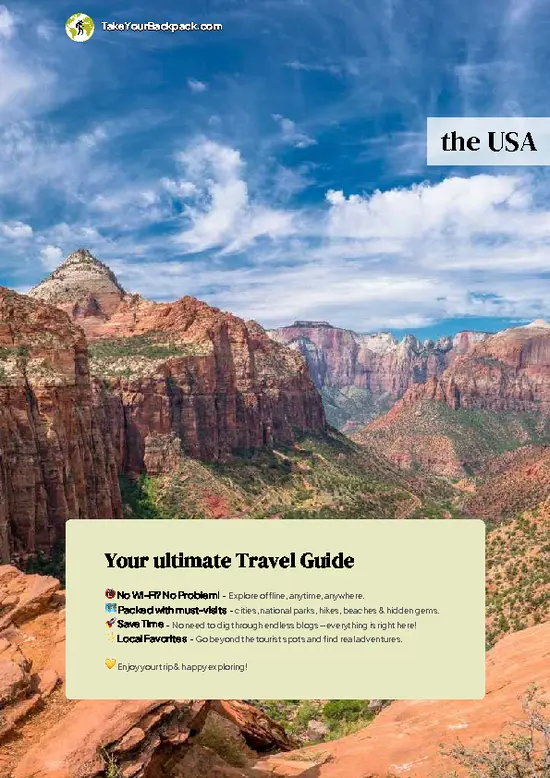
✈️ The backpacker research shortcutthe USA Travel Guide

An offline-friendly backpacking guide with optimized travel routes, ranked highlights, transport advice, and the best areas to stay.
example page 0 from our offline Travel Guide for United States
example page 1 from our offline Travel Guide for United States
example page 2 from our offline Travel Guide for United States
example page 3 from our offline Travel Guide for United States
example page 4 from our offline Travel Guide for United States
example page 5 from our offline Travel Guide for United States
example page 6 from our offline Travel Guide for United States
example page 7 from our offline Travel Guide for United States
The digital guide (451 pages) contains:
✅ 159 highlights, ranked by travel appeal
✅ Optimized 14, 21 & 30-day travel routes
✅ Cities, national parks, landmarks, beaches
✅ How to get around
✅ Offline-friendly for travel without Wi-Fi
👉 Click to see all 30+ guide features

📅 Plan smarter in minutes, not weeks
✅ Month by month travel advice
✅ Festivals & national holidays
✅ Budget expectations

🗺️ Go to the right places, skip the overrated ones
✅ Honest pros & cons of destinations
✅ Top hikes, parks & viewpoints
✅ Lesser-known places most travelers miss
✅ Clear “worth it vs skip it” guidance

🛏️ Travel smoothly without rookie mistakes
✅ Best areas to stay
✅ Transport systems explained simply
✅ Common scams & safety advice
✅ SIM cards, money & practical tips

🌍 Understand the country, not just visit it
✅ Culture & traditions
✅ Local customs
✅ Festivals worth planning around
✅ Traveler-friendly historical context
✅ Insights that make places more meaningful

📱 Built for real travel conditions
✅ Fully downloadable PDF
✅ Works completely offline
✅ Optimized for phone use
✅ Useful in remote areas & buses
✅ Everything in one place
Stop searching, start planning
Get instant access to your full guide. 30‑day money-back guarantee.
+ Add another guide for just

By proceeding you agree to our terms.
Sent to your inbox immediately after payment • 100% Secure Checkout
Best Backpacking Travel Advisor 2025 tourism awardBest Backpacking
Travel Advisor
2025
What others say about Take Your Backpack Guides:
⭐⭐⭐⭐⭐
Fantastic, amazing amount of information!
⭐⭐⭐⭐⭐
My goodness this is amazing, it's what I've been looking for hats off too you!
⭐⭐⭐⭐⭐
I think this is absolutely BRILLIANT
⭐⭐⭐⭐
Very complete and informative. It's still missing places, but I gotta to commend you
⭐⭐⭐⭐⭐
This is truly amazing, thank you, can't wait to explore it with my kids!
⭐⭐⭐⭐⭐
Awesome resource, thank you!
⭐⭐⭐⭐⭐
This is amazing! Can't wait to explore the ones I haven't seen
⭐⭐⭐⭐
I love this! Well done, great idea.
⭐⭐⭐⭐⭐
Thanks for taking the time to make this gem!
⭐⭐⭐⭐⭐
This might be the best website I've ever seen.
⭐⭐⭐⭐⭐
Congratulations, and thank you so much for your work; it's incredibly valuable.
⭐⭐⭐⭐
In all seriousness I think you did a great job pointing out the important spots
⭐⭐⭐⭐⭐
10/10 very good
⭐⭐⭐⭐⭐
As someone who's only just starting to visit regularly this is awesome, thank you.
⭐⭐⭐⭐
Thank you very much! I'm going to visit my dad, it's going to be very useful!
⭐⭐⭐⭐⭐
This is really cool! We'll be travelling for the first time and this definitely come in handy.
⭐⭐⭐⭐⭐
You are now our minister of culture, congratulations 👨‍💼
⭐⭐⭐⭐⭐
Just wanted to tell you that this is a pearl! Going to follow your recommendations.
⭐⭐⭐⭐⭐
This is so cool. I'll definitely be using the resource for my travels soon.
⭐⭐⭐⭐⭐
This is very impressive! Good work.
⭐⭐⭐⭐⭐
This is an amazing and informative site. Very well done!

🛏️ Where to stay?Top Areas to Stay

The United States has hostels in nearly every major city and many national park gateway towns, with dorm beds usually running US$35 to 70 a night and basic motel rooms from about US$70 to 120 away from the main tourist strips. In New York, the Lower East Side and Williamsburg put you steps from late-night bars but cost the most, while Harlem is cheaper and calmer with a longer subway ride; in San Francisco, Union Square is central but rough after dark where it borders the Tenderloin, and Fisherman’s Wharf feels safer yet very touristy. Elsewhere, most hostels cluster in Hollywood and Venice Beach in Los Angeles (both lively, both sketchy on side streets late at night), Wicker Park in Chicago … read more 👉
The United States has hostels in nearly every major city and many national park gateway towns, with dorm beds usually running US$35 to 70 a night and basic motel rooms from about US$70 to 120 away from the main tourist strips. In New York, the Lower East Side and Williamsburg put you steps from late-night bars but cost the most, while Harlem is cheaper and calmer with a longer subway ride; in San Francisco, Union Square is central but rough after dark where it borders the Tenderloin, and Fisherman’s Wharf feels safer yet very touristy. Elsewhere, most hostels cluster in Hollywood and Venice Beach in Los Angeles (both lively, both sketchy on side streets late at night), Wicker Park in Chicago (great bars, 20 minutes from the Loop by train) and the French Quarter and Marigny in New Orleans, where easy nightlife comes with street noise until the small hours.

If you enjoy meeting fellow travelers, consider choosing hostels with high ratings for atmosphere. On the other hand, if you prefer having your own space, a hotel might be a better option.

the USADiscover the Country

👋 Meet the founderWho’s Behind Take Your Backpack?

Johan, backpacker and founder of TakeYourBackpackHi, I’m Johan (Netherlands 🇳🇱), the creator of TakeYourBackpack. Over the past 3 decades, I’ve backpacked through 90+ countries across six continents, gaining extensive experience with independent travel, long-term trips, and overland routes.

This site is built on a combination of firsthand travel experience and carefully curated insights from other backpackers. Many guides are based on places I’ve personally visited, while others bring together tips, observations, and practical advice shared by trusted travelers I’ve met along the way.

The goal is to provide realistic, experience-driven guidance — not generic itineraries — so you can explore destinations with better context, clearer expectations, and more confidence.