×
Smithsonian National Museum of Natural History

the USA🇺🇸 | attractionsSmithsonian National Museum of Natural HistoryHope Diamond, fossil hall, butterfly pavilion | things to do and best time to go

Explore Museum of Modern ArtExplore Art Institute of Chicago

Backpacking in Smithsonian National Museum of Natural History
🌟 Highlightattraction ranked #10
By Johan Kruseman 🇳🇱 | Updated September 4, 2026

Let’s kill the myth right away: the Smithsonian National Museum of Natural History is not some quiet, contemplative temple for science nerds. It’s a full-throttle, kid-fueled, selfie-mobbed spectacle—especially on weekends and any day ending in “summer.” You’ll find it smack in the heart of Washington, D.C., on the National Mall, right where the USA puts its most iconic museums. Here’s the honest deal: if you’re backpacking the USA and want to see a dinosaur skeleton that could make your inner eight-year-old weep with joy, this place delivers. It’s free (yes, really), which is a unicorn-level rarity in a city that can bleed your wallet dry. But brace yourself for crowds that move like a school of caffeinated fish, and don’t expect much solitude. The vibe is more “field trip chaos” than “Indiana Jones discovery.” Still, the sheer scale—giant squid, Hope Diamond, ancient mummies—hits you with a sense of wonder that’s hard to fake.

Discover everything you want to know in the 📖 the USA Travel Guide.


Get your USA guide
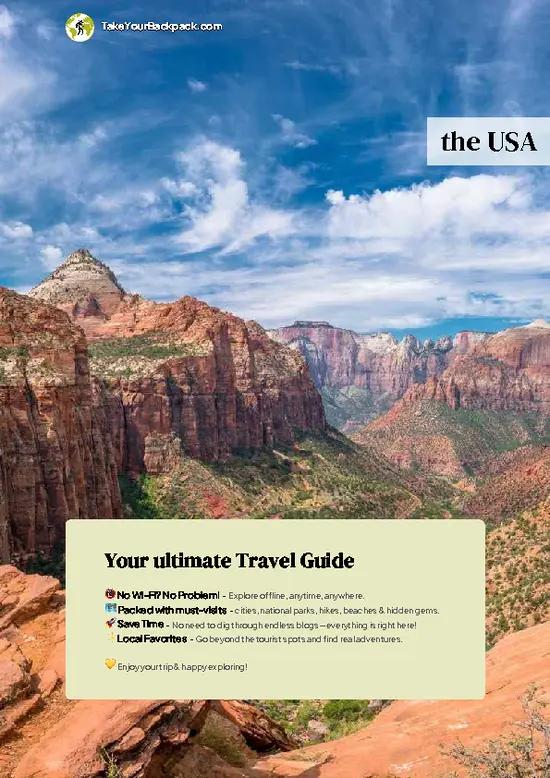
161 ranked highlights, routes & tips, works offline (586 pages)
Loading the map 🌍
CLICK TO FILTER
cities
towns
villages
landmarks
national parks
hikes
beaches
attractions
festivals
regions
SHOW COUNTRY’S BESTSHOW ALL

✨ Why go?
Ranked #10 attraction in the USA
Reasons people choose to visit here

The Smithsonian National Museum of Natural History in the USA is not just another stop on the tourist checklist—it’s a heavyweight in the world of museums. Sure, it’s crowded, especially during peak hours, and yes, the sheer size can overwhelm even the most seasoned backpacker. But here’s the kicker: this place is a vault of raw, unfiltered history and science that you won’t find replicated anywhere else. The iconic dinosaur skeletons and the dazzling Hope Diamond grab headlines, but the real magic lies in the layers beneath—millions of specimens, from ancient fossils to rare gems, each telling a story about the planet and humanity’s place on it.

Backpackers make time for this museum because it’s a milestone that connects you to the USA’s cultural and scientific heartbeat without costing … read more 👉
The Smithsonian National Museum of Natural History in the USA is not just another stop on the tourist checklist—it’s a heavyweight in the world of museums. Sure, it’s crowded, especially during peak hours, and yes, the sheer size can overwhelm even the most seasoned backpacker. But here’s the kicker: this place is a vault of raw, unfiltered history and science that you won’t find replicated anywhere else. The iconic dinosaur skeletons and the dazzling Hope Diamond grab headlines, but the real magic lies in the layers beneath—millions of specimens, from ancient fossils to rare gems, each telling a story about the planet and humanity’s place on it.

Backpackers make time for this museum because it’s a milestone that connects you to the USA’s cultural and scientific heartbeat without costing a dime. The effort-to-reward ratio is off the charts—navigating the crowds and the sprawling exhibits pays off with moments of genuine awe and insight. It’s a place where you can geek out, reflect on deep time, and feel part of a global story. If you’re threading through the USA, skipping this museum means missing a foundational chapter in understanding the world we live in.
Want to include Smithsonian National Museum of Natural History in your the USA route?
Create a personalized the USA itinerary that includes Smithsonian National Museum of Natural History and the places that fit your trip — based on your travel style, budget, and available time. Get your route in seconds.

Generate my trip

💡 HighlightsTop highlights of Smithsonian National Museum of Natural History

1. The Hope Diamond
Let’s cut through the hype: yes, it’s a blue diamond, and yes, it’s mobbed by camera-wielding crowds. But there’s a reason people elbow their way to the front. This 45.52-carat stone has survived revolutions, curses, and a parade of owners with more drama than a soap opera. The real magic isn’t just the sparkle—it’s the sense of standing inches from a rock that’s been the obsession of kings, thieves, and scientists for centuries. If you want to see the intersection of geology, history, and human greed, this is it.


2. The Hall of Fossils - Deep Time
Forget the dusty dinosaur bones of your childhood field trips. This hall is a full-on, immersive time machine. You’ll walk under a T. rex locked in a death pose with a triceratops, then zigzag past a mastodon that looks like … read more 👉
1. The Hope Diamond
Let’s cut through the hype: yes, it’s a blue diamond, and yes, it’s mobbed by camera-wielding crowds. But there’s a reason people elbow their way to the front. This 45.52-carat stone has survived revolutions, curses, and a parade of owners with more drama than a soap opera. The real magic isn’t just the sparkle—it’s the sense of standing inches from a rock that’s been the obsession of kings, thieves, and scientists for centuries. If you want to see the intersection of geology, history, and human greed, this is it.


2. The Hall of Fossils - Deep Time
Forget the dusty dinosaur bones of your childhood field trips. This hall is a full-on, immersive time machine. You’ll walk under a T. rex locked in a death pose with a triceratops, then zigzag past a mastodon that looks like it could still trample a Subaru. The exhibit doesn’t just show fossils—it tells the story of life’s wildest plot twists, from mass extinctions to the rise of mammals. The crowds are real, but so is the awe. If you’re even remotely interested in the story of life on Earth, this is the Smithsonian’s blockbuster.


3. The Insect Zoo
Here’s where the Instagrammers thin out. Most people breeze past, but if you want pure entertainment, stop and watch a tarantula feeding or try the live insect petting zoo. The staff are passionate, the bugs are bizarre, and you’ll leave with a new respect for the creatures that actually run the planet. It’s weird, it’s interactive, and it’s the opposite of sanitized museum fare. My personal favorite—nothing beats watching a roomful of adults squirm as a giant cockroach crawls across a handler’s arm.


4. The Sant Ocean Hall
This isn’t just a collection of seashells. You’ll walk beneath a 45-foot-long model of a North Atlantic right whale, then get face-to-face with a real giant squid (yes, the actual animal, not a model). The hall is a deep dive into the oceans’ mysteries, from glowing jellyfish to the science of climate change. It’s a rare place where you can feel the scale of the planet’s blue heart—and realize how little we actually know about it.


5. The Hall of Human Origins
Skip the selfie with the Neanderthal bust and actually read the displays. This hall pulls no punches about our species’ messy, improbable journey. You’ll see real hominid skulls, interactive evolution exhibits, and a timeline that puts your own existence into cosmic perspective. It’s humbling, a little existential, and—if you let it—life-affirming. The crowds are lighter here, and the payoff is huge if you’re willing to slow down and think.
Spotted a mistake or missing something? Contact us.

Things to do around Smithsonian National Museum of Natural History

Ratings based on Tripadvisor reviews. When you book through this link, you support our work at no extra cost to you.

🌤️ When to go?When to go for the best experience


  • Weather & Temperature: The Smithsonian National Museum of Natural History in the USA is indoors, so weather outside doesn’t affect your visit directly. However, Washington, D.C. summers (June to August) can be brutally hot and humid, hitting 30-35°C (86-95°F), making the air-conditioned museum a welcome refuge. Winters (December to February) are cold, around 0-8°C (32-46°F), but the museum stays cozy year-round.

  • Daylight Hours: Longer daylight in spring and summer (up to 15 hours in June) means you can explore the National Mall and nearby outdoor sites before or after your museum visit. Shorter winter days (around 9 hours in December) limit outdoor time but don’t impact the museum’s indoor experience.

  • Crowds: Peak crowds hit in summer and school holidays (July, August, and spring break
read more 👉

  • Weather & Temperature: The Smithsonian National Museum of Natural History in the USA is indoors, so weather outside doesn’t affect your visit directly. However, Washington, D.C. summers (June to August) can be brutally hot and humid, hitting 30-35°C (86-95°F), making the air-conditioned museum a welcome refuge. Winters (December to February) are cold, around 0-8°C (32-46°F), but the museum stays cozy year-round.

  • Daylight Hours: Longer daylight in spring and summer (up to 15 hours in June) means you can explore the National Mall and nearby outdoor sites before or after your museum visit. Shorter winter days (around 9 hours in December) limit outdoor time but don’t impact the museum’s indoor experience.

  • Crowds: Peak crowds hit in summer and school holidays (July, August, and spring break in March-April). Weekends are busiest year-round. If you want elbow room, aim for weekday mornings in late fall (October-November) or early spring (February-March).

  • Seasonal Activities: Special exhibits and events pop up sporadically, often aligning with school calendars. Winter holidays bring festive displays, while summer may feature family-friendly programs. Check schedules but don’t expect major price hikes.

  • Price Fluctuations: Admission is free, so no seasonal price worries here. Your main cost is time and managing crowds.


Pro-tip: Visit on a weekday morning in late fall or early spring to dodge crowds and enjoy a more intimate, focused experience without sweating the weather or waiting in lines.


source: climatestotravel.comJANJanuary: highly recommended for travelingFEBFebruary: highly recommended for travelingMARMarch: good for travelingAPRApril: good for travelingMAYMay: highly recommended for travelingJUNJune: highly recommended for travelingJULJuly: good for travelingAUGAugust: good for travelingSEPSeptember: highly recommended for travelingOCTOctober: excellent for travelingNOVNovember: excellent for travelingDECDecember: highly recommended for traveling
United States - Smithsonian National Museum of Natural History

✈️ The backpacker research shortcutthe USA Travel Guide

An offline-friendly backpacking guide with optimized travel routes, ranked highlights, transport advice, and the best areas to stay.
example page 0 from our offline Travel Guide for United States
example page 1 from our offline Travel Guide for United States
example page 2 from our offline Travel Guide for United States
example page 3 from our offline Travel Guide for United States
example page 4 from our offline Travel Guide for United States
example page 5 from our offline Travel Guide for United States
example page 6 from our offline Travel Guide for United States
example page 7 from our offline Travel Guide for United States
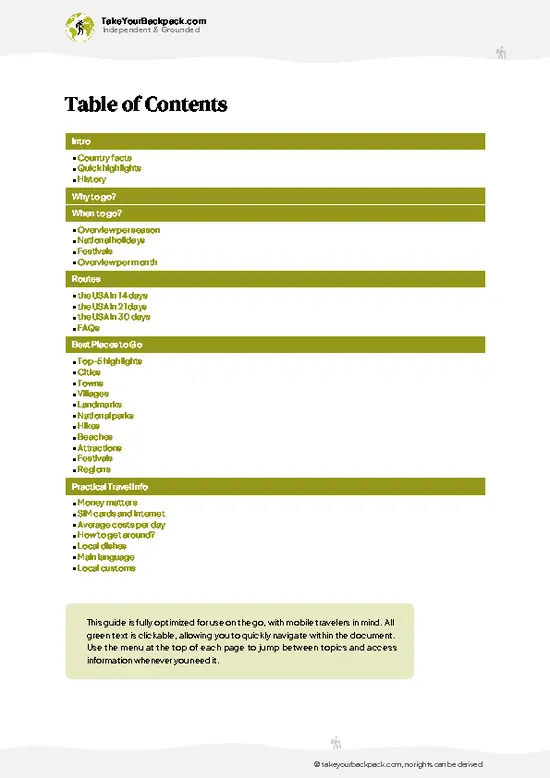
The digital guide (586 pages) contains:
161 highlights, ranked by travel appeal
Optimized 14, 21 & 30-day travel routes
Cities, national parks, landmarks, beaches
How to get around
Offline-friendly for travel without Wi-Fi
👉 Click to see all 30+ guide features

📅 Plan smarter in minutes, not weeks
Month by month travel advice
Festivals & national holidays
Budget expectations

🗺️ Go to the right places, skip the overrated ones
Honest pros & cons of destinations
Top hikes, parks & viewpoints
Lesser-known places most travelers miss
Clear “worth it vs skip it” guidance

🛏️ Travel smoothly without rookie mistakes
Best areas to stay
Transport systems explained simply
Common scams & safety advice
SIM cards, money & practical tips

🌍 Understand the country, not just visit it
Culture & traditions
Local customs
Festivals worth planning around
Traveler-friendly historical context
Insights that make places more meaningful

📱 Built for real travel conditions
Fully downloadable PDF
Works completely offline
Optimized for phone use
Useful in remote areas & buses
Everything in one place
Save weeks of stressful planning
Get instant access to your full guide. 30‑day money-back guarantee.
+ Add another guide for just US$7.80

By proceeding you agree to our terms.
Sent to your inbox immediately after payment • 100% Secure Checkout
Best Backpacking Travel Advisor 2025 tourism awardBest Backpacking
Travel Advisor
2025
What others say about Take Your Backpack Guides:
⭐⭐⭐⭐⭐
Fantastic, amazing amount of information!
⭐⭐⭐⭐⭐
My goodness this is amazing, it's what I've been looking for hats off too you!
⭐⭐⭐⭐⭐
I think this is absolutely BRILLIANT
⭐⭐⭐⭐
Very complete and informative. It's still missing places, but I gotta to commend you
⭐⭐⭐⭐⭐
This is truly amazing, thank you, can't wait to explore it with my kids!
⭐⭐⭐⭐⭐
Awesome resource, thank you!
⭐⭐⭐⭐⭐
This is amazing! Can't wait to explore the ones I haven't seen
⭐⭐⭐⭐
I love this! Well done, great idea.
⭐⭐⭐⭐⭐
Thanks for taking the time to make this gem!
⭐⭐⭐⭐⭐
This might be the best website I've ever seen.
⭐⭐⭐⭐⭐
Congratulations, and thank you so much for your work; it's incredibly valuable.
⭐⭐⭐⭐
In all seriousness I think you did a great job pointing out the important spots
⭐⭐⭐⭐⭐
10/10 very good
⭐⭐⭐⭐⭐
As someone who's only just starting to visit regularly this is awesome, thank you.
⭐⭐⭐⭐
Thank you very much! I'm going to visit my dad, it's going to be very useful!
⭐⭐⭐⭐⭐
This is really cool! We'll be travelling for the first time and this definitely come in handy.
⭐⭐⭐⭐⭐
You are now our minister of culture, congratulations 👨‍💼
⭐⭐⭐⭐⭐
Just wanted to tell you that this is a pearl! Going to follow your recommendations.
⭐⭐⭐⭐⭐
This is so cool. I'll definitely be using the resource for my travels soon.
⭐⭐⭐⭐⭐
This is very impressive! Good work.
⭐⭐⭐⭐⭐
This is an amazing and informative site. Very well done!

🛏️ Where to stay?Where staying makes the most sense

If you’re backpacking to see the Smithsonian National Museum of Natural History in the USA, brace yourself: the National Mall area is packed. Tourists swarm here daily, especially in peak seasons. It’s not a quiet retreat. The crowds can be relentless, and prices for anything within a stone’s throw spike accordingly. But here’s the real talk—staying right next to the museum isn’t the only way to soak in the experience.

Look just a bit beyond the Mall, and you’ll find neighborhoods that actually get what backpackers need: safety, social vibes, and budget-friendly options. Dupont Circle is a prime … read more 👉
If you’re backpacking to see the Smithsonian National Museum of Natural History in the USA, brace yourself: the National Mall area is packed. Tourists swarm here daily, especially in peak seasons. It’s not a quiet retreat. The crowds can be relentless, and prices for anything within a stone’s throw spike accordingly. But here’s the real talk—staying right next to the museum isn’t the only way to soak in the experience.

Look just a bit beyond the Mall, and you’ll find neighborhoods that actually get what backpackers need: safety, social vibes, and budget-friendly options. Dupont Circle is a prime example. It’s a lively, walkable area with a mix of locals and travelers, offering a genuine slice of DC life without the tourist trap feel. You’ll find plenty of cafés and bars where striking up a conversation isn’t a chore. Plus, it’s just a quick Metro ride or a 20-minute walk to the museum.

Another solid pick is Capitol Hill. It’s quieter but still buzzing with character. The streets are lined with row houses and local markets, giving you a real sense of community. It’s safe, and you’ll meet other backpackers who’ve figured out the balance between convenience and cost.

Bottom line: don’t get suckered into paying a premium just to be steps from the museum. Venture a little further out. You’ll save money, dodge the crush, and find the kind of authentic, social atmosphere that makes travel worth it.

👛 Costs (as of 4 September 2026)Money, prices, and spending tips

Admission to the Smithsonian National Museum of Natural History is free. However, some special exhibitions or events may have separate ticket fees, typically ranging from $10 to $25. Additional costs may include parking fees or guided tour fees if chosen.
⚠️ Prices can change and everyone travels differently, so take this as a rough guide. Hope it helps you plan your adventure!

FAQFrequently asked questions about Smithsonian National Museum of Natural History

3 to 4 hours is sufficient to explore the main exhibits of the Smithsonian National Museum of Natural History. If you want to see everything in detail, including temporary exhibits, plan for a full day. The museum is large, with over 126 million specimens and artifacts.
Yes, the Smithsonian National Museum of Natural History is worth the entrance fee because it is free to enter. It offers world-class exhibits on natural history, including the Hope Diamond and extensive dinosaur fossils. The educational value and unique collections make it a must-visit in Washington, D.C.
The museum is located on the National Mall in Washington, D.C., at 10th Street and Constitution Avenue NW. The closest Metro stations are Smithsonian (Blue, Orange, and Silver Lines) and Federal Triangle (Blue and Orange Lines), both within a 5-minute walk. It is also accessible by multiple bus routes and has nearby bike racks.
⚠️ Things can change over time, so always validate details locally before you go.

Other American attractions near Smithsonian National Museum of Natural History

Explore more nearby:


💡 Not sure where to go next?
Create a personalized itinerary for the USA including Smithsonian National Museum of Natural History and the places that fit your trip.

Generate my itinerary

👉 Discover all attractions

Or checkout all the USA has to offer (think cities, towns, villages, national parks, hikes, beaches, festivals)
Country photo of the USA

We 💚 feedbackParting advice and final tips

The Smithsonian National Museum of Natural History in the USA is a heavyweight in the world of museums—its collection is jaw-dropping, from giant dinosaur skeletons to dazzling gems that actually glow under UV light. But brace yourself: it’s a magnet for crowds, especially on weekends, which can turn your awe into a shoulder-to-shoulder shuffle. Still, if you carve out time early or late in the day, the sheer scale and detail here make it a rare, mind-expanding stop worth the hustle.

✈️ When did I visit the USA?
In January 2023 I visited New York. Many years before, before digital cameras existed, I discovered most of the national parks in the West.

✍️ Help improve this page!
The information on this page is based on my own backpacking experience in the USA, supplemented with up-to-date research and feedback from other travelers. Travel details can change, so if you notice anything outdated or incomplete, feel free to let me know.


🙋‍♂️ Give feedback

👋 Meet the founderWho’s Behind Take Your Backpack?

Johan, backpacker and founder of TakeYourBackpackHi, I’m Johan (Netherlands 🇳🇱), the creator of TakeYourBackpack. Over the past decade, I’ve backpacked through 80+ countries across six continents, gaining extensive experience with independent travel, long-term trips, and overland routes.

This site is built on a combination of firsthand travel experience and carefully curated insights from other backpackers. Many guides are based on places I’ve personally visited, while others bring together tips, observations, and practical advice shared by trusted travelers I’ve met along the way.

The goal is to provide realistic, experience-driven guidance — not generic itineraries — so you can explore destinations with better context, clearer expectations, and more confidence.

Get full USA guide •
Instant download • 161 highlights • Full Offline guide