×
National Air and Space Museum

the USA🇺🇸 | attractionsNational Air and Space MuseumWright Flyer, Apollo capsule, Spirit of St. Louis, free timed passes | things to do and best time to go

Explore Getty CenterExplore San Diego Zoo

Backpacking in National Air and Space Museum
🏆 Top pickattraction ranked #4
By Johan Kruseman 🇳🇱 | Updated October 20, 2026

The Smithsonian’s flagship air and space museum is free, and its timed-entry passes are what you actually have to plan for. The National Air and Space Museum sits on the National Mall in Washington, D.C., the capital of the United States, a short walk from the Capitol. Passes are free because the Smithsonian is publicly funded, and they exist because the building was partly renovated and capacity is limited, so book online a few days ahead instead of hoping at the door. I took the Metro to L’Enfant Plaza, followed the wrong exit signs, and ended up asking a man walking a very patient dog, who pointed me across the grass without looking up. Go early, since school groups arrive by mid-morning, and skip the pricey cafeteria for a bench outside. Inside, the 1903 Wright Flyer hangs overhead, strangely small and made of cloth and spruce.

Discover everything you want to know in the 📖 the USA Travel Guide.


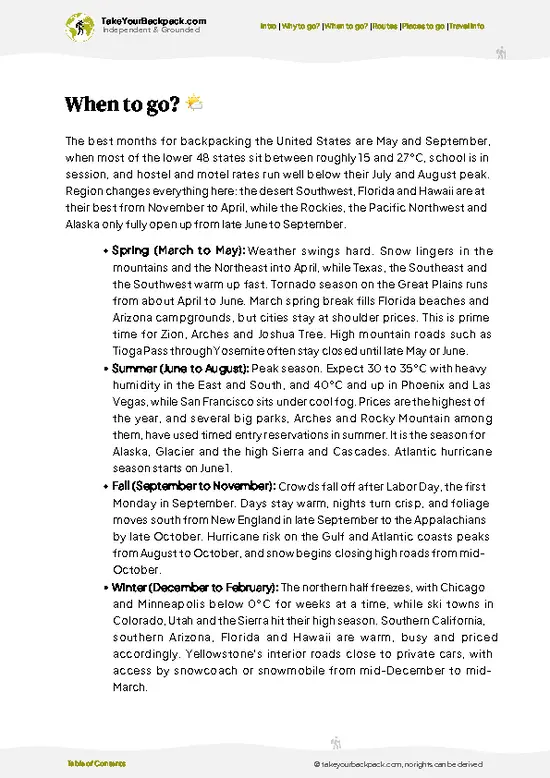
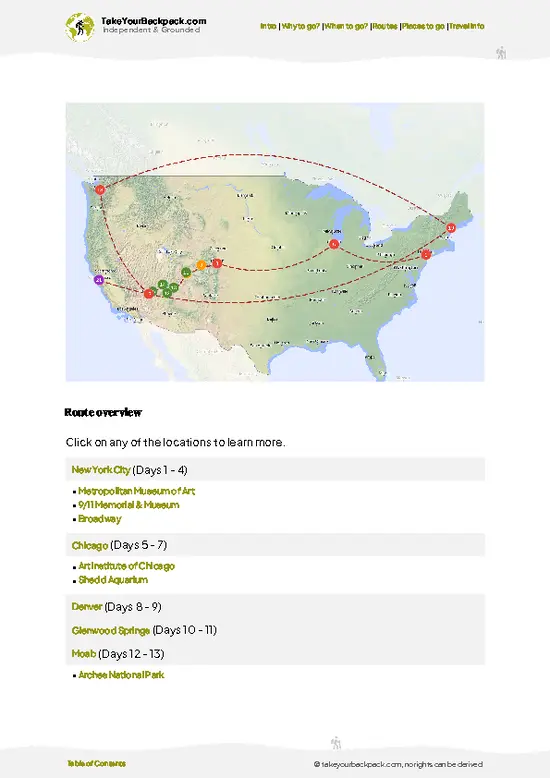
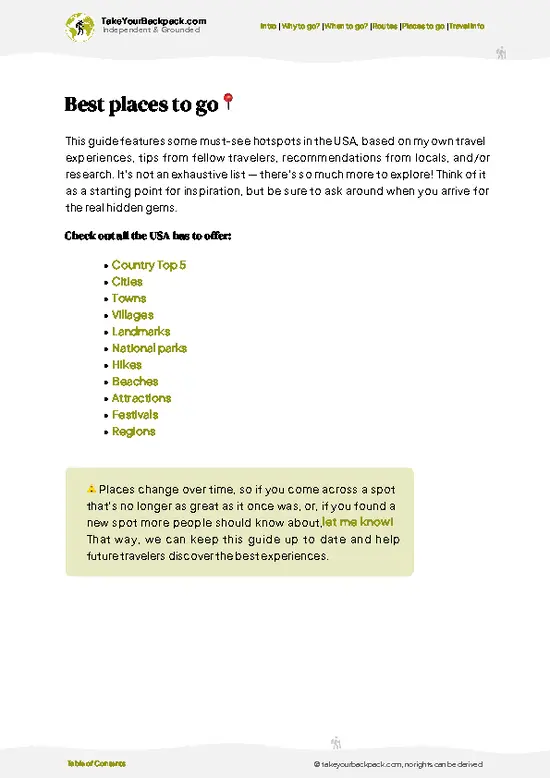
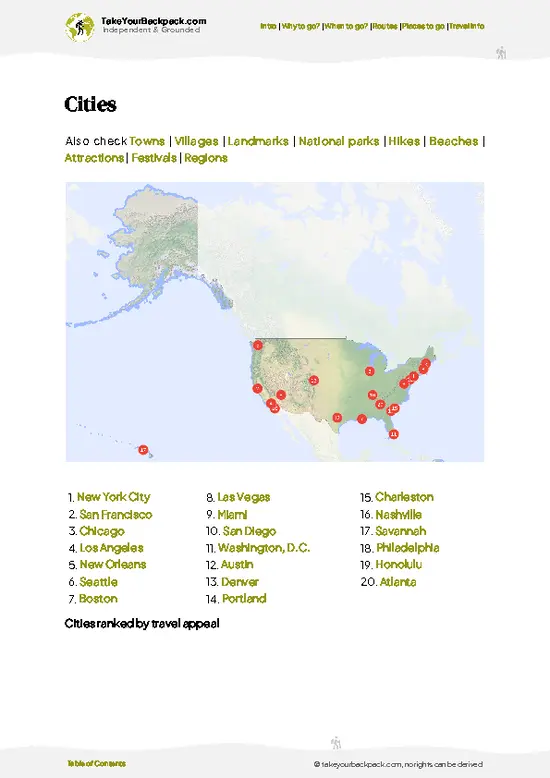
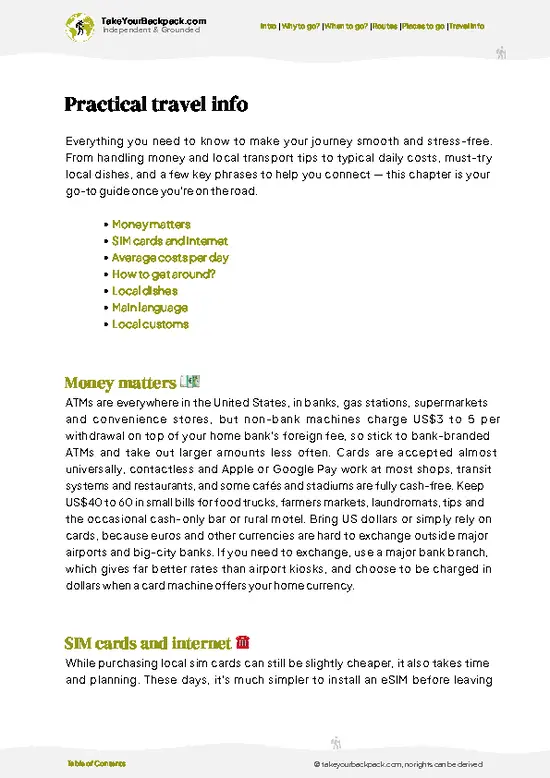
example page 0 from our offline Travel Guide for United States
example page 1 from our offline Travel Guide for United States
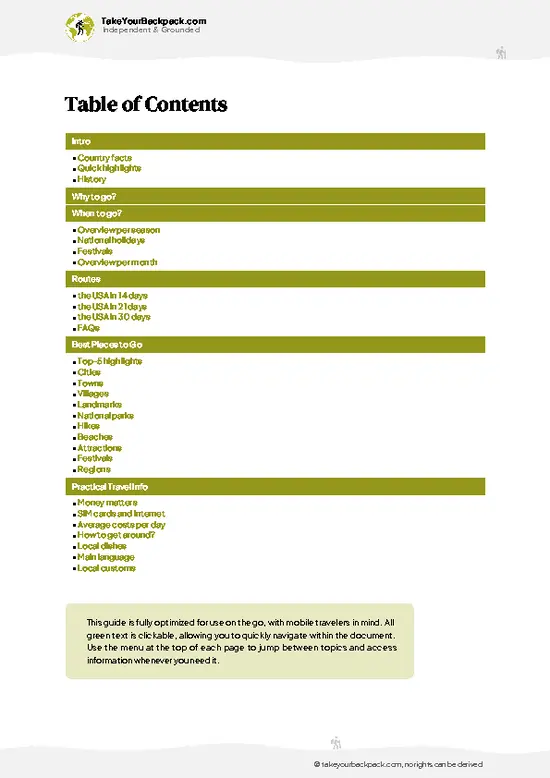
example page 2 from our offline Travel Guide for United States
example page 3 from our offline Travel Guide for United States
example page 4 from our offline Travel Guide for United States
example page 5 from our offline Travel Guide for United States
example page 6 from our offline Travel Guide for United States
example page 7 from our offline Travel Guide for United States
Loading the map 🌍
CLICK TO FILTER
cities
towns
villages
landmarks
national parks
hikes
beaches
attractions
festivals
regions
SHOW COUNTRY’S BESTSHOW ALL

✨ Why go?
Ranked #4 attraction in the USA
Why visitors keep coming back

National Air and Space Museum holds the objects that other museums only show in photographs, and that is the case for going. The 1903 Wright Flyer is the actual aircraft from Kitty Hawk, and the Apollo 11 command module Columbia is the capsule that carried three men home from the Moon. Standing within a few feet of scorched metal that really made the trip changes how you think about the footage.

The second reason is the milestone factor on a United States route. Washington, D.C. is a common entry or exit point, and this museum is the most visited stop on the National Mall, so it anchors a free day of museum-hopping along the same lawn. Admission costs nothing, which makes it easy to spend two hours or six without guilt. Aviation history here runs from wood-and-wire gliders to jet fighters … read more 👉
National Air and Space Museum holds the objects that other museums only show in photographs, and that is the case for going. The 1903 Wright Flyer is the actual aircraft from Kitty Hawk, and the Apollo 11 command module Columbia is the capsule that carried three men home from the Moon. Standing within a few feet of scorched metal that really made the trip changes how you think about the footage.

The second reason is the milestone factor on a United States route. Washington, D.C. is a common entry or exit point, and this museum is the most visited stop on the National Mall, so it anchors a free day of museum-hopping along the same lawn. Admission costs nothing, which makes it easy to spend two hours or six without guilt. Aviation history here runs from wood-and-wire gliders to jet fighters and probes, so you can follow the whole arc in one building without needing any background in aerospace.

💡 HighlightsMust-see experiences and standout moments

  1. 1903 Wright Flyer: The original powered aircraft that flew at Kitty Hawk, displayed in the Wright Brothers gallery. It looks fragile enough to make modern flying feel like a miracle.
  2. Apollo 11 Command Module Columbia: The capsule that returned the first Moon landing crew to Earth, with its heat-darkened exterior still visible.
  3. Spirit of St. Louis: Charles Lindbergh’s single-engine plane from his 1927 solo Atlantic crossing, hanging in the main hall with a surprisingly tiny cockpit.
  4. Bell X-1 Glamorous Glennis: The orange rocket plane Chuck Yeager flew past the speed of sound in 1947.
  5. Space Shuttle Discovery’s story at the Udvar-Hazy Center: Discovery itself lives at the museum’s companion hangar in Virginia, while the Mall building covers the wider shuttle era through artifacts and models.
  6. Moon
… read more 👉
  1. 1903 Wright Flyer: The original powered aircraft that flew at Kitty Hawk, displayed in the Wright Brothers gallery. It looks fragile enough to make modern flying feel like a miracle.
  2. Apollo 11 Command Module Columbia: The capsule that returned the first Moon landing crew to Earth, with its heat-darkened exterior still visible.
  3. Spirit of St. Louis: Charles Lindbergh’s single-engine plane from his 1927 solo Atlantic crossing, hanging in the main hall with a surprisingly tiny cockpit.
  4. Bell X-1 Glamorous Glennis: The orange rocket plane Chuck Yeager flew past the speed of sound in 1947.
  5. Space Shuttle Discovery’s story at the Udvar-Hazy Center: Discovery itself lives at the museum’s companion hangar in Virginia, while the Mall building covers the wider shuttle era through artifacts and models.
  6. Moon Rock: A lunar sample from the Apollo missions that visitors can touch, a small dark piece of another world.
  7. Destination Moon gallery: Exhibits on the Apollo program, including spacesuits and equipment that show how crowded and improvised the missions were.
  8. Albert Einstein Planetarium: A domed theater with shows on the universe, a cool dark break between galleries.
The Wright Flyer and the Spirit of St. Louis pair well in one morning, since the two flights sit a quarter century apart and the galleries are close together.
Spotted a mistake or missing something? Contact us.

Things to do around National Air and Space Museum

Ratings based on Tripadvisor reviews. When you book through this link, you support our work at no extra cost to you.

🌤️ When to go?Choosing the right time of year

  • Weekday Mornings, Any Season: The museum on the National Mall opens at 10 a.m., and the first two hours before school groups fill the galleries are the quietest.
  • Spring (March to May): Highs run 15 to 25°C (59 to 77°F). Cherry blossom season in late March and early April brings the heaviest crowds and the highest hotel rates in town.
  • Summer (June to August): Expect 28 to 33°C (82 to 91°F) with thick humidity. Daylight lasts about 14 hours, and families push the galleries to their busiest. Indoor air conditioning is the draw.
  • Fall (September to November): Highs of 14 to 26°C (57 to 79°F) make the walk between Smithsonian museums comfortable, and crowds thin after school resumes.
  • Winter (December to February): Highs of 3 to 8°C (37 to 46°F) and about 9 hours of daylight. Lines are short and rooms
… read more 👉
  • Weekday Mornings, Any Season: The museum on the National Mall opens at 10 a.m., and the first two hours before school groups fill the galleries are the quietest.
  • Spring (March to May): Highs run 15 to 25°C (59 to 77°F). Cherry blossom season in late March and early April brings the heaviest crowds and the highest hotel rates in town.
  • Summer (June to August): Expect 28 to 33°C (82 to 91°F) with thick humidity. Daylight lasts about 14 hours, and families push the galleries to their busiest. Indoor air conditioning is the draw.
  • Fall (September to November): Highs of 14 to 26°C (57 to 79°F) make the walk between Smithsonian museums comfortable, and crowds thin after school resumes.
  • Winter (December to February): Highs of 3 to 8°C (37 to 46°F) and about 9 hours of daylight. Lines are short and rooms are cheapest, except around the holidays.
Book timed entry passes a few days ahead for any visit between March and August.


source: climatestotravel.comJANJanuary: good for travelingFEBFebruary: good for travelingMARMarch: highly recommended for travelingAPRApril: excellent for travelingMAYMay: highly recommended for travelingJUNJune: good for travelingJULJuly: fair for travelingAUGAugust: fair for travelingSEPSeptember: good for travelingOCTOctober: excellent for travelingNOVNovember: highly recommended for travelingDECDecember: good for traveling
United States - National Air and Space Museum

✈️ The backpacker research shortcutthe USA Travel Guide

An offline-friendly backpacking guide with optimized travel routes, ranked highlights, transport advice, and the best areas to stay.
example page 0 from our offline Travel Guide for United States
example page 1 from our offline Travel Guide for United States
example page 2 from our offline Travel Guide for United States
example page 3 from our offline Travel Guide for United States
example page 4 from our offline Travel Guide for United States
example page 5 from our offline Travel Guide for United States
example page 6 from our offline Travel Guide for United States
example page 7 from our offline Travel Guide for United States
The digital guide (582 pages) contains:
✅ 159 highlights, ranked by travel appeal
✅ Optimized 14, 21 & 30-day travel routes
✅ Cities, national parks, landmarks, beaches
✅ How to get around
✅ Offline-friendly for travel without Wi-Fi
👉 Click to see all 30+ guide features

📅 Plan smarter in minutes, not weeks
✅ Month by month travel advice
✅ Festivals & national holidays
✅ Budget expectations

🗺️ Go to the right places, skip the overrated ones
✅ Honest pros & cons of destinations
✅ Top hikes, parks & viewpoints
✅ Lesser-known places most travelers miss
✅ Clear “worth it vs skip it” guidance

🛏️ Travel smoothly without rookie mistakes
✅ Best areas to stay
✅ Transport systems explained simply
✅ Common scams & safety advice
✅ SIM cards, money & practical tips

🌍 Understand the country, not just visit it
✅ Culture & traditions
✅ Local customs
✅ Festivals worth planning around
✅ Traveler-friendly historical context
✅ Insights that make places more meaningful

📱 Built for real travel conditions
✅ Fully downloadable PDF
✅ Works completely offline
✅ Optimized for phone use
✅ Useful in remote areas & buses
✅ Everything in one place
Stop searching, start planning
Get instant access to your full guide. 30‑day money-back guarantee.
+ Add another guide for just

By proceeding you agree to our terms.
Sent to your inbox immediately after payment • 100% Secure Checkout
Best Backpacking Travel Advisor 2025 tourism awardBest Backpacking
Travel Advisor
2025
What others say about Take Your Backpack Guides:
⭐⭐⭐⭐⭐
Fantastic, amazing amount of information!
⭐⭐⭐⭐⭐
My goodness this is amazing, it's what I've been looking for hats off too you!
⭐⭐⭐⭐⭐
I think this is absolutely BRILLIANT
⭐⭐⭐⭐
Very complete and informative. It's still missing places, but I gotta to commend you
⭐⭐⭐⭐⭐
This is truly amazing, thank you, can't wait to explore it with my kids!
⭐⭐⭐⭐⭐
Awesome resource, thank you!
⭐⭐⭐⭐⭐
This is amazing! Can't wait to explore the ones I haven't seen
⭐⭐⭐⭐
I love this! Well done, great idea.
⭐⭐⭐⭐⭐
Thanks for taking the time to make this gem!
⭐⭐⭐⭐⭐
This might be the best website I've ever seen.
⭐⭐⭐⭐⭐
Congratulations, and thank you so much for your work; it's incredibly valuable.
⭐⭐⭐⭐
In all seriousness I think you did a great job pointing out the important spots
⭐⭐⭐⭐⭐
10/10 very good
⭐⭐⭐⭐⭐
As someone who's only just starting to visit regularly this is awesome, thank you.
⭐⭐⭐⭐
Thank you very much! I'm going to visit my dad, it's going to be very useful!
⭐⭐⭐⭐⭐
This is really cool! We'll be travelling for the first time and this definitely come in handy.
⭐⭐⭐⭐⭐
You are now our minister of culture, congratulations 👨‍💼
⭐⭐⭐⭐⭐
Just wanted to tell you that this is a pearl! Going to follow your recommendations.
⭐⭐⭐⭐⭐
This is so cool. I'll definitely be using the resource for my travels soon.
⭐⭐⭐⭐⭐
This is very impressive! Good work.
⭐⭐⭐⭐⭐
This is an amazing and informative site. Very well done!

🛏️ Where to stay?Best areas and accommodation options

Capitol Hill is the most practical base, because the museum sits on the National Mall's south edge, roughly a 10 to 15 minute walk from the Eastern Market area. It is residential and safe in the evening along its main streets, with cafes, pubs and cheap eats, and a few budget guesthouses and hostel-style options.

Downtown and Penn Quarter, about 20 minutes' walk north, offer the largest concentration of hostels. They put you near Metro Center and Gallery Place, where Red, Blue, Orange and Green line trains meet, and the area has a lively social scene with plenty of bars and food halls. It stays … read more 👉
Capitol Hill is the most practical base, because the museum sits on the National Mall's south edge, roughly a 10 to 15 minute walk from the Eastern Market area. It is residential and safe in the evening along its main streets, with cafes, pubs and cheap eats, and a few budget guesthouses and hostel-style options.

Downtown and Penn Quarter, about 20 minutes' walk north, offer the largest concentration of hostels. They put you near Metro Center and Gallery Place, where Red, Blue, Orange and Green line trains meet, and the area has a lively social scene with plenty of bars and food halls. It stays busy after dark, which adds to the sense of safety, though it gets noisy on event nights.

Dupont Circle, a Red Line ride away, is the choice for solo travelers who want a younger crowd, bookshops, coffee spots and easy conversation in common rooms. Rates there are a bit lower than in the Mall's immediate surroundings.

Skip the lodging directly on the Mall. There is almost none, and what exists is expensive. Staying near any Metro station keeps your costs and commute low.

👛 Costs (as of 20 October 2026)Money, prices, and spending tips

A day at the National Air and Space Museum costs roughly US$72 to 131 for a backpacker, and the museum itself is free. The table below breaks down what a typical day looks like.
CategoryBudget RangeLocal Reality
EntryUS$0General admission is free. Timed entry passes are free but may need reserving online.
Planetarium or IMAXUS$10 to 15Shows in the Lockheed Martin IMAX theater and planetarium are ticketed separately.
Flight simulatorsUS$10 to 15Optional paid rides on site.
Dorm bed (high season)US$45 to 70Downtown hostels run higher in cherry blossom season and summer.
FoodUS$15 to 25Museum cafeteria meals are pricey, so bring a snack. Food trucks along the Mall and nearby delis are cheaper.
Local transportUS$2 to 6Metro fares vary by distance and time, and L’Enfant Plaza is the closest station. Walking
… read more 👉
A day at the National Air and Space Museum costs roughly US$72 to 131 for a backpacker, and the museum itself is free. The table below breaks down what a typical day looks like.
CategoryBudget RangeLocal Reality
EntryUS$0General admission is free. Timed entry passes are free but may need reserving online.
Planetarium or IMAXUS$10 to 15Shows in the Lockheed Martin IMAX theater and planetarium are ticketed separately.
Flight simulatorsUS$10 to 15Optional paid rides on site.
Dorm bed (high season)US$45 to 70Downtown hostels run higher in cherry blossom season and summer.
FoodUS$15 to 25Museum cafeteria meals are pricey, so bring a snack. Food trucks along the Mall and nearby delis are cheaper.
Local transportUS$2 to 6Metro fares vary by distance and time, and L’Enfant Plaza is the closest station. Walking works for the rest.
Total Daily BudgetUS$72 to 131Per person, per day, in high season.


source: airandspace.si.edu
⚠️ Prices can change and everyone travels differently, so take this as a rough guide. Hope it helps you plan your adventure!

FAQTraveler FAQ

Plan on 3 to 4 hours at the National Air and Space Museum for the highlights, or a full day if you add a planetarium show. The galleries include the Wright Flyer, the Apollo 11 command module and the Space Race exhibits. Arrive at 10 a.m. opening to see them before crowds peak.
The National Air and Space Museum is worth visiting precisely because general admission costs US$0. Timed entry passes are free, and you only pay for extras like the planetarium or IMAX, usually US$10 to 15. Even skipping those, the main galleries easily fill half a day.
The National Air and Space Museum sits on the National Mall at Independence Avenue and 6th Street SW. Take the Metro to L’Enfant Plaza (Blue, Orange, Silver, Green and Yellow lines), then walk about 5 minutes. From Union Station it is roughly a 25 minute walk, and rides on local buses cost about US$2.
⚠️ Things can change over time, so always validate details locally before you go.

Other American attractions near National Air and Space Museum

Explore more nearby:


💡 Not sure where to go next?
Create a personalized itinerary for the USA including National Air and Space Museum and the places that fit your trip.

Generate my itinerary

👉 Discover all attractions

Or checkout all the USA has to offer (think cities, towns, villages, national parks, hikes, beaches, festivals)
Country photo of the USA

We 💚 feedbackParting advice and final tips

National Air and Space Museum works best as a morning stop before you cross the grass to the other free Smithsonian museums, such as Natural History or American History. I would pair it with the companion hangar in Virginia only if you love big aircraft, and otherwise keep the day on the Mall.

✈️ When did I visit the USA?
In January 2023 I visited New York. Many years before, before digital cameras existed, I discovered most of the national parks in the West.

✍️ Help improve this page!
The information on this page is based on my own backpacking experience in the USA, supplemented with up-to-date research and feedback from other travelers. Travel details can change, so if you notice anything outdated or incomplete, feel free to let me know.


🙋‍♂️ Give feedback

👋 Meet the founderWho’s Behind Take Your Backpack?

Johan, backpacker and founder of TakeYourBackpackHi, I’m Johan (Netherlands 🇳🇱), the creator of TakeYourBackpack. Over the past 3 decades, I’ve backpacked through 90+ countries across six continents, gaining extensive experience with independent travel, long-term trips, and overland routes.

This site is built on a combination of firsthand travel experience and carefully curated insights from other backpackers. Many guides are based on places I’ve personally visited, while others bring together tips, observations, and practical advice shared by trusted travelers I’ve met along the way.

The goal is to provide realistic, experience-driven guidance — not generic itineraries — so you can explore destinations with better context, clearer expectations, and more confidence.