×

Uruguay🇺🇾 | national parksLaguna de Rochacoastal lagoon, migratory birds, fishing villages | things to do and best time to go

Explore Santa TeresaExplore Valle del Lunarejo

Backpacking in Laguna de Rocha
🏆 Top picknational park ranked #3
By Johan Kruseman 🇳🇱 | Updated May 19, 2026

Wind pushes the lagoon’s brackish smell across the sand as a fisherman hauls in his net, gulls screaming over his shoulder and the Atlantic thudding just beyond the dunes. Your boots crunch on broken shells, not boardwalk planks, and the loudest thing around is the wind in the reeds. Laguna de Rocha sits on Uruguay’s Atlantic coast in Rocha Department, a protected wetland where ocean, lagoon, and small fishing community overlap. For backpackers, it’s low-key and cheap: basic camping and simple rooms, modest entrance or conservation fees, limited buses, and a lot of walking or hitching. Trails are more “fisherman paths and sandy tracks” than marked hikes, but birdlife is serious, sunsets are wide open, and crowds are thin outside summer. Compared with Cabo Polonio or Santa Teresa, Laguna de Rocha is quieter, less dramatic, and more about slow, patient nature than big coastal views or fortress ruins.

Discover everything you want to know in the 📖 Uruguay Travel Guide.
Loading the map 🌍
CLICK TO FILTER
city
town
village
unique site
national park
hike
beach
attraction
festival
region
SHOW COUNTRY’S BESTSHOW ALL

✨ Why go?
Ranked #3 national park in Uruguay
What makes this national park worth exploring

Laguna de Rocha attracts backpackers for several compelling reasons. First, the independent exploration is a major draw. You can wander the park’s diverse landscapes at your own pace, soaking in the sights without the constraints of a tour group.

Budget-conscious travelers will appreciate the camping and hostel options nearby. Pitch your tent under the stars or find a cozy spot in a local hostel, keeping your expenses low while enjoying the natural beauty.

The trail variety is another highlight. Whether you’re into birdwatching or simply enjoying a leisurely hike, there’s something for everyone. The trails are well-marked, making it easy for self-guided adventurers to navigate without getting lost.

This park is particularly suited for self-guided travelers. You won’t feel pressured to … read more 👉
Laguna de Rocha attracts backpackers for several compelling reasons. First, the independent exploration is a major draw. You can wander the park’s diverse landscapes at your own pace, soaking in the sights without the constraints of a tour group.

Budget-conscious travelers will appreciate the camping and hostel options nearby. Pitch your tent under the stars or find a cozy spot in a local hostel, keeping your expenses low while enjoying the natural beauty.

The trail variety is another highlight. Whether you’re into birdwatching or simply enjoying a leisurely hike, there’s something for everyone. The trails are well-marked, making it easy for self-guided adventurers to navigate without getting lost.

This park is particularly suited for self-guided travelers. You won’t feel pressured to stick to a schedule, allowing you to truly connect with the environment. Just be mindful of the weather and pack accordingly. With these factors in play, Laguna de Rocha becomes a rewarding stop for those seeking authentic experiences without breaking the bank.
Get the complete Travel Guide for Uruguay
Everything organized for offline planning — routes, highlights, costs & tips

See what’s inside 👉

Get the Travel Guide -

💡 HighlightsEssential experiences to have while exploring Laguna de Rocha

  • Laguna de Rocha (the lagoon itself) — A shallow, brackish mirror of water that changes color with the light and tide, great for slow walks along the shore. It’s the heart of the park: calm reflections, reed fringes and plenty of places to stop and stare without crowds.
  • Birdlife and migratory flocks — The park is a magnet for waders and waterbirds; you’ll commonly see flamingo flocks, herons, terns and a variety of ducks and shorebirds, especially during migration. Bring binoculars — even small movements of birds around the reed beds are worth watching.
  • Salt marshes and reed beds — These messy-looking wetlands are hugely productive: nurseries for fish and feeding grounds for birds. They’re also a photographer’s dream at low light, when the patterns and textures really pop.
  • Dunes and coastal
read more 👉
  • Laguna de Rocha (the lagoon itself) — A shallow, brackish mirror of water that changes color with the light and tide, great for slow walks along the shore. It’s the heart of the park: calm reflections, reed fringes and plenty of places to stop and stare without crowds.
  • Birdlife and migratory flocks — The park is a magnet for waders and waterbirds; you’ll commonly see flamingo flocks, herons, terns and a variety of ducks and shorebirds, especially during migration. Bring binoculars — even small movements of birds around the reed beds are worth watching.
  • Salt marshes and reed beds — These messy-looking wetlands are hugely productive: nurseries for fish and feeding grounds for birds. They’re also a photographer’s dream at low light, when the patterns and textures really pop.
  • Dunes and coastal scrub — Rolling sand dunes backed by low scrub give the park a wild, windswept feel. Hike a short dune ridge for far-reaching views of lagoon, sea and the patchwork of habitats in between.
  • La Angostura (the lagoon’s channel to the sea) — The narrow mouth where lagoon meets ocean is always interesting: shifting sandbars, changing currents and a concentration of shorebirds. It’s a good spot to watch dynamic coastal processes up close.
  • Observation points and walking trails — Short, easy trails and a handful of viewpoints make the park very walkable; you can do relaxed loops in a couple of hours or stretch into a full day of exploration. Trails are good for quietly getting close to wildlife without disturbing it.
  • Beaches and sandbars at dusk — Wide, quiet beaches and exposed sandbanks light up at sunset; perfect for a picnic, chilly evening stroll, or to simply watch the lagoon turn gold. The low human traffic here keeps everything feeling natural and unhurried.
Spotted a mistake or missing something? Contact us.

Things to do near Laguna de Rocha

Ratings based on Tripadvisor reviews. When you book through this link, you support our work at no extra cost to you.

🌤️ When to go?Seasonal considerations and timing


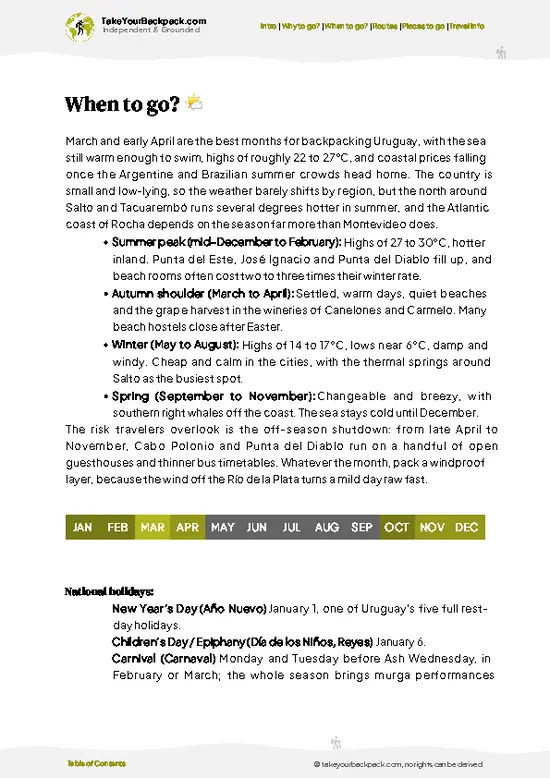
  • Weather: Laguna de Rocha experiences mild, temperate weather. Summers (December to February) can reach highs of 28°C (82°F), but humidity and occasional storms can dampen plans. Winters (June to August) are cooler, averaging 10-15°C (50-59°F), with more rain and wind, which can make outdoor activities less pleasant.

  • Temperature: Spring (September to November) and autumn (March to May) offer the most comfortable temperatures, generally between 18-22°C (64-72°F). These shoulder seasons avoid the extremes and provide a more stable climate for hiking and wildlife watching.

  • Daylight Hours: Summer days stretch up to 14-15 hours, giving you more time to explore. Winter days shrink to about 9-10 hours, limiting daylight for outdoor activities and making early starts essential.

  • Crowds: Peak
read more 👉

  • Weather: Laguna de Rocha experiences mild, temperate weather. Summers (December to February) can reach highs of 28°C (82°F), but humidity and occasional storms can dampen plans. Winters (June to August) are cooler, averaging 10-15°C (50-59°F), with more rain and wind, which can make outdoor activities less pleasant.

  • Temperature: Spring (September to November) and autumn (March to May) offer the most comfortable temperatures, generally between 18-22°C (64-72°F). These shoulder seasons avoid the extremes and provide a more stable climate for hiking and wildlife watching.

  • Daylight Hours: Summer days stretch up to 14-15 hours, giving you more time to explore. Winter days shrink to about 9-10 hours, limiting daylight for outdoor activities and making early starts essential.

  • Crowds: Peak season in summer brings local tourists, especially on weekends, which can affect campsite availability and trail solitude. Shoulder seasons see fewer visitors, offering a quieter experience without sacrificing weather quality.

  • Seasonal Activities: Birdwatching peaks in spring and autumn during migration periods. Summer is better for water activities but expect more competition for spots. Winter’s chill limits water-based options but can be good for reflective hikes.

  • Price Fluctuations: Accommodation and transport costs rise noticeably in summer. Booking early is crucial if visiting then. Off-season rates drop significantly, but some services may reduce availability or close.


Pro-tip: Aim for spring or autumn to dodge crowds, enjoy stable weather, and catch the best wildlife action without paying summer premiums.


source: climatestotravel.comJANJanuary: good for travelingFEBFebruary: good for travelingMARMarch: highly recommended for travelingAPRApril: highly recommended for travelingMAYMay: highly recommended for travelingJUNJune: fair for travelingJULJuly: fair for travelingAUGAugust: fair for travelingSEPSeptember: highly recommended for travelingOCTOctober: excellent for travelingNOVNovember: excellent for travelingDECDecember: good for traveling
when-to-go

✈️ The backpacker research shortcutUruguay Travel Guide

An offline-friendly backpacking guide with optimized travel routes, ranked highlights, transport advice, and the best areas to stay.
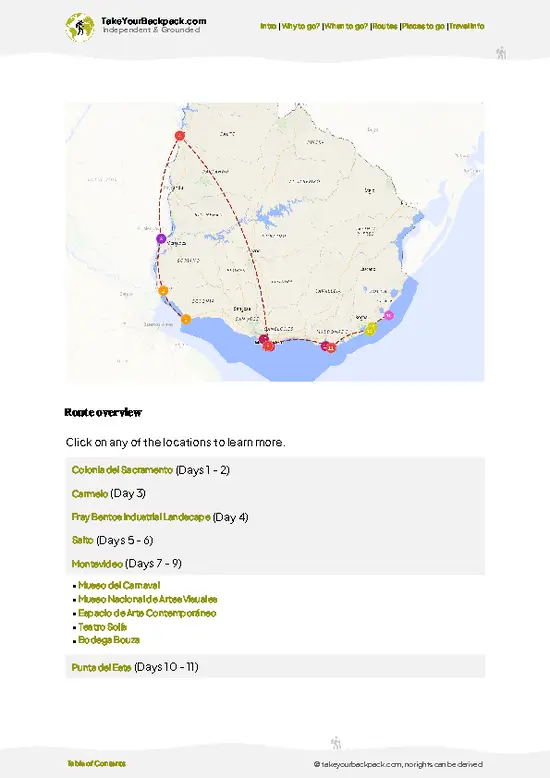
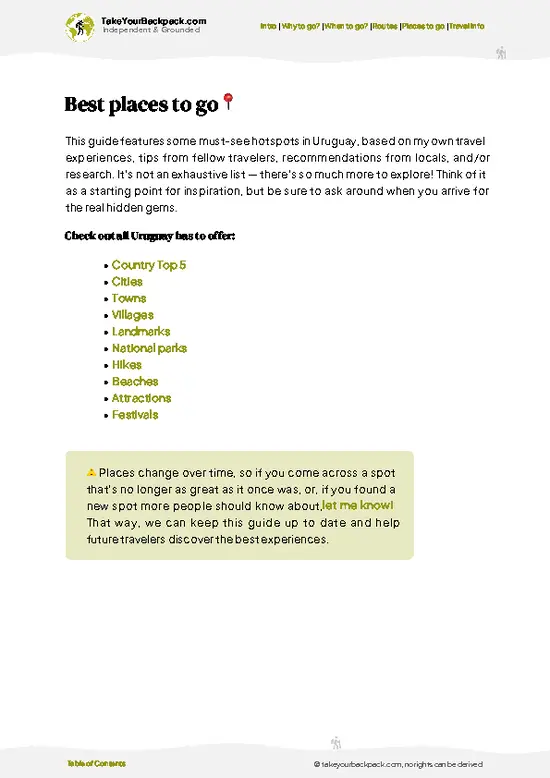
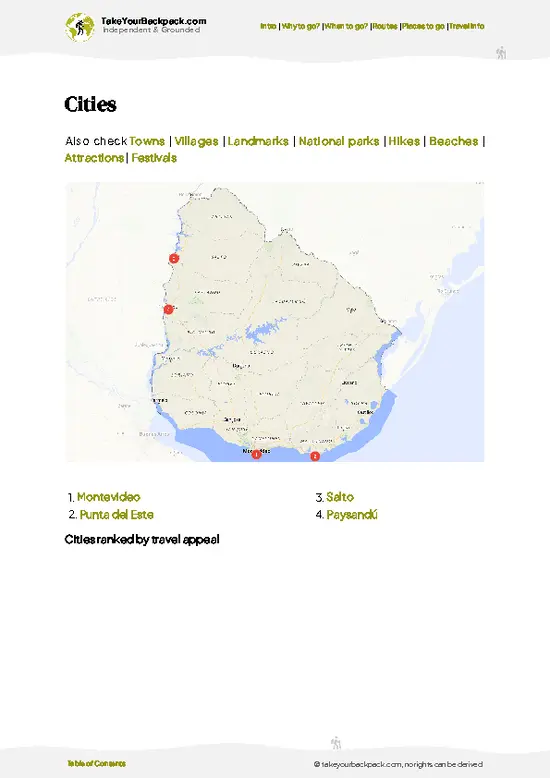
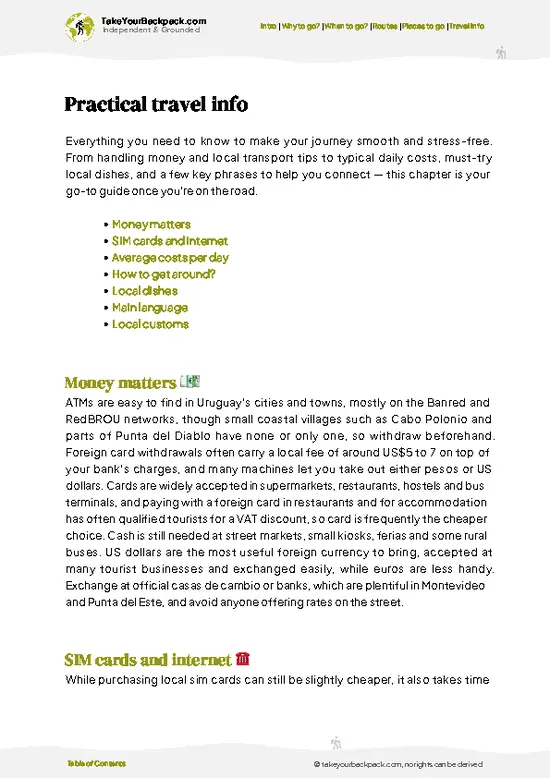
example page 0 from our offline Travel Guide for Uruguayexample page 1 from our offline Travel Guide for Uruguayexample page 2 from our offline Travel Guide for Uruguayexample page 3 from our offline Travel Guide for Uruguayexample page 4 from our offline Travel Guide for Uruguayexample page 5 from our offline Travel Guide for Uruguayexample page 6 from our offline Travel Guide for Uruguayexample page 7 from our offline Travel Guide for Uruguay
The digital guide (256 pages) contains:
64 highlights, ranked by travel appeal
Optimized 5, 10 & 15-day travel routes
Cities, national parks, beaches, historical sites, ...
How to get around
Offline-friendly for travel without Wi-Fi
👉 Click to see all 30+ guide features

📅 Plan smarter in minutes, not weeks
Month by month travel advice
Festivals & national holidays
Budget expectations

🗺️ Go to the right places, skip the overrated ones
Honest pros & cons of destinations
Top hikes, parks & viewpoints
Lesser-known places most travelers miss
Clear “worth it vs skip it” guidance

🛏️ Travel smoothly without rookie mistakes
Best areas to stay
Transport systems explained simply
Common scams & safety advice
SIM cards, money & practical tips

🌍 Understand the country, not just visit it
Culture & traditions
52 Essential phrases & customs
Festivals worth planning around
Traveler-friendly historical context
Insights that make places more meaningful

📱 Built for real travel conditions
Fully downloadable PDF
Works completely offline
Optimized for phone use
Useful in remote areas & buses
Everything in one place
Save weeks of stressful planning
Get instant access to the full guide directly. 30-day money-back guarantee.


Sent to your inbox immediately after payment • 100% Secure Checkout
Best Backpacking Travel Advisor 2025 tourism awardBest Backpacking
Travel Advisor
2025
What others say about Take Your Backpack Guides:
⭐⭐⭐⭐⭐
Fantastic, amazing amount of information!
⭐⭐⭐⭐⭐
My goodness this is amazing, it's what I've been looking for hats off too you!
⭐⭐⭐⭐⭐
I think this is absolutely BRILLIANT
⭐⭐⭐⭐
Very complete and informative. It's still missing places, but I gotta to commend you
⭐⭐⭐⭐⭐
This is truly amazing, thank you, can't wait to explore it with my kids!
⭐⭐⭐⭐⭐
Awesome resource, thank you!
⭐⭐⭐⭐⭐
This is amazing! Can't wait to explore the ones I haven't seen
⭐⭐⭐⭐
I love this! Well done, great idea.
⭐⭐⭐⭐⭐
Thanks for taking the time to make this gem!
⭐⭐⭐⭐⭐
This might be the best website I've ever seen.
⭐⭐⭐⭐⭐
Congratulations, and thank you so much for your work; it's incredibly valuable.
⭐⭐⭐⭐
In all seriousness I think you did a great job pointing out the important spots
⭐⭐⭐⭐⭐
10/10 very good
⭐⭐⭐⭐⭐
As someone who's only just starting to visit regularly this is awesome, thank you.
⭐⭐⭐⭐
Thank you very much! I'm going to visit my dad, it's going to be very useful!
⭐⭐⭐⭐⭐
This is really cool! We'll be travelling for the first time and this definitely come in handy.
⭐⭐⭐⭐⭐
You are now our minister of culture, congratulations 👨‍💼
⭐⭐⭐⭐⭐
Just wanted to tell you that this is a pearl! Going to follow your recommendations.
⭐⭐⭐⭐⭐
This is so cool. I'll definitely be using the resource for my travels soon.
⭐⭐⭐⭐⭐
This is very impressive! Good work.
⭐⭐⭐⭐⭐
This is an amazing and informative site. Very well done!

🛏️ Where to stay?Where staying makes the most sense

Laguna de Rocha is a stunning spot for backpackers, but accommodation options are limited within the park itself. There are no formal lodges or campsites directly inside the national park, which means you’ll need to look to nearby towns for a place to rest your head.

The closest town is Rocha, about 30 kilometers away. Here, you’ll find a few budget-friendly hostels and guesthouses that cater to backpackers. Hostel El Faro is a solid choice, offering dorms and private rooms with a laid-back vibe. It’s a great base for exploring the area.

Another option is La Paloma, a coastal town roughly 50 … read more 👉
Laguna de Rocha is a stunning spot for backpackers, but accommodation options are limited within the park itself. There are no formal lodges or campsites directly inside the national park, which means you’ll need to look to nearby towns for a place to rest your head.

The closest town is Rocha, about 30 kilometers away. Here, you’ll find a few budget-friendly hostels and guesthouses that cater to backpackers. Hostel El Faro is a solid choice, offering dorms and private rooms with a laid-back vibe. It’s a great base for exploring the area.

Another option is La Paloma, a coastal town roughly 50 kilometers from the park. It’s a bit more touristy, but you can find affordable hostels and a lively atmosphere. Hostel La Paloma has a friendly staff and is close to the beach, making it a good spot to unwind after a day of hiking.

Keep in mind that public transport can be sparse, so plan your travel times carefully. Renting a bike or a car can also enhance your experience, allowing you to explore the park and surrounding areas without the hassle of waiting for buses.

👛 Costs (as of 5 March 2025)How expensive it really is

Visiting Laguna de Rocha in Uruguay is a rewarding experience, but it’s essential to be aware of the costs involved to avoid any surprises.

Entry fees to the park are generally around $5 to $10 USD per person. This fee helps maintain the park and its facilities. If you’re planning to camp, expect to pay between $10 and $20 USD per night for a campsite. This is a budget-friendly option, but make sure to reserve in advance during peak seasons.

Transportation can vary widely. If you’re driving, factor in fuel costs, which can be around $1.50 to $2.00 USD per liter. Public transport options are available, but they can be less frequent. A bus ticket from Montevideo to Rocha typically costs about $15 to $20 USD.

Food options in and around the park are limited. If you’re bringing your own supplies, … read more 👉
Visiting Laguna de Rocha in Uruguay is a rewarding experience, but it’s essential to be aware of the costs involved to avoid any surprises.

Entry fees to the park are generally around $5 to $10 USD per person. This fee helps maintain the park and its facilities. If you’re planning to camp, expect to pay between $10 and $20 USD per night for a campsite. This is a budget-friendly option, but make sure to reserve in advance during peak seasons.

Transportation can vary widely. If you’re driving, factor in fuel costs, which can be around $1.50 to $2.00 USD per liter. Public transport options are available, but they can be less frequent. A bus ticket from Montevideo to Rocha typically costs about $15 to $20 USD.

Food options in and around the park are limited. If you’re bringing your own supplies, budget around $10 to $15 USD per day for groceries. Dining out can range from $15 to $30 USD per meal, depending on the location and type of cuisine.

Lastly, consider any additional activities. Guided tours or rentals for kayaking or birdwatching can add another $20 to $50 USD to your budget.

By keeping these costs in mind, you can enjoy Laguna de Rocha without stretching your budget too thin.
⚠️ Prices can change and everyone travels differently, so take this as a rough guide. Hope it helps you plan your adventure!

🥾 TrailsExploring Laguna de Rocha: trails, terrain, and views

Laguna de Rocha is a hidden gem for those who enjoy a mix of coastal scenery and diverse wildlife. The park features a beautiful lagoon surrounded by wetlands, sandy beaches, and rolling dunes. It’s a great spot for birdwatching; you might catch sight of herons, flamingos, and even the occasional capybara. The terrain varies, with some areas being flat and easy to navigate, while others can be a bit sandy and challenging, especially if the wind picks up.

There are designated trails, and one worth checking out is the Laguna de Rocha Trail. Here are the details:
  • Length: 6 km
  • Estimated Duration: 2-3
read more 👉
Laguna de Rocha is a hidden gem for those who enjoy a mix of coastal scenery and diverse wildlife. The park features a beautiful lagoon surrounded by wetlands, sandy beaches, and rolling dunes. It’s a great spot for birdwatching; you might catch sight of herons, flamingos, and even the occasional capybara. The terrain varies, with some areas being flat and easy to navigate, while others can be a bit sandy and challenging, especially if the wind picks up.

There are designated trails, and one worth checking out is the Laguna de Rocha Trail. Here are the details:
  • Length: 6 km
  • Estimated Duration: 2-3 hours
  • Difficulty Level: Moderate
  • Key Features: Stunning lagoon views, birdwatching opportunities, and coastal landscapes
  • Terrain: Mostly flat with some sandy sections

Getting to Laguna de Rocha is pretty straightforward. You can catch a bus from Montevideo, which takes about two hours. Just keep in mind that the park can get a bit crowded on weekends, especially during the summer months, so if you prefer some solitude, aim for a weekday visit. As for the entrance fee, there’s no charge to enter the park, which is a nice bonus for budget travelers. Just pack some snacks and water, and you’re all set for a day of exploring!
⚠️ Hiking info can sometimes be outdated or inaccurate. Before you hit the trail, check the latest conditions with locals. If you do spot anything that's off, I'd love to hear from you, so I can update it for fellow travelers.

🛡️ SafetyStaying Safe: What Travelers Should Know

Laguna de Rocha is generally a welcoming destination for backpackers, but a few practical considerations can enhance your experience. The weather can shift unexpectedly, so layering is key. Mornings might be cool, but afternoons can heat up quickly.

The terrain is mostly flat, making navigation straightforward, but be cautious of muddy patches after rain. Footing can be tricky in these areas, so sturdy footwear is essential.

Wildlife encounters are rare, but if you spot a bird or a small mammal, keep your distance. Respect their space; this is their home, after all.

First-timers often underestimate the importance of hydration. Carry enough water, especially on warmer days. Timing your hikes to avoid the midday sun can save energy and keep you comfortable. With these tips in mind, you’ll … read more 👉
Laguna de Rocha is generally a welcoming destination for backpackers, but a few practical considerations can enhance your experience. The weather can shift unexpectedly, so layering is key. Mornings might be cool, but afternoons can heat up quickly.

The terrain is mostly flat, making navigation straightforward, but be cautious of muddy patches after rain. Footing can be tricky in these areas, so sturdy footwear is essential.

Wildlife encounters are rare, but if you spot a bird or a small mammal, keep your distance. Respect their space; this is their home, after all.

First-timers often underestimate the importance of hydration. Carry enough water, especially on warmer days. Timing your hikes to avoid the midday sun can save energy and keep you comfortable. With these tips in mind, you’ll be set to enjoy the park’s natural beauty without unnecessary stress.

Other Uruguayan national parks near Laguna de Rocha

Explore more nearby:


👉 Discover all national parks

Or checkout all Uruguay has to offer (think cities, towns, villages, national parks, hikes, beaches, festivals)
Country photo of Uruguay
film
0
0
0a
Quebrada de los Cuervos
Paisaje Protegido Quebrada De Los Cuervos Y Sierras Del Yerbal
film
1
1
1a
Cerro Verde
film
2
2
2a
Valle del Lunarejo
film
3
3
3a
San Miguel
film
4
4
4a
Salto del Penitente
Ayelén Pons
film
5
5
5a
Montes del Queguay

We 💚 feedbackWhat to keep in mind

Laguna de Rocha is a breath of fresh air, a place where nature feels untouched and time slows down. The best surprise? The birdwatching—it’s a paradise for spotting rare species. But don’t underestimate the wind; it can whip up unexpectedly, so pack layers and a sturdy hat. Embrace the quiet here; it’s not about flashy attractions but about soaking in the serene beauty. This is where you recharge, away from the hustle. Enjoy the stillness.

✍️ Help improve this page!
The information on this page is based on in-depth research, insights shared by experienced travelers, and feedback from the local travel community in Uruguay. While every effort is made to keep the information accurate and current, conditions can change — so if you spot anything incorrect or outdated, please get in touch.


🙋‍♂️ Give feedback

👋 Meet the founderWho’s Behind Take Your Backpack?

Johan, backpacker and founder of TakeYourBackpackHi, I’m Johan (Netherlands 🇳🇱), the creator of TakeYourBackpack. Over the past decade, I’ve backpacked through 80+ countries across six continents, gaining extensive experience with independent travel, long-term trips, and overland routes.

This site is built on a combination of firsthand travel experience and carefully curated insights from other backpackers. Many guides are based on places I’ve personally visited, while others bring together tips, observations, and practical advice shared by trusted travelers I’ve met along the way.

The goal is to provide realistic, experience-driven guidance — not generic itineraries — so you can explore destinations with better context, clearer expectations, and more confidence.

Get full Uruguay guide •
Instant download • 64 highlights • Full Offline guide