

×

Uruguay🇺🇾 | attractionsMuseo del Azulejoceramic tiles, decorative panels, architectural fragments | things to do and best time to go

Explore Colonia del Sacramento Historic Quarter MuseumsExplore Espacio de Arte Contemporáneo

Backpacking in Museo del Azulejo
👀 For curious travelersattraction ranked #12
By Johan Kruseman 🇳🇱 | Updated June 7, 2026

Your fingers graze a wall of cool, hand-painted tiles—some chipped, some gleaming, all humming with stories older than your grandparents. The air smells faintly of dust and old lime mortar, and the only sound is your own footsteps echoing off centuries of color. This is Museo del Azulejo, tucked into a quiet corner of Montevideo’s Ciudad Vieja, a world away from the beach crowds and steakhouse chatter.

Here’s the straight deal: Museo del Azulejo isn’t going to blow up your Instagram feed or make your heart race like a night out in Punta del Este. It’s small, cheap (sometimes free), and rarely crowded—honestly, you might have the place to yourself. The wow-factor is subtle: it’s the slow-burn realization that Uruguay’s soul is tiled together from a thousand immigrant stories, not just flashy colonial facades. If you want adrenaline, look elsewhere. But if you crave a quiet, tactile connection to the country’s real history—no filters, no hype—this is where you’ll find it.

Discover everything you want to know in the 📖 Uruguay Travel Guide.


Get your Uruguay guide
64 ranked highlights, routes & tips, works offline (256 pages)
Loading the map 🌍
CLICK TO FILTER
cities
towns
villages
landmarks
national parks
hikes
beaches
attractions
festivals
regions
SHOW COUNTRY’S BESTSHOW ALL

✨ Why go?
Ranked #12 attraction in Uruguay
Reasons people choose to visit here

The Museo del Azulejo in Uruguay isn’t some glossy Instagram backdrop where you snap a quick pic and move on. It’s a deep dive into a craft that’s been shaping local identity for centuries. Yes, it draws crowds, especially during peak hours, and the modest entry fee might make you hesitate if you’re counting every peso. But here’s the kicker: this place is a living archive of Uruguay’s colonial and artistic history, told through thousands of hand-painted tiles that cover walls, ceilings, and floors like a mosaic diary.

Backpackers who carve out time here aren’t just ticking off a tourist box—they’re connecting with a cultural milestone that reveals the country’s layered past in a way no guidebook can match. The effort to navigate the sometimes cramped, bustling space pays off with moments … read more 👉
The Museo del Azulejo in Uruguay isn’t some glossy Instagram backdrop where you snap a quick pic and move on. It’s a deep dive into a craft that’s been shaping local identity for centuries. Yes, it draws crowds, especially during peak hours, and the modest entry fee might make you hesitate if you’re counting every peso. But here’s the kicker: this place is a living archive of Uruguay’s colonial and artistic history, told through thousands of hand-painted tiles that cover walls, ceilings, and floors like a mosaic diary.

Backpackers who carve out time here aren’t just ticking off a tourist box—they’re connecting with a cultural milestone that reveals the country’s layered past in a way no guidebook can match. The effort to navigate the sometimes cramped, bustling space pays off with moments of genuine awe as you trace the intricate patterns and imagine the artisans behind them. It’s a rare spot where history, art, and everyday life collide. For anyone trekking through Uruguay’s cultural circuit, the Museo del Azulejo is a checkpoint that transforms a simple visit into a meaningful encounter with the country’s soul. Skip it, and you miss a piece of Uruguay’s heartbeat.
Want to include Museo del Azulejo in your Uruguay route?
Create a personalized Uruguay itinerary that includes Museo del Azulejo and the places that fit your trip — based on your travel style, budget, and available time. Get your route in seconds.

Generate my trip

💡 HighlightsWhat this place is best known for

The 19th-Century Mansion Setting
Forget sterile white cubes. The Museo del Azulejo is housed in a 19th-century Montevideo mansion, and the building itself is half the experience. Creaky wooden floors, high ceilings, and that faint, dusty scent of old plaster—this is the kind of place where you can feel the ghosts of Uruguay’s bourgeoisie peering over your shoulder. The tiles aren’t just displayed; they’re embedded in the walls, the staircases, the very bones of the house. You’re not just looking at history—you’re walking through it.


Portuguese and Spanish Tile Showdown
This isn’t just a collection of pretty patterns. The museum’s core is a face-off between Portuguese and Spanish azulejos, each with their own swagger. The Portuguese tiles are all about blue-and-white drama—think intricate … read more 👉
The 19th-Century Mansion Setting
Forget sterile white cubes. The Museo del Azulejo is housed in a 19th-century Montevideo mansion, and the building itself is half the experience. Creaky wooden floors, high ceilings, and that faint, dusty scent of old plaster—this is the kind of place where you can feel the ghosts of Uruguay’s bourgeoisie peering over your shoulder. The tiles aren’t just displayed; they’re embedded in the walls, the staircases, the very bones of the house. You’re not just looking at history—you’re walking through it.


Portuguese and Spanish Tile Showdown
This isn’t just a collection of pretty patterns. The museum’s core is a face-off between Portuguese and Spanish azulejos, each with their own swagger. The Portuguese tiles are all about blue-and-white drama—think intricate floral borders and mythological scenes that wouldn’t look out of place in Lisbon’s Alfama. The Spanish tiles, on the other hand, bring the heat: bold colors, geometric Moorish motifs, and a sense of playful rebellion. Seeing them side by side, you get a crash course in colonial rivalry—no textbook required.


The “Tile Timeline” (18th to 20th Century)
If you think tiles are just bathroom decor, this place will set you straight. The museum’s collection spans from the 1700s to the early 1900s, and you can literally trace the evolution of taste, technology, and trade through the changing styles. Early hand-painted panels give way to industrially produced pieces, and suddenly you’re seeing the fingerprints of global commerce—British, French, and Italian imports sneak into the mix. It’s a visual history lesson, but with more color and less boredom.


Uruguayan Originals
Here’s where the museum punches above its weight. Beyond the colonial imports, you’ll find locally made tiles that channel Uruguay’s own identity. These are rarer, but they’re the soul of the place: Art Nouveau flourishes, unexpected color combos, and motifs that nod to local flora and fauna. It’s proof that Uruguay didn’t just copy Europe—it remixed it.


The Courtyard Mosaic
Step outside for a second. The museum’s courtyard is a riot of tilework—walls, benches, fountains, all covered in a patchwork of patterns. It’s not curated to death; it’s lived-in, a little chaotic, and totally photogenic (yes, even if you’re sick of Instagram). This is where you actually want to sit and soak it in, not just snap a photo and bolt.


Zero Crowds, Zero Pretense
Here’s the real kicker: you’ll probably have the place to yourself. No tour groups elbowing for selfies, no velvet ropes. The staff are low-key and genuinely happy to chat if you’re curious, but they’ll leave you alone if you just want to wander. It’s the opposite of a tourist circus—intimate, unhurried, and refreshingly real. If you want to feel like you’ve discovered something, this is your spot.
Spotted a mistake or missing something? Contact us.

Things to do around Museo del Azulejo

Ratings based on Tripadvisor reviews. When you book through this link, you support our work at no extra cost to you.

🌤️ When to go?Weather, crowds, and seasonal trade-offs


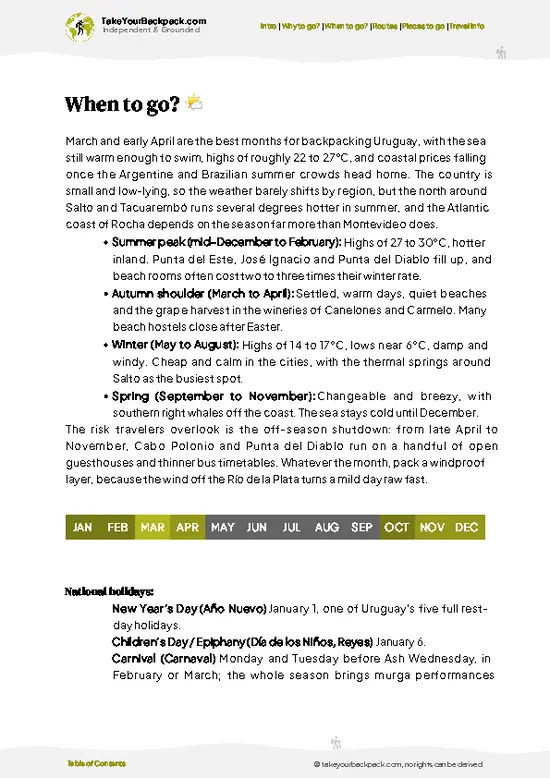
  • Weather: Uruguay’s Museo del Azulejo is best visited in spring (September to November) or fall (March to May). Summers (December to February) can be hot and humid, with temperatures often hitting 30°C (86°F), making indoor museum visits less comfortable. Winters (June to August) are mild but can be damp and chilly, around 10°C to 15°C (50°F to 59°F).

  • Temperature: Spring and fall offer the sweet spot—pleasant 18°C to 24°C (64°F to 75°F) days that keep you comfortable while wandering through the museum’s tile-covered halls without sweating buckets or shivering.

  • Daylight Hours: Longer daylight in spring and early fall means you can combine your museum visit with exploring nearby Montevideo neighborhoods without rushing. Expect around 10 to 12 hours of daylight, enough to soak in the city’s
read more 👉

  • Weather: Uruguay’s Museo del Azulejo is best visited in spring (September to November) or fall (March to May). Summers (December to February) can be hot and humid, with temperatures often hitting 30°C (86°F), making indoor museum visits less comfortable. Winters (June to August) are mild but can be damp and chilly, around 10°C to 15°C (50°F to 59°F).

  • Temperature: Spring and fall offer the sweet spot—pleasant 18°C to 24°C (64°F to 75°F) days that keep you comfortable while wandering through the museum’s tile-covered halls without sweating buckets or shivering.

  • Daylight Hours: Longer daylight in spring and early fall means you can combine your museum visit with exploring nearby Montevideo neighborhoods without rushing. Expect around 10 to 12 hours of daylight, enough to soak in the city’s vibe before and after.

  • Crowds: Peak tourist season in summer brings crowds, especially in January and February, which can dilute the intimate feel of the museum. Visiting during shoulder seasons (spring or fall) means fewer tourists and a more personal experience with the art and history.

  • Seasonal Activities: Spring and fall also coincide with local cultural events and markets in Montevideo, adding layers to your visit beyond the museum’s walls. Summer festivals can be fun but come with the trade-off of heat and crowds.

  • Price Fluctuations: Entry fees remain stable year-round, but accommodation and transport costs spike in summer. Visiting in shoulder seasons can save you money on lodging, letting you spend more on local food or souvenirs.


Pro-tip: Aim for late September or early October to dodge crowds, enjoy mild weather, and catch Montevideo’s cultural pulse at its liveliest without the tourist crush.


source: climatestotravel.comJANJanuary: fair for travelingFEBFebruary: fair for travelingMARMarch: highly recommended for travelingAPRApril: highly recommended for travelingMAYMay: highly recommended for travelingJUNJune: good for travelingJULJuly: good for travelingAUGAugust: good for travelingSEPSeptember: excellent for travelingOCTOctober: excellent for travelingNOVNovember: highly recommended for travelingDECDecember: fair for traveling
when-to-go

✈️ The backpacker research shortcutUruguay Travel Guide

An offline-friendly backpacking guide with optimized travel routes, ranked highlights, transport advice, and the best areas to stay.
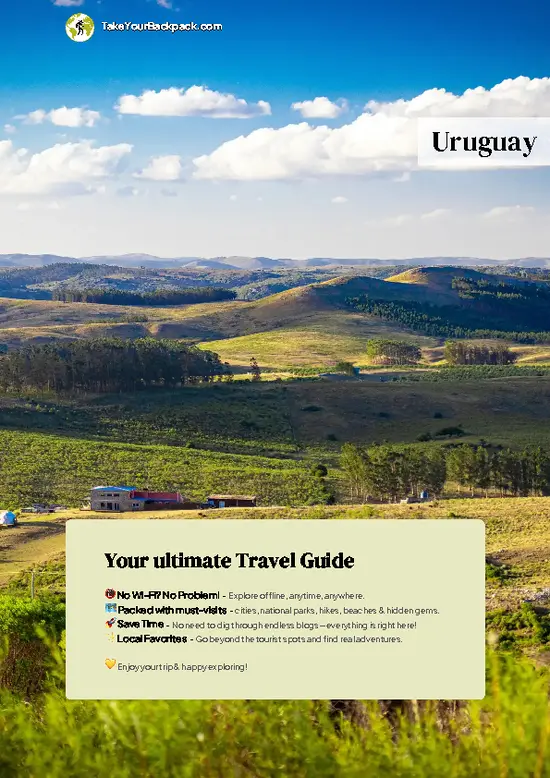
example page 0 from our offline Travel Guide for Uruguay
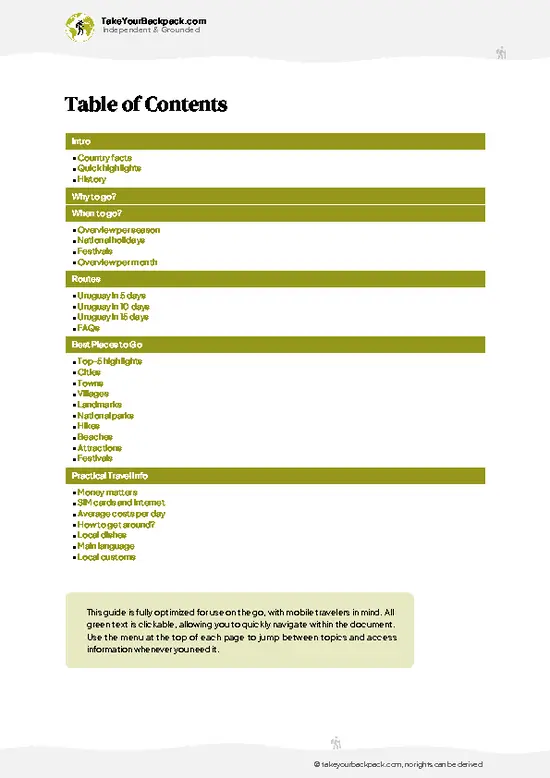
example page 1 from our offline Travel Guide for Uruguay
example page 2 from our offline Travel Guide for Uruguay
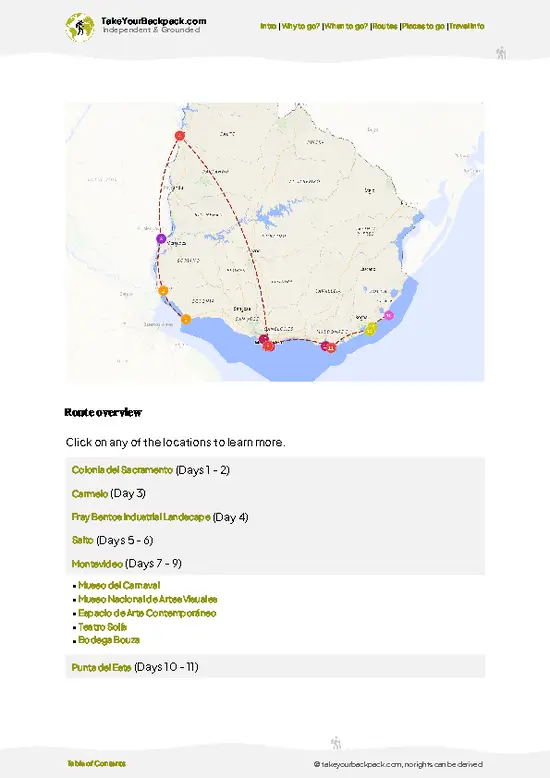
example page 3 from our offline Travel Guide for Uruguay
example page 4 from our offline Travel Guide for Uruguay
example page 5 from our offline Travel Guide for Uruguay
example page 6 from our offline Travel Guide for Uruguay
example page 7 from our offline Travel Guide for Uruguay
The digital guide (256 pages) contains:
64 highlights, ranked by travel appeal
Optimized 5, 10 & 15-day travel routes
Cities, national parks, landmarks, beaches
How to get around
Offline-friendly for travel without Wi-Fi
👉 Click to see all 30+ guide features

📅 Plan smarter in minutes, not weeks
Month by month travel advice
Festivals & national holidays
Budget expectations

🗺️ Go to the right places, skip the overrated ones
Honest pros & cons of destinations
Top hikes, parks & viewpoints
Lesser-known places most travelers miss
Clear “worth it vs skip it” guidance

🛏️ Travel smoothly without rookie mistakes
Best areas to stay
Transport systems explained simply
Common scams & safety advice
SIM cards, money & practical tips

🌍 Understand the country, not just visit it
Culture & traditions
52 Essential phrases & customs
Festivals worth planning around
Traveler-friendly historical context
Insights that make places more meaningful

📱 Built for real travel conditions
Fully downloadable PDF
Works completely offline
Optimized for phone use
Useful in remote areas & buses
Everything in one place
Save weeks of stressful planning
Get instant access to your full guide. 30‑day money-back guarantee.


By proceeding you agree to our terms.
Sent to your inbox immediately after payment • 100% Secure Checkout
Best Backpacking Travel Advisor 2025 tourism awardBest Backpacking
Travel Advisor
2025
What others say about Take Your Backpack Guides:
⭐⭐⭐⭐⭐
Fantastic, amazing amount of information!
⭐⭐⭐⭐⭐
My goodness this is amazing, it's what I've been looking for hats off too you!
⭐⭐⭐⭐⭐
I think this is absolutely BRILLIANT
⭐⭐⭐⭐
Very complete and informative. It's still missing places, but I gotta to commend you
⭐⭐⭐⭐⭐
This is truly amazing, thank you, can't wait to explore it with my kids!
⭐⭐⭐⭐⭐
Awesome resource, thank you!
⭐⭐⭐⭐⭐
This is amazing! Can't wait to explore the ones I haven't seen
⭐⭐⭐⭐
I love this! Well done, great idea.
⭐⭐⭐⭐⭐
Thanks for taking the time to make this gem!
⭐⭐⭐⭐⭐
This might be the best website I've ever seen.
⭐⭐⭐⭐⭐
Congratulations, and thank you so much for your work; it's incredibly valuable.
⭐⭐⭐⭐
In all seriousness I think you did a great job pointing out the important spots
⭐⭐⭐⭐⭐
10/10 very good
⭐⭐⭐⭐⭐
As someone who's only just starting to visit regularly this is awesome, thank you.
⭐⭐⭐⭐
Thank you very much! I'm going to visit my dad, it's going to be very useful!
⭐⭐⭐⭐⭐
This is really cool! We'll be travelling for the first time and this definitely come in handy.
⭐⭐⭐⭐⭐
You are now our minister of culture, congratulations 👨‍💼
⭐⭐⭐⭐⭐
Just wanted to tell you that this is a pearl! Going to follow your recommendations.
⭐⭐⭐⭐⭐
This is so cool. I'll definitely be using the resource for my travels soon.
⭐⭐⭐⭐⭐
This is very impressive! Good work.
⭐⭐⭐⭐⭐
This is an amazing and informative site. Very well done!

🛏️ Where to stay?How to pick the right area

The Museo del Azulejo sits in Montevideo’s Ciudad Vieja, a neighborhood that’s equal parts history lesson and gritty urban canvas. If you’re chasing the authentic backpacker vibe, this is your playground. But don’t kid yourself—Ciudad Vieja isn’t polished. It’s got its share of sketchy corners after dark, so stick to the well-trodden streets where locals and travelers mingle without the tourist trap price tags.

For safety and social buzz, aim for the blocks around Plaza Matriz and the Mercado del Puerto. These spots pulse with energy—street musicians, open-air markets, and cafés where you can … read more 👉
The Museo del Azulejo sits in Montevideo’s Ciudad Vieja, a neighborhood that’s equal parts history lesson and gritty urban canvas. If you’re chasing the authentic backpacker vibe, this is your playground. But don’t kid yourself—Ciudad Vieja isn’t polished. It’s got its share of sketchy corners after dark, so stick to the well-trodden streets where locals and travelers mingle without the tourist trap price tags.

For safety and social buzz, aim for the blocks around Plaza Matriz and the Mercado del Puerto. These spots pulse with energy—street musicians, open-air markets, and cafés where you can swap stories with fellow wanderers. It’s not luxury, but it’s real life, and that’s what makes it worth your time. You’ll find plenty of budget digs here, often packed with solo travelers looking to connect. The vibe is raw and unfiltered, but that’s the point. This isn’t about Instagram perfection; it’s about soaking in the city’s soul while keeping your wallet intact.

👛 Costs (as of 17 June 2026)Travel costs and budget guide for Museo del Azulejo

La entrada al Museo del Azulejo en Montevideo es gratuita. ([azulejo.montevideo.gub.uy](https://azulejo.montevideo.gub.uy/?utm_source=openai)) En Colonia del Sacramento, la entrada al Museo del Azulejo cuesta 50 pesos uruguayos, aproximadamente €1,20. ([portalesdeluruguay.com.uy](https://www.portalesdeluruguay.com.uy/pt/passeios-atividades/museo-del-azulejo?utm_source=openai))

source: azulejo.montevideo.gub.uy
⚠️ Prices can change and everyone travels differently, so take this as a rough guide. Hope it helps you plan your adventure!

Other Uruguayan attractions near Museo del Azulejo

Explore more nearby:


💡 Not sure where to go next?
Create a personalized itinerary for Uruguay including Museo del Azulejo and the places that fit your trip.

Generate my itinerary

👉 Discover all attractions

Or checkout all Uruguay has to offer (think cities, towns, villages, national parks, hikes, beaches, festivals)
Country photo of Uruguay

We 💚 feedbackSumming up the experience

The Museo del Azulejo isn’t going to wow you with crowds or flashy displays—expect a quiet, almost meditative space where the real magic lies in the details. The tiles themselves tell stories you won’t find in guidebooks, each crack and color shift a whisper from Uruguay’s past. It’s not a blockbuster attraction, so don’t come expecting a spectacle. Instead, come ready to slow down and appreciate craftsmanship that’s both humble and haunting. If you’re in Montevideo and craving something off the beaten path, this is your spot.

✍️ Help improve this page!
The information on this page is based on in-depth research, insights shared by experienced travelers, and feedback from the local travel community in Uruguay. While every effort is made to keep the information accurate and current, conditions can change — so if you spot anything incorrect or outdated, please get in touch.


🙋‍♂️ Give feedback

👋 Meet the founderWho’s Behind Take Your Backpack?

Johan, backpacker and founder of TakeYourBackpackHi, I’m Johan (Netherlands 🇳🇱), the creator of TakeYourBackpack. Over the past decade, I’ve backpacked through 80+ countries across six continents, gaining extensive experience with independent travel, long-term trips, and overland routes.

This site is built on a combination of firsthand travel experience and carefully curated insights from other backpackers. Many guides are based on places I’ve personally visited, while others bring together tips, observations, and practical advice shared by trusted travelers I’ve met along the way.

The goal is to provide realistic, experience-driven guidance — not generic itineraries — so you can explore destinations with better context, clearer expectations, and more confidence.

Get full Uruguay guide •
Instant download • 64 highlights • Full Offline guide