
×

Uruguay🇺🇾 | attractionsMuseo Andes 1972survival artifacts, crash site relics, personal testimonies | things to do and best time to go

Explore Museo Nacional de Artes VisualesExplore Museo del Carnaval

Backpacking in Museo Andes 1972
👍 Recommendedattraction ranked #7
By Johan Kruseman 🇳🇱 | Updated June 8, 2026

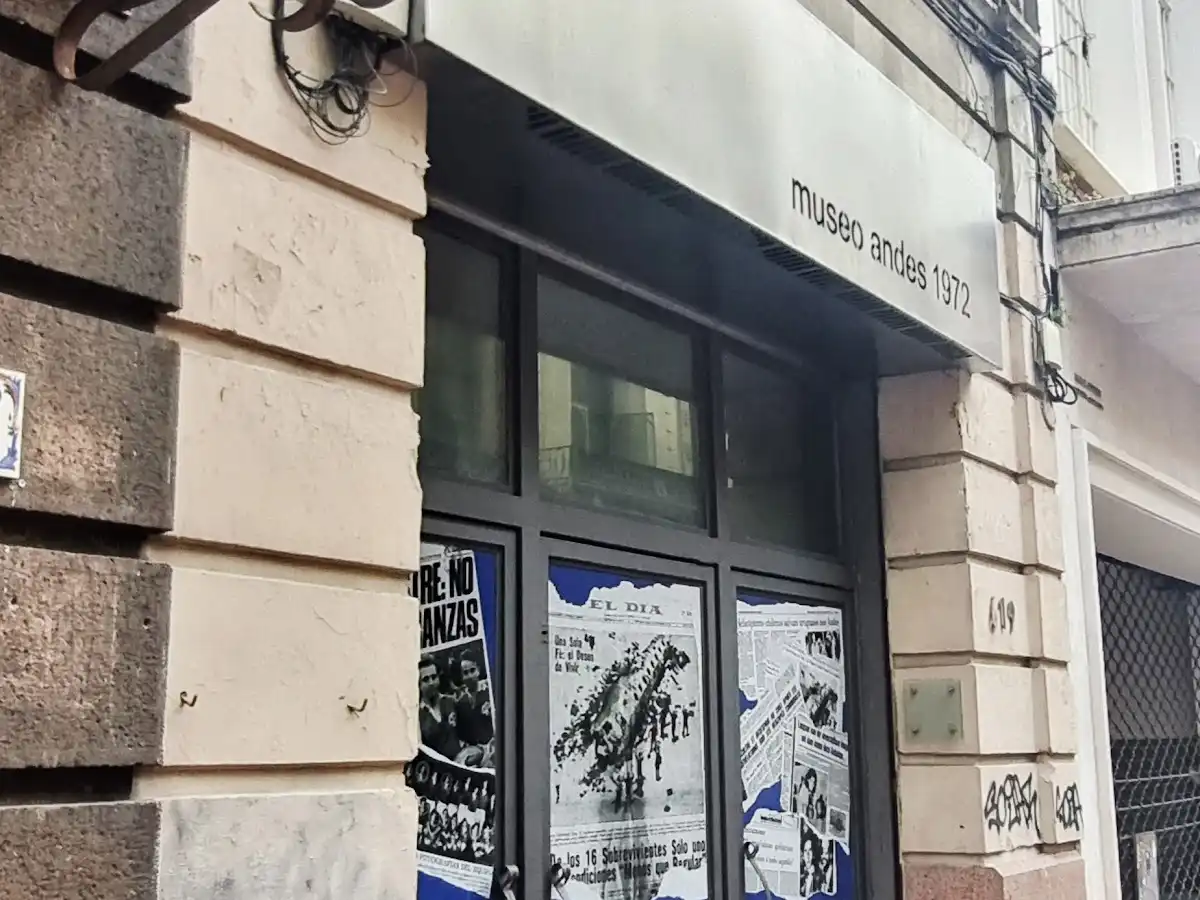
Let’s kill the myth right away: Museo Andes 1972 is not some slick, Instagrammable photo op with shiny artifacts and feel-good vibes. It’s a gut-punch of a museum, tucked into the heart of Montevideo’s Ciudad Vieja, and it’s built for people who want the truth, not a highlight reel. This place is all about the 1972 Andes plane crash—the one where survival meant making choices most of us can’t even imagine. If you’re backpacking Uruguay for beaches and breezy colonial streets, this is a hard left turn. The wow-factor here isn’t visual; it’s emotional. You’ll walk out quieter than you walked in. It’s small, privately run, and costs more than most museums in the city, but you get real, unfiltered storytelling—no sugarcoating, no crowd-pleasing fluff. You won’t find busloads of tourists, but you will find the kind of raw, human history that sticks with you longer than any sunset.

Discover everything you want to know in the 📖 Uruguay Travel Guide.


Get your Uruguay guide
64 ranked highlights, routes & tips, works offline (256 pages)
Loading the map 🌍
CLICK TO FILTER
cities
towns
villages
landmarks
national parks
hikes
beaches
attractions
festivals
regions
SHOW COUNTRY’S BESTSHOW ALL

✨ Why go?
Ranked #7 attraction in Uruguay
What makes this attraction worth visiting

Backpackers who carve out time for the Museo Andes 1972 in Uruguay aren’t just ticking off a tourist box—they’re stepping into a story that punches way above its weight. Sure, it’s not a sprawling museum with flashy exhibits or crowds elbowing for selfies. What it offers instead is raw, unvarnished history that grabs you by the gut. This isn’t just about the famous 1972 plane crash in the Andes; it’s about survival, human grit, and the complex moral questions that still echo decades later.

The museum’s cultural significance runs deep in Uruguay’s collective memory, making it a crucial stop for anyone serious about understanding the country beyond beaches and tango. It’s a sobering counterpoint to the usual travel highlights, demanding reflection rather than just admiration.

Yes, it’s modest, … read more 👉
Backpackers who carve out time for the Museo Andes 1972 in Uruguay aren’t just ticking off a tourist box—they’re stepping into a story that punches way above its weight. Sure, it’s not a sprawling museum with flashy exhibits or crowds elbowing for selfies. What it offers instead is raw, unvarnished history that grabs you by the gut. This isn’t just about the famous 1972 plane crash in the Andes; it’s about survival, human grit, and the complex moral questions that still echo decades later.

The museum’s cultural significance runs deep in Uruguay’s collective memory, making it a crucial stop for anyone serious about understanding the country beyond beaches and tango. It’s a sobering counterpoint to the usual travel highlights, demanding reflection rather than just admiration.

Yes, it’s modest, and yes, it’s often quiet—no tourist hordes here. But that’s the point. The effort-to-reward ratio is high because the experience is intimate and intense. For backpackers threading through Uruguay’s less-trodden paths, this museum is a major milestone, a place where history isn’t just learned—it’s felt.
Want to include Museo Andes 1972 in your Uruguay route?
Create a personalized Uruguay itinerary that includes Museo Andes 1972 and the places that fit your trip — based on your travel style, budget, and available time. Get your route in seconds.

Generate my trip

💡 HighlightsEssential experiences to have while visiting Museo Andes 1972

The Fuselage Room
This is the emotional core of Museo Andes 1972. You’re face-to-face with actual wreckage from the Uruguayan Air Force Flight 571 crash. Forget the polished, sanitized museum displays you’re used to—here, the battered metal and torn seats are raw, unvarnished, and impossible to romanticize. The room is small, almost claustrophobic, and that’s the point. You feel the scale of the disaster, the cold, and the impossible odds. It’s not about gore or spectacle; it’s about proximity to real survival. No Instagram filter can capture the gravity in this room.


Personal Artifacts
This isn’t a collection of generic “period items.” These are the survivors’ own belongings: a rugby jersey, a battered shoe, a rosary, handwritten notes. Each object is tagged with the name and story of its … read more 👉
The Fuselage Room
This is the emotional core of Museo Andes 1972. You’re face-to-face with actual wreckage from the Uruguayan Air Force Flight 571 crash. Forget the polished, sanitized museum displays you’re used to—here, the battered metal and torn seats are raw, unvarnished, and impossible to romanticize. The room is small, almost claustrophobic, and that’s the point. You feel the scale of the disaster, the cold, and the impossible odds. It’s not about gore or spectacle; it’s about proximity to real survival. No Instagram filter can capture the gravity in this room.


Personal Artifacts
This isn’t a collection of generic “period items.” These are the survivors’ own belongings: a rugby jersey, a battered shoe, a rosary, handwritten notes. Each object is tagged with the name and story of its owner. You’re not just looking at stuff—you’re looking at the last links to hope, faith, and identity when everything else was stripped away. It’s intimate, sometimes uncomfortably so, but that’s the magic. You’re reminded that these were real people, not just characters in a survival movie.


First-Person Testimonies
Audio and video interviews with survivors play on loop, but this isn’t your standard “talking heads” documentary fare. The survivors speak plainly—sometimes with humor, sometimes with a bluntness that’ll catch you off guard. They talk about hunger, fear, and the unthinkable choices they faced. There’s no melodrama, just the kind of honesty that makes you rethink what you’d do in their shoes. If you want a sugarcoated hero story, look elsewhere. If you want to hear what survival really sounds like, this is it.


The Rescue Timeline Wall
A floor-to-ceiling timeline walks you through the 72 days from crash to rescue, day by agonizing day. It’s not just dates and headlines—each entry is paired with photos, diary excerpts, and radio transcripts. You see how hope flickered, died, and reignited. The wall forces you to slow down and absorb the relentless grind of survival. It’s a masterclass in pacing and tension, and it’s impossible to walk away unmoved.


The Human Resilience Exhibit
This section doesn’t just dwell on tragedy—it’s about what happened after. Letters from family, news clippings, and post-rescue interviews show how the survivors rebuilt their lives and how Uruguay processed the story. There’s a focus on forgiveness, community, and the messy reality of becoming a symbol. It’s not a victory lap; it’s a meditation on what it means to move forward when the world expects you to be either a hero or a monster.


Guided Storytelling Tours
If you’re lucky, you’ll catch a tour led by a survivor or a family member. This isn’t a scripted spiel. Expect unsparing honesty, dark humor, and the kind of detail you’ll never find in a textbook. These guides don’t shy away from the tough questions, and they don’t let you off the hook emotionally. It’s the closest you’ll get to understanding the real Andes ordeal without being there yourself.
Spotted a mistake or missing something? Contact us.

Things to do around Museo Andes 1972

Ratings based on Tripadvisor reviews. When you book through this link, you support our work at no extra cost to you.

🌤️ When to go?Seasonal considerations and timing


  • Weather: The Museo Andes 1972 is in Uruguay, where summers (December to February) hit a warm 25-30°C (77-86°F). It’s pleasant but can get sticky. Winters (June to August) drop to a mild 8-14°C (46-57°F), which is cool but not bone-chilling. Spring and fall offer a comfortable middle ground with fewer extremes.

  • Daylight Hours: Summer days stretch long, giving you up to 14 hours of light—perfect for exploring without rushing. Winter cuts that down to about 10 hours, so plan indoor time accordingly.

  • Crowds: Peak tourist season aligns with summer holidays, so expect more visitors and higher prices from December through February. The museum can feel cramped, especially on weekends. Off-season months like April, May, September, and October offer a quieter, more reflective experience.

  • Seasonal
read more 👉

  • Weather: The Museo Andes 1972 is in Uruguay, where summers (December to February) hit a warm 25-30°C (77-86°F). It’s pleasant but can get sticky. Winters (June to August) drop to a mild 8-14°C (46-57°F), which is cool but not bone-chilling. Spring and fall offer a comfortable middle ground with fewer extremes.

  • Daylight Hours: Summer days stretch long, giving you up to 14 hours of light—perfect for exploring without rushing. Winter cuts that down to about 10 hours, so plan indoor time accordingly.

  • Crowds: Peak tourist season aligns with summer holidays, so expect more visitors and higher prices from December through February. The museum can feel cramped, especially on weekends. Off-season months like April, May, September, and October offer a quieter, more reflective experience.

  • Seasonal Activities: Summer brings outdoor events and festivals nearby, adding local flavor but also noise and crowds. Winter is quieter, letting you focus on the museum’s intense story without distractions.

  • Price Fluctuations: Accommodation and travel costs spike in summer. Visiting in shoulder seasons (March-April or September-November) can save you money and still provide decent weather for your trip.


Pro-tip: Aim for spring or fall to dodge the tourist crush and enjoy the museum’s raw, emotional power in a calm, contemplative setting.


source: climatestotravel.comJANJanuary: good for travelingFEBFebruary: good for travelingMARMarch: highly recommended for travelingAPRApril: highly recommended for travelingMAYMay: good for travelingJUNJune: fair for travelingJULJuly: fair for travelingAUGAugust: fair for travelingSEPSeptember: highly recommended for travelingOCTOctober: highly recommended for travelingNOVNovember: highly recommended for travelingDECDecember: good for traveling
uruguay-attraction-museo-andes-1972 v1
© Google |

✈️ The backpacker research shortcutUruguay Travel Guide

An offline-friendly backpacking guide with optimized travel routes, ranked highlights, transport advice, and the best areas to stay.
example page 0 from our offline Travel Guide for Uruguay
example page 1 from our offline Travel Guide for Uruguay
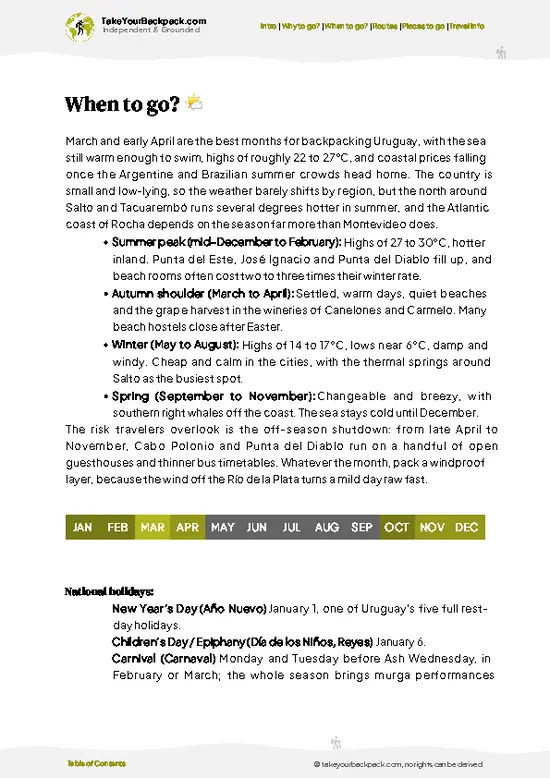
example page 2 from our offline Travel Guide for Uruguay
example page 3 from our offline Travel Guide for Uruguay
example page 4 from our offline Travel Guide for Uruguay
example page 5 from our offline Travel Guide for Uruguay
example page 6 from our offline Travel Guide for Uruguay
example page 7 from our offline Travel Guide for Uruguay
The digital guide (256 pages) contains:
64 highlights, ranked by travel appeal
Optimized 5, 10 & 15-day travel routes
Cities, national parks, landmarks, beaches
How to get around
Offline-friendly for travel without Wi-Fi
👉 Click to see all 30+ guide features

📅 Plan smarter in minutes, not weeks
Month by month travel advice
Festivals & national holidays
Budget expectations

🗺️ Go to the right places, skip the overrated ones
Honest pros & cons of destinations
Top hikes, parks & viewpoints
Lesser-known places most travelers miss
Clear “worth it vs skip it” guidance

🛏️ Travel smoothly without rookie mistakes
Best areas to stay
Transport systems explained simply
Common scams & safety advice
SIM cards, money & practical tips

🌍 Understand the country, not just visit it
Culture & traditions
52 Essential phrases & customs
Festivals worth planning around
Traveler-friendly historical context
Insights that make places more meaningful

📱 Built for real travel conditions
Fully downloadable PDF
Works completely offline
Optimized for phone use
Useful in remote areas & buses
Everything in one place
Save weeks of stressful planning
Get instant access to your full guide. 30‑day money-back guarantee.


By proceeding you agree to our terms.
Sent to your inbox immediately after payment • 100% Secure Checkout
Best Backpacking Travel Advisor 2025 tourism awardBest Backpacking
Travel Advisor
2025
What others say about Take Your Backpack Guides:
⭐⭐⭐⭐⭐
Fantastic, amazing amount of information!
⭐⭐⭐⭐⭐
My goodness this is amazing, it's what I've been looking for hats off too you!
⭐⭐⭐⭐⭐
I think this is absolutely BRILLIANT
⭐⭐⭐⭐
Very complete and informative. It's still missing places, but I gotta to commend you
⭐⭐⭐⭐⭐
This is truly amazing, thank you, can't wait to explore it with my kids!
⭐⭐⭐⭐⭐
Awesome resource, thank you!
⭐⭐⭐⭐⭐
This is amazing! Can't wait to explore the ones I haven't seen
⭐⭐⭐⭐
I love this! Well done, great idea.
⭐⭐⭐⭐⭐
Thanks for taking the time to make this gem!
⭐⭐⭐⭐⭐
This might be the best website I've ever seen.
⭐⭐⭐⭐⭐
Congratulations, and thank you so much for your work; it's incredibly valuable.
⭐⭐⭐⭐
In all seriousness I think you did a great job pointing out the important spots
⭐⭐⭐⭐⭐
10/10 very good
⭐⭐⭐⭐⭐
As someone who's only just starting to visit regularly this is awesome, thank you.
⭐⭐⭐⭐
Thank you very much! I'm going to visit my dad, it's going to be very useful!
⭐⭐⭐⭐⭐
This is really cool! We'll be travelling for the first time and this definitely come in handy.
⭐⭐⭐⭐⭐
You are now our minister of culture, congratulations 👨‍💼
⭐⭐⭐⭐⭐
Just wanted to tell you that this is a pearl! Going to follow your recommendations.
⭐⭐⭐⭐⭐
This is so cool. I'll definitely be using the resource for my travels soon.
⭐⭐⭐⭐⭐
This is very impressive! Good work.
⭐⭐⭐⭐⭐
This is an amazing and informative site. Very well done!

🛏️ Where to stay?Choosing the right base

Museo Andes 1972 isn’t exactly a magnet for hordes of tourists, so don’t expect a buzzing backpacker hub right on its doorstep. The real trick is to base yourself in Montevideo’s Ciudad Vieja or the nearby Cordón neighborhood. These areas are where you’ll find the pulse of the city—safe enough to wander solo, packed with cafés, bars, and a surprisingly lively backpacker crowd.

Ciudad Vieja is gritty but charming, with cobblestone streets and street art that tell stories far beyond the museum’s walls. It’s social without being overwhelming, perfect for striking up conversations with fellow travelers … read more 👉
Museo Andes 1972 isn’t exactly a magnet for hordes of tourists, so don’t expect a buzzing backpacker hub right on its doorstep. The real trick is to base yourself in Montevideo’s Ciudad Vieja or the nearby Cordón neighborhood. These areas are where you’ll find the pulse of the city—safe enough to wander solo, packed with cafés, bars, and a surprisingly lively backpacker crowd.

Ciudad Vieja is gritty but charming, with cobblestone streets and street art that tell stories far beyond the museum’s walls. It’s social without being overwhelming, perfect for striking up conversations with fellow travelers or locals who know the real Montevideo. Cordón, just a short ride away, offers a more laid-back vibe with affordable eats and a youthful energy thanks to its university crowd. Both spots give you easy access to public transport heading toward the museum and beyond.

Forget the polished tourist traps. Staying in these neighborhoods means you’re living the city, not just passing through. You’ll save money, meet people, and soak up the authentic atmosphere that makes the Museo Andes 1972 experience more than just a visit—it becomes part of a larger story.

👛 Costs (as of 18 June 2026)How expensive it really is

## [Museo Andes 1972](https://www.google.com/maps/search/Museo+Andes+1972?utm_source=openai)


{"cost_url": "https://mandes.uy/en/producto/standard/", "cost": "USD8 to USD12", "cost_text": "As of the most recent estimates, the standard adult ticket price for Museo Andes 1972 is USD 8.00. Additional costs may include guided tours priced at USD 50.00, with discounts available for children and older adults."}
⚠️ Prices can change and everyone travels differently, so take this as a rough guide. Hope it helps you plan your adventure!

Other Uruguayan attractions near Museo Andes 1972

Explore more nearby:


💡 Not sure where to go next?
Create a personalized itinerary for Uruguay including Museo Andes 1972 and the places that fit your trip.

Generate my itinerary

👉 Discover all attractions

Or checkout all Uruguay has to offer (think cities, towns, villages, national parks, hikes, beaches, festivals)
Country photo of Uruguay

We 💚 feedbackParting advice and final tips

Museo Andes 1972 isn’t your typical tourist stop—expect a quiet, almost reverent atmosphere. It’s not flashy, and yes, it draws a steady stream of visitors curious about the crash story, but the real magic is in the raw, unvarnished artifacts and personal accounts that hit you harder than any Instagram post could. The surprise? How deeply human and gritty the exhibit feels—like you’re stepping into a moment frozen in time, not just reading about it. Heads up: it’s emotionally intense, so come ready to reflect, not just snap photos.

✍️ Help improve this page!
The information on this page is based on in-depth research, insights shared by experienced travelers, and feedback from the local travel community in Uruguay. While every effort is made to keep the information accurate and current, conditions can change — so if you spot anything incorrect or outdated, please get in touch.


🙋‍♂️ Give feedback

👋 Meet the founderWho’s Behind Take Your Backpack?

Johan, backpacker and founder of TakeYourBackpackHi, I’m Johan (Netherlands 🇳🇱), the creator of TakeYourBackpack. Over the past decade, I’ve backpacked through 80+ countries across six continents, gaining extensive experience with independent travel, long-term trips, and overland routes.

This site is built on a combination of firsthand travel experience and carefully curated insights from other backpackers. Many guides are based on places I’ve personally visited, while others bring together tips, observations, and practical advice shared by trusted travelers I’ve met along the way.

The goal is to provide realistic, experience-driven guidance — not generic itineraries — so you can explore destinations with better context, clearer expectations, and more confidence.

Get full Uruguay guide •
Instant download • 64 highlights • Full Offline guide