v2.webp)
Kalyan Minaret: The Tower That Outlasted Empires
Forget the Instagram pose—this 12th-century minaret is not just a backdrop, it’s the reason Bukhara’s skyline exists. Genghis Khan torched the city but spared this tower, supposedly awed by its presence. Stand at its base and you’ll feel why: the brickwork spirals hypnotically, and the view up is dizzying. It’s not about climbing (you can’t), it’s about the way the minaret commands the square, especially at dusk when the bricks glow like embers. This is the kind of monument that makes you understand why people built cities in the first place.
Kalyan Mosque: Echoes and Empty Space
Here’s the honest truth: most visitors rush through, snap a photo of the blue domes, and move on. But if you linger, you get the real show. The courtyard is vast—big … read more 👉
Forget the Instagram pose—this 12th-century minaret is not just a backdrop, it’s the reason Bukhara’s skyline exists. Genghis Khan torched the city but spared this tower, supposedly awed by its presence. Stand at its base and you’ll feel why: the brickwork spirals hypnotically, and the view up is dizzying. It’s not about climbing (you can’t), it’s about the way the minaret commands the square, especially at dusk when the bricks glow like embers. This is the kind of monument that makes you understand why people built cities in the first place.
Kalyan Mosque: Echoes and Empty Space
Here’s the honest truth: most visitors rush through, snap a photo of the blue domes, and move on. But if you linger, you get the real show. The courtyard is vast—big … read more 👉
Kalyan Minaret: The Tower That Outlasted Empires
Forget the Instagram pose—this 12th-century minaret is not just a backdrop, it’s the reason Bukhara’s skyline exists. Genghis Khan torched the city but spared this tower, supposedly awed by its presence. Stand at its base and you’ll feel why: the brickwork spirals hypnotically, and the view up is dizzying. It’s not about climbing (you can’t), it’s about the way the minaret commands the square, especially at dusk when the bricks glow like embers. This is the kind of monument that makes you understand why people built cities in the first place.
Kalyan Mosque: Echoes and Empty Space
Here’s the honest truth: most visitors rush through, snap a photo of the blue domes, and move on. But if you linger, you get the real show. The courtyard is vast—big enough to swallow a football field—and when it’s empty, your footsteps echo like you’re in a dream. The symmetry is almost mathematical, but the details are human: chipped tiles, sun-faded mosaics, and the occasional local slipping in for prayer. Skip the crowd and come early or late; the silence is the real spectacle.
Mir-i-Arab Madrasa: Living History, Not a Museum
Unlike most “historic” madrasas in Uzbekistan, this one is still a working religious school. That means you can’t wander inside, but that’s the point: this place isn’t staged for tourists. Watch students in traditional dress filter in and out, and you’ll realize you’re witnessing a living tradition, not a relic. The façade is a riot of blue tiles, but the real magic is in the sense of continuity—centuries of scholarship, still ticking along behind those walls.
The Nighttime Transformation: When the Tour Buses Leave
Daytime is for the crowds. But after dark, the square empties out, and the whole ensemble glows under spotlights. Locals stroll, kids play soccer, and the minaret casts a shadow that feels ancient and cinematic. This is the Po-i-Kalyan that doesn’t make it onto postcards: peaceful, communal, and weirdly intimate. If you want to feel like you’ve slipped into another century, this is your moment.
Tilework Close-Up: The Beauty Is in the Imperfection
Step closer. The tiles aren’t flawless—some are cracked, some colors have faded, and the patterns don’t always line up. That’s the secret: this isn’t a sterile restoration, it’s a patchwork of centuries. Run your hand along the wall (gently, please) and you’ll feel the grit of real history, not a polished replica. The best souvenirs are the stories you’ll tell about the details nobody else bothered to notice.
Forget the Instagram pose—this 12th-century minaret is not just a backdrop, it’s the reason Bukhara’s skyline exists. Genghis Khan torched the city but spared this tower, supposedly awed by its presence. Stand at its base and you’ll feel why: the brickwork spirals hypnotically, and the view up is dizzying. It’s not about climbing (you can’t), it’s about the way the minaret commands the square, especially at dusk when the bricks glow like embers. This is the kind of monument that makes you understand why people built cities in the first place.
Kalyan Mosque: Echoes and Empty Space
Here’s the honest truth: most visitors rush through, snap a photo of the blue domes, and move on. But if you linger, you get the real show. The courtyard is vast—big enough to swallow a football field—and when it’s empty, your footsteps echo like you’re in a dream. The symmetry is almost mathematical, but the details are human: chipped tiles, sun-faded mosaics, and the occasional local slipping in for prayer. Skip the crowd and come early or late; the silence is the real spectacle.
Mir-i-Arab Madrasa: Living History, Not a Museum
Unlike most “historic” madrasas in Uzbekistan, this one is still a working religious school. That means you can’t wander inside, but that’s the point: this place isn’t staged for tourists. Watch students in traditional dress filter in and out, and you’ll realize you’re witnessing a living tradition, not a relic. The façade is a riot of blue tiles, but the real magic is in the sense of continuity—centuries of scholarship, still ticking along behind those walls.
The Nighttime Transformation: When the Tour Buses Leave
Daytime is for the crowds. But after dark, the square empties out, and the whole ensemble glows under spotlights. Locals stroll, kids play soccer, and the minaret casts a shadow that feels ancient and cinematic. This is the Po-i-Kalyan that doesn’t make it onto postcards: peaceful, communal, and weirdly intimate. If you want to feel like you’ve slipped into another century, this is your moment.
Tilework Close-Up: The Beauty Is in the Imperfection
Step closer. The tiles aren’t flawless—some are cracked, some colors have faded, and the patterns don’t always line up. That’s the secret: this isn’t a sterile restoration, it’s a patchwork of centuries. Run your hand along the wall (gently, please) and you’ll feel the grit of real history, not a polished replica. The best souvenirs are the stories you’ll tell about the details nobody else bothered to notice.
Spotted a mistake or missing something? Contact us.

Best of Bukhara: All Day Private Old Town Tour

City Tour Around Bukhara

Bukhara Full Day Old City Private Tour

One-Day Private Tour in the Old Town of Bukhara

Bukhara: Walking Tour with a Small Group. Complete Guidance

Bukhara Historical City Highlights Guided Walking Tour

Summers Special !! Evening Walk. A Full Chapter To Old Bukhara

Private transfer from/to Airport & Train station

Uzbekistan in 7 days Tashkent Samarkand Bukhara and Khiva







 Best Backpacking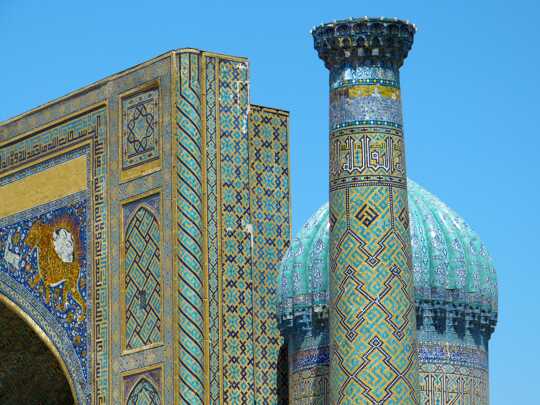
.jpg) Hi, I’m Johan (Netherlands 🇳🇱), the creator of TakeYourBackpack. Over the past decade, I’ve backpacked through 80+ countries across six continents, gaining extensive experience with independent travel, long-term trips, and overland routes.
Hi, I’m Johan (Netherlands 🇳🇱), the creator of TakeYourBackpack. Over the past decade, I’ve backpacked through 80+ countries across six continents, gaining extensive experience with independent travel, long-term trips, and overland routes.