v2.webp)
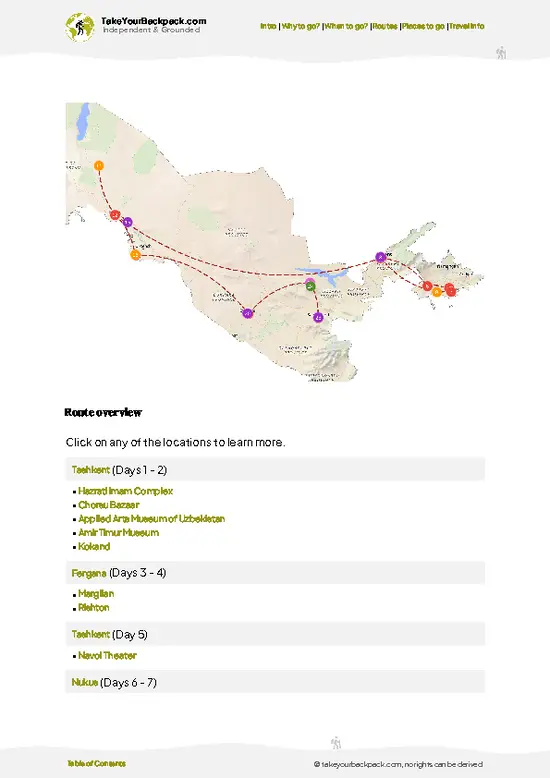
- Fayoz Tepa: a Kushan-era Buddhist monastery near Termez with a surviving stupa, courtyard and meditation cells, quiet and rarely busy.
- Kara Tepa: cave-cut Buddhist complex on the edge of Termez, good for wandering with almost no one around.
- Zurmala Stupa: one of the oldest Buddhist monuments in Central Asia, a rounded brick mass standing in open ground.
- Termez Archaeological Museum: Buddhist reliefs, Kushan finds and Greco-Bactrian pieces that explain the ruins you visit.
- Sultan Saodat Ensemble: a cluster of mausoleums with carved tilework and a long pilgrimage history.
- Al-Hakim at-Termizi Mausoleum: shrine of a medieval scholar, calm and often visited by locals.
- Kyrk Kyz: a square, fortress-like mud-brick building from the early medieval period on the outskirts of Termez, easy to explore on foot.
- Fayoz Tepa: a Kushan-era Buddhist monastery near Termez with a surviving stupa, courtyard and meditation cells, quiet and rarely busy.
- Kara Tepa: cave-cut Buddhist complex on the edge of Termez, good for wandering with almost no one around.
- Zurmala Stupa: one of the oldest Buddhist monuments in Central Asia, a rounded brick mass standing in open ground.
- Termez Archaeological Museum: Buddhist reliefs, Kushan finds and Greco-Bactrian pieces that explain the ruins you visit.
- Sultan Saodat Ensemble: a cluster of mausoleums with carved tilework and a long pilgrimage history.
- Al-Hakim at-Termizi Mausoleum: shrine of a medieval scholar, calm and often visited by locals.
- Kyrk Kyz: a square, fortress-like mud-brick building from the early medieval period on the outskirts of Termez, easy to explore on foot.
- Boysun village center: wooden doors, craft workshops and a folk-music tradition recognized by UNESCO.
- Derbent Gorge near Boysun: a narrow canyon with striking rock walls, good for short hikes.
- Teshik-Tash Cave: the cave in the Boysun mountains where the remains of a Neanderthal child were found in 1938, reached with a local driver and guide.
Spotted a mistake or missing something? Contact us.

 Best Backpacking
.jpg) Hi, I’m Johan (Netherlands 🇳🇱), the creator of TakeYourBackpack. Over the past 3 decades, I’ve backpacked through 90+ countries across six continents, gaining extensive experience with independent travel, long-term trips, and overland routes.
Hi, I’m Johan (Netherlands 🇳🇱), the creator of TakeYourBackpack. Over the past 3 decades, I’ve backpacked through 90+ countries across six continents, gaining extensive experience with independent travel, long-term trips, and overland routes.