v2.webp)
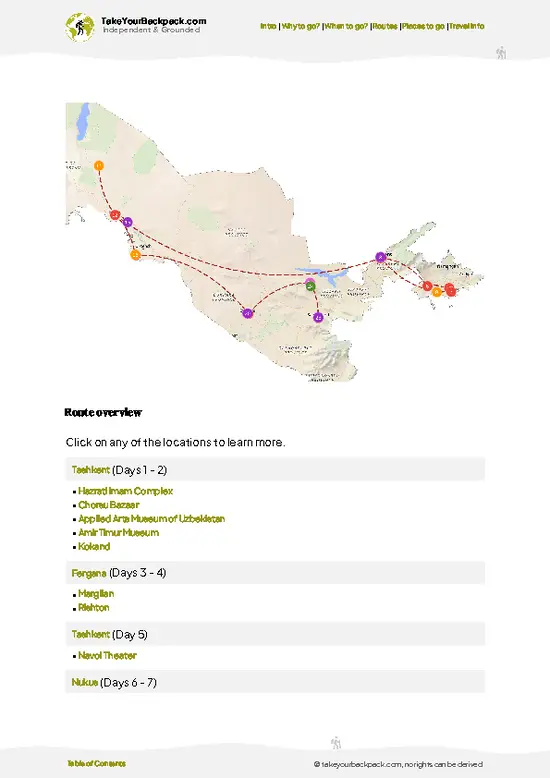
- Ichan Kala, Khiva: the walled inner city with more than fifty monuments, best at dawn when the lanes are empty.
- Kalta Minor Minaret: a stubby, tile-covered tower left unfinished, wrapped in turquoise glazed bands that photograph well in morning light.
- Islam Khodja Minaret: the tallest structure in Khiva, with a steep climb up narrow steps and a rooftop view over the whole old town.
- Tash Khauli Palace: a former khan’s residence with carved wooden columns and painted ceilings across several courtyards.
- Juma Mosque: a forest of more than 200 carved wooden pillars, some centuries old, in a dim hall lit from above.
- Pahlavon Mahmud Mausoleum: a revered shrine with a blue-tiled dome and a cool interior for a quiet pause.
- Ayaz Qala: a hilltop desert fortress near the Amu Darya delta that locals visit and
- Ichan Kala, Khiva: the walled inner city with more than fifty monuments, best at dawn when the lanes are empty.
- Kalta Minor Minaret: a stubby, tile-covered tower left unfinished, wrapped in turquoise glazed bands that photograph well in morning light.
- Islam Khodja Minaret: the tallest structure in Khiva, with a steep climb up narrow steps and a rooftop view over the whole old town.
- Tash Khauli Palace: a former khan’s residence with carved wooden columns and painted ceilings across several courtyards.
- Juma Mosque: a forest of more than 200 carved wooden pillars, some centuries old, in a dim hall lit from above.
- Pahlavon Mahmud Mausoleum: a revered shrine with a blue-tiled dome and a cool interior for a quiet pause.
- Ayaz Qala: a hilltop desert fortress near the Amu Darya delta that locals visit and few tourists reach, with sweeping sand views.
- Toprak Qala: a ruined Khorezmian palace complex of mud-brick walls, visited mostly by archaeology fans in search of solitude.
- Dishan Qala, Khiva’s outer wall: the rebuilt outer ring with a quiet walk, away from the main lanes.
- Village potteries around Khiva: workshops where families shape and glaze blue ceramics, an easy place to see the craft up close.
Spotted a mistake or missing something? Contact us.

Samarkand City Private Guided Tour & transport & paper factory

Seven Lakes: Fully Inclusive Door-to-Door Guided Tour

Bukhara: Ancient City Guided Walking Tour in a Small Group.

Day Trip from Khiva to the Top 10 Fortresses and Akchakul Lake

Autumn Special !! Explore Old Bukhara — Morning & Evening Walk

Nukus to Khiva: Transfer with Top 4 Fortresses & Akchakul Lake

Tashkent: Hands-On Uzbek Culture & Pottery Workshop

Cultural Treasures Of The Silk Road

Tashkent Vegan Street Food Tour


 Best Backpacking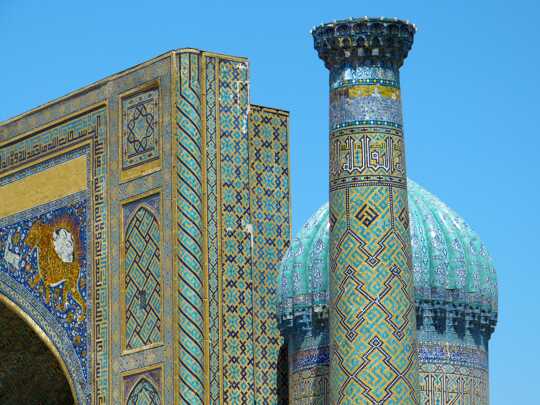
.jpg) Hi, I’m Johan (Netherlands 🇳🇱), the creator of TakeYourBackpack. Over the past 3 decades, I’ve backpacked through 90+ countries across six continents, gaining extensive experience with independent travel, long-term trips, and overland routes.
Hi, I’m Johan (Netherlands 🇳🇱), the creator of TakeYourBackpack. Over the past 3 decades, I’ve backpacked through 90+ countries across six continents, gaining extensive experience with independent travel, long-term trips, and overland routes.