v2.webp)
- SS President Coolidge wreck: A luxury liner turned troopship that sank in 1942 after hitting friendly mines. It is a world-famous wreck dive, with parts reachable by experienced divers and shallow sections for snorkelers near shore.
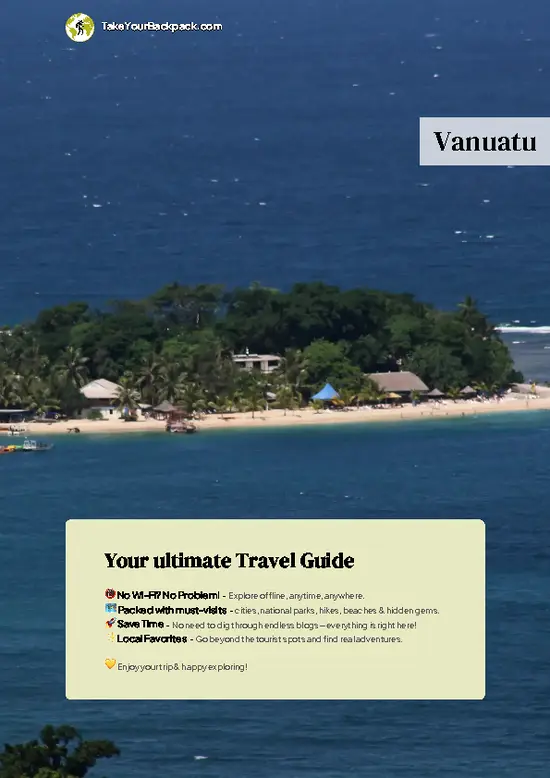
- Aore Island Resort beach: A calm stretch of sand facing Luganville, good for swimming and an easy base for snorkeling over the shallows.
- Million Dollar Point: Just across the channel, where the US military dumped vehicles and equipment after the war. Snorkelers float over rusted trucks and machinery. Entry is a small local fee.
- Aore coastal walk: A flat shoreline route along beaches, coconut groves and quiet village edges, best done in the cooler morning hours.
- Village visits on Aore: Small communities where you can meet locals, buy fruit and see everyday island life,
- SS President Coolidge wreck: A luxury liner turned troopship that sank in 1942 after hitting friendly mines. It is a world-famous wreck dive, with parts reachable by experienced divers and shallow sections for snorkelers near shore.
- Aore Island Resort beach: A calm stretch of sand facing Luganville, good for swimming and an easy base for snorkeling over the shallows.
- Million Dollar Point: Just across the channel, where the US military dumped vehicles and equipment after the war. Snorkelers float over rusted trucks and machinery. Entry is a small local fee.
- Aore coastal walk: A flat shoreline route along beaches, coconut groves and quiet village edges, best done in the cooler morning hours.
- Village visits on Aore: Small communities where you can meet locals, buy fruit and see everyday island life, always after asking permission.
- Snorkeling the Aore reef edge: Clear, shallow water with coral and reef fish just a short paddle from the beach.
- Sunset over Segond Channel: The water between Aore and Santo turns orange as small boats cross, a free show from almost any western shore.
- Coconut plantation tracks: Old working plantation lanes that cut through the island interior, quiet and shaded, with birdlife and few people.
- Hidden cove beaches: Small unmarked bays along the island’s far side that locals use for fishing and picnics, reached on foot at low tide.
- Evening boat crossing: The short ride back toward Luganville after dusk, with lights across the water and a cool breeze.
Spotted a mistake or missing something? Contact us.

Major Tom -Sailing Day Cruise, with Snorkeling, Lunch & More!

Small Group River Kayaking Tour from Port Vila

Vanuatu Jungle Zipline with Transfers

Vanuatu Jungle Zipline - Self Drive Option

Full-Day Efate Round Island Trip with Yumi Tours

Rarru Cascades, Waterfall & Kava

83 Islands Distillery & Sightseeing of Port Vila with Yumi Tours

Vanuatu Jungle Zipline, Swing and Skybridge Combo with Transfer

Discovery Hike from Port Vila


 Best Backpacking
.jpg) Hi, I’m Johan (Netherlands 🇳🇱), the creator of TakeYourBackpack. Over the past 3 decades, I’ve backpacked through 90+ countries across six continents, gaining extensive experience with independent travel, long-term trips, and overland routes.
Hi, I’m Johan (Netherlands 🇳🇱), the creator of TakeYourBackpack. Over the past 3 decades, I’ve backpacked through 90+ countries across six continents, gaining extensive experience with independent travel, long-term trips, and overland routes.