×

Venezuela🇻🇪 | citiesCaroraGoat cheese shops, whitewashed colonial church, Lara art galleries | things to do and best time to go

Explore RubioExplore Machiques

Backpacking in Carora
👌 Worth visitingcity ranked #15
By Johan Kruseman 🇳🇱 | Updated October 19, 2026

Carora in Lara state is known for its leather and its goat cheese, and the sweet smell of tanneries and sugar cane still hangs around the edges of town. It sits in the north of Venezuela, a drive west of Barquisimeto. Colonial streets are compact, so skip taxis and walk. Evenings are the sensible time to be out, since midday heat is heavy. Nightlife and hostels are thin, so don’t plan a long stay. History fans and slow travelers will like it most. Beach and party seekers won’t.

Discover everything you want to know in the 📖 Venezuela Travel Guide.
Safety warning

The current risk level for Venezuela is high. Check the advice before going.


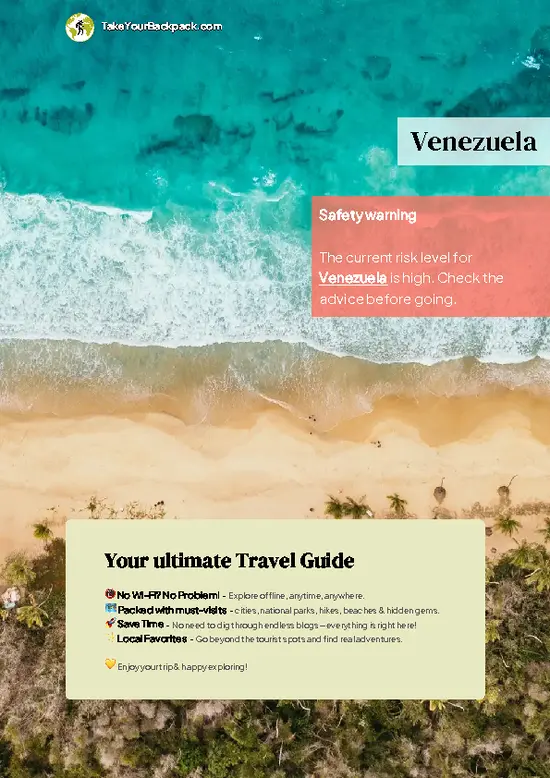
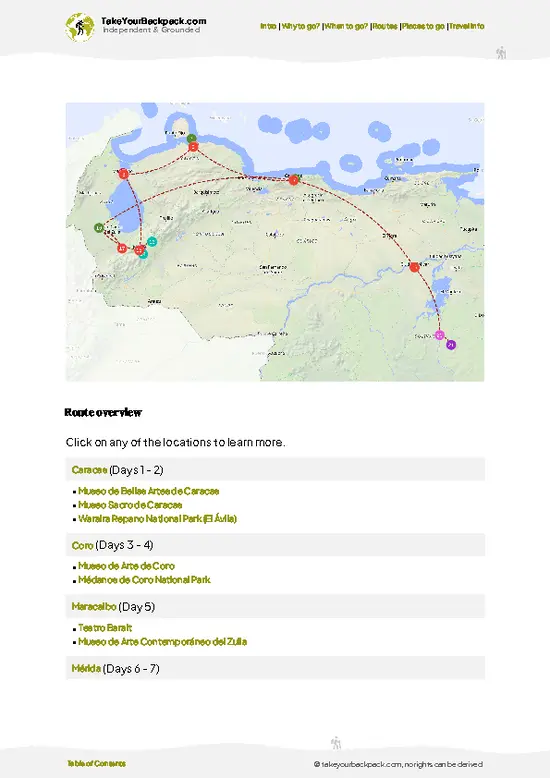
example page 0 from our offline Travel Guide for Venezuela
example page 1 from our offline Travel Guide for Venezuela
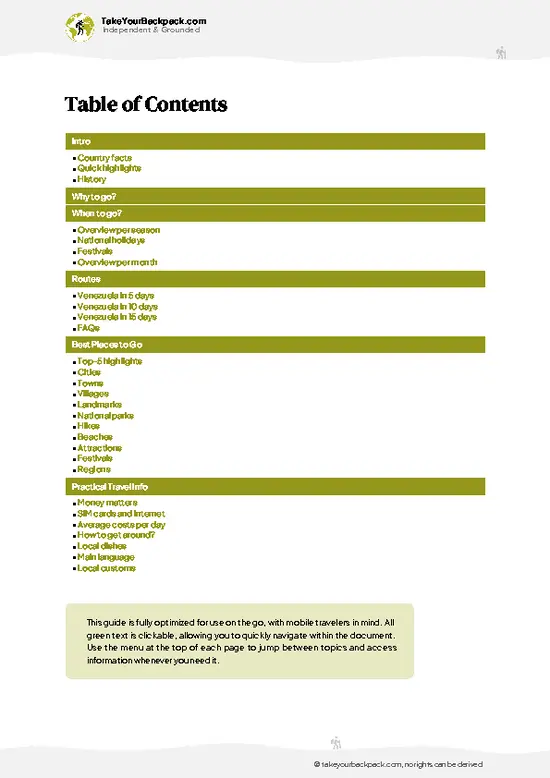
example page 2 from our offline Travel Guide for Venezuela
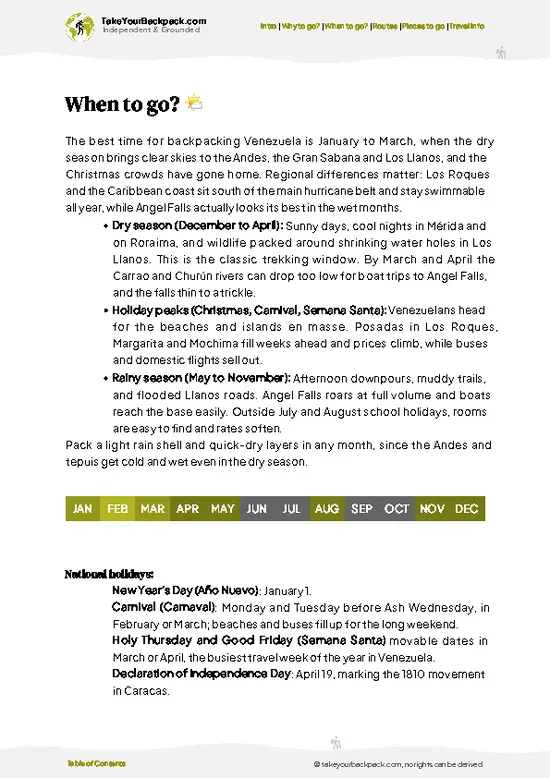
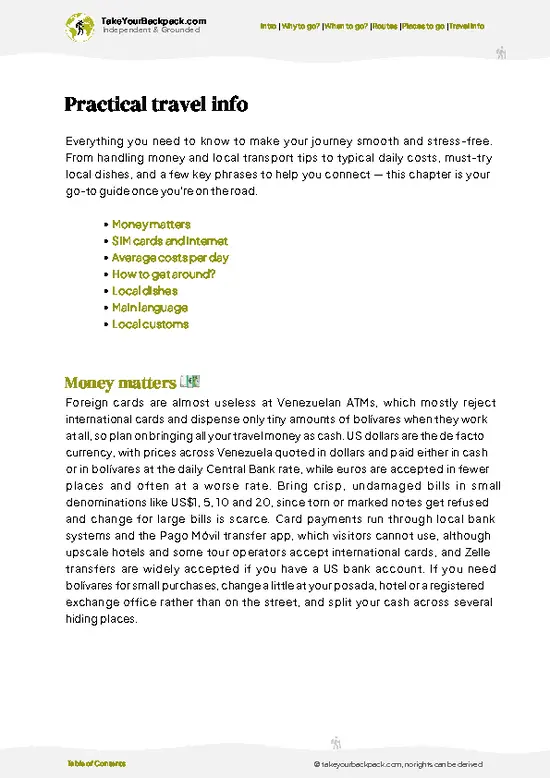
example page 3 from our offline Travel Guide for Venezuela
example page 4 from our offline Travel Guide for Venezuela
example page 5 from our offline Travel Guide for Venezuela
example page 6 from our offline Travel Guide for Venezuela
example page 7 from our offline Travel Guide for Venezuela
Loading the map 🌍
CLICK TO FILTER
cities
towns
villages
landmarks
national parks
hikes
beaches
attractions
festivals
regions
SHOW COUNTRY’S BESTSHOW ALL

✨ Why go?
Ranked #15 city in Venezuela
What makes it a must-see city

Carora works as a quiet stop where colonial streets can be covered in a morning, which suits travelers crossing Lara state on the way to the coast or the Andes. It is calm, and people here talk to strangers easily. The Carora cheese and sweets tradition means eating is a real reason to linger, and the Cuatro and folk music culture shows up in plazas on weekends. Hostels barely exist, so expect small guesthouses and plan one night, two at most. If you want hiking, nightlife and big sights, go elsewhere. If you want a place with an actual local rhythm, stay.

💡 HighlightsEssential experiences to have while visiting Carora

  1. Plaza Bolívar and Catedral de San Juan Bautista: The tree-shaded main square is the town’s living room, and the whitewashed colonial church on it anchors the historic center. Come early evening, when families fill the benches and the heat drops. Free, 30 to 45 minutes.
  2. Museo Arqueológico and Casa de la Cultura area: The archaeology museum and the cultural center near Plaza Bolívar show regional finds and local history, a quick way to read the town’s story. Go in the morning when it is cool. Entry is usually free or under US$2, about 45 minutes.
  3. Iglesia El Calvario: A gem of colonial church architecture a short walk from the center, worth a look for its simple facade and calm interior. Visit before noon. Free, 20 minutes.
  4. Casco histórico walk: Low colonial houses with tiled roofs, wooden doors
… read more 👉
  1. Plaza Bolívar and Catedral de San Juan Bautista: The tree-shaded main square is the town’s living room, and the whitewashed colonial church on it anchors the historic center. Come early evening, when families fill the benches and the heat drops. Free, 30 to 45 minutes.
  2. Museo Arqueológico and Casa de la Cultura area: The archaeology museum and the cultural center near Plaza Bolívar show regional finds and local history, a quick way to read the town’s story. Go in the morning when it is cool. Entry is usually free or under US$2, about 45 minutes.
  3. Iglesia El Calvario: A gem of colonial church architecture a short walk from the center, worth a look for its simple facade and calm interior. Visit before noon. Free, 20 minutes.
  4. Casco histórico walk: Low colonial houses with tiled roofs, wooden doors and iron-barred windows line the streets around the plaza. Walk at dawn or late afternoon to avoid the midday glare. Free, 1 to 2 hours.
  5. Local goat cheese and dairy shops: Carora sits in goat country, and shops sell fresh cheese and sweets such as dulce de leche de cabra. Go in the morning when stock is freshest. Samples are often offered, and a piece costs about US$2 to 5. Allow 30 minutes.
  6. Mercado Municipal de Carora: The town market is where locals buy produce, cheese and cooked snacks. Mornings are busiest and best. Bring small bills and plan on 45 minutes to an hour. Free to enter.
The places around Carora that reward a day out include the Bodegas Pomar vineyards at Altagracia, about half an hour away, the Barquisimeto cathedral area, and the Parque Nacional Yacambú highlands. The item easiest to overlook is the goat cheese shops, where a quick tasting tells you more about the region than any monument.
Spotted a mistake or missing something? Contact us.

🏘️ NeighborhoodsKey areas and districts to know

Carora is compact, and the colonial core holds almost everything worth your time, so you can skip taxis for most of it.
  • Centro Histórico: Plaza Bolívar, the Cathedral of San Juan Bautista and the Iglesia El Calvario sit within a few blocks, and the streets are flat and walkable. Visit in the morning, because churches and small museums shut for a long midday break, and an experienced traveler plans around that.
  • Avenida Lara and the market zone: Busy, noisy and practical, with produce stalls, cheese and goat-meat sellers. Go for the food and the local pace, not for sights, and walk it in daylight.
  • Outskirts and the ring roads: Malls, fuel stations and little else. Not worth the time unless you need supplies.

⌛️ 1 dayA smart one-day plan

Start early and walk everywhere, then take a long break in the afternoon heat, resuming when it cools.
8:00 AM: Plaza Bolívar: Coffee and a quiet look at the cathedral while shops open. Walk two blocks to the next stop.
9:30 AM: Museo Arqueológico de Carora: Regional finds give context for the town. Allow under an hour.
11:00 AM: Cheese and sweets shops: Sample local goat cheese and sweets, then buy a little for later.
12:30 PM: Lunch and rest: Eat at a simple local restaurant, then retreat indoors during the heat.
4:00 PM: Leather workshops: Less touristed, and artisans are happy to explain their work. A short walk or taxi ride from the center.

🌤️ When to go?Seasonal considerations and timing

Carora is hot and semi-arid all year, so the real choice is between dry months and the short rains. Rain is scant here, unlike the Andes.
  • Dry Season (December to April): Days reach 32 to 35°C (90 to 95°F), nights 21 to 23°C (70 to 73°F), with almost no rain and steady breezes. Best for walking the center.
  • Rainy Season (May to November): Brief afternoon downpours, with highs near 33°C (91°F) and more humidity. Scrubland turns greener.
  • Holidays: Carnival and Semana Santa bring Venezuelan families, fuller buses and higher fares. Daylight stays close to 12 hours year-round.
Arrive early in the day in any month, since midday heat empties the streets.

source: climatestotravel.comJANJanuary: excellent for travelingFEBFebruary: excellent for travelingMARMarch: excellent for travelingAPRApril: excellent for travelingMAYMay: good for travelingJUNJune: fair for travelingJULJuly: fair for travelingAUGAugust: fair for travelingSEPSeptember: fair for travelingOCTOctober: fair for travelingNOVNovember: good for travelingDECDecember: highly recommended for traveling
when-to-go

✈️ The backpacker research shortcutVenezuela Travel Guide

An offline-friendly backpacking guide with optimized travel routes, ranked highlights, transport advice, and the best areas to stay.
example page 0 from our offline Travel Guide for Venezuela
example page 1 from our offline Travel Guide for Venezuela
example page 2 from our offline Travel Guide for Venezuela
example page 3 from our offline Travel Guide for Venezuela
example page 4 from our offline Travel Guide for Venezuela
example page 5 from our offline Travel Guide for Venezuela
example page 6 from our offline Travel Guide for Venezuela
example page 7 from our offline Travel Guide for Venezuela
The digital guide (290 pages) contains:
✅ 91 highlights, ranked by travel appeal
✅ Optimized 5, 10 & 15-day travel routes
✅ Cities, national parks, landmarks, beaches
✅ How to get around
✅ Offline-friendly for travel without Wi-Fi
👉 Click to see all 30+ guide features

📅 Plan smarter in minutes, not weeks
✅ Month by month travel advice
✅ Festivals & national holidays
✅ Budget expectations

🗺️ Go to the right places, skip the overrated ones
✅ Honest pros & cons of destinations
✅ Top hikes, parks & viewpoints
✅ Lesser-known places most travelers miss
✅ Clear “worth it vs skip it” guidance

🛏️ Travel smoothly without rookie mistakes
✅ Best areas to stay
✅ Transport systems explained simply
✅ Common scams & safety advice
✅ SIM cards, money & practical tips

🌍 Understand the country, not just visit it
✅ Culture & traditions
✅ 52 Essential phrases & customs
✅ Festivals worth planning around
✅ Traveler-friendly historical context
✅ Insights that make places more meaningful

📱 Built for real travel conditions
✅ Fully downloadable PDF
✅ Works completely offline
✅ Optimized for phone use
✅ Useful in remote areas & buses
✅ Everything in one place
Stop searching, start planning
Get instant access to your full guide. 30‑day money-back guarantee.
+ Add another guide for just

By proceeding you agree to our terms.
Sent to your inbox immediately after payment • 100% Secure Checkout
Best Backpacking Travel Advisor 2025 tourism awardBest Backpacking
Travel Advisor
2025
What others say about Take Your Backpack Guides:
⭐⭐⭐⭐⭐
Fantastic, amazing amount of information!
⭐⭐⭐⭐⭐
My goodness this is amazing, it's what I've been looking for hats off too you!
⭐⭐⭐⭐⭐
I think this is absolutely BRILLIANT
⭐⭐⭐⭐
Very complete and informative. It's still missing places, but I gotta to commend you
⭐⭐⭐⭐⭐
This is truly amazing, thank you, can't wait to explore it with my kids!
⭐⭐⭐⭐⭐
Awesome resource, thank you!
⭐⭐⭐⭐⭐
This is amazing! Can't wait to explore the ones I haven't seen
⭐⭐⭐⭐
I love this! Well done, great idea.
⭐⭐⭐⭐⭐
Thanks for taking the time to make this gem!
⭐⭐⭐⭐⭐
This might be the best website I've ever seen.
⭐⭐⭐⭐⭐
Congratulations, and thank you so much for your work; it's incredibly valuable.
⭐⭐⭐⭐
In all seriousness I think you did a great job pointing out the important spots
⭐⭐⭐⭐⭐
10/10 very good
⭐⭐⭐⭐⭐
As someone who's only just starting to visit regularly this is awesome, thank you.
⭐⭐⭐⭐
Thank you very much! I'm going to visit my dad, it's going to be very useful!
⭐⭐⭐⭐⭐
This is really cool! We'll be travelling for the first time and this definitely come in handy.
⭐⭐⭐⭐⭐
You are now our minister of culture, congratulations 👨‍💼
⭐⭐⭐⭐⭐
Just wanted to tell you that this is a pearl! Going to follow your recommendations.
⭐⭐⭐⭐⭐
This is so cool. I'll definitely be using the resource for my travels soon.
⭐⭐⭐⭐⭐
This is very impressive! Good work.
⭐⭐⭐⭐⭐
This is an amazing and informative site. Very well done!

🛏️ Where to stay?How to pick the right area

The best budget base in Carora is the area around the historic center. Dedicated hostels are almost nonexistent here, so you will mostly book simple posadas and small hotels, typically US$15 to 35 for a private room. Central streets are walkable, lively until mid evening and quiet afterward, and you can reach the market on foot. Noise comes from motorbikes and early traffic rather than nightlife. Staying near the center also keeps you close to the bus pickup points and to dinner options, so you avoid late taxi rides. Choose a place with air conditioning or a strong fan, since nights stay warm, … read more 👉
The best budget base in Carora is the area around the historic center. Dedicated hostels are almost nonexistent here, so you will mostly book simple posadas and small hotels, typically US$15 to 35 for a private room. Central streets are walkable, lively until mid evening and quiet afterward, and you can reach the market on foot. Noise comes from motorbikes and early traffic rather than nightlife. Staying near the center also keeps you close to the bus pickup points and to dinner options, so you avoid late taxi rides. Choose a place with air conditioning or a strong fan, since nights stay warm, and confirm it has a generator or water tank, as outages happen.

🚌 Getting aroundMoving around without the hassle

A shared-route por puesto or local bus ride in town costs roughly US$0.25 to 0.50, paid in cash to the driver, and US dollars in small bills are widely accepted. Central Carora is small and flat, so you will walk most of the time. Public transport works but runs on no timetable, and vehicles leave when full.
  • Walking: Free and fastest for the historic center, which spans a few blocks. Do it before the midday heat.
  • Por puestos and buses: Cheap local lines serve the market and outskirts, usually from early morning to early evening. Ask the driver or a fellow passenger which line you need, because routes are rarely signed.
  • Taxis: A short city ride costs about US$1 to 3. Agree the price before you get in, since meters are not used, and use dispatched taxis after dark rather than hailing.
  • Mototaxis:
… read more 👉
A shared-route por puesto or local bus ride in town costs roughly US$0.25 to 0.50, paid in cash to the driver, and US dollars in small bills are widely accepted. Central Carora is small and flat, so you will walk most of the time. Public transport works but runs on no timetable, and vehicles leave when full.
  • Walking: Free and fastest for the historic center, which spans a few blocks. Do it before the midday heat.
  • Por puestos and buses: Cheap local lines serve the market and outskirts, usually from early morning to early evening. Ask the driver or a fellow passenger which line you need, because routes are rarely signed.
  • Taxis: A short city ride costs about US$1 to 3. Agree the price before you get in, since meters are not used, and use dispatched taxis after dark rather than hailing.
  • Mototaxis: Fast and cheap for short hops at US$0.50 to 1.50, but I would skip them in rain or with a big pack.
  • Intercity buses: The terminal handles services to Barquisimeto (about 1 hour, US$2 to 4) and beyond. Buy tickets at the counter and carry small bills.

👛 Costs (as of 19 October 2026)Money, prices, and spending tips

Expect to spend about US$38 a day in Carora on a backpacker budget in high season.
CategoryBudget RangeLocal Reality
Dorm accommodation (high season)US$15 to 20Few hostels exist, so a basic private room is the norm
Dorm accommodation (off-season)US$12 to 16Slightly lower outside holidays
MealsUS$9 to 12Market plates and bakery snacks
Local transportUS$1 to 3Por puestos and short taxis
City transport passNot availablePay per ride in cash
Basic activities/entry feesUS$2 to 5Churches and museums are cheap or free
MiscellaneousUS$2 to 4Water, snacks, data
Total Daily BudgetUS$38Using high-season accommodation
Carry small US dollar bills, because change is hard to get and rounding up costs you.
⚠️ Prices can change and everyone travels differently, so take this as a rough guide. Hope it helps you plan your adventure!

🚌 Day tripsWhere to go beyond the main area

Carora works well as a base for quiet, rural day trips, and most are reachable by bus or shared car.
Barquisimeto:
Lara’s capital is about an hour away by bus (US$2 to 4 each way) and offers the Cathedral, the Flor de Venezuela monument and big markets. Go on a weekday, and leave by late afternoon for the return.
👉 Explore Barquisimeto
Cubiro:
Cool cloud-forest highlands with coffee farms and waterfalls, roughly 1.5 to 2 hours by road. Expect US$8 to 15 in shared transport. Hire a local guide for trails, and do not leave late, since transport home thins out.

Parque Nacional Yacambú:
A green escape in the mountains southeast of town, about 1.5 hours by car. Budget US$15 to 30 including a driver. Dry months make the roads easier.

Quibor:
A farming town known for clay pottery, around 45 minutes … read more 👉
Carora works well as a base for quiet, rural day trips, and most are reachable by bus or shared car.
Barquisimeto:
Lara’s capital is about an hour away by bus (US$2 to 4 each way) and offers the Cathedral, the Flor de Venezuela monument and big markets. Go on a weekday, and leave by late afternoon for the return.
👉 Explore Barquisimeto
Cubiro:
Cool cloud-forest highlands with coffee farms and waterfalls, roughly 1.5 to 2 hours by road. Expect US$8 to 15 in shared transport. Hire a local guide for trails, and do not leave late, since transport home thins out.

Parque Nacional Yacambú:
A green escape in the mountains southeast of town, about 1.5 hours by car. Budget US$15 to 30 including a driver. Dry months make the roads easier.

Quibor:
A farming town known for clay pottery, around 45 minutes away for US$2 to 4 by bus. Visit in the morning for the craft stalls.

🍲 FoodWhat to Eat & Drink

Carora is famed for its goat: cabrito is roasted, stewed or served in chivo en coco, a regional favorite, and the smoky, rich meat suits the dry climate. Look for cheese from local dairies, plus dulce de leche sweets and cocada. Regional liquid treats include chicha and papelón con limón, a cold sugarcane drink that fights the heat.
Backpackers usually eat at the central market stalls, bakeries around the plaza and small grill restaurants on the main avenues, where a hearty plate runs US$3 to 7.

🛡️ SafetyTraveler Safety Guide

Carora is calmer than Venezuela’s big cities, but petty theft and economic strain mean you should stay alert. Keep phones and cash out of sight, avoid walking the market edges and unlit side streets after dark, and use a dispatched taxi at night. Solo travelers do fine by keeping to the center in the evening. Power cuts can leave streets dark, so carry a headlamp. Quote prices in dollars and carry small bills to avoid overcharging. Expect pushy mototaxi drivers rather than organized scams.

FAQFrequently asked questions about Carora

Two days is enough for Carora. One covers the colonial center, Plaza Bolívar and the market, while a second allows a trip to Barquisimeto (about 1 hour by bus, US$2 to 4) or the Cubiro highlands. Add a third day if you want to hike in the mountains.
Carora is considered one of the calmer places in Venezuela for solo backpackers, though basic care applies. Stick to the central streets after dark, use dispatched taxis at night, and keep phones and cash out of view. Carrying small US dollar bills and a headlamp for power cuts also helps.
Carora is known for its colonial center, goat dishes such as cabrito, and cheese and sweets from local dairies. Visitors come for the Cathedral of San Juan Bautista on Plaza Bolívar and the colonial Iglesia El Calvario. It is also a handy base for Barquisimeto and the Cubiro highlands.
⚠️ Things can change over time, so always validate details locally before you go.

Other Venezuelan cities near Carora

Explore more nearby:

  • Barquisimeto—Tent-shaped cathedral, musical capital, Divina Pastora| 81 km away
  • Acarigua—Corn-flour arepas, llanos farm market, Araure next door| 120 km away
  • Coro—Adobe old town, Médanos dunes, pirate-era cathedral| 142 km away

💡 Not sure where to go next?
Create a personalized itinerary for Venezuela including Carora and the places that fit your trip.

Generate my itinerary

👉 Discover all cities

Or checkout all Venezuela has to offer (think cities, towns, villages, national parks, hikes, beaches, festivals)
Country photo of Venezuela

We 💚 feedbackParting advice and final tips

Go on a weekday late afternoon, when the heat eases and the plazas fill with people. I would bring cash in small bills and buy cheese last, so it stays fresh. Skip midday outdoor wandering, because shade is scarce and shops often close.

✍️ Help improve this page!
The information on this page is based on in-depth research, insights shared by experienced travelers, and feedback from the local travel community in Venezuela. While every effort is made to keep the information accurate and current, conditions can change — so if you spot anything incorrect or outdated, please get in touch.


🙋‍♂️ Give feedback

👋 Meet the founderWho’s Behind Take Your Backpack?

Johan, backpacker and founder of TakeYourBackpackHi, I’m Johan (Netherlands 🇳🇱), the creator of TakeYourBackpack. Over the past 3 decades, I’ve backpacked through 90+ countries across six continents, gaining extensive experience with independent travel, long-term trips, and overland routes.

This site is built on a combination of firsthand travel experience and carefully curated insights from other backpackers. Many guides are based on places I’ve personally visited, while others bring together tips, observations, and practical advice shared by trusted travelers I’ve met along the way.

The goal is to provide realistic, experience-driven guidance — not generic itineraries — so you can explore destinations with better context, clearer expectations, and more confidence.