×

Venezuela🇻🇪 | beachesCayo de AguaTwo-cay sandbar, knee-deep shallows, boat-crew lunch, Gran Roque departures | things to do and best time to go

Explore Cayo SalExplore Playa El Agua

Backpacking in Cayo de Agua
🏆 Top pickbeach ranked #1
By Johan Kruseman 🇳🇱 | Updated October 19, 2026

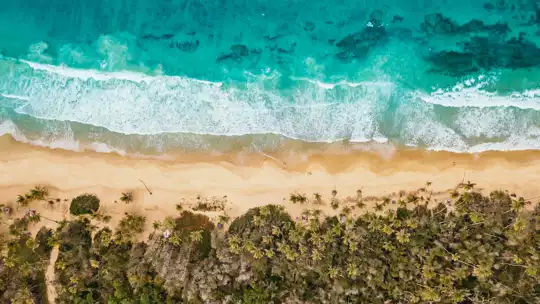
The sand strip that links Cayo de Agua to its small neighbor is a pale ribbon with water on both sides, and it is the whole reason this beach is famous. It sits in the Los Roques archipelago, off the Caribbean coast of Venezuela, north of Caracas. The water is startlingly clear and shallow, the sand is fine and white, and the swimming is easy. Snorkeling is good along the edges. Be honest with your budget though: you reach it only by boat from Gran Roque, and Los Roques is one of the priciest corners of the country, with posadas that bundle meals and boat trips. There are no shops, no shade beyond what your boat crew sets up, and the midday sun is brutal. Crowds thin out if you go early or late. Skip it if you want nightlife or a cheap beach bar. It suits couples, snorkelers and photographers who can stretch the budget, and it will frustrate anyone counting every dollar.

Discover everything you want to know in the 📖 Venezuela Travel Guide.
Safety warning

The current risk level for Venezuela is high. Check the advice before going.


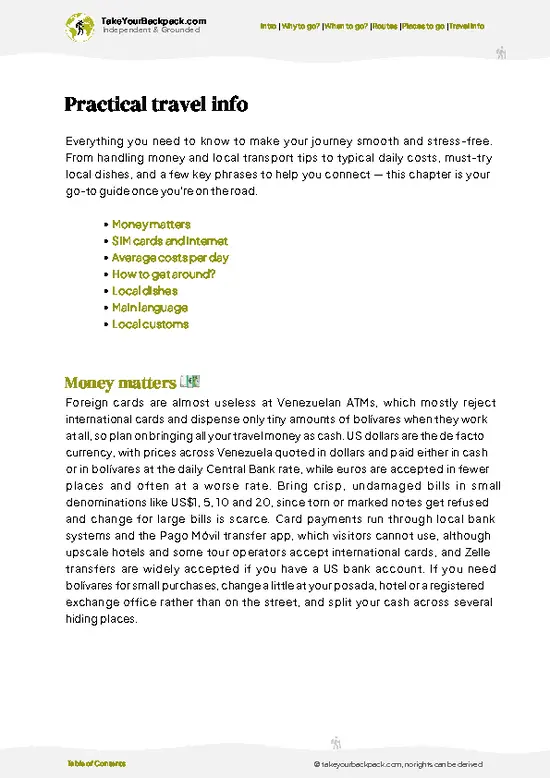
example page 0 from our offline Travel Guide for Venezuela
example page 1 from our offline Travel Guide for Venezuela
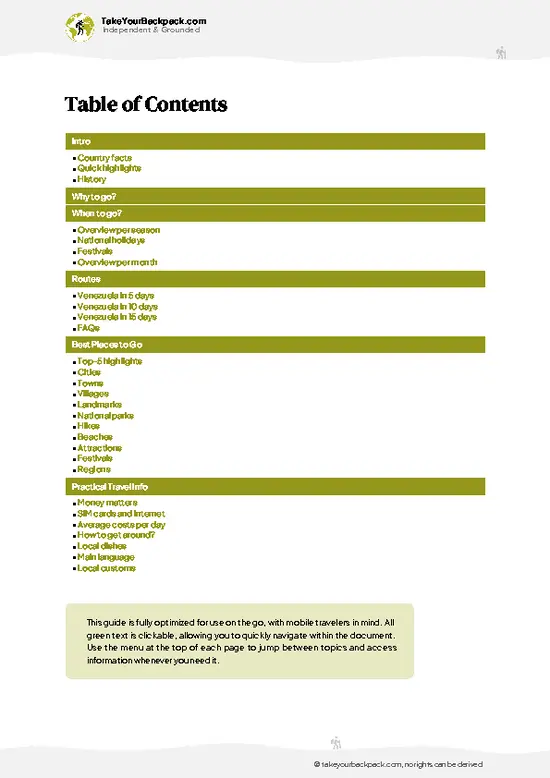
example page 2 from our offline Travel Guide for Venezuela
example page 3 from our offline Travel Guide for Venezuela
example page 4 from our offline Travel Guide for Venezuela
example page 5 from our offline Travel Guide for Venezuela
example page 6 from our offline Travel Guide for Venezuela
example page 7 from our offline Travel Guide for Venezuela
Loading the map 🌍
CLICK TO FILTER
cities
towns
villages
landmarks
national parks
hikes
beaches
attractions
festivals
regions
SHOW COUNTRY’S BESTSHOW ALL

✨ Why go?
Ranked #1 beach in Venezuela
What sets this place apart

Cayo de Agua beach earns its stop because of one thing you cannot find on the mainland: the sandbar linking Cayo de Agua to a smaller neighboring islet. You stand ankle-deep in the middle with calm turquoise water on one side and a slightly choppier, deeper blue on the other. That contrast is the draw, and it makes a day here feel very different from a standard Caribbean beach stop.

Backpackers also come for the water itself. The shallows stay warm and clear, so you can snorkel right off the sand without a tour, and weaker swimmers can wade far from shore with little current to worry about. The trade-wind breeze keeps the heat tolerable, though sunscreen and a hat are still essential.

The third reason is how it fits the Gran Roque base. Cayo de Agua beach works as a day trip from the village, … read more 👉
Cayo de Agua beach earns its stop because of one thing you cannot find on the mainland: the sandbar linking Cayo de Agua to a smaller neighboring islet. You stand ankle-deep in the middle with calm turquoise water on one side and a slightly choppier, deeper blue on the other. That contrast is the draw, and it makes a day here feel very different from a standard Caribbean beach stop.

Backpackers also come for the water itself. The shallows stay warm and clear, so you can snorkel right off the sand without a tour, and weaker swimmers can wade far from shore with little current to worry about. The trade-wind breeze keeps the heat tolerable, though sunscreen and a hat are still essential.

The third reason is how it fits the Gran Roque base. Cayo de Agua beach works as a day trip from the village, so you can sleep in a simple posada, spend the morning on the sand, and return for dinner. You join a boat with other travelers, which is the main social scene: sharing umbrellas, fish lunches and snorkel gear with strangers who quickly become dinner companions.

💡 HighlightsPlaces and moments you shouldn't skip

  1. The sandbar: This is what everyone comes for. A narrow sand strip joins the two cays, with calm water on one flank and open sea on the other. Walk its length slowly, and note that its shape shifts with wind and tide.
  2. Shallow-water swimming: The water on the sheltered side stays knee to waist deep for a long way out, clear enough to see your feet and passing rays or small fish. It is gentle and suits nervous swimmers and children.
  3. Snorkeling the edges: Along the open side and around the cay edges you find coral patches, sea grass and schools of small reef fish. Visibility is usually excellent. Bring your own mask if you are picky, since boat gear varies.
  4. Boat-crew beach lunch: Crews from the Gran Roque posadas set up umbrellas, chairs and a cooler, and lunch is usually fresh fish or seafood. It
… read more 👉
  1. The sandbar: This is what everyone comes for. A narrow sand strip joins the two cays, with calm water on one flank and open sea on the other. Walk its length slowly, and note that its shape shifts with wind and tide.
  2. Shallow-water swimming: The water on the sheltered side stays knee to waist deep for a long way out, clear enough to see your feet and passing rays or small fish. It is gentle and suits nervous swimmers and children.
  3. Snorkeling the edges: Along the open side and around the cay edges you find coral patches, sea grass and schools of small reef fish. Visibility is usually excellent. Bring your own mask if you are picky, since boat gear varies.
  4. Boat-crew beach lunch: Crews from the Gran Roque posadas set up umbrellas, chairs and a cooler, and lunch is usually fresh fish or seafood. It is the only real shade and food on the cay, so you spend the middle of the day here by necessity, and it is a good moment to chat with other guests.
  5. Dune walk around Cayo de Agua: Beyond the sandbar, the cay itself is a low sweep of white sand with almost no vegetation. Walk the outer edge in the late afternoon for open views across the reef and for the best photos. There is no nightlife here. Evenings belong to Gran Roque.
Allow a full day, roughly five to six hours on the sand once the boat has dropped you off.
Spotted a mistake or missing something? Contact us.

🌤️ When to go?When to go for the best experience

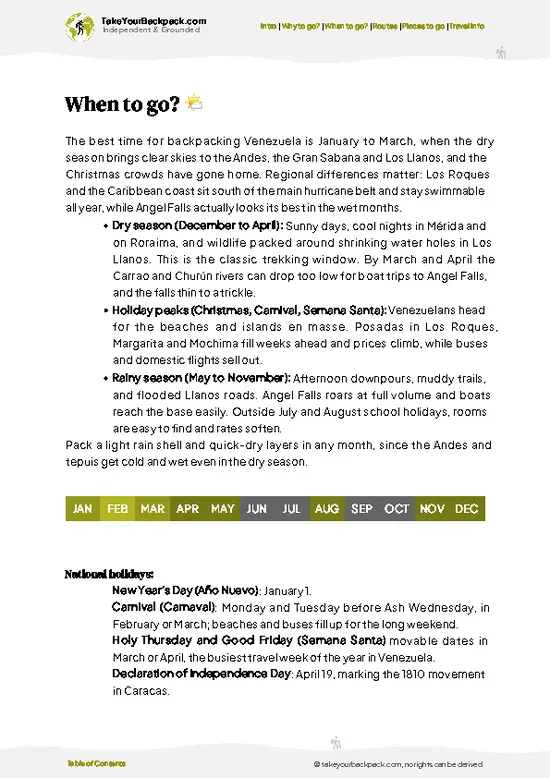
  • Dry Season (December to April): Cayo de Agua gets its best conditions from December to April, with almost no rain, steady trade winds and sea temperatures around 26 to 28°C (79 to 82°F). Daytime highs sit near 29 to 32°C (84 to 90°F) and the water is at its clearest.
  • Carnival and Semana Santa: Venezuelan holiday weeks in February or March and around Easter fill the Los Roques boats and posadas. Prices climb noticeably and rooms need booking weeks ahead.
  • Rainy Season (May to November): Short afternoon downpours are common, humidity rises and highs reach 31 to 33°C (88 to 91°F). Visibility can drop after heavy rain, but the sand is quieter and rates ease.
  • Daylight: Days run roughly 11 to 13 hours across the year, so the shift between seasons is small. Plan beach time before the midday sun.
  • Peak
… read more 👉
  • Dry Season (December to April): Cayo de Agua gets its best conditions from December to April, with almost no rain, steady trade winds and sea temperatures around 26 to 28°C (79 to 82°F). Daytime highs sit near 29 to 32°C (84 to 90°F) and the water is at its clearest.
  • Carnival and Semana Santa: Venezuelan holiday weeks in February or March and around Easter fill the Los Roques boats and posadas. Prices climb noticeably and rooms need booking weeks ahead.
  • Rainy Season (May to November): Short afternoon downpours are common, humidity rises and highs reach 31 to 33°C (88 to 91°F). Visibility can drop after heavy rain, but the sand is quieter and rates ease.
  • Daylight: Days run roughly 11 to 13 hours across the year, so the shift between seasons is small. Plan beach time before the midday sun.
  • Peak Season Tides and Wind: January and February bring the strongest breezes, which suit kitesurfers but can ruffle snorkeling spots.
Book a weekday visit in the dry season to get clear water without holiday crowds or surcharges.


source: climatestotravel.comJANJanuary: excellent for travelingFEBFebruary: excellent for travelingMARMarch: excellent for travelingAPRApril: highly recommended for travelingMAYMay: fair for travelingJUNJune: fair for travelingJULJuly: fair for travelingAUGAugust: fair for travelingSEPSeptember: fair for travelingOCTOctober: fair for travelingNOVNovember: fair for travelingDECDecember: highly recommended for traveling
venezuela-beach-cayo-de-agua
© Google | Jorge Humberto

✈️ The backpacker research shortcutVenezuela Travel Guide

An offline-friendly backpacking guide with optimized travel routes, ranked highlights, transport advice, and the best areas to stay.
example page 0 from our offline Travel Guide for Venezuela
example page 1 from our offline Travel Guide for Venezuela
example page 2 from our offline Travel Guide for Venezuela
example page 3 from our offline Travel Guide for Venezuela
example page 4 from our offline Travel Guide for Venezuela
example page 5 from our offline Travel Guide for Venezuela
example page 6 from our offline Travel Guide for Venezuela
example page 7 from our offline Travel Guide for Venezuela
The digital guide (290 pages) contains:
✅ 91 highlights, ranked by travel appeal
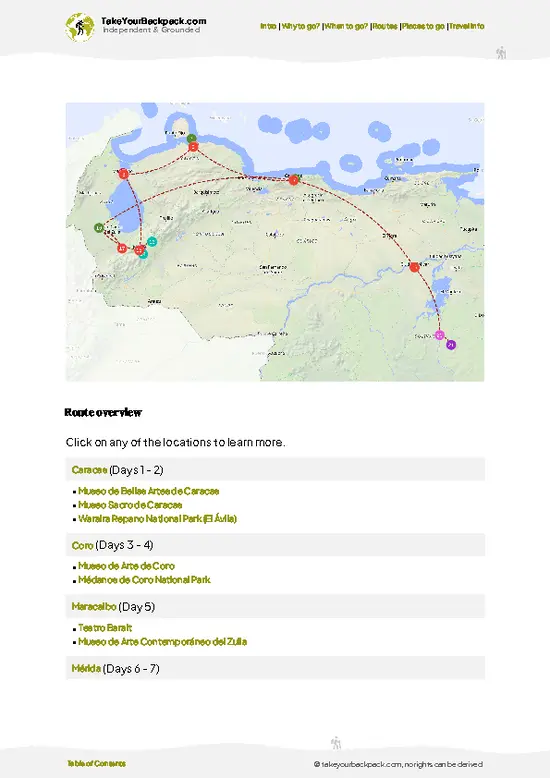
✅ Optimized 5, 10 & 15-day travel routes
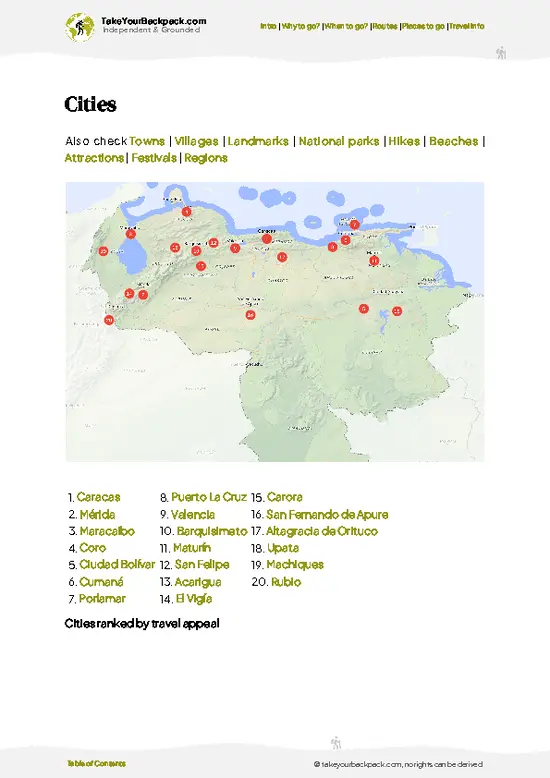
✅ Cities, national parks, landmarks, beaches
✅ How to get around
✅ Offline-friendly for travel without Wi-Fi
👉 Click to see all 30+ guide features

📅 Plan smarter in minutes, not weeks
✅ Month by month travel advice
✅ Festivals & national holidays
✅ Budget expectations

🗺️ Go to the right places, skip the overrated ones
✅ Honest pros & cons of destinations
✅ Top hikes, parks & viewpoints
✅ Lesser-known places most travelers miss
✅ Clear “worth it vs skip it” guidance

🛏️ Travel smoothly without rookie mistakes
✅ Best areas to stay
✅ Transport systems explained simply
✅ Common scams & safety advice
✅ SIM cards, money & practical tips

🌍 Understand the country, not just visit it
✅ Culture & traditions
✅ 52 Essential phrases & customs
✅ Festivals worth planning around
✅ Traveler-friendly historical context
✅ Insights that make places more meaningful

📱 Built for real travel conditions
✅ Fully downloadable PDF
✅ Works completely offline
✅ Optimized for phone use
✅ Useful in remote areas & buses
✅ Everything in one place
Stop searching, start planning
Get instant access to your full guide. 30‑day money-back guarantee.
+ Add another guide for just

By proceeding you agree to our terms.
Sent to your inbox immediately after payment • 100% Secure Checkout
Best Backpacking Travel Advisor 2025 tourism awardBest Backpacking
Travel Advisor
2025
What others say about Take Your Backpack Guides:
⭐⭐⭐⭐⭐
Fantastic, amazing amount of information!
⭐⭐⭐⭐⭐
My goodness this is amazing, it's what I've been looking for hats off too you!
⭐⭐⭐⭐⭐
I think this is absolutely BRILLIANT
⭐⭐⭐⭐
Very complete and informative. It's still missing places, but I gotta to commend you
⭐⭐⭐⭐⭐
This is truly amazing, thank you, can't wait to explore it with my kids!
⭐⭐⭐⭐⭐
Awesome resource, thank you!
⭐⭐⭐⭐⭐
This is amazing! Can't wait to explore the ones I haven't seen
⭐⭐⭐⭐
I love this! Well done, great idea.
⭐⭐⭐⭐⭐
Thanks for taking the time to make this gem!
⭐⭐⭐⭐⭐
This might be the best website I've ever seen.
⭐⭐⭐⭐⭐
Congratulations, and thank you so much for your work; it's incredibly valuable.
⭐⭐⭐⭐
In all seriousness I think you did a great job pointing out the important spots
⭐⭐⭐⭐⭐
10/10 very good
⭐⭐⭐⭐⭐
As someone who's only just starting to visit regularly this is awesome, thank you.
⭐⭐⭐⭐
Thank you very much! I'm going to visit my dad, it's going to be very useful!
⭐⭐⭐⭐⭐
This is really cool! We'll be travelling for the first time and this definitely come in handy.
⭐⭐⭐⭐⭐
You are now our minister of culture, congratulations 👨‍💼
⭐⭐⭐⭐⭐
Just wanted to tell you that this is a pearl! Going to follow your recommendations.
⭐⭐⭐⭐⭐
This is so cool. I'll definitely be using the resource for my travels soon.
⭐⭐⭐⭐⭐
This is very impressive! Good work.
⭐⭐⭐⭐⭐
This is an amazing and informative site. Very well done!

🛏️ Where to stay?Where staying makes the most sense

The best base for backpackers is the town of Gran Roque, the only real settlement in the Los Roques archipelago, a short boat ride from Cayo de Agua. Staying there puts you among small family-run posadas where budget travelers share breakfast tables, swap boat plans and split charter costs.
Expect to pay roughly US$60 to 120 per person a night for a posada, and many rates include meals because there are few other options on the islands. That is expensive next to mainland Venezuela, but food and lodging bundles keep daily spending predictable. Rooms are simple, with fans or air conditioning, and … read more 👉
The best base for backpackers is the town of Gran Roque, the only real settlement in the Los Roques archipelago, a short boat ride from Cayo de Agua. Staying there puts you among small family-run posadas where budget travelers share breakfast tables, swap boat plans and split charter costs.
Expect to pay roughly US$60 to 120 per person a night for a posada, and many rates include meals because there are few other options on the islands. That is expensive next to mainland Venezuela, but food and lodging bundles keep daily spending predictable. Rooms are simple, with fans or air conditioning, and sand streets make everything walkable in minutes.
The area around the main plaza and the seafront has the most social energy. Evenings gather on the waterfront and at the small bars facing the harbor, so solo travelers meet people easily. Streets farther back are quieter and still only a few minutes from the dock.
Camping is possible on some designated cays with park permits and a boat arrangement, which cuts costs but takes planning and your own water and supplies. Most backpackers stay on Gran Roque and take day boats out to Cayo de Agua, which keeps logistics simple. Book ahead for December to April and holiday weeks.

🛡️ SafetyStaying Safe: What Travelers Should Know

Cayo de Agua is a calm, shallow-water beach inside the Los Roques reef system, and swimming here is easy. The sandbar and turquoise shallows have gentle water, little wave energy and almost no rip currents. Tides are small, though the sandbar can shift in size and a current can build in the channels at either side, so stay near the bar rather than wading far across.
The main risk is the sun. There is almost no natural shade, the white sand reflects heat and midday exposure is intense. Bring reef-safe sunscreen, a long-sleeved shirt, a hat and plenty of water. Boat captains usually provide an umbrella, but confirm before you go.
Reef and sea urchins sit in patches near the edges, so wear water shoes if you walk away from the sand. Sharks are present in the archipelago but seldom a concern for … read more 👉
Cayo de Agua is a calm, shallow-water beach inside the Los Roques reef system, and swimming here is easy. The sandbar and turquoise shallows have gentle water, little wave energy and almost no rip currents. Tides are small, though the sandbar can shift in size and a current can build in the channels at either side, so stay near the bar rather than wading far across.
The main risk is the sun. There is almost no natural shade, the white sand reflects heat and midday exposure is intense. Bring reef-safe sunscreen, a long-sleeved shirt, a hat and plenty of water. Boat captains usually provide an umbrella, but confirm before you go.
Reef and sea urchins sit in patches near the edges, so wear water shoes if you walk away from the sand. Sharks are present in the archipelago but seldom a concern for swimmers. Theft is rare on the cay, yet keep valuables with the boat crew or in a dry bag. Follow boat schedules, since wind can change return times.

FAQTraveler FAQ

Take a flight from Caracas (Maiquetía) to Gran Roque in Los Roques, about 40 to 50 minutes, with fares typically US$180 to 300 return. From Gran Roque, a day boat to Cayo de Agua takes about an hour and usually costs US$25 to 50 per person through a posada. Book flights and a posada early in the dry season, because seats on the small planes sell out.
Cayo de Agua is excellent for swimming, with calm, shallow, turquoise water over a white sandbar and little wave action. Snorkeling is good over nearby reef patches, where you can see tropical fish and sometimes rays, while masks and fins can usually be rented in Gran Roque for around US$5 to 10. Surfing is not an option, but kitesurfing and windsurfing are popular nearby in the windy months of January to March.
Cayo de Agua itself has no gate, but it lies inside Los Roques National Park, which charges an entry fee, about US$30 per foreign visitor and paid in Gran Roque. The larger costs are the flight (about US$180 to 300 return from Caracas) and the boat (US$25 to 50 for the day). Plan roughly US$100 to 150 a day for a posada with meals once you are on the islands.
⚠️ Things can change over time, so always validate details locally before you go.

Other Venezuelan beaches near Cayo de Agua

Explore more nearby:

  • Cayo Sal—Morrocoy cay, pale-to-deep water, shoreline shells, seabirds| 173 km away
  • Cayo Muerto—Morrocoy islet, warm shallows, reef patches, camping-style visits| 174 km away
  • Playa El Agua—Four-kilometer strip, kitesurf winds, sand-side grills, evening bars| 346 km away

💡 Not sure where to go next?
Create a personalized itinerary for Venezuela including Cayo de Agua and the places that fit your trip.

Generate my itinerary

👉 Discover all beaches

Or checkout all Venezuela has to offer (think cities, towns, villages, national parks, hikes, beaches, festivals)
Country photo of Venezuela

We 💚 feedbackKey takeaways before you go

Cayo de Agua beach pairs best with a stay on Gran Roque, plus a second boat day to a quieter cay such as Francisqui or Madrisquí, so you see both a sandbar and a classic palm-fringed shore. I would go on the earliest boat, bring a long-sleeved rash shirt and reef-safe sunscreen, and skip any plan to stay past the afternoon heat.

✍️ Help improve this page!
The information on this page is based on in-depth research, insights shared by experienced travelers, and feedback from the local travel community in Venezuela. While every effort is made to keep the information accurate and current, conditions can change — so if you spot anything incorrect or outdated, please get in touch.


🙋‍♂️ Give feedback

👋 Meet the founderWho’s Behind Take Your Backpack?

Johan, backpacker and founder of TakeYourBackpackHi, I’m Johan (Netherlands 🇳🇱), the creator of TakeYourBackpack. Over the past 3 decades, I’ve backpacked through 90+ countries across six continents, gaining extensive experience with independent travel, long-term trips, and overland routes.

This site is built on a combination of firsthand travel experience and carefully curated insights from other backpackers. Many guides are based on places I’ve personally visited, while others bring together tips, observations, and practical advice shared by trusted travelers I’ve met along the way.

The goal is to provide realistic, experience-driven guidance — not generic itineraries — so you can explore destinations with better context, clearer expectations, and more confidence.