×

Venezuela🇻🇪 | best beachesEssential 6 beaches to Explore in Venezuela

Beaches in Venezuela come in two kinds: the Caribbean coast with 2,800 km of shoreline, and a handful of offshore islands. The mainland strip near Caracas and Puerto Cabello is crowded on weekends with locals and not worth a long detour. The Morrocoy and Paria coasts are better, with calm water and boat-hop access. Margarita Island has the widest range of lodging and the easiest transport. The Los Roques archipelago gives the clearest water but costs several times more. Independent travelers on a tight budget should pick the Paria Peninsula for rough, cheap, fishing-village beaches, and skip anything that needs a charter flight unless the splurge is deliberate.

By Johan Kruseman 🇳🇱 | Updated October 20, 2026
Explore the best attractions in Venezuela

Why go?What Makes Them Special

Venezuela has one of the longest Caribbean coastlines of any South American country, and it sits outside the main hurricane belt, so the sea is warm and mostly calm year-round. That geography is the real asset. Coral cays, mangrove lagoons and long palm-backed bays exist here in numbers that Colombia or Costa Rica cannot match in one country, and many of them see a fraction of the foreign visitors.

The catch is infrastructure. Decades of economic crisis left transport patchy, with unreliable fuel, intermittent power and uneven water supply in many coastal towns. Tourism services are thin outside Margarita, Morrocoy and Los Roques. Expect cash economy quirks too: the US dollar is widely used for lodging and boat trips, while small purchases may need bolívares, and card payments often fail. … read more 👉
Venezuela has one of the longest Caribbean coastlines of any South American country, and it sits outside the main hurricane belt, so the sea is warm and mostly calm year-round. That geography is the real asset. Coral cays, mangrove lagoons and long palm-backed bays exist here in numbers that Colombia or Costa Rica cannot match in one country, and many of them see a fraction of the foreign visitors.

The catch is infrastructure. Decades of economic crisis left transport patchy, with unreliable fuel, intermittent power and uneven water supply in many coastal towns. Tourism services are thin outside Margarita, Morrocoy and Los Roques. Expect cash economy quirks too: the US dollar is widely used for lodging and boat trips, while small purchases may need bolívares, and card payments often fail.

Plan on domestic holiday peaks shaping every beach: Venezuelans flood the coast at Carnival, Easter week and December, and prices jump. Beach facilities are mostly simple, with plastic chairs, fried fish and rented umbrellas, not resort-grade comfort. Travelers wanting polish should look at the islands; those wanting empty sand and low prices will find it, but must accept slow, improvised logistics. Check current government travel advisories before booking, since conditions differ sharply by region.
How the List Was Created
The list of best beaches in Venezuela is created based on beauty, vibe, water quality, activities, and surrounding scenery. If you feel a beach is missing in this list, please let us know.

When to go?Best Time to Visit Venezuela for beaches

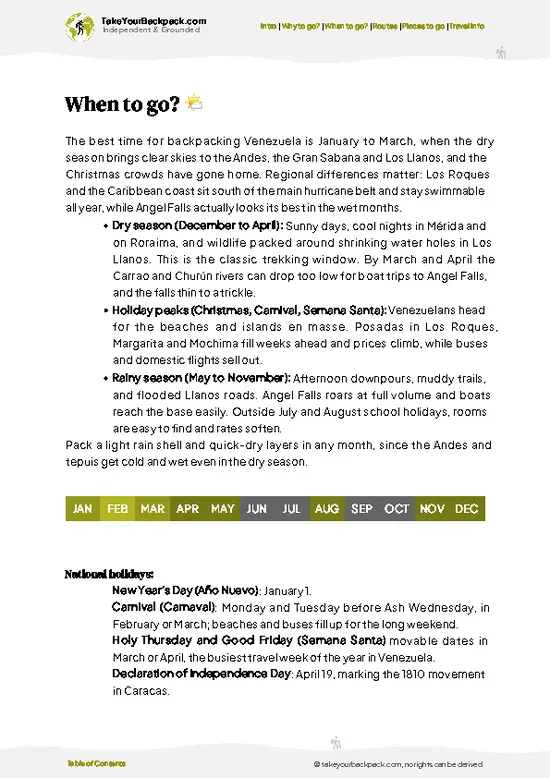
Best months and weather: The best months for beaches in Venezuela are December to April, when the dry season brings sunshine, low humidity and calm seas along the Caribbean coast. Daytime temperatures sit around 28 to 32°C, and water stays near 26 to 28°C all year. Rain in these months is minimal, often under 50 mm a month.
Shoulder and wet season: May and November are the shoulder months: fewer people, scattered afternoon showers, and lodging rates that can be 15 to 30 percent lower than peak. June to October is the rainy season, with heavy downpours of 100 to 200 mm a month in many areas, murkier water and more mosquitoes. It is not worth planning a beach-focused trip then, unless the aim is bargain prices. The eastern Paria Peninsula is wetter and greener than the dry island of Margarita, … read more 👉
Best months and weather: The best months for beaches in Venezuela are December to April, when the dry season brings sunshine, low humidity and calm seas along the Caribbean coast. Daytime temperatures sit around 28 to 32°C, and water stays near 26 to 28°C all year. Rain in these months is minimal, often under 50 mm a month.
Shoulder and wet season: May and November are the shoulder months: fewer people, scattered afternoon showers, and lodging rates that can be 15 to 30 percent lower than peak. June to October is the rainy season, with heavy downpours of 100 to 200 mm a month in many areas, murkier water and more mosquitoes. It is not worth planning a beach-focused trip then, unless the aim is bargain prices. The eastern Paria Peninsula is wetter and greener than the dry island of Margarita, and its rains can linger into November.
Peak periods: Skip Carnival (February or March), Semana Santa (the week before Easter) and the last two weeks of December if you value space. Locals fill every posada, boat prices rise, and weekend crowds on the central coast become dense. Midweek visits in January or early April avoid most of the crush while keeping the best weather.

beach hoppingTips for Visiting Multiple Destinations

Trip length and structure: A trip combining several beaches in Venezuela needs 10 to 14 days; less than that and transport eats the whole schedule. Group stops by region: the central coast (Morrocoy, Puerto Cabello), the northeast (Paria Peninsula, Mochima), and the islands (Margarita, Los Roques). Starting in Caracas, moving east along the coast and ending on Margarita makes sense, since ferries from Puerto La Cruz or Cumaná reach the island and flights return you to the capital.
Time per stop and transfers: Allow 2 to 4 nights per mainland stop and 3 to 5 on Margarita. Los Roques requires a flight from Caracas (about 40 minutes) and works best as a 3 to 4 night add-on. Overland, Caracas to Puerto La Cruz takes 4 to 5 hours, Puerto La Cruz to Paria roughly 5 to 7, and ferries to Margarita … read more 👉
Trip length and structure: A trip combining several beaches in Venezuela needs 10 to 14 days; less than that and transport eats the whole schedule. Group stops by region: the central coast (Morrocoy, Puerto Cabello), the northeast (Paria Peninsula, Mochima), and the islands (Margarita, Los Roques). Starting in Caracas, moving east along the coast and ending on Margarita makes sense, since ferries from Puerto La Cruz or Cumaná reach the island and flights return you to the capital.
Time per stop and transfers: Allow 2 to 4 nights per mainland stop and 3 to 5 on Margarita. Los Roques requires a flight from Caracas (about 40 minutes) and works best as a 3 to 4 night add-on. Overland, Caracas to Puerto La Cruz takes 4 to 5 hours, Puerto La Cruz to Paria roughly 5 to 7, and ferries to Margarita run 2 to 4 hours depending on vessel.
Planning mistakes: The most common error is cramming four regions into one week. Bus delays, fuel shortages and roadblocks regularly add hours, so leave a buffer day before any flight. Another is leaving Los Roques unbooked until arrival, when flights and posadas sell out. Book it first, then build the overland route around it. Avoid sleeper night buses on coastal roads; travel in daylight.

The ListTop beaches of Venezuela

1 Cayo de Agua

Two-cay sandbar, knee-deep shallows, boat-crew lunch, Gran Roque departures

Walk a narrow sand strip linking two cays, with calm water on one side and open sea on the other, then lunch under crew-set umbrellas.

venezuela-beach-cayo-de-agua
© Google | Jorge Humberto

2 Playa El Agua

Four-kilometer strip, kitesurf winds, sand-side grills, evening bars

Pick a stretch along a long Margarita arc, take a kitesurf lesson, eat grilled fish at sand-level tables and stay for evening music.

venezuela-beach-playa-el-agua
© Google | Vlad Malaymen

3 Playa Medina

Coconut grove, freshwater stream, shorebreak, fried-fish stands

Rinse off in a cool stream that crosses the sand, walk under tall palms and eat whole fried fish with patacones.

venezuela-beach-playa-medina
© Google | Jesus Alvarado

4 Playa Parguito

Surf break, board rentals, tostones and fried fish

Paddle into Atlantic sets, rent a board on the sand and eat fried fish afterward.

venezuela-beach-playa-parguito
© Google |

5 Cayo Sal

Morrocoy cay, pale-to-deep water, shoreline shells, seabirds

Circle a small cay on foot, comb the tideline for shells and coral, and snorkel gently sloping water beside diving terns and pelicans.

venezuela-beach-cayo-sal
© Google | Leandro Castro

6 Cayo Muerto

Morrocoy islet, warm shallows, reef patches, camping-style visits

Land by boat from Chichiriviche on a small white islet, wade out over warm flats and snorkel seagrass and coral heads.

Loading the map 🌍

Expert viewInsights from Locals and Experts

How many beaches to visit: Aim for four to six beaches over a trip, not a long checklist. Transport between them is slow and unpredictable, and each needs at least a full day to justify the journey. Beyond six you spend more time in vehicles than on sand, and the differences between stretches of coastline start to blur.
Choosing by travel style: Budget travelers should put the fishing-village coast first: simple posadas, grilled fish, and boats you share with locals. Those with a bit more money should add one offshore cay trip, where clear water and reef snorkeling are the real draw. Skip the busy city-adjacent beaches on weekends; they are loud, littered and not worth the bus fare. Families and anyone wanting easy logistics will find Margarita simplest, with the widest choice of rooms and … read more 👉
How many beaches to visit: Aim for four to six beaches over a trip, not a long checklist. Transport between them is slow and unpredictable, and each needs at least a full day to justify the journey. Beyond six you spend more time in vehicles than on sand, and the differences between stretches of coastline start to blur.
Choosing by travel style: Budget travelers should put the fishing-village coast first: simple posadas, grilled fish, and boats you share with locals. Those with a bit more money should add one offshore cay trip, where clear water and reef snorkeling are the real draw. Skip the busy city-adjacent beaches on weekends; they are loud, littered and not worth the bus fare. Families and anyone wanting easy logistics will find Margarita simplest, with the widest choice of rooms and restaurants.
What it costs: Budget about US$30 to 55 a day on the mainland coast, covering a basic room (US$12 to 25), meals (US$8 to 15) and local transport. Island stays run higher, around US$80 to 200 a day at Los Roques once flights (often US$200 to 350 return) and boat tours are included. Typical per-visit costs: boat to a cay US$5 to 20 shared, beach chair and umbrella US$3 to 8, national park entry fees a few dollars. Carry small US dollar bills in good condition; torn notes are often refused and change is hard to find. Cash is often the only option, so withdraw or bring enough before leaving a city.
Safety and cultural points: Never leave bags unattended on the sand. Theft is the most common problem, so carry only what you need, keep a phone out of sight and use a waterproof pouch. Do not walk isolated beaches at dusk or after dark, and take registered taxis or arranged transfers at night. Hire boats only from licensed operators with life jackets, and agree the price and drop-off time before departure. Weekend boat operators sometimes overload; wait for the next one if it looks packed.
Local etiquette and delays: Venezuelans are warm and chatty on the beach, and a greeting goes a long way. Swimwear is relaxed on the coast, but cover up in town. Power cuts and fuel shortages can delay buses and boats by hours, so keep a buffer for anything with a hard deadline. Bring sun protection and drinking water; shops on remote coasts may be closed or out of stock. Travel insurance that covers the region, and a check of current government advice before booking, protect your budget more than any discount will.

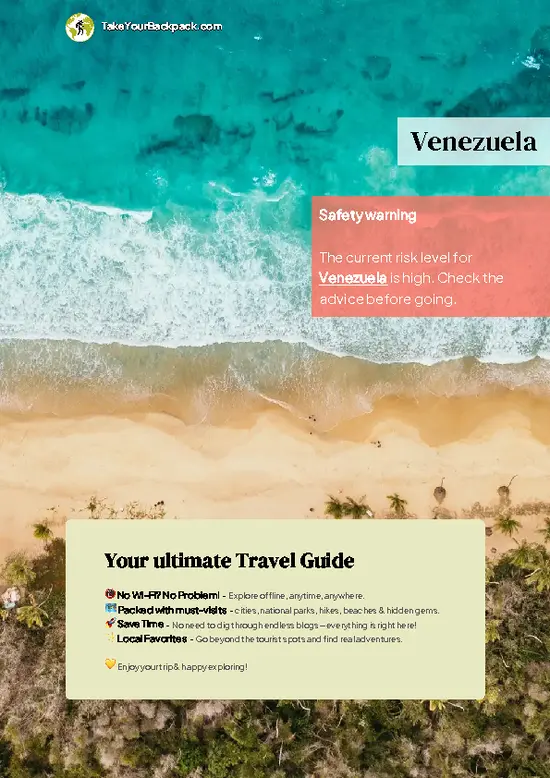
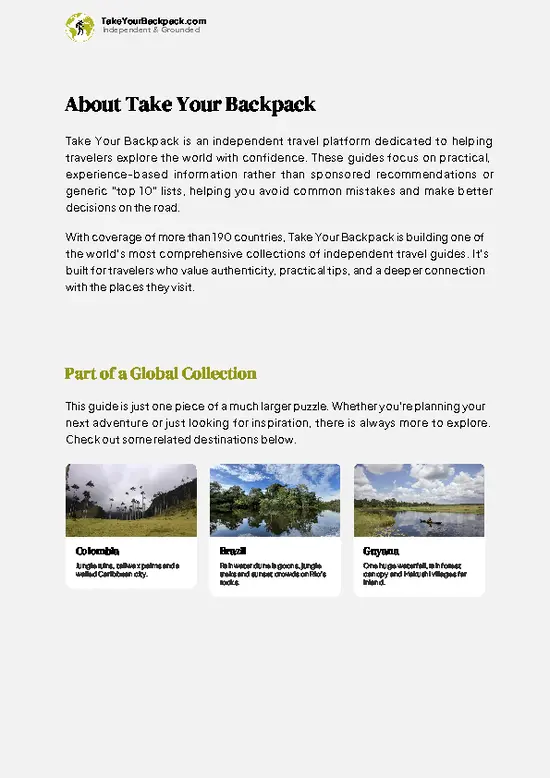
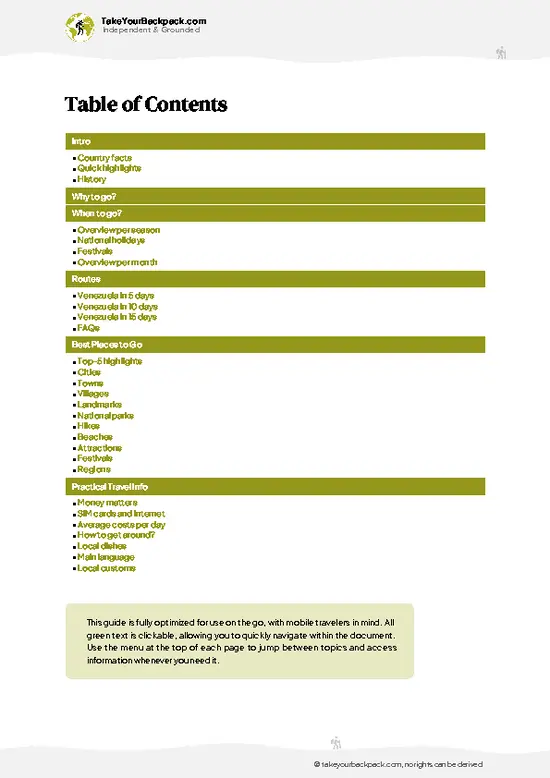
✈️ The backpacker research shortcutVenezuela Travel Guide

An offline-friendly backpacking guide with optimized travel routes, ranked highlights, transport advice, and the best areas to stay.
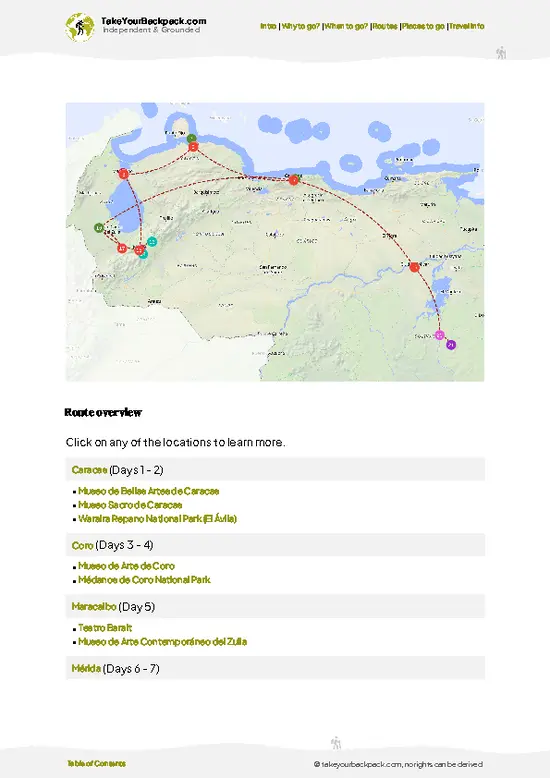
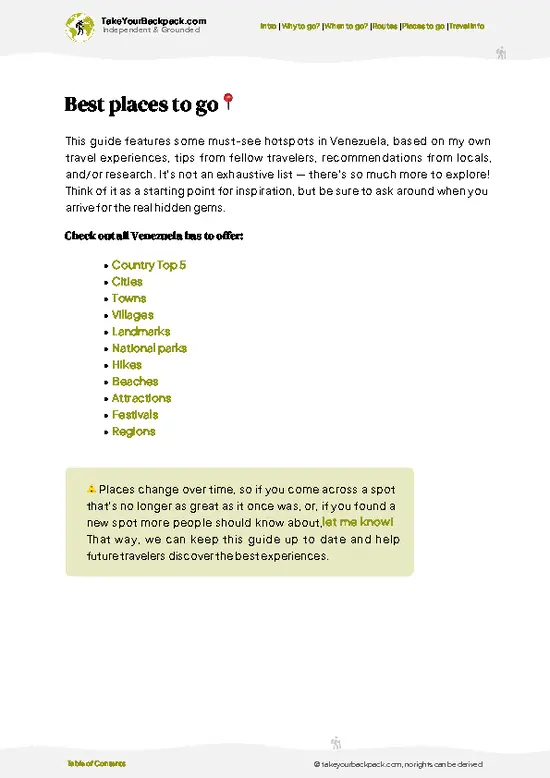
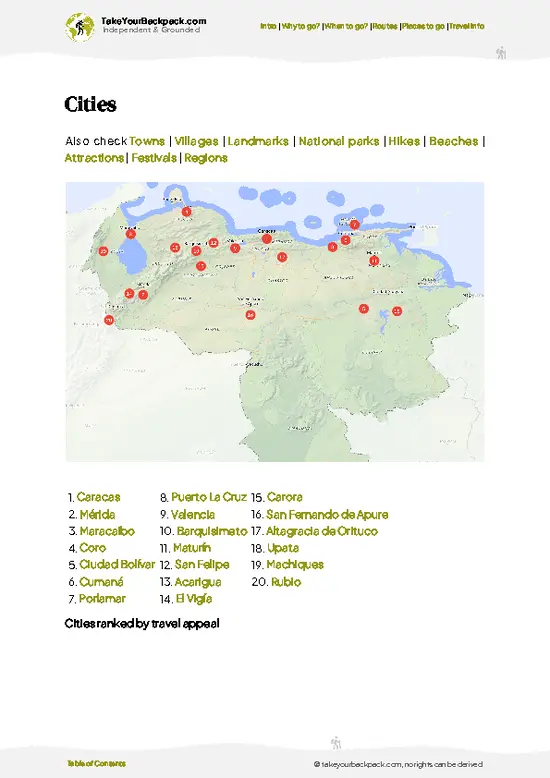
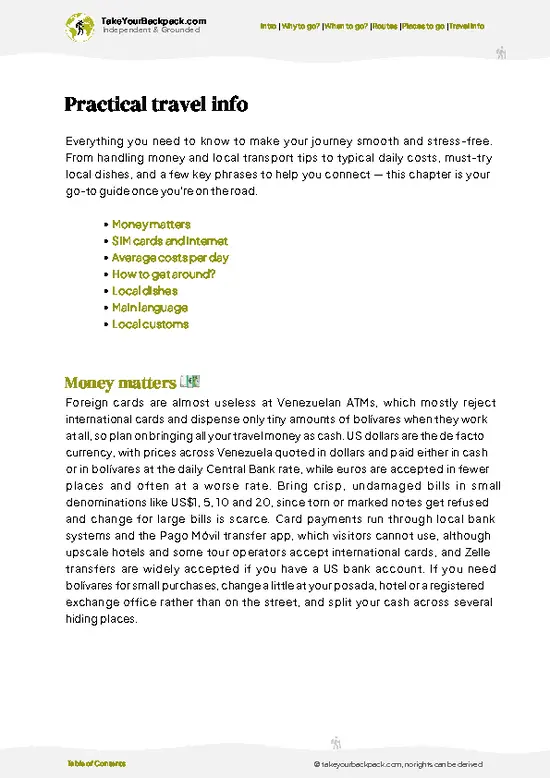
example page 0 from our offline Travel Guide for Venezuela
example page 1 from our offline Travel Guide for Venezuela
example page 2 from our offline Travel Guide for Venezuela
example page 3 from our offline Travel Guide for Venezuela
example page 4 from our offline Travel Guide for Venezuela
example page 5 from our offline Travel Guide for Venezuela
example page 6 from our offline Travel Guide for Venezuela
example page 7 from our offline Travel Guide for Venezuela
The digital guide (290 pages) contains:
✅ 91 highlights, ranked by travel appeal
✅ Optimized 5, 10 & 15-day travel routes
✅ Cities, national parks, landmarks, beaches
✅ How to get around
✅ Offline-friendly for travel without Wi-Fi
👉 Click to see all 30+ guide features

📅 Plan smarter in minutes, not weeks
✅ Month by month travel advice
✅ Festivals & national holidays
✅ Budget expectations

🗺️ Go to the right places, skip the overrated ones
✅ Honest pros & cons of destinations
✅ Top hikes, parks & viewpoints
✅ Lesser-known places most travelers miss
✅ Clear “worth it vs skip it” guidance

🛏️ Travel smoothly without rookie mistakes
✅ Best areas to stay
✅ Transport systems explained simply
✅ Common scams & safety advice
✅ SIM cards, money & practical tips

🌍 Understand the country, not just visit it
✅ Culture & traditions
✅ 52 Essential phrases & customs
✅ Festivals worth planning around
✅ Traveler-friendly historical context
✅ Insights that make places more meaningful

📱 Built for real travel conditions
✅ Fully downloadable PDF
✅ Works completely offline
✅ Optimized for phone use
✅ Useful in remote areas & buses
✅ Everything in one place
Stop searching, start planning
Get instant access to your full guide. 30‑day money-back guarantee.
+ Add another guide for just

By proceeding you agree to our terms.
Sent to your inbox immediately after payment • 100% Secure Checkout
Best Backpacking Travel Advisor 2025 tourism awardBest Backpacking
Travel Advisor
2025
What others say about Take Your Backpack Guides:
⭐⭐⭐⭐⭐
Fantastic, amazing amount of information!
⭐⭐⭐⭐⭐
My goodness this is amazing, it's what I've been looking for hats off too you!
⭐⭐⭐⭐⭐
I think this is absolutely BRILLIANT
⭐⭐⭐⭐
Very complete and informative. It's still missing places, but I gotta to commend you
⭐⭐⭐⭐⭐
This is truly amazing, thank you, can't wait to explore it with my kids!
⭐⭐⭐⭐⭐
Awesome resource, thank you!
⭐⭐⭐⭐⭐
This is amazing! Can't wait to explore the ones I haven't seen
⭐⭐⭐⭐
I love this! Well done, great idea.
⭐⭐⭐⭐⭐
Thanks for taking the time to make this gem!
⭐⭐⭐⭐⭐
This might be the best website I've ever seen.
⭐⭐⭐⭐⭐
Congratulations, and thank you so much for your work; it's incredibly valuable.
⭐⭐⭐⭐
In all seriousness I think you did a great job pointing out the important spots
⭐⭐⭐⭐⭐
10/10 very good
⭐⭐⭐⭐⭐
As someone who's only just starting to visit regularly this is awesome, thank you.
⭐⭐⭐⭐
Thank you very much! I'm going to visit my dad, it's going to be very useful!
⭐⭐⭐⭐⭐
This is really cool! We'll be travelling for the first time and this definitely come in handy.
⭐⭐⭐⭐⭐
You are now our minister of culture, congratulations 👨‍💼
⭐⭐⭐⭐⭐
Just wanted to tell you that this is a pearl! Going to follow your recommendations.
⭐⭐⭐⭐⭐
This is so cool. I'll definitely be using the resource for my travels soon.
⭐⭐⭐⭐⭐
This is very impressive! Good work.
⭐⭐⭐⭐⭐
This is an amazing and informative site. Very well done!

🛏️ Where to stay?Top Areas to Stay

Backpacking Venezuela means sleeping mostly in family-run posadas rather than dorm hostels, with private doubles typically around US$15 to 40 a night and only a handful of true dorms, mostly in the Andes and on the coast. In Caracas, Chacao, Altamira and Los Palos Grandes have the most options plus the city’s safest streets, walkable cafés and its best nightlife, though prices run higher and the historic center is a metro ride away. Mérida has the cheapest, most traveler-friendly posadas, clustered around the center near Plaza Bolívar close to tour agencies and the cable car, while beach towns like Choroní and the islands of Los Roques offer quiet posadas with little nightlife, and Los Roques … read more 👉
Backpacking Venezuela means sleeping mostly in family-run posadas rather than dorm hostels, with private doubles typically around US$15 to 40 a night and only a handful of true dorms, mostly in the Andes and on the coast. In Caracas, Chacao, Altamira and Los Palos Grandes have the most options plus the city’s safest streets, walkable cafés and its best nightlife, though prices run higher and the historic center is a metro ride away. Mérida has the cheapest, most traveler-friendly posadas, clustered around the center near Plaza Bolívar close to tour agencies and the cable car, while beach towns like Choroní and the islands of Los Roques offer quiet posadas with little nightlife, and Los Roques costs far more.

If you enjoy meeting fellow travelers, consider choosing hostels with high ratings for atmosphere. On the other hand, if you prefer having your own space, a hotel might be a better option.

VenezuelaDiscover the Country

👋 Meet the founderWho’s Behind Take Your Backpack?

Johan, backpacker and founder of TakeYourBackpackHi, I’m Johan (Netherlands 🇳🇱), the creator of TakeYourBackpack. Over the past 3 decades, I’ve backpacked through 90+ countries across six continents, gaining extensive experience with independent travel, long-term trips, and overland routes.

This site is built on a combination of firsthand travel experience and carefully curated insights from other backpackers. Many guides are based on places I’ve personally visited, while others bring together tips, observations, and practical advice shared by trusted travelers I’ve met along the way.

The goal is to provide realistic, experience-driven guidance — not generic itineraries — so you can explore destinations with better context, clearer expectations, and more confidence.