×

Venezuela🇻🇪 | townsTucupitaCaño Manamo riverfront, Warao crafts, delta gateway, dugout canoes | things to do and best time to go

Explore ChoroníExplore La Asunción

Backpacking in Tucupita
👀 For curious travelerstown ranked #5
By Johan Kruseman 🇳🇱 | Updated October 19, 2026

The outboard engine coughs, a curiara (dugout canoe with a motor) slides off the muddy bank of the Caño Manamo, and the smell of river silt and diesel follows you downstream. That is Tucupita, capital of Delta Amacuro state in the east of Venezuela, on the edge of the Orinoco Delta. The town itself is not worth more than an afternoon: a flat grid, a riverfront promenade, a few dusty plazas and heat that flattens you by noon. The reason to come is the delta, reached by guided trips into Warao communities and jungle lodges. Getting here takes a long road journey from Ciudad Guayana, and fuel and cash shortages can complicate plans. Evenings are quiet, hostels are few, and you meet other travelers mostly through tour operators. Book a multi-day river trip and skip any plan to linger. The riverside bakeries open before dawn, and the first boats leave soon after.

Discover everything you want to know in the 📖 Venezuela Travel Guide.
Safety warning

The current risk level for Venezuela is high. Check the advice before going.


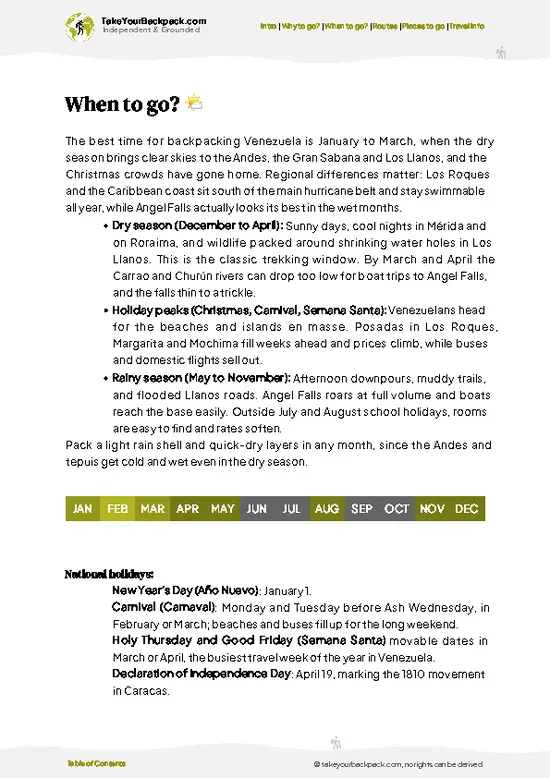
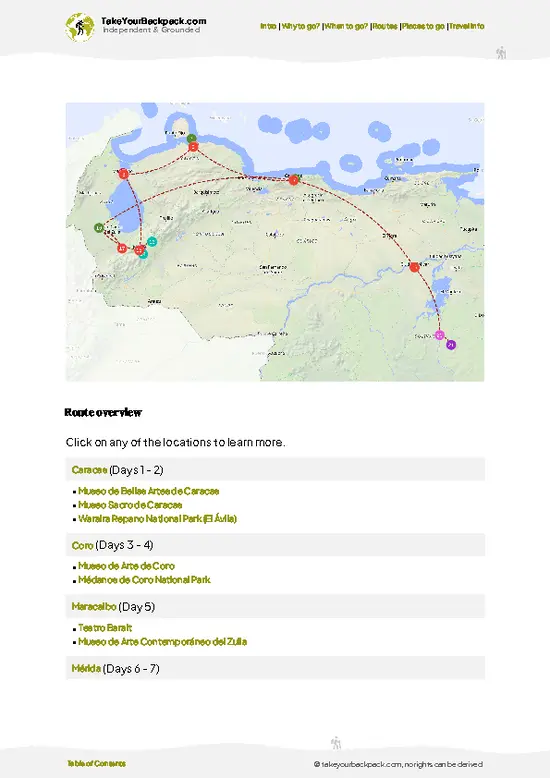
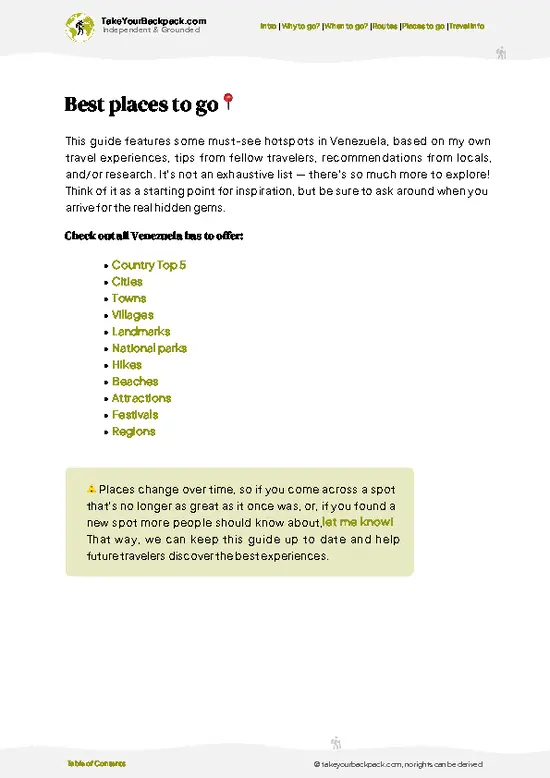
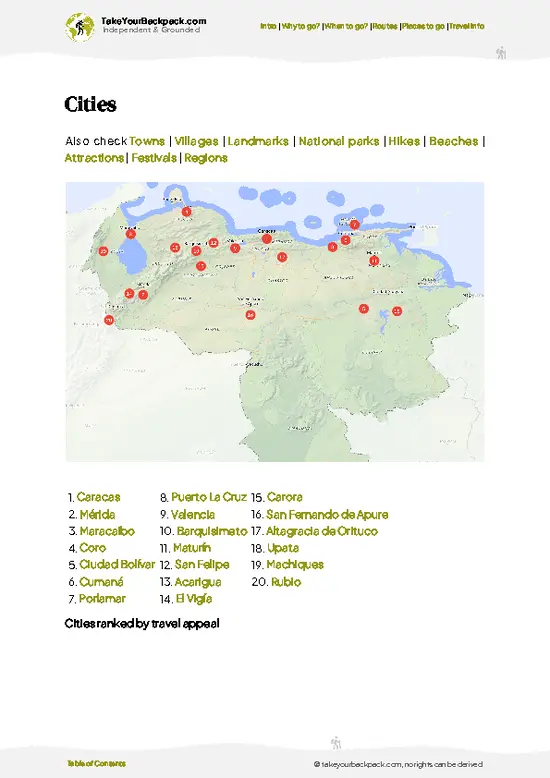
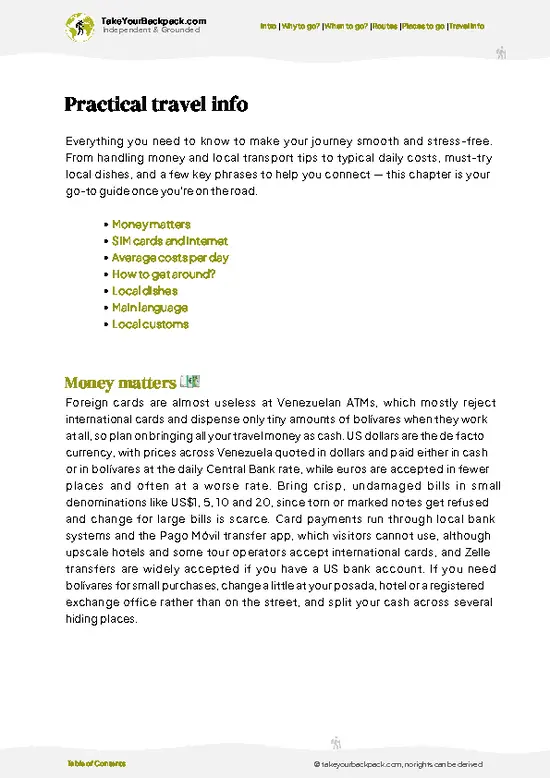
example page 0 from our offline Travel Guide for Venezuela
example page 1 from our offline Travel Guide for Venezuela
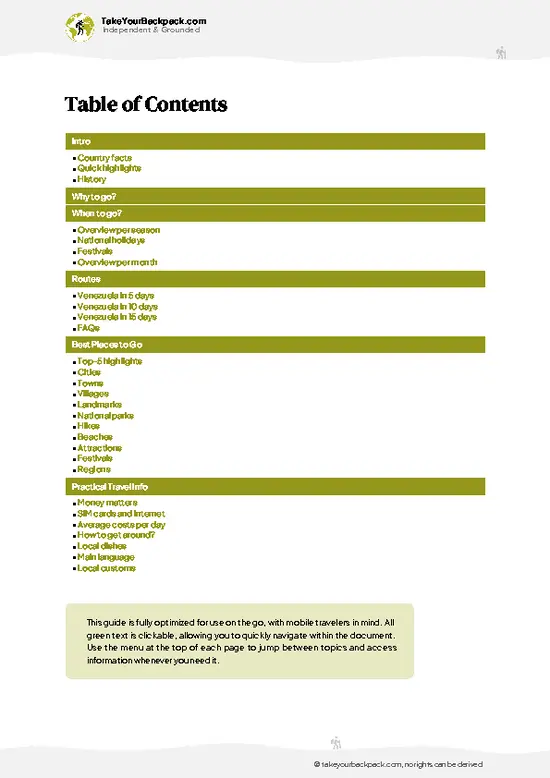
example page 2 from our offline Travel Guide for Venezuela
example page 3 from our offline Travel Guide for Venezuela
example page 4 from our offline Travel Guide for Venezuela
example page 5 from our offline Travel Guide for Venezuela
example page 6 from our offline Travel Guide for Venezuela
example page 7 from our offline Travel Guide for Venezuela
Loading the map 🌍
CLICK TO FILTER
cities
towns
villages
landmarks
national parks
hikes
beaches
attractions
festivals
regions
SHOW COUNTRY’S BESTSHOW ALL

✨ Why go?
Ranked #5 town in Venezuela
Why visitors keep coming back

Tucupita works as a launch pad, and that is the whole case for it. Almost everyone arrives to board a motorized canoe into the Orinoco Delta, where Warao families live in stilt houses and moriche palms line the channels. Most travelers stay one night before the boat and one after, which is plenty. The town gives you a place to sort out cash, buy supplies, and find a Warao guide or an operator for a two to four night lodge or hammock trip. It suits solo travelers who like joining small groups, and anyone happy to sleep in a hammock under a mosquito net, watch pink river dolphins, and eat fresh river fish. It does not suit people who want nightlife, museums or a polished old center. Tucupita is a plain, working river town, and its best hours are early morning at the Caño Manamo waterfront, when boats load and the air is still cool.

💡 HighlightsTop highlights of Tucupita

  1. Caño Manamo Waterfront: The river edge is where boats, fishers and Warao traders meet, and it is the town’s real center. Go at dawn or late afternoon when it is cooler. Free, 1 to 2 hours.
  2. Plaza Bolívar: A shaded square with benches, ice-cream sellers and locals escaping the heat. Visit early evening when families come out. Free, 30 to 45 minutes.
  3. Mercado Municipal: Stalls selling river fish, cassava bread, fruit and hammocks, a good place to see how delta food reaches the table. Mornings are liveliest. Free to enter, budget US$2 to 5 for snacks, 1 hour.
  4. Warao Crafts Stalls: Woven baskets and hammocks made from moriche palm fiber appear around the market and waterfront. Buying directly pays the makers. Prices run roughly US$3 to 25, 30 to 60 minutes.
  5. Catedral de la Divina Pastora: The central
… read more 👉
  1. Caño Manamo Waterfront: The river edge is where boats, fishers and Warao traders meet, and it is the town’s real center. Go at dawn or late afternoon when it is cooler. Free, 1 to 2 hours.
  2. Plaza Bolívar: A shaded square with benches, ice-cream sellers and locals escaping the heat. Visit early evening when families come out. Free, 30 to 45 minutes.
  3. Mercado Municipal: Stalls selling river fish, cassava bread, fruit and hammocks, a good place to see how delta food reaches the table. Mornings are liveliest. Free to enter, budget US$2 to 5 for snacks, 1 hour.
  4. Warao Crafts Stalls: Woven baskets and hammocks made from moriche palm fiber appear around the market and waterfront. Buying directly pays the makers. Prices run roughly US$3 to 25, 30 to 60 minutes.
  5. Catedral de la Divina Pastora: The central cathedral, inaugurated in 1982, that offers a cool, quiet pause and a look at everyday local devotion. Morning or late afternoon, free, 15 to 30 minutes.
The real highlights lie outside town: Warao villages along the delta channels, the Caño Mánamo and Caño Macareo waterways, and jungle lodges reached by boat, all best done as multi-day trips. For a first visit, the waterfront gives the clearest picture of why this town exists.
Spotted a mistake or missing something? Contact us.

🏘️ NeighborhoodsKey areas and districts to know

Tucupita is compact, and the useful parts fit inside about twenty blocks on the south bank of the Caño Manamo, so you can cover everything on foot in a morning.
  • Plaza Bolívar and the center: This is where to spend your time. Government buildings, banks, bakeries and cheap lunch counters crowd the streets around the plaza, and it is the one place to find a working ATM, a pharmacy and a tour agent in a single walk. Mornings are busy, and by late evening it thins out fast.
  • Waterfront along the Caño Manamo: Worth an hour at dusk. Dugout canoes (curiaras) and boats from Warao communities tie up here, the breeze is the best cooling in town, and you can watch the river traffic you will soon be joining. Grilled fish and cold drinks come from simple stands. After dark, keep to the lit stretches.
  • Mercado
… read more 👉
Tucupita is compact, and the useful parts fit inside about twenty blocks on the south bank of the Caño Manamo, so you can cover everything on foot in a morning.
  • Plaza Bolívar and the center: This is where to spend your time. Government buildings, banks, bakeries and cheap lunch counters crowd the streets around the plaza, and it is the one place to find a working ATM, a pharmacy and a tour agent in a single walk. Mornings are busy, and by late evening it thins out fast.
  • Waterfront along the Caño Manamo: Worth an hour at dusk. Dugout canoes (curiaras) and boats from Warao communities tie up here, the breeze is the best cooling in town, and you can watch the river traffic you will soon be joining. Grilled fish and cold drinks come from simple stands. After dark, keep to the lit stretches.
  • Mercado Municipal area: Loud, hot and good. Come early for river fish, plantains, cassava bread and fruit, and for a feel of how Delta families shop. Skip it at midday when the heat and crush win.
  • Outer residential barrios: Not worth the time. They are flat, sprawling grids with little to see, and walking them in the heat is wasted effort. Take a moto-taxi if you need to cross them.

⌛️ 1 dayHow to make the most of one day

6:30 AM: Caño Manamo Waterfront. Start where the day begins, watching boats load and fishers unload. Walk the embankment in the cool air and take photos from a distance. Then stroll five minutes inland.

8:00 AM: Bakery Breakfast. Find a local panadería near the center for coffee, empanadas, or a cheese-filled arepa. Eat standing like the locals. Then continue on foot to the market.

9:00 AM: Mercado Municipal. Browse fish, cassava bread, and palm-fiber hammocks. Chat with vendors, and buy crafts directly from Warao sellers if you want a fair deal. Leave before the noon heat builds.

11:30 AM: Catedral de la Divina Pastora. Duck into the cool church for a quiet break, then walk a few blocks to Plaza Bolívar and sit in the shade.

1:00 PM: Lunch. Order fried or grilled river fish with plantain … read more 👉
6:30 AM: Caño Manamo Waterfront. Start where the day begins, watching boats load and fishers unload. Walk the embankment in the cool air and take photos from a distance. Then stroll five minutes inland.

8:00 AM: Bakery Breakfast. Find a local panadería near the center for coffee, empanadas, or a cheese-filled arepa. Eat standing like the locals. Then continue on foot to the market.

9:00 AM: Mercado Municipal. Browse fish, cassava bread, and palm-fiber hammocks. Chat with vendors, and buy crafts directly from Warao sellers if you want a fair deal. Leave before the noon heat builds.

11:30 AM: Catedral de la Divina Pastora. Duck into the cool church for a quiet break, then walk a few blocks to Plaza Bolívar and sit in the shade.

1:00 PM: Lunch. Order fried or grilled river fish with plantain and rice at a simple comedor. Rest through the hottest hours.

4:00 PM: Residential Riverbanks. Wander the quieter streets toward the water, where families gather outside, kids swim, and canoes sit tied up. Few visitors come this way, and it shows daily life far better than the center does.

6:00 PM: Plaza Bolívar. Return as the heat drops and the square fills with locals. Grab a cold drink and ice cream, then confirm your boat departure for tomorrow.

🌤️ When to go?Best time to visit Tucupita

Tucupita is hot all year, with daytime highs of 31 to 34°C (88 to 93°F) and warm nights around 23 to 25°C (73 to 77°F), so the real choice is how much rain and river you want.
  • Dry Season (January to April): Lower water, less rain and fewer mosquitoes. Sunny days and easier walking on Delta trails. Tour operators run full schedules, and demand peaks around Carnival and Easter.
  • Wet Season (May to November): Heavy afternoon downpours, higher rivers, and more insects. Boats reach deeper channels, and lodges are quieter, with some discounts possible. Roads can turn muddy.
  • Transition (December): Rain tapers off, the Delta is green and full, and holiday travel raises prices and fills seats.
  • Daylight: Days run close to 12 hours in every month, so plan river trips for morning, before the heat and storms.
… read more 👉
Tucupita is hot all year, with daytime highs of 31 to 34°C (88 to 93°F) and warm nights around 23 to 25°C (73 to 77°F), so the real choice is how much rain and river you want.
  • Dry Season (January to April): Lower water, less rain and fewer mosquitoes. Sunny days and easier walking on Delta trails. Tour operators run full schedules, and demand peaks around Carnival and Easter.
  • Wet Season (May to November): Heavy afternoon downpours, higher rivers, and more insects. Boats reach deeper channels, and lodges are quieter, with some discounts possible. Roads can turn muddy.
  • Transition (December): Rain tapers off, the Delta is green and full, and holiday travel raises prices and fills seats.
  • Daylight: Days run close to 12 hours in every month, so plan river trips for morning, before the heat and storms.
Book Delta tours at least a few days ahead during Carnival and Easter weeks.


source: climatestotravel.comJANJanuary: highly recommended for travelingFEBFebruary: highly recommended for travelingMARMarch: excellent for travelingAPRApril: excellent for travelingMAYMay: fair for travelingJUNJune: fair for travelingJULJuly: fair for travelingAUGAugust: fair for travelingSEPSeptember: fair for travelingOCTOctober: fair for travelingNOVNovember: fair for travelingDECDecember: highly recommended for traveling
when-to-go

✈️ The backpacker research shortcutVenezuela Travel Guide

An offline-friendly backpacking guide with optimized travel routes, ranked highlights, transport advice, and the best areas to stay.
example page 0 from our offline Travel Guide for Venezuela
example page 1 from our offline Travel Guide for Venezuela
example page 2 from our offline Travel Guide for Venezuela
example page 3 from our offline Travel Guide for Venezuela
example page 4 from our offline Travel Guide for Venezuela
example page 5 from our offline Travel Guide for Venezuela
example page 6 from our offline Travel Guide for Venezuela
example page 7 from our offline Travel Guide for Venezuela
The digital guide (290 pages) contains:
✅ 91 highlights, ranked by travel appeal
✅ Optimized 5, 10 & 15-day travel routes
✅ Cities, national parks, landmarks, beaches
✅ How to get around
✅ Offline-friendly for travel without Wi-Fi
👉 Click to see all 30+ guide features

📅 Plan smarter in minutes, not weeks
✅ Month by month travel advice
✅ Festivals & national holidays
✅ Budget expectations

🗺️ Go to the right places, skip the overrated ones
✅ Honest pros & cons of destinations
✅ Top hikes, parks & viewpoints
✅ Lesser-known places most travelers miss
✅ Clear “worth it vs skip it” guidance

🛏️ Travel smoothly without rookie mistakes
✅ Best areas to stay
✅ Transport systems explained simply
✅ Common scams & safety advice
✅ SIM cards, money & practical tips

🌍 Understand the country, not just visit it
✅ Culture & traditions
✅ 52 Essential phrases & customs
✅ Festivals worth planning around
✅ Traveler-friendly historical context
✅ Insights that make places more meaningful

📱 Built for real travel conditions
✅ Fully downloadable PDF
✅ Works completely offline
✅ Optimized for phone use
✅ Useful in remote areas & buses
✅ Everything in one place
Stop searching, start planning
Get instant access to your full guide. 30‑day money-back guarantee.
+ Add another guide for just

By proceeding you agree to our terms.
Sent to your inbox immediately after payment • 100% Secure Checkout
Best Backpacking Travel Advisor 2025 tourism awardBest Backpacking
Travel Advisor
2025
What others say about Take Your Backpack Guides:
⭐⭐⭐⭐⭐
Fantastic, amazing amount of information!
⭐⭐⭐⭐⭐
My goodness this is amazing, it's what I've been looking for hats off too you!
⭐⭐⭐⭐⭐
I think this is absolutely BRILLIANT
⭐⭐⭐⭐
Very complete and informative. It's still missing places, but I gotta to commend you
⭐⭐⭐⭐⭐
This is truly amazing, thank you, can't wait to explore it with my kids!
⭐⭐⭐⭐⭐
Awesome resource, thank you!
⭐⭐⭐⭐⭐
This is amazing! Can't wait to explore the ones I haven't seen
⭐⭐⭐⭐
I love this! Well done, great idea.
⭐⭐⭐⭐⭐
Thanks for taking the time to make this gem!
⭐⭐⭐⭐⭐
This might be the best website I've ever seen.
⭐⭐⭐⭐⭐
Congratulations, and thank you so much for your work; it's incredibly valuable.
⭐⭐⭐⭐
In all seriousness I think you did a great job pointing out the important spots
⭐⭐⭐⭐⭐
10/10 very good
⭐⭐⭐⭐⭐
As someone who's only just starting to visit regularly this is awesome, thank you.
⭐⭐⭐⭐
Thank you very much! I'm going to visit my dad, it's going to be very useful!
⭐⭐⭐⭐⭐
This is really cool! We'll be travelling for the first time and this definitely come in handy.
⭐⭐⭐⭐⭐
You are now our minister of culture, congratulations 👨‍💼
⭐⭐⭐⭐⭐
Just wanted to tell you that this is a pearl! Going to follow your recommendations.
⭐⭐⭐⭐⭐
This is so cool. I'll definitely be using the resource for my travels soon.
⭐⭐⭐⭐⭐
This is very impressive! Good work.
⭐⭐⭐⭐⭐
This is an amazing and informative site. Very well done!

🛏️ Where to stay?Best areas to stay in Venezuela

Stay in the center around Plaza Bolívar, which is where Tucupita’s budget rooms are concentrated, along with the best access to food, ATMs and tour offices. Dedicated hostels are rare, so expect simple posadas and small guesthouses with private rooms, typically US$10 to 25 a night, and plan on fans or air conditioning, which is worth paying for in the heat. Power cuts happen, so a room with a fan that works off a backup is a plus.

The center is the safest option at night because streets stay populated until the evening and moto-taxis are easy to find. Noise comes from traffic and music, so ask … read more 👉
Stay in the center around Plaza Bolívar, which is where Tucupita’s budget rooms are concentrated, along with the best access to food, ATMs and tour offices. Dedicated hostels are rare, so expect simple posadas and small guesthouses with private rooms, typically US$10 to 25 a night, and plan on fans or air conditioning, which is worth paying for in the heat. Power cuts happen, so a room with a fan that works off a backup is a plus.

The center is the safest option at night because streets stay populated until the evening and moto-taxis are easy to find. Noise comes from traffic and music, so ask for a room away from the street. A second option is the quieter stretch near the river, which is good for early boat departures, though it is darker and emptier after dusk and has fewer places to eat. Most travelers also sleep one or more nights in Delta lodges on guided trips, usually bundled into the tour price. Book ahead for Carnival and Easter.

🚌 Getting aroundTransportation options and practical tips

The center of Tucupita is flat and small enough to cross on foot in 15 minutes, but walking stops making sense once you head for the outer barrios, the river docks beyond the center or anywhere in the midday heat. Traffic is light, and most backpackers combine walking with moto-taxis and shared rides. Fuel shortages and irregular schedules mean you should keep plans flexible.
  • Walking: Free, and the right choice for the plaza, market and waterfront. Go before 10 a.m. or after 4 p.m., because the afternoon sun is punishing.
  • Moto-taxis: The fastest way to cross town, usually US$1 to 2 per ride. Agree on the price first and ask for a helmet. They are worth it for the bus terminal and outer neighborhoods.
  • Por puesto and local buses: Shared cars and small buses cover set routes around town for about
… read more 👉
The center of Tucupita is flat and small enough to cross on foot in 15 minutes, but walking stops making sense once you head for the outer barrios, the river docks beyond the center or anywhere in the midday heat. Traffic is light, and most backpackers combine walking with moto-taxis and shared rides. Fuel shortages and irregular schedules mean you should keep plans flexible.
  • Walking: Free, and the right choice for the plaza, market and waterfront. Go before 10 a.m. or after 4 p.m., because the afternoon sun is punishing.
  • Moto-taxis: The fastest way to cross town, usually US$1 to 2 per ride. Agree on the price first and ask for a helmet. They are worth it for the bus terminal and outer neighborhoods.
  • Por puesto and local buses: Shared cars and small buses cover set routes around town for about US$0.25 to 1. They are cheap but crowded and slow, and I would use them only if you know the route.
  • Taxis: A short city ride costs about US$2 to 4. Fares are negotiated, and they are the most comfortable choice for luggage or after dark.
  • Boats (lanchas and curiaras): This is how you reach the Delta communities. Shared lanchas run from the river docks for roughly US$5 to 15 depending on distance, while a private boat costs more. Go through a trusted guide for multi-hour trips. Boats leave in the morning and rarely run after dark.
Intercity buses and por puestos leave from the terminal for Maturín, Ciudad Guayana and beyond, with journeys of roughly 3 to 5 hours at US$5 to 12. Confirm departure times the day before, since services are irregular.

👛 Costs (as of 19 October 2026)Travel costs and budget guide for Tucupita

A backpacker in Tucupita can expect to spend about US$38 to 62 a day, and the table uses a total of US$50 with a high-season room.
CategoryBudget RangeLocal Reality
Dorm accommodationUS$10 to 20Dorms are scarce, so this is a basic private room in a posada, higher in Carnival and Easter. Use US$15 for the total.
MealsUS$8 to 15Set lunches, arepas and grilled river fish are cheap, and restaurants cost more at night. Use US$11.
Local transportUS$2 to 6Moto-taxis at US$1 to 2 a ride and por puestos for pennies. Use US$4.
Basic activities/entry feesUS$10 to 30Most costs are guided boat trips into the Delta, with shared trips at the lower end. Use US$15.
Miscellaneous expensesUS$3 to 8Water, repellent, snacks and tips. Use US$5.
Total Daily BudgetUS$38 to 62About US$50 with a high-season room.
Carry small … read more 👉
A backpacker in Tucupita can expect to spend about US$38 to 62 a day, and the table uses a total of US$50 with a high-season room.
CategoryBudget RangeLocal Reality
Dorm accommodationUS$10 to 20Dorms are scarce, so this is a basic private room in a posada, higher in Carnival and Easter. Use US$15 for the total.
MealsUS$8 to 15Set lunches, arepas and grilled river fish are cheap, and restaurants cost more at night. Use US$11.
Local transportUS$2 to 6Moto-taxis at US$1 to 2 a ride and por puestos for pennies. Use US$4.
Basic activities/entry feesUS$10 to 30Most costs are guided boat trips into the Delta, with shared trips at the lower end. Use US$15.
Miscellaneous expensesUS$3 to 8Water, repellent, snacks and tips. Use US$5.
Total Daily BudgetUS$38 to 62About US$50 with a high-season room.
Carry small US dollar bills and join a shared boat tour with other travelers, which cuts the per-person price of a guide and boat sharply.
⚠️ Prices can change and everyone travels differently, so take this as a rough guide. Hope it helps you plan your adventure!

🚌 Day tripsShort trips worth adding

Tucupita works as a base for day trips, but nearly all of them are by boat through the Orinoco Delta, so you need a guide and a morning start.
Caño Manamo Communities: Short boat rides from town reach Warao villages on the nearby channels, where you see stilt houses, dugout canoes and moriche palm crafts. Expect 1 to 3 hours of travel in total and US$15 to 40 with a guide. Go in the dry season for easier access, and buy crafts directly from families. A common error is arriving with no small bills.

Boca de Tigre and nearby channels: A day on narrower side channels is the best way to spot birds such as scarlet ibis, plus monkeys and river dolphins if you are lucky. Boats run 2 to 4 hours each way, and day packages cost roughly US$40 to 80 with lunch. Early starts are important because the light … read more 👉
Tucupita works as a base for day trips, but nearly all of them are by boat through the Orinoco Delta, so you need a guide and a morning start.
Caño Manamo Communities: Short boat rides from town reach Warao villages on the nearby channels, where you see stilt houses, dugout canoes and moriche palm crafts. Expect 1 to 3 hours of travel in total and US$15 to 40 with a guide. Go in the dry season for easier access, and buy crafts directly from families. A common error is arriving with no small bills.

Boca de Tigre and nearby channels: A day on narrower side channels is the best way to spot birds such as scarlet ibis, plus monkeys and river dolphins if you are lucky. Boats run 2 to 4 hours each way, and day packages cost roughly US$40 to 80 with lunch. Early starts are important because the light and wildlife are best in the morning.

Isla Cangrejos: This is a quiet river island area reached by boat, good for fishing, swimming in calm stretches and village visits. Count on 2 to 3 hours of travel and US$30 to 60 in a shared trip. Bring insect repellent and sun protection, and keep valuables dry in a waterproof bag.

🛡️ SafetySafety Tips and Common Scams in Tucupita

Tucupita is manageable for backpackers if you use common sense, though Venezuela’s wider economic problems mean petty theft and opportunism are the main concerns. Keep phones and cameras out of sight on the street, especially around the market and the terminal, and avoid showing cash when you pay. After dark, stay in the lit center and take a taxi or trusted moto-taxi rather than walking to the edges of town. Solo travelers, including women, should stick to well-used streets at night and let your lodging know your plans. Agree on boat and moto prices before you set off, and use established guides for Delta trips rather than accepting offers from strangers at the dock. Carry small US dollar bills, because change can be hard to find and some vendors inflate prices for foreigners. Take repellent, … read more 👉
Tucupita is manageable for backpackers if you use common sense, though Venezuela’s wider economic problems mean petty theft and opportunism are the main concerns. Keep phones and cameras out of sight on the street, especially around the market and the terminal, and avoid showing cash when you pay. After dark, stay in the lit center and take a taxi or trusted moto-taxi rather than walking to the edges of town. Solo travelers, including women, should stick to well-used streets at night and let your lodging know your plans. Agree on boat and moto prices before you set off, and use established guides for Delta trips rather than accepting offers from strangers at the dock. Carry small US dollar bills, because change can be hard to find and some vendors inflate prices for foreigners. Take repellent, as mosquitoes are the most constant annoyance, and drink only bottled or filtered water.

FAQTraveler FAQ

Tucupita is worth visiting mainly as the gateway to the Orinoco Delta, not for the town itself. The center takes only a morning to see, but guided boat trips to Warao communities run about US$30 to 80 and are the real draw. Go in the dry season from January to April for easier travel and fewer mosquitoes.
Two to four days is enough for Tucupita and the Delta. One day covers the plaza, market and waterfront, and a two or three night Delta lodge trip is the main event. Packages typically cost US$40 to 80 per person per day, including meals and boat travel.
Tucupita is not practical as a day trip from a distant city, because road journeys from Ciudad Guayana or Maturín take roughly 3 to 5 hours each way at US$5 to 12. Doing it in a day leaves almost no time for the Delta. Stay at least one night and start boat trips at dawn.
⚠️ Things can change over time, so always validate details locally before you go.

Other Venezuelan towns near Tucupita

Explore more nearby:

  • La Asunción—Hilltop fort, colonial plaza, Nueva Cádiz museum, quiet capital| 295 km away
  • Choroní—Palm-backed crescent beach, fishing harbor, cacao farms, drumming weekends| 630 km away
  • Ocumare de la Costa—Cata cove, mangrove lagoon, river-mouth fishing, seafood stalls| 646 km away

💡 Not sure where to go next?
Create a personalized itinerary for Venezuela including Tucupita and the places that fit your trip.

Generate my itinerary

👉 Discover all towns

Or checkout all Venezuela has to offer (think cities, towns, villages, national parks, hikes, beaches, festivals)
Country photo of Venezuela

We 💚 feedbackSumming up the experience

The classic mistake in Tucupita is arranging a delta trip on the spot with whoever approaches you at the bus stop. Sort out your guide and the boat price before you leave for the river, and ask exactly what is included. I would bring cash in small US bills, repellent, and a light long-sleeved shirt.

✍️ Help improve this page!
The information on this page is based on in-depth research, insights shared by experienced travelers, and feedback from the local travel community in Venezuela. While every effort is made to keep the information accurate and current, conditions can change — so if you spot anything incorrect or outdated, please get in touch.


🙋‍♂️ Give feedback

👋 Meet the founderWho’s Behind Take Your Backpack?

Johan, backpacker and founder of TakeYourBackpackHi, I’m Johan (Netherlands 🇳🇱), the creator of TakeYourBackpack. Over the past 3 decades, I’ve backpacked through 90+ countries across six continents, gaining extensive experience with independent travel, long-term trips, and overland routes.

This site is built on a combination of firsthand travel experience and carefully curated insights from other backpackers. Many guides are based on places I’ve personally visited, while others bring together tips, observations, and practical advice shared by trusted travelers I’ve met along the way.

The goal is to provide realistic, experience-driven guidance — not generic itineraries — so you can explore destinations with better context, clearer expectations, and more confidence.