×

Venezuela🇻🇪 | townsChoroníPalm-backed crescent beach, fishing harbor, cacao farms, drumming weekends | things to do and best time to go

Explore Isla MargaritaExplore Tucupita

Backpacking in Choroní
🏆 Top picktown ranked #1
By Johan Kruseman 🇳🇱 | Updated October 19, 2026

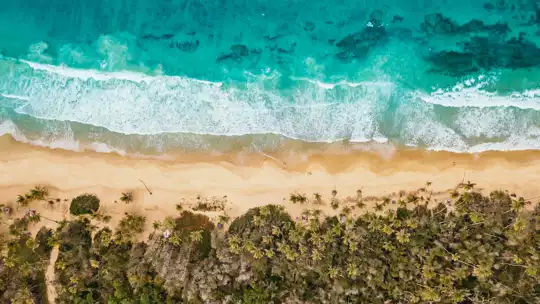
Most people come to Choroní for Playa Grande, a wide crescent of sand backed by palms and a river mouth, and it deserves the hype. What gets overlooked is the town itself: colonial streets with brightly painted houses, a cacao-growing valley behind it, and the fishing village of Puerto Colombia where nearly every guesthouse, bakery and boat is based. Choroní sits in the north of Venezuela, in Aragua state, on the Caribbean side of Henri Pittier National Park, reached by a winding mountain road from Maracay. Skip the town plaza after ten minutes; the real value is the beaches, the cacao farms and the cloud-forest drive. The ride in is slow and bendy, so it is not a quick stop between big cities. Evenings are easygoing: a few beach bars, drumming on weekends, and enough posadas that meeting other travelers over a cold beer is simple. Plan on a few nights. At dawn, fishermen haul nets onto the sand at Puerto Colombia’s small harbor.

Discover everything you want to know in the 📖 Venezuela Travel Guide.
Safety warning

The current risk level for Venezuela is high. Check the advice before going.


example page 0 from our offline Travel Guide for Venezuela
example page 1 from our offline Travel Guide for Venezuela
example page 2 from our offline Travel Guide for Venezuela
example page 3 from our offline Travel Guide for Venezuela
example page 4 from our offline Travel Guide for Venezuela
example page 5 from our offline Travel Guide for Venezuela
example page 6 from our offline Travel Guide for Venezuela
example page 7 from our offline Travel Guide for Venezuela
Loading the map 🌍
CLICK TO FILTER
cities
towns
villages
landmarks
national parks
hikes
beaches
attractions
festivals
regions
SHOW COUNTRY’S BESTSHOW ALL

✨ Why go?
Ranked #1 town in Venezuela
What makes it a must-see town

Choroní works best as a place to slow down for three or four days, and that is what most backpackers do. The draw is a short chain of Playa Grande, Playa Chuao and the boat-access coves, all reachable without a long expedition, plus a cacao valley where you can actually see how Venezuelan chocolate starts. Posadas in Puerto Colombia are small, family-run and walkable from the dock, so you rarely need transport once you arrive. Food is simple and good: fried fish, coconut sweets, arepas at breakfast, and a few places serving fresh cacao drinks. The social side is relaxed rather than rowdy. Solo travelers find company at posada breakfast tables and on the beach, and couples or small groups can settle into hammocks without any pressure to do much. Hikers get day walks into the forested hills … read more 👉
Choroní works best as a place to slow down for three or four days, and that is what most backpackers do. The draw is a short chain of Playa Grande, Playa Chuao and the boat-access coves, all reachable without a long expedition, plus a cacao valley where you can actually see how Venezuelan chocolate starts. Posadas in Puerto Colombia are small, family-run and walkable from the dock, so you rarely need transport once you arrive. Food is simple and good: fried fish, coconut sweets, arepas at breakfast, and a few places serving fresh cacao drinks. The social side is relaxed rather than rowdy. Solo travelers find company at posada breakfast tables and on the beach, and couples or small groups can settle into hammocks without any pressure to do much. Hikers get day walks into the forested hills above town, and anyone who likes tropical heat, river swims and long lunches will fit right in. If you need museums, big nightlife or a dense list of sights, a single night is plenty. For everyone else, the pace is the whole point.

💡 HighlightsKey sights and experiences for travelers

  1. Playa Grande: The town’s signature beach, a long, sheltered sweep of sand with calm swimming, palm shade and cheap beach shacks. Go early on a weekday to avoid crowds, since weekends and holidays fill up. Entry is free; chairs and umbrellas cost around US$2 to 5. Allow half a day, 3 to 5 hours.
  2. Puerto Colombia waterfront and malecón: The fishing harbor where boats leave for farther beaches and the day starts with nets and pelicans. Early morning is liveliest, and sunset brings locals out to chat. Free, and 1 hour is enough for a stroll and coffee.
  3. Plaza Bolívar and Iglesia de Santa Clara de Asís: The old colonial heart of Choroní proper, with a small church, low tiled houses and quiet streets. Visit in the morning before the heat builds. Free, around 45 minutes. Weekends bring festive drumming
… read more 👉
  1. Playa Grande: The town’s signature beach, a long, sheltered sweep of sand with calm swimming, palm shade and cheap beach shacks. Go early on a weekday to avoid crowds, since weekends and holidays fill up. Entry is free; chairs and umbrellas cost around US$2 to 5. Allow half a day, 3 to 5 hours.
  2. Puerto Colombia waterfront and malecón: The fishing harbor where boats leave for farther beaches and the day starts with nets and pelicans. Early morning is liveliest, and sunset brings locals out to chat. Free, and 1 hour is enough for a stroll and coffee.
  3. Plaza Bolívar and Iglesia de Santa Clara de Asís: The old colonial heart of Choroní proper, with a small church, low tiled houses and quiet streets. Visit in the morning before the heat builds. Free, around 45 minutes. Weekends bring festive drumming traditions to the plaza.
  4. Cacao haciendas near Choroní: Family-run farms where guides show fermenting, drying and roasting. Visit in the dry months when beans are laid out in the sun. Tours typically cost US$5 to 15 and run 1.5 to 2 hours; many include a chocolate tasting.
  5. Playa Chuao boat or road excursion: A quieter beach and village known for its cacao, reached by boat from Puerto Colombia or by a longer road trip. Mornings are calmest on the sea. A boat trip costs roughly US$5 to 10 per person and takes 3 to 5 hours with beach time.
Longer outings include Henri Pittier National Park forest trails, the Ocumare de la Costa coast, and Cata Bay, all best reached as day trips from Choroní. Playa Grande and the harbor combine well in a single day, with beach hours in the morning and a boat-side seafood lunch before sunset on the malecón.
Spotted a mistake or missing something? Contact us.

🏘️ NeighborhoodsKey areas and districts to know

Choroní is small enough to cover on foot in an afternoon, and the useful choices come down to four areas. Spend your time on the first two and treat the rest as a bonus.
  • Town center (around Plaza Bolívar): Worth a full morning. Colonial houses in saturated colors line the cobbled streets, the church of Santa Clara de Asís anchors the plaza, and bakeries and small comedores serve arepas, empanadas and fried fish. It is flat, shady and entirely walkable. Nights are quiet, with a few bars and music on weekends.
  • Puerto Colombia: The beach end of the same strip, about 2 km (1.2 miles) downhill from Choroní proper, and where you will spend most evenings. The seafront promenade, the fishing-boat pier and the cluster of cheap seafood stalls make it the liveliest spot. Come on weekends only if you like
… read more 👉
Choroní is small enough to cover on foot in an afternoon, and the useful choices come down to four areas. Spend your time on the first two and treat the rest as a bonus.
  • Town center (around Plaza Bolívar): Worth a full morning. Colonial houses in saturated colors line the cobbled streets, the church of Santa Clara de Asís anchors the plaza, and bakeries and small comedores serve arepas, empanadas and fried fish. It is flat, shady and entirely walkable. Nights are quiet, with a few bars and music on weekends.
  • Puerto Colombia: The beach end of the same strip, about 2 km (1.2 miles) downhill from Choroní proper, and where you will spend most evenings. The seafront promenade, the fishing-boat pier and the cluster of cheap seafood stalls make it the liveliest spot. Come on weekends only if you like crowds. Walkable, but the climb back up is steep in the heat.
  • Playa Grande: The main beach, a short walk from Puerto Colombia. Good for a swim and an afternoon, but the sand gets packed on Saturdays and Sundays, and the food stalls are overpriced compared with the town. Go early or midweek.
  • Surrounding cacao haciendas and hills: Uphill outside the center, reached by road or trail. Worth a half day if you like chocolate and forest views. Skip them in heavy rain, when the trails turn to mud.

⌛️ 1 daySeeing the highlights in 24 hours

7:30 AM, Puerto Colombia harbor: Start at the waterfront while fishermen unload and the air is still cool. Grab coffee and an arepa from a nearby bakery, watch the nets and pelicans, then walk five minutes to the plaza.
9:00 AM, Plaza Bolívar and church in Choroní: Wander the quiet colonial lanes and peek into the small church. The houses here are best seen in soft morning light. Catch a shared local ride or walk toward the cacao zone.
10:30 AM, Cacao hacienda tour: Join a guided visit to see beans fermenting and drying, and taste fresh chocolate. It is the best way to understand why the valley matters. Allow about two hours.
1:00 PM, Lunch in Puerto Colombia: Order fried fish with tostones at a simple spot near the harbor, then rest through the hottest hours in a hammock at your posada.
3:00 … read more 👉
7:30 AM, Puerto Colombia harbor: Start at the waterfront while fishermen unload and the air is still cool. Grab coffee and an arepa from a nearby bakery, watch the nets and pelicans, then walk five minutes to the plaza.
9:00 AM, Plaza Bolívar and church in Choroní: Wander the quiet colonial lanes and peek into the small church. The houses here are best seen in soft morning light. Catch a shared local ride or walk toward the cacao zone.
10:30 AM, Cacao hacienda tour: Join a guided visit to see beans fermenting and drying, and taste fresh chocolate. It is the best way to understand why the valley matters. Allow about two hours.
1:00 PM, Lunch in Puerto Colombia: Order fried fish with tostones at a simple spot near the harbor, then rest through the hottest hours in a hammock at your posada.
3:00 PM, Playa Grande: Walk or ride down to the beach for swimming in the calm shallows. The afternoon is breezy and shade is easy to find under the palms.
5:30 PM, River mouth and back lanes behind Playa Grande: Follow the small river and the footpaths behind the sand, where locals fish, wash and play dominoes. Few visitors wander here, and it shows the village at its most ordinary.
7:00 PM, Malecón dinner: Finish along the waterfront with a cold beer and fresh seafood while the harbor lights come on and drums sometimes start up nearby.

🌤️ When to go?Best time to visit Choroní

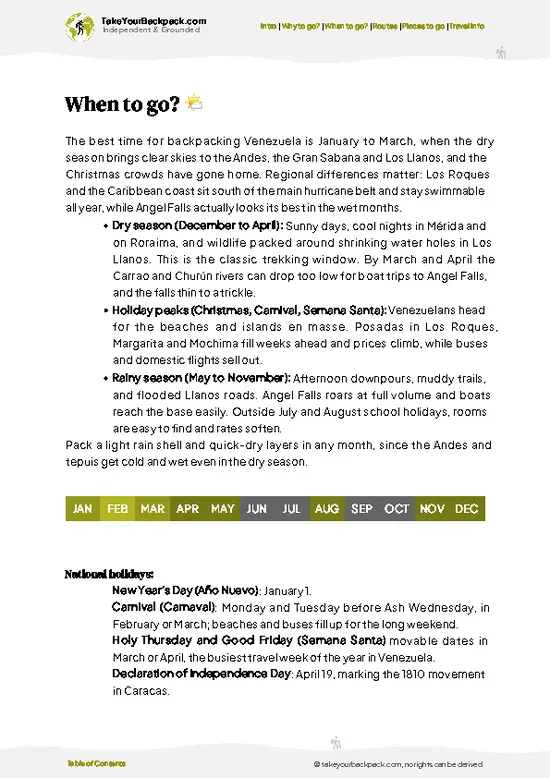
The dry months from December to April give the most reliable beach weather on this Caribbean coast, with daytime highs around 29 to 32°C (84 to 90°F) and cooler nights near 21 to 23°C (70 to 73°F).
  • Dry Season (December to April): Sunny days, calm seas and the best conditions for the road and the trails. Daylight runs roughly 11 to 12 hours. Carnival, Holy Week and Christmas fill the town and push room prices up by a noticeable margin.
  • Wet Season (May to November): Afternoon downpours are common and the cloud forest above town turns lush and muddy. Temperatures stay similar, around 28 to 31°C (82 to 88°F), but humidity is higher. Crowds thin out and rooms are easier to bargain for.
  • Holidays and weekends: Caracas residents arrive in numbers on Friday evening and leave Sunday. Midweek is quieter
… read more 👉
The dry months from December to April give the most reliable beach weather on this Caribbean coast, with daytime highs around 29 to 32°C (84 to 90°F) and cooler nights near 21 to 23°C (70 to 73°F).
  • Dry Season (December to April): Sunny days, calm seas and the best conditions for the road and the trails. Daylight runs roughly 11 to 12 hours. Carnival, Holy Week and Christmas fill the town and push room prices up by a noticeable margin.
  • Wet Season (May to November): Afternoon downpours are common and the cloud forest above town turns lush and muddy. Temperatures stay similar, around 28 to 31°C (82 to 88°F), but humidity is higher. Crowds thin out and rooms are easier to bargain for.
  • Holidays and weekends: Caracas residents arrive in numbers on Friday evening and leave Sunday. Midweek is quieter all year.
Arrive on a Monday or Tuesday and you get empty beaches and the best choice of rooms.


source: climatestotravel.comJANJanuary: highly recommended for travelingFEBFebruary: highly recommended for travelingMARMarch: highly recommended for travelingAPRApril: highly recommended for travelingMAYMay: good for travelingJUNJune: fair for travelingJULJuly: fair for travelingAUGAugust: fair for travelingSEPSeptember: fair for travelingOCTOctober: good for travelingNOVNovember: highly recommended for travelingDECDecember: highly recommended for traveling
when-to-go

✈️ The backpacker research shortcutVenezuela Travel Guide

An offline-friendly backpacking guide with optimized travel routes, ranked highlights, transport advice, and the best areas to stay.
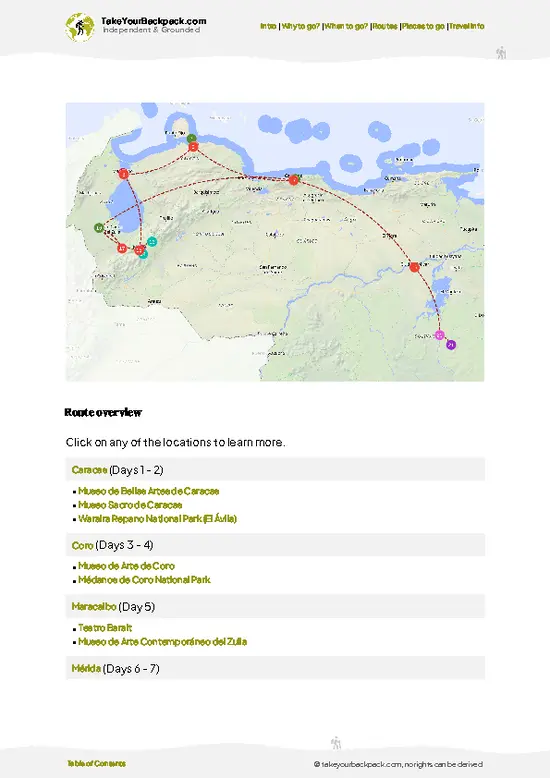
example page 0 from our offline Travel Guide for Venezuela
example page 1 from our offline Travel Guide for Venezuela
example page 2 from our offline Travel Guide for Venezuela
example page 3 from our offline Travel Guide for Venezuela
example page 4 from our offline Travel Guide for Venezuela
example page 5 from our offline Travel Guide for Venezuela
example page 6 from our offline Travel Guide for Venezuela
example page 7 from our offline Travel Guide for Venezuela
The digital guide (290 pages) contains:
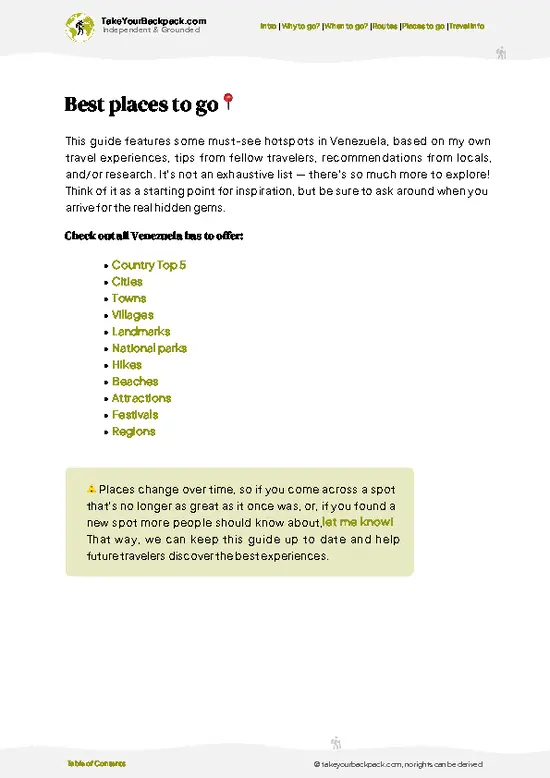
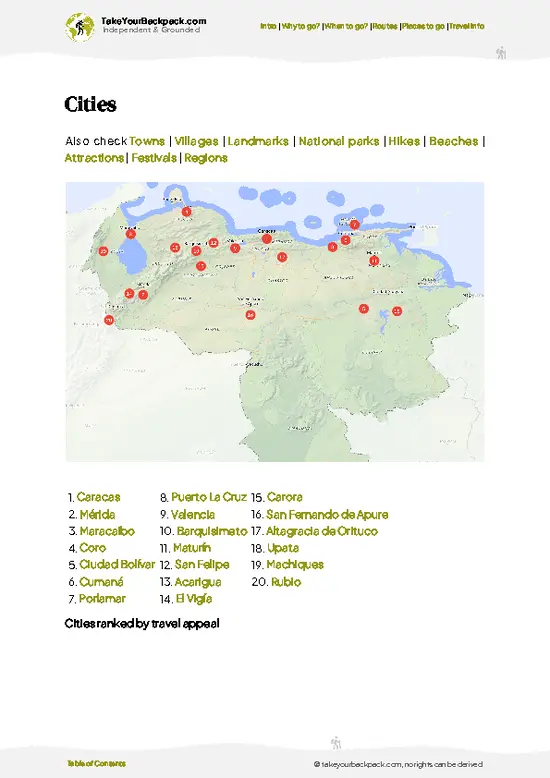
✅ 91 highlights, ranked by travel appeal
✅ Optimized 5, 10 & 15-day travel routes
✅ Cities, national parks, landmarks, beaches
✅ How to get around
✅ Offline-friendly for travel without Wi-Fi
👉 Click to see all 30+ guide features

📅 Plan smarter in minutes, not weeks
✅ Month by month travel advice
✅ Festivals & national holidays
✅ Budget expectations

🗺️ Go to the right places, skip the overrated ones
✅ Honest pros & cons of destinations
✅ Top hikes, parks & viewpoints
✅ Lesser-known places most travelers miss
✅ Clear “worth it vs skip it” guidance

🛏️ Travel smoothly without rookie mistakes
✅ Best areas to stay
✅ Transport systems explained simply
✅ Common scams & safety advice
✅ SIM cards, money & practical tips

🌍 Understand the country, not just visit it
✅ Culture & traditions
✅ 52 Essential phrases & customs
✅ Festivals worth planning around
✅ Traveler-friendly historical context
✅ Insights that make places more meaningful

📱 Built for real travel conditions
✅ Fully downloadable PDF
✅ Works completely offline
✅ Optimized for phone use
✅ Useful in remote areas & buses
✅ Everything in one place
Stop searching, start planning
Get instant access to your full guide. 30‑day money-back guarantee.
+ Add another guide for just

By proceeding you agree to our terms.
Sent to your inbox immediately after payment • 100% Secure Checkout
Best Backpacking Travel Advisor 2025 tourism awardBest Backpacking
Travel Advisor
2025
What others say about Take Your Backpack Guides:
⭐⭐⭐⭐⭐
Fantastic, amazing amount of information!
⭐⭐⭐⭐⭐
My goodness this is amazing, it's what I've been looking for hats off too you!
⭐⭐⭐⭐⭐
I think this is absolutely BRILLIANT
⭐⭐⭐⭐
Very complete and informative. It's still missing places, but I gotta to commend you
⭐⭐⭐⭐⭐
This is truly amazing, thank you, can't wait to explore it with my kids!
⭐⭐⭐⭐⭐
Awesome resource, thank you!
⭐⭐⭐⭐⭐
This is amazing! Can't wait to explore the ones I haven't seen
⭐⭐⭐⭐
I love this! Well done, great idea.
⭐⭐⭐⭐⭐
Thanks for taking the time to make this gem!
⭐⭐⭐⭐⭐
This might be the best website I've ever seen.
⭐⭐⭐⭐⭐
Congratulations, and thank you so much for your work; it's incredibly valuable.
⭐⭐⭐⭐
In all seriousness I think you did a great job pointing out the important spots
⭐⭐⭐⭐⭐
10/10 very good
⭐⭐⭐⭐⭐
As someone who's only just starting to visit regularly this is awesome, thank you.
⭐⭐⭐⭐
Thank you very much! I'm going to visit my dad, it's going to be very useful!
⭐⭐⭐⭐⭐
This is really cool! We'll be travelling for the first time and this definitely come in handy.
⭐⭐⭐⭐⭐
You are now our minister of culture, congratulations 👨‍💼
⭐⭐⭐⭐⭐
Just wanted to tell you that this is a pearl! Going to follow your recommendations.
⭐⭐⭐⭐⭐
This is so cool. I'll definitely be using the resource for my travels soon.
⭐⭐⭐⭐⭐
This is very impressive! Good work.
⭐⭐⭐⭐⭐
This is an amazing and informative site. Very well done!

🛏️ Where to stay?Best areas to stay in Venezuela

Puerto Colombia is the best base for most backpackers, with Choroní’s town center as the quieter alternative.
Puerto Colombia has the largest concentration of budget rooms and simple posadas, most within a 5 to 10 minute walk of the beach and the seafront food stalls. Expect roughly US$10 to 25 per person for a basic room, and dorm-style beds are scarce, so private rooms shared between two or three people usually give the best value. Evenings are lively, with music from bars along the waterfront, so ask for a room set back from the promenade if you sleep lightly. Streets are well used after dark, … read more 👉
Puerto Colombia is the best base for most backpackers, with Choroní’s town center as the quieter alternative.
Puerto Colombia has the largest concentration of budget rooms and simple posadas, most within a 5 to 10 minute walk of the beach and the seafront food stalls. Expect roughly US$10 to 25 per person for a basic room, and dorm-style beds are scarce, so private rooms shared between two or three people usually give the best value. Evenings are lively, with music from bars along the waterfront, so ask for a room set back from the promenade if you sleep lightly. Streets are well used after dark, which makes walking back late feel straightforward, and the pier area is the transport hub for boats and jeeps.
Choroní’s town center suits travelers who want calm nights and cooler air. Rooms in family-run guesthouses are often a little cheaper, roughly US$8 to 20 per person, and the shaded streets are very quiet after 10 pm. The compromise is the 2 km (1.2 mile) trip down to the beach, which is a pleasant downhill walk but a hot climb back, and jeeps are less frequent late in the evening.
Book ahead for weekends, Carnival and Holy Week, when rooms fill and prices rise. Midweek, you can usually walk in and negotiate.

🚌 Getting aroundMoving around without the hassle

Arriving in Choroní on a Sunday afternoon or a holiday weekend, or trying to leave then, is the mistake that eats the most time: the single mountain road from Maracay is jammed with day-trippers from Caracas, and a 2-hour drive becomes 4 or 5. Come midweek, leave early, and the road is yours. Once you are in town, you will not need wheels. The center is a few flat streets of colonial houses around the main plaza, and the beaches sit a short ride or hike beyond it.

The options are few, and some are clearly better than others.
  • Walking covers the whole town in 15 minutes, from the plaza to the fishing quay and the church. It is free and the right call for everything inside town. Streets are cobbled and steep in places, so wear sandals with grip.
  • Shared jeeps and pickup trucks (“colectivos”) run
… read more 👉
Arriving in Choroní on a Sunday afternoon or a holiday weekend, or trying to leave then, is the mistake that eats the most time: the single mountain road from Maracay is jammed with day-trippers from Caracas, and a 2-hour drive becomes 4 or 5. Come midweek, leave early, and the road is yours. Once you are in town, you will not need wheels. The center is a few flat streets of colonial houses around the main plaza, and the beaches sit a short ride or hike beyond it.

The options are few, and some are clearly better than others.
  • Walking covers the whole town in 15 minutes, from the plaza to the fishing quay and the church. It is free and the right call for everything inside town. Streets are cobbled and steep in places, so wear sandals with grip.
  • Shared jeeps and pickup trucks (“colectivos”) run the road from town to Playa Grande, Choroní’s main beach, in about 10 to 15 minutes for roughly US$0.50 to 1. They leave when full, mostly in the morning and through the afternoon, and stop in the early evening. Take them: they are cheap and you will chat with locals.
  • Mototaxis cost about US$1 to 3 for short hops around town and to the beach road. They are quick and handy with a backpack, and the only option late in the evening. Agree on the fare before you climb on.
  • Buses from Maracay are how you reach Choroní. They take about 2 to 2.5 hours across the Henri Pittier National Park pass, with a fare of about US$3 to 6. Departures start early in the morning and the last bus back leaves mid to late afternoon, so confirm the return time on arrival. The road has dozens of tight bends, so sit toward the front if you get queasy.
  • Boats to Chuao and nearby beaches leave from Puerto Colombia’s quay and cost around US$5 to 15 per person depending on group size and destination. They are the best way to reach beaches such as Playa Cepe and Playa Chuao. Skip private charters unless you have a group, because the fare is split better between four or five people.

Skip hiring a car unless you are coming from Caracas anyway. Parking in town is tight, fuel is hard to count on, and nothing on this stretch of coast needs your own vehicle. Carry small bills in US dollars or bolívares for fares, since drivers rarely have change for large notes.

👛 Costs (as of 19 October 2026)Money, prices, and spending tips

A backpacker in Choroní should plan on about US$27 to 70 a day, with a high-season total of roughly US$53 once a basic room is included.
CategoryBudget RangeLocal Reality
Dorm or basic room (high season)US$10 to 25Dorm beds are rare, so most travelers pay for a simple private room split between two. Low season is often US$8 to 18.
MealsUS$8 to 18Arepas and empanadas cost US$1 to 3, a fish lunch with sides US$5 to 10, and seafront dinners run higher.
Local transportUS$1 to 5Short jeep rides between Choroní and Puerto Colombia cost under US$2, with boat taxis extra.
Basic activities and entry feesUS$5 to 15Cacao tours, boat trips to nearby beaches and guided walks make up most of the spending. Beaches themselves are free.
MiscellaneousUS$3 to 7Water, snacks, cold drinks and occasional beer, plus small
… read more 👉
A backpacker in Choroní should plan on about US$27 to 70 a day, with a high-season total of roughly US$53 once a basic room is included.
CategoryBudget RangeLocal Reality
Dorm or basic room (high season)US$10 to 25Dorm beds are rare, so most travelers pay for a simple private room split between two. Low season is often US$8 to 18.
MealsUS$8 to 18Arepas and empanadas cost US$1 to 3, a fish lunch with sides US$5 to 10, and seafront dinners run higher.
Local transportUS$1 to 5Short jeep rides between Choroní and Puerto Colombia cost under US$2, with boat taxis extra.
Basic activities and entry feesUS$5 to 15Cacao tours, boat trips to nearby beaches and guided walks make up most of the spending. Beaches themselves are free.
MiscellaneousUS$3 to 7Water, snacks, cold drinks and occasional beer, plus small tips.
Total Daily BudgetUS$27 to 70About US$53 is a realistic mid-range day in high season.
Eat the set lunch in the town center rather than on the seafront, where the same fish often costs a third more.
⚠️ Prices can change and everyone travels differently, so take this as a rough guide. Hope it helps you plan your adventure!

🚌 Day tripsEasy escapes and nearby places

Choroní works well as a base for day trips, since most beaches and farms sit within an hour of town by road or boat, and none require an overnight stay.
Playa Aroa:
A quiet beach where the Aroa River meets the sea, reached by boat from Puerto Colombia or on a coastal walk of about two hours. Budget US$5 to 12 return including a simple fish lunch. Go on a weekday in the dry season for near-empty sand. First-timers often forget to agree a pickup time with the boat.

Cepe Beach:
A small bay backed by forest, reachable by boat from Puerto Colombia in about 20 to 30 minutes or by a rough coastal path. Boat fares run roughly US$3 to 8 per person each way. The water is clear in the dry months, and rough seas in the wet season can cancel boats. Bring cash and water, as there is little on the beach. … read more 👉
Choroní works well as a base for day trips, since most beaches and farms sit within an hour of town by road or boat, and none require an overnight stay.
Playa Aroa:
A quiet beach where the Aroa River meets the sea, reached by boat from Puerto Colombia or on a coastal walk of about two hours. Budget US$5 to 12 return including a simple fish lunch. Go on a weekday in the dry season for near-empty sand. First-timers often forget to agree a pickup time with the boat.

Cepe Beach:
A small bay backed by forest, reachable by boat from Puerto Colombia in about 20 to 30 minutes or by a rough coastal path. Boat fares run roughly US$3 to 8 per person each way. The water is clear in the dry months, and rough seas in the wet season can cancel boats. Bring cash and water, as there is little on the beach.

Cacao hacienda visit:
The hills around Choroní grow cacao, and small haciendas offer tours showing fermentation, drying and chocolate making. Tours last 1.5 to 2 hours and cost around US$5 to 15, often with samples. Book the same morning through your posada, and wear closed shoes for muddy paths.

Henri Pittier National Park hike:
The park surrounds the road you arrive on, with cloud forest trails that are good for birdwatching at dawn. Guided half-day walks cost roughly US$10 to 25. Start early, since afternoon rain often rolls in during the wet season.
👉 Explore Henri Pittier National Park

🛡️ SafetyTraveler Safety Guide

Choroní is generally relaxed and safe by Venezuelan standards, and most problems are petty and avoidable. Keep phones and cameras out of sight on crowded weekends at Playa Grande and the Puerto Colombia seafront, and never leave bags unattended on the sand while swimming. Carry only the cash you need for the day, since much of the local economy runs on US dollars in small bills and card machines are unreliable. Walking between Choroní and Puerto Colombia at night is common, but stick to the main road and use a jeep or a companion if the street is empty, particularly if you have been drinking. Solo travelers, including women, generally report friendly treatment, though a firm no works well with persistent beach vendors. Sea currents can be strong at some beaches, so swim where locals do and … read more 👉
Choroní is generally relaxed and safe by Venezuelan standards, and most problems are petty and avoidable. Keep phones and cameras out of sight on crowded weekends at Playa Grande and the Puerto Colombia seafront, and never leave bags unattended on the sand while swimming. Carry only the cash you need for the day, since much of the local economy runs on US dollars in small bills and card machines are unreliable. Walking between Choroní and Puerto Colombia at night is common, but stick to the main road and use a jeep or a companion if the street is empty, particularly if you have been drinking. Solo travelers, including women, generally report friendly treatment, though a firm no works well with persistent beach vendors. Sea currents can be strong at some beaches, so swim where locals do and avoid going out far alone. The road from Maracay is the greater daily risk, so travel in daylight and avoid late arrivals.

FAQFrequently asked questions about Choroní

Choroní is a destination in its own right, not a place to pass through. The town’s colonial streets, Playa Grande and the boat-access beaches such as Cepe and Chuao make a coastal stay that pays off within a day, and cacao farms nearby add extra reasons to stay. Most people find 2 to 3 nights enough to feel settled, and the mountain road in from Maracay is half the experience.
Three nights is the comfortable minimum in Choroní. That gives you one day for the town and Playa Grande, one for a boat to a more remote beach, and one for a cacao farm visit or a walk in the Henri Pittier National Park foothills. Add a fourth night if you want a fully lazy beach day, and expect to spend around US$30 to 50 a day on a budget.
A day trip from Maracay is possible, but it is tight and not recommended. The bus takes about 2 to 2.5 hours each way over the mountain pass, so you would have only 4 to 5 hours on the ground, and the last return buses leave in the afternoon. From Caracas the trip is longer still, around 3.5 to 5 hours each way on busy weekends. Stay at least one night to enjoy the beaches properly.
⚠️ Things can change over time, so always validate details locally before you go.

Other Venezuelan towns near Choroní

Explore more nearby:

  • Ocumare de la Costa—Cata cove, mangrove lagoon, river-mouth fishing, seafood stalls| 17 km away
  • La Asunción—Hilltop fort, colonial plaza, Nueva Cádiz museum, quiet capital| 414 km away
  • San Antonio del Táchira—Border bridge, money changers, produce market, Colombia transit| 608 km away

💡 Not sure where to go next?
Create a personalized itinerary for Venezuela including Choroní and the places that fit your trip.

Generate my itinerary

👉 Discover all towns

Or checkout all Venezuela has to offer (think cities, towns, villages, national parks, hikes, beaches, festivals)
Country photo of Venezuela

We 💚 feedbackWhat to keep in mind

Choroní is best in the early morning, before the heat and the weekend crowds arrive, and ideally on a weekday outside school holidays when Playa Grande feels almost private. Come in the drier months if you can, since the mountain road is easier. I would bring cash, insect repellent and patience for the winding drive, then stay one night longer than planned.

✍️ Help improve this page!
The information on this page is based on in-depth research, insights shared by experienced travelers, and feedback from the local travel community in Venezuela. While every effort is made to keep the information accurate and current, conditions can change — so if you spot anything incorrect or outdated, please get in touch.


🙋‍♂️ Give feedback

👋 Meet the founderWho’s Behind Take Your Backpack?

Johan, backpacker and founder of TakeYourBackpackHi, I’m Johan (Netherlands 🇳🇱), the creator of TakeYourBackpack. Over the past 3 decades, I’ve backpacked through 90+ countries across six continents, gaining extensive experience with independent travel, long-term trips, and overland routes.

This site is built on a combination of firsthand travel experience and carefully curated insights from other backpackers. Many guides are based on places I’ve personally visited, while others bring together tips, observations, and practical advice shared by trusted travelers I’ve met along the way.

The goal is to provide realistic, experience-driven guidance — not generic itineraries — so you can explore destinations with better context, clearer expectations, and more confidence.