×

Venezuela🇻🇪 | citiesUpataCerro El Toro views, telita cheese, Gran Sabana road stop | things to do and best time to go

Explore El VigíaExplore Rubio

Backpacking in Upata
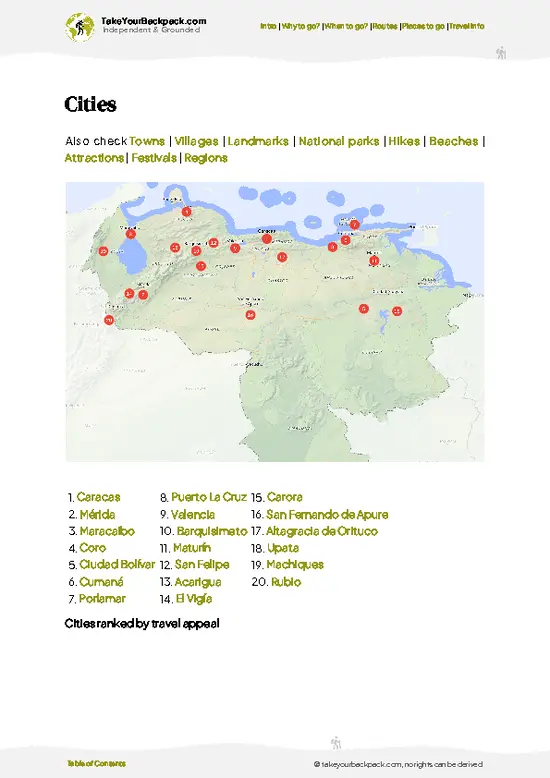
👀 For curious travelerscity ranked #18
By Johan Kruseman 🇳🇱 | Updated October 19, 2026

Upata sits on the main road to the Gran Sabana, and almost every overland traveler passes through without stopping. That is the mistake. This is a mining and cattle town in Bolívar state, in the southeast of Venezuela, with a calm plaza, good arepas and no tour-bus circus. Skip it if you want nightlife or museums. Stay a night if you like unscripted places and need a cheap, easy break on the way south. Slow travelers will like it; sight-collectors will not.

Discover everything you want to know in the 📖 Venezuela Travel Guide.
Safety warning

The current risk level for Venezuela is high. Check the advice before going.


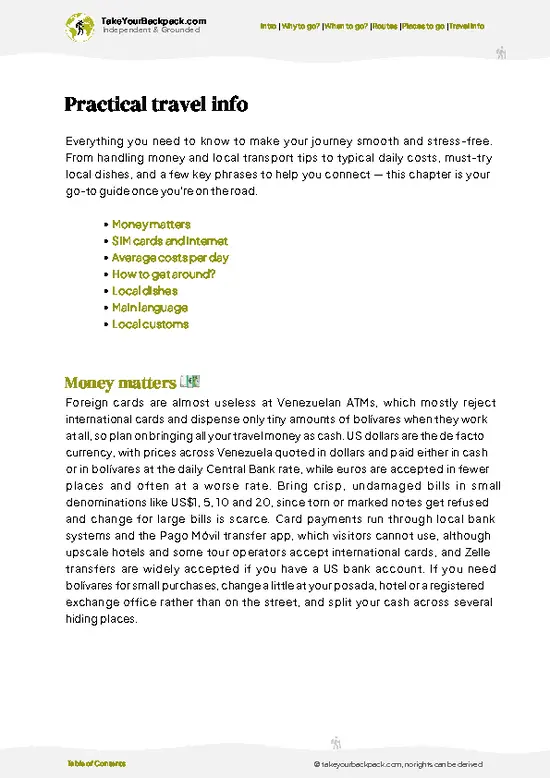
example page 0 from our offline Travel Guide for Venezuela
example page 1 from our offline Travel Guide for Venezuela
example page 2 from our offline Travel Guide for Venezuela
example page 3 from our offline Travel Guide for Venezuela
example page 4 from our offline Travel Guide for Venezuela
example page 5 from our offline Travel Guide for Venezuela
example page 6 from our offline Travel Guide for Venezuela
example page 7 from our offline Travel Guide for Venezuela
Loading the map 🌍
CLICK TO FILTER
cities
towns
villages
landmarks
national parks
hikes
beaches
attractions
festivals
regions
SHOW COUNTRY’S BESTSHOW ALL

✨ Why go?
Ranked #18 city in Venezuela
Reasons people choose to visit here

Upata works as a breather between Ciudad Guayana and the Gran Sabana, not as a destination to fill a week. You come for a town where locals outnumber foreigners, where the Plaza Bolívar fills up at dusk and nobody tries to sell you a tour. Simple posadas and bakeries make a night here easy, and the hills around town give you short, green walks within reach. Onward buses along the Troncal 10 pass often, so leaving is painless. One night is plenty; two only if you want to do nothing.

💡 HighlightsTop highlights of Upata

  1. Plaza Bolívar and the cathedral area: the town’s social center, with shaded benches, vendors and families. Go at dusk, when it is liveliest. Free, 30 to 45 minutes.
  2. Cerro El Toro viewpoint: a hill above town with wide views over the savanna and the roofs of Upata. Early morning is clearest. Free to low cost, 1 to 2 hours including the climb or ride.
  3. Mercado Municipal: the place to see local produce, cheese and fresh juice, and to eat cheaply among townspeople. Mornings are best. Budget US$2 to 4 for a snack or lunch, 45 minutes.
  4. Local bakeries and cheese shops: Upata is cattle country, so try fresh telita or guayanés cheese with warm bread. Morning is best. US$1 to 3, 30 minutes.
  5. Río Caroní-area countryside lanes: quiet roads on the edge of town show ranches, mango trees and distant hills. Walk
… read more 👉
  1. Plaza Bolívar and the cathedral area: the town’s social center, with shaded benches, vendors and families. Go at dusk, when it is liveliest. Free, 30 to 45 minutes.
  2. Cerro El Toro viewpoint: a hill above town with wide views over the savanna and the roofs of Upata. Early morning is clearest. Free to low cost, 1 to 2 hours including the climb or ride.
  3. Mercado Municipal: the place to see local produce, cheese and fresh juice, and to eat cheaply among townspeople. Mornings are best. Budget US$2 to 4 for a snack or lunch, 45 minutes.
  4. Local bakeries and cheese shops: Upata is cattle country, so try fresh telita or guayanés cheese with warm bread. Morning is best. US$1 to 3, 30 minutes.
  5. Río Caroní-area countryside lanes: quiet roads on the edge of town show ranches, mango trees and distant hills. Walk in the cool early hours. Free, 1 to 2 hours.
The plaza is the best first-visit choice because it shows how the town lives in one easy stop. Day trips from Upata include the Guri reservoir, the Caroní river parks of Ciudad Guayana (Llovizna Park) and the first stretches of the Gran Sabana.
Spotted a mistake or missing something? Contact us.

🏘️ NeighborhoodsNeighborhood guide to Upata

Upata is small, so you only need to know a few areas, and most of your time belongs in one of them.
  • Plaza Bolívar and the center: Worth your time. This is where the bakeries, bank machines, small cafés and evening bench-sitters are, and everything sits within a few flat blocks on foot. Come for the people-watching and cheap empanadas.
  • Avenida Guasipati area: The commercial strip, with shops, pharmacies and transport stands. Useful for errands, not for lingering.
  • Residential barrios on the hillsides: Not worth a special trip. They are quiet, steep in places, and have nothing to see or eat for a visitor.
  • Surrounding countryside and savanna edge: Worth the effort for cattle country views and nearby rivers, but you need a ride, since distances are too long to walk.

⌛️ 1 dayHow to make the most of one day

8:00 AM: Local bakery. Start with coffee, fresh bread and telita cheese. Then walk to the center.
9:00 AM: Plaza Bolívar. Watch the morning routine, then stroll past the cathedral and surrounding shops. Everything is within a few blocks.
10:30 AM: Mercado Municipal. Wander the stalls for fruit, cheese and juice. It is a good place to see what ordinary Upata buys.
1:00 PM: Lunch. Order grilled beef or a plate of the day at a family eatery near the market, then rest through the heat.
4:00 PM: Cerro El Toro. Head up for views over the savanna when the light softens. Take a taxi up if the heat is heavy.
6:00 PM: Edge-of-town lanes. Off the usual route, walk the quiet ranch roads as the town cools, then return to the plaza for dinner.

🌤️ When to go?Best time to visit Upata

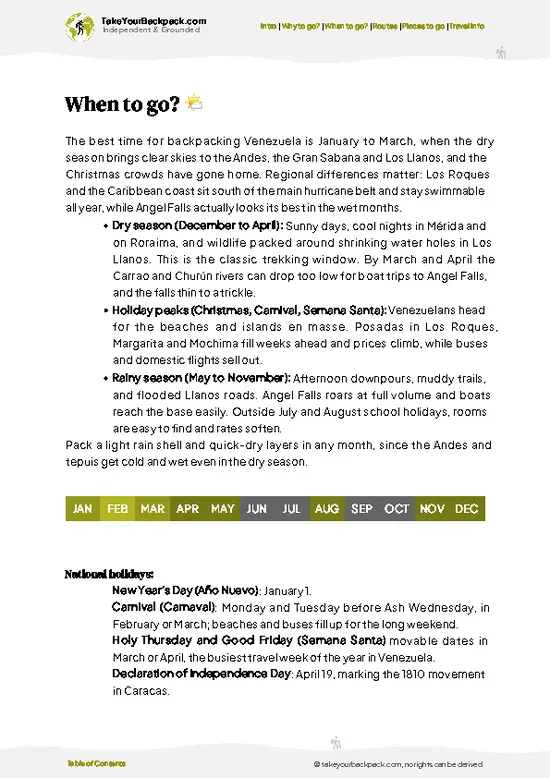
  • Dry season (December to April): Upata is hot and dusty, with highs around 32 to 35°C (90 to 95°F), the easiest months for road travel and river visits.
  • Rainy season (May to November): Afternoon downpours, 24 to 31°C (75 to 88°F), green hills and swollen rivers, with some dirt roads turning to mud.
  • Holidays: Carnival and Semana Santa bring local crowds and higher bus fares. Daylight stays close to twelve hours all year.
Go in January or February for dry roads without holiday crowds.

source: climatestotravel.comJANJanuary: excellent for travelingFEBFebruary: excellent for travelingMARMarch: excellent for travelingAPRApril: highly recommended for travelingMAYMay: fair for travelingJUNJune: fair for travelingJULJuly: fair for travelingAUGAugust: fair for travelingSEPSeptember: fair for travelingOCTOctober: fair for travelingNOVNovember: fair for travelingDECDecember: highly recommended for traveling
when-to-go

✈️ The backpacker research shortcutVenezuela Travel Guide

An offline-friendly backpacking guide with optimized travel routes, ranked highlights, transport advice, and the best areas to stay.
example page 0 from our offline Travel Guide for Venezuela
example page 1 from our offline Travel Guide for Venezuela
example page 2 from our offline Travel Guide for Venezuela
example page 3 from our offline Travel Guide for Venezuela
example page 4 from our offline Travel Guide for Venezuela
example page 5 from our offline Travel Guide for Venezuela
example page 6 from our offline Travel Guide for Venezuela
example page 7 from our offline Travel Guide for Venezuela
The digital guide (290 pages) contains:
✅ 91 highlights, ranked by travel appeal
✅ Optimized 5, 10 & 15-day travel routes
✅ Cities, national parks, landmarks, beaches
✅ How to get around
✅ Offline-friendly for travel without Wi-Fi
👉 Click to see all 30+ guide features

📅 Plan smarter in minutes, not weeks
✅ Month by month travel advice
✅ Festivals & national holidays
✅ Budget expectations

🗺️ Go to the right places, skip the overrated ones
✅ Honest pros & cons of destinations
✅ Top hikes, parks & viewpoints
✅ Lesser-known places most travelers miss
✅ Clear “worth it vs skip it” guidance

🛏️ Travel smoothly without rookie mistakes
✅ Best areas to stay
✅ Transport systems explained simply
✅ Common scams & safety advice
✅ SIM cards, money & practical tips

🌍 Understand the country, not just visit it
✅ Culture & traditions
✅ 52 Essential phrases & customs
✅ Festivals worth planning around
✅ Traveler-friendly historical context
✅ Insights that make places more meaningful

📱 Built for real travel conditions
✅ Fully downloadable PDF
✅ Works completely offline
✅ Optimized for phone use
✅ Useful in remote areas & buses
✅ Everything in one place
Stop searching, start planning
Get instant access to your full guide. 30‑day money-back guarantee.
+ Add another guide for just

By proceeding you agree to our terms.
Sent to your inbox immediately after payment • 100% Secure Checkout
Best Backpacking Travel Advisor 2025 tourism awardBest Backpacking
Travel Advisor
2025
What others say about Take Your Backpack Guides:
⭐⭐⭐⭐⭐
Fantastic, amazing amount of information!
⭐⭐⭐⭐⭐
My goodness this is amazing, it's what I've been looking for hats off too you!
⭐⭐⭐⭐⭐
I think this is absolutely BRILLIANT
⭐⭐⭐⭐
Very complete and informative. It's still missing places, but I gotta to commend you
⭐⭐⭐⭐⭐
This is truly amazing, thank you, can't wait to explore it with my kids!
⭐⭐⭐⭐⭐
Awesome resource, thank you!
⭐⭐⭐⭐⭐
This is amazing! Can't wait to explore the ones I haven't seen
⭐⭐⭐⭐
I love this! Well done, great idea.
⭐⭐⭐⭐⭐
Thanks for taking the time to make this gem!
⭐⭐⭐⭐⭐
This might be the best website I've ever seen.
⭐⭐⭐⭐⭐
Congratulations, and thank you so much for your work; it's incredibly valuable.
⭐⭐⭐⭐
In all seriousness I think you did a great job pointing out the important spots
⭐⭐⭐⭐⭐
10/10 very good
⭐⭐⭐⭐⭐
As someone who's only just starting to visit regularly this is awesome, thank you.
⭐⭐⭐⭐
Thank you very much! I'm going to visit my dad, it's going to be very useful!
⭐⭐⭐⭐⭐
This is really cool! We'll be travelling for the first time and this definitely come in handy.
⭐⭐⭐⭐⭐
You are now our minister of culture, congratulations 👨‍💼
⭐⭐⭐⭐⭐
Just wanted to tell you that this is a pearl! Going to follow your recommendations.
⭐⭐⭐⭐⭐
This is so cool. I'll definitely be using the resource for my travels soon.
⭐⭐⭐⭐⭐
This is very impressive! Good work.
⭐⭐⭐⭐⭐
This is an amazing and informative site. Very well done!

🛏️ Where to stay?Best areas to stay in Venezuela

Stay near Plaza Bolívar, because Upata has few hostels and the center holds most of the small posadas and budget guesthouses, typically US$10 to 25 a night for a private room. Dorm beds are rare, so expect a private room. The center is quiet at night, within walking distance of food and the transport stands, and feels safer than the outskirts after dark. The second option is the area along the main avenue toward the highway, which has simple lodging with easy parking and quick access to buses, though it is noisier from traffic. Book ahead for Carnival and Semana Santa, and confirm that your room has power backup and water, as outages happen.

🚌 Getting aroundGetting around like a local

The center of Upata is flat and compact enough to cross on foot in 10 to 15 minutes, but walking stops making sense in the midday heat and once you head for the outskirts or the highway. Public transport is informal, fuel shortages sometimes thin out services, and no rail line exists.
  • Walking: Free, and the best way to see the plaza, markets and shops. Skip it after dark on poorly lit side streets.
  • Por puesto (shared cars and minibuses): Fixed routes around town cost roughly US$0.25 to 0.75, and they run from early morning until early evening. They are the cheapest option but crowded and irregular.
  • Moto-taxi and local taxis: A short ride costs about US$1 to 3. Agree the price before you get in, since there are no meters. Worth it for the hot hours and for luggage.
  • Intercity buses and shared cars:
… read more 👉
The center of Upata is flat and compact enough to cross on foot in 10 to 15 minutes, but walking stops making sense in the midday heat and once you head for the outskirts or the highway. Public transport is informal, fuel shortages sometimes thin out services, and no rail line exists.
  • Walking: Free, and the best way to see the plaza, markets and shops. Skip it after dark on poorly lit side streets.
  • Por puesto (shared cars and minibuses): Fixed routes around town cost roughly US$0.25 to 0.75, and they run from early morning until early evening. They are the cheapest option but crowded and irregular.
  • Moto-taxi and local taxis: A short ride costs about US$1 to 3. Agree the price before you get in, since there are no meters. Worth it for the hot hours and for luggage.
  • Intercity buses and shared cars: Connections to Ciudad Guayana take roughly 1 to 1.5 hours for US$2 to 5. Leave by early afternoon, because services dwindle later in the day.
Hiring a driver for a day trip beyond town, usually US$25 to 50, beats waiting for rides on rural roads.

👛 Costs (as of 19 October 2026)Typical daily expenses

Backpacking in Upata costs about US$28 a day, based on high-season prices and paying in cash.
CategoryBudget RangeLocal Reality
Dorm (high season)US$10 to 15Dorms are rare, so a basic private room is the norm.
Dorm (off-season)US$8 to 12Slightly lower outside holidays.
MealsUS$6 to 9Empanadas, cachapas and set lunches.
Local transportUS$1 to 3Por puestos and short moto-taxi rides.
City transport passNot availableYou pay per ride.
Activities and entry feesUS$1 to 3Mostly free sights and low park fees.
MiscellaneousUS$2 to 4Water, snacks, data.
Total Daily BudgetUS$28Using high-season lodging.
Carry small US dollar bills, since many sellers prefer them and give better prices than card payments.
⚠️ Prices can change and everyone travels differently, so take this as a rough guide. Hope it helps you plan your adventure!

🚌 Day tripsShort trips worth adding

Upata works as a modest base, since the best outings need a driver or patience with shared cars.Ciudad Guayana: The big twin-city complex lies about 1 to 1.5 hours away by bus for US$2 to 5 each way. Come for the Caroní river parks and Cachamay Falls, where entry is usually under US$2. Go in the morning to be back before transport thins out.
Cachamay and Llovizna Falls: These waterfalls sit in city parks at Puerto Ordaz. Budget US$8 to 15 total with transport. Rainy season gives the strongest flow, and first-timers often arrive too late in the afternoon.
Guasipati and El Callao: These gold-mining towns lie about 1.5 to 2 hours to the south and offer a raw look at regional life. Total cost is roughly US$8 to 15 by shared car. Travel only in daylight and keep a low profile.

🍲 FoodWhat to Eat & Drink

Upata sits in cattle country, so carne en vara and grilled beef are the local draw, often served with yuca and fresh queso de mano. Look for the regional cachapas topped with soft white cheese at roadside stands, sold hot off the griddle. Mornings belong to bakeries with pan de jamón and strong coffee. Eat around Plaza Bolívar, where small cafés and street carts sell empanadas for under US$1, and a full lunch costs roughly US$3 to 6. Fresh fruit juices from mango and guanábana cool the heat, and evenings bring cold beer on plastic chairs.

🛡️ SafetyScams, Hazards, and Annoyances

Upata is a quiet provincial town, and most problems are ordinary ones. Keep your phone and cash out of sight, avoid walking dark side streets at night, and take a taxi after dark. Solo travelers are generally left alone, though foreigners stand out. Carry small bills, since change is scarce, and agree prices before moto-taxi rides. Avoid mining areas to the south unless you travel with a local guide, and do not take intercity roads after dark.

FAQCommon questions from travelers

One to two days is enough for Upata itself, since the center takes an afternoon to walk. Add a day if you want to visit Cachamay Falls in Puerto Ordaz, about 1 to 1.5 hours away by bus for US$2 to 5. Most travelers pass through on the way to Ciudad Guayana or the Gran Sabana.
Upata is generally calm for solo backpackers during the day, with low street crime compared with big Venezuelan cities. Avoid walking after dark and take a taxi for US$1 to 3. Skip the mining areas to the south unless you go with a local guide.
Upata is known for its cattle ranching, beef and cheese, and its position in Bolívar state between the Orinoco and the Gran Sabana. Locals sell queso de mano and cachapas for US$1 to 3. It is also a gateway to the gold-mining towns of Guasipati and El Callao, about 1.5 to 2 hours away.
⚠️ Things can change over time, so always validate details locally before you go.

Other Venezuelan cities near Upata

Explore more nearby:

  • Ciudad Bolívar—Orinoco promenade, Angostura Bridge, Soto museum, Canaima gateway| 127 km away
  • Maturín—Guarapiche riverside, oil-and-cattle hub, Cueva del Guácharo route| 210 km away
  • Cumaná—Hilltop forts, Sucre museums, dawn fish landing, Playa San Luis| 335 km away

💡 Not sure where to go next?
Create a personalized itinerary for Venezuela including Upata and the places that fit your trip.

Generate my itinerary

👉 Discover all cities

Or checkout all Venezuela has to offer (think cities, towns, villages, national parks, hikes, beaches, festivals)
Country photo of Venezuela

We 💚 feedbackWhat to keep in mind

Most people overlook Upata’s mornings. Be out by 7:00 AM, when bakeries pull fresh bread and the plaza is calm. I would eat the local cheese here instead of buying snacks in Ciudad Guayana, and bring small bills.

✍️ Help improve this page!
The information on this page is based on in-depth research, insights shared by experienced travelers, and feedback from the local travel community in Venezuela. While every effort is made to keep the information accurate and current, conditions can change — so if you spot anything incorrect or outdated, please get in touch.


🙋‍♂️ Give feedback

👋 Meet the founderWho’s Behind Take Your Backpack?

Johan, backpacker and founder of TakeYourBackpackHi, I’m Johan (Netherlands 🇳🇱), the creator of TakeYourBackpack. Over the past 3 decades, I’ve backpacked through 90+ countries across six continents, gaining extensive experience with independent travel, long-term trips, and overland routes.

This site is built on a combination of firsthand travel experience and carefully curated insights from other backpackers. Many guides are based on places I’ve personally visited, while others bring together tips, observations, and practical advice shared by trusted travelers I’ve met along the way.

The goal is to provide realistic, experience-driven guidance — not generic itineraries — so you can explore destinations with better context, clearer expectations, and more confidence.