×

Venezuela🇻🇪 | national parksYapacana National ParkCerro Yapacana, Orinoco and Atabapo rivers, white-sand forest, San Fernando de Atabapo | things to do and best time to go

Explore Serranía La Neblina National ParkExplore Ciénagas del Catatumbo National Park

Backpacking in Yapacana
👀 For curious travelersnational park ranked #21
By Johan Kruseman 🇳🇱 | Updated October 19, 2026

Most of Yapacana National Park’s forest is not open to casual visitors, because illegal gold mining has overrun parts of it and armed groups operate there. The park sits in the south of Venezuela, in Amazonas state, along the Orinoco near San Fernando de Atabapo. The flat-topped Cerro Yapacana is striking from the river, and the blackwater forest is remote and rich in birds. Skip it for trekking. Go only for the river views, and check access in San Fernando first.

Discover everything you want to know in the 📖 Venezuela Travel Guide.
Safety warning

The current risk level for Venezuela is high. Check the advice before going.


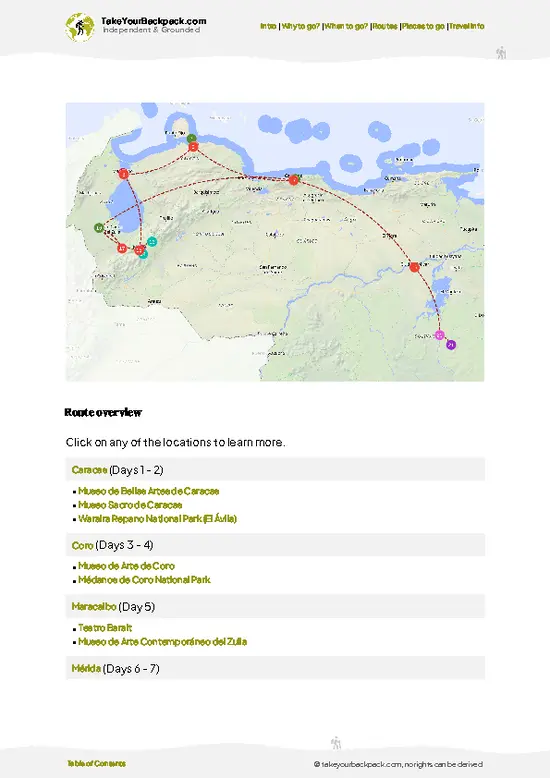
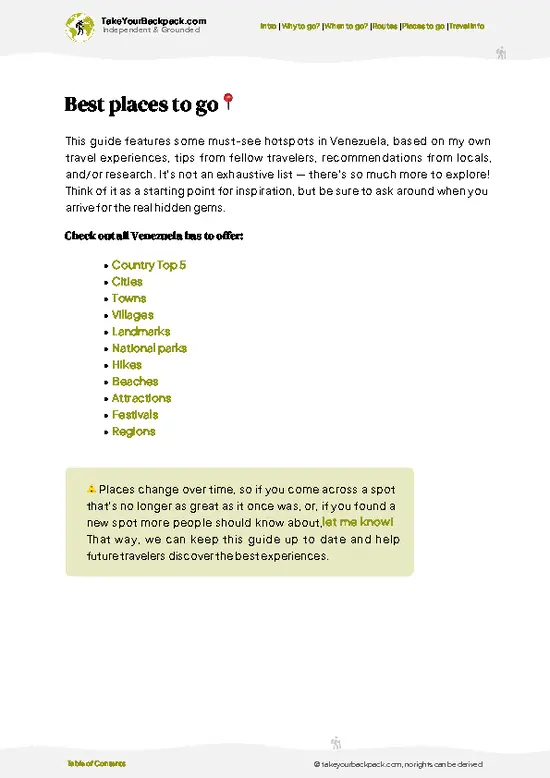
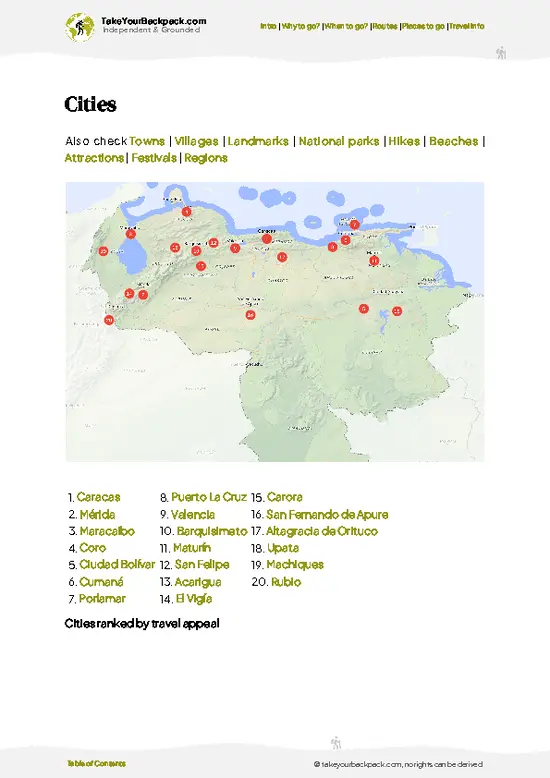
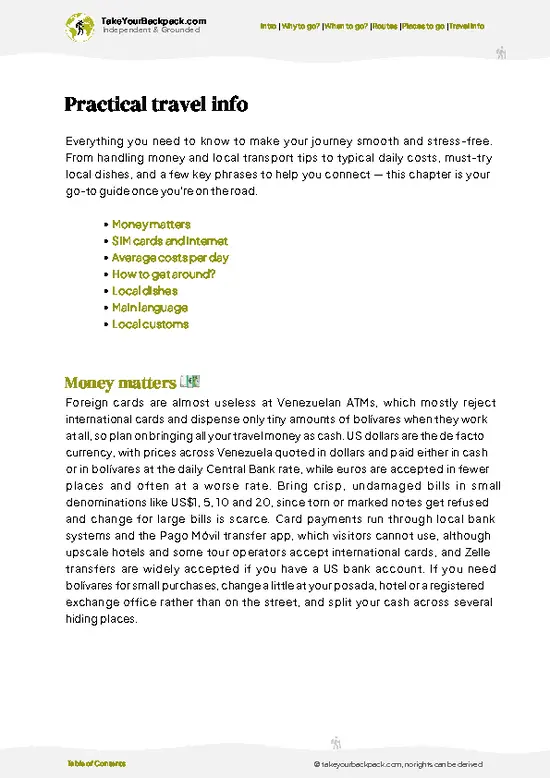
example page 0 from our offline Travel Guide for Venezuela
example page 1 from our offline Travel Guide for Venezuela
example page 2 from our offline Travel Guide for Venezuela
example page 3 from our offline Travel Guide for Venezuela
example page 4 from our offline Travel Guide for Venezuela
example page 5 from our offline Travel Guide for Venezuela
example page 6 from our offline Travel Guide for Venezuela
example page 7 from our offline Travel Guide for Venezuela
Loading the map 🌍
CLICK TO FILTER
cities
towns
villages
landmarks
national parks
hikes
beaches
attractions
festivals
regions
SHOW COUNTRY’S BESTSHOW ALL

✨ Why go?
Ranked #21 national park in Venezuela
What sets this place apart

Yapacana National Park appeals to a very narrow kind of backpacker: someone who wants raw Amazon-Orinoco country with no infrastructure and no tour crowds. The draw is the Cerro Yapacana tepui, a sandstone massif rising from white-sand forest, and the Orinoco and Atabapo rivers that you travel by boat from San Fernando de Atabapo. Everything here is self-arranged with local boatmen, which suits people comfortable with slow river logistics and zero services. Anyone wanting marked trails or ranger posts should choose another park.

💡 HighlightsPlaces and moments you shouldn't skip

  1. Cerro Yapacana: the park’s signature tepui, a sandstone mountain of roughly 1,300 meters that stands alone above the lowland forest and is best admired from the water.
  2. Orinoco River: the broad, sandy-banked river that forms the approach, with river dolphins and herons along the edges.
  3. Atabapo River: a dark, tea-colored blackwater river whose acidic water keeps mosquitoes fewer than on the muddy rivers.
  4. White-sand forest: stunted, specialized vegetation growing on nutrient-poor sand, with plants found in few other places.
  5. San Fernando de Atabapo: the riverside town at the confluence of the Orinoco and Atabapo, where boats are arranged and the park’s edge begins.
Allow a few days in the area, most of it spent on the river.
Spotted a mistake or missing something? Contact us.

🌤️ When to go?Weather, crowds, and seasonal trade-offs

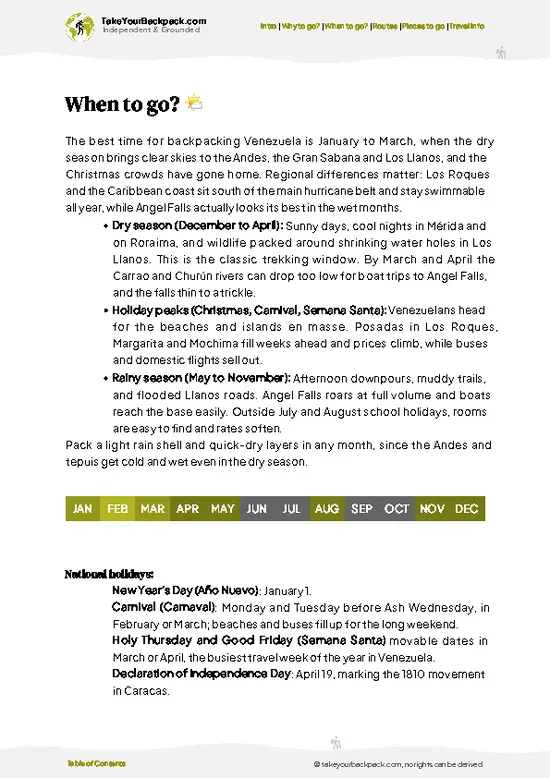
  • Dry Season (December to March): Rivers drop, sandbars appear and trails around the tepui dry out. Days run 31 to 35°C (88 to 95°F), nights 22 to 24°C (72 to 75°F).
  • Rainy Season (May to October): Heavy downpours swell the Orinoco, and boat travel gets slower. Highs sit near 29 to 32°C (84 to 90°F), and mosquitoes multiply.
  • Crowds and Prices: Visitors are very few year-round, so prices barely shift, but boat fuel costs can spike at any time.
Daylight stays close to 12 hours all year, so plan trail starts early regardless of season.

source: climatestotravel.comJANJanuary: excellent for travelingFEBFebruary: excellent for travelingMARMarch: highly recommended for travelingAPRApril: not recommended for travelingMAYMay: not recommended for travelingJUNJune: not recommended for travelingJULJuly: not recommended for travelingAUGAugust: not recommended for travelingSEPSeptember: not recommended for travelingOCTOctober: not recommended for travelingNOVNovember: not recommended for travelingDECDecember: highly recommended for traveling
when-to-go

✈️ The backpacker research shortcutVenezuela Travel Guide

An offline-friendly backpacking guide with optimized travel routes, ranked highlights, transport advice, and the best areas to stay.
example page 0 from our offline Travel Guide for Venezuela
example page 1 from our offline Travel Guide for Venezuela
example page 2 from our offline Travel Guide for Venezuela
example page 3 from our offline Travel Guide for Venezuela
example page 4 from our offline Travel Guide for Venezuela
example page 5 from our offline Travel Guide for Venezuela
example page 6 from our offline Travel Guide for Venezuela
example page 7 from our offline Travel Guide for Venezuela
The digital guide (290 pages) contains:
✅ 91 highlights, ranked by travel appeal
✅ Optimized 5, 10 & 15-day travel routes
✅ Cities, national parks, landmarks, beaches
✅ How to get around
✅ Offline-friendly for travel without Wi-Fi
👉 Click to see all 30+ guide features

📅 Plan smarter in minutes, not weeks
✅ Month by month travel advice
✅ Festivals & national holidays
✅ Budget expectations

🗺️ Go to the right places, skip the overrated ones
✅ Honest pros & cons of destinations
✅ Top hikes, parks & viewpoints
✅ Lesser-known places most travelers miss
✅ Clear “worth it vs skip it” guidance

🛏️ Travel smoothly without rookie mistakes
✅ Best areas to stay
✅ Transport systems explained simply
✅ Common scams & safety advice
✅ SIM cards, money & practical tips

🌍 Understand the country, not just visit it
✅ Culture & traditions
✅ 52 Essential phrases & customs
✅ Festivals worth planning around
✅ Traveler-friendly historical context
✅ Insights that make places more meaningful

📱 Built for real travel conditions
✅ Fully downloadable PDF
✅ Works completely offline
✅ Optimized for phone use
✅ Useful in remote areas & buses
✅ Everything in one place
Stop searching, start planning
Get instant access to your full guide. 30‑day money-back guarantee.
+ Add another guide for just

By proceeding you agree to our terms.
Sent to your inbox immediately after payment • 100% Secure Checkout
Best Backpacking Travel Advisor 2025 tourism awardBest Backpacking
Travel Advisor
2025
What others say about Take Your Backpack Guides:
⭐⭐⭐⭐⭐
Fantastic, amazing amount of information!
⭐⭐⭐⭐⭐
My goodness this is amazing, it's what I've been looking for hats off too you!
⭐⭐⭐⭐⭐
I think this is absolutely BRILLIANT
⭐⭐⭐⭐
Very complete and informative. It's still missing places, but I gotta to commend you
⭐⭐⭐⭐⭐
This is truly amazing, thank you, can't wait to explore it with my kids!
⭐⭐⭐⭐⭐
Awesome resource, thank you!
⭐⭐⭐⭐⭐
This is amazing! Can't wait to explore the ones I haven't seen
⭐⭐⭐⭐
I love this! Well done, great idea.
⭐⭐⭐⭐⭐
Thanks for taking the time to make this gem!
⭐⭐⭐⭐⭐
This might be the best website I've ever seen.
⭐⭐⭐⭐⭐
Congratulations, and thank you so much for your work; it's incredibly valuable.
⭐⭐⭐⭐
In all seriousness I think you did a great job pointing out the important spots
⭐⭐⭐⭐⭐
10/10 very good
⭐⭐⭐⭐⭐
As someone who's only just starting to visit regularly this is awesome, thank you.
⭐⭐⭐⭐
Thank you very much! I'm going to visit my dad, it's going to be very useful!
⭐⭐⭐⭐⭐
This is really cool! We'll be travelling for the first time and this definitely come in handy.
⭐⭐⭐⭐⭐
You are now our minister of culture, congratulations 👨‍💼
⭐⭐⭐⭐⭐
Just wanted to tell you that this is a pearl! Going to follow your recommendations.
⭐⭐⭐⭐⭐
This is so cool. I'll definitely be using the resource for my travels soon.
⭐⭐⭐⭐⭐
This is very impressive! Good work.
⭐⭐⭐⭐⭐
This is an amazing and informative site. Very well done!

🛏️ Where to stay?Best areas and accommodation options

There is no lodging inside Yapacana National Park, and the base for reaching it is San Fernando de Atabapo, a riverside town in Amazonas state. Expect simple posadas with fan or air-conditioned rooms for about US$10 to 25 a night, and book by phone or through a local guide. Puerto Ayacucho, the state capital to the north, has more choice, from basic hostels at US$8 to 15 to mid-range hotels around US$30 to 50, plus supply shops, ATMs and tour operators. Inside the park, travelers sling hammocks and camp near the river, and that needs a guide and permission arranged beforehand.

👛 Costs (as of 19 October 2026)Money, prices, and spending tips

Budget about US$85 per day for Yapacana National Park, with most of the money going to guide and boat hire.
CategoryBudget RangeLocal Reality
Entrance and permitsUS$0 to 10Fees are not consistently charged, and permission is arranged through your guide.
Accommodation (high season)US$10 to 25Posadas in San Fernando de Atabapo, or a hammock when camping.
Local transportUS$40 to 120Boat and fuel are costly and often split among a group.
GuideUS$20 to 40Required in practice for safe access.
Food and suppliesUS$8 to 15Simple meals of fish, cassava and rice, and you bring your own camping food.
Total Daily BudgetUS$85Per person, per day, in high season.
⚠️ Prices can change and everyone travels differently, so take this as a rough guide. Hope it helps you plan your adventure!

🥾 TrailsTrail guide for Yapacana national park

Yapacana National Park has no designated, named trails open to hikers, and the walking people actually do is limited to river shores and short forest edges. Most movement is by boat out of San Fernando de Atabapo, with short landings on sandbanks for birdwatching and looking up at the tepui.
  • Terrain: flat, sandy lowland forest and wet riverbank, with the tepui wall rising abruptly above it.
  • Difficulty: easy underfoot but hot, humid and slow in the dense understory, with no marked paths.
  • Wildlife: river dolphins, macaws, toucans, caimans and plenty of insects.
  • Scenery: blackwater channels, white beaches
… read more 👉
Yapacana National Park has no designated, named trails open to hikers, and the walking people actually do is limited to river shores and short forest edges. Most movement is by boat out of San Fernando de Atabapo, with short landings on sandbanks for birdwatching and looking up at the tepui.
  • Terrain: flat, sandy lowland forest and wet riverbank, with the tepui wall rising abruptly above it.
  • Difficulty: easy underfoot but hot, humid and slow in the dense understory, with no marked paths.
  • Wildlife: river dolphins, macaws, toucans, caimans and plenty of insects.
  • Scenery: blackwater channels, white beaches in the dry months and the dark profile of Cerro Yapacana.
Public transport does not reach the park. Getting to San Fernando de Atabapo is the hard part, and from there you need a local boat and guide. Crowds are essentially nonexistent, but mining activity and military control in parts of the park make access unpredictable. Ask in town before committing to any route.
⚠️ Hiking info can sometimes be outdated or inaccurate. Before you hit the trail, check the latest conditions with locals. If you do spot anything that's off, I'd love to hear from you, so I can update it for fellow travelers.

🛡️ SafetyScams, Hazards, and Annoyances

Reaching Yapacana is the real challenge, because illegal mining camps and armed groups have operated in parts of the park and along nearby stretches of the Orinoco. Do not go without an experienced local guide who has current information on which areas are open, and skip the park if that guide says no. Malaria is present, so carry prophylaxis, repellent and a mosquito net. Pack a water filter and a first aid kit, as help is days away. Rain makes granite slabs slick, so move slowly.

FAQFrequently asked questions about Yapacana

Plan on 3 to 5 days for Yapacana National Park, including travel. Puerto Ayacucho to San Fernando de Atabapo takes roughly 4 to 6 hours by road and river, and the boat leg to the park adds another day or so. Time on the ground is usually one to two days.
No, Yapacana National Park has no public transport, so you need a hired boat. Fly or drive to Puerto Ayacucho, continue to San Fernando de Atabapo, then charter a motorized canoe with a guide for about US$40 to 120 per trip. The journey on the Orinoco takes several hours.
Entrance fees at Yapacana National Park are minimal or not consistently collected, roughly US$0 to 10. Permission from authorities and a local guide are what you need in practice, since the area sits in Amazonas state with security concerns. Arrange this in Puerto Ayacucho or San Fernando de Atabapo before heading out.
⚠️ Things can change over time, so always validate details locally before you go.

Other Venezuelan national parks near Yapacana

Explore more nearby:


💡 Not sure where to go next?
Create a personalized itinerary for Venezuela including Yapacana and the places that fit your trip.

Generate my itinerary

👉 Discover all national parks

Or checkout all Venezuela has to offer (think cities, towns, villages, national parks, hikes, beaches, festivals)
Country photo of Venezuela

We 💚 feedbackKey takeaways before you go

Yapacana National Park’s best feature is the color of the Atabapo, tea-dark and nearly free of the biting insects that plague the muddy Orinoco. I would base myself in San Fernando and keep every outing on the river.

✍️ Help improve this page!
The information on this page is based on in-depth research, insights shared by experienced travelers, and feedback from the local travel community in Venezuela. While every effort is made to keep the information accurate and current, conditions can change — so if you spot anything incorrect or outdated, please get in touch.


🙋‍♂️ Give feedback

👋 Meet the founderWho’s Behind Take Your Backpack?

Johan, backpacker and founder of TakeYourBackpackHi, I’m Johan (Netherlands 🇳🇱), the creator of TakeYourBackpack. Over the past 3 decades, I’ve backpacked through 90+ countries across six continents, gaining extensive experience with independent travel, long-term trips, and overland routes.

This site is built on a combination of firsthand travel experience and carefully curated insights from other backpackers. Many guides are based on places I’ve personally visited, while others bring together tips, observations, and practical advice shared by trusted travelers I’ve met along the way.

The goal is to provide realistic, experience-driven guidance — not generic itineraries — so you can explore destinations with better context, clearer expectations, and more confidence.