×

Vietnam🇻🇳 | citiesHueimperial citadel, royal tombs, Perfume River | things to do and best time to go

Explore Hoi AnExplore Ninh Binh

Backpacking in Hue
🏆 Top pickcity ranked #4
By Johan Kruseman 🇳🇱 | Updated June 13, 2026

You land in Huế and hit your first real fork in the road: do you burn half a day and a chunk of cash on a guided citadel–tomb–pagoda tour with AC transport, or do you rent a cheap scooter, sweat through your shirt, and trade comfort for freedom and extra meals? That single choice sets the tone for your time budget, your wallet, and how close you actually get to the city.

Huế sits in central Vietnam, between Hanoi and Da Nang/Hội An, and it feels quieter and more introspective than both. It’s all about the Imperial Citadel, royal tombs scattered in the hills, incense villages, and slow riverside evenings rather than wild nightlife. Travel is easy, buses and trains are straightforward, and costs are low even by Vietnam standards. It’s safe, mellow, and social enough in hostels, but the city itself is more temple-at-sunset than bar-crawl-at-dawn.

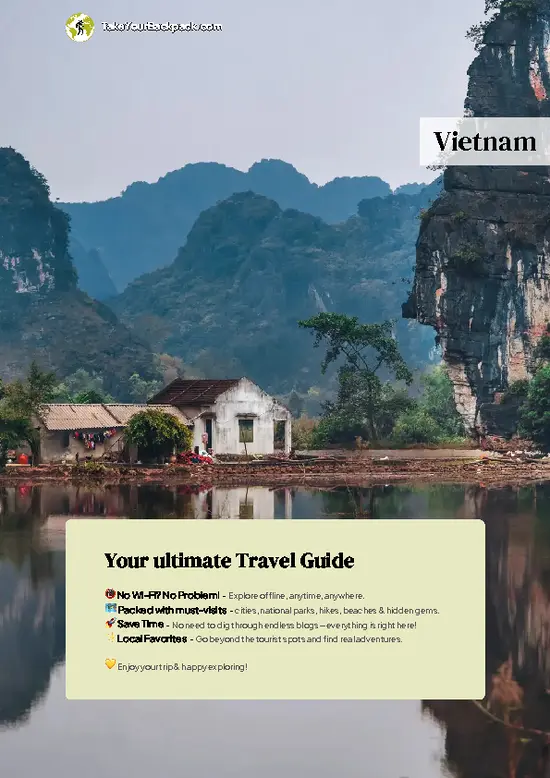
Discover everything you want to know in the 📖 Vietnam Travel Guide.


Get your Vietnam guide
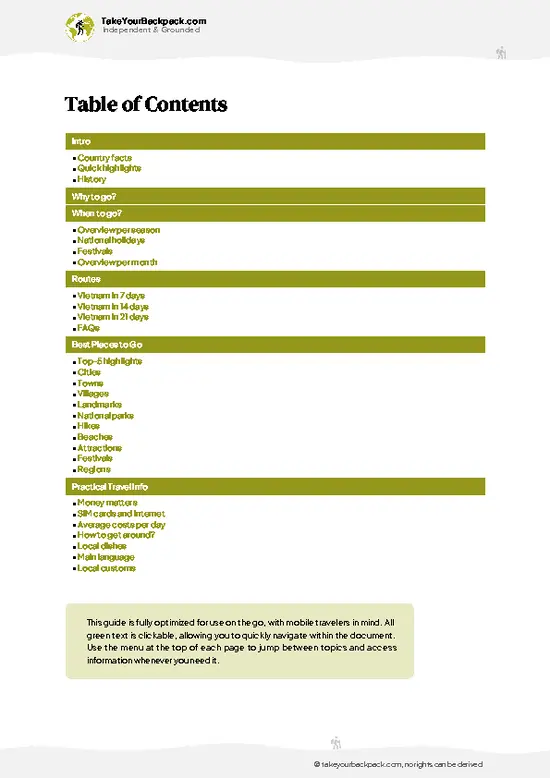
122 ranked highlights, routes & tips, works offline (437 pages)
Loading the map 🌍
CLICK TO FILTER
cities
towns
villages
landmarks
national parks
hikes
beaches
attractions
festivals
regions
SHOW COUNTRY’S BESTSHOW ALL

✨ Why go?
Ranked #4 city in Vietnam
What makes it a must-see city

Hue is a strategic stop for backpackers weaving through Vietnam. It’s not just about the highlights; it’s the basecamp value that makes it shine. You can explore the ancient citadel and tombs, then retreat to your affordable hostel for a good night’s sleep. The walkability of the city means you can easily navigate between sights, grabbing a bowl of pho or a banh mi from street vendors along the way.

Nightlife here is laid-back yet vibrant, with plenty of bars and cafes that cater to a backpacker crowd. Plus, it’s a gateway for day trips to nearby attractions like the DMZ or the stunning beaches of Lang Co. If you’re looking to stretch your budget, Hue offers a range of cheap eats and accommodations without sacrificing comfort.

In the grand scheme of your Vietnam journey, Hue fits perfectly … read more 👉
Hue is a strategic stop for backpackers weaving through Vietnam. It’s not just about the highlights; it’s the basecamp value that makes it shine. You can explore the ancient citadel and tombs, then retreat to your affordable hostel for a good night’s sleep. The walkability of the city means you can easily navigate between sights, grabbing a bowl of pho or a banh mi from street vendors along the way.

Nightlife here is laid-back yet vibrant, with plenty of bars and cafes that cater to a backpacker crowd. Plus, it’s a gateway for day trips to nearby attractions like the DMZ or the stunning beaches of Lang Co. If you’re looking to stretch your budget, Hue offers a range of cheap eats and accommodations without sacrificing comfort.

In the grand scheme of your Vietnam journey, Hue fits perfectly into a backpacking route, offering enough to keep you engaged without demanding too much time. It’s a place where you can recharge before diving into your next adventure.
Want to include Hue in your Vietnam route?
Create a personalized Vietnam itinerary that includes Hue and the places that fit your trip — based on your travel style, budget, and available time. Get your route in seconds.

Generate my trip

💡 HighlightsThe experiences that define the visit

  1. Hue Imperial City (The Citadel / Đại Nội) — The beating heart of Hue: palace halls, gates, royal temples and the ruined but atmospheric Forbidden Purple City. Walk its courtyards to feel the scale of the Nguyen dynasty and spot lacquered carvings and faded murals that photos can’t capture.
  2. Thiên Mụ Pagoda — Iconic riverside pagoda with a seven-tiered tower and clifftop views over the Perfume River. It’s a living religious site, great for sunrise or a quiet hour away from tour groups.
  3. Đông Ba Market — A chaotic, colourful market where locals shop: fresh produce, bánh nậm, chè, and cheap tailoring. Go hungry and try the local snacks; it’s the best place to taste everyday Hue life up close.
  4. Trang Tiền Bridge & Perfume River bank — The bridge is a city landmark and the riverbank at sunset
read more 👉
  1. Hue Imperial City (The Citadel / Đại Nội) — The beating heart of Hue: palace halls, gates, royal temples and the ruined but atmospheric Forbidden Purple City. Walk its courtyards to feel the scale of the Nguyen dynasty and spot lacquered carvings and faded murals that photos can’t capture.
  2. Thiên Mụ Pagoda — Iconic riverside pagoda with a seven-tiered tower and clifftop views over the Perfume River. It’s a living religious site, great for sunrise or a quiet hour away from tour groups.
  3. Đông Ba Market — A chaotic, colourful market where locals shop: fresh produce, bánh nậm, chè, and cheap tailoring. Go hungry and try the local snacks; it’s the best place to taste everyday Hue life up close.
  4. Trang Tiền Bridge & Perfume River bank — The bridge is a city landmark and the riverbank at sunset is prime people-watching: cyclists, students, café life and floating incense offerings. Walk from the Citadel along the river for the city’s rhythm.
  5. Perfume River boat ride (dragon or sampan) — Short boat trips to Thien Mu or just a sunset loop give a completely different view of Hue’s palaces and pagodas. It’s touristy but worth it for the light and the relaxed pace.
  6. Tomb of Emperor Tự Đức (Lăng Tự Đức) — A poetic, garden-like funerary complex with quiet lakes, pavilions and classical stone stele. Less ornate than some tombs but atmospheric and designed as a place for reflection.
  7. Tu Hiếu Pagoda — A tranquil, tree-shaded temple where several royal family members were once associated; the grounds, monk’s quarters and tombstones feel intimate compared with busier sites.
  8. Hue Museum of Royal Antiquities (Bảo tàng Cổ vật Cung đình) — Compact but rich: robes, ceramics, votive objects and imperial regalia rescued from the court. Seeing the artifacts in person makes the Imperial City’s stories click into place.
  9. An Dinh Palace (Dinh An Định) — A flamboyant, lesser-known former royal residence with elaborate tile work and murals. It’s an eccentric contrast to the formal Citadel and usually far quieter.
  10. Hue Royal Theater & Royal Court Music performances — Catching a Ca Huế (royal court music) show is cultural gold: UNESCO-recognized music performed in historic costume. It’s brief, hypnotic, and gives context to the imperial sites.
A few nearby day-trip highlights outside the city are Bach Ma National Park (hiking and cool mountain air), Lang Co Beach and the Hai Van Pass (scenic beach and road views), and the DMZ wartime sites north of Hue; Bach Ma is my personal favorite.
Spotted a mistake or missing something? Contact us.

Things to do in Hue

Ratings based on Tripadvisor reviews. When you book through this link, you support our work at no extra cost to you.

🏘️ NeighborhoodsUnderstanding the local layout

Hue is a city steeped in history, where ancient temples meet vibrant street life. Understanding its neighborhoods can elevate your experience, helping you balance time, money, and comfort.

**Old Town**
This is the heart of Hue, where history breathes. You’ll find the Imperial City and a maze of charming streets. Costs are moderate, and it’s highly walkable. The vibe is lively during the day, but it quiets down at night. Perfect for short stays if you want to soak in the culture quickly.

**Phu Hoi**
A bit off the tourist trail, Phu Hoi offers a more local experience. Prices are lower here, and you can find cozy guesthouses. The area is walkable, but you might need a bike for longer distances. It’s quieter, making it ideal for longer stays where you can immerse yourself in daily life.
read more 👉
Hue is a city steeped in history, where ancient temples meet vibrant street life. Understanding its neighborhoods can elevate your experience, helping you balance time, money, and comfort.

**Old Town**
This is the heart of Hue, where history breathes. You’ll find the Imperial City and a maze of charming streets. Costs are moderate, and it’s highly walkable. The vibe is lively during the day, but it quiets down at night. Perfect for short stays if you want to soak in the culture quickly.

**Phu Hoi**
A bit off the tourist trail, Phu Hoi offers a more local experience. Prices are lower here, and you can find cozy guesthouses. The area is walkable, but you might need a bike for longer distances. It’s quieter, making it ideal for longer stays where you can immerse yourself in daily life.

**Thuan An Beach**
If you crave some sun, head to Thuan An Beach. It’s a bit of a trek from the city center, so transport is key—grab a taxi or rent a motorbike. Costs can vary, but beachside accommodations can be pricier. The nightlife is laid-back, perfect for unwinding after a day of exploration.

**Tran Hung Dao Street**
This bustling street is a hub for backpackers. You’ll find budget hostels, street food, and a vibrant nightlife scene. It’s highly walkable, making it easy to explore nearby attractions. Ideal for short stays where you want to experience the energy of the city.

⌛️ 1 dayHow to make the most of one day

Hue, Vietnam, is a city steeped in history, where the echoes of emperors linger in the air. Once the imperial capital, it boasts a rich tapestry of culture, stunning architecture, and a laid-back vibe that invites exploration. You can easily spend a day here, soaking in its essence without feeling rushed.

Start your morning at the Imperial City, a UNESCO World Heritage site. Arrive early to beat the crowds and wander through the grand gates, marveling at the intricate details of the architecture. The tranquility of the gardens is a perfect backdrop for a leisurely stroll. Afterward, head to the nearby Dong Ba Market. Here, you can dive into local life, sampling fresh banh beo (rice cakes) and sipping on strong Vietnamese coffee. The market buzzes with energy, and the flavors will kickstart … read more 👉
Hue, Vietnam, is a city steeped in history, where the echoes of emperors linger in the air. Once the imperial capital, it boasts a rich tapestry of culture, stunning architecture, and a laid-back vibe that invites exploration. You can easily spend a day here, soaking in its essence without feeling rushed.

Start your morning at the Imperial City, a UNESCO World Heritage site. Arrive early to beat the crowds and wander through the grand gates, marveling at the intricate details of the architecture. The tranquility of the gardens is a perfect backdrop for a leisurely stroll. Afterward, head to the nearby Dong Ba Market. Here, you can dive into local life, sampling fresh banh beo (rice cakes) and sipping on strong Vietnamese coffee. The market buzzes with energy, and the flavors will kickstart your day.

In the afternoon, make your way to the Thien Mu Pagoda, perched on the banks of the Perfume River. It’s a short ride from the city center and offers a serene escape. The iconic seven-story pagoda is a sight to behold, and the views from the hilltop are worth the trek. If you’re feeling adventurous, rent a bicycle and explore the countryside, where you might stumble upon the lesser-known Tu Hieu Pagoda, a peaceful retreat often overlooked by tourists.

As evening falls, return to the city and find a spot along the river for dinner. Try a local restaurant serving bun bo Hue, a spicy beef noodle soup that’s a signature dish of the region. The riverside atmosphere, with lanterns reflecting on the water, creates a magical setting.

Hue may not be as bustling as Hanoi or Ho Chi Minh City, but its charm lies in its slower pace and rich history. Embrace the day, and you’ll leave with a deeper appreciation for this captivating city.
Turn your Hue visit into an Vietnam adventure
Build a complete Vietnam route with Hue, hidden gems, must-see destinations, and realistic travel times included.

Generate my trip

🌤️ When to go?When to go for the best experience


  • Weather: Hue’s climate swings between a hot, wet season from May to October and a cooler, drier stretch from November to April. The wet months bring heavy rains and humidity, which can slow down your pace and soak your gear.

  • Temperature: From November to February, expect mild days around 18-25°C (64-77°F), perfect for trekking and city exploration without overheating. The summer months push highs to 30-35°C (86-95°F), which can drain your energy fast.

  • Daylight Hours: Hue enjoys roughly 11 to 12 hours of daylight year-round, but the dry season offers clearer skies, making those golden hours more reliable for sightseeing and photography.

  • Crowds: Tourist traffic peaks during the dry season, especially around Tet (Vietnamese New Year, late January or early February). If you want fewer
read more 👉

  • Weather: Hue’s climate swings between a hot, wet season from May to October and a cooler, drier stretch from November to April. The wet months bring heavy rains and humidity, which can slow down your pace and soak your gear.

  • Temperature: From November to February, expect mild days around 18-25°C (64-77°F), perfect for trekking and city exploration without overheating. The summer months push highs to 30-35°C (86-95°F), which can drain your energy fast.

  • Daylight Hours: Hue enjoys roughly 11 to 12 hours of daylight year-round, but the dry season offers clearer skies, making those golden hours more reliable for sightseeing and photography.

  • Crowds: Tourist traffic peaks during the dry season, especially around Tet (Vietnamese New Year, late January or early February). If you want fewer people, aim for the shoulder months of March-April or September-October.

  • Seasonal Activities: The dry season hosts cultural festivals like the Hue Festival every two years, a rich dive into local arts and traditions. The rainy season limits outdoor events but offers lush landscapes and fewer tourists.

  • Price Fluctuations: Accommodation and tours spike during peak dry months and festivals. The wet season sees discounts and better deals, but you trade off comfort and accessibility.


Pro-tip: Target late February to April for a sweet spot—pleasant weather, manageable crowds, and prices that haven’t hit their peak yet. You’ll feel like you cracked the Hue timing code.


source: climatestotravel.comJANJanuary: highly recommended for travelingFEBFebruary: highly recommended for travelingMARMarch: excellent for travelingAPRApril: excellent for travelingMAYMay: fair for travelingJUNJune: fair for travelingJULJuly: fair for travelingAUGAugust: fair for travelingSEPSeptember: good for travelingOCTOctober: good for travelingNOVNovember: excellent for travelingDECDecember: excellent for traveling
when-to-go

✈️ The backpacker research shortcutVietnam Travel Guide

An offline-friendly backpacking guide with optimized travel routes, ranked highlights, transport advice, and the best areas to stay.
example page 0 from our offline Travel Guide for Vietnam
example page 1 from our offline Travel Guide for Vietnam
example page 2 from our offline Travel Guide for Vietnam
example page 3 from our offline Travel Guide for Vietnam
example page 4 from our offline Travel Guide for Vietnam
example page 5 from our offline Travel Guide for Vietnam
example page 6 from our offline Travel Guide for Vietnam
example page 7 from our offline Travel Guide for Vietnam
The digital guide (437 pages) contains:
122 highlights, ranked by travel appeal
Optimized 7, 14 & 21-day travel routes
Cities, national parks, landmarks, beaches
How to get around
Offline-friendly for travel without Wi-Fi
👉 Click to see all 30+ guide features

📅 Plan smarter in minutes, not weeks
Month by month travel advice
Festivals & national holidays
Budget expectations

🗺️ Go to the right places, skip the overrated ones
Honest pros & cons of destinations
Top hikes, parks & viewpoints
Lesser-known places most travelers miss
Clear “worth it vs skip it” guidance

🛏️ Travel smoothly without rookie mistakes
Best areas to stay
Transport systems explained simply
Common scams & safety advice
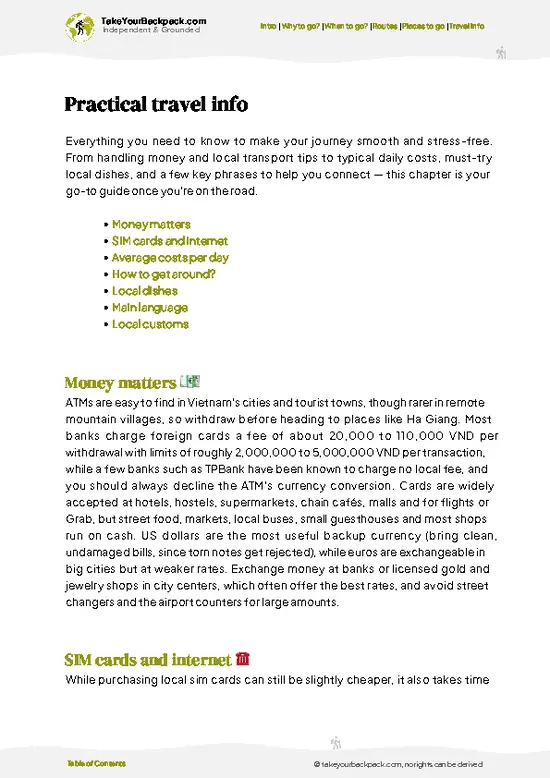
SIM cards, money & practical tips

🌍 Understand the country, not just visit it
Culture & traditions
52 Essential phrases & customs
Festivals worth planning around
Traveler-friendly historical context
Insights that make places more meaningful

📱 Built for real travel conditions
Fully downloadable PDF
Works completely offline
Optimized for phone use
Useful in remote areas & buses
Everything in one place
Save weeks of stressful planning
Get instant access to your full guide. 30‑day money-back guarantee.


By proceeding you agree to our terms.
Sent to your inbox immediately after payment • 100% Secure Checkout
Best Backpacking Travel Advisor 2025 tourism awardBest Backpacking
Travel Advisor
2025
What others say about Take Your Backpack Guides:
⭐⭐⭐⭐⭐
Fantastic, amazing amount of information!
⭐⭐⭐⭐⭐
My goodness this is amazing, it's what I've been looking for hats off too you!
⭐⭐⭐⭐⭐
I think this is absolutely BRILLIANT
⭐⭐⭐⭐
Very complete and informative. It's still missing places, but I gotta to commend you
⭐⭐⭐⭐⭐
This is truly amazing, thank you, can't wait to explore it with my kids!
⭐⭐⭐⭐⭐
Awesome resource, thank you!
⭐⭐⭐⭐⭐
This is amazing! Can't wait to explore the ones I haven't seen
⭐⭐⭐⭐
I love this! Well done, great idea.
⭐⭐⭐⭐⭐
Thanks for taking the time to make this gem!
⭐⭐⭐⭐⭐
This might be the best website I've ever seen.
⭐⭐⭐⭐⭐
Congratulations, and thank you so much for your work; it's incredibly valuable.
⭐⭐⭐⭐
In all seriousness I think you did a great job pointing out the important spots
⭐⭐⭐⭐⭐
10/10 very good
⭐⭐⭐⭐⭐
As someone who's only just starting to visit regularly this is awesome, thank you.
⭐⭐⭐⭐
Thank you very much! I'm going to visit my dad, it's going to be very useful!
⭐⭐⭐⭐⭐
This is really cool! We'll be travelling for the first time and this definitely come in handy.
⭐⭐⭐⭐⭐
You are now our minister of culture, congratulations 👨‍💼
⭐⭐⭐⭐⭐
Just wanted to tell you that this is a pearl! Going to follow your recommendations.
⭐⭐⭐⭐⭐
This is so cool. I'll definitely be using the resource for my travels soon.
⭐⭐⭐⭐⭐
This is very impressive! Good work.
⭐⭐⭐⭐⭐
This is an amazing and informative site. Very well done!

🛏️ Where to stay?Where staying makes the most sense

Hue’s backpacker sweet spot is the area around Pham Ngu Lao Street and the nearby Le Loi Street. This neighborhood nails the balance between safety, social buzz, and budget-friendly options. It’s where you’ll find a cluster of hostels packed with fellow travelers, making it easy to swap stories or find a group for a day trip. The streets hum with affordable eateries, casual bars, and street vendors, so you’re never far from a cheap meal or a cold drink after a day of exploring.

Compared to the quieter, more residential zones farther from the city center, this area keeps you plugged into the pulse … read more 👉
Hue’s backpacker sweet spot is the area around Pham Ngu Lao Street and the nearby Le Loi Street. This neighborhood nails the balance between safety, social buzz, and budget-friendly options. It’s where you’ll find a cluster of hostels packed with fellow travelers, making it easy to swap stories or find a group for a day trip. The streets hum with affordable eateries, casual bars, and street vendors, so you’re never far from a cheap meal or a cold drink after a day of exploring.

Compared to the quieter, more residential zones farther from the city center, this area keeps you plugged into the pulse of Hue without the hassle of dodging tourist traps or sketchy spots. It’s walkable, well-lit, and feels secure even after dark, which is a big plus for solo backpackers. The vibe here is relaxed but lively—think laid-back conversations over local beer rather than loud party scenes.

If you stray toward the Imperial City or the riverside, you’ll pay a premium for comfort and views, but lose that social, budget-friendly edge. So, if your goal is to maximize connection and keep costs low while staying safe, the Pham Ngu Lao-Le Loi corridor is your strategic base camp in Hue.

🚌 Getting aroundHow to get from A to B

Hue moves at a rhythm that’s part old-world ceremony, part modern hustle. The city’s pulse isn’t dictated by strict timetables but by a blend of tradition and practical improvisation. You’ll find moments where time feels suspended—like drifting through the Imperial City’s quiet courtyards—and others where the streets buzz with scooters weaving through traffic, honking in a chaotic but strangely efficient dance. Understanding Hue’s flow means recognizing that your travel choices here are a game of balancing patience, budget, and comfort. The trade-offs aren’t just about money or speed; they’re about how much of the city’s character you want to absorb versus how quickly you want to move on.


  • Walking: The ultimate budget option and the best way to soak in Hue’s layered history. Most central
read more 👉
Hue moves at a rhythm that’s part old-world ceremony, part modern hustle. The city’s pulse isn’t dictated by strict timetables but by a blend of tradition and practical improvisation. You’ll find moments where time feels suspended—like drifting through the Imperial City’s quiet courtyards—and others where the streets buzz with scooters weaving through traffic, honking in a chaotic but strangely efficient dance. Understanding Hue’s flow means recognizing that your travel choices here are a game of balancing patience, budget, and comfort. The trade-offs aren’t just about money or speed; they’re about how much of the city’s character you want to absorb versus how quickly you want to move on.


  • Walking: The ultimate budget option and the best way to soak in Hue’s layered history. Most central attractions are within a 20-30 minute stroll. Zero cost, zero schedule, but expect heat and humidity to slow you down. Walking lets you catch the small details—street vendors, colonial architecture, and riverside life—that motorized transport misses.


  • Public Bus: Runs roughly from 5:30 AM to 9:30 PM, fares hover around 7,000-10,000 VND (about 30-40 cents). It’s slow and often crowded, but it’s the cheapest way to cover longer distances like from the city center to the outskirts or the airport. Comfort is minimal—expect standing room and occasional delays—but it’s a window into local daily life and a solid choice if you’re not in a rush.


  • Motorbike Taxi (Xe Om): Available 24/7, prices vary but typically 20,000-50,000 VND for short trips. Fast and flexible, these are your go-to for quick hops or when public buses don’t reach. Comfort depends on your tolerance for open-air rides and traffic noise. Negotiating price upfront is key; it’s a trade-off between speed and the unpredictability of street bargaining.


  • Grab Motorbike or Car: App-based ride-hailing services operate widely, offering fixed prices and cashless payment. Cars cost more (around 50,000-100,000 VND for short rides), motorbikes less. This option balances comfort and convenience with moderate cost. It’s perfect when you want to avoid haggling or need a reliable ride late at night.


  • Bicycle Rental: A middle ground between walking and motorized transport. Rentals run about 50,000-100,000 VND per day. You control your pace and route, which is great for exploring the Perfume River banks or the Citadel outskirts. It’s more comfortable than walking in the heat but requires some stamina and street savvy.


Mastering Hue’s transit means playing with these trade-offs: walk to savor, bus to economize, motorbike taxi to speed up, Grab to smooth the edges, and bike to blend freedom with efficiency. Your choice shapes not just how you move, but how you experience the city’s unique tempo.

👛 Costs (as of 27 April 2026)Money, prices, and spending tips

Backpacking in Hue, Vietnam, offers a clear trade-off between cost and comfort, with prices that let you stretch your budget or indulge a bit without breaking the bank.
  • Dorm Accommodation (High Season): Expect to pay around $6 to $10 per night. High season means more tourists, so prices tick up, but you still get clean, basic dorms with air conditioning and Wi-Fi in most hostels.
  • Dorm Accommodation (Off-Season): Prices drop to about $4 to $7 per night. Fewer travelers mean better deals and sometimes more personal space, though some places might close or reduce services.
  • Meals: Street food and local eateries dominate here. A typical meal costs between $1.50 and $3.50. If you want to eat at a mid-range restaurant, budget $5 to $8 per meal. Hue’s specialty dishes like Bun Bo Hue are cheap
read more 👉
Backpacking in Hue, Vietnam, offers a clear trade-off between cost and comfort, with prices that let you stretch your budget or indulge a bit without breaking the bank.
  • Dorm Accommodation (High Season): Expect to pay around $6 to $10 per night. High season means more tourists, so prices tick up, but you still get clean, basic dorms with air conditioning and Wi-Fi in most hostels.
  • Dorm Accommodation (Off-Season): Prices drop to about $4 to $7 per night. Fewer travelers mean better deals and sometimes more personal space, though some places might close or reduce services.
  • Meals: Street food and local eateries dominate here. A typical meal costs between $1.50 and $3.50. If you want to eat at a mid-range restaurant, budget $5 to $8 per meal. Hue’s specialty dishes like Bun Bo Hue are cheap and filling.
  • Local Transport: Motorbike rentals run about $5 to $7 per day. Alternatively, cyclo rides or short taxi trips cost $1 to $3 depending on distance. Renting a bike gives you freedom but adds a bit of risk and responsibility.
  • City Transport Pass: Hue doesn’t have a formal city transport pass system; most locals and travelers rely on motorbikes, taxis, or walking. Budget around $1 to $2 daily if you use taxis or cyclos regularly.
  • Basic Activities/Entry Fees: Visiting the Imperial City or tombs costs roughly $3 to $7 per site. Some temples and museums are free or ask for a small donation. Budget $5 to $10 daily if you plan to explore multiple sites.
  • Miscellaneous Expenses: Bottled water, snacks, and small purchases usually add up to $1 to $3 per day. Keep some cash handy for unexpected needs like laundry or a quick coffee.

All told, a realistic daily budget for backpacking in Hue ranges from about $15 on a shoestring to $30 if you want a bit more comfort and flexibility. This range lets you decide whether to prioritize saving every dollar or splurging on a few creature comforts without losing the authentic experience.


source: vietnam.travel
⚠️ Prices can change and everyone travels differently, so take this as a rough guide. Hope it helps you plan your adventure!

🚌 Day tripsBest day trips from Hue

Hue is a fantastic launchpad for day trips that blend history, culture, and stunning landscapes. Here’s how to make the most of your time while keeping your budget in check.

**Imperial City and Thien Mu Pagoda**
Start your day with a visit to the Imperial City, a UNESCO World Heritage site that’s a must-see. Spend a couple of hours wandering through its ancient walls and learning about Vietnam’s royal past. Afterward, hop on a local bus or rent a bike to reach Thien Mu Pagoda, perched on a hill overlooking the Perfume River. The ride takes about 30 minutes and costs around $1. This combo gives you a taste of Hue’s rich history without breaking the bank. Just remember, many first-timers underestimate the time needed to explore the Imperial City fully.


**Phong Nha-Ke Bang National Park** … read more 👉
Hue is a fantastic launchpad for day trips that blend history, culture, and stunning landscapes. Here’s how to make the most of your time while keeping your budget in check.

**Imperial City and Thien Mu Pagoda**
Start your day with a visit to the Imperial City, a UNESCO World Heritage site that’s a must-see. Spend a couple of hours wandering through its ancient walls and learning about Vietnam’s royal past. Afterward, hop on a local bus or rent a bike to reach Thien Mu Pagoda, perched on a hill overlooking the Perfume River. The ride takes about 30 minutes and costs around $1. This combo gives you a taste of Hue’s rich history without breaking the bank. Just remember, many first-timers underestimate the time needed to explore the Imperial City fully.


**Phong Nha-Ke Bang National Park**
For the adventurous spirit, Phong Nha-Ke Bang National Park is a gem. It’s about a two-hour bus ride from Hue, costing around $5. The park is famous for its limestone caves, including the stunning Paradise Cave. You can spend the day hiking, exploring, and even swimming in cool, clear waters. The best time to visit is during the dry season, from November to April. A common mistake is trying to squeeze in too much; focus on a couple of caves to truly appreciate their beauty.
👉 Explore Phong Nha-Ke Bang National Park

**Tam Giang Lagoon**
If you’re looking for a more laid-back experience, head to Tam Giang Lagoon. Just a 30-minute drive from Hue, this serene spot offers a glimpse into local life. Rent a kayak or take a boat tour to explore the lagoon’s tranquil waters and watch fishermen at work. Expect to spend around $10 for transportation and a rental. The best time to visit is at sunrise or sunset for breathtaking views. Many travelers overlook this peaceful escape, so don’t miss it!


**Lang Co Beach**
For a beach day, Lang Co Beach is your go-to. It’s about an hour from Hue, with bus fares around $3. The beach is stunning, with soft sand and clear water. You can relax, swim, or grab some fresh seafood from local vendors. The ideal time to visit is during the dry season, but avoid weekends when it gets crowded. A common mistake is not bringing enough cash; some vendors don’t accept cards.
Want to know what more Vietnam offers?
The Vietnam Travel Guide describes 122 highlights, from cities to national parks, from beaches to hikes

Get the Travel Guide -

🍲 FoodWhat to Eat & Drink

Hue is a **culinary treasure** in Vietnam, where every bite tells a story. Start with **Bún Bò Huế**, a spicy beef noodle soup that’s a warm hug in a bowl. The broth is rich, fragrant with lemongrass, and the beef is tender. Pair it with fresh herbs and lime for a burst of flavor.

Street food stalls are your best friends here. The **Dong Ba Market** buzzes with energy, offering everything from **banh khoai** (savory pancakes) to **che** (sweet desserts). Grab a seat on a tiny plastic stool and dive into the local scene. You’ll find locals chatting over bowls of noodles, and the atmosphere is electric.

Don’t skip the **local drinking culture**. Try **Huda beer**, a light lager that’s perfect for the humid evenings. You’ll often see groups of friends clinking glasses and sharing stories. It’s … read more 👉
Hue is a **culinary treasure** in Vietnam, where every bite tells a story. Start with **Bún Bò Huế**, a spicy beef noodle soup that’s a warm hug in a bowl. The broth is rich, fragrant with lemongrass, and the beef is tender. Pair it with fresh herbs and lime for a burst of flavor.

Street food stalls are your best friends here. The **Dong Ba Market** buzzes with energy, offering everything from **banh khoai** (savory pancakes) to **che** (sweet desserts). Grab a seat on a tiny plastic stool and dive into the local scene. You’ll find locals chatting over bowls of noodles, and the atmosphere is electric.

Don’t skip the **local drinking culture**. Try **Huda beer**, a light lager that’s perfect for the humid evenings. You’ll often see groups of friends clinking glasses and sharing stories. It’s customary to toast with “1, 2, 3, yo!” before taking a sip.

Be mindful of **etiquette**: it’s polite to wait for the eldest to start eating first. This isn’t just a meal; it’s a communal experience, where flavors and laughter blend seamlessly. Embrace it all, and you’ll leave with a full belly and a happy heart.

🛡️ SafetyScams, Hazards, and Annoyances

Hue is generally safe for backpackers, but a few situational awareness tips can enhance your experience. Stick to well-lit areas at night, especially around the Citadel and the Perfume River. Solo travelers should avoid quiet backstreets after dark; it’s best to stay where there are people.

Common scams are minimal, but be cautious with motorbike taxis. Always agree on a fare before hopping on. Street vendors can be persistent, so a polite but firm “no, thank you” usually does the trick.

Keep your belongings close, especially in crowded markets like Dong Ba. Pickpocketing isn’t rampant, but it’s wise to be vigilant. Overall, if you maintain a confident demeanor and engage with locals respectfully, you’ll find Hue welcoming and rich in experiences.

Other Vietnamese cities near Hue

Explore more nearby:

  • Quang Tri—demilitarized zone, riverside town, war cemeteries| 53 km away
  • Dong Ha—border crossing, DMZ tours, highway junction| 63 km away
  • Da Nang—urban beaches, Han River bridges, modern skyline| 69 km away

💡 Not sure where to go next?
Create a personalized itinerary for Vietnam including Hue and the places that fit your trip.

Generate my itinerary

👉 Discover all cities

Or checkout all Vietnam has to offer (think cities, towns, villages, national parks, hikes, beaches, festivals)
Country photo of Vietnam

We 💚 feedbackIs it worth it?

Hue is a treasure trove of history, with its ancient citadel and royal tombs whispering tales of Vietnam’s past. You can almost feel the echoes of emperors walking the grounds. But be ready for the heat and humidity; it can be relentless. If you’re not a fan of sweating through your shirt while exploring, plan your outings for early morning or late afternoon. Embrace the experience, and you’ll find it’s worth every drop.

✈️ When did I visit Vietnam?
I have backpacked through the northern part of Vietnam all the way back in 1998.

✍️ Help improve this page!
The information on this page is based on my own backpacking experience in Vietnam, supplemented with up-to-date research and feedback from other travelers. Travel details can change, so if you notice anything outdated or incomplete, feel free to let me know.


🙋‍♂️ Give feedback

👋 Meet the founderWho’s Behind Take Your Backpack?

Johan, backpacker and founder of TakeYourBackpackHi, I’m Johan (Netherlands 🇳🇱), the creator of TakeYourBackpack. Over the past decade, I’ve backpacked through 80+ countries across six continents, gaining extensive experience with independent travel, long-term trips, and overland routes.

This site is built on a combination of firsthand travel experience and carefully curated insights from other backpackers. Many guides are based on places I’ve personally visited, while others bring together tips, observations, and practical advice shared by trusted travelers I’ve met along the way.

The goal is to provide realistic, experience-driven guidance — not generic itineraries — so you can explore destinations with better context, clearer expectations, and more confidence.

Get full Vietnam guide •
Instant download • 122 highlights • Full Offline guide