×

Vietnam🇻🇳 | citiesHoi Anlantern-lit streets, riverside town, tailor shops | things to do and best time to go

Explore Ho Chi Minh CityExplore Hue

Backpacking in Hoi An
UNESCO World Heritage site
🏆 Top pickcity ranked #3
By Johan Kruseman 🇳🇱 | Updated June 10, 2026

Hoi An’s secret advantage is that it’s one of the few places in Vietnam where you can slow down without “wasting” days; everything you want—food, beach, countryside, Old Town—is within a 20-minute bike ride, so you burn almost no time on transport. It sits on the central coast, just south of Da Nang, roughly halfway between Hanoi and Ho Chi Minh City. For backpackers, it’s easy-mode in the best and worst ways: gorgeous lantern-lit Old Town, tailor shops, cooking classes, An Bang beach, rice paddies, and cafés built for lingering. It’s cheap by global standards but pricier than Da Nang or Hue, and nightlife is more “pub crawl and river bars” than underground scene. Super safe, very walkable, and almost too easy to meet other travelers—hostels here feel like social factories. Compared to nearby cities, Hoi An is softer, prettier, and a bit more curated, but still worth your days.

Discover everything you want to know in the 📖 Vietnam Travel Guide.


Get your Vietnam guide
122 ranked highlights, routes & tips, works offline (437 pages)
Loading the map 🌍
CLICK TO FILTER
cities
towns
villages
landmarks
national parks
hikes
beaches
attractions
festivals
regions
SHOW COUNTRY’S BESTSHOW ALL

✨ Why go?
Ranked #3 city in Vietnam
What makes it a must-see city

Hoi An is a backpacker’s dream for several reasons. First, its walkability makes it easy to explore on foot, allowing you to soak in the charming streets without the hassle of transportation. You’ll find a plethora of hostels that cater to budget travelers, offering not just affordable beds but also a vibrant social scene. The food scene is a highlight, with street vendors serving up local delicacies that won’t break the bank.

As a basecamp for day trips, Hoi An is strategically located near stunning beaches and cultural sites, making it a smart choice for those wanting to maximize their time without sacrificing comfort. The nightlife is laid-back yet engaging, perfect for winding down after a day of exploration.

In terms of onward travel, Hoi An is well-connected, allowing you to easily … read more 👉
Hoi An is a backpacker’s dream for several reasons. First, its walkability makes it easy to explore on foot, allowing you to soak in the charming streets without the hassle of transportation. You’ll find a plethora of hostels that cater to budget travelers, offering not just affordable beds but also a vibrant social scene. The food scene is a highlight, with street vendors serving up local delicacies that won’t break the bank.

As a basecamp for day trips, Hoi An is strategically located near stunning beaches and cultural sites, making it a smart choice for those wanting to maximize their time without sacrificing comfort. The nightlife is laid-back yet engaging, perfect for winding down after a day of exploration.

In terms of onward travel, Hoi An is well-connected, allowing you to easily hop on a bus or train to your next destination. Whether you stay for a few days or just a quick stop, Hoi An offers a blend of high-value experiences that fit seamlessly into any backpacking route.
Want to include Hoi An in your Vietnam route?
Create a personalized Vietnam itinerary that includes Hoi An and the places that fit your trip — based on your travel style, budget, and available time. Get your route in seconds.

Generate my trip

💡 HighlightsEssential experiences to have while visiting Hoi An

  1. Japanese Covered Bridge (Chùa Cầu) — The tiny arched bridge with its guardian dogs and pagoda is the postcard of Hoi An; visit to see the mix of Japanese, Chinese and Vietnamese influences and get a classic photo before the crowds pick it apart.
  2. Phuc Kien (Fujian) Assembly Hall — Lavishly decorated Chinese assembly hall with carved dragons, colorful tiles and a peaceful courtyard; great for understanding the Chinese merchant communities that shaped Hoi An’s trading history.
  3. Tan Ky Old House — A lived-in 18th-century merchant’s home with original woodwork, antiques and layered architecture that tells the story of family trade across generations; small, intimate and very tangible history.
  4. Phung Hung Old House — Another well-preserved merchant house on the main street that contrasts commerce
read more 👉
  1. Japanese Covered Bridge (Chùa Cầu) — The tiny arched bridge with its guardian dogs and pagoda is the postcard of Hoi An; visit to see the mix of Japanese, Chinese and Vietnamese influences and get a classic photo before the crowds pick it apart.
  2. Phuc Kien (Fujian) Assembly Hall — Lavishly decorated Chinese assembly hall with carved dragons, colorful tiles and a peaceful courtyard; great for understanding the Chinese merchant communities that shaped Hoi An’s trading history.
  3. Tan Ky Old House — A lived-in 18th-century merchant’s home with original woodwork, antiques and layered architecture that tells the story of family trade across generations; small, intimate and very tangible history.
  4. Phung Hung Old House — Another well-preserved merchant house on the main street that contrasts commerce and domestic life; climb the narrow stairs and notice the mix of design details brought by traders over centuries.
  5. Hoi An Museum of Trade Ceramics — Compact but excellent collection of ceramics dug up from old cargoes and local sites; it’s the best place to connect the town’s architecture with the actual goods that made it rich.
  6. Central Market & Riverside Fish Market — A noisy, colorful hub where you can sample street food, watch seafood auctions, and see daily life unfiltered; go early for the freshest action and best photos.
  7. Lantern-making workshops (riverside craft shops) — Hands-on: pick fabrics, bend the frame, and make your own lantern — an instantly rewarding way to learn a Hoi An craft and leave with something handmade (and actually useful).
  8. Tra Que Vegetable Village — A short bike or boat ride from the old town to a living herb garden where farmers still use traditional methods; you can help plant, learn local gardening techniques, then cook and eat what you grew.
  9. Cam Thanh Coconut Village & Basket Boat Rides — Palm-lined waterways, fishermen demonstrating traditional net techniques, and the famous “basket boat” spin: a quirky, photogenic way to see the fishing culture just outside the old quarter.
  10. An Bang Beach — Sand, simple seafood shacks and relaxed local vibes make this the best place to unwind without leaving Hoi An; it’s where town meets sea and you can watch trawlers and locals rather than tourist resorts.
A few great day trips outside the city: My Son Sanctuary (UNESCO Champa ruins), the Cham Islands (Cu Lao Cham) for snorkeling, and the Marble Mountains in Da Nang — My Son is my personal favorite for the atmosphere and history.
Spotted a mistake or missing something? Contact us.

Things to do around Hoi An

Ratings based on Tripadvisor reviews. When you book through this link, you support our work at no extra cost to you.

🏘️ NeighborhoodsKey areas and districts to know

Hoi An is a backpacker’s playground, blending history with vibrant street life. Here’s how the neighborhoods stack up:

Old Town: This is the heart of Hoi An, where ancient architecture meets bustling markets. The vibe is lively, especially at night with lanterns illuminating the streets. Costs can be higher here, but the walkability is unbeatable. Everything is within a short stroll. Perfect for short stays, as you can soak up the culture quickly, but longer stays might feel repetitive.

An Bang Beach: If you crave sun and surf, head to An Bang. It’s laid-back, with beach bars and fresh seafood. Prices are moderate, and you can find cozy guesthouses. While it’s a bit further from the town center, transport options are available. Ideal for longer stays if you want a mix of beach and culture, … read more 👉
Hoi An is a backpacker’s playground, blending history with vibrant street life. Here’s how the neighborhoods stack up:

Old Town: This is the heart of Hoi An, where ancient architecture meets bustling markets. The vibe is lively, especially at night with lanterns illuminating the streets. Costs can be higher here, but the walkability is unbeatable. Everything is within a short stroll. Perfect for short stays, as you can soak up the culture quickly, but longer stays might feel repetitive.

An Bang Beach: If you crave sun and surf, head to An Bang. It’s laid-back, with beach bars and fresh seafood. Prices are moderate, and you can find cozy guesthouses. While it’s a bit further from the town center, transport options are available. Ideal for longer stays if you want a mix of beach and culture, but nightlife is quieter here.

Cam Pho: This area offers a more local experience. It’s less touristy, with affordable accommodations and street food. The vibe is relaxed, making it suitable for longer stays. Walkability is decent, but you might need a bike for longer distances. Nightlife is minimal, so it’s perfect if you prefer peace over parties.

Tan An: A hidden treasure for budget travelers. It’s a short bike ride from Old Town, with great local eateries and cheaper lodging. The atmosphere is friendly and authentic. While it lacks nightlife, it’s a great base for longer stays, especially if you enjoy exploring on foot or by bike.

⌛️ 1 daySeeing the highlights in 24 hours

Hoi An is a captivating blend of history, culture, and culinary delights. This ancient town, with its lantern-lit streets and riverside charm, invites you to slow down and soak in the atmosphere. The best way to experience Hoi An is to embrace its rhythm, focusing on the Old Town and the nearby countryside.

Start your morning with a stroll through the Old Town. The early hours are perfect for wandering the narrow streets before the crowds arrive. Stop by a local café for a bowl of cao lầu, a regional noodle dish that’s a must-try. As you savor your breakfast, take in the sights of the iconic Japanese Covered Bridge and the vibrant colors of the old merchant houses.

In the afternoon, head to the outskirts of town to explore the rice paddies. Rent a bicycle and pedal through the lush green … read more 👉
Hoi An is a captivating blend of history, culture, and culinary delights. This ancient town, with its lantern-lit streets and riverside charm, invites you to slow down and soak in the atmosphere. The best way to experience Hoi An is to embrace its rhythm, focusing on the Old Town and the nearby countryside.

Start your morning with a stroll through the Old Town. The early hours are perfect for wandering the narrow streets before the crowds arrive. Stop by a local café for a bowl of cao lầu, a regional noodle dish that’s a must-try. As you savor your breakfast, take in the sights of the iconic Japanese Covered Bridge and the vibrant colors of the old merchant houses.

In the afternoon, head to the outskirts of town to explore the rice paddies. Rent a bicycle and pedal through the lush green fields. This is where you’ll find the real soul of Hoi An, away from the tourist traps. Stop by a small village like Tra Que, where you can join a cooking class and learn about local herbs. It’s a hands-on experience that connects you to the land and its people.

As evening approaches, return to the Old Town. The streets come alive with lanterns, creating a magical atmosphere. Grab dinner at a riverside restaurant, where you can indulge in fresh seafood while watching boats glide by. For a unique twist, seek out a local bar like Mango Mango, known for its creative cocktails and laid-back vibe.

End your day with a leisurely walk along the river, where you can release a lantern into the water. It’s a simple act, but it captures the essence of Hoi An—a blend of tradition, beauty, and connection. You’ve spent a day not just visiting a city, but truly experiencing its heart.
Turn your Hoi An visit into an Vietnam adventure
Build a complete Vietnam route with Hoi An, hidden gems, must-see destinations, and realistic travel times included.

Generate my trip

🌤️ When to go?When to go for the best experience


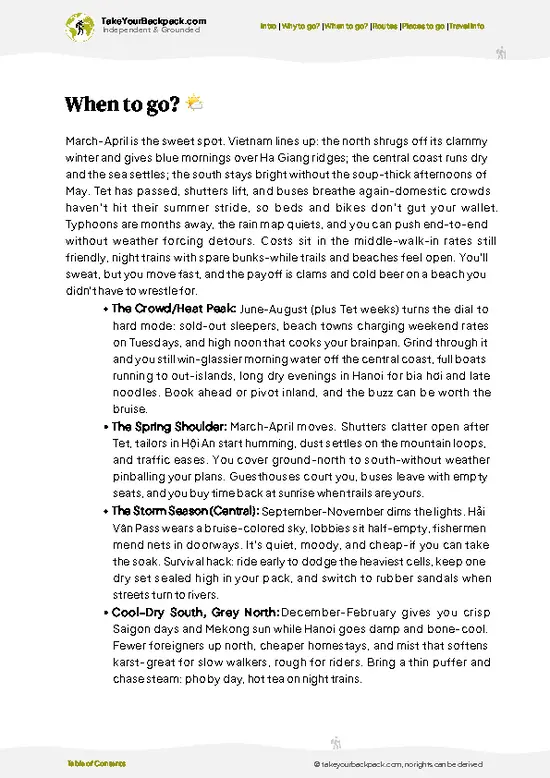
  • Weather: The dry season from February to April offers the most reliable weather, with minimal rain and clear skies. Avoid the wet months from September to November when heavy downpours can disrupt plans and turn streets into rivers.

  • Temperature: Expect comfortable temperatures between 20-30°C (68-86°F) during the dry season. The hottest months, May to August, can push highs above 35°C (95°F), which might sap your energy on long walks or bike rides.

  • Daylight Hours: Daylight remains fairly consistent year-round, around 11-12 hours daily, giving you plenty of time to explore without rushing.

  • Crowds: Peak tourist season aligns with the dry months, especially March and April, so expect more visitors and higher prices. The shoulder months, like February and May, balance fewer crowds with
read more 👉

  • Weather: The dry season from February to April offers the most reliable weather, with minimal rain and clear skies. Avoid the wet months from September to November when heavy downpours can disrupt plans and turn streets into rivers.

  • Temperature: Expect comfortable temperatures between 20-30°C (68-86°F) during the dry season. The hottest months, May to August, can push highs above 35°C (95°F), which might sap your energy on long walks or bike rides.

  • Daylight Hours: Daylight remains fairly consistent year-round, around 11-12 hours daily, giving you plenty of time to explore without rushing.

  • Crowds: Peak tourist season aligns with the dry months, especially March and April, so expect more visitors and higher prices. The shoulder months, like February and May, balance fewer crowds with decent weather.

  • Seasonal Activities: The Full Moon Festival, held monthly, is a cultural highlight but draws crowds. The Tet Lunar New Year in late January or early February offers unique local experiences but can limit business hours.

  • Price Fluctuations: Accommodation and tours spike during the dry season and festivals. Booking in shoulder months or the early rainy season can save money but requires flexibility with weather.


Pro-tip: Aim for late February to early April—dry, warm, manageable crowds, and you’ll dodge the tourist crush without sacrificing comfort or experience.


source: climatestotravel.comJANJanuary: good for travelingFEBFebruary: highly recommended for travelingMARMarch: excellent for travelingAPRApril: excellent for travelingMAYMay: highly recommended for travelingJUNJune: fair for travelingJULJuly: fair for travelingAUGAugust: fair for travelingSEPSeptember: below average for travelingOCTOctober: below average for travelingNOVNovember: fair for travelingDECDecember: good for traveling
vietnam-city-hoi-an
© Google |

✈️ The backpacker research shortcutVietnam Travel Guide

An offline-friendly backpacking guide with optimized travel routes, ranked highlights, transport advice, and the best areas to stay.
example page 0 from our offline Travel Guide for Vietnam
example page 1 from our offline Travel Guide for Vietnam
example page 2 from our offline Travel Guide for Vietnam
example page 3 from our offline Travel Guide for Vietnam
example page 4 from our offline Travel Guide for Vietnam
example page 5 from our offline Travel Guide for Vietnam
example page 6 from our offline Travel Guide for Vietnam
example page 7 from our offline Travel Guide for Vietnam
The digital guide (437 pages) contains:
122 highlights, ranked by travel appeal
Optimized 7, 14 & 21-day travel routes
Cities, national parks, landmarks, beaches
How to get around
Offline-friendly for travel without Wi-Fi
👉 Click to see all 30+ guide features

📅 Plan smarter in minutes, not weeks
Month by month travel advice
Festivals & national holidays
Budget expectations

🗺️ Go to the right places, skip the overrated ones
Honest pros & cons of destinations
Top hikes, parks & viewpoints
Lesser-known places most travelers miss
Clear “worth it vs skip it” guidance

🛏️ Travel smoothly without rookie mistakes
Best areas to stay
Transport systems explained simply
Common scams & safety advice
SIM cards, money & practical tips

🌍 Understand the country, not just visit it
Culture & traditions
52 Essential phrases & customs
Festivals worth planning around
Traveler-friendly historical context
Insights that make places more meaningful

📱 Built for real travel conditions
Fully downloadable PDF
Works completely offline
Optimized for phone use
Useful in remote areas & buses
Everything in one place
Save weeks of stressful planning
Get instant access to your full guide. 30‑day money-back guarantee.


By proceeding you agree to our terms.
Sent to your inbox immediately after payment • 100% Secure Checkout
Best Backpacking Travel Advisor 2025 tourism awardBest Backpacking
Travel Advisor
2025
What others say about Take Your Backpack Guides:
⭐⭐⭐⭐⭐
Fantastic, amazing amount of information!
⭐⭐⭐⭐⭐
My goodness this is amazing, it's what I've been looking for hats off too you!
⭐⭐⭐⭐⭐
I think this is absolutely BRILLIANT
⭐⭐⭐⭐
Very complete and informative. It's still missing places, but I gotta to commend you
⭐⭐⭐⭐⭐
This is truly amazing, thank you, can't wait to explore it with my kids!
⭐⭐⭐⭐⭐
Awesome resource, thank you!
⭐⭐⭐⭐⭐
This is amazing! Can't wait to explore the ones I haven't seen
⭐⭐⭐⭐
I love this! Well done, great idea.
⭐⭐⭐⭐⭐
Thanks for taking the time to make this gem!
⭐⭐⭐⭐⭐
This might be the best website I've ever seen.
⭐⭐⭐⭐⭐
Congratulations, and thank you so much for your work; it's incredibly valuable.
⭐⭐⭐⭐
In all seriousness I think you did a great job pointing out the important spots
⭐⭐⭐⭐⭐
10/10 very good
⭐⭐⭐⭐⭐
As someone who's only just starting to visit regularly this is awesome, thank you.
⭐⭐⭐⭐
Thank you very much! I'm going to visit my dad, it's going to be very useful!
⭐⭐⭐⭐⭐
This is really cool! We'll be travelling for the first time and this definitely come in handy.
⭐⭐⭐⭐⭐
You are now our minister of culture, congratulations 👨‍💼
⭐⭐⭐⭐⭐
Just wanted to tell you that this is a pearl! Going to follow your recommendations.
⭐⭐⭐⭐⭐
This is so cool. I'll definitely be using the resource for my travels soon.
⭐⭐⭐⭐⭐
This is very impressive! Good work.
⭐⭐⭐⭐⭐
This is an amazing and informative site. Very well done!

🛏️ Where to stay?How to pick the right area

Hoi An’s Old Town is the undeniable hub for backpackers who want to be in the thick of it without sacrificing safety or social buzz. This compact, pedestrian-friendly area is where you’ll find the highest concentration of hostels, making it easy to meet fellow travelers over a cold bia hoi or a street food feast. The vibe here is relaxed but lively, with lantern-lit evenings and a steady flow of backpackers swapping stories. It’s a place where comfort meets budget—hostels here often balance clean, simple dorms with communal spaces that encourage interaction.

Step just a bit outside the Old Town, … read more 👉
Hoi An’s Old Town is the undeniable hub for backpackers who want to be in the thick of it without sacrificing safety or social buzz. This compact, pedestrian-friendly area is where you’ll find the highest concentration of hostels, making it easy to meet fellow travelers over a cold bia hoi or a street food feast. The vibe here is relaxed but lively, with lantern-lit evenings and a steady flow of backpackers swapping stories. It’s a place where comfort meets budget—hostels here often balance clean, simple dorms with communal spaces that encourage interaction.

Step just a bit outside the Old Town, and you hit the An Hoi Island area. It’s quieter but still close enough to the action, perfect if you want a break from the crowds without losing access to social spots. Hostels here tend to be newer and sometimes a touch more spacious, offering a slightly more comfortable stay while keeping costs low.

Avoid the more residential or industrial outskirts—they’re cheaper but lack the social pulse and can feel isolating. In Hoi An, your best bet is to trade a few extra dong for proximity and community. Staying near the Old Town or An Hoi Island means you’re not just booking a bed; you’re plugging into the city’s rhythm, making every moment count.

🚌 Getting aroundHow to get around Hoi An

Hoi An moves at its own pace—somewhere between the gentle rhythm of a river and the unpredictable buzz of a market day. It’s not a city where you’ll find rigid timetables or the relentless rush of a metropolis. Instead, it’s a place where intuition and local knowledge shape your journey. The flow here rewards patience and curiosity, but it also demands you make smart choices about how you move. Time, money, and comfort aren’t just abstract concepts—they’re the currency you trade to unlock the city’s layers. Knowing the trade-offs means you’re not just getting from A to B; you’re mastering the city’s pulse.


  • Walking: The ultimate budget choice and the best way to soak in Hoi An’s charm. It costs nothing, offers total freedom, and lets you discover alleyways and riverside views at your own
read more 👉
Hoi An moves at its own pace—somewhere between the gentle rhythm of a river and the unpredictable buzz of a market day. It’s not a city where you’ll find rigid timetables or the relentless rush of a metropolis. Instead, it’s a place where intuition and local knowledge shape your journey. The flow here rewards patience and curiosity, but it also demands you make smart choices about how you move. Time, money, and comfort aren’t just abstract concepts—they’re the currency you trade to unlock the city’s layers. Knowing the trade-offs means you’re not just getting from A to B; you’re mastering the city’s pulse.


  • Walking: The ultimate budget choice and the best way to soak in Hoi An’s charm. It costs nothing, offers total freedom, and lets you discover alleyways and riverside views at your own pace. Expect to spend 15-30 minutes crossing the Old Town, depending on your energy and how often you stop. Comfort is high if you’re prepared for tropical heat and occasional humidity.


  • Public Bus: Limited but functional, the local bus serves as a low-cost option for reaching nearby beaches or the bus station. Fares hover around 10,000-15,000 VND (less than a dollar), with buses running roughly from 6:00 AM to 8:00 PM. It’s slow and often crowded, so comfort is minimal, but it’s a solid choice if you want to stretch your budget and don’t mind a bit of unpredictability in timing.


  • Motorbike Rental: The sweet spot for budget travelers craving speed and flexibility. Rentals run about 100,000-150,000 VND per day (~$4-6), giving you the freedom to explore beyond the city limits on your own schedule. It’s faster than walking or bus, but comfort depends on your tolerance for heat, traffic, and the occasional bumpy road. Safety gear is a must, and remember that traffic here is a dance of chaos and caution.


  • Taxi and Ride-Hailing Apps (Grab): More expensive but convenient and comfortable, taxis and Grab rides start around 30,000 VND for short trips within town. They run 24/7, so you can rely on them anytime, especially late at night or when you’re hauling luggage. The trade-off is clear: you pay for comfort and time saved, but it’s not the best move if you’re pinching pennies.


  • Bicycle Rental: A classic Hoi An move for those who want a balance between walking and motorbiking. Bikes cost about 40,000-60,000 VND per day (~$2-3), offer moderate speed, and let you breeze through narrow streets and countryside paths. Comfort is decent, but prepare for the tropical sun and occasional rain. It’s a low-cost, low-stress way to cover more ground without the chaos of motorbikes.

👛 Costs (as of 24 April 2026)Money, prices, and spending tips

Backpacking in Hoi An, Vietnam, is a balancing act between stretching your budget and savoring the city’s charm without skimping on comfort or experience. Here’s how the daily costs typically break down for an independent traveler navigating this trade-off.
  • Dorm Accommodation (High Season): Expect to pay around $8 to $12 per night. High season drives prices up as demand spikes, especially in well-rated hostels near the Old Town.
  • Dorm Accommodation (Off-Season): Prices drop to about $5 to $8 per night. The quieter months offer a chance to snag better deals and more space without sacrificing location.
  • Meals: Street food and local eateries keep costs low, averaging $2 to $5 per meal. A full day of eating well, including a mix of banh mi, pho, and fresh seafood, typically runs $6 to $12.
  • Local
read more 👉
Backpacking in Hoi An, Vietnam, is a balancing act between stretching your budget and savoring the city’s charm without skimping on comfort or experience. Here’s how the daily costs typically break down for an independent traveler navigating this trade-off.
  • Dorm Accommodation (High Season): Expect to pay around $8 to $12 per night. High season drives prices up as demand spikes, especially in well-rated hostels near the Old Town.
  • Dorm Accommodation (Off-Season): Prices drop to about $5 to $8 per night. The quieter months offer a chance to snag better deals and more space without sacrificing location.
  • Meals: Street food and local eateries keep costs low, averaging $2 to $5 per meal. A full day of eating well, including a mix of banh mi, pho, and fresh seafood, typically runs $6 to $12.
  • Local Transport: Renting a motorbike is the go-to for flexibility, costing around $5 to $7 per day. Alternatively, short taxi or ride-hailing trips usually range from $1 to $3 each within town.
  • City Transport Pass: Hoi An doesn’t have a formal city transport pass due to its small size and reliance on motorbikes and taxis, so budget accordingly for individual rides.
  • Basic Activities/Entry Fees: Visiting the Ancient Town and museums typically costs $5 to $7 for a ticket covering multiple sites. Additional activities like lantern-making workshops or boat rides add $5 to $15 depending on the experience.
  • Miscellaneous Expenses: Think snacks, bottled water, occasional coffee, or small souvenirs—budget around $2 to $5 daily to cover these little extras that add up.

All told, a realistic daily budget for backpacking in Hoi An ranges from about $20 on the lean side to $40 if you want a bit more comfort and activity. This range lets you weigh your priorities: save on accommodation and meals to splurge on experiences, or upgrade your stay and keep activities modest. Knowing these trade-offs upfront turns your trip into a strategic win rather than a guessing game.


source: vietnam.travel
⚠️ Prices can change and everyone travels differently, so take this as a rough guide. Hope it helps you plan your adventure!

🚌 Day tripsShort trips worth adding

Hoi An is a fantastic base for day trips that blend culture, adventure, and stunning landscapes. Here are some top picks that will elevate your experience without draining your wallet.

My Son Sanctuary
Just a short drive from Hoi An, My Son is an ancient Cham site that whispers tales of a bygone civilization. The lush green hills surrounding the ruins create a serene backdrop, perfect for wandering and absorbing history. Expect to spend around 100,000 VND for entry and transportation, making it a budget-friendly choice. Early mornings are best to avoid the crowds and catch the soft light on the stone carvings. A common mistake is underestimating the time needed to explore; give yourself at least half a day.
👉 Explore My Son Sanctuary

Marble Mountains
A quick 30-minute ride from Hoi … read more 👉
Hoi An is a fantastic base for day trips that blend culture, adventure, and stunning landscapes. Here are some top picks that will elevate your experience without draining your wallet.

My Son Sanctuary
Just a short drive from Hoi An, My Son is an ancient Cham site that whispers tales of a bygone civilization. The lush green hills surrounding the ruins create a serene backdrop, perfect for wandering and absorbing history. Expect to spend around 100,000 VND for entry and transportation, making it a budget-friendly choice. Early mornings are best to avoid the crowds and catch the soft light on the stone carvings. A common mistake is underestimating the time needed to explore; give yourself at least half a day.
👉 Explore My Son Sanctuary

Marble Mountains
A quick 30-minute ride from Hoi An, the Marble Mountains are a stunning cluster of limestone hills dotted with caves and pagodas. Climb the steps to the top for panoramic views that make the effort worthwhile. Entry is free, but you might spend around 50,000 VND on transport. The best time to visit is early morning or late afternoon when the heat is manageable. Many first-timers miss the hidden caves; take your time exploring to uncover their secrets.


Cù Lao Chàm (Cham Islands)
For a taste of island life, hop on a boat to Cù Lao Chàm. The journey takes about 30 minutes, and the islands offer pristine beaches and snorkeling spots. Expect to pay around 300,000 VND for the boat ride and entry fee. The dry season, from March to August, is ideal for clear waters. A common pitfall is not checking the weather; rough seas can cancel trips, so plan ahead.


Tra Que Vegetable Village
Just a short bike ride from Hoi An, this village is a delightful escape into local agriculture. You can join a cooking class or simply stroll through the fields, learning about organic farming practices. Costs are minimal, around 50,000 VND for bike rental and a cooking class. Early mornings are best to see the farmers at work. Many overlook this gem, thinking it’s just a quick stop; it’s worth dedicating a few hours to soak in the atmosphere.
Want to know what more Vietnam offers?
The Vietnam Travel Guide describes 122 highlights, from cities to national parks, from beaches to hikes

Get the Travel Guide -

🍲 FoodLocal Cuisine & Drinks

In Hoi An, **food** is a vibrant dance of flavors that tells the story of its rich culture. You can’t miss **Cao Lau**, a noodle dish that’s a local treasure, featuring thick, chewy noodles topped with tender pork and fresh herbs. The secret? The water used to make those noodles comes from a specific well in town, giving them a unique taste.

Then there’s **Banh Mi**, the iconic Vietnamese sandwich. Picture a crispy baguette stuffed with savory meats, pickled veggies, and a drizzle of spicy sauce. Grab one from a street vendor, and you’ll feel the pulse of the city.

For drinks, try **Vietnamese coffee**—strong, sweet, and served with condensed milk. It’s a ritual here; sip it slowly while watching the world go by in a bustling café.

Backpackers often gather at **street food stalls** and … read more 👉
In Hoi An, **food** is a vibrant dance of flavors that tells the story of its rich culture. You can’t miss **Cao Lau**, a noodle dish that’s a local treasure, featuring thick, chewy noodles topped with tender pork and fresh herbs. The secret? The water used to make those noodles comes from a specific well in town, giving them a unique taste.

Then there’s **Banh Mi**, the iconic Vietnamese sandwich. Picture a crispy baguette stuffed with savory meats, pickled veggies, and a drizzle of spicy sauce. Grab one from a street vendor, and you’ll feel the pulse of the city.

For drinks, try **Vietnamese coffee**—strong, sweet, and served with condensed milk. It’s a ritual here; sip it slowly while watching the world go by in a bustling café.

Backpackers often gather at **street food stalls** and local markets, where the atmosphere is electric. Eating is communal; don’t be surprised if you share a table with strangers. Embrace the **custom** of slurping your noodles—it’s a sign of appreciation.

In Hoi An, every bite and sip is a chance to connect with the local vibe. Dive in and savor the experience!

🛡️ SafetyScams, Hazards, and Annoyances

Hoi An is generally safe, but a few situations call for your attention. The Old Town, while picturesque, can get crowded. Keep your belongings close, especially in busy markets. Pickpockets are rare but not unheard of, so a crossbody bag can be your best friend.

If you’re traveling solo, especially at night, stick to well-lit areas. The lantern-lit streets are enchanting, but avoid quieter alleys after dark. Trust your instincts; if something feels off, it probably is.

Scams are minimal, but be wary of overly friendly locals offering unsolicited help. They may lead you to shops where prices are inflated. Always confirm prices before accepting services, like a ride on a cyclo.

Annoyances like aggressive street vendors can test your patience. A polite “no, thank you” usually does the trick. … read more 👉
Hoi An is generally safe, but a few situations call for your attention. The Old Town, while picturesque, can get crowded. Keep your belongings close, especially in busy markets. Pickpockets are rare but not unheard of, so a crossbody bag can be your best friend.

If you’re traveling solo, especially at night, stick to well-lit areas. The lantern-lit streets are enchanting, but avoid quieter alleys after dark. Trust your instincts; if something feels off, it probably is.

Scams are minimal, but be wary of overly friendly locals offering unsolicited help. They may lead you to shops where prices are inflated. Always confirm prices before accepting services, like a ride on a cyclo.

Annoyances like aggressive street vendors can test your patience. A polite “no, thank you” usually does the trick. Stay calm and assertive, and you’ll navigate Hoi An like a pro.

Other Vietnamese cities near Hoi An

Explore more nearby:

  • Da Nang—urban beaches, Han River bridges, modern skyline| 34 km away
  • Quang Ngai—war memorials, fishing harbors, My Lai site| 98 km away
  • Hue—imperial citadel, royal tombs, Perfume River| 103 km away

💡 Not sure where to go next?
Create a personalized itinerary for Vietnam including Hoi An and the places that fit your trip.

Generate my itinerary

👉 Discover all cities

Or checkout all Vietnam has to offer (think cities, towns, villages, national parks, hikes, beaches, festivals)
Country photo of Vietnam

We 💚 feedbackIs it worth it?

Hoi An is a treasure trove of history and culture, where the lantern-lit streets pulse with life. You’ll savor the local cuisine and the charm of ancient architecture. But here’s the kicker: it can get crowded, especially during peak season. If you’re after that serene vibe, plan your visit for the shoulder months. Embrace the hustle, but know when to step back and soak in the quieter moments.

✈️ When did I visit Vietnam?
I have backpacked through the northern part of Vietnam all the way back in 1998.

✍️ Help improve this page!
The information on this page is based on my own backpacking experience in Vietnam, supplemented with up-to-date research and feedback from other travelers. Travel details can change, so if you notice anything outdated or incomplete, feel free to let me know.


🙋‍♂️ Give feedback

👋 Meet the founderWho’s Behind Take Your Backpack?

Johan, backpacker and founder of TakeYourBackpackHi, I’m Johan (Netherlands 🇳🇱), the creator of TakeYourBackpack. Over the past decade, I’ve backpacked through 80+ countries across six continents, gaining extensive experience with independent travel, long-term trips, and overland routes.

This site is built on a combination of firsthand travel experience and carefully curated insights from other backpackers. Many guides are based on places I’ve personally visited, while others bring together tips, observations, and practical advice shared by trusted travelers I’ve met along the way.

The goal is to provide realistic, experience-driven guidance — not generic itineraries — so you can explore destinations with better context, clearer expectations, and more confidence.

Get full Vietnam guide •
Instant download • 122 highlights • Full Offline guide