
×

Vietnam🇻🇳 | citiesPhu Quocisland beaches, fish sauce factories, night market | things to do and best time to go

Explore Rach GiaExplore Tuy Hoa

Backpacking in Phu Quoc
🏆 Top pickcity ranked #7
By Johan Kruseman 🇳🇱 | Updated June 12, 2026

A decade ago Phu Quoc felt like a sleepy fishing island with a few bungalows and one half-decent beach bar; now it’s Vietnam’s resort lab, with mega-hotels, beach clubs, and construction cranes competing with palm trees. It sits off the country’s southwest coast in the Gulf of Thailand, closer to Cambodia than Saigon. For backpackers, it’s easy, sunny, and a bit chaotic: cheap seafood, scooter loops through the interior, night markets, island-hopping, and some genuinely good beaches, but also overdevelopment, patchy trash management, and a slightly theme-park edge in spots like Grand World. It’s safe and social but less backpacker-intense than Saigon or Da Nang. I treat Phu Quoc as a “play-and-chill” stop, not a deep-culture destination.

Discover everything you want to know in the 📖 Vietnam Travel Guide.


Get your Vietnam guide
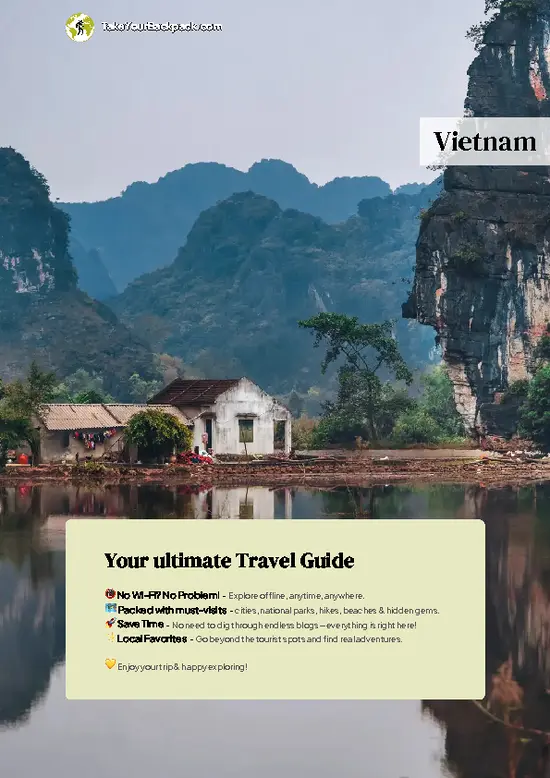
122 ranked highlights, routes & tips, works offline (437 pages)
Loading the map 🌍
CLICK TO FILTER
cities
towns
villages
landmarks
national parks
hikes
beaches
attractions
festivals
regions
SHOW COUNTRY’S BESTSHOW ALL

✨ Why go?
Ranked #7 city in Vietnam
The unique appeal for travelers

Phu Quoc is a strategic stop for backpackers seeking a blend of affordability and adventure. The island’s basecamp value is impressive; it serves as a launchpad for day trips to nearby islands and natural wonders. You’ll find a range of hostels that cater to budget travelers, offering a social atmosphere that makes it easy to connect with fellow adventurers.

The food scene is a delightful mix of local flavors and international options, ensuring you can fuel up without breaking the bank. Plus, the island is walkable, allowing you to explore at your own pace, whether you’re hunting for a beachside café or a vibrant night market.

When the sun sets, the nightlife kicks in, with bars and beach parties that keep the energy alive. Lastly, Phu Quoc’s easy onward travel options make it a breeze … read more 👉
Phu Quoc is a strategic stop for backpackers seeking a blend of affordability and adventure. The island’s basecamp value is impressive; it serves as a launchpad for day trips to nearby islands and natural wonders. You’ll find a range of hostels that cater to budget travelers, offering a social atmosphere that makes it easy to connect with fellow adventurers.

The food scene is a delightful mix of local flavors and international options, ensuring you can fuel up without breaking the bank. Plus, the island is walkable, allowing you to explore at your own pace, whether you’re hunting for a beachside café or a vibrant night market.

When the sun sets, the nightlife kicks in, with bars and beach parties that keep the energy alive. Lastly, Phu Quoc’s easy onward travel options make it a breeze to continue your journey, whether you’re heading to mainland Vietnam or beyond. It’s a place where you can soak in the experience without feeling rushed, making it a worthy stop on your backpacking route.
Want to include Phu Quoc in your Vietnam route?
Create a personalized Vietnam itinerary that includes Phu Quoc and the places that fit your trip — based on your travel style, budget, and available time. Get your route in seconds.

Generate my trip

💡 HighlightsMust-see experiences and standout moments

  • Dinh Cau Night Market (Duong Dong Market): The island’s social heart at night — cheap, excellent seafood stalls, local snacks and souvenirs, plus that genuine bustle of fishermen, families and backpackers mixing on the quay.
  • Dinh Cau Temple (Cau Temple / Rock Temple): A tiny seaside shrine perched on a rocky outcrop next to the market; great for sunset, local worship rituals and panoramic views of the harbor without needing a guided tour.
  • Phu Quoc Prison (Coconut Tree Prison Relic): A sobering, well-preserved museum about Vietnam’s wartime history — concrete cells, original murals and eyewitness accounts that give the island depth beyond beaches.
  • Coi Nguon Museum: Housed in a charming French-era villa, this small museum collects artifacts and stories of island life — fishermen gear, Khmer
read more 👉
  • Dinh Cau Night Market (Duong Dong Market): The island’s social heart at night — cheap, excellent seafood stalls, local snacks and souvenirs, plus that genuine bustle of fishermen, families and backpackers mixing on the quay.
  • Dinh Cau Temple (Cau Temple / Rock Temple): A tiny seaside shrine perched on a rocky outcrop next to the market; great for sunset, local worship rituals and panoramic views of the harbor without needing a guided tour.
  • Phu Quoc Prison (Coconut Tree Prison Relic): A sobering, well-preserved museum about Vietnam’s wartime history — concrete cells, original murals and eyewitness accounts that give the island depth beyond beaches.
  • Coi Nguon Museum: Housed in a charming French-era villa, this small museum collects artifacts and stories of island life — fishermen gear, Khmer and Kinh cultural pieces — neat if you care about local history and context.
  • Bãi Trường / Long Beach: The main stretch of sand west of Duong Dong — ideal for lazy afternoons, long walks, affordable beachfront cafés and spectacular sunsets without the fancy-resort price tag.
  • Sùng Hưng Pagoda (Sung Hung Pagoda): The largest Buddhist temple near Duong Dong; ornate statues, a calm courtyard and a look into contemporary religious life on Phu Quoc.
  • Suối Tranh (Tranh Stream & Waterfall): A short jungle walk leads to a cool stream and seasonal waterfall — good for a picnic, easy trekking and seeing the island’s interior greenery up close.
  • Ham Ninh Fishing Village: A working east-coast village with stilt houses, boat activity and one of the best places for freshly grilled seafood — visit early to watch the catch come in and sample local flavors.
  • Traditional Fish Sauce & Pepper Farms: Phu Quoc’s signature industries — touring a small fish-sauce factory and a pepper plantation shows how key local flavors are made, and most places let you taste and buy direct.
  • Pearl/Oyster Farm Tours: Short boat trips to nearby oyster cages and small farms demonstrate pearl cultivation and let you shop for locally graded pearls — a nice blend of maritime craft and a quieter island experience.
A few great day trips just outside the city: the An Thoi islands/Hòn Thơm (snorkeling and the cable-car views — my personal favorite), the famous white sand of Bãi Sao, and the northern headland at Gành Dầu for quiet rocky coasts and Cambodia views.
Spotted a mistake or missing something? Contact us.

Things to do near Phu Quoc

Ratings based on Tripadvisor reviews. When you book through this link, you support our work at no extra cost to you.

🏘️ NeighborhoodsNeighborhood guide to Phu Quoc

Phu Quoc is a tropical playground where your choices shape your experience. Here’s a breakdown of key neighborhoods to help you navigate the island’s offerings.

Duong Dong: This is the bustling heart of Phu Quoc. It’s where you’ll find markets, street food, and a vibrant nightlife. Prices are reasonable, making it great for budget travelers. The walkability is decent, but you might want a scooter for longer distances. Perfect for short stays if you want to soak up local culture quickly.

Long Beach: A laid-back stretch with soft sands and beach bars. It’s more touristy, but you can find affordable accommodations. The vibe is relaxed, ideal for lounging or enjoying sunset cocktails. Walkable, but a scooter opens up more options. Great for longer stays if you want to unwind.

Vinpearl Land: … read more 👉
Phu Quoc is a tropical playground where your choices shape your experience. Here’s a breakdown of key neighborhoods to help you navigate the island’s offerings.

Duong Dong: This is the bustling heart of Phu Quoc. It’s where you’ll find markets, street food, and a vibrant nightlife. Prices are reasonable, making it great for budget travelers. The walkability is decent, but you might want a scooter for longer distances. Perfect for short stays if you want to soak up local culture quickly.

Long Beach: A laid-back stretch with soft sands and beach bars. It’s more touristy, but you can find affordable accommodations. The vibe is relaxed, ideal for lounging or enjoying sunset cocktails. Walkable, but a scooter opens up more options. Great for longer stays if you want to unwind.

Vinpearl Land: This area is all about luxury and entertainment. It’s pricier, but if you’re looking for a splash of adventure, the amusement park and water park are here. Not very walkable, so transport is essential. Best for short bursts of fun rather than extended stays.

Ganh Dau: A quieter, more rural area with stunning views. It’s less developed, so costs are lower, but amenities are limited. Perfect for those seeking peace and natural beauty. A scooter is a must for getting around. Ideal for longer stays if you want to escape the crowds.

⌛️ 1 day1-day itinerary for Phu Quoc

Phu Quoc, Vietnam, is a tropical paradise that balances stunning beaches with a rich local culture. This island is not just about sunbathing; it’s a canvas of vibrant markets, lush landscapes, and hidden corners waiting to be explored.

Start your day in the bustling Duong Dong Market. Arrive early to soak in the local vibe as vendors set up their stalls. The aroma of fresh seafood and tropical fruits fills the air. Grab a bowl of pho from a street vendor—it’s a breakfast staple that will fuel your adventures. Afterward, stroll along the waterfront, where you can catch glimpses of fishing boats bobbing in the water.

In the afternoon, head to the quieter side of the island, specifically the An Thoi archipelago. Take a boat tour to explore some of the smaller islands. You’ll find pristine … read more 👉
Phu Quoc, Vietnam, is a tropical paradise that balances stunning beaches with a rich local culture. This island is not just about sunbathing; it’s a canvas of vibrant markets, lush landscapes, and hidden corners waiting to be explored.

Start your day in the bustling Duong Dong Market. Arrive early to soak in the local vibe as vendors set up their stalls. The aroma of fresh seafood and tropical fruits fills the air. Grab a bowl of pho from a street vendor—it’s a breakfast staple that will fuel your adventures. Afterward, stroll along the waterfront, where you can catch glimpses of fishing boats bobbing in the water.

In the afternoon, head to the quieter side of the island, specifically the An Thoi archipelago. Take a boat tour to explore some of the smaller islands. You’ll find pristine beaches and crystal-clear waters perfect for snorkeling. This is where you can escape the crowds and truly connect with nature. If you’re feeling adventurous, try your hand at paddleboarding; the calm waters make it an easy and enjoyable experience.

As the sun begins to set, make your way to the northern part of the island, where you’ll find the less-visited Vinpearl Safari. This isn’t just a typical zoo; it’s a chance to see animals in a more natural habitat. The evening light creates a magical atmosphere as you wander through the park.

Wrap up your day with dinner at a local seafood restaurant in the Ong Lang Beach area. The grilled fish here is a must-try, paired with a cold local beer. You’ll leave Phu Quoc not just with sun-kissed skin, but with a deeper appreciation for its unique blend of relaxation and adventure.
Turn your Phu Quoc visit into an Vietnam adventure
Build a complete Vietnam route with Phu Quoc, hidden gems, must-see destinations, and realistic travel times included.

Generate my trip

🌤️ When to go?Seasonal considerations and timing


  • Weather: The dry season from November to April is your best bet. Expect minimal rain, making beach days and island hopping reliable. May to October brings heavy monsoons, often grounding boats and flooding roads.

  • Temperature: Temperatures hover between 25-30°C (77-86°F) year-round. The dry season feels more comfortable with lower humidity, while the wet season can be sticky and oppressive.

  • Daylight Hours: Daylight remains steady, roughly 11-12 hours daily. Sunrise around 6:00 AM and sunset near 6:00 PM, giving you plenty of daylight for exploration regardless of season.

  • Crowds: Peak tourist influx aligns with the dry season, especially December to February. Expect more travelers and higher prices but also better infrastructure and open attractions.

  • Seasonal Activities: Dry months
read more 👉

  • Weather: The dry season from November to April is your best bet. Expect minimal rain, making beach days and island hopping reliable. May to October brings heavy monsoons, often grounding boats and flooding roads.

  • Temperature: Temperatures hover between 25-30°C (77-86°F) year-round. The dry season feels more comfortable with lower humidity, while the wet season can be sticky and oppressive.

  • Daylight Hours: Daylight remains steady, roughly 11-12 hours daily. Sunrise around 6:00 AM and sunset near 6:00 PM, giving you plenty of daylight for exploration regardless of season.

  • Crowds: Peak tourist influx aligns with the dry season, especially December to February. Expect more travelers and higher prices but also better infrastructure and open attractions.

  • Seasonal Activities: Dry months unlock snorkeling, diving, and fishing trips. Wet season limits water activities but offers lush landscapes and fewer tourists if you don’t mind the rain.

  • Price Fluctuations: Accommodation and tours spike in the dry season, especially around holidays. The wet season slashes prices but at the cost of comfort and accessibility.


Pro-tip: Aim for the shoulder months of November or April to balance good weather, manageable crowds, and better prices—smart timing that feels like you cracked the code.


source: climatestotravel.comJANJanuary: excellent for travelingFEBFebruary: excellent for travelingMARMarch: excellent for travelingAPRApril: highly recommended for travelingMAYMay: fair for travelingJUNJune: fair for travelingJULJuly: fair for travelingAUGAugust: fair for travelingSEPSeptember: fair for travelingOCTOctober: fair for travelingNOVNovember: highly recommended for travelingDECDecember: excellent for traveling
when-to-go

✈️ The backpacker research shortcutVietnam Travel Guide

An offline-friendly backpacking guide with optimized travel routes, ranked highlights, transport advice, and the best areas to stay.
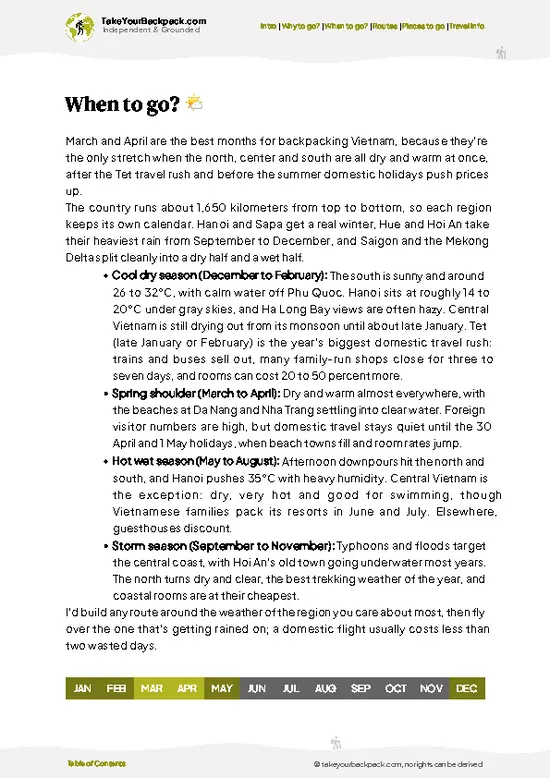
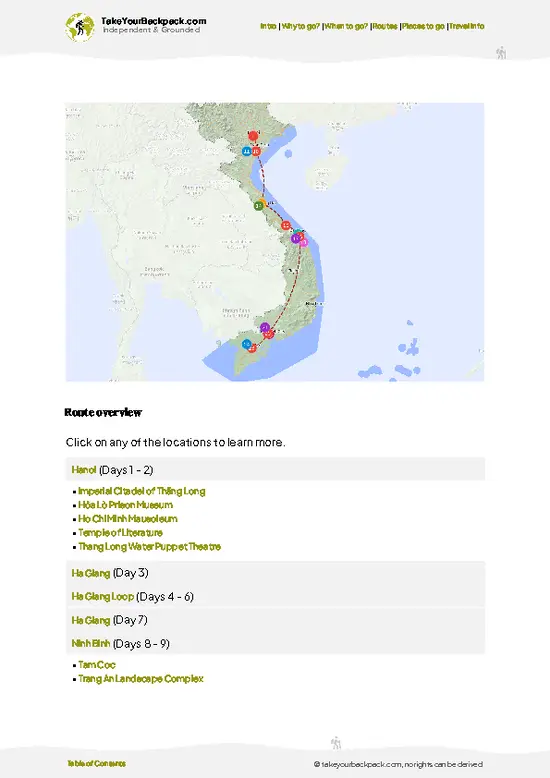
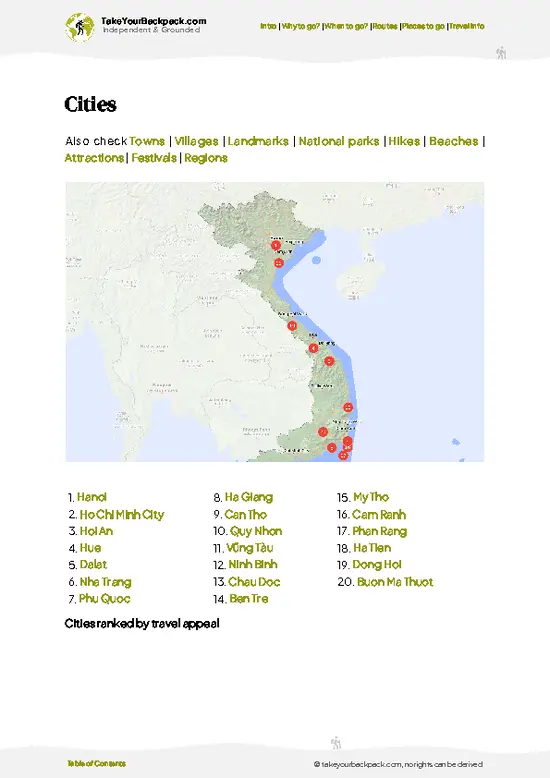
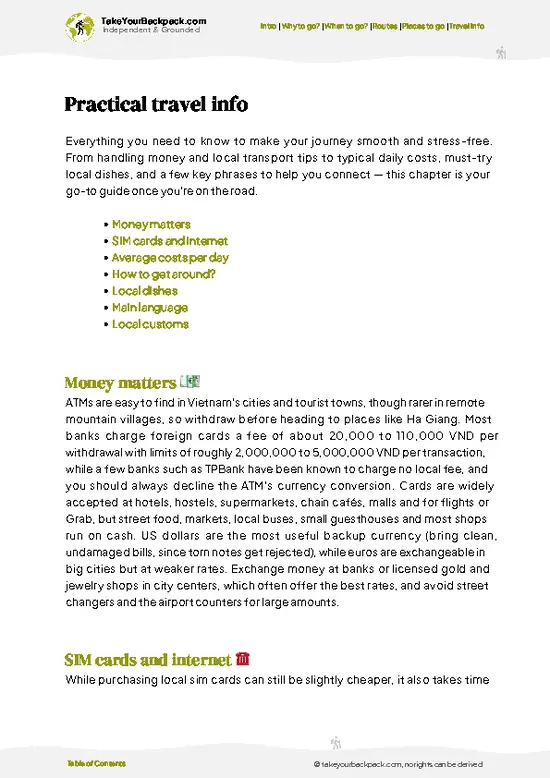
example page 0 from our offline Travel Guide for Vietnam
example page 1 from our offline Travel Guide for Vietnam
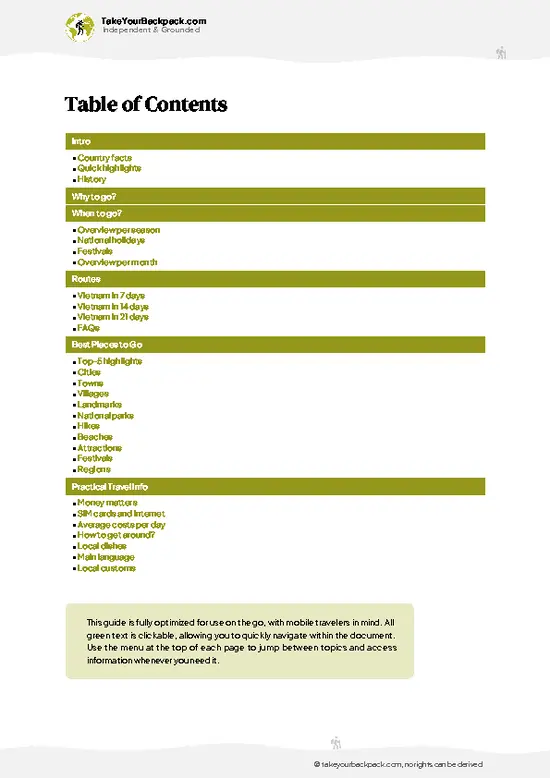
example page 2 from our offline Travel Guide for Vietnam
example page 3 from our offline Travel Guide for Vietnam
example page 4 from our offline Travel Guide for Vietnam
example page 5 from our offline Travel Guide for Vietnam
example page 6 from our offline Travel Guide for Vietnam
example page 7 from our offline Travel Guide for Vietnam
The digital guide (437 pages) contains:
122 highlights, ranked by travel appeal
Optimized 7, 14 & 21-day travel routes
Cities, national parks, landmarks, beaches
How to get around
Offline-friendly for travel without Wi-Fi
👉 Click to see all 30+ guide features

📅 Plan smarter in minutes, not weeks
Month by month travel advice
Festivals & national holidays
Budget expectations

🗺️ Go to the right places, skip the overrated ones
Honest pros & cons of destinations
Top hikes, parks & viewpoints
Lesser-known places most travelers miss
Clear “worth it vs skip it” guidance

🛏️ Travel smoothly without rookie mistakes
Best areas to stay
Transport systems explained simply
Common scams & safety advice
SIM cards, money & practical tips

🌍 Understand the country, not just visit it
Culture & traditions
52 Essential phrases & customs
Festivals worth planning around
Traveler-friendly historical context
Insights that make places more meaningful

📱 Built for real travel conditions
Fully downloadable PDF
Works completely offline
Optimized for phone use
Useful in remote areas & buses
Everything in one place
Save weeks of stressful planning
Get instant access to your full guide. 30‑day money-back guarantee.


By proceeding you agree to our terms.
Sent to your inbox immediately after payment • 100% Secure Checkout
Best Backpacking Travel Advisor 2025 tourism awardBest Backpacking
Travel Advisor
2025
What others say about Take Your Backpack Guides:
⭐⭐⭐⭐⭐
Fantastic, amazing amount of information!
⭐⭐⭐⭐⭐
My goodness this is amazing, it's what I've been looking for hats off too you!
⭐⭐⭐⭐⭐
I think this is absolutely BRILLIANT
⭐⭐⭐⭐
Very complete and informative. It's still missing places, but I gotta to commend you
⭐⭐⭐⭐⭐
This is truly amazing, thank you, can't wait to explore it with my kids!
⭐⭐⭐⭐⭐
Awesome resource, thank you!
⭐⭐⭐⭐⭐
This is amazing! Can't wait to explore the ones I haven't seen
⭐⭐⭐⭐
I love this! Well done, great idea.
⭐⭐⭐⭐⭐
Thanks for taking the time to make this gem!
⭐⭐⭐⭐⭐
This might be the best website I've ever seen.
⭐⭐⭐⭐⭐
Congratulations, and thank you so much for your work; it's incredibly valuable.
⭐⭐⭐⭐
In all seriousness I think you did a great job pointing out the important spots
⭐⭐⭐⭐⭐
10/10 very good
⭐⭐⭐⭐⭐
As someone who's only just starting to visit regularly this is awesome, thank you.
⭐⭐⭐⭐
Thank you very much! I'm going to visit my dad, it's going to be very useful!
⭐⭐⭐⭐⭐
This is really cool! We'll be travelling for the first time and this definitely come in handy.
⭐⭐⭐⭐⭐
You are now our minister of culture, congratulations 👨‍💼
⭐⭐⭐⭐⭐
Just wanted to tell you that this is a pearl! Going to follow your recommendations.
⭐⭐⭐⭐⭐
This is so cool. I'll definitely be using the resource for my travels soon.
⭐⭐⭐⭐⭐
This is very impressive! Good work.
⭐⭐⭐⭐⭐
This is an amazing and informative site. Very well done!

🛏️ Where to stay?Best areas to stay in Vietnam

Phu Quoc’s backpacker sweet spot is unquestionably the Duong Dong area, especially near the night market and the main strip. This zone nails the balance between safety, social buzz, and budget options. You’ll find a cluster of hostels here, making it easy to meet fellow travelers without sacrificing your peace of mind. The vibe is lively but not overwhelming—think casual beach town energy with enough nightlife to keep things interesting but not so much that you lose sleep.

Compared to the quieter, more upscale areas like Ong Lang or the southern resorts, Duong Dong offers a more authentic, grassroots … read more 👉
Phu Quoc’s backpacker sweet spot is unquestionably the Duong Dong area, especially near the night market and the main strip. This zone nails the balance between safety, social buzz, and budget options. You’ll find a cluster of hostels here, making it easy to meet fellow travelers without sacrificing your peace of mind. The vibe is lively but not overwhelming—think casual beach town energy with enough nightlife to keep things interesting but not so much that you lose sleep.

Compared to the quieter, more upscale areas like Ong Lang or the southern resorts, Duong Dong offers a more authentic, grassroots backpacker experience. It’s where you trade a bit of luxury for connection and convenience. The beaches here are accessible, but the real draw is the community feel and the ease of hopping between street food stalls, bars, and local markets.

If you want to maximize your time and money, this neighborhood lets you stretch your budget while staying plugged into the pulse of Phu Quoc’s backpacker scene. It’s the strategic choice for those who want comfort without the price tag and social opportunities without the chaos.

🚌 Getting aroundGetting around like a local

Phu Quoc moves at its own pace—neither a frantic rush nor a strict timetable. It’s a place where the rhythm is set by the sun and the tides, not by a clock on the wall. You’ll find that schedules here are more like guidelines, and the real flow comes from reading the mood of the island and its people. This means your travel choices are less about catching a train on the dot and more about balancing patience, budget, and comfort. Understanding this trade-off map is your secret weapon to mastering Phu Quoc’s transit puzzle.


  • Walking: The simplest and cheapest way to get around, especially in the compact towns like Duong Dong. It costs nothing, offers total flexibility, and lets you soak in the island’s vibe at your own pace. Just watch out for uneven sidewalks and occasional stray dogs.

read more 👉
Phu Quoc moves at its own pace—neither a frantic rush nor a strict timetable. It’s a place where the rhythm is set by the sun and the tides, not by a clock on the wall. You’ll find that schedules here are more like guidelines, and the real flow comes from reading the mood of the island and its people. This means your travel choices are less about catching a train on the dot and more about balancing patience, budget, and comfort. Understanding this trade-off map is your secret weapon to mastering Phu Quoc’s transit puzzle.


  • Walking: The simplest and cheapest way to get around, especially in the compact towns like Duong Dong. It costs nothing, offers total flexibility, and lets you soak in the island’s vibe at your own pace. Just watch out for uneven sidewalks and occasional stray dogs.


  • Motorbike Rental: The go-to for budget travelers craving freedom. Expect to pay around $7–10 per day. It’s fast and lets you explore remote beaches and hidden spots on your schedule. Comfort depends on your riding skills and the weather—rain can turn roads slippery fast.


  • Local Bus: Limited but functional, with routes connecting Duong Dong to the airport and some beaches. Runs roughly from 6 AM to 6 PM, fares under $1. It’s slow and can be crowded, but it’s the cheapest way to cover longer distances without sweating the details.


  • Taxi and Grab: Readily available but pricier, with fares starting around $5 for short rides. Offers door-to-door comfort and air conditioning, perfect if you’re carrying gear or traveling after dark. Negotiation skills help keep costs down, especially outside Grab’s app coverage.


  • Ferry to Mainland: If your trip extends beyond the island, ferries run from early morning to late afternoon, costing $10–15. They’re slower and less comfortable than flights but offer a scenic, budget-friendly way to connect with the mainland’s bus network.


Each option demands a trade-off: time saved versus money spent, comfort gained versus flexibility lost. Your smartest move is to mix and match—walk where you can, rent a motorbike for freedom, and save taxis for when comfort truly matters. That’s how you turn transit into a strategic advantage, not a headache.

👛 Costs (as of 22 April 2026)Money, prices, and spending tips

Backpacking in Phu Quoc, Vietnam, offers a clear trade-off between cost, comfort, and convenience, and knowing the daily expenses helps you play that trade-off smartly.
  • Dorm Accommodation (High Season): Expect to pay around $8 to $12 per night for a bed in a shared dorm. High season pushes prices up due to demand, especially near popular beaches and the main town.
  • Dorm Accommodation (Off-Season): Prices drop to about $5 to $8 per night. Off-season means quieter hostels and better bargaining power, but some places might close or reduce services.
  • Meals: Street food and local eateries will run you about $2 to $5 per meal. If you opt for a mix of local dishes and occasional Western-style cafes, budget around $8 to $12 daily for food.
  • Local Transport: Renting a motorbike is the go-to and costs
read more 👉
Backpacking in Phu Quoc, Vietnam, offers a clear trade-off between cost, comfort, and convenience, and knowing the daily expenses helps you play that trade-off smartly.
  • Dorm Accommodation (High Season): Expect to pay around $8 to $12 per night for a bed in a shared dorm. High season pushes prices up due to demand, especially near popular beaches and the main town.
  • Dorm Accommodation (Off-Season): Prices drop to about $5 to $8 per night. Off-season means quieter hostels and better bargaining power, but some places might close or reduce services.
  • Meals: Street food and local eateries will run you about $2 to $5 per meal. If you opt for a mix of local dishes and occasional Western-style cafes, budget around $8 to $12 daily for food.
  • Local Transport: Renting a motorbike is the go-to and costs roughly $6 to $10 per day. It’s the most flexible way to explore the island but requires some confidence in local traffic.
  • City Transport Pass: Phu Quoc doesn’t have a formal city transport pass system. Instead, taxis and motorbike taxis fill the gap, with short rides costing $1 to $3. Factor this in if you’re avoiding self-driving.
  • Basic Activities/Entry Fees: Many beaches are free, but expect to pay $2 to $5 for entry to national parks or pearl farms. Snorkeling or simple tours start around $10 to $20.
  • Miscellaneous Expenses: Bottled water, snacks, occasional laundry, and SIM cards add up to about $3 to $6 daily. These small costs are easy to overlook but matter over time.

Altogether, a realistic daily budget for backpacking in Phu Quoc ranges from about $20 on a tight, off-season plan to $40 if you lean into more comfort and activities. This range lets you decide if you want to stretch your dollar by roughing it a bit or spend more for ease and extras.
⚠️ Prices can change and everyone travels differently, so take this as a rough guide. Hope it helps you plan your adventure!

🚌 Day tripsBest day trips from Phu Quoc

Phu Quoc is a fantastic base for day trips, offering a blend of adventure and relaxation that keeps your backpacking spirit alive. Here are some top picks that make the most of your time, money, and comfort.

**Snorkeling at An Thoi Islands**
Just a short boat ride from Phu Quoc, the An Thoi Islands are a snorkeler’s paradise. Picture vibrant coral reefs teeming with colorful fish. You can book a day tour for around $25, which typically includes gear and lunch. The best time to go is during the dry season, from November to March, when the waters are calm and visibility is high. A common mistake is underestimating the sun—bring plenty of sunscreen and a hat to avoid a painful burn.


**Exploring Vinpearl Safari**
For a unique experience, head to Vinpearl Safari, Vietnam’s first open zoo. … read more 👉
Phu Quoc is a fantastic base for day trips, offering a blend of adventure and relaxation that keeps your backpacking spirit alive. Here are some top picks that make the most of your time, money, and comfort.

**Snorkeling at An Thoi Islands**
Just a short boat ride from Phu Quoc, the An Thoi Islands are a snorkeler’s paradise. Picture vibrant coral reefs teeming with colorful fish. You can book a day tour for around $25, which typically includes gear and lunch. The best time to go is during the dry season, from November to March, when the waters are calm and visibility is high. A common mistake is underestimating the sun—bring plenty of sunscreen and a hat to avoid a painful burn.


**Exploring Vinpearl Safari**
For a unique experience, head to Vinpearl Safari, Vietnam’s first open zoo. It’s about a 30-minute ride from the main town. Tickets cost around $20, and you’ll get to see a variety of animals in a more natural setting. The park is best visited in the morning when the animals are most active. Many first-timers rush through the exhibits; take your time to enjoy the animal interactions and educational talks.


**Trekking in Phu Quoc National Park**
If you crave a bit of nature, Phu Quoc National Park is your go-to. The park is a 30-minute drive from the town center and offers several trails. Entry is free, but you might want to hire a local guide for around $10 to enhance your experience. The best time to trek is early morning or late afternoon to avoid the heat. A common pitfall is not bringing enough water—stay hydrated to fully enjoy the lush surroundings.
👉 Explore Phu Quoc National Park

**Relaxing at Sao Beach**
Sao Beach is a slice of paradise, just a 30-minute drive from Phu Quoc. With soft white sand and clear waters, it’s perfect for a chill day. You can grab a beach chair for about $5 and enjoy fresh seafood from local vendors. The best time to visit is early morning or late afternoon to dodge the crowds. Many backpackers overlook the nearby coconut trees for shade; don’t miss out on a perfect spot to unwind.
Want to know what more Vietnam offers?
The Vietnam Travel Guide describes 122 highlights, from cities to national parks, from beaches to hikes

Get the Travel Guide -

🍲 FoodLocal Flavors for Backpackers

In Phu Quoc, **food** is a vibrant tapestry of flavors that tells the story of the island. You can’t miss the **seafood**—fresh catches grilled to perfection, often served with a side of **nuoc cham**, a tangy dipping sauce that packs a punch. Try the local specialty, **bun quay**, a noodle dish served with shrimp and fish, where the broth is made right in front of you.

Street food stalls are your best bet for authentic bites. The **night market** buzzes with energy, where you can sample everything from **banh xeo** (Vietnamese pancakes) to **goi cuon** (fresh spring rolls). Grab a seat on a plastic stool, and dive into the local scene.

When it comes to drinks, don’t overlook the **coconut water**—refreshing and sweet, it’s a perfect antidote to the tropical heat. Locals often sip **bia … read more 👉
In Phu Quoc, **food** is a vibrant tapestry of flavors that tells the story of the island. You can’t miss the **seafood**—fresh catches grilled to perfection, often served with a side of **nuoc cham**, a tangy dipping sauce that packs a punch. Try the local specialty, **bun quay**, a noodle dish served with shrimp and fish, where the broth is made right in front of you.

Street food stalls are your best bet for authentic bites. The **night market** buzzes with energy, where you can sample everything from **banh xeo** (Vietnamese pancakes) to **goi cuon** (fresh spring rolls). Grab a seat on a plastic stool, and dive into the local scene.

When it comes to drinks, don’t overlook the **coconut water**—refreshing and sweet, it’s a perfect antidote to the tropical heat. Locals often sip **bia hoi**, a light draft beer, while chatting with friends. Remember, sharing food is a sign of hospitality here, so don’t hesitate to offer a taste of your dish. Embrace the communal spirit, and you’ll savor every moment.

🛡️ SafetySafety Tips and Common Scams in Phu Quoc

Phu Quoc is generally safe for backpackers, but a few areas require a sharper eye. The bustling markets can be a hotspot for pickpockets, especially in crowded spots like Dinh Cau Night Market. Keep your belongings close and avoid flashy displays of wealth.

Solo travelers should be mindful at night. While the beach areas are usually well-lit and populated, stray too far into quieter streets, and you might find yourself in less welcoming territory. Stick to main roads and well-traveled paths.

Scams are rare, but be cautious with transportation. Always agree on a fare before hopping into a taxi or motorbike. Some drivers might try to inflate prices for tourists. A friendly but firm demeanor goes a long way. Carry yourself confidently, and you’ll navigate Phu Quoc like a pro.

Other Vietnamese cities near Phu Quoc

Explore more nearby:

  • Ha Tien—limestone caves, river delta, border crossing| 55 km away
  • Rach Gia—ferry port, coastal city, seafood markets| 125 km away
  • Chau Doc—border town, floating villages, pilgrimage sites| 131 km away

💡 Not sure where to go next?
Create a personalized itinerary for Vietnam including Phu Quoc and the places that fit your trip.

Generate my itinerary

👉 Discover all cities

Or checkout all Vietnam has to offer (think cities, towns, villages, national parks, hikes, beaches, festivals)
Country photo of Vietnam

We 💚 feedbackKey takeaways before you go

Phu Quoc is a slice of paradise with its pristine beaches and vibrant marine life. Snorkeling here? Absolutely worth it. But be prepared: the island can feel touristy, especially during peak season. You might sacrifice some local charm for convenience. Still, if you’re after sun-soaked adventures and fresh seafood, it’s a trade-off that pays off. Just know when to go for the best experience.

✈️ When did I visit Vietnam?
I have backpacked through the northern part of Vietnam all the way back in 1998.

✍️ Help improve this page!
The information on this page is based on my own backpacking experience in Vietnam, supplemented with up-to-date research and feedback from other travelers. Travel details can change, so if you notice anything outdated or incomplete, feel free to let me know.


🙋‍♂️ Give feedback

👋 Meet the founderWho’s Behind Take Your Backpack?

Johan, backpacker and founder of TakeYourBackpackHi, I’m Johan (Netherlands 🇳🇱), the creator of TakeYourBackpack. Over the past decade, I’ve backpacked through 80+ countries across six continents, gaining extensive experience with independent travel, long-term trips, and overland routes.

This site is built on a combination of firsthand travel experience and carefully curated insights from other backpackers. Many guides are based on places I’ve personally visited, while others bring together tips, observations, and practical advice shared by trusted travelers I’ve met along the way.

The goal is to provide realistic, experience-driven guidance — not generic itineraries — so you can explore destinations with better context, clearer expectations, and more confidence.

Get full Vietnam guide •
Instant download • 122 highlights • Full Offline guide