×

Western Sahara🇪🇭 | regionsOued Ed-DahabKite lagoon, white dune, oyster farms, flamingo shallows | things to do and best time to go

Explore Dakhla LagoonExplore Saguia el Hamra

Backpacking in Oued Ed-Dahab
👍 Recommendedregion ranked #2
By Johan Kruseman 🇳🇱 | Updated October 22, 2026

Dakhla’s lagoon holds both calm, shallow water and steady wind, which is why kitesurfers outnumber ordinary tourists here for much of the year. Oued Ed-Dahab lies in the south of Western Sahara, on a long Atlantic peninsula that shelters a wide bay, and the region is administered by Morocco. The draw is open space: pale dunes meeting turquoise water, flamingos, oyster farms and a slow fishing-town rhythm. Variety is modest, though. Beyond the lagoon there is mostly desert, so you come for water, wind and quiet rather than ruins or nightlife. Kite camps cluster out on the peninsula and can feel like a bubble, while the town itself is the more authentic side. The distances are large and public transport is thin, so the practical thing is to book a tour or hire a car and driver for the lagoon sights, and to travel in the windy season only if you want the kiting.

Discover everything you want to know in the 📖 Western Sahara Travel Guide.


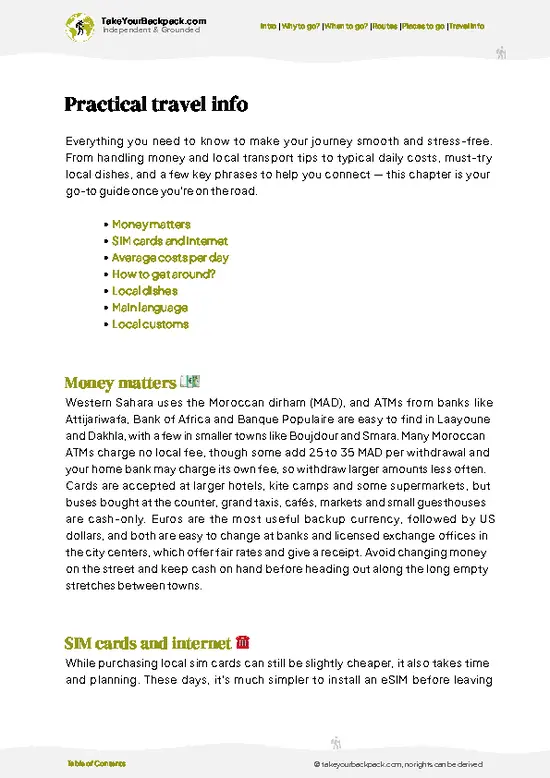
example page 0 from our offline Travel Guide for Western Sahara
example page 1 from our offline Travel Guide for Western Sahara
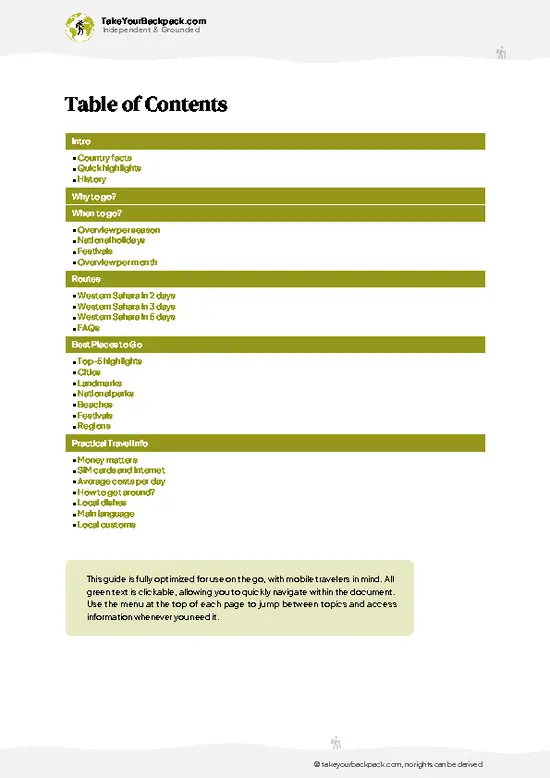
example page 2 from our offline Travel Guide for Western Sahara
example page 3 from our offline Travel Guide for Western Sahara
example page 4 from our offline Travel Guide for Western Sahara
example page 5 from our offline Travel Guide for Western Sahara
example page 6 from our offline Travel Guide for Western Sahara
example page 7 from our offline Travel Guide for Western Sahara
Loading the map 🌍
CLICK TO FILTER
cities
landmarks
national parks
beaches
festivals
regions
SHOW COUNTRY’S BESTSHOW ALL

✨ Why go?
Ranked #2 region in Western Sahara
Why Oued Ed-Dahab should be on your travel list

Oued Ed-Dahab gives backpackers one base and three very different days without repacking. The Dakhla lagoon is the center of it: flat, shallow water on one side of the peninsula and open Atlantic swell on the other, so kiters, paddlers and surfers can all find their conditions within a short hop. Walkers and photographers get Dune Blanche, where sand slides straight into tidal flats, and flamingos and pelicans work the edges of the bay. The second reason is the pace. The town is small enough to cover on foot, and the long distances between sights are handled by shared tours and local taxis, so nothing demands a rushed schedule. Evenings come down to grilled fish near the port and long conversations with fishermen, Sahrawi families and kite instructors who have settled here. If you are weighing … read more 👉
Oued Ed-Dahab gives backpackers one base and three very different days without repacking. The Dakhla lagoon is the center of it: flat, shallow water on one side of the peninsula and open Atlantic swell on the other, so kiters, paddlers and surfers can all find their conditions within a short hop. Walkers and photographers get Dune Blanche, where sand slides straight into tidal flats, and flamingos and pelicans work the edges of the bay. The second reason is the pace. The town is small enough to cover on foot, and the long distances between sights are handled by shared tours and local taxis, so nothing demands a rushed schedule. Evenings come down to grilled fish near the port and long conversations with fishermen, Sahrawi families and kite instructors who have settled here. If you are weighing it against the better-known Moroccan coast, this part of Western Sahara is emptier, more elemental and much easier to enjoy slowly.

💡 HighlightsDon't-miss highlights and experiences

  1. Dakhla Lagoon kite spots: the shallow bay around Pointe de l’Or is the reason most travelers come, with warm, flat water and a reliable breeze that suits beginners and experts alike.
  2. Dune Blanche: a huge white sand dune that drops into the lagoon, best reached by boat or 4x4 and ideal for walking barefoot over ripples at low tide.
  3. Dragon Island: a rock formation in the bay whose outline looks like a dragon, a short boat trip that also brings you close to birdlife.
  4. Flamingo and pelican shallows: the quieter inlets of the bay hold flocks that feed in the mud, and a patient hour with binoculars is plenty.
  5. Dakhla oyster farms: small producers on the lagoon shore serve oysters straight from the water, a simple tasting that locals genuinely rate.
  6. Fontaine Chaude hot spring: a geothermal spring inland
… read more 👉
  1. Dakhla Lagoon kite spots: the shallow bay around Pointe de l’Or is the reason most travelers come, with warm, flat water and a reliable breeze that suits beginners and experts alike.
  2. Dune Blanche: a huge white sand dune that drops into the lagoon, best reached by boat or 4x4 and ideal for walking barefoot over ripples at low tide.
  3. Dragon Island: a rock formation in the bay whose outline looks like a dragon, a short boat trip that also brings you close to birdlife.
  4. Flamingo and pelican shallows: the quieter inlets of the bay hold flocks that feed in the mud, and a patient hour with binoculars is plenty.
  5. Dakhla oyster farms: small producers on the lagoon shore serve oysters straight from the water, a simple tasting that locals genuinely rate.
  6. Fontaine Chaude hot spring: a geothermal spring inland from town where warm water rises in the desert, lesser known and mostly visited by locals.
  7. Dakhla fishing port and fish market: boats unload in the morning, and the stalls give you an honest sense of why the town exists.
  8. Spanish-era church of Villa Cisneros: a small relic of the old colonial town name, easy to pass in a few minutes and little visited.
  9. Dakhla seafront promenade: a flat walk along the bay edge where families gather as the heat eases, with good views of kites in the distance.
Seeing everything in Oued Ed-Dahab comfortably takes three to four days, and a fifth if you want extra time on the water.
Spotted a mistake or missing something? Contact us.

⌛️ 5 daysHow to make the most of Oued Ed-Dahab

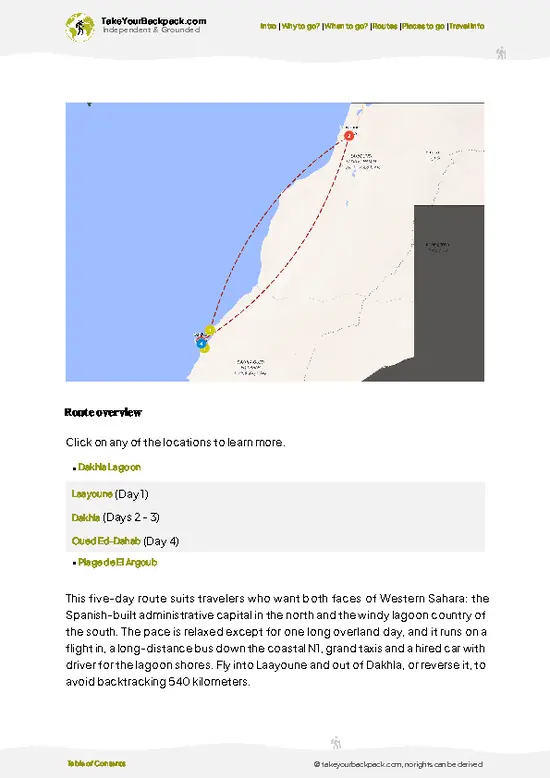
Day 1: Dakhla Town: Start at the fishing port in the morning, when boats are unloading and the market is lively, because the harbor is the one place in town that is busiest early. Then walk the seafront and the old Spanish church. Town is compact, so petit taxis are only needed for the edges, and this easy first day lets you fix tours and drivers for the days ahead.Day 2: Dakhla Lagoon: Out on the peninsula, transport is the bottleneck: buses do not run to the kite camps, so shared taxis or a booked 4x4 set the pace. Spend the day around Pointe de l’Or, take a lesson or watch from the shore, and finish with oysters at a lagoon farm, which makes more sense once you have seen the water they grow in.Day 3: Dune Blanche and Dragon Island: These two need a boat or 4x4 and a guide, so they are best … read more 👉
Day 1: Dakhla Town: Start at the fishing port in the morning, when boats are unloading and the market is lively, because the harbor is the one place in town that is busiest early. Then walk the seafront and the old Spanish church. Town is compact, so petit taxis are only needed for the edges, and this easy first day lets you fix tours and drivers for the days ahead.Day 2: Dakhla Lagoon: Out on the peninsula, transport is the bottleneck: buses do not run to the kite camps, so shared taxis or a booked 4x4 set the pace. Spend the day around Pointe de l’Or, take a lesson or watch from the shore, and finish with oysters at a lagoon farm, which makes more sense once you have seen the water they grow in.Day 3: Dune Blanche and Dragon Island: These two need a boat or 4x4 and a guide, so they are best bundled into one outing. Go when the tide is low, since the dune is at its widest and the flats are firm enough to walk. Allow a full day, because distances are longer than they look.Day 4: Fontaine Chaude: This is the detour. A half-day trip inland by car takes you to the warm spring in desert surroundings, adds a very different landscape and fits easily between town and the lagoon without breaking your schedule. Return to town for a fish dinner.Day 5: Back on the Water: If you must pick one day that justifies the whole trip, this is the Dune Blanche day. Nowhere else in Oued Ed-Dahab combines white sand, turquoise shallows and birds so plainly. Use the last day to repeat your favorite spot or rest.

🌤️ When to go?Seasonal considerations and timing

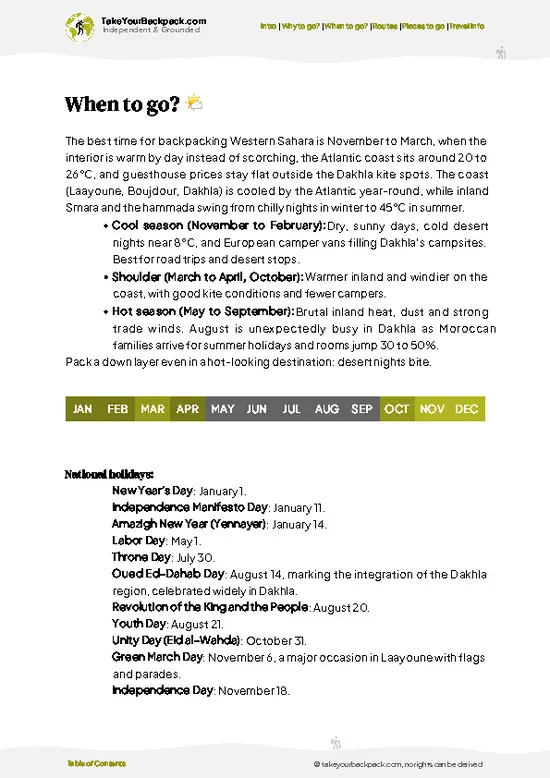
Oued Ed-Dahab is most comfortable from October to April, when daytime highs sit at 20 to 26°C (68 to 79°F) and the Atlantic keeps the heat in check.
  • Winter (November to February): Days reach 20 to 24°C (68 to 75°F), nights drop to 12 to 15°C (54 to 59°F), and daylight lasts about 10.5 hours. Flamingos and waders gather on the lagoon, and the dunes are pleasant to walk. Prices climb around Christmas and New Year.
  • Spring (March to May): Highs of 22 to 27°C (72 to 81°F), and the wind builds. Kitesurfers arrive, so camps fill and rates rise.
  • Summer (June to September): Highs of 26 to 31°C (79 to 88°F), with about 13.5 hours of light. The steady Atlantic wind is strongest now, which suits kiters but whips sand across open ground. Humid mornings are common.
  • Autumn (October to November): Calmer winds,
… read more 👉
Oued Ed-Dahab is most comfortable from October to April, when daytime highs sit at 20 to 26°C (68 to 79°F) and the Atlantic keeps the heat in check.
  • Winter (November to February): Days reach 20 to 24°C (68 to 75°F), nights drop to 12 to 15°C (54 to 59°F), and daylight lasts about 10.5 hours. Flamingos and waders gather on the lagoon, and the dunes are pleasant to walk. Prices climb around Christmas and New Year.
  • Spring (March to May): Highs of 22 to 27°C (72 to 81°F), and the wind builds. Kitesurfers arrive, so camps fill and rates rise.
  • Summer (June to September): Highs of 26 to 31°C (79 to 88°F), with about 13.5 hours of light. The steady Atlantic wind is strongest now, which suits kiters but whips sand across open ground. Humid mornings are common.
  • Autumn (October to November): Calmer winds, warm water, and fewer crowds. Midweek rates are the softest of the year.
Book kite lessons or camps for July and August well ahead, and book flights early for the winter holidays.


source: climatestotravel.comJANJanuary: excellent for travelingFEBFebruary: excellent for travelingMARMarch: excellent for travelingAPRApril: excellent for travelingMAYMay: good for travelingJUNJune: fair for travelingJULJuly: below average for travelingAUGAugust: below average for travelingSEPSeptember: good for travelingOCTOctober: excellent for travelingNOVNovember: excellent for travelingDECDecember: excellent for traveling
western-sahara-region-oued-ed-dahab
© Google |

✈️ The backpacker research shortcutWestern Sahara Travel Guide

An offline-friendly backpacking guide with optimized travel routes, ranked highlights, transport advice, and the best areas to stay.
example page 0 from our offline Travel Guide for Western Sahara
example page 1 from our offline Travel Guide for Western Sahara
example page 2 from our offline Travel Guide for Western Sahara
example page 3 from our offline Travel Guide for Western Sahara
example page 4 from our offline Travel Guide for Western Sahara
example page 5 from our offline Travel Guide for Western Sahara
example page 6 from our offline Travel Guide for Western Sahara
example page 7 from our offline Travel Guide for Western Sahara
The digital guide (68 pages) contains:
✅ 9 highlights, ranked by travel appeal
✅ Optimized 2, 3 & 5-day travel routes
✅ Cities, national parks, landmarks, beaches
✅ How to get around
✅ Offline-friendly for travel without Wi-Fi
👉 Click to see all 30+ guide features

📅 Plan smarter in minutes, not weeks
✅ Month by month travel advice
✅ Festivals & national holidays
✅ Budget expectations

🗺️ Go to the right places, skip the overrated ones
✅ Honest pros & cons of destinations
✅ Top hikes, parks & viewpoints
✅ Lesser-known places most travelers miss
✅ Clear “worth it vs skip it” guidance

🛏️ Travel smoothly without rookie mistakes
✅ Best areas to stay
✅ Transport systems explained simply
✅ Common scams & safety advice
✅ SIM cards, money & practical tips

🌍 Understand the country, not just visit it
✅ Culture & traditions
✅ 52 Essential phrases & customs
✅ Festivals worth planning around
✅ Traveler-friendly historical context
✅ Insights that make places more meaningful

📱 Built for real travel conditions
✅ Fully downloadable PDF
✅ Works completely offline
✅ Optimized for phone use
✅ Useful in remote areas & buses
✅ Everything in one place
Stop searching, start planning
Get instant access to your full guide. 30‑day money-back guarantee.
+ Add another guide for just

By proceeding you agree to our terms.
Sent to your inbox immediately after payment • 100% Secure Checkout
Best Backpacking Travel Advisor 2025 tourism awardBest Backpacking
Travel Advisor
2025
What others say about Take Your Backpack Guides:
⭐⭐⭐⭐⭐
Fantastic, amazing amount of information!
⭐⭐⭐⭐⭐
My goodness this is amazing, it's what I've been looking for hats off too you!
⭐⭐⭐⭐⭐
I think this is absolutely BRILLIANT
⭐⭐⭐⭐
Very complete and informative. It's still missing places, but I gotta to commend you
⭐⭐⭐⭐⭐
This is truly amazing, thank you, can't wait to explore it with my kids!
⭐⭐⭐⭐⭐
Awesome resource, thank you!
⭐⭐⭐⭐⭐
This is amazing! Can't wait to explore the ones I haven't seen
⭐⭐⭐⭐
I love this! Well done, great idea.
⭐⭐⭐⭐⭐
Thanks for taking the time to make this gem!
⭐⭐⭐⭐⭐
This might be the best website I've ever seen.
⭐⭐⭐⭐⭐
Congratulations, and thank you so much for your work; it's incredibly valuable.
⭐⭐⭐⭐
In all seriousness I think you did a great job pointing out the important spots
⭐⭐⭐⭐⭐
10/10 very good
⭐⭐⭐⭐⭐
As someone who's only just starting to visit regularly this is awesome, thank you.
⭐⭐⭐⭐
Thank you very much! I'm going to visit my dad, it's going to be very useful!
⭐⭐⭐⭐⭐
This is really cool! We'll be travelling for the first time and this definitely come in handy.
⭐⭐⭐⭐⭐
You are now our minister of culture, congratulations 👨‍💼
⭐⭐⭐⭐⭐
Just wanted to tell you that this is a pearl! Going to follow your recommendations.
⭐⭐⭐⭐⭐
This is so cool. I'll definitely be using the resource for my travels soon.
⭐⭐⭐⭐⭐
This is very impressive! Good work.
⭐⭐⭐⭐⭐
This is an amazing and informative site. Very well done!

🛏️ Where to stay?Choosing the right base

Dakhla town is the best base in Oued Ed-Dahab, since it holds the bus station, the supermarkets, the ATMs and nearly all the budget beds. Dorm and basic private rooms run about US$8 to 25 a night, and the lanes around the main avenue and the port put you within walking distance of cafés and fish grills. It is calm and safe, with a relaxed pace, and solo travelers meet others easily on shared rides and group excursions.
The kite-camp strip along the peninsula, roughly 15 to 40 km from town, suits anyone who has come for the wind. Camps there offer dorms, tents and shared bungalows for about US$15 … read more 👉
Dakhla town is the best base in Oued Ed-Dahab, since it holds the bus station, the supermarkets, the ATMs and nearly all the budget beds. Dorm and basic private rooms run about US$8 to 25 a night, and the lanes around the main avenue and the port put you within walking distance of cafés and fish grills. It is calm and safe, with a relaxed pace, and solo travelers meet others easily on shared rides and group excursions.
The kite-camp strip along the peninsula, roughly 15 to 40 km from town, suits anyone who has come for the wind. Camps there offer dorms, tents and shared bungalows for about US$15 to 40, often with meals included. The social life is built around the lagoon, with lessons by day and long dinners afterward. The downside is isolation, since you rely on taxis or camp transfers for anything beyond the shore.
El Argoub, a small fishing and military village on the peninsula, is quieter and cheaper, with few visitors and a few simple guesthouses. It makes sense for a night or two if you want local life and a calm, shallow bay.
Book ahead for March to September, when the lagoon camps fill.

🚌 Getting aroundTransportation options and practical tips

Oued Ed-Dahab is far enough south that the costliest mistake is treating it as a stop on a Morocco loop and trying to reach it overland from Agadir in one push. The distance is roughly 1,150 km (715 miles) of empty coastal road, and the buses take 17 to 20 hours. Most backpackers either break the trip at Laayoune and Tarfaya or fly the last stretch, then use cheap taxis once they arrive.
  • Long-distance buses: Supratours and CTM run daily coaches along the coast road. Laayoune to Dakhla takes about 6 to 8 hours and costs US$15 to 22, and Agadir to Dakhla costs roughly US$35 to 50. The distances are enormous and the road has few services, so buy tickets a day ahead, sit on the shaded side, and carry water and food.
  • Flights: Dakhla has an airport with flights from Casablanca, Agadir and Laayoune,
… read more 👉
Oued Ed-Dahab is far enough south that the costliest mistake is treating it as a stop on a Morocco loop and trying to reach it overland from Agadir in one push. The distance is roughly 1,150 km (715 miles) of empty coastal road, and the buses take 17 to 20 hours. Most backpackers either break the trip at Laayoune and Tarfaya or fly the last stretch, then use cheap taxis once they arrive.
  • Long-distance buses: Supratours and CTM run daily coaches along the coast road. Laayoune to Dakhla takes about 6 to 8 hours and costs US$15 to 22, and Agadir to Dakhla costs roughly US$35 to 50. The distances are enormous and the road has few services, so buy tickets a day ahead, sit on the shaded side, and carry water and food.
  • Flights: Dakhla has an airport with flights from Casablanca, Agadir and Laayoune, and some European routes. One-way fares are about US$40 to 120 and book out in kite season. If your time is short, flying one way saves nearly a full day of road.
  • Petit taxis: These small cabs work within Dakhla town, and rides cost US$1 to 3. Meters are rarely used, so agree on the price before you get in. Carry small change because drivers seldom have any.
  • Grand taxis: Shared six-seat Mercedes cars link Dakhla with nearby villages and the lagoon strip for about US$1 to 5 a seat. They leave only when full, so go early in the morning, when more passengers are waiting. Chartering a whole car for a half-day costs about US$25 to 45.
  • Organized 4x4 trips: The white dune and the lagoon islands lie beyond sealed roads. Day tours cost around US$40 to 70 per person, usually with a lunch of grilled fish. Booking with a small group splits the vehicle cost and avoids the soft sand that stops ordinary cars.
Police checkpoints are routine on the highway, so keep your passport in an easy pocket. Fuel stations are far apart, so anyone driving or hitching should fill up whenever one appears.

🍲 FoodEating & Drinking in Oued Ed-Dahab

Seafood is the point of eating in Oued Ed-Dahab. Dakhla oysters, grown in the bay, arrive cold, briny and almost sweet, and a dozen costs about US$4 to 9 from stalls and small restaurants near the port. Grilled sea bass, sole and dorade come off the charcoal blistered at the edges, usually with bread, olives and a squeeze of lemon for US$5 to 10. Lobster and sea urchin appear in season, and camel meat turns up in stews and tagines with a darker, gamier depth. Cafés pour Sahrawi tea, strong, sugary and poured from height into small glasses, along with camel milk, which tastes tangy.
For a backpacker budget, the fish market and the grills beside it are best: pick your catch, pay by weight, and they cook it within minutes. Simple cafés sell msemen pancakes, eggs and coffee for US$2 to 4, and a … read more 👉
Seafood is the point of eating in Oued Ed-Dahab. Dakhla oysters, grown in the bay, arrive cold, briny and almost sweet, and a dozen costs about US$4 to 9 from stalls and small restaurants near the port. Grilled sea bass, sole and dorade come off the charcoal blistered at the edges, usually with bread, olives and a squeeze of lemon for US$5 to 10. Lobster and sea urchin appear in season, and camel meat turns up in stews and tagines with a darker, gamier depth. Cafés pour Sahrawi tea, strong, sugary and poured from height into small glasses, along with camel milk, which tastes tangy.
For a backpacker budget, the fish market and the grills beside it are best: pick your catch, pay by weight, and they cook it within minutes. Simple cafés sell msemen pancakes, eggs and coffee for US$2 to 4, and a sandwich of fried fish costs about US$2.
Tea is a ritual. Three glasses are customary, and refusing the first is less polite than accepting. Eat with your right hand when sharing a dish, and expect a long, slow pace. Alcohol is hard to find, and during Ramadan most places close until sunset.

FAQFrequently asked questions about Oued Ed-Dahab

Three to five days is enough for Oued Ed-Dahab if you are not kitesurfing. Two days covers Dakhla town, the oyster farms and a 4x4 trip to the white dune, and an extra day or two adds a lagoon boat tour with flamingos. Kiters usually stay a week or longer, because lessons and wind conditions take several sessions.
In Oued Ed-Dahab you can manage without a car by using petit taxis in Dakhla town, which cost about US$1 to 3 a ride, and shared grand taxis to the lagoon strip for roughly US$1 to 5 a seat. For the dunes and islands, book a 4x4 day tour at about US$40 to 70 per person, since ordinary taxis do not cross soft sand. Long-distance coaches from Laayoune take about 6 to 8 hours, and flights land at Dakhla airport.
Oued Ed-Dahab is known for the Dakhla lagoon, where steady Atlantic winds and flat, shallow water make it one of the best kitesurfing sites in Africa. Visitors also come for the farmed oysters, the white dune that rises beside the water, and flamingos in winter. The peninsula is about 40 km long, and the desert landscape meets the ocean in an unusual way, so the area has a strong sense of remoteness.
⚠️ Things can change over time, so always validate details locally before you go.

Expanding your trip beyond this stop

Oued Ed-Dahab isn’t the only highlight in Western Sahara. Explore all what Western Sahara has to offer.
Country photo of Western Sahara

We 💚 feedbackIs it worth it?

Oued Ed-Dahab trips often go wrong when travelers book transport to the peninsula at the last minute and end up stranded far from town. Arrange a driver or tour a day ahead, and bring a windproof layer even in warm months, because the breeze off the lagoon cools quickly. I would also skip the fancy camp food and eat at the port.

✍️ Help improve this page!
The information on this page is based on in-depth research, insights shared by experienced travelers, and feedback from the local travel community in Western Sahara. While every effort is made to keep the information accurate and current, conditions can change — so if you spot anything incorrect or outdated, please get in touch.


🙋‍♂️ Give feedback

👋 Meet the founderWho’s Behind Take Your Backpack?

Johan, backpacker and founder of TakeYourBackpackHi, I’m Johan (Netherlands 🇳🇱), the creator of TakeYourBackpack. Over the past 3 decades, I’ve backpacked through 90+ countries across six continents, gaining extensive experience with independent travel, long-term trips, and overland routes.

This site is built on a combination of firsthand travel experience and carefully curated insights from other backpackers. Many guides are based on places I’ve personally visited, while others bring together tips, observations, and practical advice shared by trusted travelers I’ve met along the way.

The goal is to provide realistic, experience-driven guidance — not generic itineraries — so you can explore destinations with better context, clearer expectations, and more confidence.