
×

Western Sahara🇪🇭 | regionsSaguia el Hamrarocky plateaus, dry riverbeds, nomadic encampments, colonial-era towns | things to do and best time to go

Explore Oued Ed-DahabExplore Boujdour

Backpacking in Saguia el Hamra
🏆 Top pickregion ranked #1
By Johan Kruseman 🇳🇱 | Updated May 30, 2026

Your boots crunch over salt-crusted earth as the wind whips grit against your ankles, and somewhere nearby, a tea kettle whistles over a charcoal fire. The air smells like dust and mint. This is Saguia el Hamra—a region in northern Western Sahara, stretching from the Atlantic coast at El Aaiún to the ochre dunes east of Smara.

Backpackers come here for the raw, unpolished Sahara: endless horizons, Berber hospitality, and a sense of being somewhere that hasn’t been staged for Instagram. It’s not cheap to get around—shared taxis are rare, buses are slow, and distances are big. But you’re rewarded with wild Atlantic beaches, the faded colonial bones of El Aaiún, and desert towns where the tea is poured high and slow. There’s no party scene, no crowds, and almost no touts. Compared to the busier Dakhla to the south, Saguia el Hamra feels more lived-in, less curated. You trade convenience for authenticity, and if you’re after the real Sahara, that’s a fair deal.

Discover everything you want to know in the 📖 Western Sahara Travel Guide.
Loading the map 🌍
CLICK TO FILTER
cities
towns
villages
landmarks
hikes
beaches
festivals
regions
SHOW COUNTRY’S BESTSHOW ALL

✨ Why go?
Ranked #1 region in Western Sahara
The unique appeal for travelers

Backpackers flock to Saguia el Hamra for a reason. This region offers a variety of landscapes that can make your jaw drop. From sweeping dunes to rugged mountains, you can experience it all without the hassle of constant relocation. You can set up camp in one spot and dive deep into the local culture and nature.

Transport here is surprisingly flexible. You can hop on a shared taxi or rent a bike to explore at your own pace. This means you can spend a lazy afternoon sipping mint tea with locals or wandering through vibrant markets, soaking in the atmosphere.

The beauty of slow travel shines in Saguia el Hamra. You’re not just ticking boxes; you’re savoring each moment. Imagine spending a night under the stars, listening to the whispers of the desert wind, then waking up to a sunrise that … read more 👉
Backpackers flock to Saguia el Hamra for a reason. This region offers a variety of landscapes that can make your jaw drop. From sweeping dunes to rugged mountains, you can experience it all without the hassle of constant relocation. You can set up camp in one spot and dive deep into the local culture and nature.

Transport here is surprisingly flexible. You can hop on a shared taxi or rent a bike to explore at your own pace. This means you can spend a lazy afternoon sipping mint tea with locals or wandering through vibrant markets, soaking in the atmosphere.

The beauty of slow travel shines in Saguia el Hamra. You’re not just ticking boxes; you’re savoring each moment. Imagine spending a night under the stars, listening to the whispers of the desert wind, then waking up to a sunrise that paints the dunes in gold.

Mixing nature and culture is effortless here. You can trek through stunning landscapes by day and immerse yourself in rich traditions by night. This balance makes Saguia el Hamra a high-value experience that’s hard to beat.
Want to include Saguia el Hamra in your Western Sahara route?
Create a personalized Western Sahara itinerary that includes Saguia el Hamra and the places that fit your trip — based on your travel style, budget, and available time. Get your route in seconds.

Generate my trip

💡 HighlightsWhat this place is best known for

  1. Laâyoune Corniche & Fishing Port — Long promenade where the Atlantic hits a Sahrawi city: watch small wooden boats come in, buy fish straight off the quay from the guys who landed it that morning, and hang out with locals at sunset. It’s city-beach life you won’t find exactly anywhere else because the fishing culture mixes with Sahrawi street life.
  2. Old Medina (Souk El Aaiún) — A compact, authentic market full of Sahrawi textiles, silver jewelry, spices and camel-leather goods. The ritual of pouring mint tea here and bargaining with quiet, shrewd vendors gives a real feel for local everyday culture.
  3. El Marsa fishing village — Hidden gem. A short hop from Laâyoune, this small, rough-around-the-edges beach village is where locals go for the freshest grilled fish and a relaxed stretch of sand
read more 👉
  1. Laâyoune Corniche & Fishing Port — Long promenade where the Atlantic hits a Sahrawi city: watch small wooden boats come in, buy fish straight off the quay from the guys who landed it that morning, and hang out with locals at sunset. It’s city-beach life you won’t find exactly anywhere else because the fishing culture mixes with Sahrawi street life.
  2. Old Medina (Souk El Aaiún) — A compact, authentic market full of Sahrawi textiles, silver jewelry, spices and camel-leather goods. The ritual of pouring mint tea here and bargaining with quiet, shrewd vendors gives a real feel for local everyday culture.
  3. El Marsa fishing village — Hidden gem. A short hop from Laâyoune, this small, rough-around-the-edges beach village is where locals go for the freshest grilled fish and a relaxed stretch of sand without tourists. Simple, cheap, and real — bring cash and a willingness to eat where people actually live.
  4. Saguia el-Hamra wadi and palm groves — The dried riverbed (the “Saguia”) threads through the region and pockets of palm groves and scrub around it feel like desert oases. Walk the wadi, find small camps, and watch how pastoral life and city life meet — a quiet, local slice of landscape you won’t easily replicate.
  5. Es Semara (Smara) ksar and Zaouia of Ma al-Ainayn — Hidden gem. Smara’s ruined ksar and the zaouia (religious complex) recall the town’s role as a 19th-century Saharan spiritual and caravan hub. The crumbling walls, low mosques and surrounding camps make visiting feel like stepping back into regional history.
  6. Boujdour lighthouse and Atlantic cliff beaches — The town’s working lighthouse, wind-swept cliffs and long pebble/sand shelves give dramatic Atlantic views without crowds. Fishermen’s platforms, battered nets and line-caught fish keep it grounded — great for photos and watching local coastal life.
  7. Plage Blanche (White Beach) and coastal dunes — Hidden gem. A staggering stretch of uninterrupted white sand and dunes north of Boujdour: vast, flat, and perfect for long walks, sunset camps, or a chill 4x4 run. Solitude on a scale: if you want beaches that feel like they belong to the desert rather than tourism, this is it.
  8. Nomad camps and Sahrawi tea gatherings near Smara — Experience-based highlight. Arrange to visit a family camp to join a tea ceremony, hear oral history and see camel-herding routines. It’s hospitality that’s personal, unglossed, and deeply tied to Sahrawi identity — not a staged show.
  9. Faded Spanish-era quarters in Laâyoune — The city still has stretches of colonial architecture, old administrative buildings and quiet plazas from the Spanish period. They’re visually interesting, historically layered, and give context to contemporary Sahrawi life — worth a slow wander with a camera.
  10. Tidal flats and shorebird spots near Laâyoune — Small lagoons and flats along the coast attract migratory shorebirds and local fishermen; early mornings are great for low-key birdwatching and photography. It’s a subtle nature stop that pairs well with a port visit and feels distinct from typical desert sights.
Spotted a mistake or missing something? Contact us.

⌛️ 5 daysSeeing the highlights in 5 days

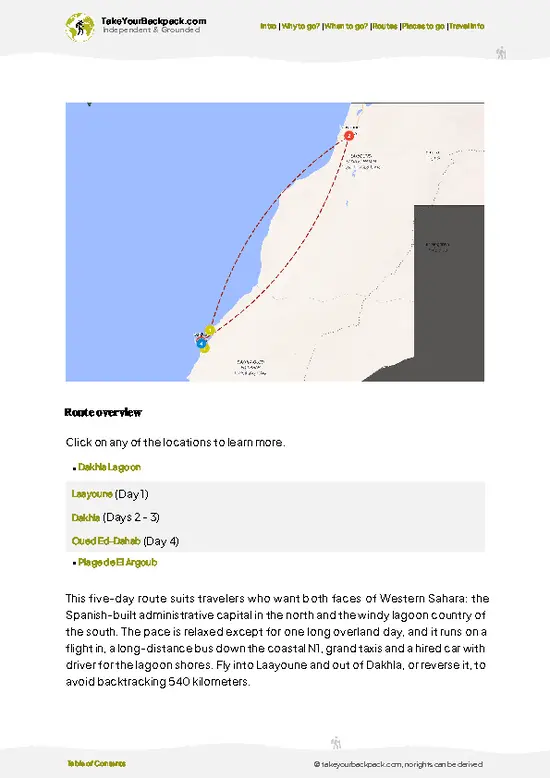
Day 1: Laayoune


Start your journey in Laayoune, the capital of Western Sahara. This city is your gateway, where you can acclimate to the region’s unique vibe. Spend the day exploring local markets and sampling traditional dishes like mechouia. The transport system here is decent, with shared taxis and buses connecting you to other parts of the region. This first day is about grounding yourself; you’ll want to understand the rhythm of the place before diving deeper.

Day 2: Smara


From Laayoune, head to Smara, a town that offers a glimpse into Sahrawi culture. The bus ride is about three hours, and it’s a chance to see the stark beauty of the desert landscape. Smara is quieter than Laayoune, allowing you to connect with locals and learn about their stories. The slower pace here is a refreshing … read more 👉

Day 1: Laayoune


Start your journey in Laayoune, the capital of Western Sahara. This city is your gateway, where you can acclimate to the region’s unique vibe. Spend the day exploring local markets and sampling traditional dishes like mechouia. The transport system here is decent, with shared taxis and buses connecting you to other parts of the region. This first day is about grounding yourself; you’ll want to understand the rhythm of the place before diving deeper.

Day 2: Smara


From Laayoune, head to Smara, a town that offers a glimpse into Sahrawi culture. The bus ride is about three hours, and it’s a chance to see the stark beauty of the desert landscape. Smara is quieter than Laayoune, allowing you to connect with locals and learn about their stories. The slower pace here is a refreshing change, and the hospitality is genuine.

Day 3: Tifariti


Next, make your way to Tifariti, a small town that’s a hub for Sahrawi activism. The journey is a bit longer, but the transport options are reliable. Tifariti is off the beaten path, and you’ll find a sense of community that’s hard to replicate elsewhere. Engage with local leaders and understand their fight for autonomy. This is where you’ll feel the pulse of the region.

Day 4: Dakhla


Now it’s time to head to Dakhla, a coastal city known for its stunning beaches and water sports. The bus ride is about six hours, but it’s worth it for the ocean breeze and fresh seafood. Dakhla offers a stark contrast to the desert, and you can unwind while enjoying activities like kite surfing or simply lounging by the water.

Day 5: Off-Path Reward - Oued Eddahab


Take a detour to Oued Eddahab, a lesser-known area that showcases the region’s natural beauty. The journey is a bit tricky, but the untouched landscapes and solitude are rewarding. You’ll feel like a true explorer here, away from the usual tourist spots.

The must-do day? Day 4 in Dakhla. It encapsulates the essence of Western Sahara, blending culture, adventure, and relaxation. This is where your trip transforms from a simple visit to a rich experience.
Turn your Saguia el Hamra visit into an Western Sahara adventure
Build a complete Western Sahara route with Saguia el Hamra, hidden gems, must-see destinations, and realistic travel times included.

Generate my trip

🌤️ When to go?Choosing the right time of year


  • Topic: Weather – The desert climate here is no joke. Summers scorch with highs pushing 40°C (104°F) or more, making midday trekking brutal. Winters cool down to a comfortable 15-20°C (59-68°F), perfect for long hikes without frying your skin.

  • Topic: Temperature Swings – Nights can be surprisingly chilly, especially in winter, dropping close to 5°C (41°F). Pack layers if you’re camping; the desert doesn’t forgive the cold after sunset.

  • Topic: Daylight Hours – Expect roughly 11 to 13 hours of daylight year-round. The sun rises early and sets late, giving you plenty of time to explore but also demanding smart hydration and sun protection.

  • Topic: Crowds – The region is off most mainstream radar, so crowds are minimal year-round. However, local festivals in late winter can bring a burst
read more 👉

  • Topic: Weather – The desert climate here is no joke. Summers scorch with highs pushing 40°C (104°F) or more, making midday trekking brutal. Winters cool down to a comfortable 15-20°C (59-68°F), perfect for long hikes without frying your skin.

  • Topic: Temperature Swings – Nights can be surprisingly chilly, especially in winter, dropping close to 5°C (41°F). Pack layers if you’re camping; the desert doesn’t forgive the cold after sunset.

  • Topic: Daylight Hours – Expect roughly 11 to 13 hours of daylight year-round. The sun rises early and sets late, giving you plenty of time to explore but also demanding smart hydration and sun protection.

  • Topic: Crowds – The region is off most mainstream radar, so crowds are minimal year-round. However, local festivals in late winter can bring a burst of activity—great for cultural immersion if you time it right.

  • Topic: Seasonal Activities – Winter months (November to February) are prime for camel treks and dune camping. Spring can surprise with rare desert blooms, but beware of occasional sandstorms that can ground plans.

  • Topic: Price Fluctuations – Off-peak winter sees better deals on guides and accommodations, but book early for festival times to avoid last-minute price hikes. Summer rates drop but so does comfort.


Pro-tip: Aim for late autumn or early spring—cool enough to move freely, quiet enough to feel like you own the desert, and just before the festival buzz kicks in. That’s the sweet spot for a trip that sticks with you.


source: climatestotravel.comJANJanuary: excellent for travelingFEBFebruary: excellent for travelingMARMarch: highly recommended for travelingAPRApril: good for travelingMAYMay: fair for travelingJUNJune: below average for travelingJULJuly: below average for travelingAUGAugust: below average for travelingSEPSeptember: fair for travelingOCTOctober: highly recommended for travelingNOVNovember: excellent for travelingDECDecember: excellent for traveling
when-to-go

✈️ The backpacker research shortcutWestern Sahara Travel Guide

An offline-friendly backpacking guide with optimized travel routes, ranked highlights, transport advice, and the best areas to stay.
example page 0 from our offline Travel Guide for Western Sahara
example page 1 from our offline Travel Guide for Western Sahara
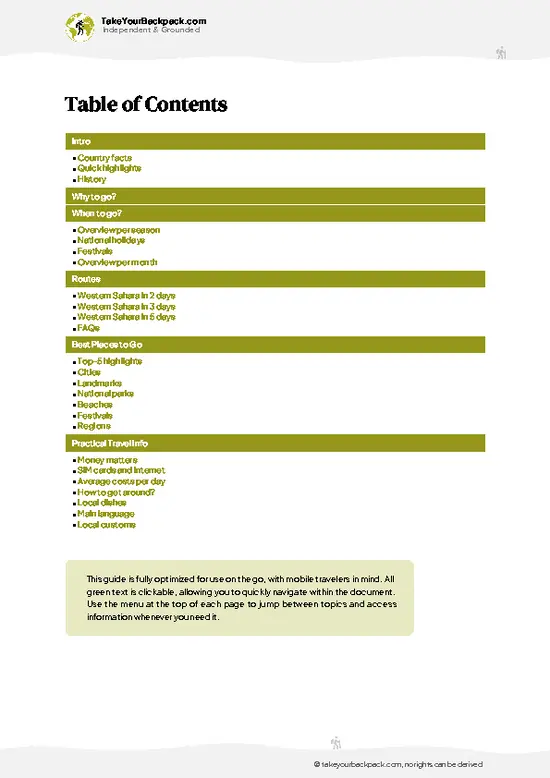
example page 2 from our offline Travel Guide for Western Sahara
example page 3 from our offline Travel Guide for Western Sahara
example page 4 from our offline Travel Guide for Western Sahara
example page 5 from our offline Travel Guide for Western Sahara
example page 6 from our offline Travel Guide for Western Sahara
example page 7 from our offline Travel Guide for Western Sahara
The digital guide (117 pages) contains:
22 highlights, ranked by travel appeal
Optimized 2, 3 & 5-day travel routes
Cities, national parks, landmarks, beaches
How to get around
Offline-friendly for travel without Wi-Fi
👉 Click to see all 30+ guide features

📅 Plan smarter in minutes, not weeks
Month by month travel advice
Festivals & national holidays
Budget expectations

🗺️ Go to the right places, skip the overrated ones
Honest pros & cons of destinations
Top hikes, parks & viewpoints
Lesser-known places most travelers miss
Clear “worth it vs skip it” guidance

🛏️ Travel smoothly without rookie mistakes
Best areas to stay
Transport systems explained simply
Common scams & safety advice
SIM cards, money & practical tips

🌍 Understand the country, not just visit it
Culture & traditions
52 Essential phrases & customs
Festivals worth planning around
Traveler-friendly historical context
Insights that make places more meaningful

📱 Built for real travel conditions
Fully downloadable PDF
Works completely offline
Optimized for phone use
Useful in remote areas & buses
Everything in one place
Save weeks of stressful planning
Get instant access to your full guide. 30‑day money-back guarantee.


By proceeding you agree to our terms.
Sent to your inbox immediately after payment • 100% Secure Checkout
Best Backpacking Travel Advisor 2025 tourism awardBest Backpacking
Travel Advisor
2025
What others say about Take Your Backpack Guides:
⭐⭐⭐⭐⭐
Fantastic, amazing amount of information!
⭐⭐⭐⭐⭐
My goodness this is amazing, it's what I've been looking for hats off too you!
⭐⭐⭐⭐⭐
I think this is absolutely BRILLIANT
⭐⭐⭐⭐
Very complete and informative. It's still missing places, but I gotta to commend you
⭐⭐⭐⭐⭐
This is truly amazing, thank you, can't wait to explore it with my kids!
⭐⭐⭐⭐⭐
Awesome resource, thank you!
⭐⭐⭐⭐⭐
This is amazing! Can't wait to explore the ones I haven't seen
⭐⭐⭐⭐
I love this! Well done, great idea.
⭐⭐⭐⭐⭐
Thanks for taking the time to make this gem!
⭐⭐⭐⭐⭐
This might be the best website I've ever seen.
⭐⭐⭐⭐⭐
Congratulations, and thank you so much for your work; it's incredibly valuable.
⭐⭐⭐⭐
In all seriousness I think you did a great job pointing out the important spots
⭐⭐⭐⭐⭐
10/10 very good
⭐⭐⭐⭐⭐
As someone who's only just starting to visit regularly this is awesome, thank you.
⭐⭐⭐⭐
Thank you very much! I'm going to visit my dad, it's going to be very useful!
⭐⭐⭐⭐⭐
This is really cool! We'll be travelling for the first time and this definitely come in handy.
⭐⭐⭐⭐⭐
You are now our minister of culture, congratulations 👨‍💼
⭐⭐⭐⭐⭐
Just wanted to tell you that this is a pearl! Going to follow your recommendations.
⭐⭐⭐⭐⭐
This is so cool. I'll definitely be using the resource for my travels soon.
⭐⭐⭐⭐⭐
This is very impressive! Good work.
⭐⭐⭐⭐⭐
This is an amazing and informative site. Very well done!

🛏️ Where to stay?Choosing the right base

In the Saguia el Hamra region, you’ve got a few standout spots that cater to backpackers looking for safety, social vibes, and budget-friendly options.

Start with Laayoune, the capital. It’s a bustling hub where you can mingle with locals and fellow travelers. The atmosphere is relaxed, and you’ll find plenty of cafes where you can sip mint tea and swap stories. The city’s markets are a sensory overload—think spices, textiles, and the hum of daily life. Timing your visit around local festivals can elevate your experience; you’ll feel the pulse of the culture.

Next up, Dakhla. This coastal town … read more 👉
In the Saguia el Hamra region, you’ve got a few standout spots that cater to backpackers looking for safety, social vibes, and budget-friendly options.

Start with Laayoune, the capital. It’s a bustling hub where you can mingle with locals and fellow travelers. The atmosphere is relaxed, and you’ll find plenty of cafes where you can sip mint tea and swap stories. The city’s markets are a sensory overload—think spices, textiles, and the hum of daily life. Timing your visit around local festivals can elevate your experience; you’ll feel the pulse of the culture.

Next up, Dakhla. This coastal town is a paradise for water sports enthusiasts and offers a laid-back vibe. The beaches are stunning, and the sunset views are worth every second. You’ll find a mix of travelers here, making it easy to connect. Plus, the seafood is fresh and affordable—perfect for a budget-friendly feast after a day of exploring.

Lastly, consider Boujdour. It’s quieter but has a charm that’s hard to resist. The local community is welcoming, and you’ll get a genuine feel for life in the region. It’s a great base for day trips to nearby natural wonders.

Each of these spots offers a unique slice of Saguia el Hamra, ensuring you get the most out of your adventure without breaking the bank.

🚌 Getting aroundMoving around without the hassle

Saguia el Hamra is a land where time feels fluid, a dance between the clock and the whims of the desert. Here, rigid schedules are more of a suggestion than a rule. You’ll find yourself navigating a landscape that thrives on intuition rather than precision. The sun rises and sets, and with it, the rhythm of travel shifts. Locals might tell you that a bus is coming “soon,” but “soon” could mean anything from five minutes to an hour. Embrace the chaos; it’s part of the charm. This is a place where you learn to read the wind and the people, making your way through the vastness with a sense of adventure.


  • Shared Taxis (Grand Taxis): These are the lifeblood of Saguia el Hamra. They operate on a semi-fixed schedule, usually starting at dawn and running until sunset. Expect to pay around 50-100
read more 👉
Saguia el Hamra is a land where time feels fluid, a dance between the clock and the whims of the desert. Here, rigid schedules are more of a suggestion than a rule. You’ll find yourself navigating a landscape that thrives on intuition rather than precision. The sun rises and sets, and with it, the rhythm of travel shifts. Locals might tell you that a bus is coming “soon,” but “soon” could mean anything from five minutes to an hour. Embrace the chaos; it’s part of the charm. This is a place where you learn to read the wind and the people, making your way through the vastness with a sense of adventure.


  • Shared Taxis (Grand Taxis): These are the lifeblood of Saguia el Hamra. They operate on a semi-fixed schedule, usually starting at dawn and running until sunset. Expect to pay around 50-100 MAD for a ride to nearby towns. They’re fast and can be quite comfortable if you’re lucky enough to snag a front seat.


  • Local Buses: A budget-friendly option, local buses connect major towns and run several times a day. Fares range from 30-70 MAD, depending on the distance. They can be slow, often stopping frequently, but they offer a chance to mingle with locals and soak in the scenery.


  • Motorbike Rentals: For the adventurous soul, renting a motorbike can be a game-changer. Prices hover around 200 MAD per day. This gives you the freedom to explore at your own pace, but be prepared for the occasional rough patch on the roads. Fuel is relatively cheap, making this a solid choice for those who crave independence.


  • Walking: Don’t underestimate the power of your own two feet. In smaller towns, walking is often the best way to soak up the local vibe. It’s free, and you’ll discover hidden corners that no taxi can reach. Just be mindful of the heat and stay hydrated.


For a tactical edge, always ask locals about the best times to catch a ride. They know the ins and outs, and you’ll often find that the best experiences come from a little local insight. If you can, travel during off-peak hours to avoid the rush and snag a better seat. Embrace the unpredictability, and you’ll find that the journey is just as rewarding as the destination.

🍲 FoodLocal Cuisine & Drinks

In Saguia el Hamra, the culinary scene is a vibrant tapestry of flavors that tells the story of its rich culture. You can’t miss trying couscous, a staple here, often served with tender lamb or chicken, infused with spices that dance on your palate. Pair it with a side of harira, a hearty soup that warms you from the inside out, especially during cooler evenings.

For a true local experience, hit the markets. The air is thick with the scent of spices and grilled meats. Street vendors serve up mechoui, succulent lamb roasted to perfection, often enjoyed with fresh bread. Grab a plate and a seat on a low bench, and you’ll feel like part of the community.

When it comes to drinks, don’t overlook the mint tea. It’s not just a beverage; it’s a ritual. Served sweet and strong, it’s a symbol of … read more 👉
In Saguia el Hamra, the culinary scene is a vibrant tapestry of flavors that tells the story of its rich culture. You can’t miss trying couscous, a staple here, often served with tender lamb or chicken, infused with spices that dance on your palate. Pair it with a side of harira, a hearty soup that warms you from the inside out, especially during cooler evenings.

For a true local experience, hit the markets. The air is thick with the scent of spices and grilled meats. Street vendors serve up mechoui, succulent lamb roasted to perfection, often enjoyed with fresh bread. Grab a plate and a seat on a low bench, and you’ll feel like part of the community.

When it comes to drinks, don’t overlook the mint tea. It’s not just a beverage; it’s a ritual. Served sweet and strong, it’s a symbol of hospitality. Expect to sip it slowly, savoring each drop while engaging in lively conversation.

Dining customs here lean towards communal experiences. Sharing food is the norm, so don’t hesitate to dig in with your hands. Just remember, the left hand is considered impolite for eating. Embrace the flavors, the warmth, and the camaraderie—this is where the heart of Saguia el Hamra truly lies.

Where to go next

Saguia el Hamra isn’t the only highlight in Western Sahara. Explore all what Western Sahara has to offer.
Country photo of Western Sahara

We 💚 feedbackWhat to keep in mind

Saguia el Hamra has a raw, unfiltered vibe that feels like stepping back in time. The best surprise? The warmth of the locals; they’ll share stories over mint tea that’ll make you feel like family. Just a heads-up: the desert can be unforgiving. Pack plenty of water and don’t underestimate the sun. Embrace the quiet moments under the stars; that’s where the magic happens. Trust me, you’ll leave with a piece of the Sahara in your heart.

✍️ Help improve this page!
The information on this page is based on in-depth research, insights shared by experienced travelers, and feedback from the local travel community in Western Sahara. While every effort is made to keep the information accurate and current, conditions can change — so if you spot anything incorrect or outdated, please get in touch.


🙋‍♂️ Give feedback

👋 Meet the founderWho’s Behind Take Your Backpack?

Johan, backpacker and founder of TakeYourBackpackHi, I’m Johan (Netherlands 🇳🇱), the creator of TakeYourBackpack. Over the past decade, I’ve backpacked through 80+ countries across six continents, gaining extensive experience with independent travel, long-term trips, and overland routes.

This site is built on a combination of firsthand travel experience and carefully curated insights from other backpackers. Many guides are based on places I’ve personally visited, while others bring together tips, observations, and practical advice shared by trusted travelers I’ve met along the way.

The goal is to provide realistic, experience-driven guidance — not generic itineraries — so you can explore destinations with better context, clearer expectations, and more confidence.

Get full country guide •
Instant download • 22 highlights • Full Offline guide