×

Yemen🇾🇪 | national parksWadi Zabid National Parkirrigation canals, mudbrick architecture, cotton fields | things to do and best time to go

Explore Wadi Dhamar National ParkExplore Socotra Archipelago

Backpacking in Wadi Zabid
By Johan Kruseman 🇳🇱 | Updated October 13, 2026

Your boots crunch through dry river pebbles while a faint smell of dust and acacia sap hangs in the heat, and the only sound is your pack straps creaking as swallows skim the canyon walls above. Wadi Zabid National Park sits in western Yemen near the Tihama plain, and it’s a low-key, semi-arid valley park with modest trails, sparse but interesting birdlife, and big, empty views. Compared with better-known Yemeni highland parks like Jabal Bura or Hawf, Wadi Zabid is flatter, hotter, and less dramatic, but also quieter and cheaper, with minimal entrance fees, almost no formal facilities, and camping that’s essentially wild if you clear it locally. Access tracks can be rough, public transport thin, and there’s little in the way of official budget accommodation, so you trade convenience and lush scenery for solitude, simple hiking, and a very raw, unpolished vibe.

Discover everything you want to know in the 📖 Yemen Travel Guide.
Safety warning

The current risk level for Yemen is high. Check the advice before going.


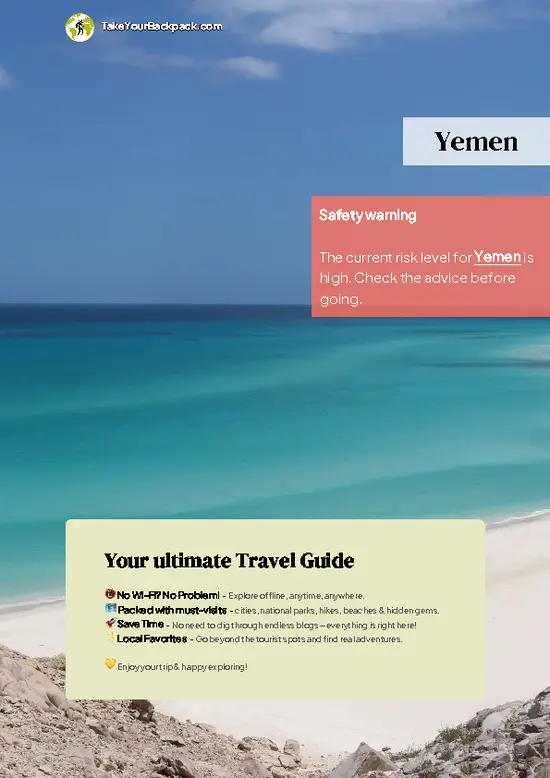
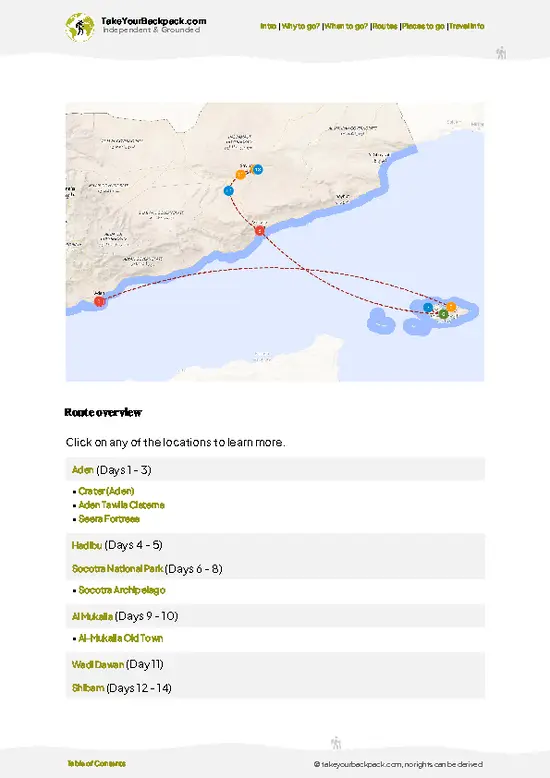
example page 0 from our offline Travel Guide for Yemen
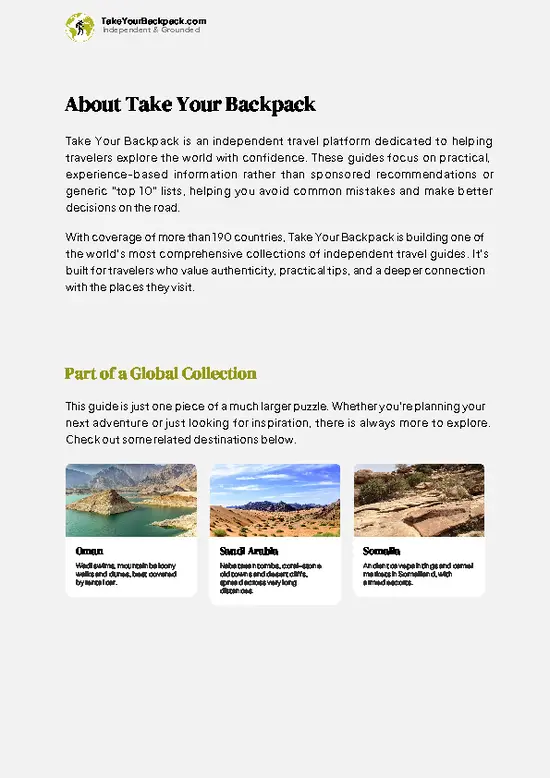
example page 1 from our offline Travel Guide for Yemen
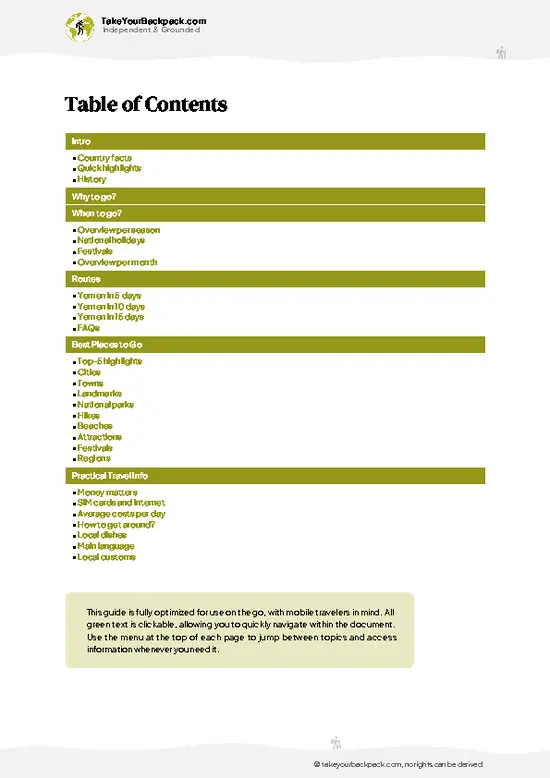
example page 2 from our offline Travel Guide for Yemen
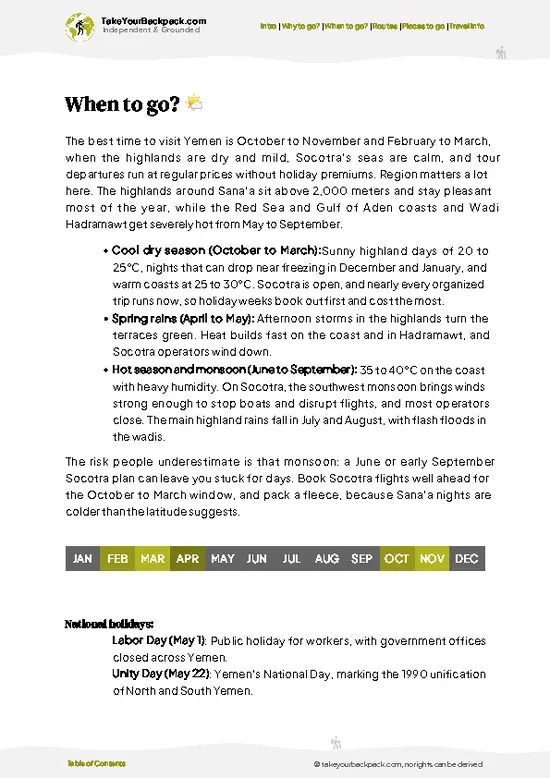
example page 3 from our offline Travel Guide for Yemen
example page 4 from our offline Travel Guide for Yemen
example page 5 from our offline Travel Guide for Yemen
example page 6 from our offline Travel Guide for Yemen
example page 7 from our offline Travel Guide for Yemen
Loading the map 🌍
CLICK TO FILTER
cities
towns
landmarks
national parks
hikes
beaches
attractions
festivals
regions
SHOW COUNTRY’S BESTSHOW ALL

✨ Why go?
Ranked #99 national park in Yemen
What makes this national park worth exploring

Backpackers flock to Wadi Zabid National Park for its independent exploration opportunities. The park offers a range of trails, from easy walks to challenging hikes, catering to various skill levels. Budget-conscious travelers appreciate the nearby camping and hostel options, allowing for a wallet-friendly stay. This park is particularly suited for self-guided travelers; the well-marked paths and stunning landscapes make it easy to navigate without a tour. Avoid the tourist traps and embrace the freedom of discovering this unique environment at your own pace, preserving your energy and budget for the experiences that truly matter.

💡 HighlightsDon't-miss highlights and experiences

  1. Dramatic Wadi Gorge and Seasonal Riverbed — steep, weathered walls carve a narrow canyon with pools and plunging light; best after the rains when the wadi runs and the contrast between rock and green is striking for photos and short waterside walks.
  2. Terraced Farms & Date Palm Groves — surprising pockets of lushness: small terraces and palm oases cling to the slopes, showing traditional agriculture that brightens an otherwise arid scene and makes for peaceful, pastoral hikes between fields.
  3. Traditional Mountain Villages — compact stone-and-mud settlements perched on terraces, with narrow lanes and rooftop views; good places to see local building styles and, if you’re polite and patient, meet villagers who still follow old rhythms of life.
  4. Birdlife and Migratory Stopover — the wadi acts
… read more 👉
  1. Dramatic Wadi Gorge and Seasonal Riverbed — steep, weathered walls carve a narrow canyon with pools and plunging light; best after the rains when the wadi runs and the contrast between rock and green is striking for photos and short waterside walks.
  2. Terraced Farms & Date Palm Groves — surprising pockets of lushness: small terraces and palm oases cling to the slopes, showing traditional agriculture that brightens an otherwise arid scene and makes for peaceful, pastoral hikes between fields.
  3. Traditional Mountain Villages — compact stone-and-mud settlements perched on terraces, with narrow lanes and rooftop views; good places to see local building styles and, if you’re polite and patient, meet villagers who still follow old rhythms of life.
  4. Birdlife and Migratory Stopover — the wadi acts as a green corridor: expect raptors riding the thermals, small passerines in the groves, and seasonal waterbirds when pools form—bring binoculars and a patient ear.
  5. Hiking Ridges and Scenic Trails — a mix of easy valley walks and steeper ridge scrambles that reward you with sweeping views across the wadi; trails are often rough and unsigned, so simple route-finding skills or a local guide are handy.
  6. Ancient Irrigation Channels and Cultural Landscape — visible remnants of traditional water management and terracing systems that explain how people have lived here for centuries; it’s as much history as it is nature, and you’ll notice the landscape shaped by long human care.
  7. Sunset Vistas and Night Skies — wide horizons mean dramatic sunset colors spilling across the canyon, and when the lights are out there’s excellent stargazing—bring a headlamp and a warm layer for chilly nights.
Spotted a mistake or missing something? Contact us.

🌤️ When to go?Best time to explore Wadi Zabid

  • Weather: The best time is between October and April when temperatures are milder. Summers soar above 40°C (104°F), making hiking exhausting and risky.
  • Temperature: Daytime highs in winter hover around 20-25°C (68-77°F), perfect for trekking. Nights can drop to 10°C (50°F), so pack layers.
  • Daylight Hours: Expect roughly 10-11 hours of daylight in winter, enough for full-day hikes without rushing.
  • Crowds: The park sees very few tourists year-round, but winter months attract local visitors, so expect some company on weekends.
  • Seasonal Activities: Spring brings wildflowers and bird migrations, adding color and life to the landscape—worth timing your visit for.
  • Price Fluctuations: Yemen’s tourism is limited, so prices remain stable, but winter’s mild weather means slightly higher costs for
… read more 👉
  • Weather: The best time is between October and April when temperatures are milder. Summers soar above 40°C (104°F), making hiking exhausting and risky.
  • Temperature: Daytime highs in winter hover around 20-25°C (68-77°F), perfect for trekking. Nights can drop to 10°C (50°F), so pack layers.
  • Daylight Hours: Expect roughly 10-11 hours of daylight in winter, enough for full-day hikes without rushing.
  • Crowds: The park sees very few tourists year-round, but winter months attract local visitors, so expect some company on weekends.
  • Seasonal Activities: Spring brings wildflowers and bird migrations, adding color and life to the landscape—worth timing your visit for.
  • Price Fluctuations: Yemen’s tourism is limited, so prices remain stable, but winter’s mild weather means slightly higher costs for guides and accommodations.
Pro-tip: Avoid the scorching summer and plan for late winter or early spring to maximize comfort and natural beauty without unexpected heat exhaustion.


source: climatestotravel.comJANJanuary: excellent for travelingFEBFebruary: excellent for travelingMARMarch: excellent for travelingAPRApril: highly recommended for travelingMAYMay: fair for travelingJUNJune: below average for travelingJULJuly: below average for travelingAUGAugust: below average for travelingSEPSeptember: fair for travelingOCTOctober: excellent for travelingNOVNovember: excellent for travelingDECDecember: excellent for traveling
when-to-go

✈️ The backpacker research shortcutYemen Travel Guide

An offline-friendly backpacking guide with optimized travel routes, ranked highlights, transport advice, and the best areas to stay.
example page 0 from our offline Travel Guide for Yemen
example page 1 from our offline Travel Guide for Yemen
example page 2 from our offline Travel Guide for Yemen
example page 3 from our offline Travel Guide for Yemen
example page 4 from our offline Travel Guide for Yemen
example page 5 from our offline Travel Guide for Yemen
example page 6 from our offline Travel Guide for Yemen
example page 7 from our offline Travel Guide for Yemen
The digital guide (223 pages) contains:
✅ 54 highlights, ranked by travel appeal
✅ Optimized 5, 10 & 15-day travel routes
✅ Cities, national parks, landmarks, beaches
✅ How to get around
✅ Offline-friendly for travel without Wi-Fi
👉 Click to see all 30+ guide features

📅 Plan smarter in minutes, not weeks
✅ Month by month travel advice
✅ Festivals & national holidays
✅ Budget expectations

🗺️ Go to the right places, skip the overrated ones
✅ Honest pros & cons of destinations
✅ Top hikes, parks & viewpoints
✅ Lesser-known places most travelers miss
✅ Clear “worth it vs skip it” guidance

🛏️ Travel smoothly without rookie mistakes
✅ Best areas to stay
✅ Transport systems explained simply
✅ Common scams & safety advice
✅ SIM cards, money & practical tips

🌍 Understand the country, not just visit it
✅ Culture & traditions
✅ 52 Essential phrases & customs
✅ Festivals worth planning around
✅ Traveler-friendly historical context
✅ Insights that make places more meaningful

📱 Built for real travel conditions
✅ Fully downloadable PDF
✅ Works completely offline
✅ Optimized for phone use
✅ Useful in remote areas & buses
✅ Everything in one place
Stop searching, start planning
Get instant access to your full guide. 30‑day money-back guarantee.
+ Add another guide for just

By proceeding you agree to our terms.
Sent to your inbox immediately after payment • 100% Secure Checkout
Best Backpacking Travel Advisor 2025 tourism awardBest Backpacking
Travel Advisor
2025
What others say about Take Your Backpack Guides:
⭐⭐⭐⭐⭐
Fantastic, amazing amount of information!
⭐⭐⭐⭐⭐
My goodness this is amazing, it's what I've been looking for hats off too you!
⭐⭐⭐⭐⭐
I think this is absolutely BRILLIANT
⭐⭐⭐⭐
Very complete and informative. It's still missing places, but I gotta to commend you
⭐⭐⭐⭐⭐
This is truly amazing, thank you, can't wait to explore it with my kids!
⭐⭐⭐⭐⭐
Awesome resource, thank you!
⭐⭐⭐⭐⭐
This is amazing! Can't wait to explore the ones I haven't seen
⭐⭐⭐⭐
I love this! Well done, great idea.
⭐⭐⭐⭐⭐
Thanks for taking the time to make this gem!
⭐⭐⭐⭐⭐
This might be the best website I've ever seen.
⭐⭐⭐⭐⭐
Congratulations, and thank you so much for your work; it's incredibly valuable.
⭐⭐⭐⭐
In all seriousness I think you did a great job pointing out the important spots
⭐⭐⭐⭐⭐
10/10 very good
⭐⭐⭐⭐⭐
As someone who's only just starting to visit regularly this is awesome, thank you.
⭐⭐⭐⭐
Thank you very much! I'm going to visit my dad, it's going to be very useful!
⭐⭐⭐⭐⭐
This is really cool! We'll be travelling for the first time and this definitely come in handy.
⭐⭐⭐⭐⭐
You are now our minister of culture, congratulations 👨‍💼
⭐⭐⭐⭐⭐
Just wanted to tell you that this is a pearl! Going to follow your recommendations.
⭐⭐⭐⭐⭐
This is so cool. I'll definitely be using the resource for my travels soon.
⭐⭐⭐⭐⭐
This is very impressive! Good work.
⭐⭐⭐⭐⭐
This is an amazing and informative site. Very well done!

🛏️ Where to stay?Best areas to stay in Yemen

Wadi Zabid National Park doesn’t have formal accommodations within its boundaries. Instead, head to nearby towns like Zabid or Al Hudaydah. Zabid offers budget-friendly guesthouses where you can soak in local culture. Al Hudaydah, a bit larger, has more options, from hostels to mid-range hotels.

Be aware that transportation can be tricky. Public transport is limited, so consider hiring a local guide or arranging a taxi for convenience. This will save you time and energy, allowing you to focus on the park’s stunning landscapes and rich history. Prioritize your budget for experiences, not just a place to sleep.

👛 Costs (as of 13 October 2026)Travel costs and budget guide for Wadi Zabid

Visiting Wadi Zabid National Park in Yemen requires careful budgeting. Entry fees typically range from €5 to €10 (about $5 to $10). This fee grants you access to the park’s stunning landscapes and unique ecosystems.

Guided tours are highly recommended. Expect to pay between €30 and €60 ($30 to $60) for a full-day tour. This often includes transportation and a knowledgeable guide who can enhance your experience with local insights.

Accommodation options vary. Basic lodgings can cost around €20 to €40 ($20 to $40) per night. For more comfort, mid-range hotels may charge €50 to €100 ($50 to $100) per night. Always check for amenities that suit your needs.

Food is generally affordable. Meals at local eateries can range from €5 to €15 ($5 to $15). If you prefer dining at more upscale places, … read more 👉
Visiting Wadi Zabid National Park in Yemen requires careful budgeting. Entry fees typically range from €5 to €10 (about $5 to $10). This fee grants you access to the park’s stunning landscapes and unique ecosystems.

Guided tours are highly recommended. Expect to pay between €30 and €60 ($30 to $60) for a full-day tour. This often includes transportation and a knowledgeable guide who can enhance your experience with local insights.

Accommodation options vary. Basic lodgings can cost around €20 to €40 ($20 to $40) per night. For more comfort, mid-range hotels may charge €50 to €100 ($50 to $100) per night. Always check for amenities that suit your needs.

Food is generally affordable. Meals at local eateries can range from €5 to €15 ($5 to $15). If you prefer dining at more upscale places, budget for €20 to €40 ($20 to $40) per meal.

Transportation within the park can add up. Hiring a vehicle or using local transport might cost €10 to €30 ($10 to $30) depending on the distance and type of service.

Be mindful of additional costs like park permits or fees for specific activities. These can vary, so it’s wise to inquire ahead.

In summary, a budget of around €100 to €200 ($100 to $200) per day should cover your basic needs, including entry, accommodation, food, and transportation. This allows you to focus on enjoying the park without financial surprises.
⚠️ Prices can change and everyone travels differently, so take this as a rough guide. Hope it helps you plan your adventure!

🥾 TrailsDiscover Wadi Zabid's top trails and natural wonders

Wadi Zabid National Park in Yemen is a hidden gem for those looking to escape the usual tourist trails. The park offers a mix of dramatic landscapes, from rugged mountains to lush valleys. You’ll find yourself surrounded by striking cliffs and unique rock formations, with the occasional oasis popping up to break the arid scenery. Wildlife enthusiasts will appreciate the chance to spot endemic species, particularly birds and small mammals, making it a vibrant ecosystem despite the harsh environment.

For hiking, there’s a solid option called Wadi Zabid Loop. Here’s what you need to know:
  • Length:
… read more 👉
Wadi Zabid National Park in Yemen is a hidden gem for those looking to escape the usual tourist trails. The park offers a mix of dramatic landscapes, from rugged mountains to lush valleys. You’ll find yourself surrounded by striking cliffs and unique rock formations, with the occasional oasis popping up to break the arid scenery. Wildlife enthusiasts will appreciate the chance to spot endemic species, particularly birds and small mammals, making it a vibrant ecosystem despite the harsh environment.

For hiking, there’s a solid option called Wadi Zabid Loop. Here’s what you need to know:
  • Length: 10 km
  • Estimated Duration: 4-5 hours
  • Difficulty Level: Moderate
  • Key Features: Stunning views of the wadi, diverse flora, and potential wildlife sightings
  • Terrain: Rocky paths, some steep sections, and sandy stretches

Getting to the park can be a bit of an adventure in itself. Public transport options are limited, so you might have to rely on shared taxis or local buses from nearby towns. It’s not the most crowded spot, which is a plus if you’re looking for solitude. Just keep in mind that there might be a small entrance fee, so it’s good to have some cash handy. Overall, it’s a fantastic spot for those who enjoy a little off-the-beaten-path exploration!
⚠️ Hiking info can sometimes be outdated or inaccurate. Before you hit the trail, check the latest conditions with locals. If you do spot anything that's off, I'd love to hear from you, so I can update it for fellow travelers.

🛡️ SafetyScams, Hazards, and Annoyances

Wadi Zabid National Park offers a generally manageable hiking experience, but a few realities can catch you off guard. Weather can shift unexpectedly, so pack layers and be ready for both sun and sudden rain. The terrain varies; some trails are steep and rocky, requiring good footwear and careful footing. Navigation is straightforward, but don’t underestimate the importance of a reliable map or GPS. Wildlife encounters are rare, but if you see animals, observe from a distance and avoid feeding them. Stay hydrated and pace yourself to enjoy the stunning surroundings without overexertion.

FAQTraveler FAQ

2 to 3 days are sufficient to explore Wadi Zabid National Park thoroughly, allowing time for hiking and wildlife observation. The park covers a large area with diverse landscapes, so plan accordingly to cover key spots.
No, visiting Wadi Zabid National Park without a car is difficult due to limited public transportation and the park's remote location. Renting a car or arranging private transport is recommended for flexibility and access.
Yes, an entrance fee or permit is required to visit Wadi Zabid National Park. Fees vary but expect to pay around $10 to $15 USD, which helps with park maintenance and conservation efforts.
⚠️ Things can change over time, so always validate details locally before you go.

Other Yemeni national parks near Wadi Zabid

Explore more nearby:


💡 Not sure where to go next?
Create a personalized itinerary for Yemen including Wadi Zabid and the places that fit your trip.

Generate my itinerary

👉 Discover all national parks

Or checkout all Yemen has to offer (think cities, towns, villages, national parks, hikes, beaches, festivals)
Country photo of Yemen

We 💚 feedbackParting advice and final tips

Wadi Zabid National Park has a raw, untouched vibe that’s hard to find elsewhere. The best surprise? The locals’ warmth and willingness to share stories. Just be cautious with your timing; the heat can drain your energy fast. Plan your hikes early to savor every moment.

✍️ Help improve this page!
The information on this page is based on in-depth research, insights shared by experienced travelers, and feedback from the local travel community in Yemen. While every effort is made to keep the information accurate and current, conditions can change — so if you spot anything incorrect or outdated, please get in touch.


🙋‍♂️ Give feedback

👋 Meet the founderWho’s Behind Take Your Backpack?

Johan, backpacker and founder of TakeYourBackpackHi, I’m Johan (Netherlands 🇳🇱), the creator of TakeYourBackpack. Over the past 3 decades, I’ve backpacked through 90+ countries across six continents, gaining extensive experience with independent travel, long-term trips, and overland routes.

This site is built on a combination of firsthand travel experience and carefully curated insights from other backpackers. Many guides are based on places I’ve personally visited, while others bring together tips, observations, and practical advice shared by trusted travelers I’ve met along the way.

The goal is to provide realistic, experience-driven guidance — not generic itineraries — so you can explore destinations with better context, clearer expectations, and more confidence.