×

Zambia🇿🇲 | citiesKabwe
Railway junction, colonial-era buildings, lead mining legacy | things to do and best time to go

Explore ChipataExplore Kitwe

Backpacking in Kabwe
👍 Recommendedcity ranked #9
By Johan Kruseman 🇳🇱 | Updated May 18, 2026

If you crave polished tourist circuits, Instagrammable cafés, or a parade of hostels packed with fellow backpackers, Kabwe is not your city. But that’s exactly why it’s worth your time: Kabwe, sitting halfway between Lusaka and the Victoria Falls hub of Livingstone, is Zambia stripped of pretense. The city’s colonial-era railway station, faded mining relics, and the modest Kabwe Museum offer a raw, unfiltered look at the country’s industrial backbone. You won’t find curated nightlife or a backpacker scene—meeting other travelers is rare, and English is spoken but not everywhere. Costs are low, safety is average for Zambia (keep your wits about you after dark), and the vibe is gritty, functional, and real. Kabwe rewards those who value authenticity over comfort, and context over convenience.

Discover everything you want to know in the 📖 Zambia Travel Guide.
Loading the map 🌍
CLICK TO FILTER
city
town
unique site
national park
hike
beach
attraction
festival
SHOW COUNTRY‘S BESTSHOW ALL

✨ Why go?
Ranked #9 city in Zambia
What makes this city worth visiting

Kabwe is a strategic stop for backpackers weaving through Zambia. It’s not just about the highlights; it’s about the value it brings to your journey. The city serves as a solid basecamp for day trips, making it easy to explore nearby attractions without the hassle of constant packing.

Accommodations here are affordable, with hostels that cater to budget travelers while fostering a sense of community. You’ll find local food that’s both delicious and easy on the wallet, perfect for refueling after a day of exploration. The city is walkable, allowing you to soak in the local vibe without needing a taxi.

When the sun sets, the nightlife offers a laid-back atmosphere, ideal for unwinding and sharing stories with fellow travelers. Plus, Kabwe’s transport links make onward travel a breeze, whether … read more 👉
Kabwe is a strategic stop for backpackers weaving through Zambia. It’s not just about the highlights; it’s about the value it brings to your journey. The city serves as a solid basecamp for day trips, making it easy to explore nearby attractions without the hassle of constant packing.

Accommodations here are affordable, with hostels that cater to budget travelers while fostering a sense of community. You’ll find local food that’s both delicious and easy on the wallet, perfect for refueling after a day of exploration. The city is walkable, allowing you to soak in the local vibe without needing a taxi.

When the sun sets, the nightlife offers a laid-back atmosphere, ideal for unwinding and sharing stories with fellow travelers. Plus, Kabwe’s transport links make onward travel a breeze, whether you’re heading to Lusaka or beyond. It’s a practical choice that balances comfort and adventure, making it a worthy stop on your Zambian route.
Get the complete Travel Guide for Zambia
Everything organized for offline planning — routes, highlights, costs & tips

See what’s inside 👉

Get the Travel Guide -

💡 HighlightsDon't-miss highlights and experiences

  1. Broken Hill / Kabwe Mine site — The town’s defining landmark: the old lead-zinc workings and towering tailings from the Broken Hill mine. It’s where the famous ”Broken Hill skull” (Kabwe 1) was discovered and the mine area tells the town’s industrial story in concrete, rust and slag heaps.
  2. Kabwe Central Market — Packed stalls, fresh produce, second-hand clothing and local snacks; the market is the best place to feel the city’s rhythm, buy cotton wares or sample roadside grilled fish and nshima while watching everyday Kabwe life.
  3. Kabwe Railway Station — A live piece of Zambia’s rail history with colonial-era buildings and daily freight/passenger activity. The platform and surrounding yards are great for seeing the rail spine that shaped the town and watching long-distance trains come and
read more 👉
  1. Broken Hill / Kabwe Mine site — The town’s defining landmark: the old lead-zinc workings and towering tailings from the Broken Hill mine. It’s where the famous ”Broken Hill skull” (Kabwe 1) was discovered and the mine area tells the town’s industrial story in concrete, rust and slag heaps.
  2. Kabwe Central Market — Packed stalls, fresh produce, second-hand clothing and local snacks; the market is the best place to feel the city’s rhythm, buy cotton wares or sample roadside grilled fish and nshima while watching everyday Kabwe life.
  3. Kabwe Railway Station — A live piece of Zambia’s rail history with colonial-era buildings and daily freight/passenger activity. The platform and surrounding yards are great for seeing the rail spine that shaped the town and watching long-distance trains come and go.
  4. Broken Hill / Kabwe Museum — The small local museum covers the mine’s history, displays regional archaeology and interprets the Kabwe skull story for visitors who want context on the town’s scientific and mining heritage.
  5. Broken Hill / Kabwe Golf & Social Club — A surprisingly green colonial-era golf course and clubhouse that functions as a social hub; it’s a relaxed place to meet locals, grab a cold drink and escape the dust for a couple of hours.
A few easy day trips from Kabwe include the Mulungushi Rock of Authority and Mulungushi Dam (historic political site and riverside scenery) and the nearby rail town of Kapiri Mposhi with its markets and junction for onward travel.
Spotted a mistake or missing something? Contact us.
🏘️ NeighborhoodsNeighborhood guide to Kabwe

Kabwe offers a unique blend of local culture and accessibility for backpackers. Here’s a breakdown of key neighborhoods to help you navigate your stay.

Central Kabwe: This is the heart of the city. It’s bustling, with markets and shops lining the streets. Costs are moderate, making it budget-friendly. Walkability is high, so you can easily explore on foot. Nightlife is low-key, with a few bars and eateries. Perfect for short stays where you want to soak up local life.

Chibombo: A bit quieter, Chibombo is ideal for those seeking a more relaxed vibe. It’s slightly more expensive, but the trade-off is a peaceful atmosphere. Walkability dips here, so consider public transport. It’s great for longer stays, especially if you want to escape the hustle.

Railway Compound: This area is vibrant and … read more 👉
Kabwe offers a unique blend of local culture and accessibility for backpackers. Here’s a breakdown of key neighborhoods to help you navigate your stay.

Central Kabwe: This is the heart of the city. It’s bustling, with markets and shops lining the streets. Costs are moderate, making it budget-friendly. Walkability is high, so you can easily explore on foot. Nightlife is low-key, with a few bars and eateries. Perfect for short stays where you want to soak up local life.

Chibombo: A bit quieter, Chibombo is ideal for those seeking a more relaxed vibe. It’s slightly more expensive, but the trade-off is a peaceful atmosphere. Walkability dips here, so consider public transport. It’s great for longer stays, especially if you want to escape the hustle.

Railway Compound: This area is vibrant and affordable, attracting a younger crowd. The nightlife is lively, with local music and dance spots. It’s walkable, but be cautious at night. Perfect for short stays if you want to experience Kabwe’s energy.

Makanda: A residential area with a local feel. Costs are low, and it’s less touristy. Walkability is moderate, but you’ll need to rely on taxis for longer distances. Ideal for longer stays if you want to immerse yourself in daily life.

⌛️ 1 dayHow to make the most of one day

Kabwe, Zambia, is a city steeped in history and culture, known for its rich mining heritage and vibrant local life. It’s a place where you can feel the pulse of Zambian life, away from the typical tourist trail.

Start your morning at the Kabwe Market, a bustling hub where locals gather. The aroma of fresh produce and street food fills the air. Grab a breakfast of chibwabwa (pumpkin leaves) and nshima (a staple maize dish) from a vendor. It’s a delicious way to fuel up while soaking in the lively atmosphere. Afterward, take a stroll to the nearby Railway Museum. Here, you’ll find fascinating exhibits that tell the story of Zambia’s rail history, a crucial part of its development.

In the afternoon, head to the iconic Mulungushi River. Pack a light lunch and find a shady spot along the banks. … read more 👉
Kabwe, Zambia, is a city steeped in history and culture, known for its rich mining heritage and vibrant local life. It’s a place where you can feel the pulse of Zambian life, away from the typical tourist trail.

Start your morning at the Kabwe Market, a bustling hub where locals gather. The aroma of fresh produce and street food fills the air. Grab a breakfast of chibwabwa (pumpkin leaves) and nshima (a staple maize dish) from a vendor. It’s a delicious way to fuel up while soaking in the lively atmosphere. Afterward, take a stroll to the nearby Railway Museum. Here, you’ll find fascinating exhibits that tell the story of Zambia’s rail history, a crucial part of its development.

In the afternoon, head to the iconic Mulungushi River. Pack a light lunch and find a shady spot along the banks. This is a great place to relax and enjoy the natural beauty. If you’re feeling adventurous, consider a short hike in the surrounding area. The trails offer a glimpse of local flora and fauna, and you might even spot some wildlife.

As evening approaches, make your way to the town center. Stop by a local eatery for dinner; try the grilled fish or chicken, seasoned to perfection. Afterward, explore the vibrant nightlife. Check out a local bar or music venue where you can experience traditional Zambian music.

Kabwe may not be on every travel itinerary, but its authentic charm makes it a worthwhile stop. You’ll leave with a deeper understanding of Zambian culture and a heart full of memories.
Build the Right Itinerary
Use the Zambia Travel Guide’s 5, 10 & 15-day routes as a starting point to plan a trip that actually works on the ground.

Get the Travel Guide -

🌤️ When to go?When to go for the best experience


  • Topic: Weather – Kabwe’s dry season from May to October offers clear skies and minimal rain, making trekking and outdoor exploration straightforward. The wet season, November to April, brings heavy rains that can turn trails into mud traps and disrupt transport.

  • Topic: Temperature – Expect daytime highs around 25-28°C (77-82°F) during the dry months, cooling off nicely at night to 10-15°C (50-59°F). The wet season is warmer and more humid, with highs creeping up to 30°C (86°F), which can sap your energy on long hikes.

  • Topic: Daylight Hours – Kabwe enjoys roughly 11-12 hours of daylight year-round, but the dry season’s clearer skies mean you get more usable daylight for activities without the threat of sudden storms.

  • Topic: Crowds – Kabwe isn’t a tourist hotspot, so crowds are minimal
read more 👉

  • Topic: Weather – Kabwe’s dry season from May to October offers clear skies and minimal rain, making trekking and outdoor exploration straightforward. The wet season, November to April, brings heavy rains that can turn trails into mud traps and disrupt transport.

  • Topic: Temperature – Expect daytime highs around 25-28°C (77-82°F) during the dry months, cooling off nicely at night to 10-15°C (50-59°F). The wet season is warmer and more humid, with highs creeping up to 30°C (86°F), which can sap your energy on long hikes.

  • Topic: Daylight Hours – Kabwe enjoys roughly 11-12 hours of daylight year-round, but the dry season’s clearer skies mean you get more usable daylight for activities without the threat of sudden storms.

  • Topic: Crowds – Kabwe isn’t a tourist hotspot, so crowds are minimal year-round. However, local festivals during the dry season can add a lively cultural layer without overwhelming the scene.

  • Topic: Seasonal Activities – Dry months are prime for visiting nearby wildlife reserves and hiking. The wet season’s lush greenery is beautiful but less accessible, limiting outdoor options.

  • Topic: Price Fluctuations – Accommodation and transport costs dip during the wet season due to lower demand, but the trade-off is less reliable travel conditions and fewer open attractions.


Pro-tip: Aim for the shoulder months of May or October to balance pleasant weather, fewer crowds, and better prices—maximizing your comfort without sacrificing adventure.


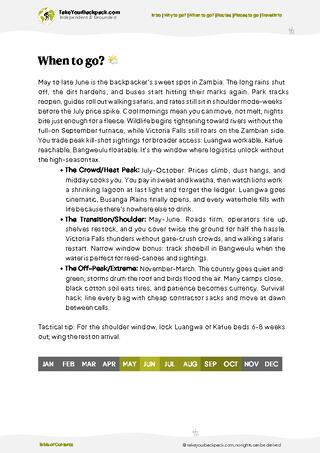
source: climatestotravel.comJANJanuary: fair for travelingFEBFebruary: fair for travelingMARMarch: fair for travelingAPRApril: fair for travelingMAYMay: highly recommended for travelingJUNJune: excellent for travelingJULJuly: excellent for travelingAUGAugust: excellent for travelingSEPSeptember: excellent for travelingOCTOctober: highly recommended for travelingNOVNovember: fair for travelingDECDecember: fair for traveling
when-to-go

✈️ The backpacker research shortcutZambia Travel Guide

An offline-friendly backpacking guide with optimized travel routes, ranked highlights, transport advice, and the best areas to stay.
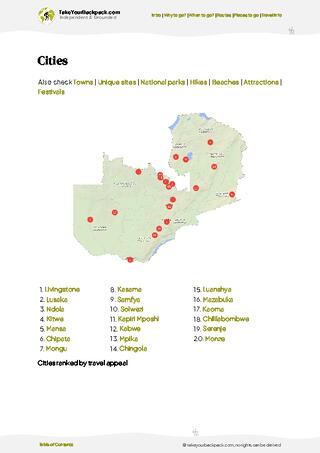
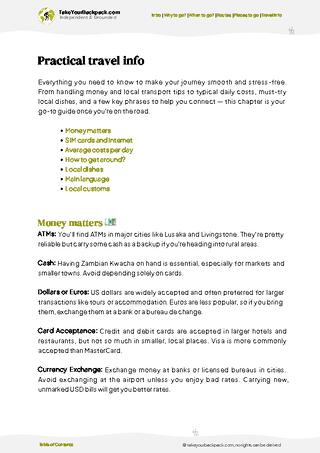
example page 0 from our offline Travel Guide for Zambiaexample page 1 from our offline Travel Guide for Zambiaexample page 2 from our offline Travel Guide for Zambiaexample page 3 from our offline Travel Guide for Zambiaexample page 4 from our offline Travel Guide for Zambiaexample page 5 from our offline Travel Guide for Zambiaexample page 6 from our offline Travel Guide for Zambiaexample page 7 from our offline Travel Guide for Zambia
The digital guide (375 pages) contains:
97 highlights, ranked by travel appeal
Optimized 5, 10 & 15-day travel routes
Best neighborhoods to stay
How to get around
Offline-friendly for travel without Wi-Fi
👉 See all 30+ guide features

📅 Plan smarter in minutes, not weeks
Month by month travel advice
Festivals & national holidays
Budget expectations

🗺️ Go to the right places, skip the overrated ones
Honest pros & cons of destinations
Top hikes, parks & viewpoints
Lesser-known places most travelers miss
Clear “worth it vs skip it” guidance

🛏️ Travel smoothly without rookie mistakes
Best areas to stay
Transport systems explained simply
Common scams & safety advice
SIM cards, money & practical tips

🌍 Understand the country, not just visit it
Culture & traditions
52 Essential phrases & customs
Festivals worth planning around
Traveler-friendly historical context
Insights that make places more meaningful

📱 Built for real travel conditions
Fully downloadable PDF
Works completely offline
Optimized for phone use
Useful in remote areas & buses
Everything in one place
Save weeks of stressful planning
Get instant access to the full guide directly. 30-day money-back guarantee.


Sent to your inbox immediately after payment • 100% Secure Checkout
Best Backpacking Travel Advisor 2025 tourism awardBest Backpacking
Travel Advisor
2025
What others say about Take Your Backpack Guides:
⭐⭐⭐⭐⭐
Fantastic, amazing amount of information!
⭐⭐⭐⭐⭐
My goodness this is amazing, it's what I've been looking for hats off too you!
⭐⭐⭐⭐⭐
I think this is absolutely BRILLIANT
⭐⭐⭐⭐
Very complete and informative. It's still missing places, but I gotta to commend you
⭐⭐⭐⭐⭐
This is truly amazing, thank you, can't wait to explore it with my kids!
⭐⭐⭐⭐⭐
Awesome resource, thank you!
⭐⭐⭐⭐⭐
This is amazing! Can't wait to explore the ones I haven't seen
⭐⭐⭐⭐
I love this! Well done, great idea.
⭐⭐⭐⭐⭐
Thanks for taking the time to make this gem!
⭐⭐⭐⭐⭐
This might be the best website I've ever seen.
⭐⭐⭐⭐⭐
Congratulations, and thank you so much for your work; it's incredibly valuable.
⭐⭐⭐⭐
In all seriousness I think you did a great job pointing out the important spots
⭐⭐⭐⭐⭐
10/10 very good
⭐⭐⭐⭐⭐
As someone who's only just starting to visit regularly this is awesome, thank you.
⭐⭐⭐⭐
Thank you very much! I'm going to visit my dad, it's going to be very useful!
⭐⭐⭐⭐⭐
This is really cool! We'll be travelling for the first time and this definitely come in handy.
⭐⭐⭐⭐⭐
You are now our minister of culture, congratulations 👨‍💼
⭐⭐⭐⭐⭐
Just wanted to tell you that this is a pearl! Going to follow your recommendations.
⭐⭐⭐⭐⭐
This is so cool. I'll definitely be using the resource for my travels soon.
⭐⭐⭐⭐⭐
This is very impressive! Good work.
⭐⭐⭐⭐⭐
This is an amazing and informative site. Very well done!

🛏️ Where to stay?How to pick the right area

In Kabwe, the sweet spot for backpackers is the central business district (CBD) and its immediate surroundings. This area strikes a balance between safety, social buzz, and budget-friendly options. It’s where you’ll find the pulse of the city—markets, street food, and local hangouts—without venturing into sketchier neighborhoods. The CBD offers a handful of hostels and guesthouses that cater to solo travelers and budget-conscious visitors, making it easier to meet others without sacrificing security.

Compared to the outskirts or industrial zones, the CBD’s walkability and access to public transport … read more 👉
In Kabwe, the sweet spot for backpackers is the central business district (CBD) and its immediate surroundings. This area strikes a balance between safety, social buzz, and budget-friendly options. It’s where you’ll find the pulse of the city—markets, street food, and local hangouts—without venturing into sketchier neighborhoods. The CBD offers a handful of hostels and guesthouses that cater to solo travelers and budget-conscious visitors, making it easier to meet others without sacrificing security.

Compared to the outskirts or industrial zones, the CBD’s walkability and access to public transport save you time and money, which is crucial when every kwacha counts. The vibe here is practical but lively—think local chatter over a cheap meal rather than touristy nightlife. If you want to stretch comfort, this is where you’ll find it without blowing your budget. Other areas tend to be quieter but less convenient or less safe, so the CBD remains the smartest choice for backpackers who want to maximize value and connection in Kabwe.

🚌 Getting aroundMoving around without the hassle

Kabwe moves at its own rhythm—a blend of laid-back pace and bursts of urgency. It’s not a city where you’ll find clocks dictating every step, but rather a place where intuition and local knowledge steer your journey. The streets pulse with informal networks of transport, where schedules are more of a suggestion than a rule, and comfort often takes a backseat to getting from A to B without breaking the bank. Understanding this flow means you’re not just a passenger; you’re playing the game with eyes wide open, choosing when to save time, when to save money, and when to accept a little discomfort as part of the experience.


  • Walking: The ultimate budget option. Kabwe’s central areas are compact enough to explore on foot, giving you full control over your pace and route. Zero cost, zero schedule,
read more 👉
Kabwe moves at its own rhythm—a blend of laid-back pace and bursts of urgency. It’s not a city where you’ll find clocks dictating every step, but rather a place where intuition and local knowledge steer your journey. The streets pulse with informal networks of transport, where schedules are more of a suggestion than a rule, and comfort often takes a backseat to getting from A to B without breaking the bank. Understanding this flow means you’re not just a passenger; you’re playing the game with eyes wide open, choosing when to save time, when to save money, and when to accept a little discomfort as part of the experience.


  • Walking: The ultimate budget option. Kabwe’s central areas are compact enough to explore on foot, giving you full control over your pace and route. Zero cost, zero schedule, but expect uneven sidewalks and the occasional dust cloud. Best for short hops and soaking in local life.


  • Shared Minibus Taxis: The backbone of Kabwe’s transit. These minibuses run from dawn until dusk, roughly 6 AM to 6 PM, with fares around 2,000 to 3,000 ZMW cents (a few cents in USD). They’re cheap and relatively quick, but expect crowding and no fixed timetable—buses leave when full. Comfort is minimal; windows open for ventilation, but prepare for a bumpy ride.


  • Private Taxis: More expensive, roughly 50 to 100 ZMW per trip depending on distance, but they offer door-to-door convenience and flexibility. Available 24/7, these are your go-to if you’re carrying heavy gear or traveling late. Comfort is better than minibuses, but negotiate fares upfront to avoid surprises.


  • Bicycle Rentals: A middle ground between walking and motorized transport. Renting a bike costs about 20 to 40 ZMW per day. It’s faster than walking and gives you freedom to explore beyond the center without the hassle of schedules or traffic jams. Requires some stamina and local road savvy, but the payoff is a smooth, flexible ride.


Mastering Kabwe’s transit means balancing these options like a chess player. You trade off comfort for cost, speed for spontaneity, and rigid schedules for local rhythm. The savvy traveler knows when to walk, when to squeeze into a minibus, and when to splurge on a taxi—turning every trip into a strategic win.

👛 Costs (as of 7 May 2025)Money, prices, and spending tips

Backpacking in Kabwe, Zambia, is a balancing act between modest costs and the occasional splurge for comfort or convenience. Here’s the breakdown to help you navigate your daily budget with precision:
  • Dorm Accommodation (High Season): Expect to pay around $10 to $15 per night. High season sees a slight bump due to demand, but options remain basic and functional rather than luxurious.
  • Dorm Accommodation (Off-Season): Prices drop to about $7 to $10 per night. Fewer travelers mean better bargaining power and more availability in budget guesthouses or hostels.
  • Meals: Street food and local eateries offer meals for $2 to $5. A mix of nshima (a local staple) with vegetables or meat keeps costs low and energy high. Western-style meals or dining in tourist spots can push this to $7 or more.
  • Local
read more 👉
Backpacking in Kabwe, Zambia, is a balancing act between modest costs and the occasional splurge for comfort or convenience. Here’s the breakdown to help you navigate your daily budget with precision:
  • Dorm Accommodation (High Season): Expect to pay around $10 to $15 per night. High season sees a slight bump due to demand, but options remain basic and functional rather than luxurious.
  • Dorm Accommodation (Off-Season): Prices drop to about $7 to $10 per night. Fewer travelers mean better bargaining power and more availability in budget guesthouses or hostels.
  • Meals: Street food and local eateries offer meals for $2 to $5. A mix of nshima (a local staple) with vegetables or meat keeps costs low and energy high. Western-style meals or dining in tourist spots can push this to $7 or more.
  • Local Transport: Minibus taxis and shared rides dominate, costing roughly $0.50 to $1 per trip within the city. It’s cheap but expect crowded conditions and irregular schedules.
  • City Transport Pass: Kabwe doesn’t have a formal city transport pass system. Budget travelers rely on cash for each ride, so factor in daily transport expenses rather than a fixed pass.
  • Basic Activities/Entry Fees: Most local attractions and markets have minimal or no entry fees, usually under $2. Guided tours or special excursions can cost $10 to $20, but these are optional and rare.
  • Miscellaneous Expenses: This includes bottled water, snacks, occasional internet access, and small tips. Budget around $2 to $5 daily to cover these essentials without surprises.

In total, a savvy backpacker in Kabwe can expect to spend between $15 and $30 per day, depending on season and personal comfort choices. This range covers the essentials without cutting corners on safety or basic convenience, letting you focus on the experience rather than the expense.


source: zambiatourism.com
⚠️ Prices can change and everyone travels differently, so take this as a rough guide. Hope it helps you plan your adventure!

🚌 Day tripsEasy escapes and nearby places

Kabwe, Zambia, is a strategic launchpad for day trips that blend adventure with cultural immersion. Here’s how you can make the most of your time.

Caves of Kafue
Just a short 45-minute drive from Kabwe, the Caves of Kafue offer a fascinating glimpse into ancient rock art and geological formations. The hike to the caves is manageable, even for beginners, and the thrill of discovering centuries-old paintings is worth every step. Bring a packed lunch to enjoy amidst the stunning scenery. Expect to spend around $10 for transport and entry fees. The dry season, from May to October, is ideal for this trip. A common mistake is underestimating the time needed to explore; plan for at least half a day.


Lake Kariba
About two hours from Kabwe, Lake Kariba is a paradise for those who love water … read more 👉
Kabwe, Zambia, is a strategic launchpad for day trips that blend adventure with cultural immersion. Here’s how you can make the most of your time.

Caves of Kafue
Just a short 45-minute drive from Kabwe, the Caves of Kafue offer a fascinating glimpse into ancient rock art and geological formations. The hike to the caves is manageable, even for beginners, and the thrill of discovering centuries-old paintings is worth every step. Bring a packed lunch to enjoy amidst the stunning scenery. Expect to spend around $10 for transport and entry fees. The dry season, from May to October, is ideal for this trip. A common mistake is underestimating the time needed to explore; plan for at least half a day.


Lake Kariba
About two hours from Kabwe, Lake Kariba is a paradise for those who love water activities. Rent a kayak or take a boat tour to soak in the views of the lake and its wildlife. The cost for a day trip can range from $15 to $30, depending on your activities. The best time to visit is during the cooler months, from May to August. Many first-timers overlook the need for sunscreen; the sun can be relentless.


Chisamba
Just an hour away, Chisamba is a charming village that showcases local Zambian culture. Spend your day visiting local markets, sampling traditional foods, and engaging with the community. This trip is incredibly budget-friendly, typically costing around $5 for transport and food. The dry season is best for this experience, as the roads can get muddy during the rainy months. A common pitfall is not learning a few basic phrases in Bemba; it goes a long way in connecting with locals.


Munda Wanga Environmental Park
Only 30 minutes from Kabwe, this park is a sanctuary for rescued animals and a great spot for a leisurely stroll. The entrance fee is about $5, making it an affordable option. The park is best visited in the morning when animals are most active. Many backpackers miss the guided tours that provide deeper insights into conservation efforts; don’t skip them!
Want to know what more Zambia offers?
The Zambia Travel Guide describes 97 highlights, from cities to national parks, from beaches to hikes

Get the Travel Guide -

🍲 FoodEating & Drinking in Kabwe

In Kabwe, local cuisine is a vibrant tapestry of flavors that tells the story of its people. You can’t visit without trying nshima, a staple made from maize flour, often served with savoury relishes like groundnut stew or fish. The texture is comforting, and it’s the perfect vehicle for scooping up those rich sauces.

Street food is where the action is. Vendors line the streets with sizzling grilled meats and vegetable skewers, filling the air with mouthwatering aromas. Grab a samosa or two for a quick bite; they’re crispy, spicy, and utterly addictive.

When it comes to drinks, look for maheu, a fermented maize drink that’s both refreshing and energizing. It’s a local favorite, often enjoyed in the afternoon heat.

Dining here is casual and communal. Expect to share meals and stories, … read more 👉
In Kabwe, local cuisine is a vibrant tapestry of flavors that tells the story of its people. You can’t visit without trying nshima, a staple made from maize flour, often served with savoury relishes like groundnut stew or fish. The texture is comforting, and it’s the perfect vehicle for scooping up those rich sauces.

Street food is where the action is. Vendors line the streets with sizzling grilled meats and vegetable skewers, filling the air with mouthwatering aromas. Grab a samosa or two for a quick bite; they’re crispy, spicy, and utterly addictive.

When it comes to drinks, look for maheu, a fermented maize drink that’s both refreshing and energizing. It’s a local favorite, often enjoyed in the afternoon heat.

Dining here is casual and communal. Expect to share meals and stories, as it’s all about connection. Embrace the local pace; meals can be leisurely, allowing you to soak in the lively atmosphere and the warmth of Kabwe’s people.

🛡️ SafetyTraveler Safety Guide

Kabwe is generally safe for backpackers, but a few smart habits can enhance your experience. Stay alert in crowded markets, where pickpockets might lurk. When wandering alone, especially at night, stick to well-lit areas and avoid empty streets.

Solo travelers should embrace the local vibe—chat with shopkeepers or fellow diners; it builds rapport and can deter unwanted attention.

Scams are rare, but be cautious of overly friendly strangers offering unsolicited help. Politely decline and trust your instincts. Everyday annoyances might include slow service in restaurants, so patience is key. Carry small bills for easier transactions, and always have a backup plan for transportation. With these strategies, you’ll navigate Kabwe like a pro, enjoying its character without unnecessary stress.

Other Zambian cities near Kabwe

Explore more nearby:

  • Kapiri Mposhi—railway junction, bus hub, transit town| 56 km away
  • Lusaka—National capital, government district, diverse neighborhoods| 112 km away
  • Luanshya—Historic mining sites, quiet neighborhoods, local football| 143 km away

👉 Discover all cities

Or checkout all Zambia has to offer (think cities, towns, villages, national parks, hikes, beaches, festivals)
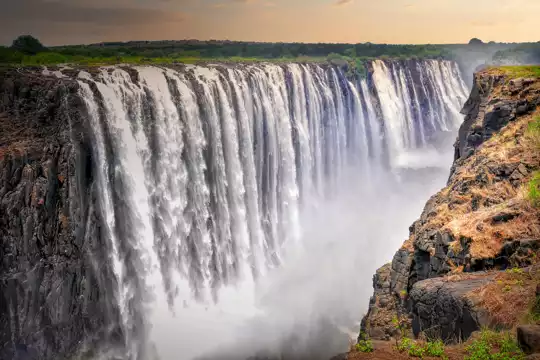
Country photo of Zambia

We 💚 feedbackSumming up the experience

Kabwe has a laid-back vibe that feels like a breath of fresh air. The real surprise? The local markets bursting with life and flavors—don’t skip the street food. Just a heads-up: the roads can be rough, so patience is key. Embrace the slower pace; it’s part of the charm. You’ll leave with stories that outshine any tourist trap. Trust me, it’s worth the detour.

✍️ Help improve this page!
The information on this page is based on in-depth research, insights shared by experienced travelers, and feedback from the local travel community in Zambia. While every effort is made to keep the information accurate and current, conditions can change — so if you spot anything incorrect or outdated, please get in touch.


🙋‍♂️ Give feedback

👋 Meet the founderWho’s Behind Take Your Backpack?

Johan, backpacker and founder of TakeYourBackpackHi, I’m Johan (Netherlands 🇳🇱), the creator of TakeYourBackpack. Over the past decade, I’ve backpacked through 80+ countries across six continents, gaining extensive experience with independent travel, long-term trips, and overland routes.

This site is built on a combination of firsthand travel experience and carefully curated insights from other backpackers. Many guides are based on places I’ve personally visited, while others bring together tips, observations, and practical advice shared by trusted travelers I’ve met along the way.

The goal is to provide realistic, experience-driven guidance — not generic itineraries — so you can explore destinations with better context, clearer expectations, and more confidence.

Get Full Country Guide |
Instant download • 97 highlights • Full Offline guide