×

Zambia🇿🇲 | best citiesTop-Rated 10 cities in Zambia

Zambia’s cities pulse with a unique blend of culture and energy, each offering distinct experiences for the backpacker or independent traveler. Major hubs like Lusaka and Ndola buzz with urban life, showcasing vibrant markets and nightlife, while smaller towns like Livingstone and Chipata provide a more intimate connection to local traditions. Seasonal nuances affect everything from transport connections to safety; the dry season draws more tourists, impacting prices and availability. Choosing the right city shapes your journey—affecting your budget, ease of travel, and depth of cultural immersion. Understanding these dynamics unlocks a smoother, more rewarding adventure through Zambia’s diverse urban landscapes.

By Johan Kruseman 🇳🇱 | Updated September 4, 2026
Explore the best towns in Zambia

Why go?Why These city Stand Out

Zambia’s cities pulse with a cultural diversity that sets them apart in Southern Africa. Each urban center reflects a rich tapestry of ethnic groups, languages, and traditions, creating a vibrant social fabric. This diversity fosters a unique historical depth, where colonial legacies intertwine with indigenous narratives, offering travelers a chance to engage with a complex past that shapes contemporary life.

The regional identities across Zambia’s cities are distinct yet interconnected. Urban centers serve as hubs for trade and cultural exchange, enhancing the transport networks that facilitate movement. However, this accessibility comes with trade-offs. While major cities like Lusaka and Ndola are well-connected, venturing into remote areas may require more time and effort, often rewarding … read more 👉
Zambia’s cities pulse with a cultural diversity that sets them apart in Southern Africa. Each urban center reflects a rich tapestry of ethnic groups, languages, and traditions, creating a vibrant social fabric. This diversity fosters a unique historical depth, where colonial legacies intertwine with indigenous narratives, offering travelers a chance to engage with a complex past that shapes contemporary life.

The regional identities across Zambia’s cities are distinct yet interconnected. Urban centers serve as hubs for trade and cultural exchange, enhancing the transport networks that facilitate movement. However, this accessibility comes with trade-offs. While major cities like Lusaka and Ndola are well-connected, venturing into remote areas may require more time and effort, often rewarding those who seek deeper exploration with authentic experiences.

Zambia’s geographic layout, characterized by vast plateaus and river systems, influences urban development and climate. The dry season invites exploration, but the rainy season can complicate travel plans. Understanding these climatic patterns is crucial for planning a visit.

Ultimately, Zambia’s cities offer a compelling blend of accessibility and immersive experiences. Travelers must weigh the constraints of travel time against the richness of cultural engagement, ensuring that each journey becomes a rewarding challenge rather than a mere transit through urban landscapes.
How the List Was Created
The list of best cities in Zambia is created based on culture, vibe, attractions, transport ease, and local charm. If you feel a city is missing in this list, please let us know.

When to go?Optimal Periods for Travel

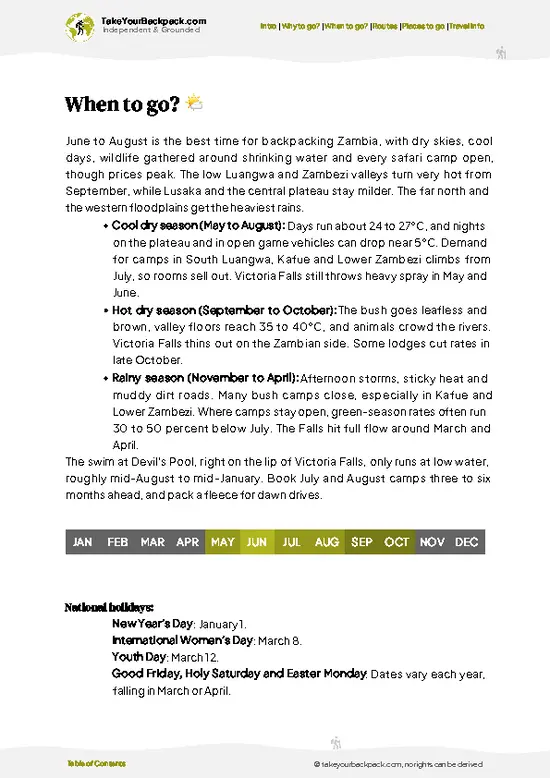
Seasonality shapes the experience of exploring Zambia’s cities. The dry season, from May to October, offers cooler temperatures and lower humidity, making it ideal for urban adventures. Expect clear skies and pleasant evenings, perfect for strolling through local markets or enjoying outdoor dining. However, this is also peak tourist season, leading to larger crowds and higher prices.

Shoulder seasons—April and November—present a compelling alternative. These months see fewer tourists, allowing for a more intimate experience. While temperatures may be warmer, the trade-off is often worth it. Rainfall begins to increase in November, but the lush landscapes that follow can enhance the urban scenery.

Festivals often occur during the dry season, drawing crowds and creating vibrant atmospheres. … read more 👉
Seasonality shapes the experience of exploring Zambia’s cities. The dry season, from May to October, offers cooler temperatures and lower humidity, making it ideal for urban adventures. Expect clear skies and pleasant evenings, perfect for strolling through local markets or enjoying outdoor dining. However, this is also peak tourist season, leading to larger crowds and higher prices.

Shoulder seasons—April and November—present a compelling alternative. These months see fewer tourists, allowing for a more intimate experience. While temperatures may be warmer, the trade-off is often worth it. Rainfall begins to increase in November, but the lush landscapes that follow can enhance the urban scenery.

Festivals often occur during the dry season, drawing crowds and creating vibrant atmospheres. Missing these events means skipping unique cultural experiences. However, visiting during the wet season, from December to March, offers a different charm. Cities may be quieter, and prices drop, but heavy rains can disrupt travel plans and limit outdoor activities.

Understanding these seasonal rhythms allows for smarter planning. Weigh the benefits of ideal weather against the allure of cultural events and the comfort of fewer crowds. This knowledge transforms a trip into a more enriching journey.

city hoppingOptimizing Your Multi-Stop Itinerary

Start in Lusaka. This bustling capital is your gateway. From here, you can easily access other cities. Use it as a launchpad.

Cluster by Region. Divide your journey into two main loops: the Southern and Northern circuits. The Southern loop includes Livingstone and the Lower Zambezi. The Northern loop covers Ndola and Kitwe. This approach minimizes backtracking and maximizes your time.

Plan Your Route. Travel south to Livingstone first. Experience the mighty Victoria Falls, then head east to the Lower Zambezi National Park. After soaking in the wildlife, return to Lusaka. From there, venture north to Ndola and Kitwe. This sequence keeps travel times manageable and allows for deeper exploration.

Time Management. Allocate at least two days per major stop. This pacing lets you absorb the local … read more 👉
Start in Lusaka. This bustling capital is your gateway. From here, you can easily access other cities. Use it as a launchpad.

Cluster by Region. Divide your journey into two main loops: the Southern and Northern circuits. The Southern loop includes Livingstone and the Lower Zambezi. The Northern loop covers Ndola and Kitwe. This approach minimizes backtracking and maximizes your time.

Plan Your Route. Travel south to Livingstone first. Experience the mighty Victoria Falls, then head east to the Lower Zambezi National Park. After soaking in the wildlife, return to Lusaka. From there, venture north to Ndola and Kitwe. This sequence keeps travel times manageable and allows for deeper exploration.

Time Management. Allocate at least two days per major stop. This pacing lets you absorb the local culture and attractions without feeling rushed. A common mistake is trying to cram too many cities into a short timeframe, leading to fatigue and missed experiences.

Trade-offs Matter. Speed might get you to more places, but depth enriches your journey. Consider budget versus comfort; local transport is cheaper but less reliable. Flexibility is key. Be ready to adjust plans based on local conditions or newfound interests. Embrace the journey; it’s as rewarding as the destinations.

The ListTop cities of Zambia

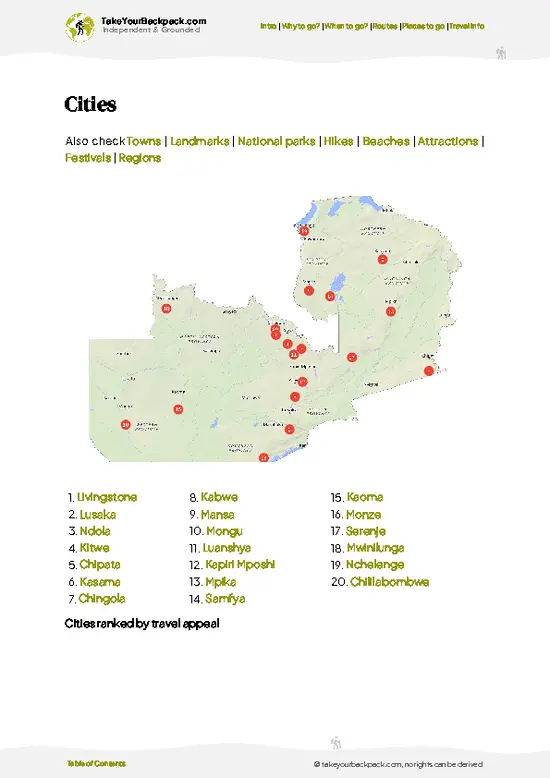
1 Livingstone

Victoria Falls access, adventure sports, colonial architecture

Base yourself near Victoria Falls for river activities, historic buildings, and easy access to Zambia’s most famous natural wonder.

2 Lusaka

National capital, government district, diverse neighborhoods

Navigate Zambia’s capital for embassies, markets, and a mix of modern and traditional life spread across sprawling districts.

3 Ndola

Industrial center, airport gateway, Copperbelt museums

Arrive in a city known for industry and transport links, with museums and business districts serving as a Copperbelt entry point.

4 Kitwe

Commercial hub, shopping districts, urban nightlife

Experience the Copperbelt’s busiest city, where business, entertainment, and modern amenities draw travelers seeking urban energy.

5 Chipata

Gateway to Malawi, bustling markets, Ngoni heritage

Cross into eastern Zambia’s commercial center, where cross-border trade and Ngoni traditions create a lively, multicultural atmosphere.

6 Kasama

Kalambo Falls access, Bemba culture, rural markets

Experience northern Zambia’s relaxed pace, with easy routes to waterfalls, traditional crafts, and a strong sense of local identity.

7 Chingola

Nchanga mines, golf course, leafy residential areas

Tour a city shaped by mining wealth, with green neighborhoods and one of Zambia’s most established golf courses.

8 Kabwe

Railway junction, colonial-era buildings, lead mining legacy

Trace Zambia’s industrial past in a city marked by railways and mining, with remnants of colonial architecture and a central location.

9 Mansa

provincial capital, Luapula River, local markets

Navigate a busy regional hub with easy access to river scenery, bustling markets, and connections to northern lakes.

10 Mongu

Barotse floodplain, provincial capital, annual Kuomboka

Time your visit for the Kuomboka festival or explore the vast floodplain from a town that anchors western Zambia.

11 Luanshya

Historic mining sites, quiet neighborhoods, local football

Walk through a town with deep mining roots, where football culture and a slower pace set it apart from busier Copperbelt cities.

12 Kapiri Mposhi

railway junction, bus hub, transit town

Change trains or buses at a major transport interchange, where most travelers pass through en route to other destinations.

13 Mpika

Great North Road junction, rail stop, gateway to waterfalls

Break your journey at a crossroads town where transport links meet, and use it as a base for exploring remote northern attractions.

14 Samfya

white sand beaches, Lake Bangweulu, fishing villages

Swim or relax on sandy lakeshores, visit nearby islands, and observe daily life in a lakeside fishing community.

15 Kaoma

timber industry, Lozi communities, western gateway

Pass through a timber town on the way to Barotseland, where Lozi culture and forest industries shape daily life.

16 Monze

agricultural center, roadside town, local grain markets

Experience a farming community along the main highway, with easy access to local produce and a glimpse of rural commerce.

17 Serenje

railway stop, forest reserves, central plateau

Break your journey on the TAZARA line, with access to forested reserves and a quiet plateau setting.

18 Mwinilunga

pine plantations, source of Zambezi, honey production

Travel to a remote town near the Zambezi’s origin, where pine forests and local honey define the landscape.

19 Nchelenge

Lake Mweru shore, island ferries, fishing port

Catch a ferry to islands or watch fishing boats return at a lakeside town on the northern border with the DRC.

20 Chililabombwe

Border proximity, copper mining, compact urban core

Navigate a border city defined by mining and cross-border trade, with a compact center and easy access to the DRC.

Think you know Zambia?

Prove you’re a true local — uncover 10 lesser-known cities in Zambia that locals tend to keep to themselves.
Loading the map 🌍

Expert viewExpert Commentary on cities

Transport Hubs

Zambia’s transport network is a patchwork of options, each with its own quirks. Major cities serve as transport hubs, connecting you to the rest of the country. Buses dominate the scene, offering a budget-friendly way to hop between urban centers. However, don’t underestimate the time commitment. A bus ride can stretch longer than expected due to road conditions and frequent stops. If you’re itching to cover more ground quickly, consider domestic flights. They can be pricier, but they save hours, allowing you to dive deeper into the local culture rather than spending your days on the road.

Urban Pacing

Zambia’s cities pulse with a unique rhythm. Some are bustling with markets and street vendors, while others offer a more laid-back vibe. If you’re keen on immersing yourself … read more 👉

Transport Hubs

Zambia’s transport network is a patchwork of options, each with its own quirks. Major cities serve as transport hubs, connecting you to the rest of the country. Buses dominate the scene, offering a budget-friendly way to hop between urban centers. However, don’t underestimate the time commitment. A bus ride can stretch longer than expected due to road conditions and frequent stops. If you’re itching to cover more ground quickly, consider domestic flights. They can be pricier, but they save hours, allowing you to dive deeper into the local culture rather than spending your days on the road.

Urban Pacing

Zambia’s cities pulse with a unique rhythm. Some are bustling with markets and street vendors, while others offer a more laid-back vibe. If you’re keen on immersing yourself in local life, allocate at least two to three days in each city. This gives you time to explore beyond the tourist spots and engage with the community. However, if you’re on a tighter schedule, you might be tempted to squeeze in more cities. The trade-off? You risk skimming the surface of experiences that could enrich your journey.

Local Costs

Budgeting in Zambia can be a balancing act. While local food and transport are generally affordable, activities and accommodations can vary widely. Street food is a steal and a delicious way to experience local flavors. However, if you opt for mid-range hotels or guided tours, your expenses can climb quickly. Factor in your priorities: do you want to splurge on a unique experience or save for a longer stay? Understanding local costs helps you plan effectively, ensuring you don’t run out of funds mid-adventure.

Exploring More Cities vs. Deeper Immersion

The allure of visiting multiple cities is tempting, but it often comes at the cost of deeper connections. If you’re keen on a whirlwind tour, aim for three to four cities, but be prepared for a fast-paced itinerary. Each city has its own character, and rushing through them means missing out on the nuances that make them special. On the flip side, spending more time in fewer places allows for richer interactions and a better grasp of local customs. You might find that a slower pace leads to unexpected friendships and insights that a quick visit simply can’t provide.

Planning and Prioritizing Cities

When mapping out your journey, consider the geographical layout and transport options. Some cities are more accessible than others, and planning your route can save you time and hassle. Prioritize cities based on what you want to experience—whether it’s culture, nature, or urban life. Research local events or festivals that might coincide with your visit; they can offer a vibrant glimpse into Zambian life.

Safety & Cultural Considerations

Safety is paramount. While Zambia is generally safe for travelers, it’s wise to stay aware of your surroundings, especially in crowded areas. Respect local customs and dress modestly, particularly in rural areas. Engaging with locals can enhance your experience, but approach with an open mind and a willingness to learn. Cultural sensitivity goes a long way in building rapport and ensuring a warm welcome.

Zambia is a land of contrasts, and how you navigate it can shape your experience. Whether you choose to sprint through cities or savor each moment, understanding the logistics will empower you to make the most of your adventure.

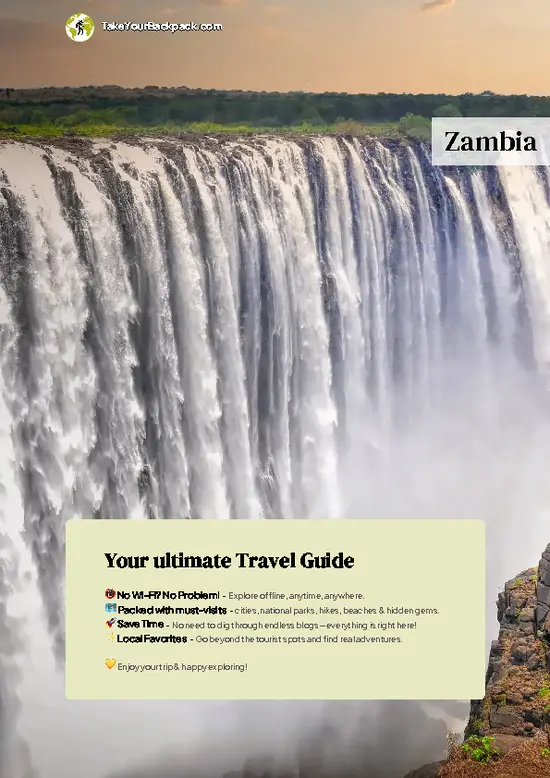
✈️ The backpacker research shortcutZambia Travel Guide

An offline-friendly backpacking guide with optimized travel routes, ranked highlights, transport advice, and the best areas to stay.
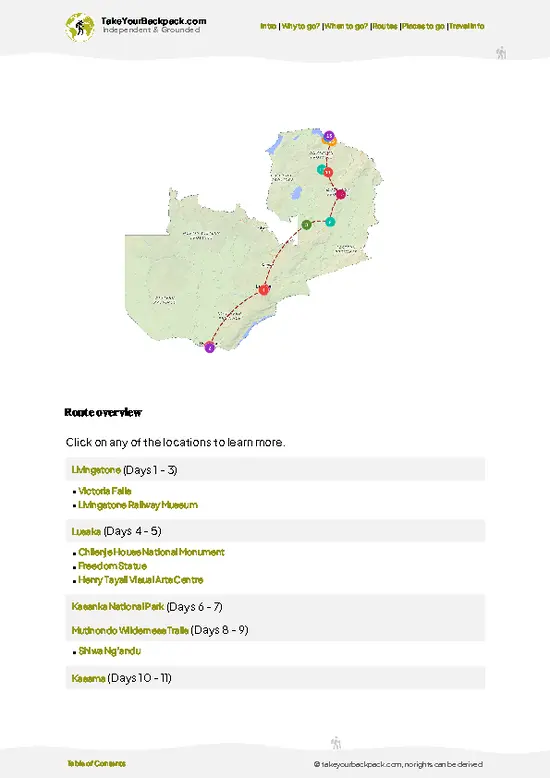
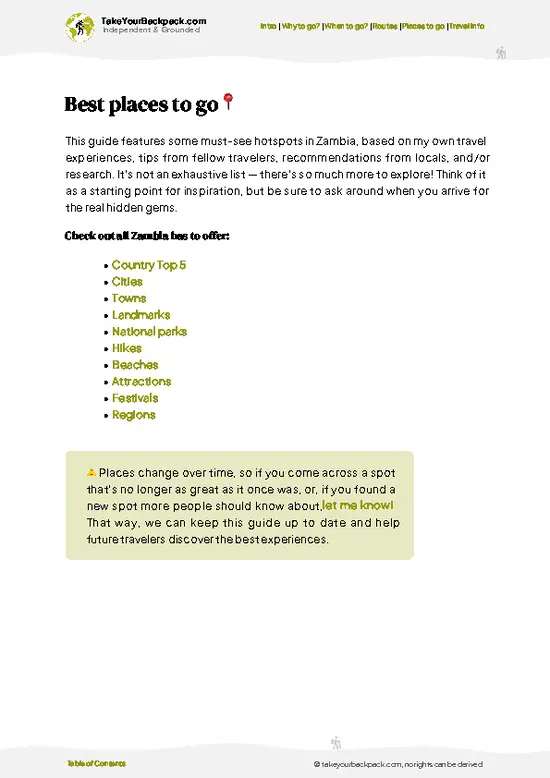
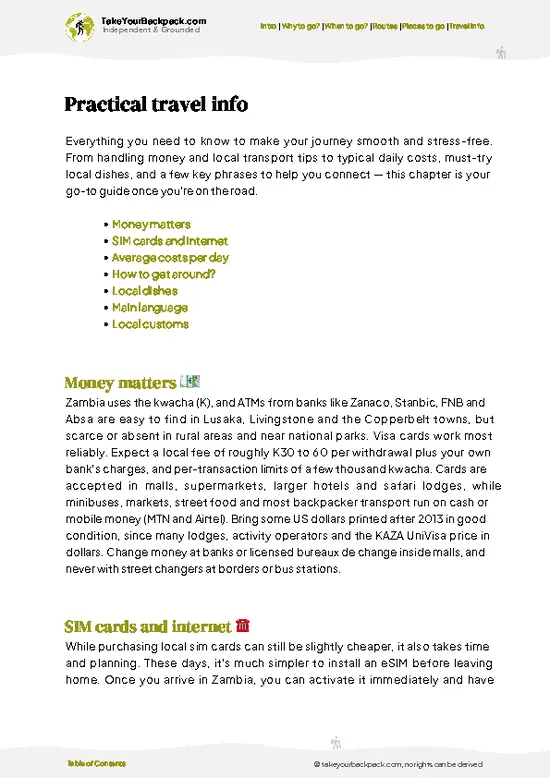
example page 0 from our offline Travel Guide for Zambia
example page 1 from our offline Travel Guide for Zambia
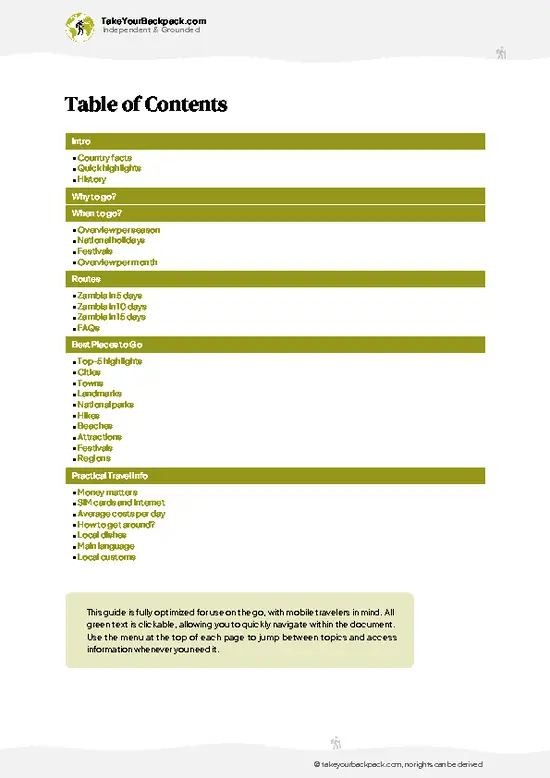
example page 2 from our offline Travel Guide for Zambia
example page 3 from our offline Travel Guide for Zambia
example page 4 from our offline Travel Guide for Zambia
example page 5 from our offline Travel Guide for Zambia
example page 6 from our offline Travel Guide for Zambia
example page 7 from our offline Travel Guide for Zambia
The digital guide (357 pages) contains:
91 highlights, ranked by travel appeal
Optimized 5, 10 & 15-day travel routes
Cities, national parks, landmarks, beaches
How to get around
Offline-friendly for travel without Wi-Fi
👉 Click to see all 30+ guide features

📅 Plan smarter in minutes, not weeks
Month by month travel advice
Festivals & national holidays
Budget expectations

🗺️ Go to the right places, skip the overrated ones
Honest pros & cons of destinations
Top hikes, parks & viewpoints
Lesser-known places most travelers miss
Clear “worth it vs skip it” guidance

🛏️ Travel smoothly without rookie mistakes
Best areas to stay
Transport systems explained simply
Common scams & safety advice
SIM cards, money & practical tips

🌍 Understand the country, not just visit it
Culture & traditions
52 Essential phrases & customs
Festivals worth planning around
Traveler-friendly historical context
Insights that make places more meaningful

📱 Built for real travel conditions
Fully downloadable PDF
Works completely offline
Optimized for phone use
Useful in remote areas & buses
Everything in one place
Save weeks of stressful planning
Get instant access to your full guide. 30‑day money-back guarantee.
+ Add another guide for just US$7.80

By proceeding you agree to our terms.
Sent to your inbox immediately after payment • 100% Secure Checkout
Best Backpacking Travel Advisor 2025 tourism awardBest Backpacking
Travel Advisor
2025
What others say about Take Your Backpack Guides:
⭐⭐⭐⭐⭐
Fantastic, amazing amount of information!
⭐⭐⭐⭐⭐
My goodness this is amazing, it's what I've been looking for hats off too you!
⭐⭐⭐⭐⭐
I think this is absolutely BRILLIANT
⭐⭐⭐⭐
Very complete and informative. It's still missing places, but I gotta to commend you
⭐⭐⭐⭐⭐
This is truly amazing, thank you, can't wait to explore it with my kids!
⭐⭐⭐⭐⭐
Awesome resource, thank you!
⭐⭐⭐⭐⭐
This is amazing! Can't wait to explore the ones I haven't seen
⭐⭐⭐⭐
I love this! Well done, great idea.
⭐⭐⭐⭐⭐
Thanks for taking the time to make this gem!
⭐⭐⭐⭐⭐
This might be the best website I've ever seen.
⭐⭐⭐⭐⭐
Congratulations, and thank you so much for your work; it's incredibly valuable.
⭐⭐⭐⭐
In all seriousness I think you did a great job pointing out the important spots
⭐⭐⭐⭐⭐
10/10 very good
⭐⭐⭐⭐⭐
As someone who's only just starting to visit regularly this is awesome, thank you.
⭐⭐⭐⭐
Thank you very much! I'm going to visit my dad, it's going to be very useful!
⭐⭐⭐⭐⭐
This is really cool! We'll be travelling for the first time and this definitely come in handy.
⭐⭐⭐⭐⭐
You are now our minister of culture, congratulations 👨‍💼
⭐⭐⭐⭐⭐
Just wanted to tell you that this is a pearl! Going to follow your recommendations.
⭐⭐⭐⭐⭐
This is so cool. I'll definitely be using the resource for my travels soon.
⭐⭐⭐⭐⭐
This is very impressive! Good work.
⭐⭐⭐⭐⭐
This is an amazing and informative site. Very well done!

🛏️ Where to stay?Where to Stay in Zambia

Yes—hostels and budget accommodation in Zambia exist, mainly as guesthouses, campsites and community chalets rather than many dorm‑style hostels, so expect hostels concentrated in cities and tourist hubs and fewer low‑cost options in remote park areas.
In Lusaka look around City Centre and Rhodes Park/Longacres for the most choices—pros: close to transport, cheap food and some nightlife; cons: busy streets, inconsistent sidewalks and higher petty‑theft risk after dark so use taxis and secure valuables.
In tourist towns like Livingstone (town centre/Mukuni Road), South Luangwa (Mfuwe village) and the Lower Zambezi/Siavonga areas you’ll find campsites and budget chalets near waterfalls, parks … read more 👉
Yes—hostels and budget accommodation in Zambia exist, mainly as guesthouses, campsites and community chalets rather than many dorm‑style hostels, so expect hostels concentrated in cities and tourist hubs and fewer low‑cost options in remote park areas.
In Lusaka look around City Centre and Rhodes Park/Longacres for the most choices—pros: close to transport, cheap food and some nightlife; cons: busy streets, inconsistent sidewalks and higher petty‑theft risk after dark so use taxis and secure valuables.
In tourist towns like Livingstone (town centre/Mukuni Road), South Luangwa (Mfuwe village) and the Lower Zambezi/Siavonga areas you’ll find campsites and budget chalets near waterfalls, parks and river activities—pros: proximity to highlights and quiet evenings; cons: higher park/transfer costs, limited public transport and fewer services away from main hubs so carry cash and confirm transfers in advance.

If you enjoy meeting fellow travelers, consider choosing hostels with high ratings for atmosphere. On the other hand, if you prefer having your own space, a hotel might be a better option.

ZambiaMore of Zambia

👋 Meet the founderWho’s Behind Take Your Backpack?

Johan, backpacker and founder of TakeYourBackpackHi, I’m Johan (Netherlands 🇳🇱), the creator of TakeYourBackpack. Over the past decade, I’ve backpacked through 80+ countries across six continents, gaining extensive experience with independent travel, long-term trips, and overland routes.

This site is built on a combination of firsthand travel experience and carefully curated insights from other backpackers. Many guides are based on places I’ve personally visited, while others bring together tips, observations, and practical advice shared by trusted travelers I’ve met along the way.

The goal is to provide realistic, experience-driven guidance — not generic itineraries — so you can explore destinations with better context, clearer expectations, and more confidence.

Get full Zambia guide •
Instant download • 91 highlights • Full Offline guide