×

Zambia🇿🇲 | citiesKaomatimber industry, Lozi communities, western gateway | things to do and best time to go

Explore SerenjeExplore Chililabombwe

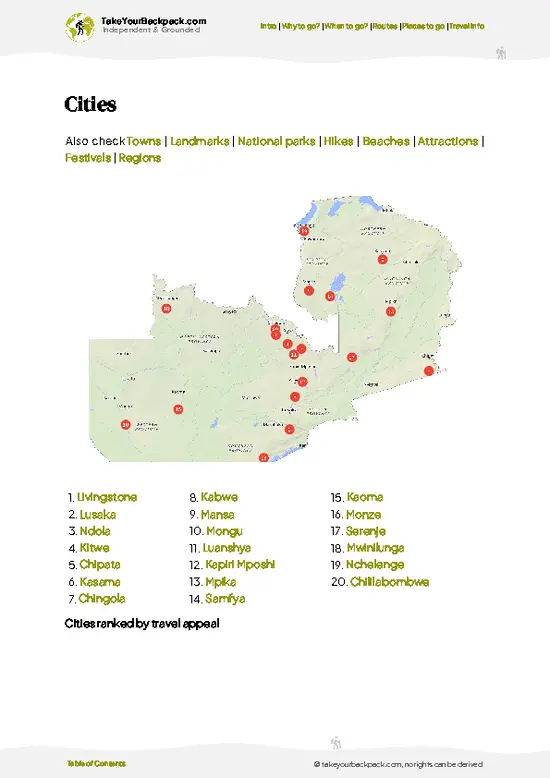
Backpacking in Kaoma
👌 Worth visitingcity ranked #15
By Johan Kruseman 🇳🇱 | Updated September 3, 2026

You’re standing in Kaoma’s early morning market, the air thick with woodsmoke and the sharp, sweet scent of mangoes. A rooster crows somewhere behind the stalls, and the sun’s already burning off the last of the mist. Kaoma sits in Zambia’s Western Province, about halfway between Lusaka and Mongu—a crossroads town where the tar road meets the dust. For backpackers, Kaoma is less a destination than a practical pause: a place to swap minibuses, grab a meal of nshima and relish, and watch the slow choreography of rural life. There’s no old town to wander or nightlife to chase, but the market’s lively and you’ll find a few basic guesthouses. It’s quieter and more grounded than Mongu, with fewer travelers and less bustle, but that means you’ll need to make your own fun—maybe a walk to the Kafue River, maybe just swapping stories with locals over a cold Mosi. Costs are low, safety is typical for rural Zambia (watch your bag, but relax), and you’ll likely be the only foreigner in sight. Kaoma’s not a highlight reel, but it’s a real slice of Zambia—worth a stop if you want to see the country between the guidebook pages.

Discover everything you want to know in the 📖 Zambia Travel Guide.


Get your Zambia guide
91 ranked highlights, routes & tips, works offline (357 pages)
Loading the map 🌍
CLICK TO FILTER
cities
towns
landmarks
national parks
hikes
beaches
attractions
festivals
SHOW COUNTRY’S BESTSHOW ALL

✨ Why go?
Ranked #15 city in Zambia
Reasons people choose to visit here

Kaoma serves as a gateway for backpackers exploring Zambia’s rugged beauty. Its walkable streets make it easy to navigate between small-scale hostels and local eateries, where the aroma of grilled meats fills the air. Many travelers use Kaoma as a base for nearby hikes or cultural sites, often lingering a few days to soak in the friendly atmosphere. It’s ideal for slow travelers and solo adventurers seeking connection without the chaos of larger towns. While nightlife is minimal, the sense of community here makes every shared meal or conversation feel rewarding, turning a simple stop into a memorable experience.
Want to include Kaoma in your Zambia route?
Create a personalized Zambia itinerary that includes Kaoma and the places that fit your trip — based on your travel style, budget, and available time. Get your route in seconds.

Generate my trip

💡 HighlightsEssential experiences to have while visiting Kaoma

  1. Kaoma Main Market — The real heart of town where traders from surrounding villages bring fresh produce, dried fish, charcoal and hand-made goods. Go early to see the busiest trading, taste local street food (maize porridge, grilled fish) and buy inexpensive crafts; it’s the best place to feel how Kaoma’s economy and daily life actually work.
  2. Lusaka-Mongu Road junction & Kaoma Transport Hub — The stretch of town where long-distance minibuses, truck convoys and local browns (shared taxis) gather. It’s an honest travel experience: watch overland logistics in action, book onward transport, catch sunset light on the roadside stalls, and meet people heading to/from Lusaka, Mongu or nearby villages.
A few real, visitable highlights just outside Kaoma you can explore as day trips are Mongu (with … read more 👉
  1. Kaoma Main Market — The real heart of town where traders from surrounding villages bring fresh produce, dried fish, charcoal and hand-made goods. Go early to see the busiest trading, taste local street food (maize porridge, grilled fish) and buy inexpensive crafts; it’s the best place to feel how Kaoma’s economy and daily life actually work.
  2. Lusaka-Mongu Road junction & Kaoma Transport Hub — The stretch of town where long-distance minibuses, truck convoys and local browns (shared taxis) gather. It’s an honest travel experience: watch overland logistics in action, book onward transport, catch sunset light on the roadside stalls, and meet people heading to/from Lusaka, Mongu or nearby villages.
A few real, visitable highlights just outside Kaoma you can explore as day trips are Mongu (with the Barotse royal area / Lealui and local markets) and Liuwa Plain National Park for wildlife viewing.
Spotted a mistake or missing something? Contact us.

🏘️ NeighborhoodsNeighborhood guide to Kaoma

Kaoma is a vibrant hub in Zambia, offering a mix of local culture and practical amenities for backpackers. Here’s how to navigate its neighborhoods:

Central Kaoma: This is the heart of the town, buzzing with local markets and street vendors. It’s walkable, with affordable accommodations. The nightlife is low-key, perfect for those wanting to unwind after a day of exploring. Short stays work well here, as you can easily access transport to other regions.

Chikankata: A quieter area, ideal for longer stays. You’ll find guesthouses with a homely feel. The vibe is laid-back, with a few local eateries. It’s less walkable, but the peace makes it worth it for those looking to recharge.

Kaoma West: This neighborhood has a mix of residential and commercial spaces. It’s more developed, offering better … read more 👉
Kaoma is a vibrant hub in Zambia, offering a mix of local culture and practical amenities for backpackers. Here’s how to navigate its neighborhoods:

Central Kaoma: This is the heart of the town, buzzing with local markets and street vendors. It’s walkable, with affordable accommodations. The nightlife is low-key, perfect for those wanting to unwind after a day of exploring. Short stays work well here, as you can easily access transport to other regions.

Chikankata: A quieter area, ideal for longer stays. You’ll find guesthouses with a homely feel. The vibe is laid-back, with a few local eateries. It’s less walkable, but the peace makes it worth it for those looking to recharge.

Kaoma West: This neighborhood has a mix of residential and commercial spaces. It’s more developed, offering better transport links. While nightlife is minimal, the local cafes provide a cozy atmosphere for evening chats. Great for both short and extended visits.

⌛️ 1 dayWhat you can realistically do in a day

Kaoma, Zambia, is a vibrant town that pulses with local culture and a sense of community. Start your day early at the bustling Kaoma Market. The air is thick with the scent of fresh produce and the chatter of vendors. Grab a breakfast of chibwabwa (pumpkin leaves) and nshima, a staple that fuels your adventures.

In the afternoon, head to the nearby Liuwa Plain National Park. It’s a bit off the typical tourist path, but the wide-open savannahs and the chance to spot wildlife make it worthwhile. Bring a packed lunch and enjoy it under a shady tree while soaking in the sounds of nature.

As the sun sets, return to town and stroll through the lively streets of the central neighborhood. Stop by a local tavern for a taste of malwa, a traditional brew, and engage with the friendly locals. The warmth … read more 👉
Kaoma, Zambia, is a vibrant town that pulses with local culture and a sense of community. Start your day early at the bustling Kaoma Market. The air is thick with the scent of fresh produce and the chatter of vendors. Grab a breakfast of chibwabwa (pumpkin leaves) and nshima, a staple that fuels your adventures.

In the afternoon, head to the nearby Liuwa Plain National Park. It’s a bit off the typical tourist path, but the wide-open savannahs and the chance to spot wildlife make it worthwhile. Bring a packed lunch and enjoy it under a shady tree while soaking in the sounds of nature.

As the sun sets, return to town and stroll through the lively streets of the central neighborhood. Stop by a local tavern for a taste of malwa, a traditional brew, and engage with the friendly locals. The warmth of their hospitality will wrap around you like a cozy blanket, making your day in Kaoma feel rich and rewarding.
Turn your Kaoma visit into an Zambia adventure
Build a complete Zambia route with Kaoma, hidden gems, must-see destinations, and realistic travel times included.

Generate my trip

🌤️ When to go?Seasonal considerations and timing


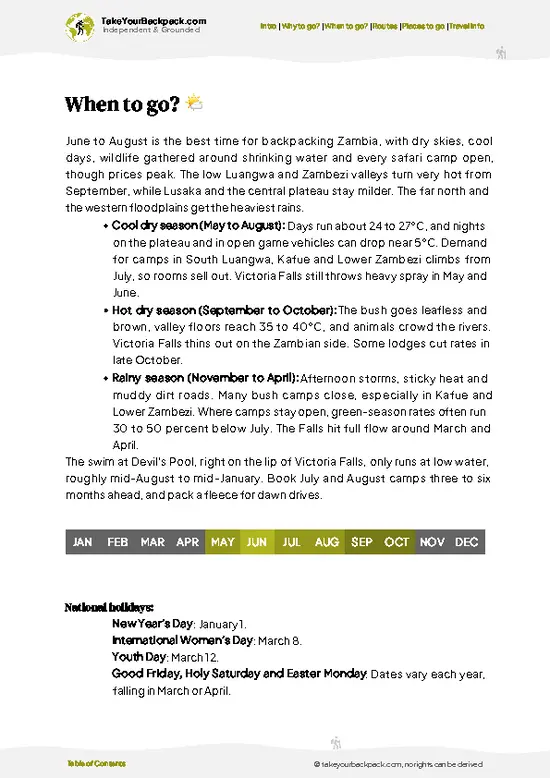
  • Topic: Weather – Kaoma’s dry season from May to October is your best bet. Expect clear skies and minimal rain, making trails less slippery and the air crisp. The wet season (November to April) brings heavy rains that can turn roads to mud and flood low areas.

  • Topic: Temperature – During the dry months, daytime highs hover around 25-30°C (77-86°F), cooling to 10-15°C (50-59°F) at night. The wet season is warmer and more humid, often pushing 30-35°C (86-95°F), which can sap your energy on long hikes.

  • Topic: Daylight Hours – Daylight stays steady year-round, roughly 11-12 hours. But the dry season’s clear skies mean you’ll get more usable daylight without the damp gloom of rainy days.

  • Topic: Crowds – Kaoma isn’t a tourist hotspot, so crowds are light year-round. However, local festivals
read more 👉

  • Topic: Weather – Kaoma’s dry season from May to October is your best bet. Expect clear skies and minimal rain, making trails less slippery and the air crisp. The wet season (November to April) brings heavy rains that can turn roads to mud and flood low areas.

  • Topic: Temperature – During the dry months, daytime highs hover around 25-30°C (77-86°F), cooling to 10-15°C (50-59°F) at night. The wet season is warmer and more humid, often pushing 30-35°C (86-95°F), which can sap your energy on long hikes.

  • Topic: Daylight Hours – Daylight stays steady year-round, roughly 11-12 hours. But the dry season’s clear skies mean you’ll get more usable daylight without the damp gloom of rainy days.

  • Topic: Crowds – Kaoma isn’t a tourist hotspot, so crowds are light year-round. However, local festivals in the dry season can bring a lively buzz, adding cultural depth without overwhelming the town.

  • Topic: Seasonal Activities – Wildlife spotting peaks in the dry season when animals gather around shrinking water sources. The wet season bursts with lush greenery and birdlife but can limit access to some trails.

  • Topic: Price Fluctuations – Accommodation and transport costs dip during the wet season due to lower demand, but the trade-off is rougher travel conditions and fewer open services.


Pro-tip: Aim for late dry season (August-October) to catch pleasant weather, vibrant local life, and prime wildlife viewing—all without the hassle of mud or crowds.


source: climatestotravel.comJANJanuary: fair for travelingFEBFebruary: fair for travelingMARMarch: fair for travelingAPRApril: fair for travelingMAYMay: highly recommended for travelingJUNJune: excellent for travelingJULJuly: excellent for travelingAUGAugust: excellent for travelingSEPSeptember: excellent for travelingOCTOctober: excellent for travelingNOVNovember: fair for travelingDECDecember: fair for traveling
when-to-go

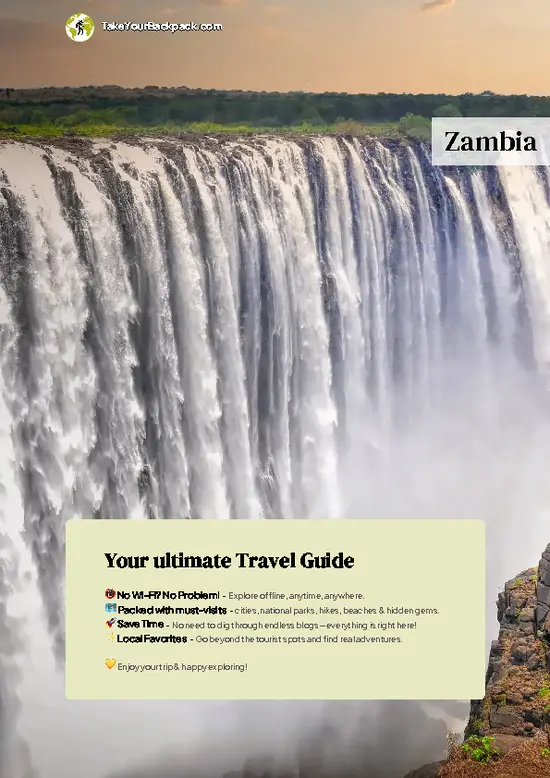
✈️ The backpacker research shortcutZambia Travel Guide

An offline-friendly backpacking guide with optimized travel routes, ranked highlights, transport advice, and the best areas to stay.
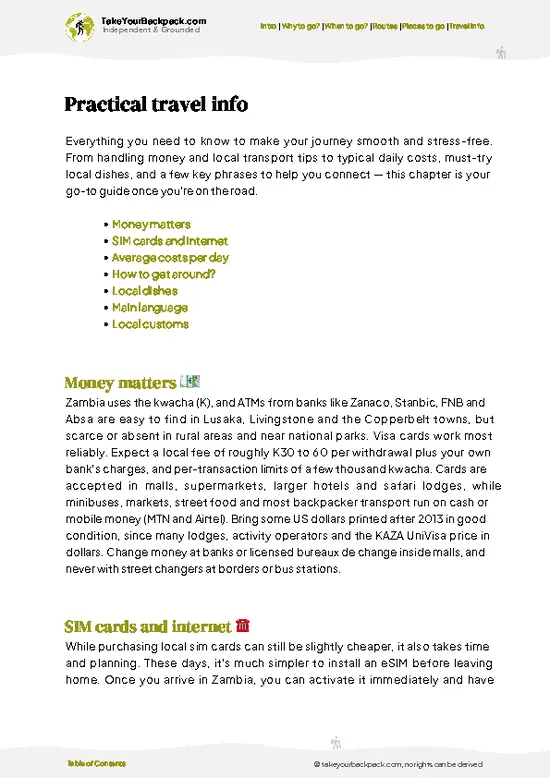
example page 0 from our offline Travel Guide for Zambia
example page 1 from our offline Travel Guide for Zambia
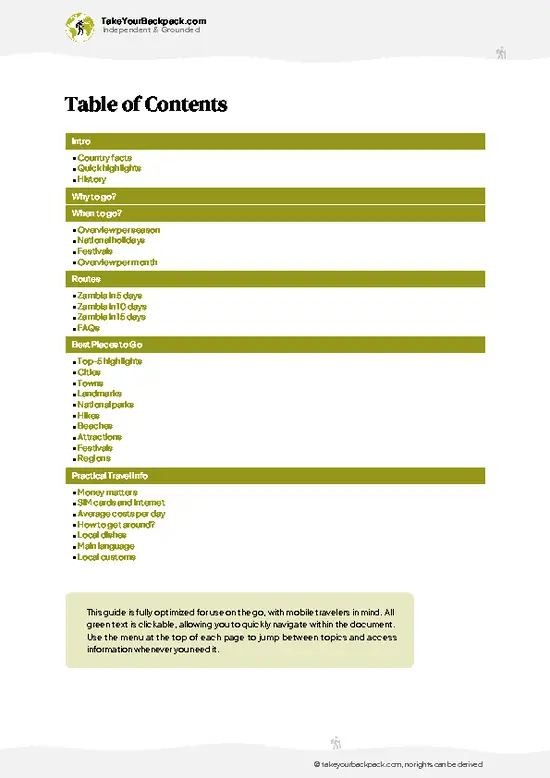
example page 2 from our offline Travel Guide for Zambia
example page 3 from our offline Travel Guide for Zambia
example page 4 from our offline Travel Guide for Zambia
example page 5 from our offline Travel Guide for Zambia
example page 6 from our offline Travel Guide for Zambia
example page 7 from our offline Travel Guide for Zambia
The digital guide (357 pages) contains:
91 highlights, ranked by travel appeal
Optimized 5, 10 & 15-day travel routes
Cities, national parks, landmarks, beaches
How to get around
Offline-friendly for travel without Wi-Fi
👉 Click to see all 30+ guide features

📅 Plan smarter in minutes, not weeks
Month by month travel advice
Festivals & national holidays
Budget expectations

🗺️ Go to the right places, skip the overrated ones
Honest pros & cons of destinations
Top hikes, parks & viewpoints
Lesser-known places most travelers miss
Clear “worth it vs skip it” guidance

🛏️ Travel smoothly without rookie mistakes
Best areas to stay
Transport systems explained simply
Common scams & safety advice
SIM cards, money & practical tips

🌍 Understand the country, not just visit it
Culture & traditions
52 Essential phrases & customs
Festivals worth planning around
Traveler-friendly historical context
Insights that make places more meaningful

📱 Built for real travel conditions
Fully downloadable PDF
Works completely offline
Optimized for phone use
Useful in remote areas & buses
Everything in one place
Save weeks of stressful planning
Get instant access to your full guide. 30‑day money-back guarantee.
+ Add another guide for just US$7.80

By proceeding you agree to our terms.
Sent to your inbox immediately after payment • 100% Secure Checkout
Best Backpacking Travel Advisor 2025 tourism awardBest Backpacking
Travel Advisor
2025
What others say about Take Your Backpack Guides:
⭐⭐⭐⭐⭐
Fantastic, amazing amount of information!
⭐⭐⭐⭐⭐
My goodness this is amazing, it's what I've been looking for hats off too you!
⭐⭐⭐⭐⭐
I think this is absolutely BRILLIANT
⭐⭐⭐⭐
Very complete and informative. It's still missing places, but I gotta to commend you
⭐⭐⭐⭐⭐
This is truly amazing, thank you, can't wait to explore it with my kids!
⭐⭐⭐⭐⭐
Awesome resource, thank you!
⭐⭐⭐⭐⭐
This is amazing! Can't wait to explore the ones I haven't seen
⭐⭐⭐⭐
I love this! Well done, great idea.
⭐⭐⭐⭐⭐
Thanks for taking the time to make this gem!
⭐⭐⭐⭐⭐
This might be the best website I've ever seen.
⭐⭐⭐⭐⭐
Congratulations, and thank you so much for your work; it's incredibly valuable.
⭐⭐⭐⭐
In all seriousness I think you did a great job pointing out the important spots
⭐⭐⭐⭐⭐
10/10 very good
⭐⭐⭐⭐⭐
As someone who's only just starting to visit regularly this is awesome, thank you.
⭐⭐⭐⭐
Thank you very much! I'm going to visit my dad, it's going to be very useful!
⭐⭐⭐⭐⭐
This is really cool! We'll be travelling for the first time and this definitely come in handy.
⭐⭐⭐⭐⭐
You are now our minister of culture, congratulations 👨‍💼
⭐⭐⭐⭐⭐
Just wanted to tell you that this is a pearl! Going to follow your recommendations.
⭐⭐⭐⭐⭐
This is so cool. I'll definitely be using the resource for my travels soon.
⭐⭐⭐⭐⭐
This is very impressive! Good work.
⭐⭐⭐⭐⭐
This is an amazing and informative site. Very well done!

🛏️ Where to stay?How to pick the right area

Kaoma’s heart for backpackers beats strongest around the town center, where the pulse of daily life hums with approachable energy. This area is your best bet—not just because it’s safer, but because it’s where you’ll find the few budget lodgings that double as social hubs. The streets here catch the golden afternoon light, dust swirling gently as locals and travelers mingle over shared stories and cold drinks. It’s compact enough to walk everywhere, so you’re not wasting time or money on transport, and the vibe leans toward easygoing camaraderie rather than touristy isolation.

Venture beyond … read more 👉
Kaoma’s heart for backpackers beats strongest around the town center, where the pulse of daily life hums with approachable energy. This area is your best bet—not just because it’s safer, but because it’s where you’ll find the few budget lodgings that double as social hubs. The streets here catch the golden afternoon light, dust swirling gently as locals and travelers mingle over shared stories and cold drinks. It’s compact enough to walk everywhere, so you’re not wasting time or money on transport, and the vibe leans toward easygoing camaraderie rather than touristy isolation.

Venture beyond this core, and you hit quieter, more residential zones that feel disconnected and less secure after dark. The outskirts lack the buzz and practical amenities backpackers crave—think fewer food stalls, no casual meeting spots, and a heavier reliance on taxis. Staying central means you’re plugged into the town’s rhythm, with the chance to swap tips and plan your next move without the hassle of long commutes or feeling out of place.

🚌 Getting aroundHow to get around Kaoma

Kaoma moves at its own rhythm—less a clockwork town and more a place where the day unfolds with the sun’s slow climb and the chatter of locals setting their pace. The streets hum with a mix of purposeful strides and spontaneous stops, where schedules are suggestions rather than rules. The air carries the scent of earth and distant smoke from cooking fires, grounding you in a place where time feels tactile, not digital. Navigating Kaoma means tuning into this flow, embracing a bit of unpredictability while knowing the essentials that keep the town connected.


  • Walking: The heart of Kaoma is compact enough to explore on foot, with dusty roads and shaded paths that reveal the town’s pulse. Walking costs nothing, lets you absorb the local sounds and smells, and is often faster than waiting for
read more 👉
Kaoma moves at its own rhythm—less a clockwork town and more a place where the day unfolds with the sun’s slow climb and the chatter of locals setting their pace. The streets hum with a mix of purposeful strides and spontaneous stops, where schedules are suggestions rather than rules. The air carries the scent of earth and distant smoke from cooking fires, grounding you in a place where time feels tactile, not digital. Navigating Kaoma means tuning into this flow, embracing a bit of unpredictability while knowing the essentials that keep the town connected.


  • Walking: The heart of Kaoma is compact enough to explore on foot, with dusty roads and shaded paths that reveal the town’s pulse. Walking costs nothing, lets you absorb the local sounds and smells, and is often faster than waiting for other transport, especially during market hours.

  • Shared Minibuses (Local Kombis): These are the budget traveler’s lifeline for getting around town and to nearby villages. They run from early morning (around 6:30 AM) until dusk, with fares typically under a dollar. Expect a lively, cramped ride where space is tight but the stops are frequent and flexible.

  • Bicycle Rentals: Renting a bike offers a sweet balance of speed and freedom, letting you cover more ground without losing the intimacy of the town’s textures—the cracked walls, the children’s laughter, the smell of fresh maize roasting. Rentals cost a few dollars a day, and the terrain is mostly flat but can get dusty.

  • Motorbike Taxis (Chibuku Taxis): For quicker trips or when the sun dips low, motorbike taxis zip through traffic and dirt roads alike. Prices vary but are affordable for short distances. Helmets aren’t always standard, so hold on tight and enjoy the wind and the town’s fading light.

  • Intercity Buses: If you’re heading beyond Kaoma, the bus station is your gateway. Buses leave irregularly, often filling up before departure, so arriving early is key. Tickets are cheap, but comfort is basic—think hard seats and open windows letting in the dry, warm air of the plateau.

👛 Costs (as of 3 September 2026)What things cost and how to budget

Backpacking in Kaoma, Zambia, offers a raw, authentic experience where costs stay modest but the environment demands a bit of savvy budgeting to keep things smooth.
  • Dorm Accommodation: Expect basic guesthouses or hostels with dorm beds priced around $8 to $15 per night. These places often have simple facilities—think mosquito nets, shared bathrooms, and the occasional power outage. It’s not luxury, but it’s enough to recharge after a day under the hot Zambian sun.
  • Meals: Local eateries serve hearty, filling meals for about $3 to $6. Staples include nshima (a thick maize porridge) with vegetables or fish, often cooked over charcoal fires, which gives food a smoky, earthy flavor. Street food options can be cheaper but less predictable in hygiene and portion size.
  • Local Transport: Minibuses
read more 👉
Backpacking in Kaoma, Zambia, offers a raw, authentic experience where costs stay modest but the environment demands a bit of savvy budgeting to keep things smooth.
  • Dorm Accommodation: Expect basic guesthouses or hostels with dorm beds priced around $8 to $15 per night. These places often have simple facilities—think mosquito nets, shared bathrooms, and the occasional power outage. It’s not luxury, but it’s enough to recharge after a day under the hot Zambian sun.
  • Meals: Local eateries serve hearty, filling meals for about $3 to $6. Staples include nshima (a thick maize porridge) with vegetables or fish, often cooked over charcoal fires, which gives food a smoky, earthy flavor. Street food options can be cheaper but less predictable in hygiene and portion size.
  • Local Transport: Minibuses and shared taxis are the go-to, costing roughly $1 to $3 for short trips within town or nearby villages. The rides are bumpy and crowded, but they’re the pulse of local life, offering a chance to soak in the sounds and smells of Kaoma’s streets.
  • Basic Activities/Entry Fees: Most attractions around Kaoma are nature-based and low-cost. Entry fees to local parks or cultural sites hover around $2 to $5. Guided walks or village tours might push this to $10, but they’re worth it for the insight and connection you gain.
  • Miscellaneous Expenses: Budget around $2 to $5 daily for essentials like bottled water, snacks, or small tips. Keep some cash handy for unexpected needs—like a quick SIM card top-up or a cold soda to beat the heat.

All told, you’re looking at roughly $16 to $34 per day to cover the essentials in Kaoma. This range keeps you comfortably on the ground without skimping on the experience, letting you focus on the textures of the place—the dry dust, the chatter in local markets, the slow rhythm of life away from tourist crowds.


source: zambiatourism.com
⚠️ Prices can change and everyone travels differently, so take this as a rough guide. Hope it helps you plan your adventure!

🚌 Day tripsWhere to go beyond the main area

Kaoma, Zambia, is a backpacker’s dream base for exploring the rich landscapes and cultures nearby. Here are some day trips that pack a punch.

Kafue National Park
Just a few hours from Kaoma, Kafue offers a chance to see wildlife without the crowds. The park is vast, so plan for a full day of game drives. Expect to pay around $15 for entry, plus transport costs. Early mornings are best for spotting animals, and the golden light at dawn makes for stunning photos. A common mistake is underestimating travel time; leave early to maximize your experience.


Mongu and the Barotse Floodplain
A trip to Mongu reveals the stunning Barotse Floodplain, especially during the rainy season when the landscape transforms. It’s about a three-hour drive, and you can enjoy local markets and the unique culture … read more 👉
Kaoma, Zambia, is a backpacker’s dream base for exploring the rich landscapes and cultures nearby. Here are some day trips that pack a punch.

Kafue National Park
Just a few hours from Kaoma, Kafue offers a chance to see wildlife without the crowds. The park is vast, so plan for a full day of game drives. Expect to pay around $15 for entry, plus transport costs. Early mornings are best for spotting animals, and the golden light at dawn makes for stunning photos. A common mistake is underestimating travel time; leave early to maximize your experience.


Mongu and the Barotse Floodplain
A trip to Mongu reveals the stunning Barotse Floodplain, especially during the rainy season when the landscape transforms. It’s about a three-hour drive, and you can enjoy local markets and the unique culture of the Lozi people. Budget around $10 for transport and food. The best time to visit is right after the rains, when the area is alive with color and activity. Don’t miss the chance to try local dishes; many first-timers overlook the culinary delights here.
👉 Explore Mongu

Lusaka
Though a bit further at about five hours away, Lusaka is worth the journey for its vibrant markets and urban energy. You can explore the bustling city life, visit the National Museum, and sample street food for under $20. Aim for a weekday visit to avoid weekend crowds. Many backpackers skip Lusaka, thinking it’s just a transit point, but it offers a rich slice of Zambian life.
👉 Explore Lusaka
Want to know what more Zambia offers?
The Zambia Travel Guide describes 91 highlights, from cities to national parks, from beaches to hikes

Get the Travel Guide -

🍲 FoodLocal Flavors for Backpackers

In Kaoma, food is a direct line to the heart of Zambian life. You’ll want to dive into nshima, the dense, corn-based staple that’s less a side dish and more the foundation of every meal. It’s often paired with ifisashi, a rich, creamy stew of groundnuts and greens, or grilled fish fresh from the nearby rivers. The flavors are simple but deeply satisfying, a reminder that local ingredients tell the best stories.

Backpackers find their rhythm at bustling markets and street stalls, where the air hums with sizzling meat and the sharp tang of fresh vegetables. These spots are where you’ll meet locals mid-meal, sharing laughter over plates piled high. Casual eateries and small cafés offer a break from the heat, serving up cold Chibuku—a traditional sorghum beer that’s earthy and slightly sour, … read more 👉
In Kaoma, food is a direct line to the heart of Zambian life. You’ll want to dive into nshima, the dense, corn-based staple that’s less a side dish and more the foundation of every meal. It’s often paired with ifisashi, a rich, creamy stew of groundnuts and greens, or grilled fish fresh from the nearby rivers. The flavors are simple but deeply satisfying, a reminder that local ingredients tell the best stories.

Backpackers find their rhythm at bustling markets and street stalls, where the air hums with sizzling meat and the sharp tang of fresh vegetables. These spots are where you’ll meet locals mid-meal, sharing laughter over plates piled high. Casual eateries and small cafés offer a break from the heat, serving up cold Chibuku—a traditional sorghum beer that’s earthy and slightly sour, perfect for cooling off and striking up conversation.

Eating here means embracing a relaxed pace. Meals are social, often eaten with hands, and sharing is the norm. Don’t rush—this is about connection as much as nourishment.

🛡️ SafetySafety Tips and Common Scams in Kaoma

Kaoma is generally safe, but a few practical tips can enhance your experience. Stay aware in crowded markets; pickpockets can be a nuisance. If you’re solo, avoid wandering too far after dark—stick to well-lit areas and travel with purpose.

Common scams are rare, but be cautious of overly friendly locals offering unsolicited help; they might expect a tip. Carry yourself confidently, and don’t flash valuables. A relaxed demeanor goes a long way in blending in and enjoying the local vibe.

FAQFrequently asked questions about Kaoma

2 to 3 days are sufficient to explore Kaoma. This allows time to visit local markets, nearby natural attractions, and experience the town's culture. Longer stays are recommended only if using Kaoma as a base for regional trips.
Yes, Kaoma is generally safe for solo backpackers. Basic precautions like avoiding isolated areas at night and securing belongings are advised. The town has a low crime rate compared to larger Zambian cities.
Kaoma is known for its proximity to the Barotse Floodplain and traditional Lozi culture. It serves as a gateway to natural attractions and cultural experiences in Western Zambia. The town is also recognized for its local crafts and markets.
⚠️ Things can change over time, so always validate details locally before you go.

Other Zambian cities near Kaoma

Explore more nearby:

  • Mongu—Barotse floodplain, provincial capital, annual Kuomboka| 184 km away
  • Monze—agricultural center, roadside town, local grain markets| 330 km away
  • Mwinilunga—pine plantations, source of Zambezi, honey production| 344 km away

💡 Not sure where to go next?
Create a personalized itinerary for Zambia including Kaoma and the places that fit your trip.

Generate my itinerary

👉 Discover all cities

Or checkout all Zambia has to offer (think cities, towns, villages, national parks, hikes, beaches, festivals)
Country photo of Zambia

We 💚 feedbackWhat to keep in mind

Kaoma has a raw, unfiltered vibe that pulses with life. The best surprise? The local markets bursting with color and laughter. Just a heads-up: the roads can be rough. Embrace the bumps; they lead to genuine connections and unforgettable moments.

✍️ Help improve this page!
The information on this page is based on in-depth research, insights shared by experienced travelers, and feedback from the local travel community in Zambia. While every effort is made to keep the information accurate and current, conditions can change — so if you spot anything incorrect or outdated, please get in touch.


🙋‍♂️ Give feedback

👋 Meet the founderWho’s Behind Take Your Backpack?

Johan, backpacker and founder of TakeYourBackpackHi, I’m Johan (Netherlands 🇳🇱), the creator of TakeYourBackpack. Over the past decade, I’ve backpacked through 80+ countries across six continents, gaining extensive experience with independent travel, long-term trips, and overland routes.

This site is built on a combination of firsthand travel experience and carefully curated insights from other backpackers. Many guides are based on places I’ve personally visited, while others bring together tips, observations, and practical advice shared by trusted travelers I’ve met along the way.

The goal is to provide realistic, experience-driven guidance — not generic itineraries — so you can explore destinations with better context, clearer expectations, and more confidence.

Get full Zambia guide •
Instant download • 91 highlights • Full Offline guide