×

Zambia🇿🇲 | citiesSerenjeKundalila Falls, Kasanka bats, Shiwa Ngandu, hot springs | things to do and best time to go

Explore MwinilungaExplore Kaoma

Backpacking in Serenje
👀 For curious travelerscity ranked #17
By Johan Kruseman 🇳🇱 | Updated October 22, 2026

Serenje used to be a place you passed through on the Great North Road, a fuel-and-sleep stop with nothing to keep you. Today it is a staging post with real pull. It sits in the north of Zambia, in Central Province, and suits travelers who like rough edges and self-reliance. Skip it if you want nightlife or polish. A taxi or minibus costs little time and money, but a rented 4x4 gives you far more freedom for the surrounding wilderness. The market sells fat caterpillars in season.

Discover everything you want to know in the 📖 Zambia Travel Guide.


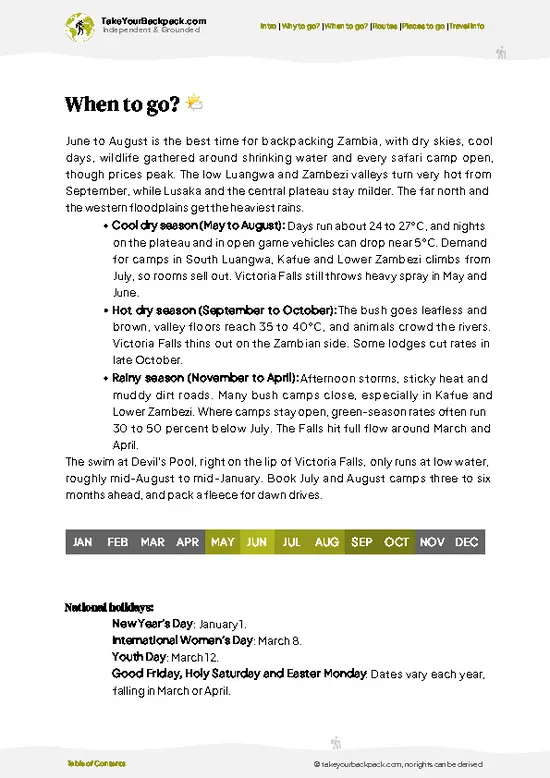
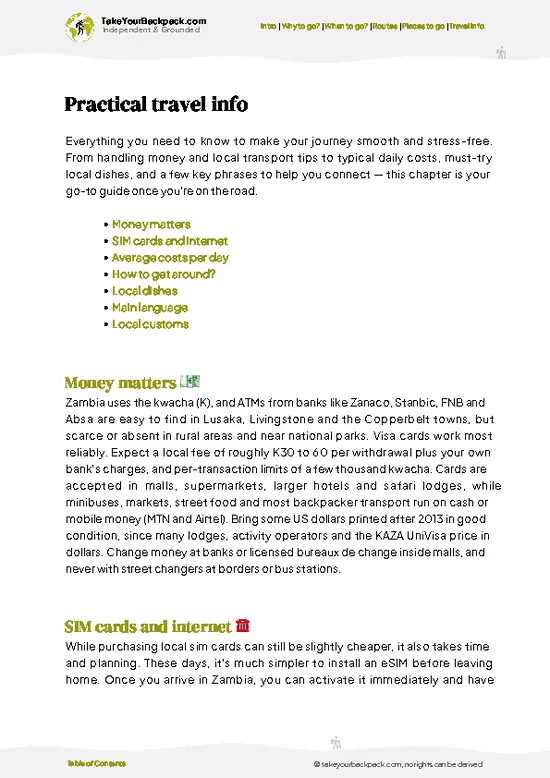
example page 0 from our offline Travel Guide for Zambia
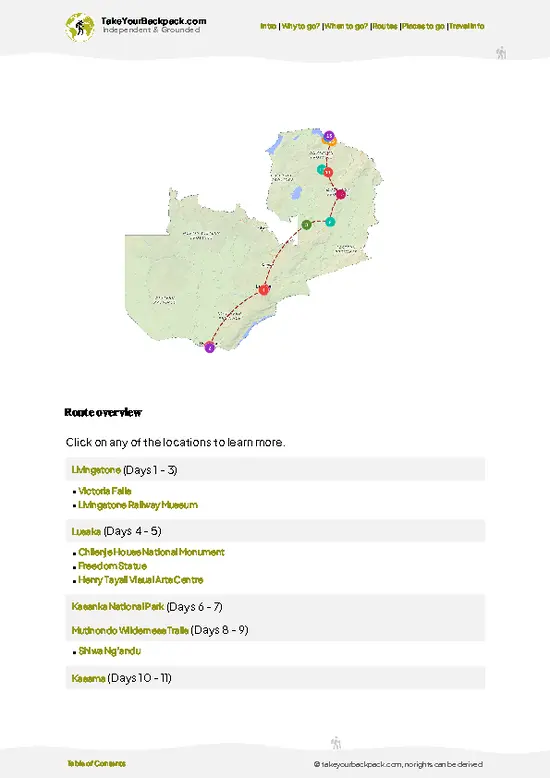
example page 1 from our offline Travel Guide for Zambia
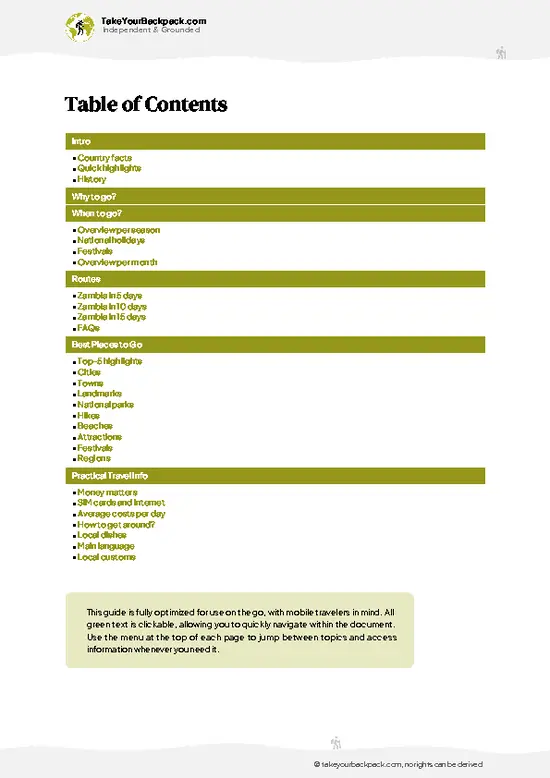
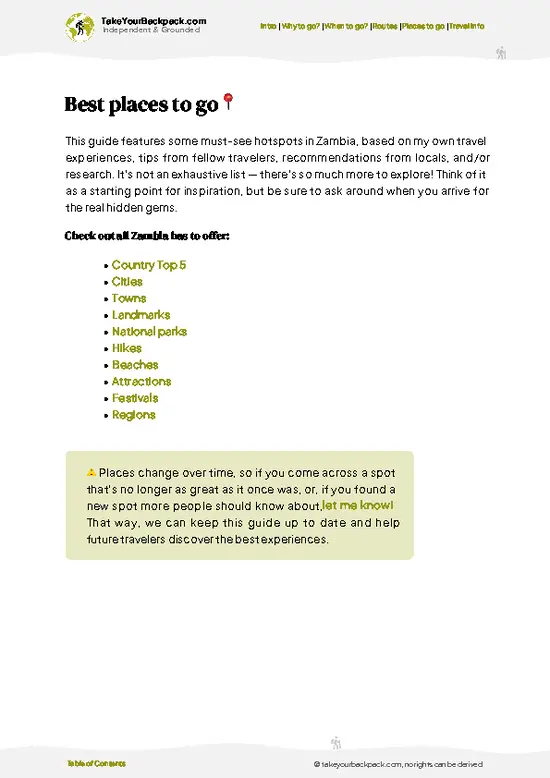
example page 2 from our offline Travel Guide for Zambia
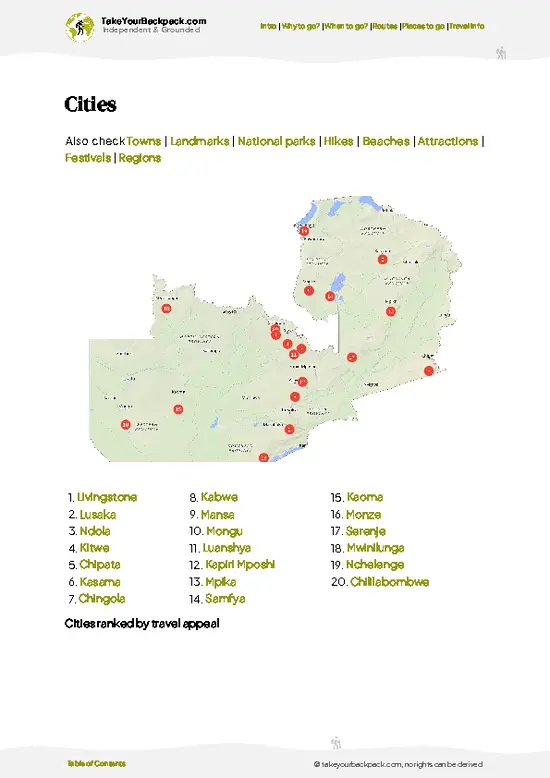
example page 3 from our offline Travel Guide for Zambia
example page 4 from our offline Travel Guide for Zambia
example page 5 from our offline Travel Guide for Zambia
example page 6 from our offline Travel Guide for Zambia
example page 7 from our offline Travel Guide for Zambia
Loading the map 🌍
CLICK TO FILTER
cities
towns
landmarks
national parks
hikes
beaches
attractions
festivals
regions
SHOW COUNTRY’S BESTSHOW ALL

✨ Why go?
Ranked #17 city in Zambia
What makes this city worth visiting

Serenje earns its stop as a gateway rather than a destination. It sits at the junction where the Great North Road meets the road toward Kasanka National Park and the Kundalila Falls area, so it works as a supply point for food, cash and fuel before you head into the bush. Guesthouses are simple and cheap, the town is flat and walkable in an hour, and buses between Lusaka and the Copperbelt or Mpika stop here. Treat it as one or two nights, not a base for a week.

💡 HighlightsKey sights and experiences for travelers

  1. Kundalila Falls: A 70 meter ribbon of water dropping into a forested gorge, with a rock pool you can swim in during the dry months. Go in the morning for light and cooler hiking. Entry is about US$5 to 10, and you need 2 to 3 hours.
  2. Serenje Main Market: Piles of tomatoes, dried fish, mushrooms and seasonal caterpillars, plus cheap phone credit and snacks. Arrive before noon when stalls are fullest. It is free to wander and takes about 45 minutes.
  3. Kapishya Hot Springs area: Natural thermal pools beside the Mansa River, with sandy banks and palms. Late afternoon is best. Day entry runs about US$5 to 10 and a soak takes 1 to 2 hours.
  4. Kasanka National Park: Famous for the huge fruit bat migration from roughly October to December, and for sitatunga sightings from tree hides. Park fees are around US$15
… read more 👉
  1. Kundalila Falls: A 70 meter ribbon of water dropping into a forested gorge, with a rock pool you can swim in during the dry months. Go in the morning for light and cooler hiking. Entry is about US$5 to 10, and you need 2 to 3 hours.
  2. Serenje Main Market: Piles of tomatoes, dried fish, mushrooms and seasonal caterpillars, plus cheap phone credit and snacks. Arrive before noon when stalls are fullest. It is free to wander and takes about 45 minutes.
  3. Kapishya Hot Springs area: Natural thermal pools beside the Mansa River, with sandy banks and palms. Late afternoon is best. Day entry runs about US$5 to 10 and a soak takes 1 to 2 hours.
  4. Kasanka National Park: Famous for the huge fruit bat migration from roughly October to December, and for sitatunga sightings from tree hides. Park fees are around US$15 to 30 per day, and you need a full day.
  5. Shiwa Ngandu estate: A grand English-style manor house, built by Stewart Gore-Browne, with working farmland and a small museum. Visit in dry weather. Tours cost around US$15 to 25 and take 2 hours.
Serenje is best used as a jumping-off point for day trips to Kasanka, Kundalila Falls and Shiwa Ngandu. Allow a full day for the falls and market together, and two or three days if you add the park and estate.
Spotted a mistake or missing something? Contact us.

🏘️ NeighborhoodsHow different areas shape the experience

Serenje is a compact district town, so you can cover its few areas on foot or by a short minibus hop.
  • Main Street and the Great North Road strip is where you stride past the central market, the bus stop, small grocers and fast-moving food stalls selling fried fish, nshima and chicken. It is the most useful stretch for the least effort, and walking it takes under 20 minutes.
  • The market area rewards an early start: fresh tomatoes, dried kapenta, caterpillars in season and cheap hot tea. Skip the sit-down places and eat here for the best value.
  • The residential and government quarter is quiet, with a hospital, the boma offices and tree-lined dirt streets. Nightlife is a few simple bars with loud music, so evenings stay low-key.
  • The road toward Kasanka and Kapiri Mposhi is for people on wheels. Hitch
… read more 👉
Serenje is a compact district town, so you can cover its few areas on foot or by a short minibus hop.
  • Main Street and the Great North Road strip is where you stride past the central market, the bus stop, small grocers and fast-moving food stalls selling fried fish, nshima and chicken. It is the most useful stretch for the least effort, and walking it takes under 20 minutes.
  • The market area rewards an early start: fresh tomatoes, dried kapenta, caterpillars in season and cheap hot tea. Skip the sit-down places and eat here for the best value.
  • The residential and government quarter is quiet, with a hospital, the boma offices and tree-lined dirt streets. Nightlife is a few simple bars with loud music, so evenings stay low-key.
  • The road toward Kasanka and Kapiri Mposhi is for people on wheels. Hitch or take a minibus rather than walking it, since distances open up fast.

⌛️ 1 dayA smart one-day plan

Serenje is small enough to cover on foot, so spend the day on a mix of walking and one hired taxi, and rest in the shade during the hottest hours after lunch.
8:00 AM: Main Market Walk the stalls for breakfast, fresh fruit and supplies. It is the best way to see local life before the day heats up.
9:30 AM: Great North Road stretch Stroll the roadside shops and mechanics, then arrange a taxi for the falls.
10:30 AM: Kundalila Falls Hike the short trail to the viewpoints and swim at the pool if water levels allow. Stay about two hours.
1:30 PM: Lunch and rest Back in town, eat nshima with relish at a local eatery and shelter from the afternoon sun.
4:00 PM: Back lanes behind the market Wander the residential streets, the lesser-visited part of town, where you can watch charcoal sellers and kids playing … read more 👉
Serenje is small enough to cover on foot, so spend the day on a mix of walking and one hired taxi, and rest in the shade during the hottest hours after lunch.
8:00 AM: Main Market Walk the stalls for breakfast, fresh fruit and supplies. It is the best way to see local life before the day heats up.
9:30 AM: Great North Road stretch Stroll the roadside shops and mechanics, then arrange a taxi for the falls.
10:30 AM: Kundalila Falls Hike the short trail to the viewpoints and swim at the pool if water levels allow. Stay about two hours.
1:30 PM: Lunch and rest Back in town, eat nshima with relish at a local eatery and shelter from the afternoon sun.
4:00 PM: Back lanes behind the market Wander the residential streets, the lesser-visited part of town, where you can watch charcoal sellers and kids playing football. Finish with a cold soda at a roadside bar.

🌤️ When to go?Weather, crowds, and seasonal trade-offs

  • Cool Dry Season (May to August): Days reach 22 to 26°C (72 to 79°F), nights drop to 7 to 12°C (45 to 54°F), and rain is absent. Roads are firm and crowds are thin.
  • Hot Season (September to November): Temperatures climb to 30 to 34°C (86 to 93°F) before the first storms; bush fires haze the air.
  • Rainy Season (December to April): Expect 20 to 28°C (68 to 82°F), daily downpours and muddy side roads. Lodges cut rates, but transport slows.
Aim for June or July if you want Kasanka’s bat migration season to line up with firm roads; the bats arrive roughly October to December.

source: climatestotravel.comJANJanuary: fair for travelingFEBFebruary: fair for travelingMARMarch: fair for travelingAPRApril: good for travelingMAYMay: highly recommended for travelingJUNJune: excellent for travelingJULJuly: excellent for travelingAUGAugust: excellent for travelingSEPSeptember: excellent for travelingOCTOctober: excellent for travelingNOVNovember: fair for travelingDECDecember: fair for traveling
when-to-go

✈️ The backpacker research shortcutZambia Travel Guide

An offline-friendly backpacking guide with optimized travel routes, ranked highlights, transport advice, and the best areas to stay.
example page 0 from our offline Travel Guide for Zambia
example page 1 from our offline Travel Guide for Zambia
example page 2 from our offline Travel Guide for Zambia
example page 3 from our offline Travel Guide for Zambia
example page 4 from our offline Travel Guide for Zambia
example page 5 from our offline Travel Guide for Zambia
example page 6 from our offline Travel Guide for Zambia
example page 7 from our offline Travel Guide for Zambia
The digital guide (351 pages) contains:
✅ 89 highlights, ranked by travel appeal
✅ Optimized 5, 10 & 15-day travel routes
✅ Cities, national parks, landmarks, beaches
✅ How to get around
✅ Offline-friendly for travel without Wi-Fi
👉 Click to see all 30+ guide features

📅 Plan smarter in minutes, not weeks
✅ Month by month travel advice
✅ Festivals & national holidays
✅ Budget expectations

🗺️ Go to the right places, skip the overrated ones
✅ Honest pros & cons of destinations
✅ Top hikes, parks & viewpoints
✅ Lesser-known places most travelers miss
✅ Clear “worth it vs skip it” guidance

🛏️ Travel smoothly without rookie mistakes
✅ Best areas to stay
✅ Transport systems explained simply
✅ Common scams & safety advice
✅ SIM cards, money & practical tips

🌍 Understand the country, not just visit it
✅ Culture & traditions
✅ 52 Essential phrases & customs
✅ Festivals worth planning around
✅ Traveler-friendly historical context
✅ Insights that make places more meaningful

📱 Built for real travel conditions
✅ Fully downloadable PDF
✅ Works completely offline
✅ Optimized for phone use
✅ Useful in remote areas & buses
✅ Everything in one place
Stop searching, start planning
Get instant access to your full guide. 30‑day money-back guarantee.
+ Add another guide for just

By proceeding you agree to our terms.
Sent to your inbox immediately after payment • 100% Secure Checkout
Best Backpacking Travel Advisor 2025 tourism awardBest Backpacking
Travel Advisor
2025
What others say about Take Your Backpack Guides:
⭐⭐⭐⭐⭐
Fantastic, amazing amount of information!
⭐⭐⭐⭐⭐
My goodness this is amazing, it's what I've been looking for hats off too you!
⭐⭐⭐⭐⭐
I think this is absolutely BRILLIANT
⭐⭐⭐⭐
Very complete and informative. It's still missing places, but I gotta to commend you
⭐⭐⭐⭐⭐
This is truly amazing, thank you, can't wait to explore it with my kids!
⭐⭐⭐⭐⭐
Awesome resource, thank you!
⭐⭐⭐⭐⭐
This is amazing! Can't wait to explore the ones I haven't seen
⭐⭐⭐⭐
I love this! Well done, great idea.
⭐⭐⭐⭐⭐
Thanks for taking the time to make this gem!
⭐⭐⭐⭐⭐
This might be the best website I've ever seen.
⭐⭐⭐⭐⭐
Congratulations, and thank you so much for your work; it's incredibly valuable.
⭐⭐⭐⭐
In all seriousness I think you did a great job pointing out the important spots
⭐⭐⭐⭐⭐
10/10 very good
⭐⭐⭐⭐⭐
As someone who's only just starting to visit regularly this is awesome, thank you.
⭐⭐⭐⭐
Thank you very much! I'm going to visit my dad, it's going to be very useful!
⭐⭐⭐⭐⭐
This is really cool! We'll be travelling for the first time and this definitely come in handy.
⭐⭐⭐⭐⭐
You are now our minister of culture, congratulations 👨‍💼
⭐⭐⭐⭐⭐
Just wanted to tell you that this is a pearl! Going to follow your recommendations.
⭐⭐⭐⭐⭐
This is so cool. I'll definitely be using the resource for my travels soon.
⭐⭐⭐⭐⭐
This is very impressive! Good work.
⭐⭐⭐⭐⭐
This is an amazing and informative site. Very well done!

🛏️ Where to stay?Best areas and accommodation options

The best budget stay in Serenje is near the main road and market, where basic guesthouses charge about US$10 to 20 a night. Formal dorm hostels are rare, so expect a private room with a shared or small en-suite bathroom. Staying close to the bus stop means early departures are easy, and shops and food stalls are a short walk away. Trucks on the Great North Road make some rooms noisy, so ask for one at the back. The quieter residential side of town costs a little more, is calmer at night and is a short walk from the center, but food options there are thin.

🚌 Getting aroundMoving around without the hassle

A minibus ride around Serenje costs about US$0.30 to 0.60, paid in cash to the conductor once you are seated. The town is small enough that walking handles most errands, while long-distance coaches and minibuses run along the Great North Road. Services thin out after dark, so plan to move by mid-afternoon.
  • Walking costs nothing and covers the market, the bus stop and the main street in under 20 minutes. It is the best value for anything in town.
  • Minibuses link Serenje with Kapiri Mposhi (about 3 to 4 hours, US$8 to 12) and Mpika. They leave when full, which saves money but costs patience, and seats are tight.
  • Long-distance coaches pass along the Great North Road toward Lusaka or Kasama for roughly US$15 to 25. They are more comfortable and quicker than minibuses, so take them when your bags are
… read more 👉
A minibus ride around Serenje costs about US$0.30 to 0.60, paid in cash to the conductor once you are seated. The town is small enough that walking handles most errands, while long-distance coaches and minibuses run along the Great North Road. Services thin out after dark, so plan to move by mid-afternoon.
  • Walking costs nothing and covers the market, the bus stop and the main street in under 20 minutes. It is the best value for anything in town.
  • Minibuses link Serenje with Kapiri Mposhi (about 3 to 4 hours, US$8 to 12) and Mpika. They leave when full, which saves money but costs patience, and seats are tight.
  • Long-distance coaches pass along the Great North Road toward Lusaka or Kasama for roughly US$15 to 25. They are more comfortable and quicker than minibuses, so take them when your bags are heavy.
  • Motorbike and shared taxis cost US$1 to 3 for local hops or the road out to nearby villages. Quick, bumpy and flexible, they beat waiting for a minibus that may not come.

👛 Costs (as of 22 October 2026)Typical daily expenses

Serenje costs a backpacker about US$33 to 41 a day if you stay in basic rooms and eat local food.
CategoryBudget RangeLocal Reality
Dorm accommodation (high season)US$10 to 15No true dorms, so a basic single room.
Dorm accommodation (off-season)US$8 to 12Rates ease in the rains.
MealsUS$5 to 9Market plates, nshima and fish.
Local transportUS$1 to 3Minibuses and motorbikes.
City transport passUS$0None exists; pay per ride.
Basic activities/entry feesUS$5 to 10Falls and viewpoints are cheap.
MiscellaneousUS$2 to 4Data, water, snacks.
Total Daily BudgetUS$33 to 41High-season stay included.
Buy food at the market and carry water from there, since packaged items in small shops cost more.

source: zambiatourism.com
⚠️ Prices can change and everyone travels differently, so take this as a rough guide. Hope it helps you plan your adventure!

🚌 Day tripsBest day trips from Serenje

Serenje works as a base for a few reachable outings if you bargain for a ride or hitch carefully.Kasanka National Park: Roughly 1.5 to 2 hours by road, this park is famed for the straw-colored fruit bat migration, which peaks around October to December. Entry plus transport and a guide can run US$60 to 120, so go in a group. First-timers often assume public minibuses go all the way in; they do not.
👉 Explore Kasanka National ParkKundalila Falls: About 45 minutes to an hour away, these falls drop into a pool good for a swim. Budget US$10 to 25 with transport and entry. Go in the late rainy season for the heaviest flow, and wear shoes with grip for the wet path.
Lukusuzi and Luangwa escarpment views: The escarpment road west of town gives long views over the valley for just the cost of a ride, … read more 👉
Serenje works as a base for a few reachable outings if you bargain for a ride or hitch carefully.Kasanka National Park: Roughly 1.5 to 2 hours by road, this park is famed for the straw-colored fruit bat migration, which peaks around October to December. Entry plus transport and a guide can run US$60 to 120, so go in a group. First-timers often assume public minibuses go all the way in; they do not.
👉 Explore Kasanka National ParkKundalila Falls: About 45 minutes to an hour away, these falls drop into a pool good for a swim. Budget US$10 to 25 with transport and entry. Go in the late rainy season for the heaviest flow, and wear shoes with grip for the wet path.
Lukusuzi and Luangwa escarpment views: The escarpment road west of town gives long views over the valley for just the cost of a ride, around US$3 to 8. Go in the dry months for clear air.

🍲 FoodLocal Cuisine & Drinks

Serenje sits near caterpillar and mushroom country, so in the rainy season look for mushrooms and dried mopane caterpillars at the market, plus wild honey sold in bottles beside the road. Fresh bream and kapenta from nearby waters come fried with nshima and a sharp tomato relish. A plate at a market stall costs about US$1.50 to 3, and tea with fried dough (vitumbuwa) is under US$1. Eat where the crowd is, early, when the pots are freshest. Small bars along the main road sell cold Mosi lager for about US$1.50 to 2. Roadside sellers offer roasted maize and groundnuts for pennies.

🛡️ SafetyTraveler Safety Guide

Serenje is a calm district town, and most problems are petty. Keep your phone and cash out of sight in the market and around the bus stop, where crowds gather as coaches arrive. Walking after dark is fine on the main street but poorly lit elsewhere, so use a motorbike taxi or stay on the lit road. Solo travelers meet mostly curiosity and friendliness. Touts may overcharge for rides, so agree a price first. Long-distance buses are best taken in daylight because trucks and night driving raise road risks.

FAQTraveler FAQ

Two days is enough for Serenje itself, with a third if you add Kasanka National Park or Kundalila Falls. The town has little to see beyond the market and main street, so most people use it as a stopover on the Great North Road. Kundalila Falls is under an hour away, and Kasanka is roughly 1.5 to 2 hours.
Yes, Serenje is comfortable for solo backpackers, with petty theft the main risk. Keep valuables hidden around the market and bus stop, and avoid unlit streets after dark. Minibuses cost under US$1 in town, and motorbike taxis for short trips run about US$1 to 3.
Serenje is known as a stop on the Great North Road and a gateway to Kasanka National Park and its fruit bat migration. Kundalila Falls, about 45 minutes away, is its best-known natural sight. The market sells local honey, mushrooms and seasonal caterpillars, with meals costing around US$1.50 to 3.
⚠️ Things can change over time, so always validate details locally before you go.

Other Zambian cities near Serenje

Explore more nearby:

  • Ndola—Hammarskjöld memorial, Masala Market, trade fair, tree-lined avenues| 174 km away
  • Kapiri Mposhi—Tazara terminus, bus yards, roadside grills| 187 km away
  • Luanshya—Roan headframes, company quarter, Mpatamatu| 197 km away

💡 Not sure where to go next?
Create a personalized itinerary for Zambia including Serenje and the places that fit your trip.

Generate my itinerary

👉 Discover all cities

Or checkout all Zambia has to offer (think cities, towns, villages, national parks, hikes, beaches, festivals)
Country photo of Zambia

We 💚 feedbackIs it worth it?

Serenje deserves one night, two if you add Kundalila Falls and a lazy market morning. Stay longer only if you have your own vehicle and plan to push into Kasanka. I would arrive with cash and a full phone battery.

✍️ Help improve this page!
The information on this page is based on in-depth research, insights shared by experienced travelers, and feedback from the local travel community in Zambia. While every effort is made to keep the information accurate and current, conditions can change — so if you spot anything incorrect or outdated, please get in touch.


🙋‍♂️ Give feedback

👋 Meet the founderWho’s Behind Take Your Backpack?

Johan, backpacker and founder of TakeYourBackpackHi, I’m Johan (Netherlands 🇳🇱), the creator of TakeYourBackpack. Over the past 3 decades, I’ve backpacked through 90+ countries across six continents, gaining extensive experience with independent travel, long-term trips, and overland routes.

This site is built on a combination of firsthand travel experience and carefully curated insights from other backpackers. Many guides are based on places I’ve personally visited, while others bring together tips, observations, and practical advice shared by trusted travelers I’ve met along the way.

The goal is to provide realistic, experience-driven guidance — not generic itineraries — so you can explore destinations with better context, clearer expectations, and more confidence.