×

Zambia🇿🇲 | townsMpulunguLake port, cichlid snorkeling, kapenta racks, Tanganyika sunsets | things to do and best time to go

Explore MbalaExplore Luwingu

Backpacking in Mpulungu
🏆 Top picktown ranked #4
By Johan Kruseman 🇳🇱 | Updated October 22, 2026

Fishermen haul their catch onto the shore at the harbor at dawn, and the lake smells of woodsmoke and fresh kapenta, the tiny sardine-like fish that feeds half of northern Zambia. Mpulungu sits at the southern tip of Lake Tanganyika, in the far north of Zambia, and it is the country’s only lake port. Come for clear, warm water, snorkeling over cichlids found nowhere else, and the ferry to the Kasanga end of the lake. Don’t expect polish: the town is dusty, compact and working, with a few lodges and little nightlife. That suits slow evenings by the water, and you meet other travelers easily because so few places to stay exist. Getting here is a long haul from Mbala and Kasama by road, so go for the lake, not the town. Bring enough cash, since ATMs are few and sometimes empty, and top up in Kasama beforehand.

Discover everything you want to know in the 📖 Zambia Travel Guide.


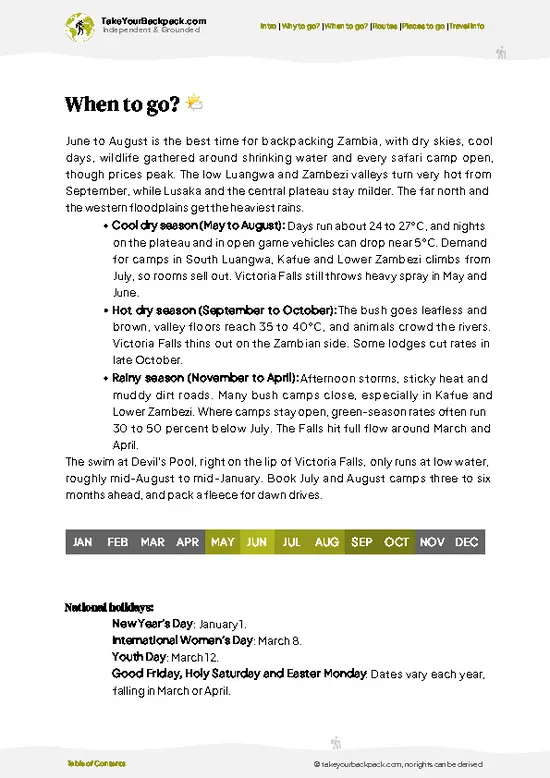
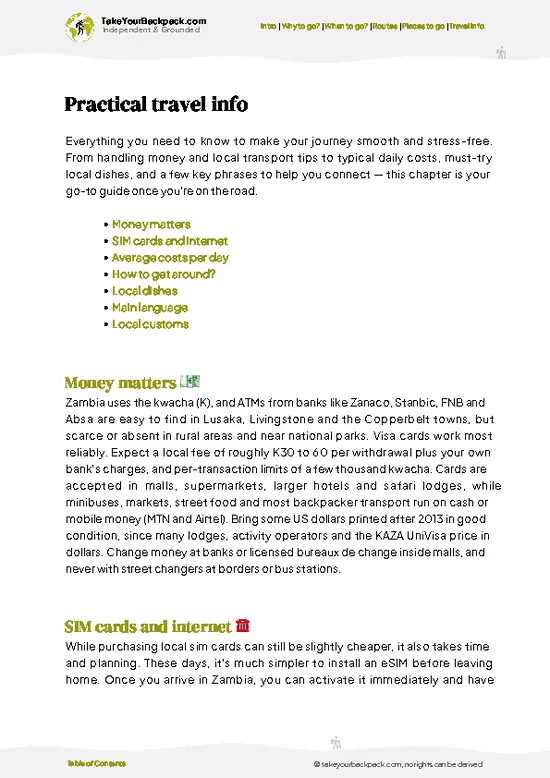
example page 0 from our offline Travel Guide for Zambia
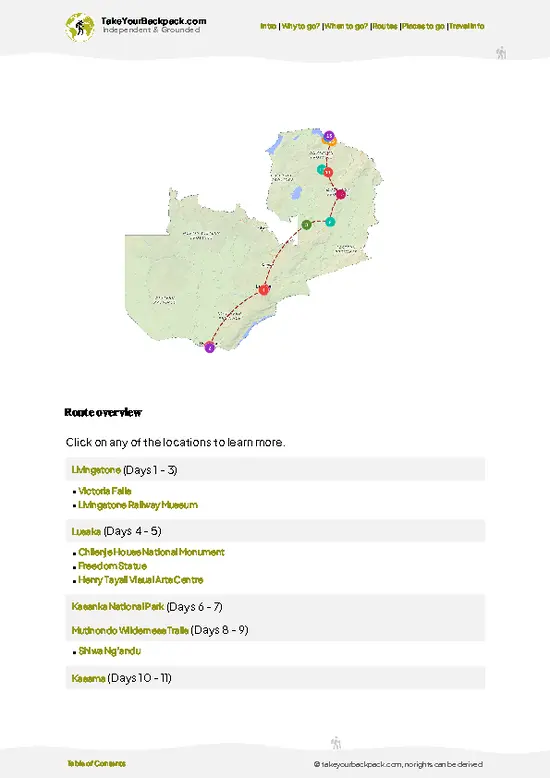
example page 1 from our offline Travel Guide for Zambia
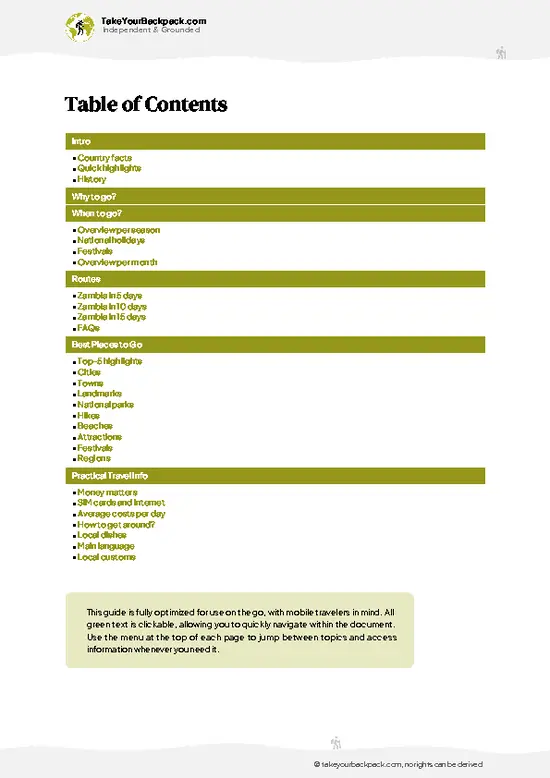
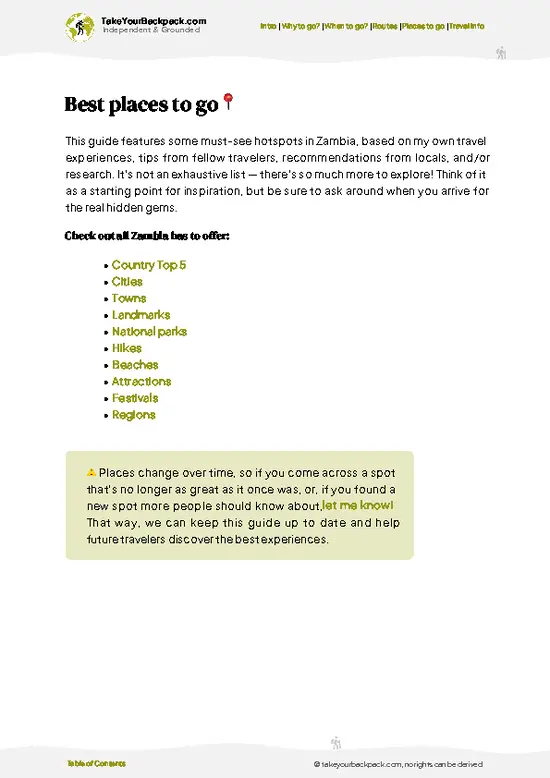
example page 2 from our offline Travel Guide for Zambia
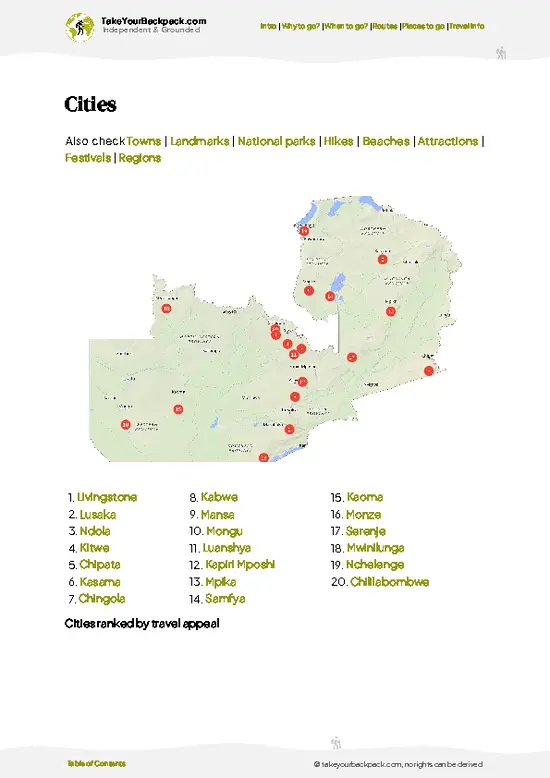
example page 3 from our offline Travel Guide for Zambia
example page 4 from our offline Travel Guide for Zambia
example page 5 from our offline Travel Guide for Zambia
example page 6 from our offline Travel Guide for Zambia
example page 7 from our offline Travel Guide for Zambia
Loading the map 🌍
CLICK TO FILTER
cities
towns
landmarks
national parks
hikes
beaches
attractions
festivals
regions
SHOW COUNTRY’S BESTSHOW ALL

✨ Why go?
Ranked #4 town in Zambia
What makes it a must-see town

Mpulungu is the place to swim, snorkel and sit still after the long road north. The water of Lake Tanganyika is the second deepest on earth, and it is clear enough that you can see colorful cichlids from the shoreline at the lodges east of town. Most backpackers stay two or three days, enough to book a boat, kayak or snorkel session and still have afternoons for nothing. The harbor is the other draw. The MV Liemba, the old German steamer that works the lake, is the traveler’s link toward Tanzania, so many people arrive here either to catch it or to rest after stepping off it. The town itself is small and walkable, with a lively fish market and basic eateries. It suits hikers winding down, solo travelers who like meeting people over a shared boat trip, and anyone happy to trade sights for water. … read more 👉
Mpulungu is the place to swim, snorkel and sit still after the long road north. The water of Lake Tanganyika is the second deepest on earth, and it is clear enough that you can see colorful cichlids from the shoreline at the lodges east of town. Most backpackers stay two or three days, enough to book a boat, kayak or snorkel session and still have afternoons for nothing. The harbor is the other draw. The MV Liemba, the old German steamer that works the lake, is the traveler’s link toward Tanzania, so many people arrive here either to catch it or to rest after stepping off it. The town itself is small and walkable, with a lively fish market and basic eateries. It suits hikers winding down, solo travelers who like meeting people over a shared boat trip, and anyone happy to trade sights for water. If you need sightseeing or nightlife, treat it as one night.

💡 HighlightsKey sights and experiences for travelers

  1. Mpulungu Harbor: The working port is the town’s heart, with fishing boats, cargo vessels and the occasional lake ferry. Go at dawn when the boats return. Free to watch, 1 hour. Ask before photographing people.
  2. Fish market and kapenta drying beds: Rows of kapenta dry on racks near the shore, and traders sell fresh tilapia and dried fish. Morning is busiest. Free to wander, 1 hour, and small purchases cost US$1 to 3.
  3. Snorkeling at the lodge beaches: The rocky shore near town holds hundreds of cichlid species, many endemic. Mornings give the best visibility. Gear rental is about US$5 to 10, and 2 to 3 hours passes easily.
  4. Boat trip on Lake Tanganyika: Lodges and local operators run trips along the shoreline and to nearby bays. Early morning is calm. Expect US$30 to 80 per boat depending on distance,
… read more 👉
  1. Mpulungu Harbor: The working port is the town’s heart, with fishing boats, cargo vessels and the occasional lake ferry. Go at dawn when the boats return. Free to watch, 1 hour. Ask before photographing people.
  2. Fish market and kapenta drying beds: Rows of kapenta dry on racks near the shore, and traders sell fresh tilapia and dried fish. Morning is busiest. Free to wander, 1 hour, and small purchases cost US$1 to 3.
  3. Snorkeling at the lodge beaches: The rocky shore near town holds hundreds of cichlid species, many endemic. Mornings give the best visibility. Gear rental is about US$5 to 10, and 2 to 3 hours passes easily.
  4. Boat trip on Lake Tanganyika: Lodges and local operators run trips along the shoreline and to nearby bays. Early morning is calm. Expect US$30 to 80 per boat depending on distance, 2 to 4 hours.
  5. Lake sunsets from the waterfront: The western horizon opens across the water, and fishing lamps appear on the lake after dark. Arrive about an hour before dusk with a drink. Free, 1 hour.
For day trips, you can reach Kalambo Falls, one of Africa’s tallest single-drop waterfalls, and the old mission town of Mbala, while Sumbu National Park lies farther along the lake shore. Mpulungu itself takes about one full day to cover properly, and an extra day or two if you add the boat and snorkeling.
Spotted a mistake or missing something? Contact us.

🏘️ NeighborhoodsWhere things are and how it's laid out

Mpulungu is small enough to cover on foot or by bike-taxi in a morning, and each corner has a different job. Learn them fast and you waste no time.
  • Harbor and Port Area: This is the working heart, where Lake Tanganyika cargo boats, fishing canoes and the old ferry quay crowd together. Zambia’s only lake port sits here because the lake’s southern tip offers sheltered water, so mornings are the time to wander. Go early for the fish landing, then eat grilled fish and nshima at a quay-side stall. Fully walkable.
  • Main Market and Town Center: Stalls sell dried kapenta, the tiny sardine-like fish the town lives on, plus fruit, phone credit and cheap clothes. Cash rules because few shops take cards, so bring small notes. Compact, loud and easy to walk in 20 minutes.
  • Lakeshore Road to Kasakalabwe and
… read more 👉
Mpulungu is small enough to cover on foot or by bike-taxi in a morning, and each corner has a different job. Learn them fast and you waste no time.
  • Harbor and Port Area: This is the working heart, where Lake Tanganyika cargo boats, fishing canoes and the old ferry quay crowd together. Zambia’s only lake port sits here because the lake’s southern tip offers sheltered water, so mornings are the time to wander. Go early for the fish landing, then eat grilled fish and nshima at a quay-side stall. Fully walkable.
  • Main Market and Town Center: Stalls sell dried kapenta, the tiny sardine-like fish the town lives on, plus fruit, phone credit and cheap clothes. Cash rules because few shops take cards, so bring small notes. Compact, loud and easy to walk in 20 minutes.
  • Lakeshore Road to Kasakalabwe and Beaches: The road east along the water leads to quiet sandy coves, lodges and the lake’s clear shallows, where snorkeling is possible. Distances stretch here and shade is thin, so hire a motorbike taxi rather than walking in midday heat. Evenings are peaceful, with little nightlife beyond a lodge bar.
  • Nsumbu Road Side: Residential lanes and small bars where locals drink Mosi beer after work. Nightlife is modest and ends early. Walk in groups after dark because streets are unlit.

⌛️ 1 dayWhat you can realistically do in a day

The day moves slowly and mostly on foot, with a long midday break in shade when the heat peaks and a taxi ride for the farther lodges.

6:00 AM, Harbor: Walk down as the boats come in. Watch crews unload and sort fish, and keep your camera low and polite. It is the most honest view of the town and costs nothing.

7:30 AM, Fish market and kapenta racks: Stroll the short distance to the stalls. Buy fruit or a hot breakfast from vendors, and follow the drying racks along the shore to see how the catch is processed.

9:30 AM, Lodge beach snorkeling: Take a taxi to a lodge east of town and rent a mask. The water is calmest and clearest in the morning, and the cichlids sit right at the rocks.

12:30 PM, Lunch and rest: Eat grilled fish with nshima at the lodge, then lie in the shade. This is the … read more 👉
The day moves slowly and mostly on foot, with a long midday break in shade when the heat peaks and a taxi ride for the farther lodges.

6:00 AM, Harbor: Walk down as the boats come in. Watch crews unload and sort fish, and keep your camera low and polite. It is the most honest view of the town and costs nothing.

7:30 AM, Fish market and kapenta racks: Stroll the short distance to the stalls. Buy fruit or a hot breakfast from vendors, and follow the drying racks along the shore to see how the catch is processed.

9:30 AM, Lodge beach snorkeling: Take a taxi to a lodge east of town and rent a mask. The water is calmest and clearest in the morning, and the cichlids sit right at the rocks.

12:30 PM, Lunch and rest: Eat grilled fish with nshima at the lodge, then lie in the shade. This is the break from the heat, so don’t rush it.

3:00 PM, Back-street walk behind the port: Head into the residential lanes beyond the main road, where carpenters, small shops and boat repairers work. It is rarely on a visitor’s list, and people are happy to chat.

5:00 PM, Waterfront: Walk to the shore and settle in for dusk. As night falls, lamps from the fishing boats spread across the lake. Finish with a cold drink and a plate of fried fish.

🌤️ When to go?Best time to visit Mpulungu

May to September is the easiest window, with dry days and pleasant lake air.
  • Cool Dry Season (May to August): Days reach 24 to 28°C (75 to 82°F) and nights drop to 14 to 17°C (57 to 63°F). Rain is almost absent, the water is calm for boat trips, and lodges fill modestly with overland trucks.
  • Hot Dry Season (September to October): Temperatures climb to 28 to 33°C (82 to 91°F) with humid afternoons. Swimming is at its best and prices stay steady. Daylight runs about 12 hours across the year, so plan around the equatorial evenings.
  • Rainy Season (November to April): Storms roll across the lake, roads to the lakeshore turn muddy and highs sit at 27 to 30°C (81 to 86°F). Lodges drop rates by 10 to 20 percent, though boat schedules and visibility suffer.
Book lakeside rooms ahead for July and August if you want a beachfront spot.

source: climatestotravel.comJANJanuary: fair for travelingFEBFebruary: fair for travelingMARMarch: fair for travelingAPRApril: fair for travelingMAYMay: highly recommended for travelingJUNJune: excellent for travelingJULJuly: excellent for travelingAUGAugust: excellent for travelingSEPSeptember: highly recommended for travelingOCTOctober: highly recommended for travelingNOVNovember: fair for travelingDECDecember: fair for traveling
when-to-go

✈️ The backpacker research shortcutZambia Travel Guide

An offline-friendly backpacking guide with optimized travel routes, ranked highlights, transport advice, and the best areas to stay.
example page 0 from our offline Travel Guide for Zambia
example page 1 from our offline Travel Guide for Zambia
example page 2 from our offline Travel Guide for Zambia
example page 3 from our offline Travel Guide for Zambia
example page 4 from our offline Travel Guide for Zambia
example page 5 from our offline Travel Guide for Zambia
example page 6 from our offline Travel Guide for Zambia
example page 7 from our offline Travel Guide for Zambia
The digital guide (351 pages) contains:
✅ 89 highlights, ranked by travel appeal
✅ Optimized 5, 10 & 15-day travel routes
✅ Cities, national parks, landmarks, beaches
✅ How to get around
✅ Offline-friendly for travel without Wi-Fi
👉 Click to see all 30+ guide features

📅 Plan smarter in minutes, not weeks
✅ Month by month travel advice
✅ Festivals & national holidays
✅ Budget expectations

🗺️ Go to the right places, skip the overrated ones
✅ Honest pros & cons of destinations
✅ Top hikes, parks & viewpoints
✅ Lesser-known places most travelers miss
✅ Clear “worth it vs skip it” guidance

🛏️ Travel smoothly without rookie mistakes
✅ Best areas to stay
✅ Transport systems explained simply
✅ Common scams & safety advice
✅ SIM cards, money & practical tips

🌍 Understand the country, not just visit it
✅ Culture & traditions
✅ 52 Essential phrases & customs
✅ Festivals worth planning around
✅ Traveler-friendly historical context
✅ Insights that make places more meaningful

📱 Built for real travel conditions
✅ Fully downloadable PDF
✅ Works completely offline
✅ Optimized for phone use
✅ Useful in remote areas & buses
✅ Everything in one place
Stop searching, start planning
Get instant access to your full guide. 30‑day money-back guarantee.
+ Add another guide for just

By proceeding you agree to our terms.
Sent to your inbox immediately after payment • 100% Secure Checkout
Best Backpacking Travel Advisor 2025 tourism awardBest Backpacking
Travel Advisor
2025
What others say about Take Your Backpack Guides:
⭐⭐⭐⭐⭐
Fantastic, amazing amount of information!
⭐⭐⭐⭐⭐
My goodness this is amazing, it's what I've been looking for hats off too you!
⭐⭐⭐⭐⭐
I think this is absolutely BRILLIANT
⭐⭐⭐⭐
Very complete and informative. It's still missing places, but I gotta to commend you
⭐⭐⭐⭐⭐
This is truly amazing, thank you, can't wait to explore it with my kids!
⭐⭐⭐⭐⭐
Awesome resource, thank you!
⭐⭐⭐⭐⭐
This is amazing! Can't wait to explore the ones I haven't seen
⭐⭐⭐⭐
I love this! Well done, great idea.
⭐⭐⭐⭐⭐
Thanks for taking the time to make this gem!
⭐⭐⭐⭐⭐
This might be the best website I've ever seen.
⭐⭐⭐⭐⭐
Congratulations, and thank you so much for your work; it's incredibly valuable.
⭐⭐⭐⭐
In all seriousness I think you did a great job pointing out the important spots
⭐⭐⭐⭐⭐
10/10 very good
⭐⭐⭐⭐⭐
As someone who's only just starting to visit regularly this is awesome, thank you.
⭐⭐⭐⭐
Thank you very much! I'm going to visit my dad, it's going to be very useful!
⭐⭐⭐⭐⭐
This is really cool! We'll be travelling for the first time and this definitely come in handy.
⭐⭐⭐⭐⭐
You are now our minister of culture, congratulations 👨‍💼
⭐⭐⭐⭐⭐
Just wanted to tell you that this is a pearl! Going to follow your recommendations.
⭐⭐⭐⭐⭐
This is so cool. I'll definitely be using the resource for my travels soon.
⭐⭐⭐⭐⭐
This is very impressive! Good work.
⭐⭐⭐⭐⭐
This is an amazing and informative site. Very well done!

🛏️ Where to stay?Best areas and accommodation options

The harbor and town center zone is the best base for a budget bed, with the cheapest guesthouses and rooms at US$10 to 20, walking distance from the market, bus station and port. Dorm-style beds are scarce in Mpulungu, so most backpackers book simple private rooms and split costs with a travel partner. Streets are busy by day and quiet after dark, but a short motorbike-taxi ride is cheaper and safer than walking late. Noise comes mostly from trucks and early boat engines, so bring earplugs.

The lakeshore stretch east of town suits anyone who wants water at the door. Campsites and lodges here … read more 👉
The harbor and town center zone is the best base for a budget bed, with the cheapest guesthouses and rooms at US$10 to 20, walking distance from the market, bus station and port. Dorm-style beds are scarce in Mpulungu, so most backpackers book simple private rooms and split costs with a travel partner. Streets are busy by day and quiet after dark, but a short motorbike-taxi ride is cheaper and safer than walking late. Noise comes mostly from trucks and early boat engines, so bring earplugs.

The lakeshore stretch east of town suits anyone who wants water at the door. Campsites and lodges here offer tent pitches for about US$5 to 10 and beds from US$15 to 30, with swimming, kayaking and calm evenings. The trade-off is distance: you depend on motorbike taxis or a lodge shuttle, and food options are limited to the lodge kitchen, so stock up in town beforehand. It is safer than central streets at night because most properties have guards and gated grounds. Book ahead from June to August, when overland groups fill the best pitches.

🚌 Getting aroundMoving around without the hassle

Mpulungu punishes anyone who arrives from Kasama or Mbala without checking the last bus time, because afternoon services thin out and you can end up paying a private taxi US$40 to 60 for a journey a bus would do for US$8 to 12. Leave the highway towns by early morning and the day works in your favor.
  • Walking: The harbor, market and main road sit within about 2 km of each other, so you cover them in 20 to 30 minutes. Walk in the morning, since the lakeside sun gets heavy by noon.
  • Motorbike Taxis: These are the fastest way along the lakeshore, costing US$1 to 3 per ride in town and US$4 to 8 to far beaches. Fares are negotiated because there are no meters, so agree the price before you climb on and carry small notes.
  • Minibuses and Shared Taxis: Short hops cost under US$1, and trips to Mbala (about
… read more 👉
Mpulungu punishes anyone who arrives from Kasama or Mbala without checking the last bus time, because afternoon services thin out and you can end up paying a private taxi US$40 to 60 for a journey a bus would do for US$8 to 12. Leave the highway towns by early morning and the day works in your favor.
  • Walking: The harbor, market and main road sit within about 2 km of each other, so you cover them in 20 to 30 minutes. Walk in the morning, since the lakeside sun gets heavy by noon.
  • Motorbike Taxis: These are the fastest way along the lakeshore, costing US$1 to 3 per ride in town and US$4 to 8 to far beaches. Fares are negotiated because there are no meters, so agree the price before you climb on and carry small notes.
  • Minibuses and Shared Taxis: Short hops cost under US$1, and trips to Mbala (about 40 km) run US$3 to 5 in 1 to 1.5 hours. They depart only when full, so arrive early and expect the last ones around late afternoon.
  • Long-Distance Buses: Services run to Kasama (roughly 4 to 5 hours, US$8 to 12) and onward toward Lusaka. Buses leave early morning, so buy your seat the day before at the bus station.
  • Boats: Local operators run lake trips and transfers, with a few hours on the water costing US$20 to 60 per boat shared between several people. Agree the fuel cost up front, because fuel is the main expense and varies day to day.

👛 Costs (as of 22 October 2026)Typical daily expenses

Mpulungu costs about US$10 to 20 a day for a backpacker, with a total daily budget of US$52 in high season.
CategoryBudget RangeLocal Reality
Dorm accommodationUS$10 to 20True dorms are rare, so simple private rooms or camping at US$5 to 10 are the norm.
MealsUS$8 to 14Grilled fish or chicken with nshima costs US$2 to 4 at local eateries.
Local transportUS$4 to 10Motorbike taxis run US$1 to 3 per ride and minibuses under US$1 in town.
Basic activities/entry feesUS$8 to 15Shared boat trips and snorkeling run US$5 to 15 per person, with small park or falls fees.
MiscellaneousUS$3 to 6Water, phone data, a Mosi beer at US$1.50 to 2.50.
Total Daily BudgetUS$52Lower if you camp and cook.
Buy fish straight from the harbor at the morning landing and have a lodge cook it, which costs far less than a restaurant meal.

source: zambiatourism.com
⚠️ Prices can change and everyone travels differently, so take this as a rough guide. Hope it helps you plan your adventure!

🚌 Day tripsWhere to go beyond the main area

Mpulungu works well as a base for short outings because most sights lie within an hour or two by road or boat.
Kalambo Falls:
The second highest uninterrupted waterfall in Africa drops about 235 meters on the Tanzania border, and the viewpoint is the draw. Road access takes around 1.5 to 2 hours each way by hired vehicle or motorbike, with a total cost of US$25 to 45 when shared, plus a small entry fee. Go from May to October, since rain turns the final track to mud. First-timers often leave too late and run out of daylight on the return.
👉 Explore Kalambo Falls
Lake Tanganyika Boat Trip:
A half-day on the water brings you to quiet beaches, fishing villages and snorkeling in clear water full of cichlids found nowhere else. Boat hire runs US$20 to 60, easily split among four people. Mornings are … read more 👉
Mpulungu works well as a base for short outings because most sights lie within an hour or two by road or boat.
Kalambo Falls:
The second highest uninterrupted waterfall in Africa drops about 235 meters on the Tanzania border, and the viewpoint is the draw. Road access takes around 1.5 to 2 hours each way by hired vehicle or motorbike, with a total cost of US$25 to 45 when shared, plus a small entry fee. Go from May to October, since rain turns the final track to mud. First-timers often leave too late and run out of daylight on the return.
👉 Explore Kalambo Falls
Lake Tanganyika Boat Trip:
A half-day on the water brings you to quiet beaches, fishing villages and snorkeling in clear water full of cichlids found nowhere else. Boat hire runs US$20 to 60, easily split among four people. Mornings are calmest, and afternoon winds can make crossings choppy.
👉 Explore Lake Tanganyika
Mbala and Lake Chila:
This highland town 40 km away sits cooler than the shore, with the Moto Moto Museum, which covers northern Zambian culture, and a small lake nearby. Shared minibuses take 1 to 1.5 hours and cost US$3 to 5 each way, so the total outing is about US$15 with food and entry. Leave by 8 am to catch return transport.
👉 Explore Mbala
Nsumbu National Park Edge:
Boat trips along the shore on the western side show hippos and birdlife without an overnight stay. Costs run US$40 to 80 per person including a guide. Dry season gives the best sightings.
👉 Explore Nsumbu National Park

🛡️ SafetyTraveler Safety Guide

Mpulungu is broadly safe and relaxed, and most problems are small. Pickpocketing happens in the crowded market and around the port, so keep your phone in a front pocket and carry only what you need for the day. Streets away from the center are unlit, so after dark take a motorbike taxi rather than walking, especially if you are alone. Solo travelers, including women, generally report friendly interactions, though persistent attention from touts around the bus station is common and a firm, polite no works. Agree prices for rides and boats before you start, since the usual annoyance is a fare that grows at the end. Take care around the harbor, where officials may ask about photography of port equipment. Swim only where locals do, because the lake has crocodiles and hippos in some stretches, … read more 👉
Mpulungu is broadly safe and relaxed, and most problems are small. Pickpocketing happens in the crowded market and around the port, so keep your phone in a front pocket and carry only what you need for the day. Streets away from the center are unlit, so after dark take a motorbike taxi rather than walking, especially if you are alone. Solo travelers, including women, generally report friendly interactions, though persistent attention from touts around the bus station is common and a firm, polite no works. Agree prices for rides and boats before you start, since the usual annoyance is a fare that grows at the end. Take care around the harbor, where officials may ask about photography of port equipment. Swim only where locals do, because the lake has crocodiles and hippos in some stretches, and avoid wading at dusk. Malaria is present year-round, so sleep under a net.

FAQFrequently asked questions about Mpulungu

Mpulungu is worth two or three days if you want Lake Tanganyika rather than a quick pass-through. It sits at the end of the tar road from Mbala, and the lake is the draw: clear freshwater snorkeling over cichlids, kayaking and boat trips to Kalambo Falls area viewpoints and nearby islands. Many travelers also use it as the Zambian port for the MV Liemba ferry toward Kigoma in Tanzania, which sails roughly every two weeks, so the stop doubles as a gateway.
Mpulungu suits two to three days. One day covers the harbor, the fish market and a swim or snorkel from a lodge beach, and a second lets you take a boat trip, with a half-day visit to the Nsumbu National Park side of the lake as an extra if you have time. Allow a fourth day only if you are waiting on the MV Liemba, whose schedule shifts, and budget US$25 to 45 a day for a basic stay.
Mpulungu is a poor fit as a day trip from Mbala, because the road between them takes about 1 to 1.5 hours each way (roughly 40 km), which leaves little time at the lake. Minibuses and shared taxis cost about US$2 to 4 one way and thin out by late afternoon. Kasama is around 4 to 5 hours away by road, so a day trip from there makes no sense; sleep at the lake instead.
⚠️ Things can change over time, so always validate details locally before you go.

Other Zambian towns near Mpulungu

Explore more nearby:

  • Mbala—Moto Moto Museum, Lake Chila, Abercorn surrender, Tanganyika gateway| 29 km away
  • Luwingu—Bemba farm town, smoked fish, village bike tracks, Kasama–Mansa road| 211 km away
  • Chinsali—Kaunda roots, Lubwa Mission, Great North Road, Kasomo Hill| 222 km away

💡 Not sure where to go next?
Create a personalized itinerary for Zambia including Mpulungu and the places that fit your trip.

Generate my itinerary

👉 Discover all towns

Or checkout all Zambia has to offer (think cities, towns, villages, national parks, hikes, beaches, festivals)
Country photo of Zambia

We 💚 feedbackIs it worth it?

Many travelers treat Mpulungu as a one-night transit stop and leave before the lake grows on them. Give it at least two nights. I would skip the town center after lunch and spend that time in the water, and I would carry plenty of cash from Kasama, since banking here is unreliable.

✍️ Help improve this page!
The information on this page is based on in-depth research, insights shared by experienced travelers, and feedback from the local travel community in Zambia. While every effort is made to keep the information accurate and current, conditions can change — so if you spot anything incorrect or outdated, please get in touch.


🙋‍♂️ Give feedback

👋 Meet the founderWho’s Behind Take Your Backpack?

Johan, backpacker and founder of TakeYourBackpackHi, I’m Johan (Netherlands 🇳🇱), the creator of TakeYourBackpack. Over the past 3 decades, I’ve backpacked through 90+ countries across six continents, gaining extensive experience with independent travel, long-term trips, and overland routes.

This site is built on a combination of firsthand travel experience and carefully curated insights from other backpackers. Many guides are based on places I’ve personally visited, while others bring together tips, observations, and practical advice shared by trusted travelers I’ve met along the way.

The goal is to provide realistic, experience-driven guidance — not generic itineraries — so you can explore destinations with better context, clearer expectations, and more confidence.