×

Zambia🇿🇲 | townsChinsaliKaunda roots, Lubwa Mission, Great North Road, Kasomo Hill | things to do and best time to go

Explore ZambeziExplore Petauke

Backpacking in Chinsali
👍 Recommendedtown ranked #9
By Johan Kruseman 🇳🇱 | Updated October 22, 2026

Chinsali puts you on the Great North Road with a fuel stop, a market, and a real slice of Bemba country, all without tour-bus crowds. It sits in the north of Zambia, in Muchinga Province, southwest of Isoka and northeast of Mpika. Walk the main drag, poke around the central market, and head out to Chinsali Museum and Kasomo Hill if history appeals. Skip hunting for nightlife, because evenings are quiet, with a few bars and guesthouse chats. Hostels are scarce, so meeting other backpackers happens by chance, usually among overlanders breaking the long haul. Buses and minibuses reach it easily. Unlike Mpika, which is mostly a junction, Chinsali has a stronger political story and a friendlier pace for stretching your legs.

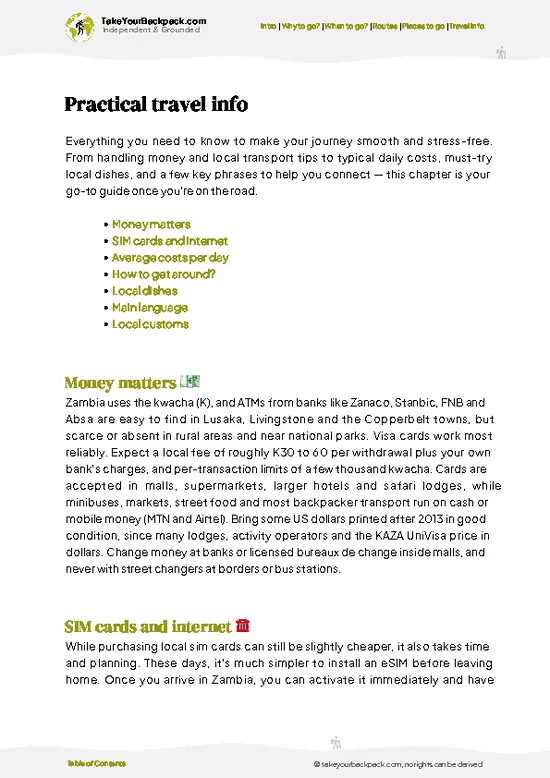
Discover everything you want to know in the 📖 Zambia Travel Guide.


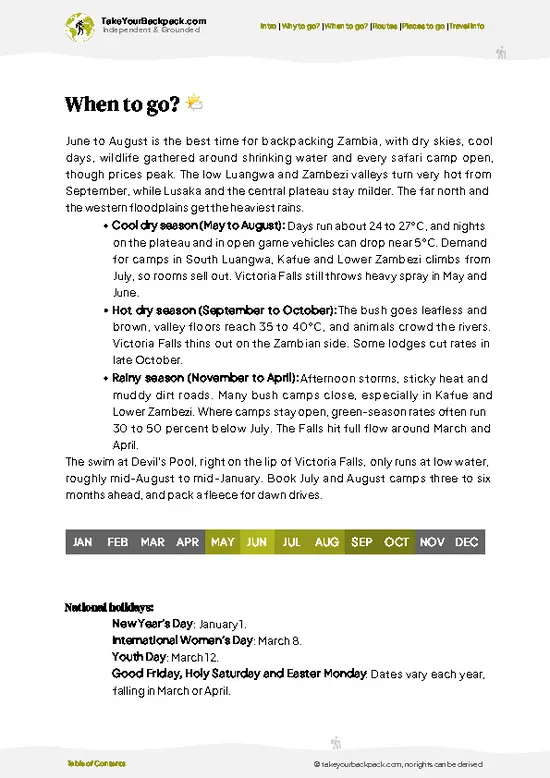
example page 0 from our offline Travel Guide for Zambia
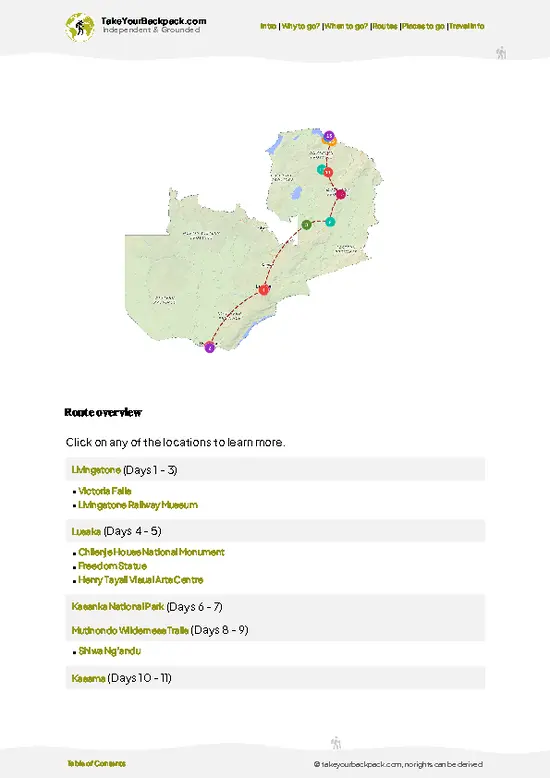
example page 1 from our offline Travel Guide for Zambia
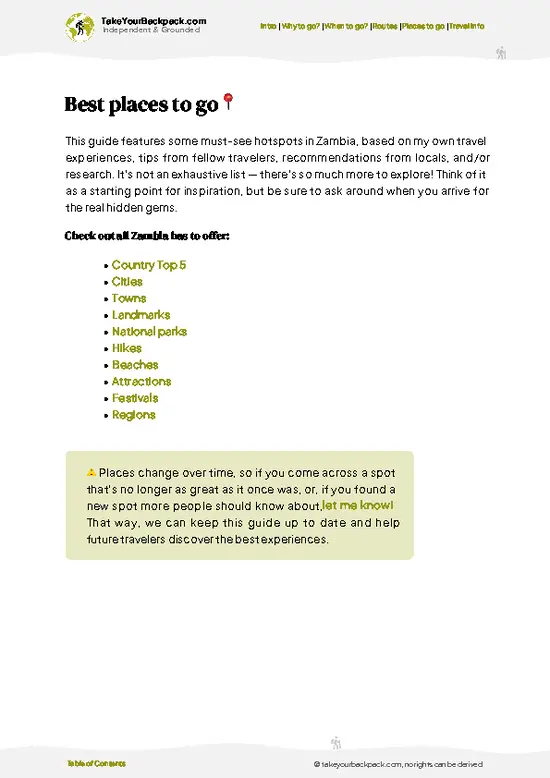
example page 2 from our offline Travel Guide for Zambia
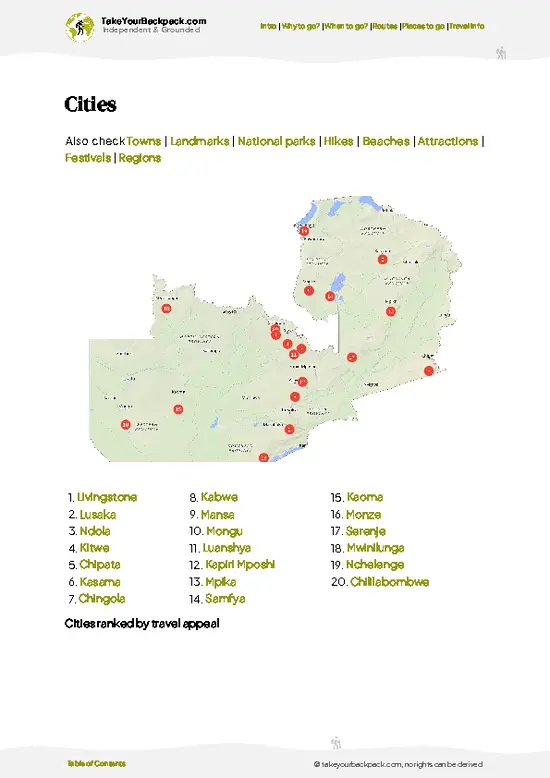
example page 3 from our offline Travel Guide for Zambia
example page 4 from our offline Travel Guide for Zambia
example page 5 from our offline Travel Guide for Zambia
example page 6 from our offline Travel Guide for Zambia
example page 7 from our offline Travel Guide for Zambia
Loading the map 🌍
CLICK TO FILTER
cities
towns
landmarks
national parks
hikes
beaches
attractions
festivals
regions
SHOW COUNTRY’S BESTSHOW ALL

✨ Why go?
Ranked #9 town in Zambia
What makes it a must-see town

Chinsali earns a stop because it is the hometown of Kenneth Kaunda, and the area still carries the story of Zambia’s independence struggle. Most travelers stay one night, two if they want to chase the Lubwa Mission history and the nearby Shiwa Ngandu estate without rushing. The town is compact and walkable, so you can cover the market, museum and local eateries on foot, eating nshima with relish or bean stew among locals who are curious and talkative. Guesthouses are small and simple rather than social, which suits solo travelers who like to find conversation themselves, and slow travelers who enjoy ordinary life more than ticking off sights. Hikers and nature seekers will mostly use it as a launch point toward the Muchinga Escarpment and waterfalls in the region. If you want party hostels and organized tours, push on elsewhere.

💡 HighlightsThe experiences that define the visit

  1. Chinsali Museum (Kenneth Kaunda Museum area): The best known draw, it presents local history and the independence era tied to Kaunda’s roots. Go in the morning when it is cool. Expect a small fee of roughly US$2 to 5 and about 1 hour.
  2. Lubwa Mission: Just outside the center, this former Church of Scotland mission is where Kaunda’s father preached and where Kaunda grew up. Quiet old buildings and a historic feel make it worth a visit. Visit in daylight, allow 1 to 2 hours, and expect free or a small donation of about US$1 to 3.
  3. Chinsali Central Market: The place to see what the Northern highlands grow and sell: dried fish, cassava, groundnuts, vegetables and secondhand clothes. Mornings are liveliest. Entry is free and 45 minutes to 1 hour is plenty.
  4. Kasomo Hill viewpoint: A short climb gives wide
… read more 👉
  1. Chinsali Museum (Kenneth Kaunda Museum area): The best known draw, it presents local history and the independence era tied to Kaunda’s roots. Go in the morning when it is cool. Expect a small fee of roughly US$2 to 5 and about 1 hour.
  2. Lubwa Mission: Just outside the center, this former Church of Scotland mission is where Kaunda’s father preached and where Kaunda grew up. Quiet old buildings and a historic feel make it worth a visit. Visit in daylight, allow 1 to 2 hours, and expect free or a small donation of about US$1 to 3.
  3. Chinsali Central Market: The place to see what the Northern highlands grow and sell: dried fish, cassava, groundnuts, vegetables and secondhand clothes. Mornings are liveliest. Entry is free and 45 minutes to 1 hour is plenty.
  4. Kasomo Hill viewpoint: A short climb gives wide views over the town and the surrounding woodland. Late afternoon light is best. It is free and takes about 1 hour including the walk.
  5. Local eateries along the Great North Road: Sit down for nshima with relish, chicken or beans among locals and drivers. Lunchtime is busiest. A meal costs about US$2 to 5 and takes 45 minutes.
Beyond town, day trips can reach Shiwa Ngandu manor house and its lake and the Kapishya Hot Springs, while Lake Bangweulu wetlands and Mpika are further afield. Start with Chinsali Museum, since it gives the context that makes the mission and the rest of the town make sense.
Spotted a mistake or missing something? Contact us.

🏘️ NeighborhoodsKey areas and districts to know

Chinsali is compact, so you can cover every part of it on foot in a morning and still have energy left. Here is where to spend your time.
  • Main Street and the market area: This is the part to hit first. Stalls along the Great North Road strip sell tomatoes, dried kapenta, cassava and cheap phones, and the market is where you grab nsima with beans or chicken for a few dollars. Walk it, chat, snack, move on.
  • Shoprite and the bus station side: Practical rather than pretty. You come here for ATMs, supplies and minibus departures, so tick it off fast and don’t linger.
  • Chinsali Museum area: Worth a detour. The small museum sits in the old colonial district office and covers local history and Kenneth Kaunda’s roots in the Chinsali region. It is a short walk from the center, quiet and shaded.
  • Residential
… read more 👉
Chinsali is compact, so you can cover every part of it on foot in a morning and still have energy left. Here is where to spend your time.
  • Main Street and the market area: This is the part to hit first. Stalls along the Great North Road strip sell tomatoes, dried kapenta, cassava and cheap phones, and the market is where you grab nsima with beans or chicken for a few dollars. Walk it, chat, snack, move on.
  • Shoprite and the bus station side: Practical rather than pretty. You come here for ATMs, supplies and minibus departures, so tick it off fast and don’t linger.
  • Chinsali Museum area: Worth a detour. The small museum sits in the old colonial district office and covers local history and Kenneth Kaunda’s roots in the Chinsali region. It is a short walk from the center, quiet and shaded.
  • Residential edges and the road toward Shiwa Ng’andu: Skip these unless you have a bike. Dusty lanes, a few churches and villages appear, but there is little to see, so spend that time elsewhere.
Nightlife is modest: a handful of local bars with loud music, mostly on the main road. Most travelers eat early and turn in.

⌛️ 1 day1-day itinerary for Chinsali

A history morning that turns into a relaxed market afternoon suits Chinsali well.
8:00 AM, Breakfast on the main street: Start with tea, fried dough and eggs at a local café. Chat with the owner about the day ahead, then walk to the museum.
9:00 AM, Chinsali Museum: Spend an hour with the independence-era displays and local history. The staff often add stories beyond the labels.
10:30 AM, Lubwa Mission: Take a taxi or a boda ride out to the old mission buildings, then wander the grounds and the church. It is peaceful and rarely busy.
12:30 PM, Lunch at a roadside eatery: Order nshima with relish among drivers and locals, and enjoy the simple food.
2:00 PM, Central Market: Walk the stalls for fruit, dried fish and groundnuts, and pick up supplies. It is easy to cover on foot.
4:00 PM, Kasomo Hill: … read more 👉
A history morning that turns into a relaxed market afternoon suits Chinsali well.
8:00 AM, Breakfast on the main street: Start with tea, fried dough and eggs at a local café. Chat with the owner about the day ahead, then walk to the museum.
9:00 AM, Chinsali Museum: Spend an hour with the independence-era displays and local history. The staff often add stories beyond the labels.
10:30 AM, Lubwa Mission: Take a taxi or a boda ride out to the old mission buildings, then wander the grounds and the church. It is peaceful and rarely busy.
12:30 PM, Lunch at a roadside eatery: Order nshima with relish among drivers and locals, and enjoy the simple food.
2:00 PM, Central Market: Walk the stalls for fruit, dried fish and groundnuts, and pick up supplies. It is easy to cover on foot.
4:00 PM, Kasomo Hill: Climb for views across the town and woodland as the afternoon softens. Go slowly.
5:30 PM, Backstreet neighborhood walk: Off the standard route, stroll the residential lanes behind the main road, where children play, women cook outside, and small churches fill the air with singing. Greet people and stop for a cold soda at a local shop.

🌤️ When to go?Best time to visit Chinsali

  • Cool Dry Season (May to August): Mornings are crisp at 8 to 12°C (46 to 54°F) and afternoons reach 22 to 26°C (72 to 79°F). Roads are firm, skies are clear and this suits hiking and visits to nearby estates.
  • Hot Season (September to October): Dry and dusty, with 28 to 32°C (82 to 90°F) afternoons. Bush fires haze the horizon, though crowds stay thin.
  • Rainy Season (November to April): Heavy downpours turn dirt roads to mud, and some tracks become impassable. Temperatures sit around 18 to 27°C (64 to 81°F), the hills glow green, and lodges drop rates slightly.
Chinsali sees few tourists in any month, so prices barely shift. Aim for June to August if you plan to use dirt roads.

source: climatestotravel.comJANJanuary: below average for travelingFEBFebruary: below average for travelingMARMarch: below average for travelingAPRApril: fair for travelingMAYMay: highly recommended for travelingJUNJune: excellent for travelingJULJuly: excellent for travelingAUGAugust: excellent for travelingSEPSeptember: highly recommended for travelingOCTOctober: highly recommended for travelingNOVNovember: fair for travelingDECDecember: below average for traveling
when-to-go

✈️ The backpacker research shortcutZambia Travel Guide

An offline-friendly backpacking guide with optimized travel routes, ranked highlights, transport advice, and the best areas to stay.
example page 0 from our offline Travel Guide for Zambia
example page 1 from our offline Travel Guide for Zambia
example page 2 from our offline Travel Guide for Zambia
example page 3 from our offline Travel Guide for Zambia
example page 4 from our offline Travel Guide for Zambia
example page 5 from our offline Travel Guide for Zambia
example page 6 from our offline Travel Guide for Zambia
example page 7 from our offline Travel Guide for Zambia
The digital guide (351 pages) contains:
✅ 89 highlights, ranked by travel appeal
✅ Optimized 5, 10 & 15-day travel routes
✅ Cities, national parks, landmarks, beaches
✅ How to get around
✅ Offline-friendly for travel without Wi-Fi
👉 Click to see all 30+ guide features

📅 Plan smarter in minutes, not weeks
✅ Month by month travel advice
✅ Festivals & national holidays
✅ Budget expectations

🗺️ Go to the right places, skip the overrated ones
✅ Honest pros & cons of destinations
✅ Top hikes, parks & viewpoints
✅ Lesser-known places most travelers miss
✅ Clear “worth it vs skip it” guidance

🛏️ Travel smoothly without rookie mistakes
✅ Best areas to stay
✅ Transport systems explained simply
✅ Common scams & safety advice
✅ SIM cards, money & practical tips

🌍 Understand the country, not just visit it
✅ Culture & traditions
✅ 52 Essential phrases & customs
✅ Festivals worth planning around
✅ Traveler-friendly historical context
✅ Insights that make places more meaningful

📱 Built for real travel conditions
✅ Fully downloadable PDF
✅ Works completely offline
✅ Optimized for phone use
✅ Useful in remote areas & buses
✅ Everything in one place
Stop searching, start planning
Get instant access to your full guide. 30‑day money-back guarantee.
+ Add another guide for just

By proceeding you agree to our terms.
Sent to your inbox immediately after payment • 100% Secure Checkout
Best Backpacking Travel Advisor 2025 tourism awardBest Backpacking
Travel Advisor
2025
What others say about Take Your Backpack Guides:
⭐⭐⭐⭐⭐
Fantastic, amazing amount of information!
⭐⭐⭐⭐⭐
My goodness this is amazing, it's what I've been looking for hats off too you!
⭐⭐⭐⭐⭐
I think this is absolutely BRILLIANT
⭐⭐⭐⭐
Very complete and informative. It's still missing places, but I gotta to commend you
⭐⭐⭐⭐⭐
This is truly amazing, thank you, can't wait to explore it with my kids!
⭐⭐⭐⭐⭐
Awesome resource, thank you!
⭐⭐⭐⭐⭐
This is amazing! Can't wait to explore the ones I haven't seen
⭐⭐⭐⭐
I love this! Well done, great idea.
⭐⭐⭐⭐⭐
Thanks for taking the time to make this gem!
⭐⭐⭐⭐⭐
This might be the best website I've ever seen.
⭐⭐⭐⭐⭐
Congratulations, and thank you so much for your work; it's incredibly valuable.
⭐⭐⭐⭐
In all seriousness I think you did a great job pointing out the important spots
⭐⭐⭐⭐⭐
10/10 very good
⭐⭐⭐⭐⭐
As someone who's only just starting to visit regularly this is awesome, thank you.
⭐⭐⭐⭐
Thank you very much! I'm going to visit my dad, it's going to be very useful!
⭐⭐⭐⭐⭐
This is really cool! We'll be travelling for the first time and this definitely come in handy.
⭐⭐⭐⭐⭐
You are now our minister of culture, congratulations 👨‍💼
⭐⭐⭐⭐⭐
Just wanted to tell you that this is a pearl! Going to follow your recommendations.
⭐⭐⭐⭐⭐
This is so cool. I'll definitely be using the resource for my travels soon.
⭐⭐⭐⭐⭐
This is very impressive! Good work.
⭐⭐⭐⭐⭐
This is an amazing and informative site. Very well done!

🛏️ Where to stay?Where staying makes the most sense

The center of Chinsali, within a ten-minute walk of the market and bus stop, is the best place for a budget bed. Cheap guesthouses and a couple of simple lodges cluster here, and dorm-style hostels are rare, so expect basic private rooms with shared or private bathrooms, generally US$12 to 25 a night. Being central means you can walk to food, ATMs and morning minibuses without paying for transport, and the bars along the main road are close enough for a drink yet a little noisy if you’re a light sleeper. Ask for a room at the back.

The quieter option is the leafy streets on the outskirts near … read more 👉
The center of Chinsali, within a ten-minute walk of the market and bus stop, is the best place for a budget bed. Cheap guesthouses and a couple of simple lodges cluster here, and dorm-style hostels are rare, so expect basic private rooms with shared or private bathrooms, generally US$12 to 25 a night. Being central means you can walk to food, ATMs and morning minibuses without paying for transport, and the bars along the main road are close enough for a drink yet a little noisy if you’re a light sleeper. Ask for a room at the back.

The quieter option is the leafy streets on the outskirts near the museum. They are calmer at night, and walking back after dark is fine in a group but a taxi is smarter alone, as street lighting is patchy. Book ahead in the rainy season or around district events, since the supply of beds is small. Camping is possible at estates farther out, but plan that as a separate trip.

🚌 Getting aroundHow to get from A to B

Walking is the easiest way to get around Chinsali, because the center, market, bus stop and museum sit within about 1.5 kilometers of each other. Traffic is light, apart from trucks thundering along the Great North Road, and public transport is informal but dependable for local hops. Here is how to move.
  • Walking: Free and quick. You can cross the whole center in 15 to 20 minutes, so lace up and roam. Carry water, as the midday sun is strong.
  • Motorbike taxis and local taxis: Handy for the edges of town or when you have a pack. Expect US$1 to 3 for most trips. Agree the price before you climb on, and settle for a short ride only.
  • Minibuses and buses on the Great North Road: These link Chinsali to Mpika, Isoka and Kasama, plus longer runs to Lusaka. Fares to Kasama run about US$7 to 10 and take
… read more 👉
Walking is the easiest way to get around Chinsali, because the center, market, bus stop and museum sit within about 1.5 kilometers of each other. Traffic is light, apart from trucks thundering along the Great North Road, and public transport is informal but dependable for local hops. Here is how to move.
  • Walking: Free and quick. You can cross the whole center in 15 to 20 minutes, so lace up and roam. Carry water, as the midday sun is strong.
  • Motorbike taxis and local taxis: Handy for the edges of town or when you have a pack. Expect US$1 to 3 for most trips. Agree the price before you climb on, and settle for a short ride only.
  • Minibuses and buses on the Great North Road: These link Chinsali to Mpika, Isoka and Kasama, plus longer runs to Lusaka. Fares to Kasama run about US$7 to 10 and take 2.5 to 3 hours, and Mpika is roughly US$5 to 8. Departures run mainly from early morning until mid-afternoon, and vehicles leave when full, so arrive by 7 am for the best choice.
  • Hitching and shared rides toward Shiwa Ng’andu: Villages off the main road see few vehicles. Ask at the bus station for a shared lift or negotiate a car for the day at around US$30 to 50. It beats waiting for a seat that never comes.
Buy any long-distance seat the day before if you can. Night travel on the Great North Road isn’t worth the trucks and potholes, so move by day.

👛 Costs (as of 22 October 2026)Money, prices, and spending tips

Chinsali costs a backpacker about US$12 to 20 a day, with a total daily budget of US$47 once you factor in basic lodging and local food. Prices are low, but options are limited, so you pay for convenience in rooms and transport.
CategoryBudget RangeLocal Reality
Dorm accommodationUS$12 to 20True dorms are scarce. Budget guesthouse rooms are the norm, with a fan and shared or simple private bath.
MealsUS$6 to 12Nsima with relish or chicken at local eateries costs US$2 to 4. Western-style meals cost more.
Local transportUS$3 to 6Walking is free, and short motorbike or taxi rides run US$1 to 3.
Basic activities/entry feesUS$5 to 15Museum entry is small, while Shiwa Ng’andu and Kapishya add US$5 to 20 each.
Miscellaneous expensesUS$3 to 6Water, data, snacks and tips. Pay in kwacha, and carry small notes.
… read more 👉
Chinsali costs a backpacker about US$12 to 20 a day, with a total daily budget of US$47 once you factor in basic lodging and local food. Prices are low, but options are limited, so you pay for convenience in rooms and transport.
CategoryBudget RangeLocal Reality
Dorm accommodationUS$12 to 20True dorms are scarce. Budget guesthouse rooms are the norm, with a fan and shared or simple private bath.
MealsUS$6 to 12Nsima with relish or chicken at local eateries costs US$2 to 4. Western-style meals cost more.
Local transportUS$3 to 6Walking is free, and short motorbike or taxi rides run US$1 to 3.
Basic activities/entry feesUS$5 to 15Museum entry is small, while Shiwa Ng’andu and Kapishya add US$5 to 20 each.
Miscellaneous expensesUS$3 to 6Water, data, snacks and tips. Pay in kwacha, and carry small notes.
Total Daily BudgetUS$47Comfortable for one traveler on a budget.
Save money by eating at the market and sharing a hired vehicle for out-of-town trips with other travelers.


source: zambiatourism.com
⚠️ Prices can change and everyone travels differently, so take this as a rough guide. Hope it helps you plan your adventure!

🚌 Day tripsBest day trips from Chinsali

Chinsali works as a base for a few rural outings, but you need your own wheels or a negotiated ride, since public transport to most sights is thin.
Shiwa Ng’andu:
The restored Manor House built by Stewart Gore-Browne is the headline, with a lake, gardens and tours. It lies about 1 hour by road on partly rough tracks, and a car with driver costs around US$40 to 60 for the day, plus entry or tour fees of around US$10 to 20. Dry months from May to October are safest. First-timers often leave too late and drive the dirt back in the dark.
👉 Explore Shiwa Ng’andu
Kapishya Hot Springs:
A warm natural pool in palm forest on the Manshya River, a soak that feels earned after a dusty drive. It is roughly 1.5 hours from Chinsali, with day entry around US$5 to 10. Pair it with Shiwa Ng’andu if you hire a … read more 👉
Chinsali works as a base for a few rural outings, but you need your own wheels or a negotiated ride, since public transport to most sights is thin.
Shiwa Ng’andu:
The restored Manor House built by Stewart Gore-Browne is the headline, with a lake, gardens and tours. It lies about 1 hour by road on partly rough tracks, and a car with driver costs around US$40 to 60 for the day, plus entry or tour fees of around US$10 to 20. Dry months from May to October are safest. First-timers often leave too late and drive the dirt back in the dark.
👉 Explore Shiwa Ng’andu
Kapishya Hot Springs:
A warm natural pool in palm forest on the Manshya River, a soak that feels earned after a dusty drive. It is roughly 1.5 hours from Chinsali, with day entry around US$5 to 10. Pair it with Shiwa Ng’andu if you hire a vehicle, to split the cost.

Chinsali Museum and Kaunda sites:
A short walk or a quick ride gets you to local political history, including displays on Kenneth Kaunda and the independence struggle. Count on an hour, with a small fee of about US$1 to 3. Go in the morning when it is cooler.

Lubwa Mission:
This is the old mission where Kaunda’s father worked, about 10 kilometers from town. Reach it by taxi or bike for US$5 to 10 round trip. The ruins are modest, so go for history, not scenery.

🛡️ SafetyScams, Hazards, and Annoyances

Chinsali is a calm, small town where most problems are minor. Petty theft such as phone snatching can happen around the market and bus station, so keep valuables zipped and out of sight in crowds. After dark, street lighting is patchy, so take a short taxi or walk in a group rather than wandering alone. Solo travelers, women included, generally find locals curious and friendly, though a firm no handles persistent offers. Touts at the bus station may quote inflated fares, so ask a couple of people what the going rate is. The main risk is road travel: trucks and potholes along the Great North Road make night driving a poor idea. Carry small cash, since card use is limited and ATMs sometimes run dry.

FAQFrequently asked questions about Chinsali

Chinsali is worth a stop if you care about history and the road to Shiwa Ng’andu, but it is not a destination in itself. The Chinsali Museum covers Kenneth Kaunda’s story, and Shiwa Ng’andu manor lies about 1 hour away by road. Most travelers combine it with Kapishya Hot Springs and use the town for supplies and a bed at US$12 to 25.
One to two days is enough for Chinsali. Spend a half day on the market and museum, then a full day hiring a car for Shiwa Ng’andu and Kapishya Hot Springs at about US$40 to 60 for the vehicle. Add a night if you want to explore slowly in the dry season.
Chinsali can be done as a day trip from Kasama, roughly 2.5 to 3 hours away by bus at US$7 to 10, but it would be a long day. A better plan is to overnight in Chinsali and see Shiwa Ng’andu the next morning. Buses on the Great North Road mostly leave before mid-afternoon, so an early start matters.
⚠️ Things can change over time, so always validate details locally before you go.

Other Zambian towns near Chinsali

Explore more nearby:

  • Isoka—Namwanga museum, Mafinga viewpoints, border-road market, Sunday choirs| 75 km away
  • Mbala—Moto Moto Museum, Lake Chila, Abercorn surrender, Tanganyika gateway| 203 km away
  • Mpulungu—Lake port, cichlid snorkeling, kapenta racks, Tanganyika sunsets| 222 km away

💡 Not sure where to go next?
Create a personalized itinerary for Zambia including Chinsali and the places that fit your trip.

Generate my itinerary

👉 Discover all towns

Or checkout all Zambia has to offer (think cities, towns, villages, national parks, hikes, beaches, festivals)
Country photo of Zambia

We 💚 feedbackKey takeaways before you go

Chinsali’s best surprise is how much history sits in ordinary places, so slow down and talk to people, because the shop owner may know more than the signboard. Bring small notes for markets and a flashlight, since power can cut out. I would stay at least one night rather than rushing through.

✍️ Help improve this page!
The information on this page is based on in-depth research, insights shared by experienced travelers, and feedback from the local travel community in Zambia. While every effort is made to keep the information accurate and current, conditions can change — so if you spot anything incorrect or outdated, please get in touch.


🙋‍♂️ Give feedback

👋 Meet the founderWho’s Behind Take Your Backpack?

Johan, backpacker and founder of TakeYourBackpackHi, I’m Johan (Netherlands 🇳🇱), the creator of TakeYourBackpack. Over the past 3 decades, I’ve backpacked through 90+ countries across six continents, gaining extensive experience with independent travel, long-term trips, and overland routes.

This site is built on a combination of firsthand travel experience and carefully curated insights from other backpackers. Many guides are based on places I’ve personally visited, while others bring together tips, observations, and practical advice shared by trusted travelers I’ve met along the way.

The goal is to provide realistic, experience-driven guidance — not generic itineraries — so you can explore destinations with better context, clearer expectations, and more confidence.