×

Zambia🇿🇲 | festivalsVinkhakanimba CeremonyMambwe ancestral offerings, Nyika highlands, bark-cloth dancers, call-and-response songs | things to do and best time to go

Explore Malaila CeremonyExplore Victoria Falls

Backpacking in Vinkhakanimba Ceremony
👀 For curious travelersfestival ranked #13
By Johan Kruseman 🇳🇱 | Updated October 22, 2026

Once a closed village affair watched mostly by Mambwe elders, Vinkhakanimba Ceremony now draws outsiders who arrive with cameras and respect. It happens in the north of Zambia, in the Mambwe and Nyika highlands near the Malawi border, roughly east of Mbala-Isoka country. Expect drums, call-and-response songs, ancestral offerings and dancers in bark cloth and beads, usually over a few days. The crowd is mostly local families, with a thin scatter of backpackers. Go for the raw, unpolished energy. Before you travel, ask the local chief’s office or your guesthouse for permission and the current dates.

Discover everything you want to know in the 📖 Zambia Travel Guide.


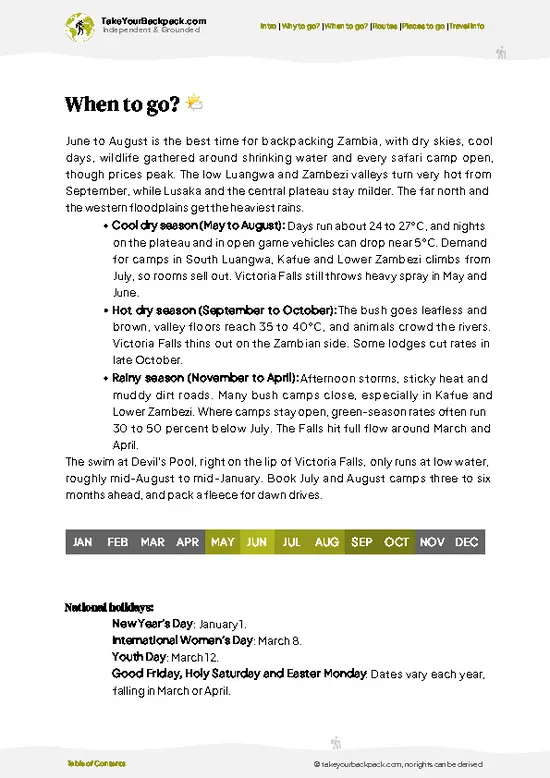
example page 0 from our offline Travel Guide for Zambia
example page 1 from our offline Travel Guide for Zambia
example page 2 from our offline Travel Guide for Zambia
example page 3 from our offline Travel Guide for Zambia
example page 4 from our offline Travel Guide for Zambia
example page 5 from our offline Travel Guide for Zambia
example page 6 from our offline Travel Guide for Zambia
example page 7 from our offline Travel Guide for Zambia
Loading the map 🌍
CLICK TO FILTER
cities
towns
landmarks
national parks
hikes
beaches
attractions
festivals
regions
SHOW COUNTRY’S BESTSHOW ALL

✨ Why go?
Ranked #13 festival in Zambia
Why visitors keep coming back

Vinkhakanimba Ceremony pulls backpackers who want a living Mambwe ritual rather than a staged show. There are no wristbands, no sponsor tents and no stage, so you stand shoulder to shoulder with villagers and watch tradition happen at its own pace. That closeness is the main draw. Locals tend to adopt visitors fast: you get handed a bowl of food, shown where to stand, and corrected on how to clap. It also fits well into a northern Zambia loop, because the Nyika highlands and the Malawi border sit close by, so you can add it to a longer overland trip without a big detour. Compared with the well-known festivals elsewhere in Zambia, it is far quieter and costs very little beyond a gift for the host community.

💡 HighlightsThe experiences that define the visit

  1. The opening ritual offerings: Elders honor ancestors with beer, grain and prayers. This is the heart of the event, and it is quiet, formal and absorbing.
  2. Drumming circles: Long drums set a pulse that carries across the valley. Listen for how the rhythm shifts as dancers change pace.
  3. Traditional dance: Dancers in bark cloth, beads and rattles move in tight, stamping formations. Villagers often pull spectators in.
  4. Call-and-response singing: Songs in the Mambwe language lead by one voice and answered by the crowd. You will pick up the chorus within an hour.
  5. Shared village food: Nshima with relish, often served communally, and locally brewed beer passed around. Accept a bowl when offered.
Start with the opening ritual offerings, because they set the tone for everything after and the elders are most … read more 👉
  1. The opening ritual offerings: Elders honor ancestors with beer, grain and prayers. This is the heart of the event, and it is quiet, formal and absorbing.
  2. Drumming circles: Long drums set a pulse that carries across the valley. Listen for how the rhythm shifts as dancers change pace.
  3. Traditional dance: Dancers in bark cloth, beads and rattles move in tight, stamping formations. Villagers often pull spectators in.
  4. Call-and-response singing: Songs in the Mambwe language lead by one voice and answered by the crowd. You will pick up the chorus within an hour.
  5. Shared village food: Nshima with relish, often served communally, and locally brewed beer passed around. Accept a bowl when offered.
Start with the opening ritual offerings, because they set the tone for everything after and the elders are most open to explaining what is happening before the crowds and dancing build.
Spotted a mistake or missing something? Contact us.

🌤️ When to go?When is the celebration of Vinkhakanimba Ceremony?

The Vinkhakanimba Ceremony is held by the Tumbuka people around the Chama and Isoka area in Zambia’s Northern and Muchinga provinces, usually in the dry months between roughly June and September, with the exact day set by the chief’s council rather than a fixed calendar.
  • Best day: The main day, when dancers and drummers gather around the chief’s court, is the one to attend. Weekdays before it are mostly preparation.
  • Weather: Days run about 22 to 28°C (72 to 82°F), dry and sunny, with chilly nights near 10°C (50°F). Bring a warm layer, a hat and a dust scarf.
  • Booking: Confirm the date locally first. Rooms in Isoka are few, so reserve a week or more ahead; prices may rise a little.
  • Roads: Arrive the day before and leave the morning after, as minibuses fill and thin out after the main event.
Ask the … read more 👉
The Vinkhakanimba Ceremony is held by the Tumbuka people around the Chama and Isoka area in Zambia’s Northern and Muchinga provinces, usually in the dry months between roughly June and September, with the exact day set by the chief’s council rather than a fixed calendar.
  • Best day: The main day, when dancers and drummers gather around the chief’s court, is the one to attend. Weekdays before it are mostly preparation.
  • Weather: Days run about 22 to 28°C (72 to 82°F), dry and sunny, with chilly nights near 10°C (50°F). Bring a warm layer, a hat and a dust scarf.
  • Booking: Confirm the date locally first. Rooms in Isoka are few, so reserve a week or more ahead; prices may rise a little.
  • Roads: Arrive the day before and leave the morning after, as minibuses fill and thin out after the main event.
Ask the local chief’s office for the confirmed date before you commit to travel.


source: climatestotravel.comJANJanuary: not recommended for travelingFEBFebruary: not recommended for travelingMARMarch: not recommended for travelingAPRApril: not recommended for travelingMAYMay: excellent for travelingJUNJune: not recommended for travelingJULJuly: not recommended for travelingAUGAugust: not recommended for travelingSEPSeptember: not recommended for travelingOCTOctober: not recommended for travelingNOVNovember: not recommended for travelingDECDecember: not recommended for traveling

✈️ The backpacker research shortcutZambia Travel Guide

An offline-friendly backpacking guide with optimized travel routes, ranked highlights, transport advice, and the best areas to stay.
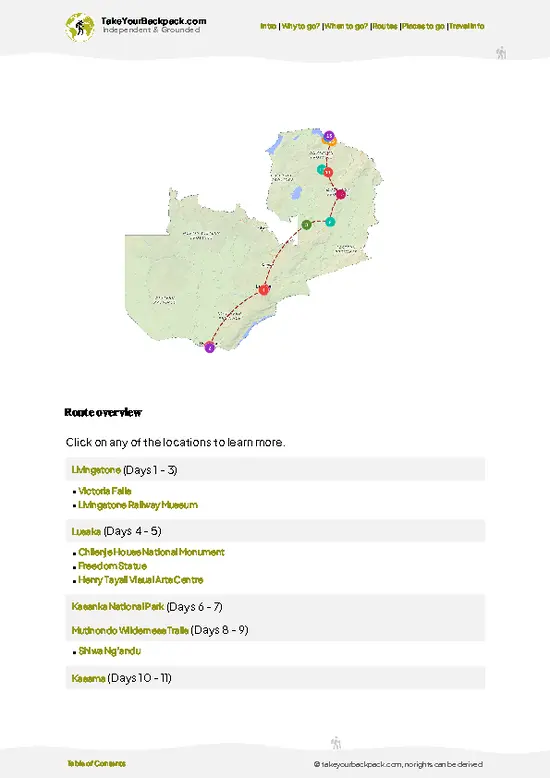
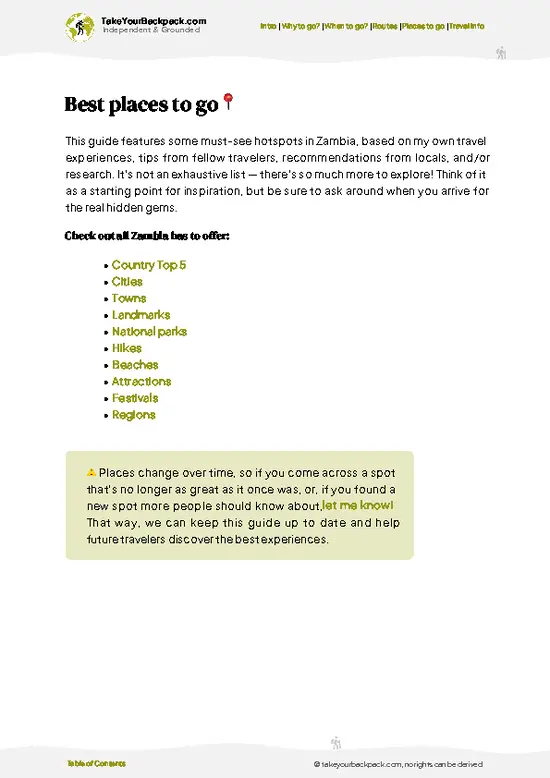
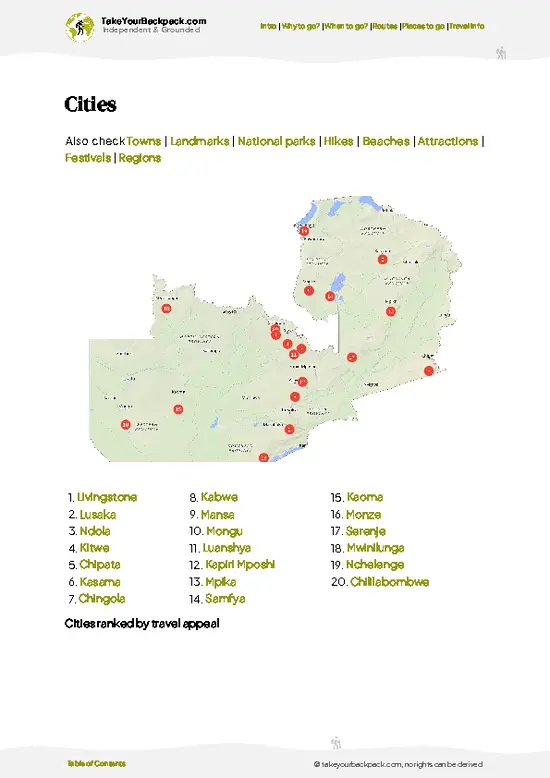
example page 0 from our offline Travel Guide for Zambia
example page 1 from our offline Travel Guide for Zambia
example page 2 from our offline Travel Guide for Zambia
example page 3 from our offline Travel Guide for Zambia
example page 4 from our offline Travel Guide for Zambia
example page 5 from our offline Travel Guide for Zambia
example page 6 from our offline Travel Guide for Zambia
example page 7 from our offline Travel Guide for Zambia
The digital guide (351 pages) contains:
✅ 89 highlights, ranked by travel appeal
✅ Optimized 5, 10 & 15-day travel routes
✅ Cities, national parks, landmarks, beaches
✅ How to get around
✅ Offline-friendly for travel without Wi-Fi
👉 Click to see all 30+ guide features

📅 Plan smarter in minutes, not weeks
✅ Month by month travel advice
✅ Festivals & national holidays
✅ Budget expectations

🗺️ Go to the right places, skip the overrated ones
✅ Honest pros & cons of destinations
✅ Top hikes, parks & viewpoints
✅ Lesser-known places most travelers miss
✅ Clear “worth it vs skip it” guidance

🛏️ Travel smoothly without rookie mistakes
✅ Best areas to stay
✅ Transport systems explained simply
✅ Common scams & safety advice
✅ SIM cards, money & practical tips

🌍 Understand the country, not just visit it
✅ Culture & traditions
✅ 52 Essential phrases & customs
✅ Festivals worth planning around
✅ Traveler-friendly historical context
✅ Insights that make places more meaningful

📱 Built for real travel conditions
✅ Fully downloadable PDF
✅ Works completely offline
✅ Optimized for phone use
✅ Useful in remote areas & buses
✅ Everything in one place
Stop searching, start planning
Get instant access to your full guide. 30‑day money-back guarantee.
+ Add another guide for just

By proceeding you agree to our terms.
Sent to your inbox immediately after payment • 100% Secure Checkout
Best Backpacking Travel Advisor 2025 tourism awardBest Backpacking
Travel Advisor
2025
What others say about Take Your Backpack Guides:
⭐⭐⭐⭐⭐
Fantastic, amazing amount of information!
⭐⭐⭐⭐⭐
My goodness this is amazing, it's what I've been looking for hats off too you!
⭐⭐⭐⭐⭐
I think this is absolutely BRILLIANT
⭐⭐⭐⭐
Very complete and informative. It's still missing places, but I gotta to commend you
⭐⭐⭐⭐⭐
This is truly amazing, thank you, can't wait to explore it with my kids!
⭐⭐⭐⭐⭐
Awesome resource, thank you!
⭐⭐⭐⭐⭐
This is amazing! Can't wait to explore the ones I haven't seen
⭐⭐⭐⭐
I love this! Well done, great idea.
⭐⭐⭐⭐⭐
Thanks for taking the time to make this gem!
⭐⭐⭐⭐⭐
This might be the best website I've ever seen.
⭐⭐⭐⭐⭐
Congratulations, and thank you so much for your work; it's incredibly valuable.
⭐⭐⭐⭐
In all seriousness I think you did a great job pointing out the important spots
⭐⭐⭐⭐⭐
10/10 very good
⭐⭐⭐⭐⭐
As someone who's only just starting to visit regularly this is awesome, thank you.
⭐⭐⭐⭐
Thank you very much! I'm going to visit my dad, it's going to be very useful!
⭐⭐⭐⭐⭐
This is really cool! We'll be travelling for the first time and this definitely come in handy.
⭐⭐⭐⭐⭐
You are now our minister of culture, congratulations 👨‍💼
⭐⭐⭐⭐⭐
Just wanted to tell you that this is a pearl! Going to follow your recommendations.
⭐⭐⭐⭐⭐
This is so cool. I'll definitely be using the resource for my travels soon.
⭐⭐⭐⭐⭐
This is very impressive! Good work.
⭐⭐⭐⭐⭐
This is an amazing and informative site. Very well done!

🛏️ Where to stay?Choosing the right base

Isoka town is the most practical base, because it has the area’s guesthouses, a market, and minibuses heading toward the ceremony grounds. Backpackers usually find the central streets near the main market the easiest to settle into. You can walk to food stalls, change money, and find shared transport in the morning without arranging a taxi. It is also where other independent travelers and NGO workers tend to overnight, so you will meet people to split rides with.

If you want a more rural stay, ask in nearby villages whether a family can host you for a night or two. Community hospitality is common … read more 👉
Isoka town is the most practical base, because it has the area’s guesthouses, a market, and minibuses heading toward the ceremony grounds. Backpackers usually find the central streets near the main market the easiest to settle into. You can walk to food stalls, change money, and find shared transport in the morning without arranging a taxi. It is also where other independent travelers and NGO workers tend to overnight, so you will meet people to split rides with.

If you want a more rural stay, ask in nearby villages whether a family can host you for a night or two. Community hospitality is common during gatherings, and it puts you close to the dancing at dawn. Bring a sleeping bag, a headlamp and cash, as power and cards are unreliable. Avoid walking between villages after dark; arrange a lift home with someone you trust.

👛 Costs (as of 22 October 2026)Travel costs and budget guide for Vinkhakanimba Ceremony

A day at the Vinkhakanimba Ceremony costs about US$37 to 75 for an independent traveler, depending on how much you spend on getting there and where you sleep.
CategoryBudget RangeLocal Reality
Festival ticketsUS$0 to 5Entry is generally free as a community event, though small donations or a photo fee may be requested.
AccommodationUS$12 to 30Basic guesthouses in Isoka cost less; the high season sees prices at the upper end. Village homestays are negotiated directly.
Local transportUS$8 to 20Minibuses and shared taxis run from Isoka; a private hire to the grounds costs more.
Food & drinksUS$6 to 12Nshima meals at stalls and local eateries are inexpensive; bottled drinks cost a little more.
Miscellaneous expensesUS$3 to 8Water, phone credit, small gifts for hosts and donations to performers.
Total
… read more 👉
A day at the Vinkhakanimba Ceremony costs about US$37 to 75 for an independent traveler, depending on how much you spend on getting there and where you sleep.
CategoryBudget RangeLocal Reality
Festival ticketsUS$0 to 5Entry is generally free as a community event, though small donations or a photo fee may be requested.
AccommodationUS$12 to 30Basic guesthouses in Isoka cost less; the high season sees prices at the upper end. Village homestays are negotiated directly.
Local transportUS$8 to 20Minibuses and shared taxis run from Isoka; a private hire to the grounds costs more.
Food & drinksUS$6 to 12Nshima meals at stalls and local eateries are inexpensive; bottled drinks cost a little more.
Miscellaneous expensesUS$3 to 8Water, phone credit, small gifts for hosts and donations to performers.
Total Daily BudgetUS$37 to 75Based on high-season rates, with cash in Zambian kwacha.


source: zambiatourism.com
⚠️ Prices can change and everyone travels differently, so take this as a rough guide. Hope it helps you plan your adventure!

🍲 FoodWhat to Eat & Drink

Expect the nshima staple, a thick maize porridge, served in big shared bowls with relish such as stewed chicken, beans, pumpkin leaves or dried fish. Women from nearby villages set up stalls where you can buy grilled maize cobs, roasted groundnuts, fried cassava and sweet fritters for small change.

Try the nshima with kapenta or a village chicken dish, because that is what families cook for guests during the celebrations. Drinks lean toward bottled sodas, tea and the local maize beer, which is cloudy, sour and often passed around in a communal container. Take a sip if offered, as refusing outright can seem rude.

Eat with your right hand after washing, and take small portions from the shared bowl in front of you. Carry cash in small notes, since cards and mobile money are unreliable at stalls. … read more 👉
Expect the nshima staple, a thick maize porridge, served in big shared bowls with relish such as stewed chicken, beans, pumpkin leaves or dried fish. Women from nearby villages set up stalls where you can buy grilled maize cobs, roasted groundnuts, fried cassava and sweet fritters for small change.

Try the nshima with kapenta or a village chicken dish, because that is what families cook for guests during the celebrations. Drinks lean toward bottled sodas, tea and the local maize beer, which is cloudy, sour and often passed around in a communal container. Take a sip if offered, as refusing outright can seem rude.

Eat with your right hand after washing, and take small portions from the shared bowl in front of you. Carry cash in small notes, since cards and mobile money are unreliable at stalls. Bring your own water or purification tablets, and expect lines to form at lunchtime around the performance area.

FAQTraveler FAQ

The Vinkhakanimba Ceremony usually takes place in the dry months between about June and September, with the exact day set by the chief’s council each year. The main event lasts about one day, with preparations in the preceding days. Isoka is the usual gateway town, so confirm the date there before traveling.
Attending the Vinkhakanimba Ceremony is generally free, as it is a community gathering rather than a ticketed festival. Budget about US$37 to 75 per day for a bed in Isoka, minibus fares, food and small donations. A private hire to the grounds will push that higher.
The Vinkhakanimba Ceremony does not normally require tickets in advance, since it is open to visitors who arrive respectfully. What you should book early is a room in Isoka, ideally a week or more ahead. Ask the local chief’s office about protocol, photography and any small contribution expected.
⚠️ Things can change over time, so always validate details locally before you go.

Other Zambian festivals near Vinkhakanimba Ceremony

Explore more nearby:

  • Malaila Ceremony—Eastern chiefdom, dance-troupe rivalry, heirloom regalia, village brew| 350 km away
  • N’cwala—Ngoni first fruits, Mtenguleni, shields and spears, February rains| 369 km away
  • Kulamba Ceremony—Chewa paramount chief, Gule Wamkulu masks, Katete, cross-border delegations| 409 km away

💡 Not sure where to go next?
Create a personalized itinerary for Zambia including Vinkhakanimba Ceremony and the places that fit your trip.

Generate my itinerary

👉 Discover all festivals

Or checkout all Zambia has to offer (think cities, towns, villages, national parks, hikes, beaches, festivals)
Country photo of Zambia

We 💚 feedbackWhat to keep in mind

Vinkhakanimba Ceremony pairs best with a slow northern loop: add the Nyika highlands and a lakeside stop at Lake Tanganyika before or after. I would bring a small gift for the host village and keep the camera low until someone nods.

✍️ Help improve this page!
The information on this page is based on in-depth research, insights shared by experienced travelers, and feedback from the local travel community in Zambia. While every effort is made to keep the information accurate and current, conditions can change — so if you spot anything incorrect or outdated, please get in touch.


🙋‍♂️ Give feedback

👋 Meet the founderWho’s Behind Take Your Backpack?

Johan, backpacker and founder of TakeYourBackpackHi, I’m Johan (Netherlands 🇳🇱), the creator of TakeYourBackpack. Over the past 3 decades, I’ve backpacked through 90+ countries across six continents, gaining extensive experience with independent travel, long-term trips, and overland routes.

This site is built on a combination of firsthand travel experience and carefully curated insights from other backpackers. Many guides are based on places I’ve personally visited, while others bring together tips, observations, and practical advice shared by trusted travelers I’ve met along the way.

The goal is to provide realistic, experience-driven guidance — not generic itineraries — so you can explore destinations with better context, clearer expectations, and more confidence.